Understanding ordinal numbers Worksheets for Ages 4-8
3 filtered results
-
From - To
Introducing our "Understanding Ordinal Numbers Worksheets" designed for children ages 4-8! These engaging and interactive worksheets help young learners grasp the concept of ordinal numbers, such as first, second, and third, in a fun and accessible way. With colorful visuals and age-appropriate activities, children will enhance their number recognition and sequencing skills. Perfect for both classroom and home settings, these worksheets promote early math skills while keeping kids entertained. Encourage your child’s understanding of position and order with our varied exercises that cater to different learning styles. Start building a strong mathematical foundation today!
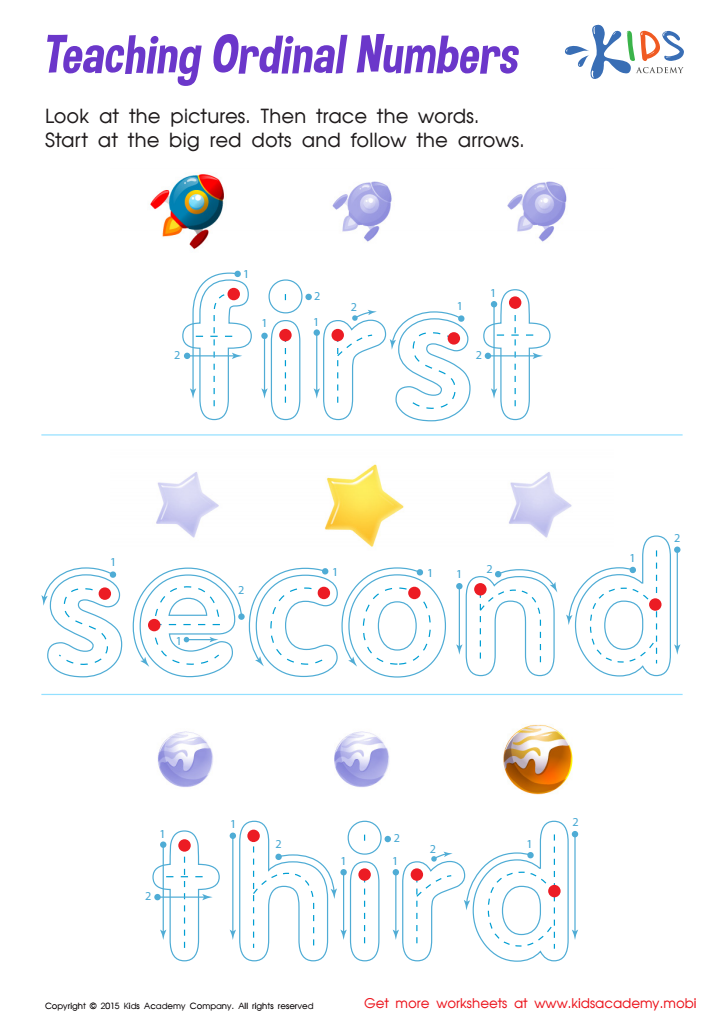
Ordinal Numbers: Teaching Ordinal Numbers Printable
 Assign to My Students
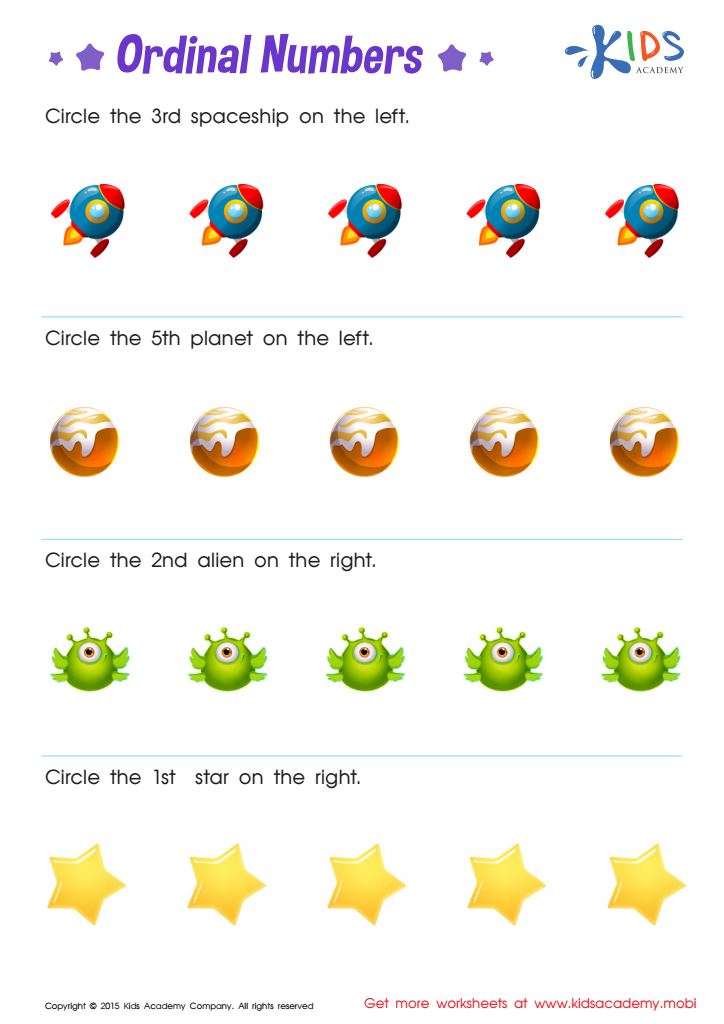
Ordinal Numbers: Space Ordinals Worksheet








Understanding ordinal numbers is essential for children aged 4-8 because these numbers help them grasp concepts related to order and position, which are foundational for more complex mathematical reasoning. Ordinals, such as first, second, and third, allow children to classify and organize objects and events in a sequential manner, fostering cognitive development.
In everyday life, children encounter ordinal numbers frequently, from waiting in turn at a playground to understanding race placements in school sports. Mastery of these concepts not only helps them engage in these activities but also enhances their communication skills as they describe experiences and share stories.
Moreover, understanding ordinal numbers prepares children for future mathematical learning. It lays the groundwork for more advanced topics like place value and number patterns, ultimately promoting their problem-solving abilities. By incorporating discussion of ordinal numbers into daily routines and learning activities, parents and teachers can strengthen children's overall numeracy skills and boost their confidence in math-related tasks.
Furthermore, recognizing and articulating ordinal relationships supports children's social skills by clarifying roles in groups or games, imparting crucial lessons in patience and cooperation. Thus, understanding ordinal numbers is a vital aspect of children's early education that benefits multiple developmental areas.








