Understanding pollination Worksheets for Ages 4-8
4 filtered results
-
From - To
Discover our engaging "Understanding Pollination Worksheets" designed specifically for children ages 4-8. These worksheets provide a fun and interactive way for young learners to explore the fascinating process of pollination. Through colorful illustrations and age-appropriate activities, kids will learn about the roles of bees, butterflies, and other pollinators in nature. Each worksheet encourages creativity and critical thinking, helping students connect with the environment while developing essential skills. Perfect for at-home learning or classroom use, our resources support early education and inspire a love for nature. Dive into the world of plants and pollinators with our easy-to-use worksheets today!
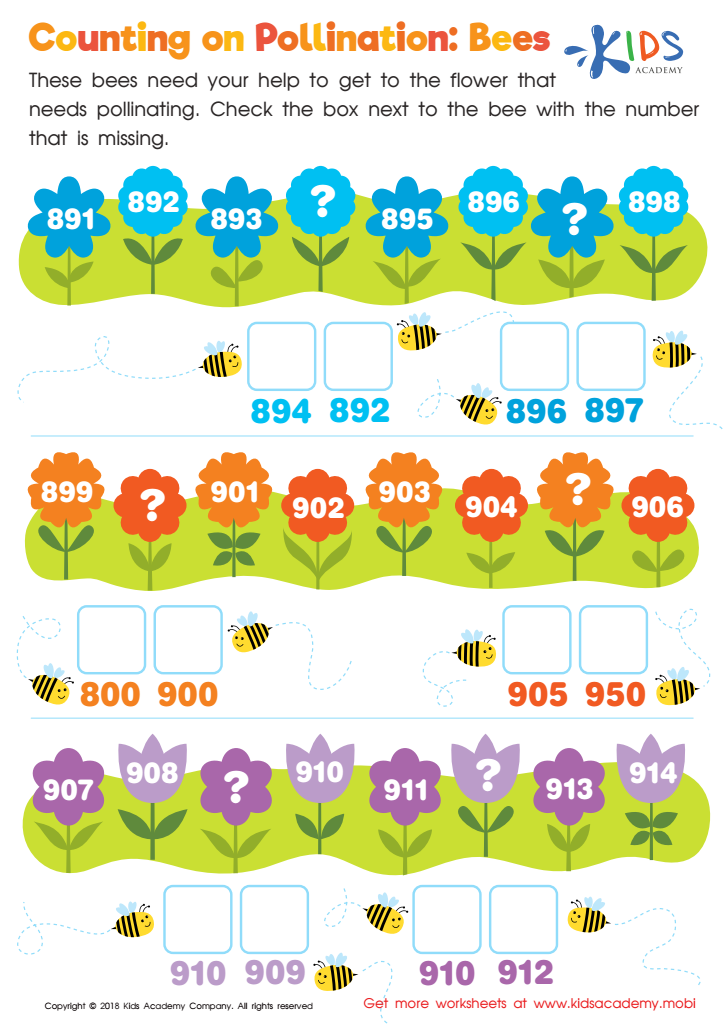
Counting on Pollination: Bees Worksheet
 Assign to My Students
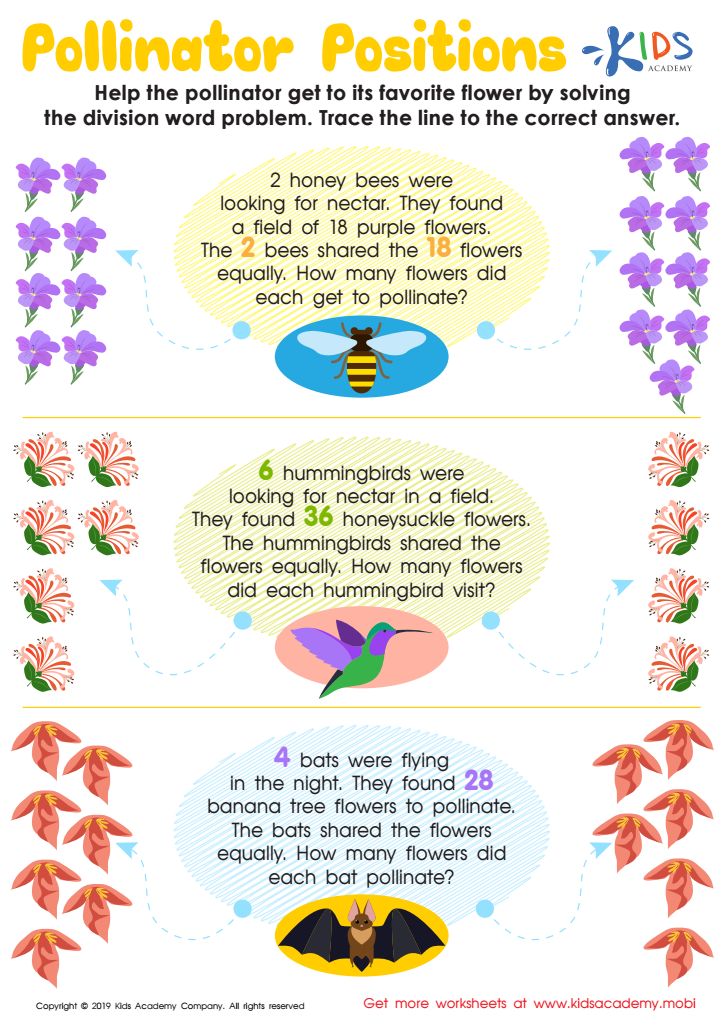
Pollinator Positions Worksheet
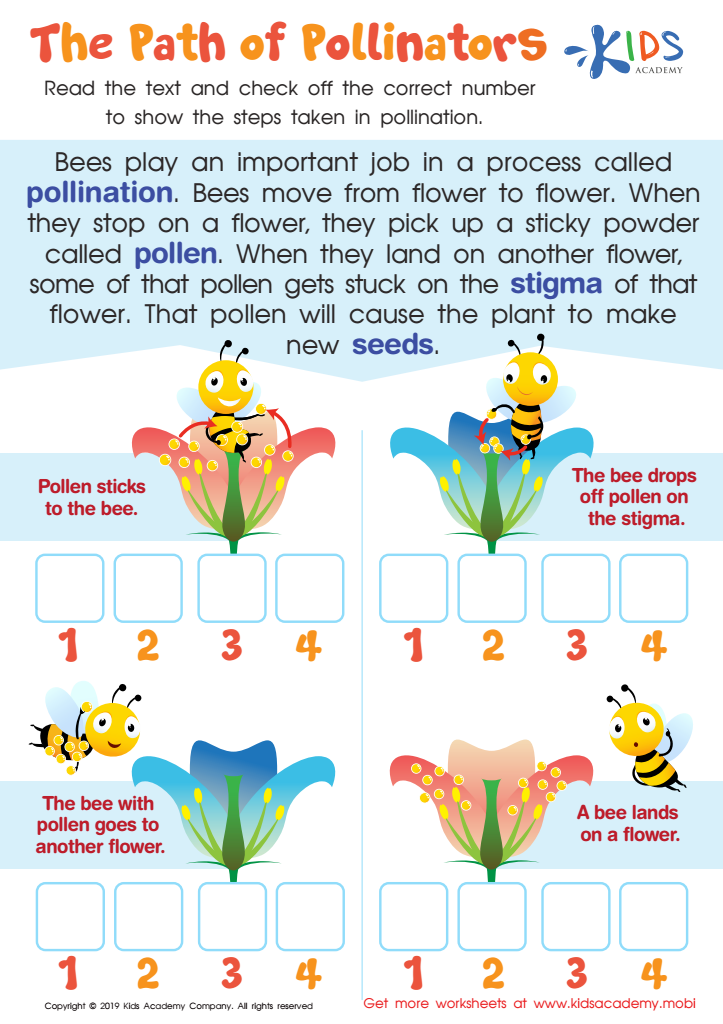
The Path of Pollinators Worksheet
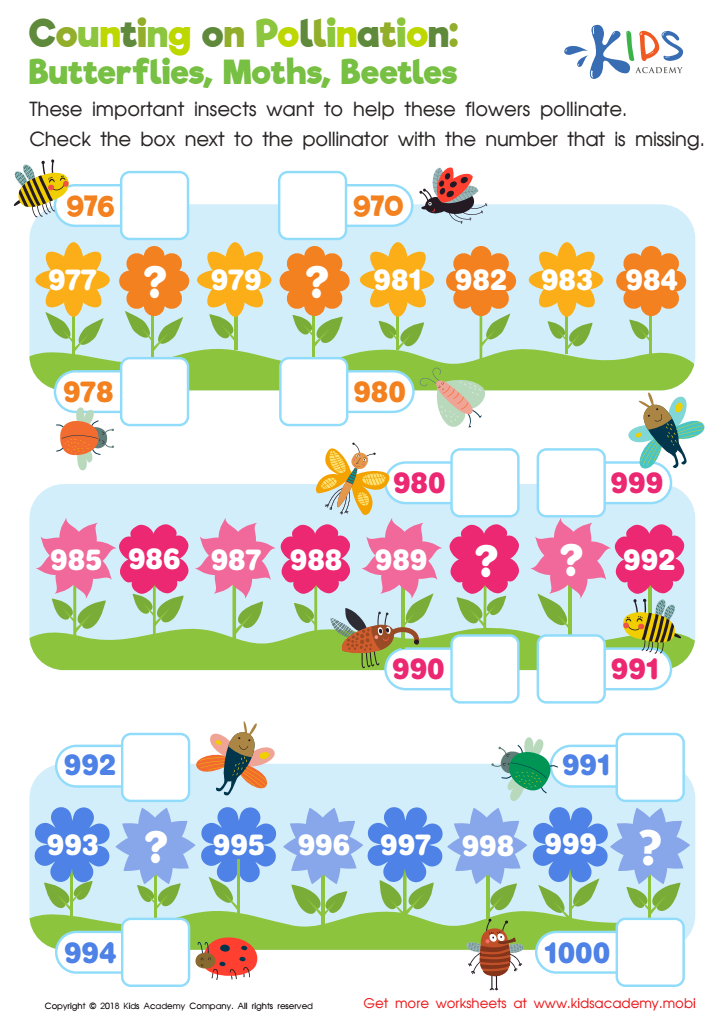
Counting on Pollination: Butterflies, Moths, Beetles Worksheet






Understanding pollination is crucial for children aged 4-8 as it lays the foundation for their appreciation of the natural world and its interconnectedness. Pollination, the process by which pollen is transferred from one flower to another, is vital for the growth of fruits, vegetables, and flowers. By grasping this concept, young learners can develop a curiosity about nature and the essential role of bees, butterflies, and other pollinators.
Educators and parents can foster an early love for science by incorporating pollination lessons that are engaging and age-appropriate. Hands-on activities, like planting seeds or observing pollinators in action, not only enhance learning but also encourage outdoor exploration and environmental awareness.
Furthermore, understanding pollination teaches children about ecosystems, food chains, and the responsibilities we have in preserving our environment. In a world facing environmental challenges, equipping young minds with knowledge about pollination can inspire a new generation of stewards for the Earth. This knowledge promotes critical thinking and problem-solving skills as they contemplate the impact of human actions on nature. Ultimately, caring about pollination is about nurturing informed, environmentally conscious individuals who will contribute positively to our world.








