Understanding prefixes Worksheets for Ages 4-8
8 filtered results
-
From - To
Our "Understanding Prefixes Worksheets for Ages 4-8" are designed to help young learners grasp the basics of word formation through fun and engaging activities. These worksheets introduce children to common prefixes, building their vocabulary and reading skills in an interactive way. With colorful illustrations and simple exercises, kids will understand how adding a prefix can change a word’s meaning, fostering their cognitive and language development. Perfect for both classroom and home use, these worksheets provide a solid foundation for early literacy and a love for learning. Boost your child's language skills today with our expertly crafted resources.
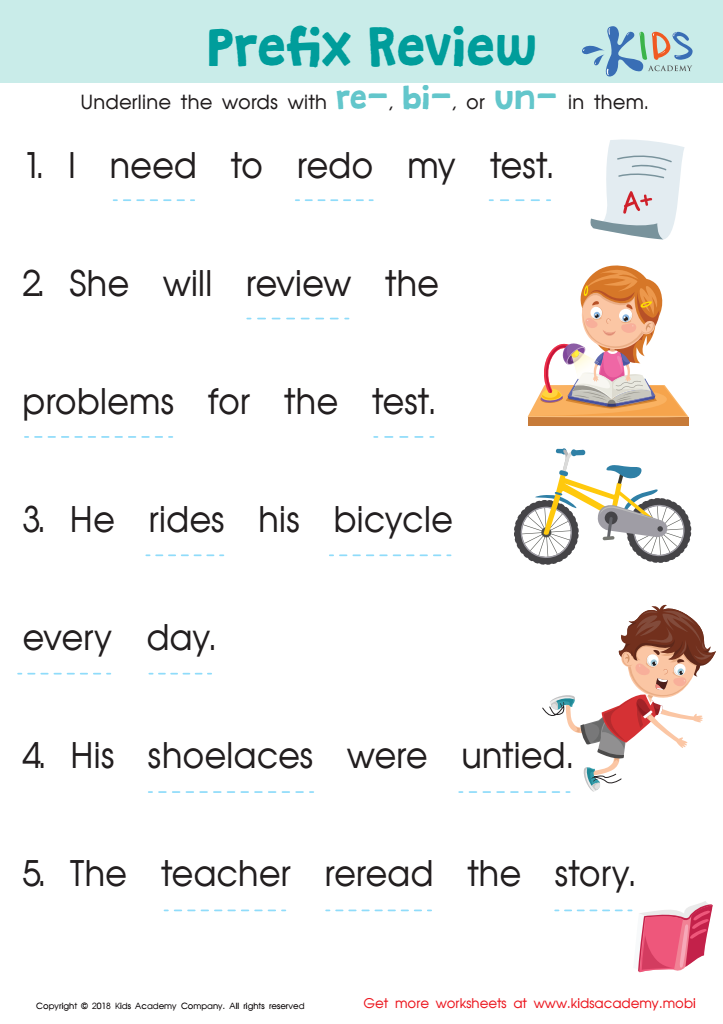
Prefix Review Worksheet
 Assign to My Students
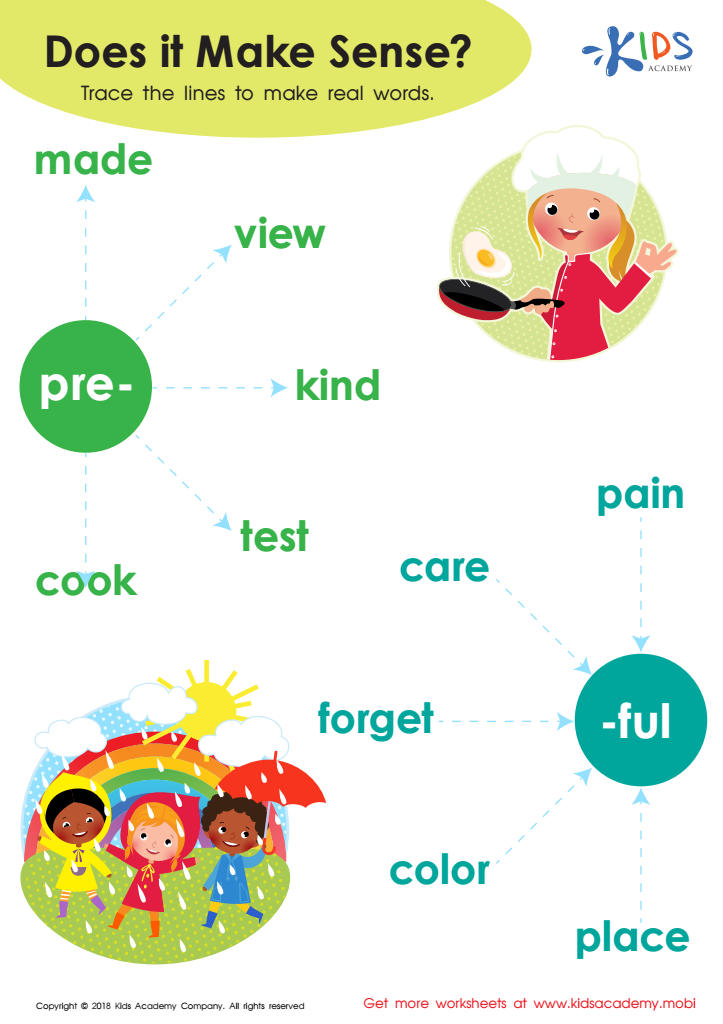
Prefix pre– and Suffix ful– Worksheet
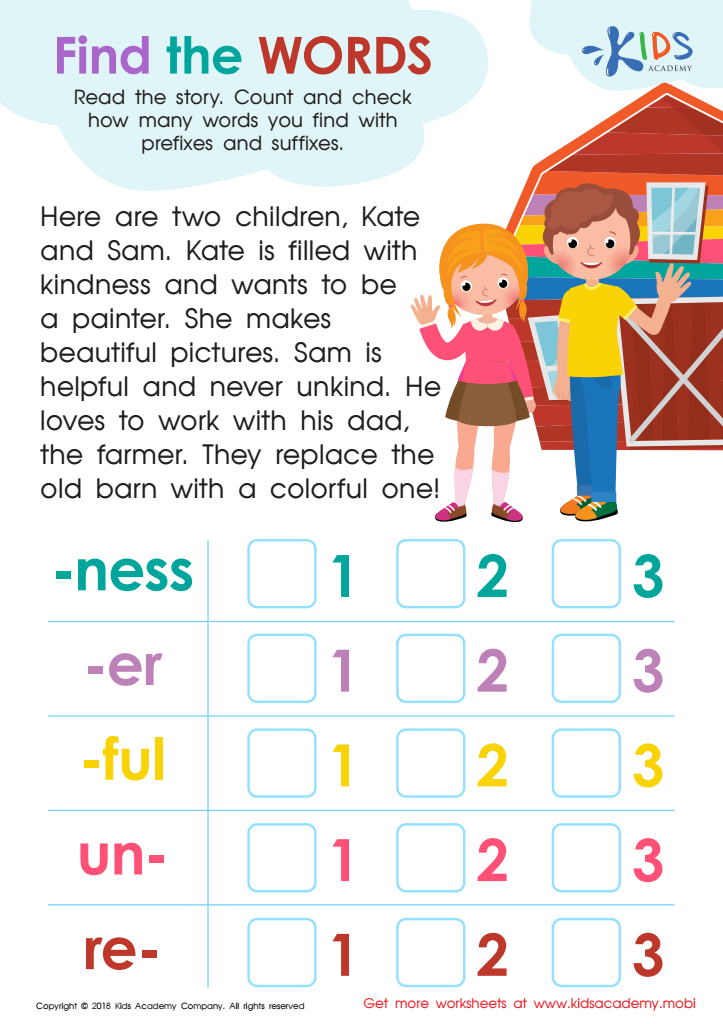
Prefix and Suffix Worksheet For Grade 3
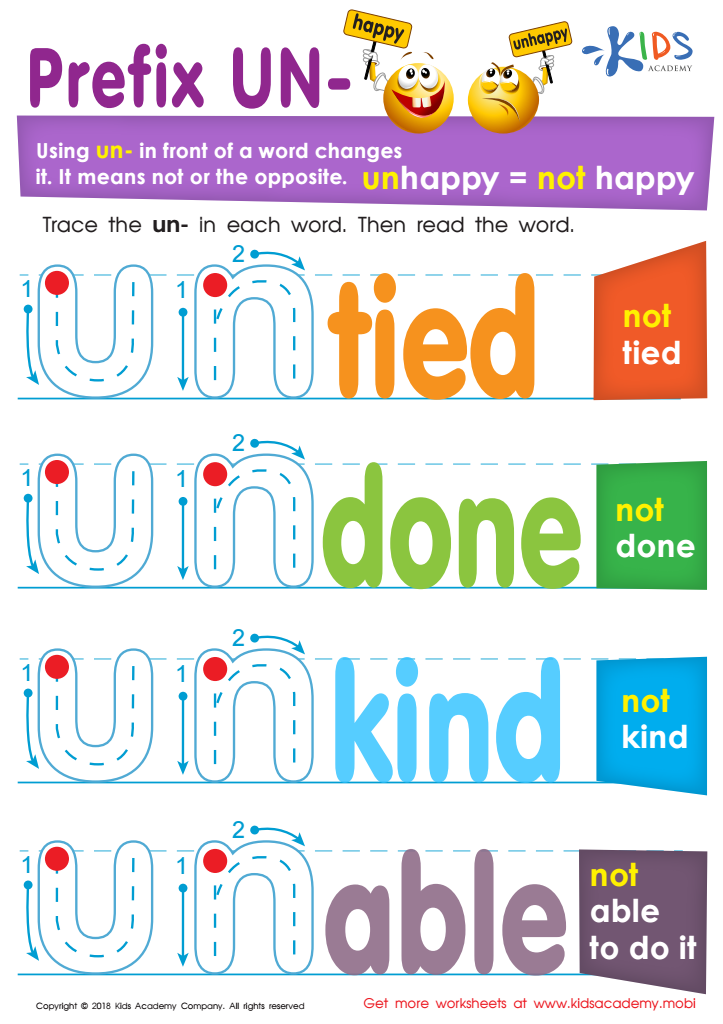
Prefix Un- Worksheet
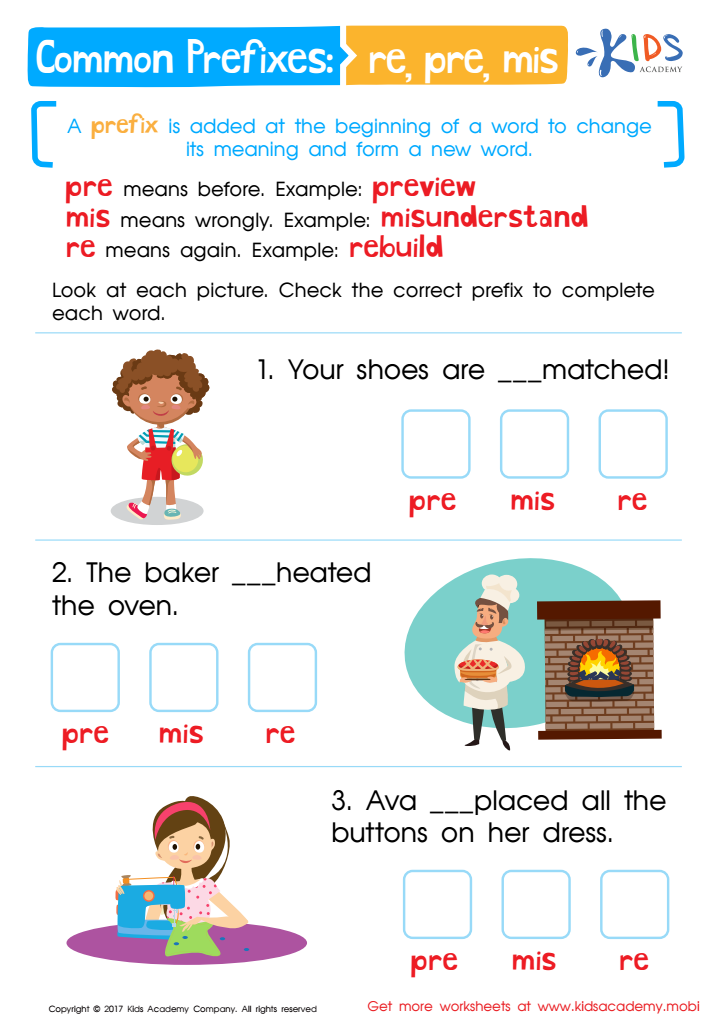
Common Prefixes Worksheet: RE, PRE, MIS
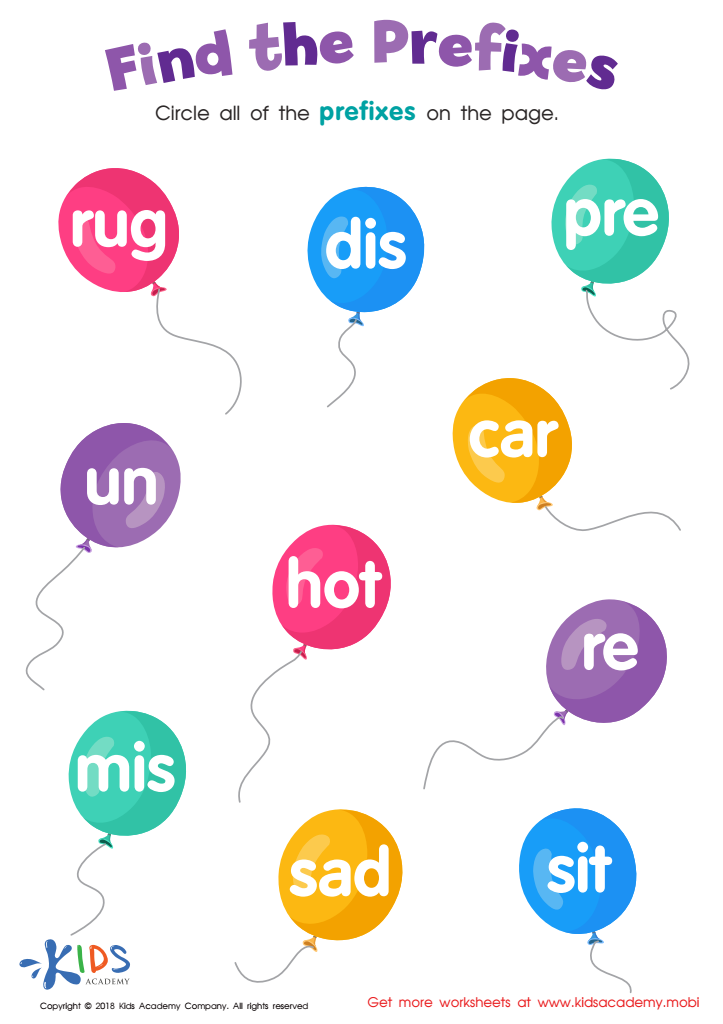
Reading: Find the Prefixes Worksheet
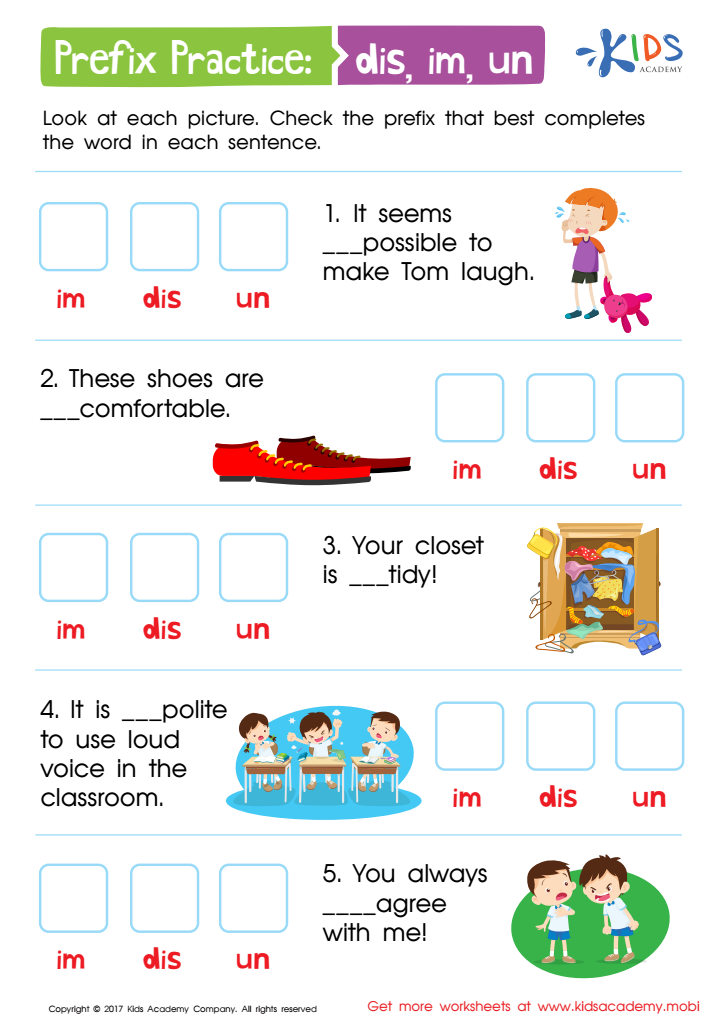
Prefix Practice Worksheet: DIS, IM, UM
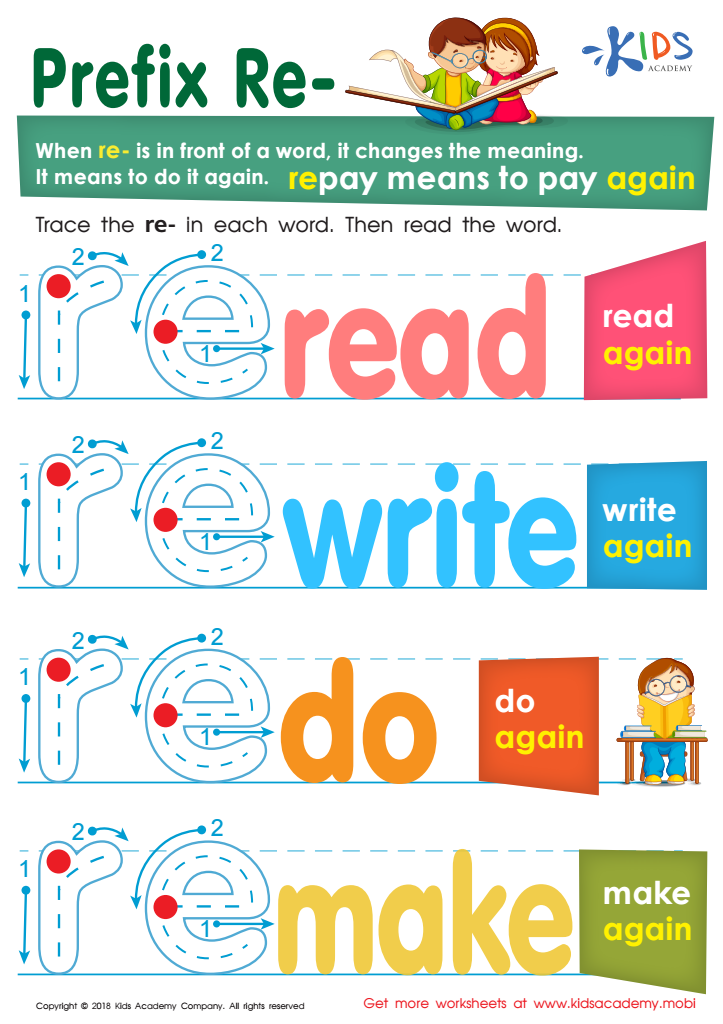
Prefix Re- Worksheet






Understanding prefixes is crucial for young children, especially those between the ages of 4-8, as it forms a foundational aspect of language development and literacy skills. Simple prefixes such as "un-", "re-", and "pre-" are among the building blocks that help children comprehend how words function. When children understand that adding "un-" to "happy" creates the opposite, "unhappy," they start to see patterns in language, improving their ability to decode new words by recognizing familiar components. This skill significantly amplifies their vocabulary, allowing them to become more confident readers and effective communicators.
During early reading and writing, children often encounter unfamiliar words. Recognizing prefixes gives them tools to infer meanings and keep up with their grade-level progress. Moreover, teaching prefixes can boost critical thinking as children learn to break down complex words into understandable parts. This enhances their overall ability to understand and engage with texts, which is essential for school success.
From a cognitive development perspective, learning about prefixes stimulates analytical thinking and problem-solving. It also aids in spelling since children understand word variations and their origins. Overall, familiarity with prefixes not only boosts linguistic aptitude but also contributes to a child's confidence and enthusiasm for learning, making it a vital piece of early education.








