Understanding Sequences Worksheets for Ages 4-8 - Page 2
29 filtered results
-
From - To
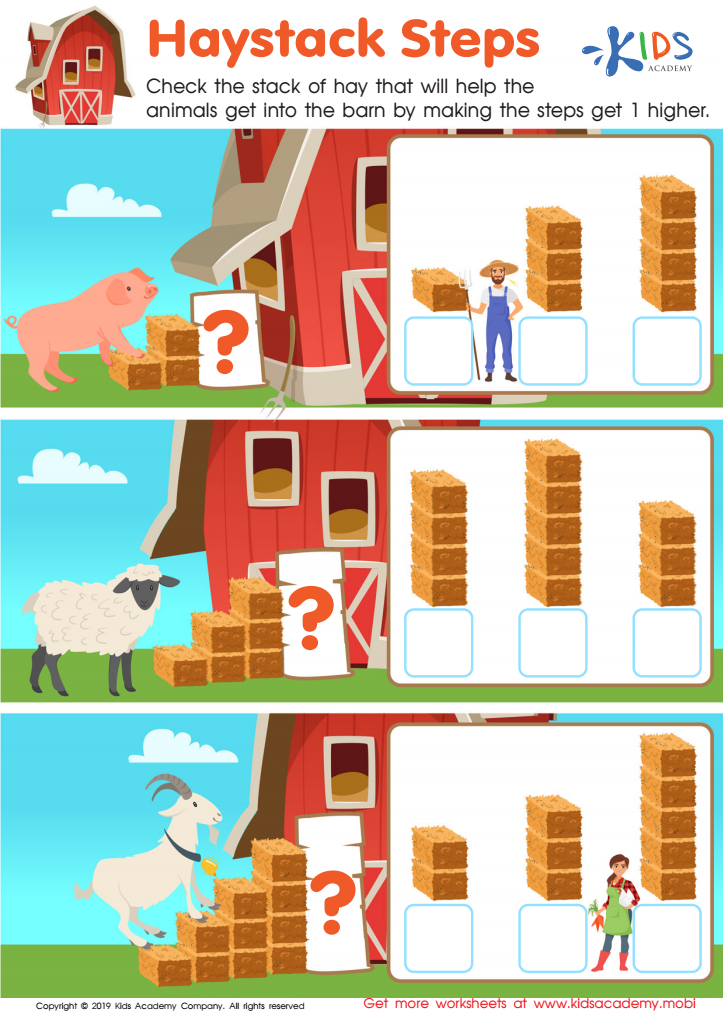
Haystack Steps Worksheet
 Assign to My Students






Understanding sequences is a foundational skill crucial for young children's cognitive and academic development. For ages 4-8, learning sequences helps kids grasp the order of events, boosting their comprehension in multiple areas. It aids in understanding routines (like the daily schedule), fostering a sense of security and predictability.
In early reading and storytelling, recognizing sequences—beginning, middle, end—improves comprehension and retention, making reading more enjoyable and engaging. Math skills also heavily rely on sequences; counting, understanding patterns, and solving problems all depend on this ability.
For parents and teachers, fostering sequencing skills at this stage equips children with critical thinking and problem-solving abilities essential for later academic success. It enables them to follow instructions better, manage time effectively, and improve organizational skills, which are vital for both school and life.
Additionally, sequences aren't just academic; they're part of everyday life, from tying shoelaces to performing simple tasks independently. Instilling this competency early ensures children are adept at both conceptual and practical challenges, building confidence and the ability to handle complex scenarios as they grow. Investing time in teaching sequences strengthens the overall learning foundation, helping children thrive in diverse environments.








