Uppercase identification Worksheets for Ages 4-8
5 filtered results
-
From - To
Unlock your child's potential with our engaging Uppercase Identification Worksheets, specially designed for ages 4-8! These interactive activities help young learners recognize and differentiate uppercase letters through fun exercises, making learning enjoyable and effective. Our worksheets incorporate colorful illustrations and entertaining challenges that capture children's attention while promoting letter recognition skills. Ideal for preschool or early elementary education, these resources are perfect for independent practice, group activities, or homeschooling. Watch your child gain confidence as they master uppercase letters, setting a strong foundation for reading and writing. Dive into the world of letters and spark a lifelong love of learning today!
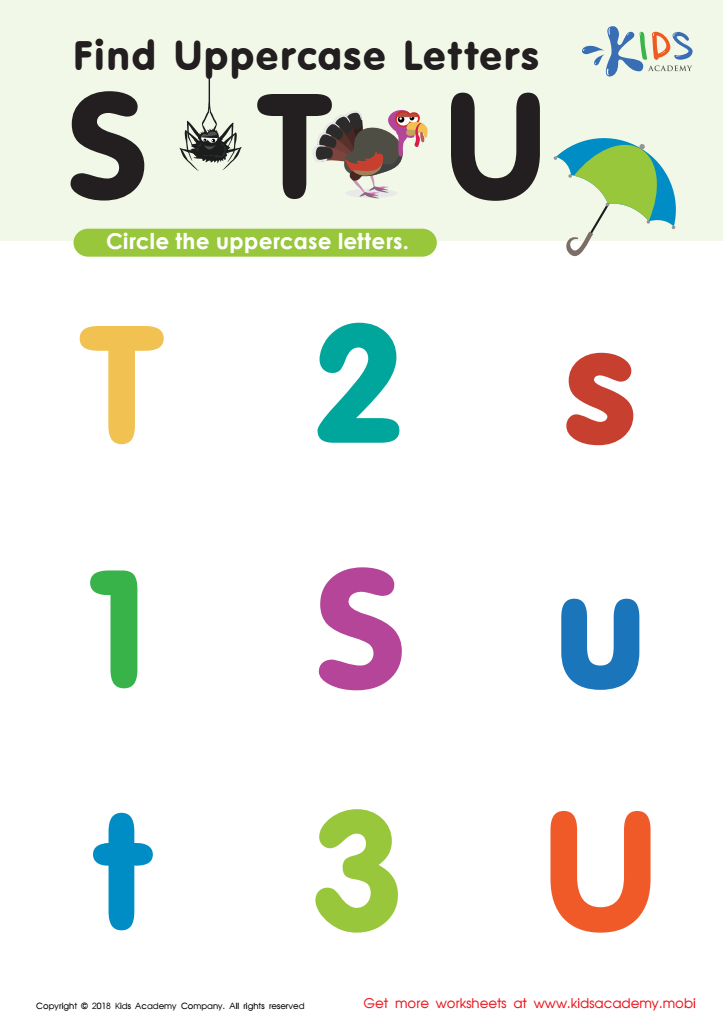
Find Uppercase Letters Worksheet
 Assign to My Students
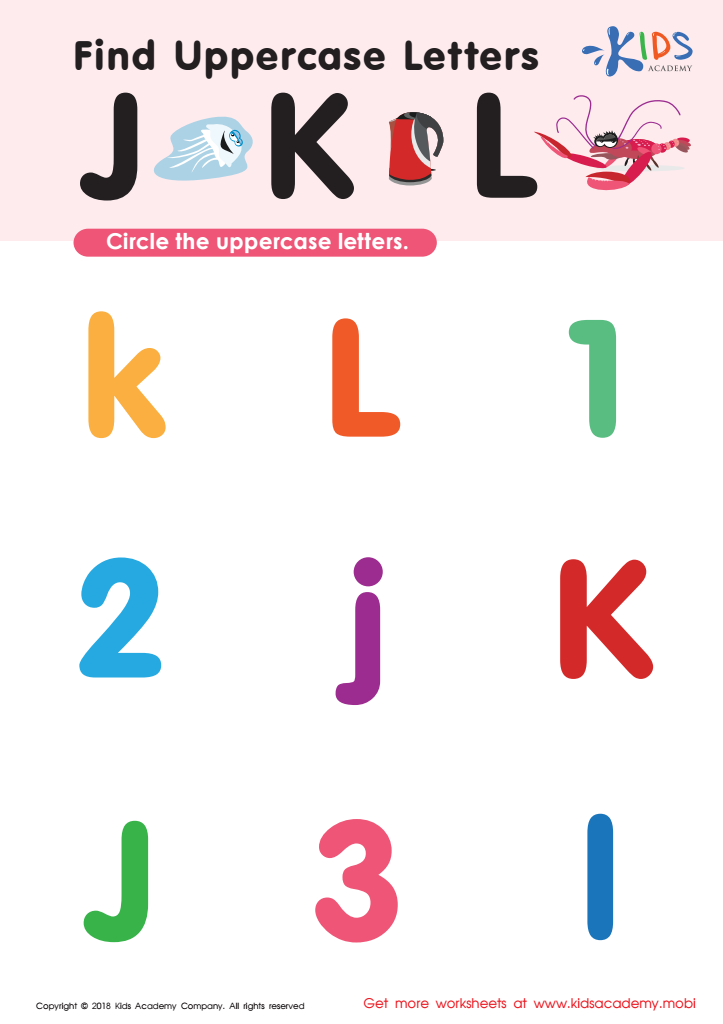
Find Uppercase Letters J, K, and L Worksheet
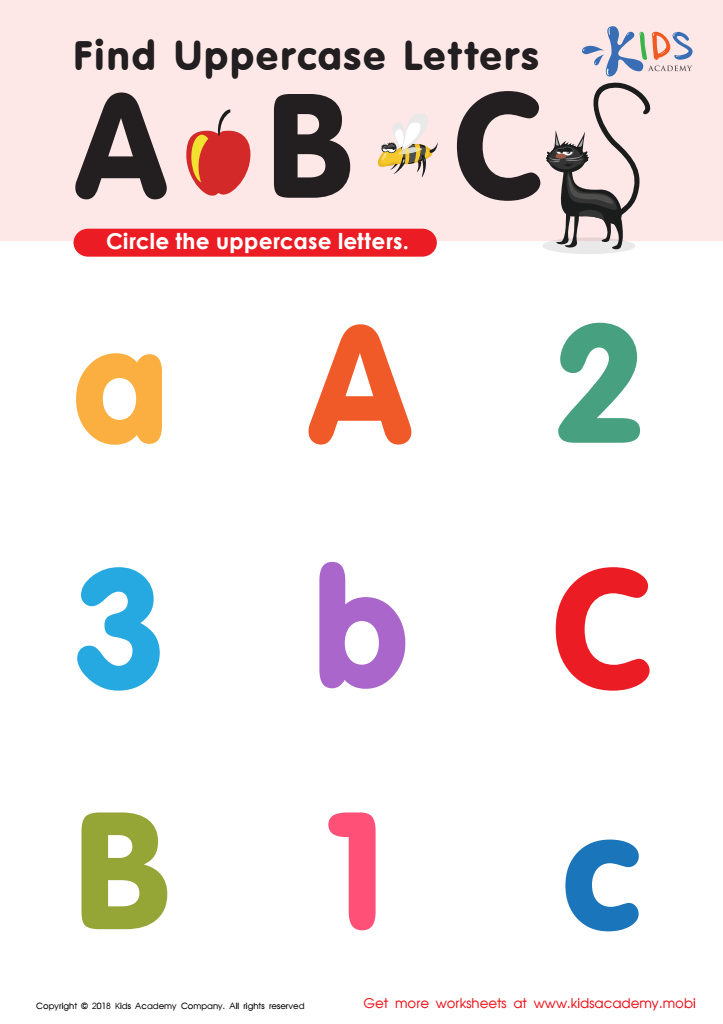
Find Uppercase Letters A, B, and C Worksheet
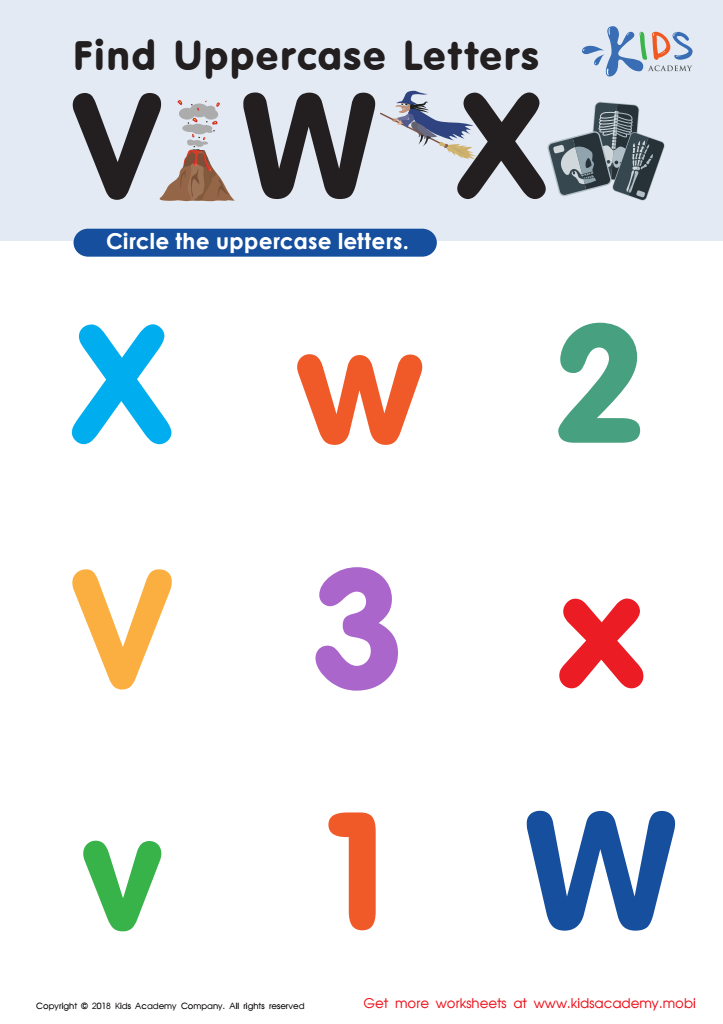
Find Uppercase Letters V, W, X Worksheet
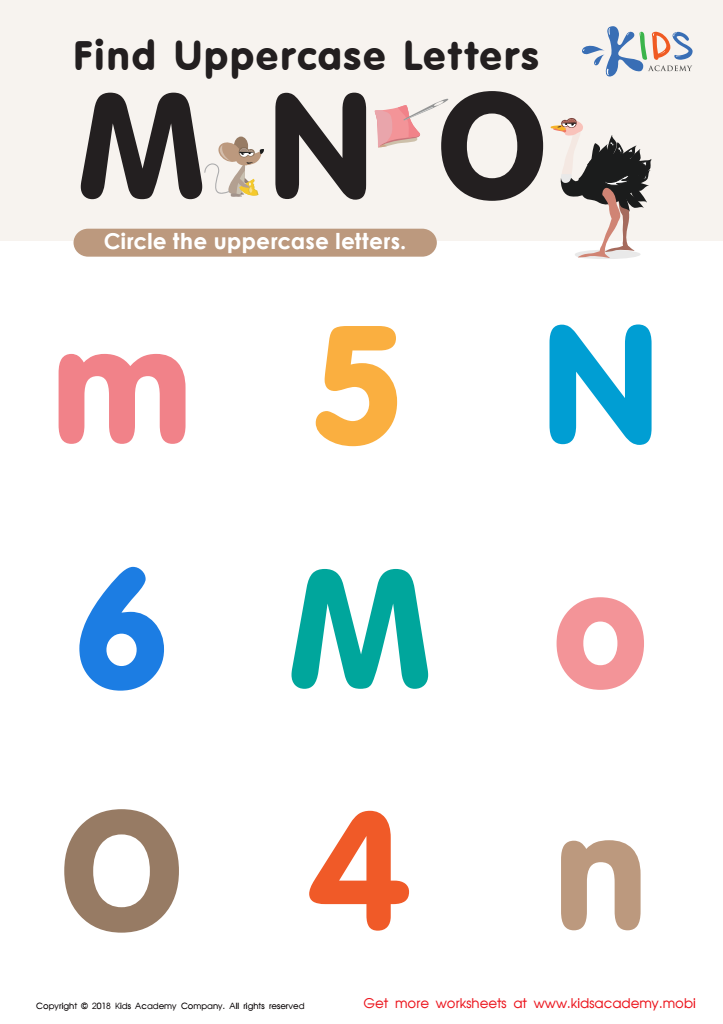
Find Uppercase Letters M, N, and O Worksheet







Uppercase letter identification is crucial for children aged 4-8 as it forms the foundation for their literacy skills. At this stage, preschool and early elementary students are developing their language and reading abilities, and recognizing uppercase letters is a significant milestone. These letters play a prominent role in helping children learn the alphabet, spelling, and forming words. Children encounter uppercase letters frequently in books, signs, and digital content, making familiarity essential for early reading confidence.
Parents and teachers need to emphasize uppercase identification as it aids in developing phonemic awareness, which is vital for decoding words. Understanding these letters helps children grasp the concept of capitalization, contributing to effective writing skills as they progress in school. Furthermore, recognizing that uppercase letters serve various functions, such as signaling the beginning of a sentence or representing proper nouns, enhances contextual comprehension.
Encouraging letter recognition through fun activities, engaginggames, and daily interactions can spark a child's interest in reading and writing. Involvement from parents and teachers can create a supportive environment; their engagement demonstrates the importance of literacy, instilling a love for reading that can last a lifetime. Prioritizing uppercase identification paves the way for overall academic success.








