Check out this FREE "Visual Learning" Trial Lesson for age 4-8!

Multiplication Facts 2

Favorites
With answer key
Interactive
  • 4-8
  • Visual Learning
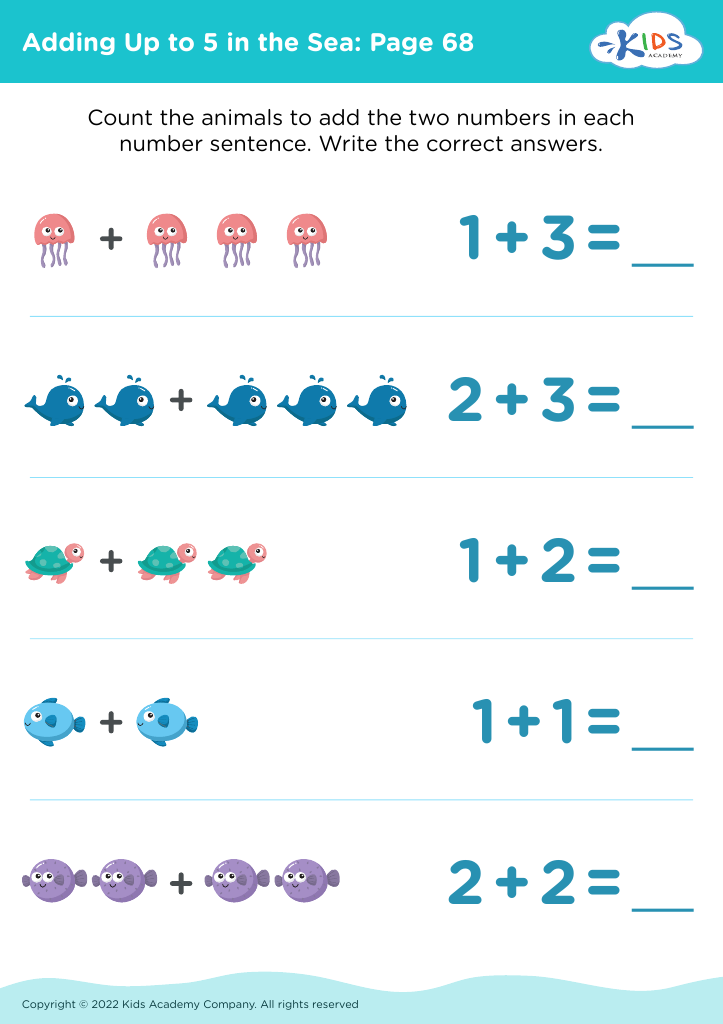
Adding Up to 5 in the Sea: Page 68
Worksheet
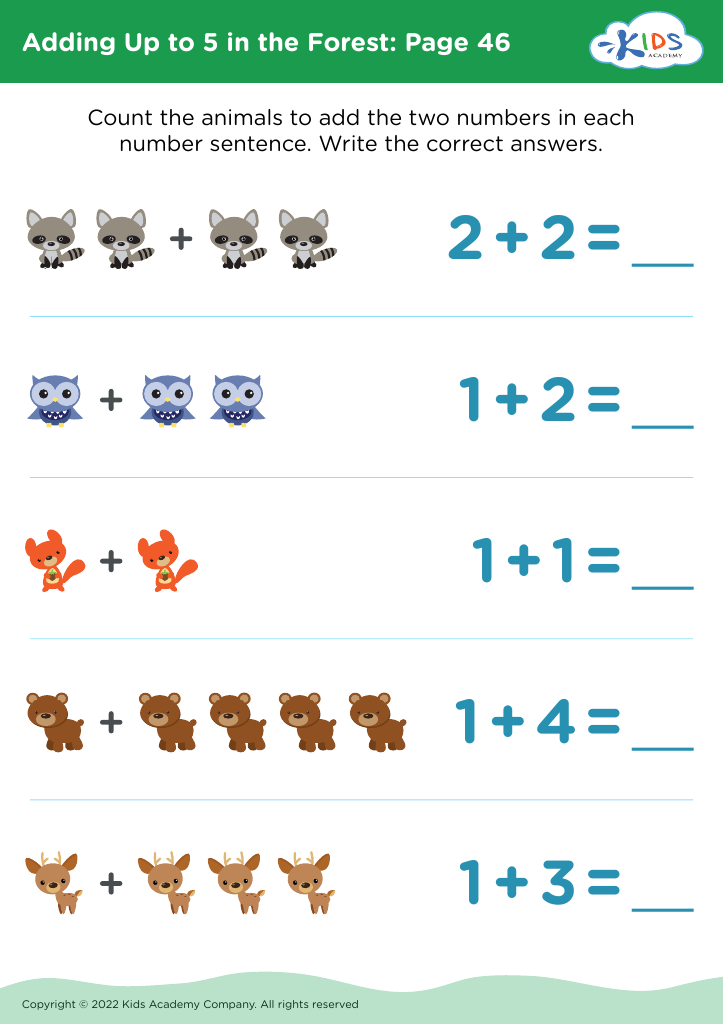
Adding Up to 5 in the Forest: Page 46
Worksheet
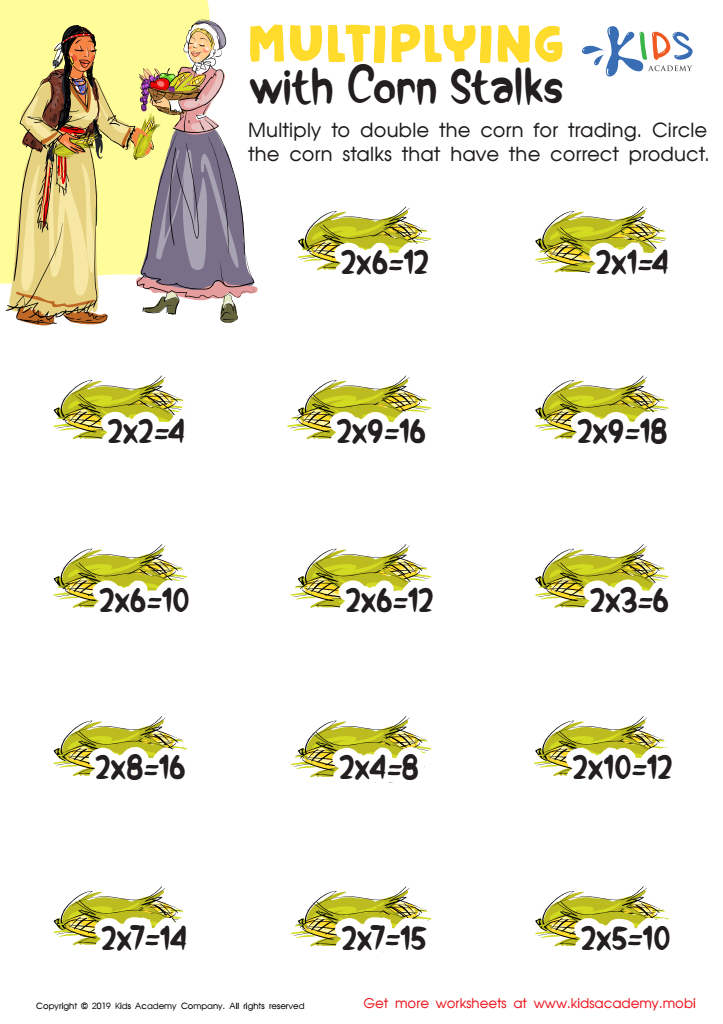
Multiplying With Corn Stalks Worksheet

Multiplying With Corn Stalks Worksheet

Farming is profitable; corn is a versatile crop used for many things. Ask your kids what products come from corn! This worksheet is a fun way to teach multiplying with corn stalks. Farmers must multiply the stalks to double their number for trading and increase their profits. Challenge your kids to circle the correct products.
Multiplying With Corn Stalks Worksheet
Worksheet
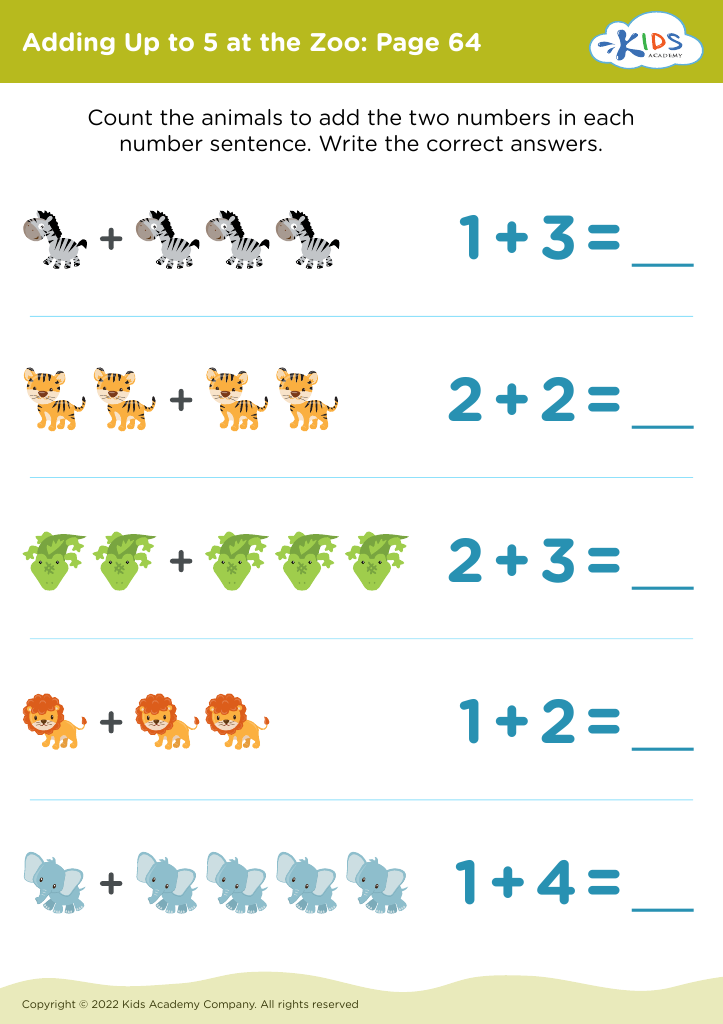
Adding Up to 5 at the Zoo: Page 64
Worksheet
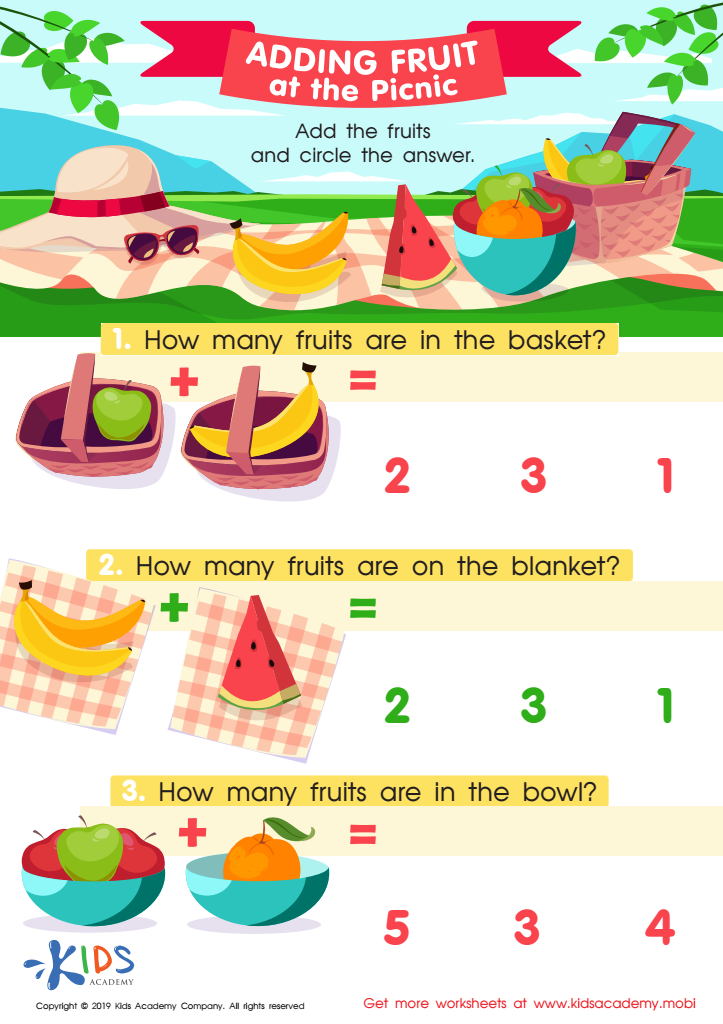
Adding Fruit at the Picnic Worksheet
Adding Fruit at the Picnic Worksheet
Picnics are a great way for the family to enjoy a fun day in the sun! Get your kids involved by having them help load the picnic basket and do this worksheet to practice their math skills while they get ready. Identify the fruits in the picture, add them up, and circle the correct answer.
Adding Fruit at the Picnic Worksheet
Worksheet
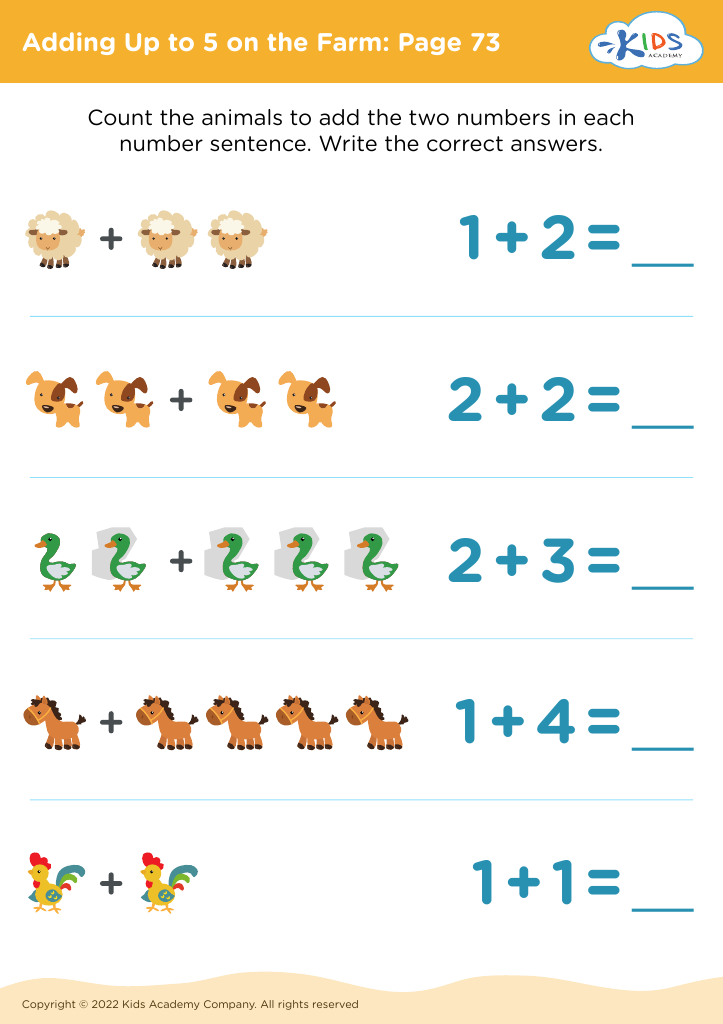
Adding Up to 5 on the Farm: Page 73
Worksheet
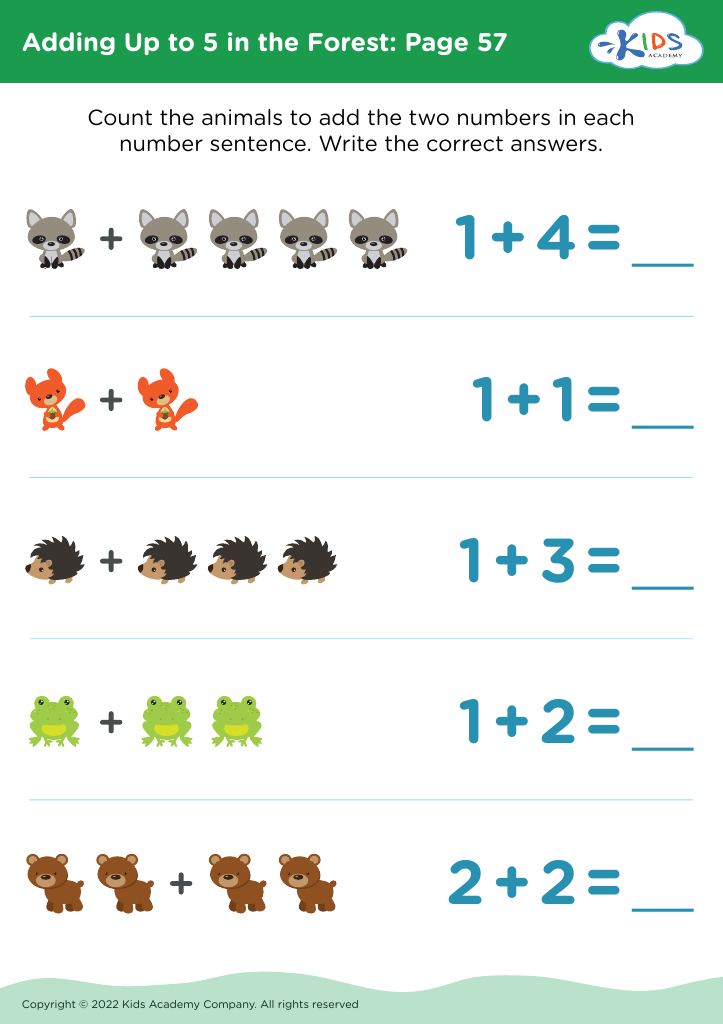
Adding Up to 5 in the Forest: Page 57
Worksheet
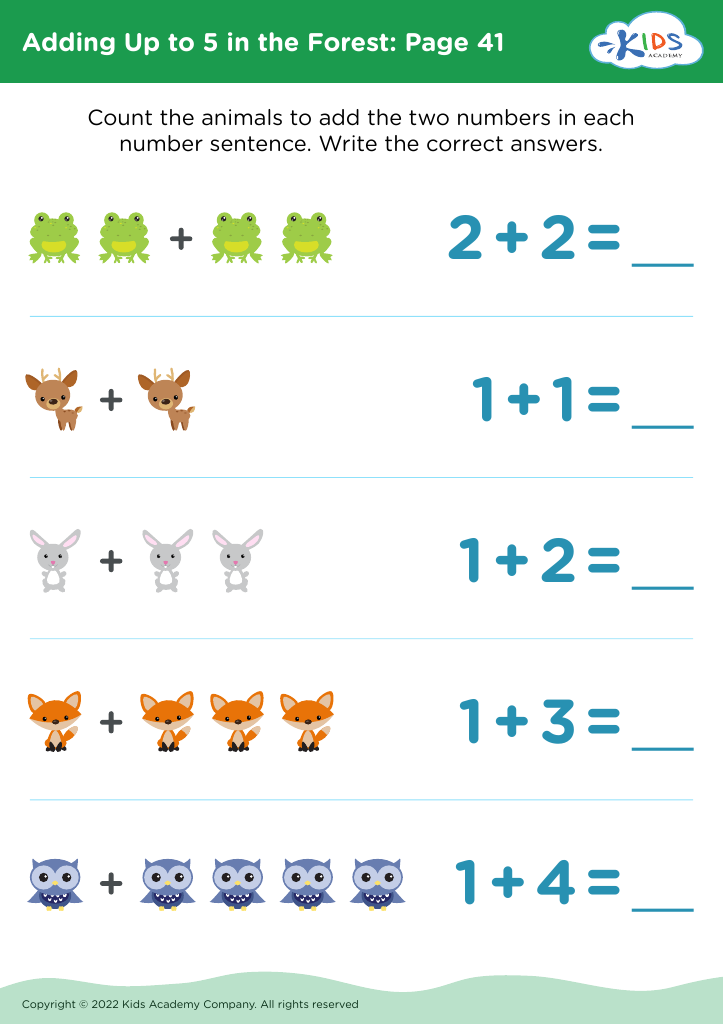
Adding Up to 5 in the Forest: Page 41
Worksheet
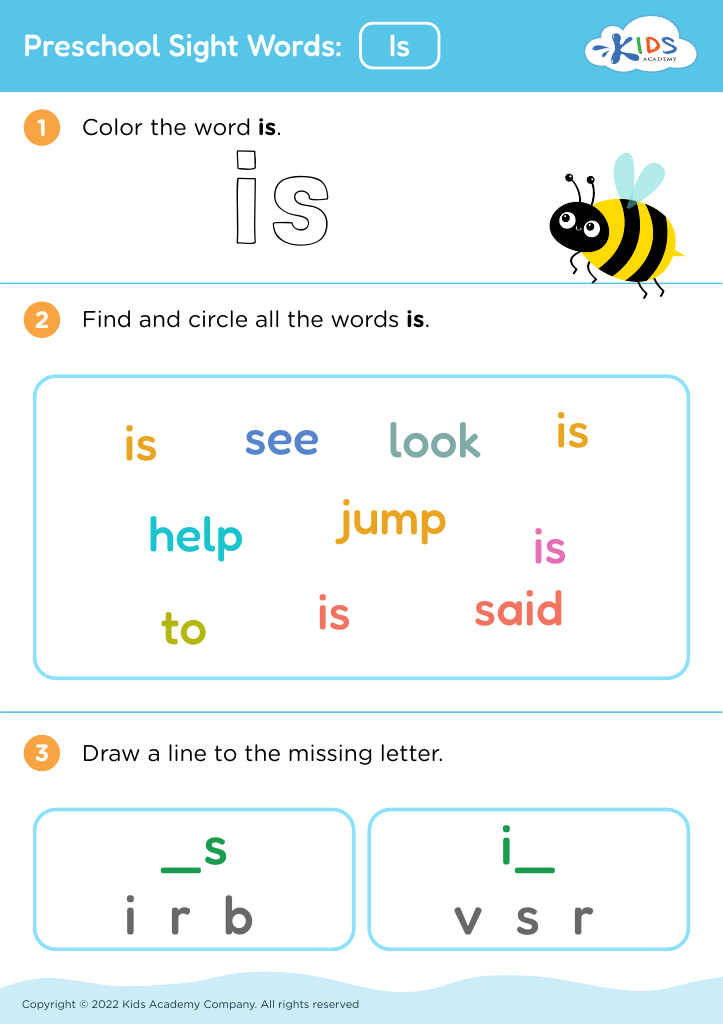
Preschool Sight Words: Is

Preschool Sight Words: Is

Preschool Sight Words: Is
Worksheet


... 4 5

Visual learning is essential for children aged 4-8 because it aligns with their developmental stage and enhances cognitive growth. At this age, children are often naturally curious and learn best through engaging, visual stimuli. Incorporating visual learning strategies, such as images, diagrams, and interactive activities, helps capture their attention and fosters deeper understanding of concepts.

Moreover, visual learning supports varied learning styles and helps children with different abilities thrive. It promotes critical thinking, problem-solving, and retention, as visual aids can simplify complex ideas, making them more relatable. Through visual storytelling, illustrations, and hands-on activities, children can better connect with the material, enhancing their enjoyment and interest in learning.

For teachers and parents, encouraging visual learning can pave the way for improved literacy and numeracy skills. It aids in vocabulary development, phonemic awareness, and mathematical comprehension by using charts, graphs, and visual symbols that make abstract ideas tangible.

In promoting visual learning, adults can help children build confidence, creativity, and collaboration while preparing them for a future where visual literacy is crucial. Teaching practices integrated with visual aids can significantly impact a child's educational journey, equipping them with skills that benefit them both in and out of the classroom.