Vocabulary enhancement 2D Shapes Worksheets for Ages 4-8
7 filtered results
-
From - To
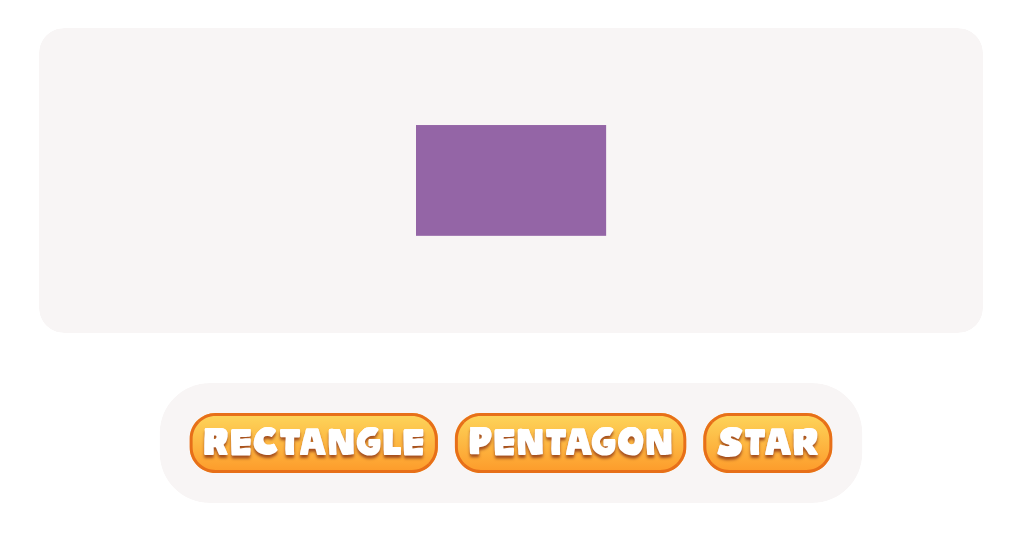
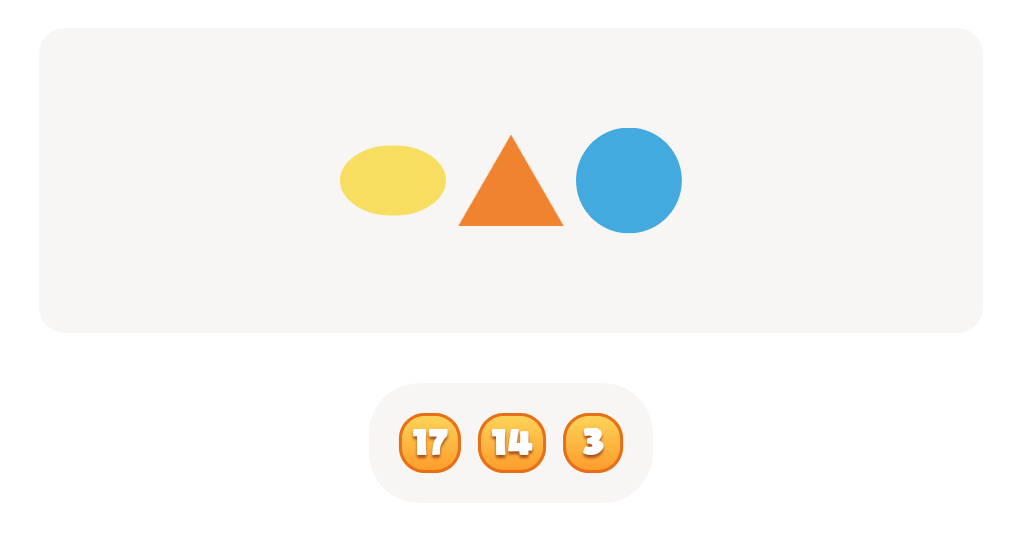
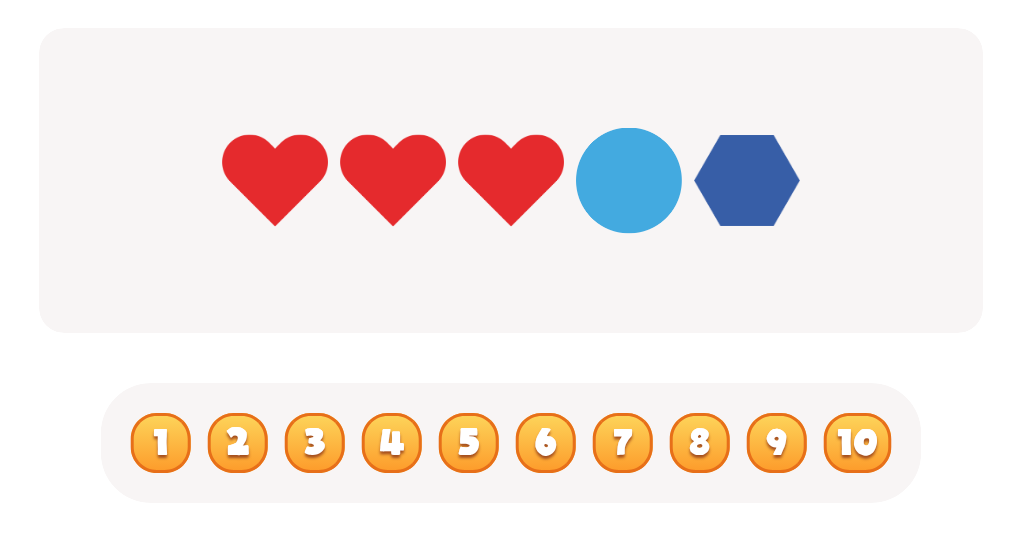
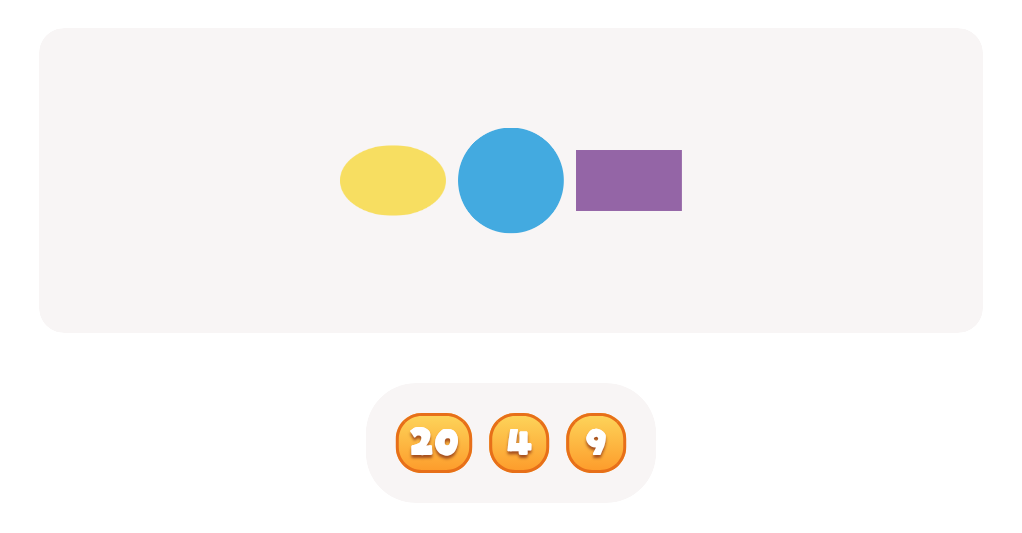
Enhance your child's vocabulary and understanding of geometry with our engaging 2D Shapes Worksheets, designed for children aged 4-8. These thoughtfully crafted printables introduce young learners to various 2D shapes while expanding their descriptive language skills. Each worksheet combines vibrant illustrations and fun activities to make learning shapes enjoyable and effective. Aligning with early learning standards, these worksheets are perfect for both classroom and home settings, helping kids to identify, describe, and categorize shapes confidently. Give your child a solid foundation in geometry and vocabulary with our expertly designed 2D Shapes Worksheets.
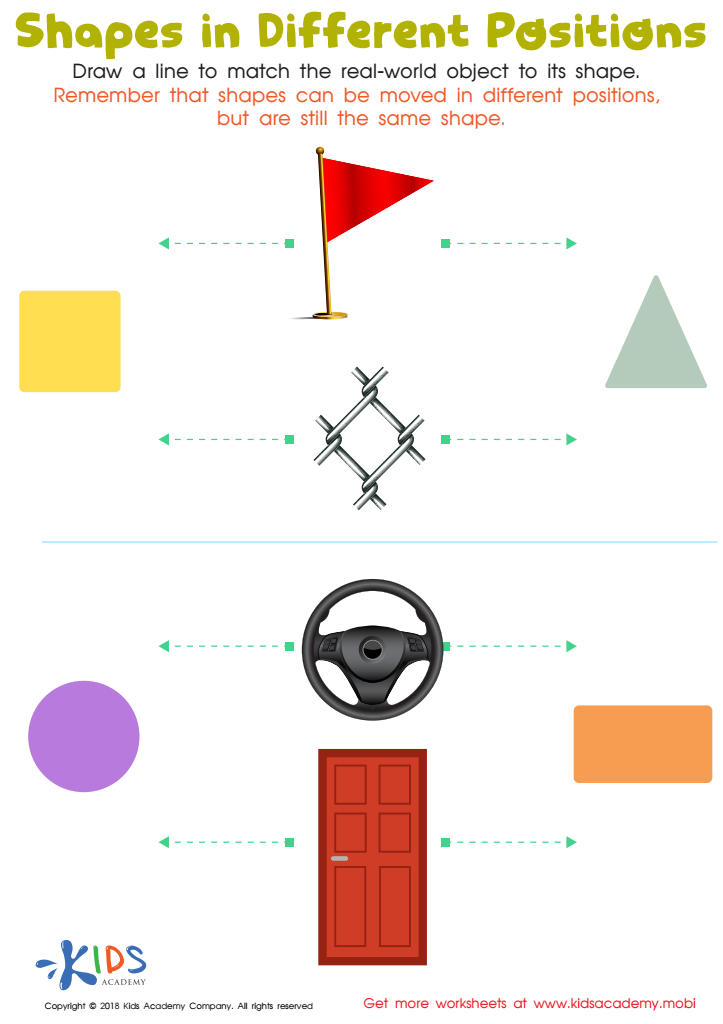
Shapes in Different Positions Worksheet
 Assign to My Students

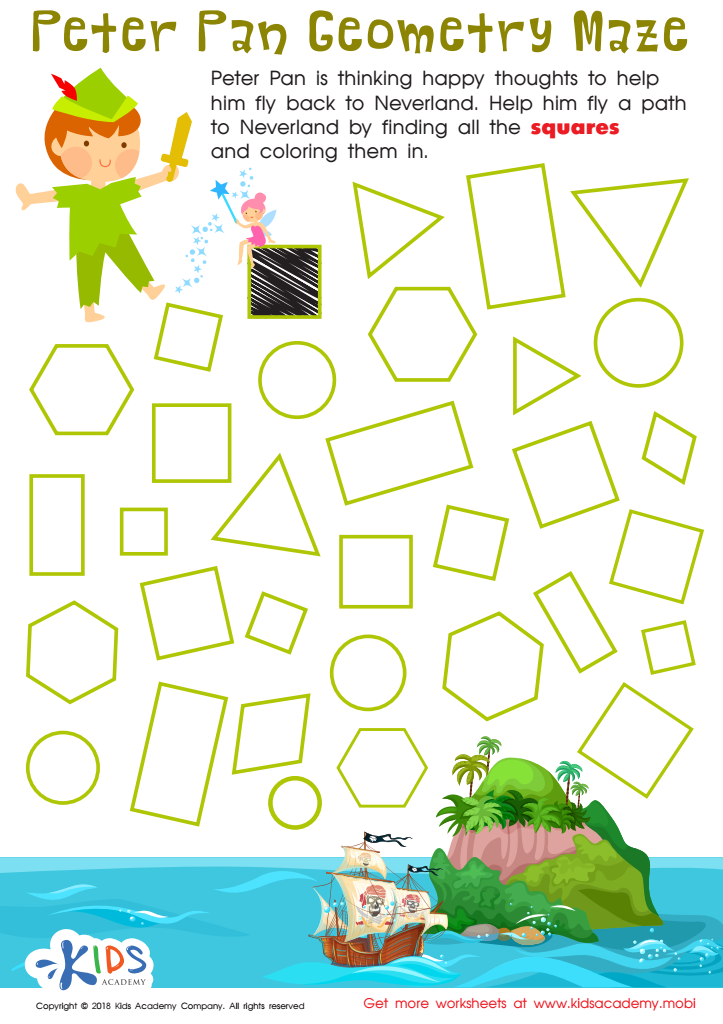
Peter Pan Worksheet
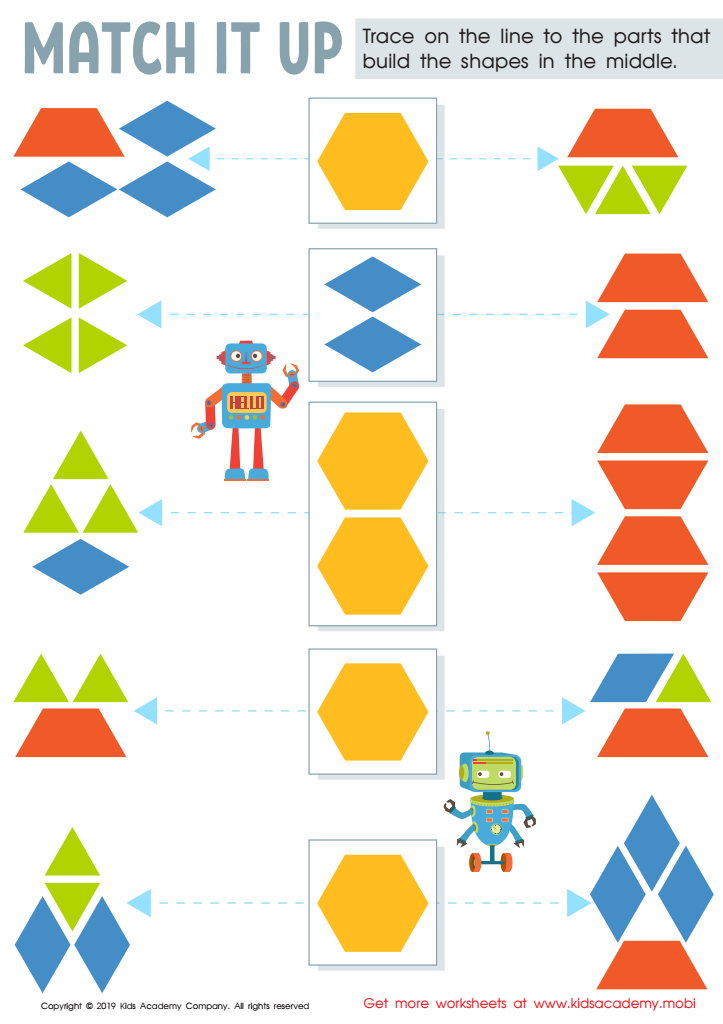
Match It up Worksheet
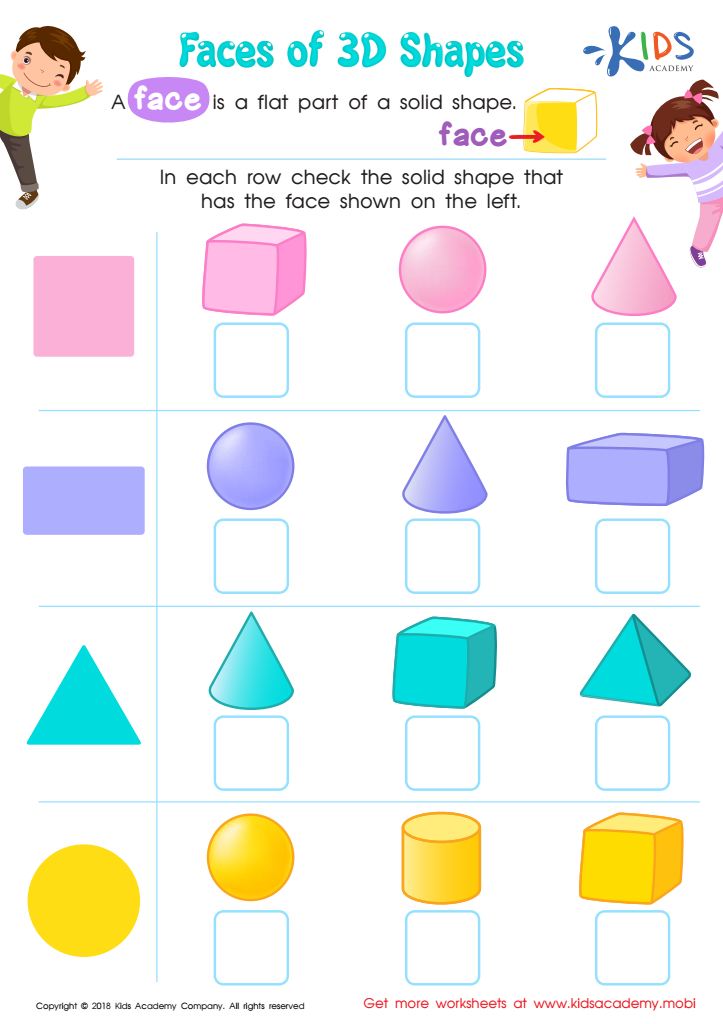
Faces of 3D Shapes Worksheet
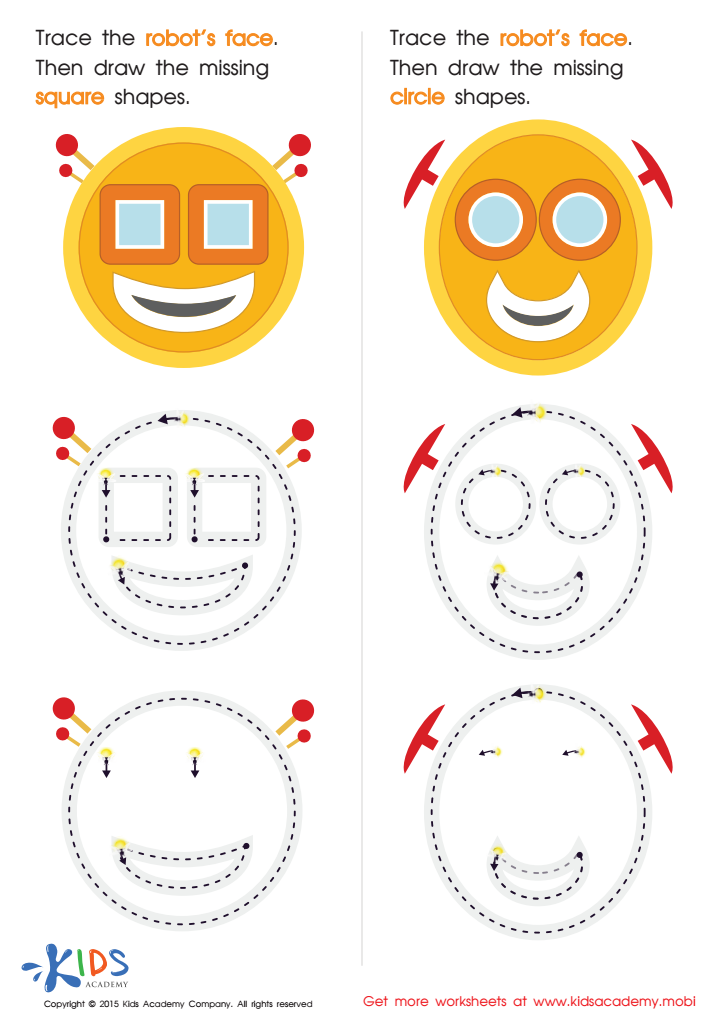
Practicing to Draw Circles And Squares Printable
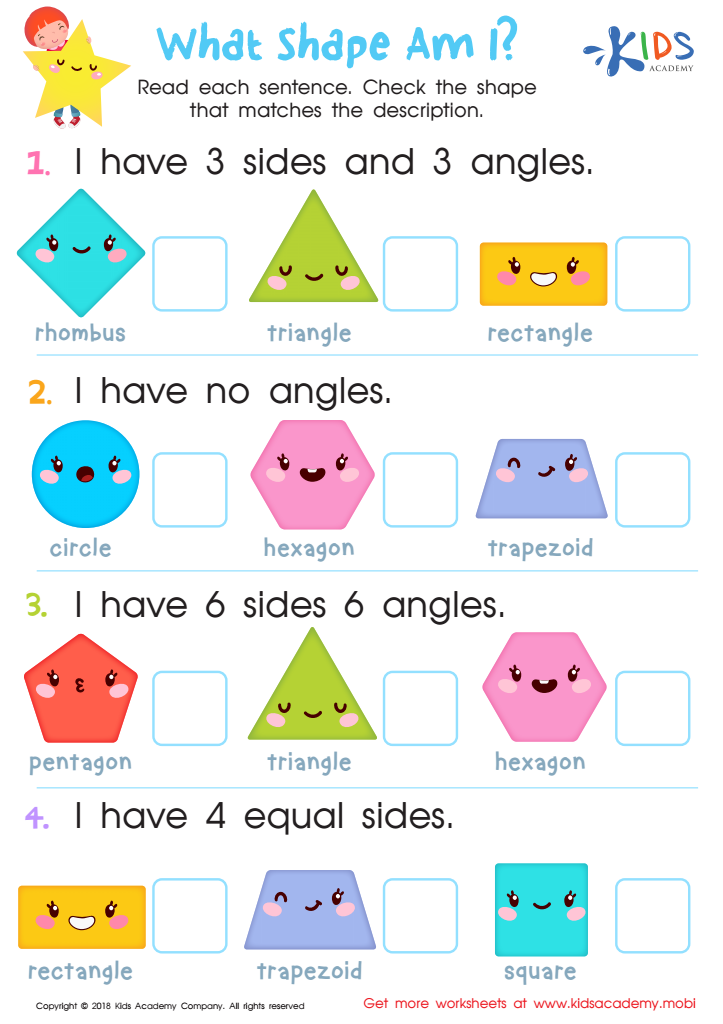
What Shape Am I? Worksheet
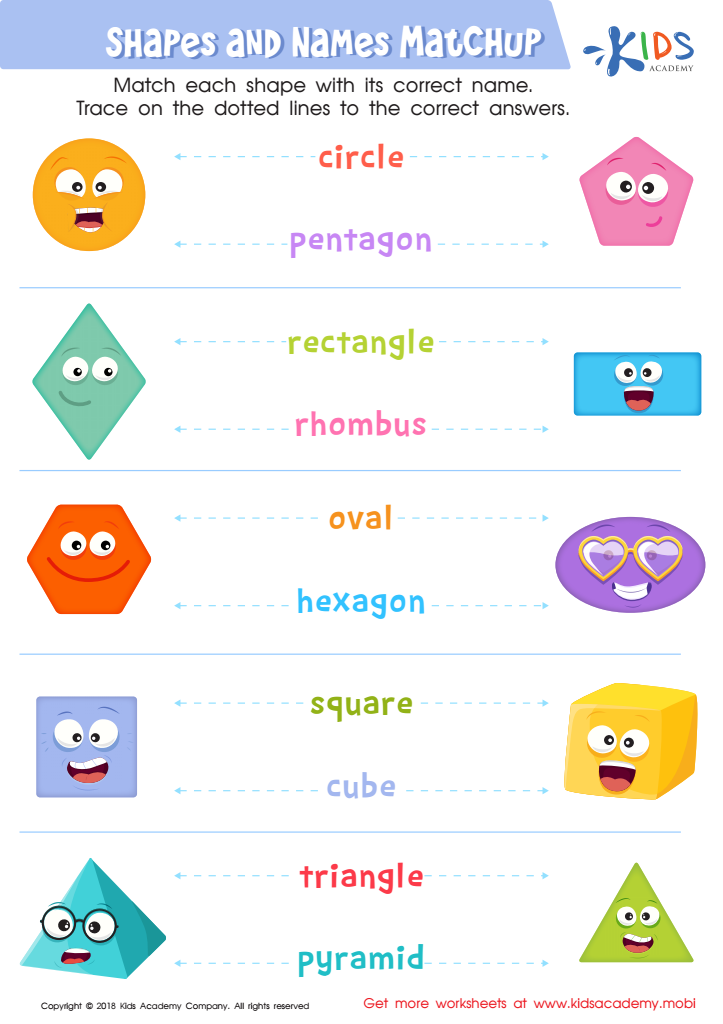
Shapes and Names Matchup Worksheet








Enhancing vocabulary related to 2D shapes for children ages 4-8 is crucial for a few reasons. First and foremost, early exposure to geometric concepts lays the foundation for more advanced mathematical understanding. Recognizing and naming shapes like circles, squares, and triangles aids in the development of spatial intelligence, which is essential for problem-solving and logical reasoning. As children learn these terms, they begin to notice patterns and properties in their environment, refining their observational skills and enhancing cognitive development.
Moreover, vocabulary enhancement at an early age broadly supports language development. Learning to correctly use terms for 2D shapes enriches a child's descriptive abilities and improves their communication skills. Children who are confident in expressing what they see are better equipped to articulate their thoughts and ideas, which is beneficial in both academic and social settings.
Lastly, engaging with 2D shapes through playful, hands-on activities can bolster a child's enthusiasm for learning. When parents and teachers make learning about shapes fun and interactive, children become more motivated and curious, fostering a love for education that can last a lifetime. Essentially, vocabulary enhancement for 2D shapes is a multi-faceted educational strategy that supports holistic development, making it a priority for both parents and teachers.