Adding in the Sea Worksheets for Ages 4-8 - Page 4
77 filtered results
-
From - To
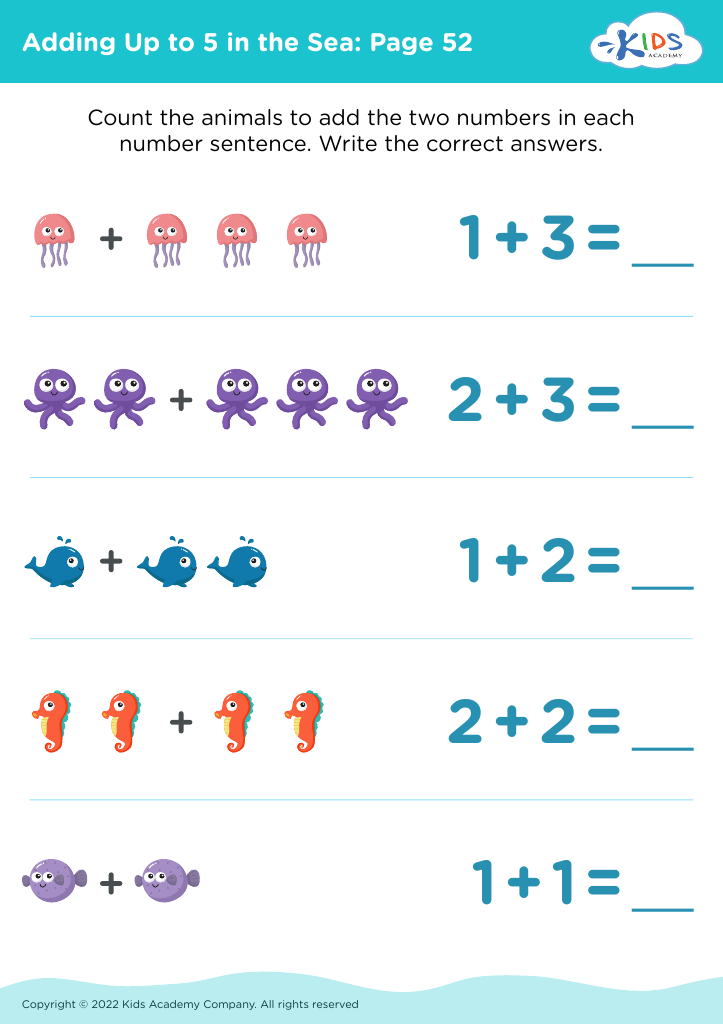
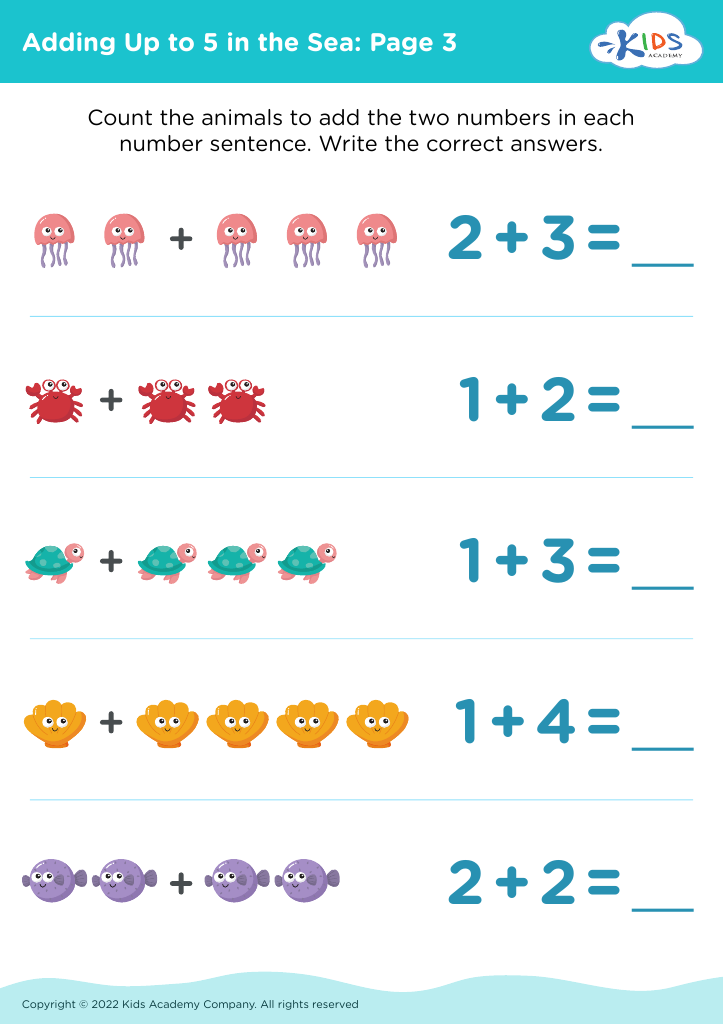
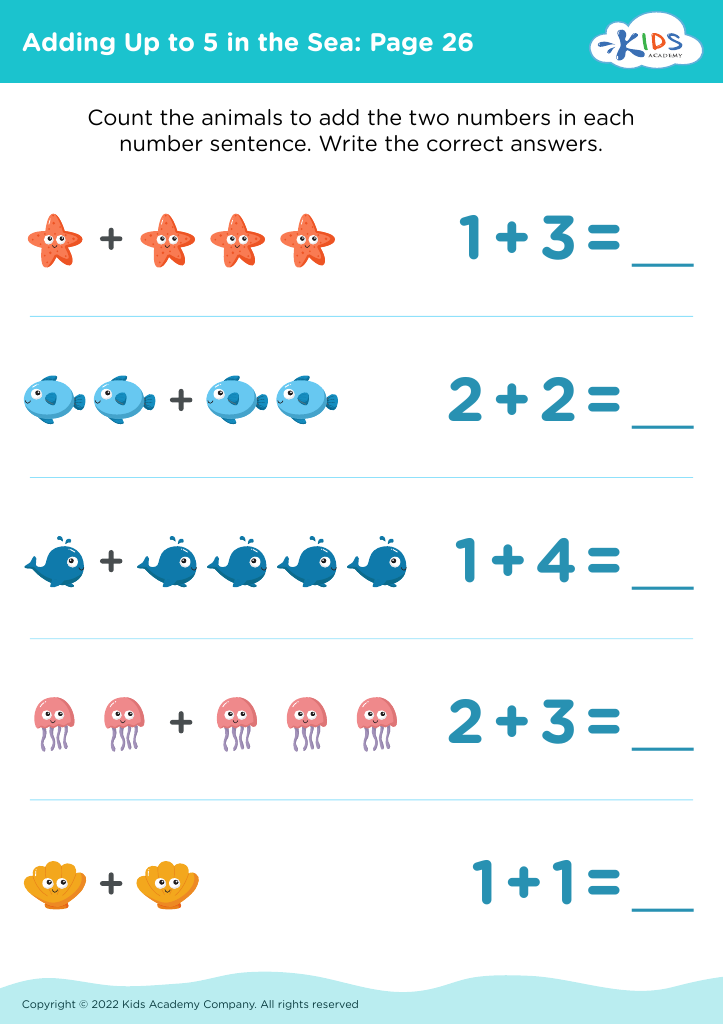
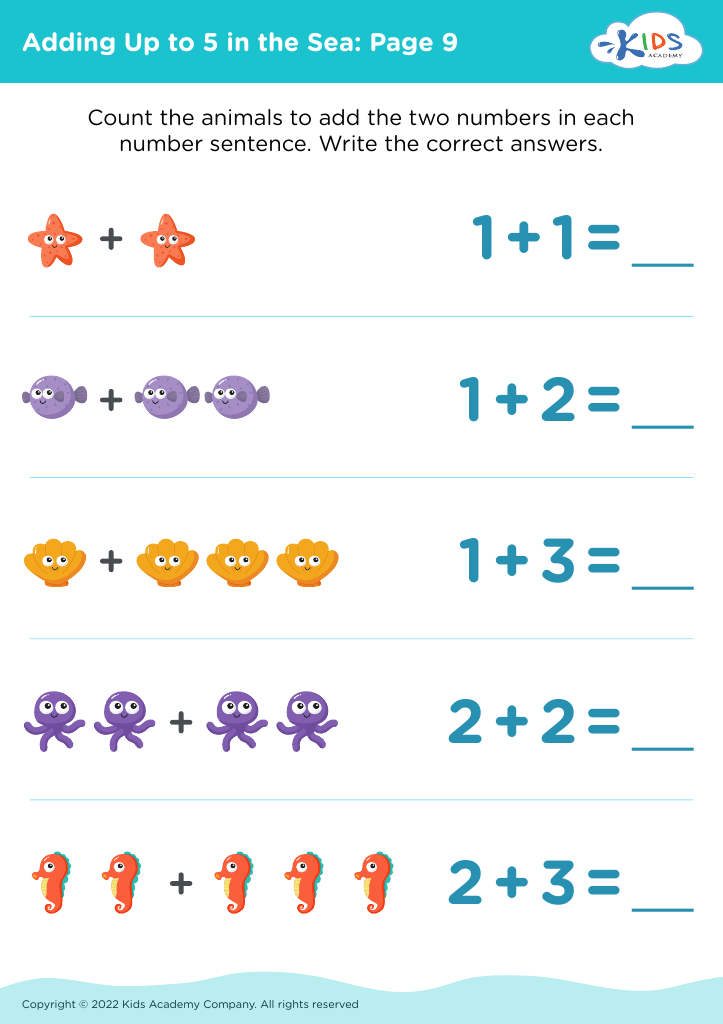
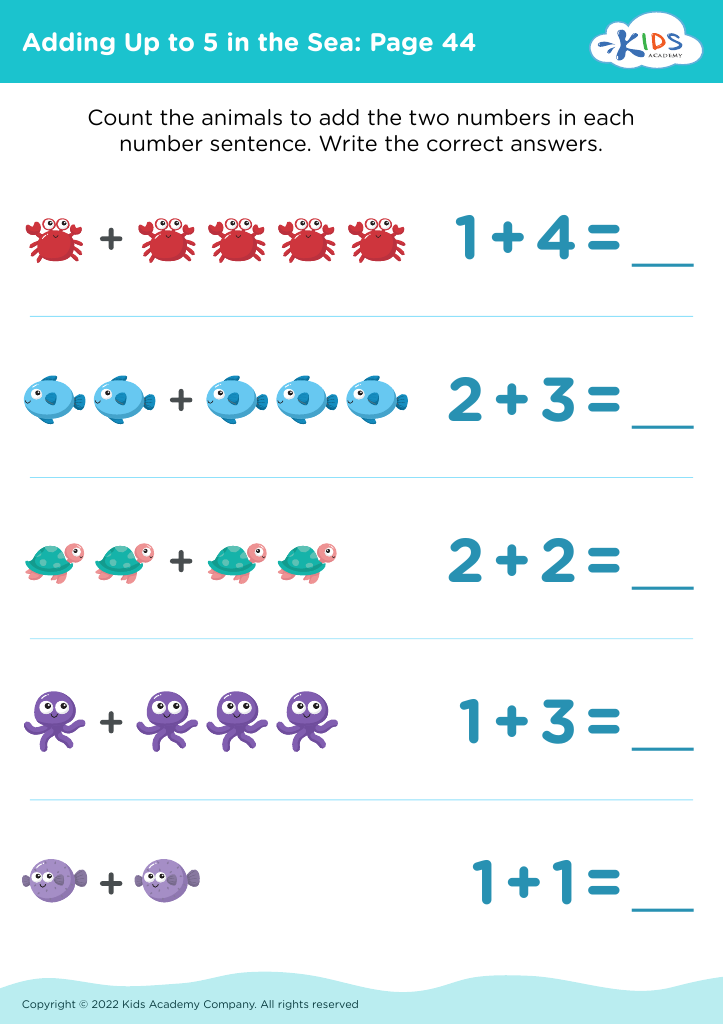



The book "Adding in the Sea" for ages 4-8 is a valuable educational tool for both parents and teachers. Encouraging early mathematical skills is essential, and this book makes the process engaging and fun. The colorful, imaginative underwater setting captures children's attention, making it easier for them to focus on learning crucial concepts of addition.
Through its captivating illustrations and relatable sea creatures, the book transforms a potentially challenging subject into an enjoyable adventure. This can help reduce any anxiety children might feel towards math, fostering a positive attitude towards the subject from an early age. The narrative context helps children understand addition in a practical setting, which promotes better comprehension and retention.
Moreover, "Adding in the Sea" supports the development of critical thinking and problem-solving skills. As children follow along with the story, they are encouraged to solve problems and arrive at answers on their own, enhancing both their confidence and competence in math.
Parents and teachers should care about this resource because it aligns with key educational principles, such as making learning interactive and context-based. It lays a solid foundation in numeracy, setting children up for future academic success and instilling a lifelong love for learning.