Develop fine motor skills Adding up to 100 Worksheets for Ages 4-8
5 filtered results
-
From - To
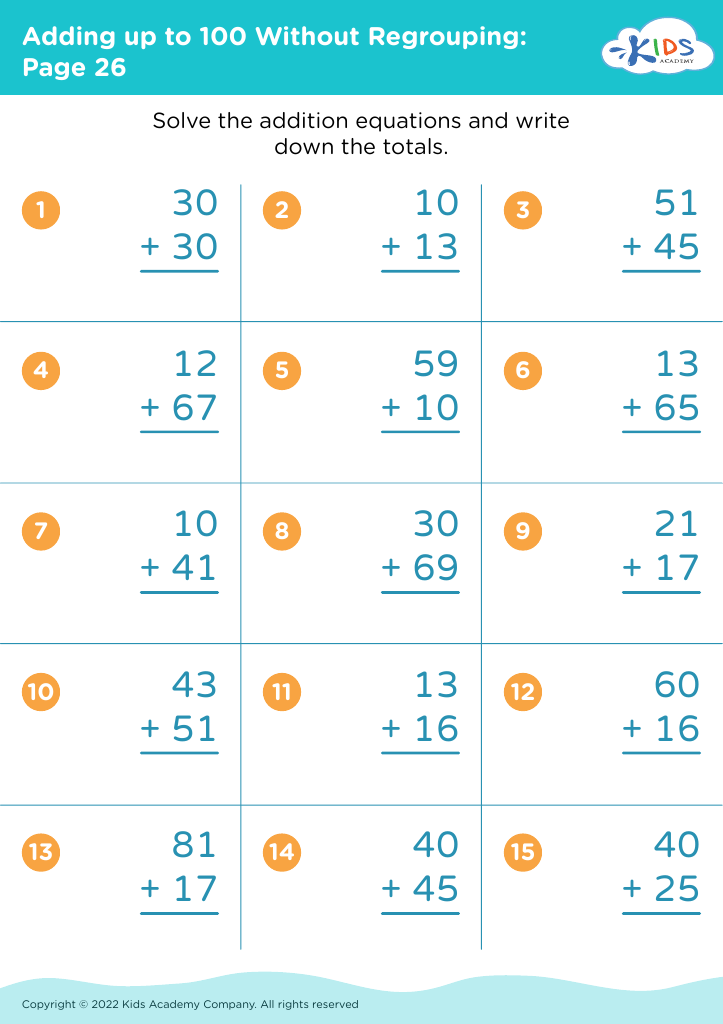
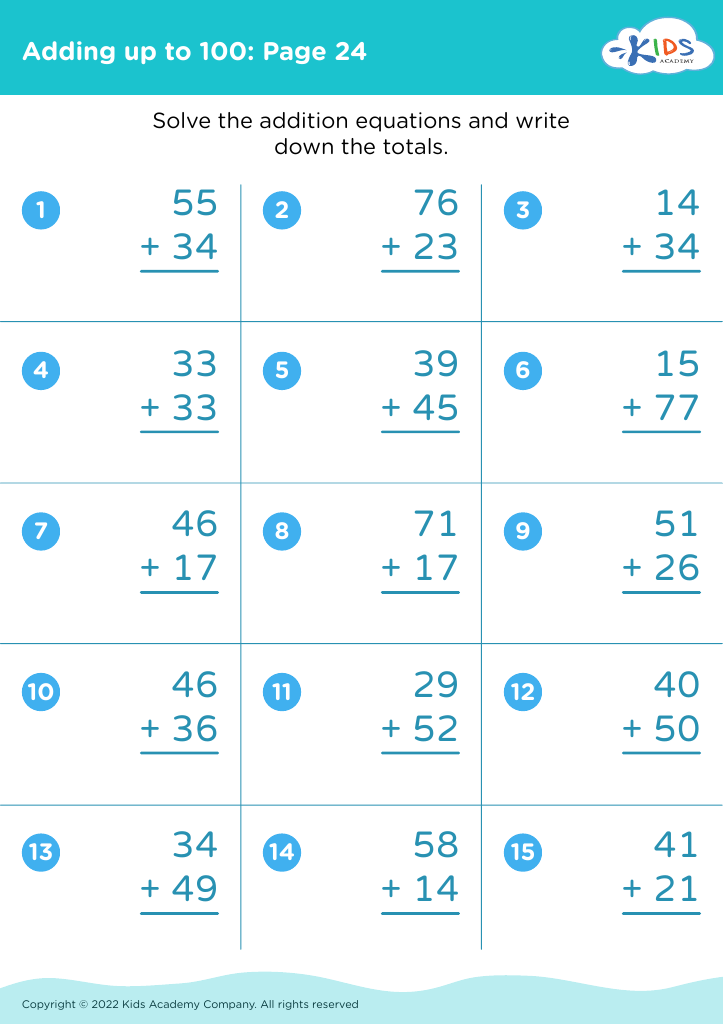
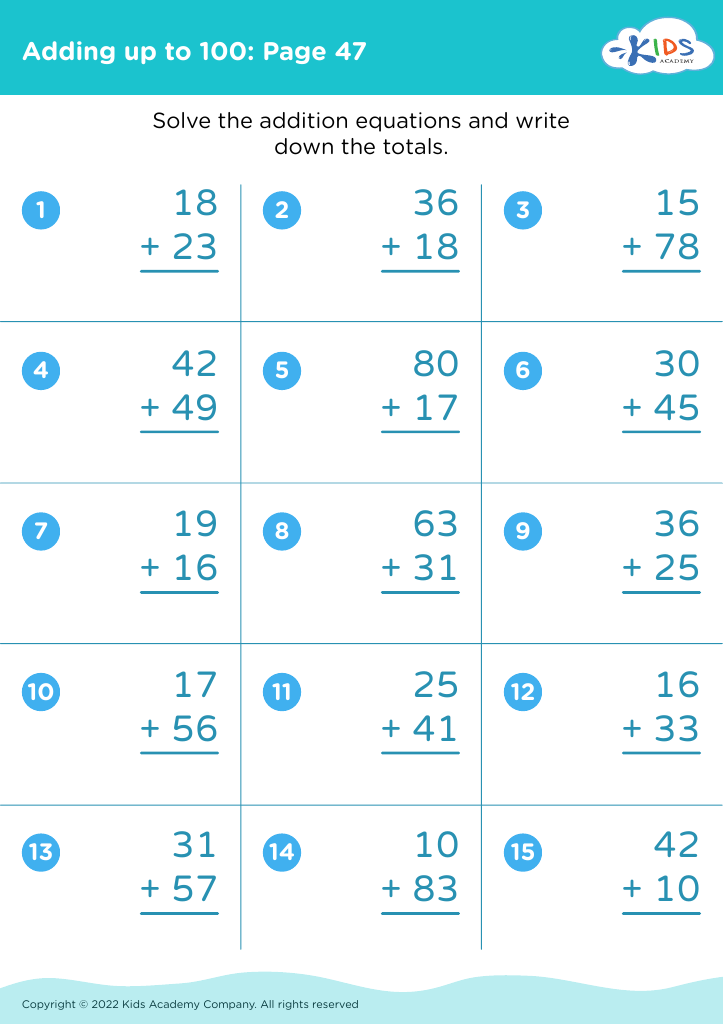
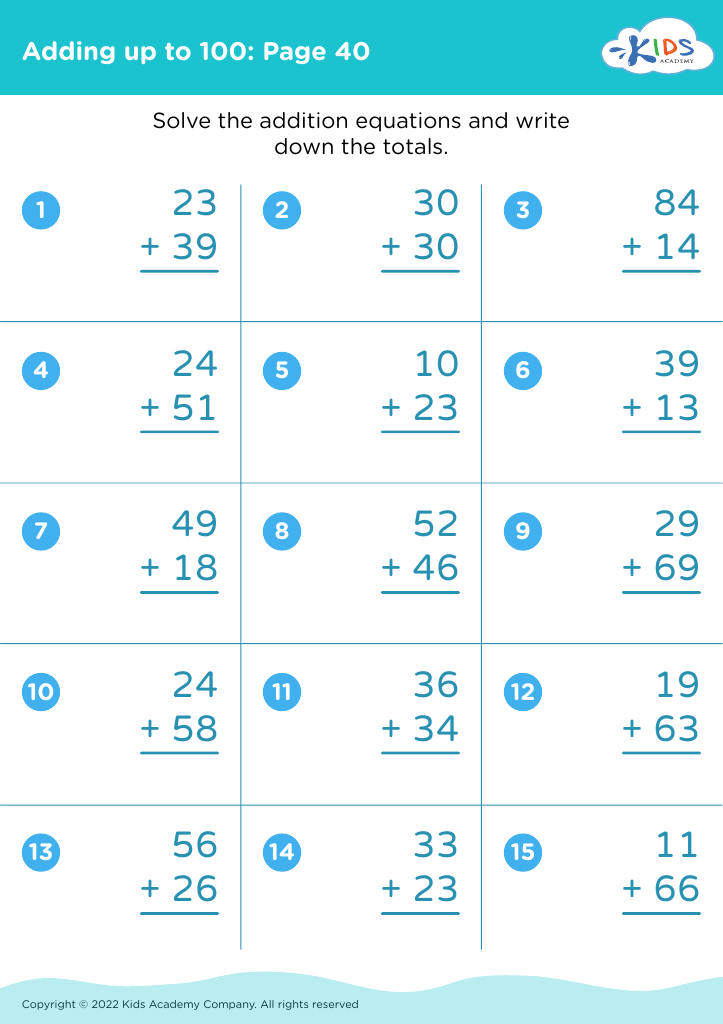
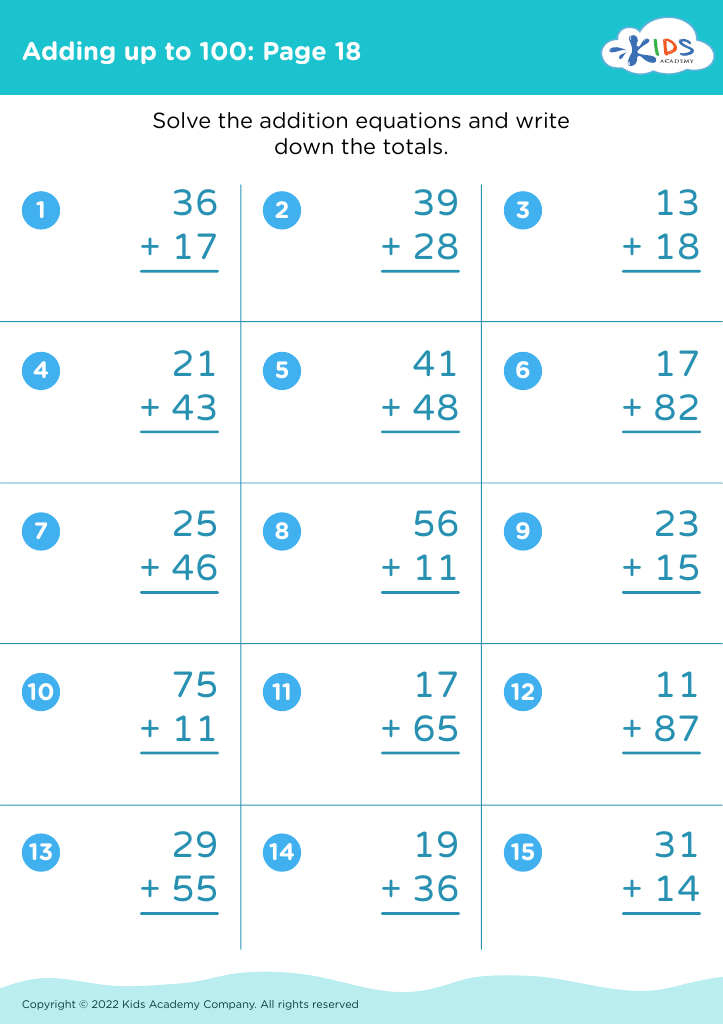
Enhance your child's fine motor skills while they learn essential math concepts with our "Adding up to 100" worksheets designed for ages 4-8. These engaging activities not only promote mathematical understanding but also encourage the development of hand-eye coordination and dexterity. As children practice adding numbers in fun and interactive ways, they will strengthen their grip, control, and precision. Our worksheets are perfect for independent practice, classroom use, or homeschooling. Foster your child's confidence and skills in both math and fine motor coordination with these thoughtfully crafted resources. Start your journey towards mastery today!


%20(1).jpg)




Developing fine motor skills in children aged 4-8 is crucial for both their academic and personal growth. Fine motor skills involve the coordination between small muscles in our hands and fingers, which are needed for tasks such as writing, drawing, and manipulating small objects. Mastery of these skills lays the foundation for later abilities like reading and math, including counting and adding.
When children practice fine motor skills, they enhance their hand-eye coordination, which is essential for activities that require precision, such as crafting, tying shoelaces, and using scissors. These skills also boost their confidence, making them more willing to engage in challenging tasks and activities.
Additionally, fine motor development can have a significant impact on a child's social interactions. Activities that involve sharing materials, collaborating on projects, or completing group tasks promote not only fine motor skills but also teamwork and communication skills.
Parents and teachers should care about developing these skills, as they are vital for children's independence and success in later years. Early support allows for a smooth transition into more complex tasks, setting the stage for lifelong learning and personal development. Investing time in these activities now yields lasting benefits in education and beyond.








