Fine Motor Skills Adding up to 100 Worksheets for Ages 4-8
12 filtered results
-
From - To
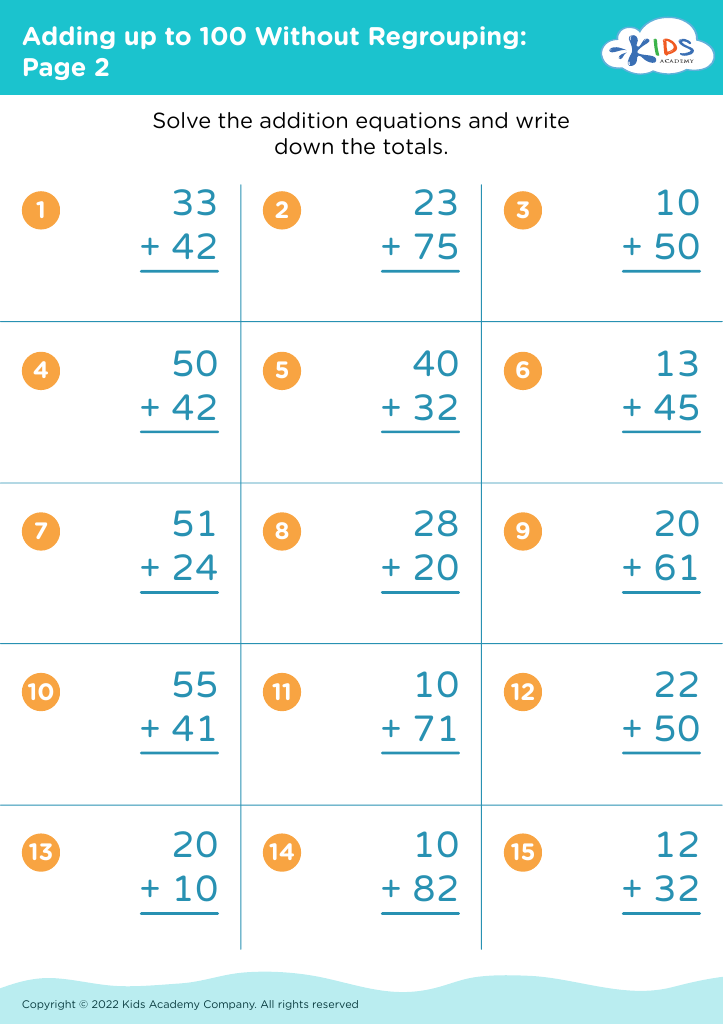
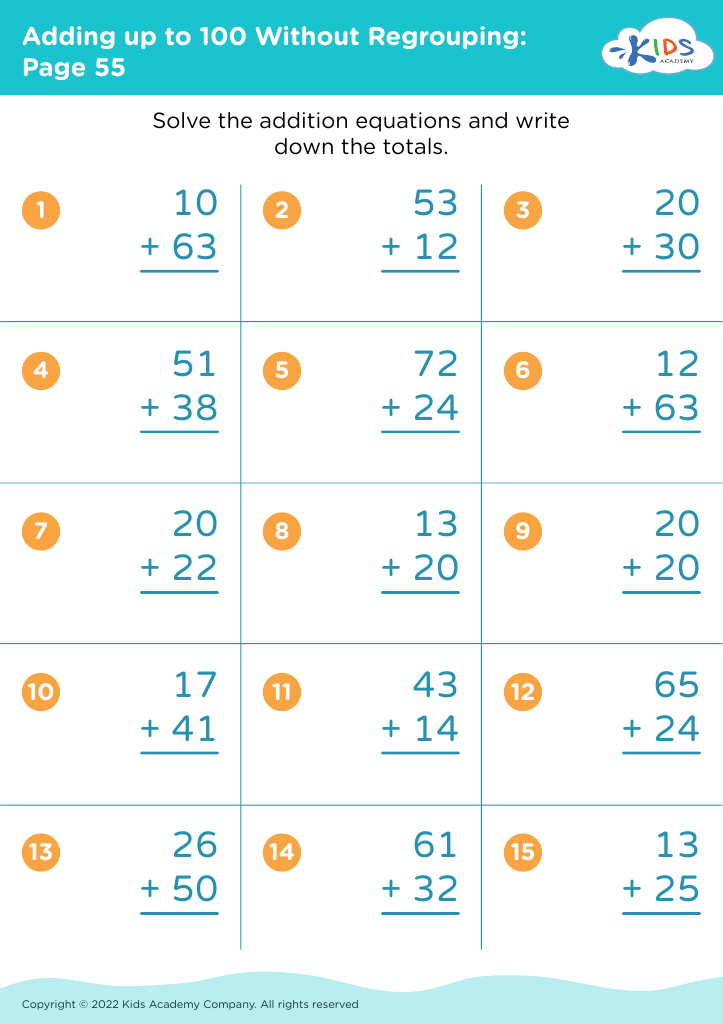
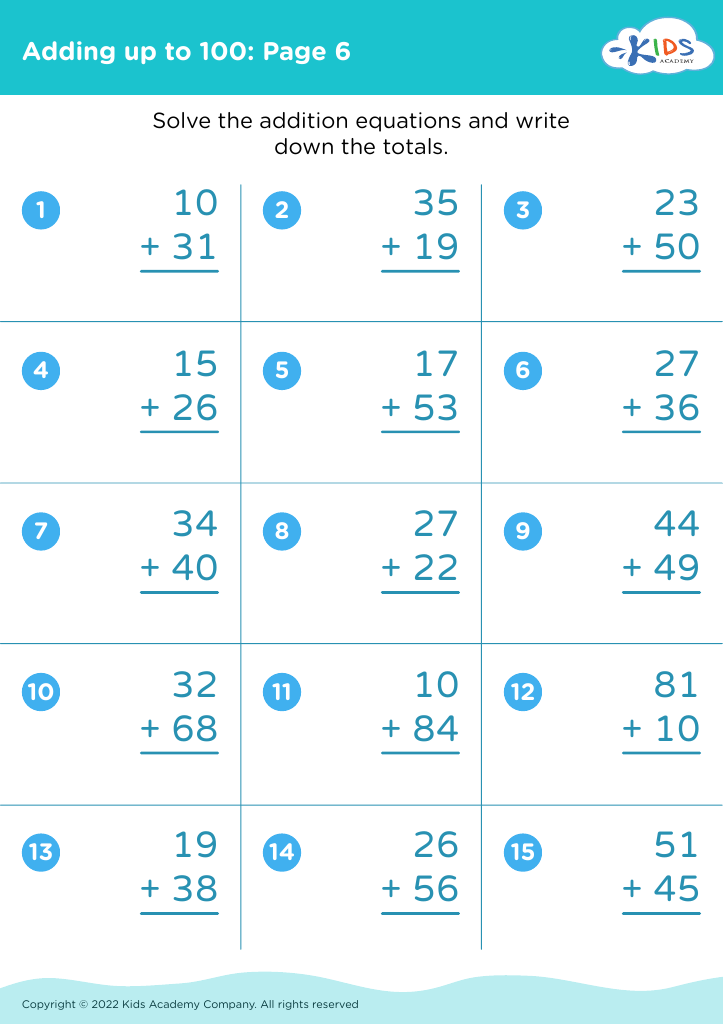
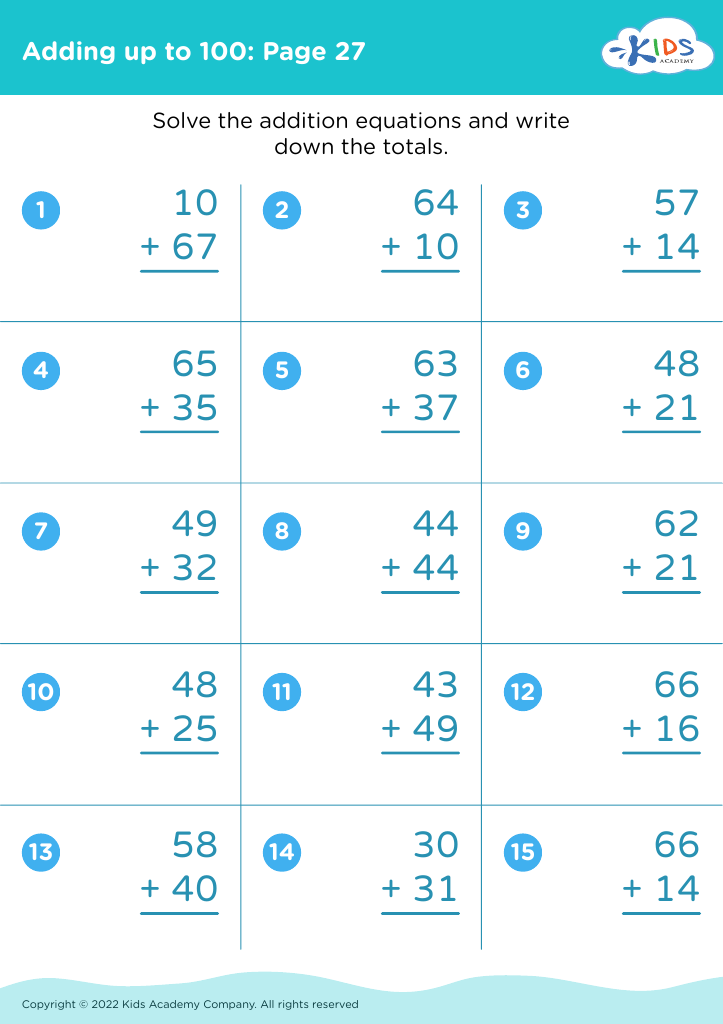
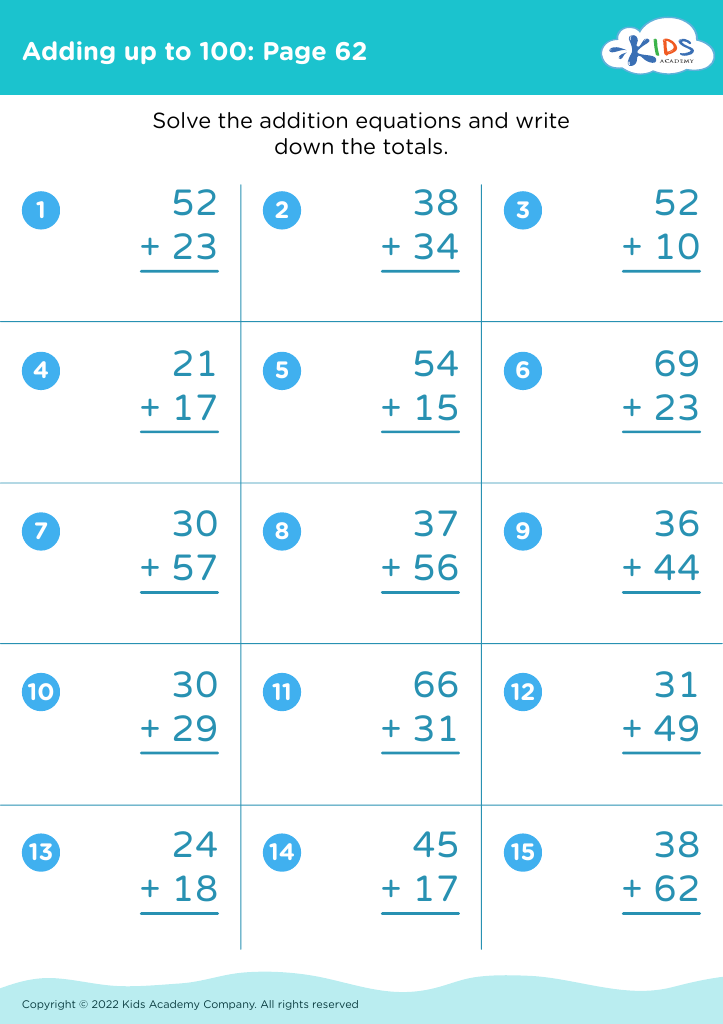
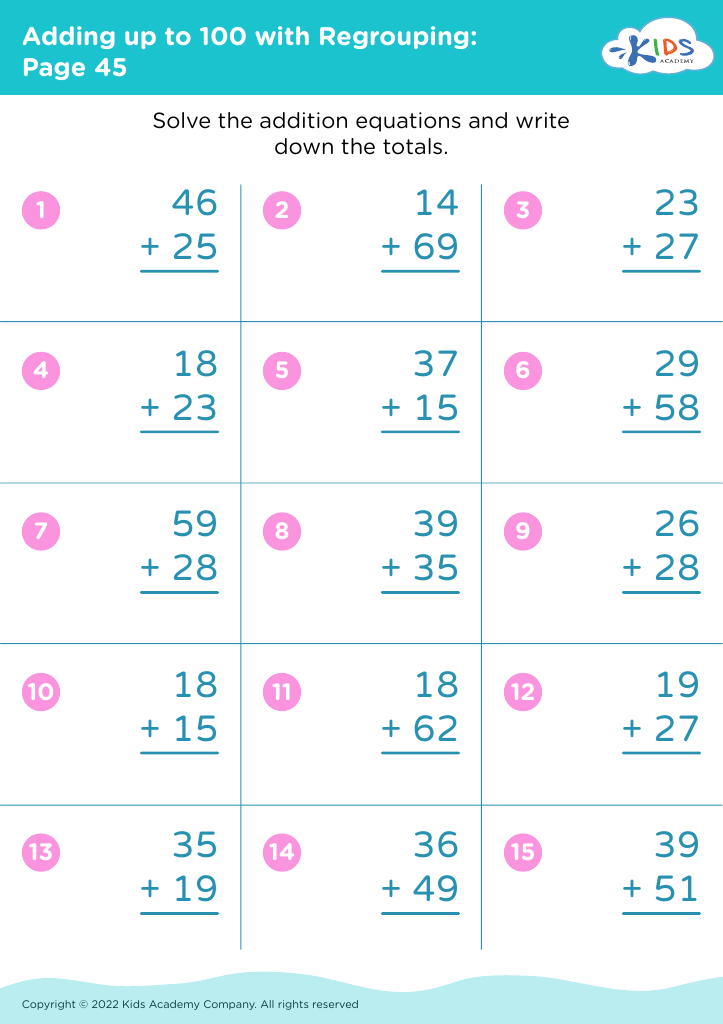
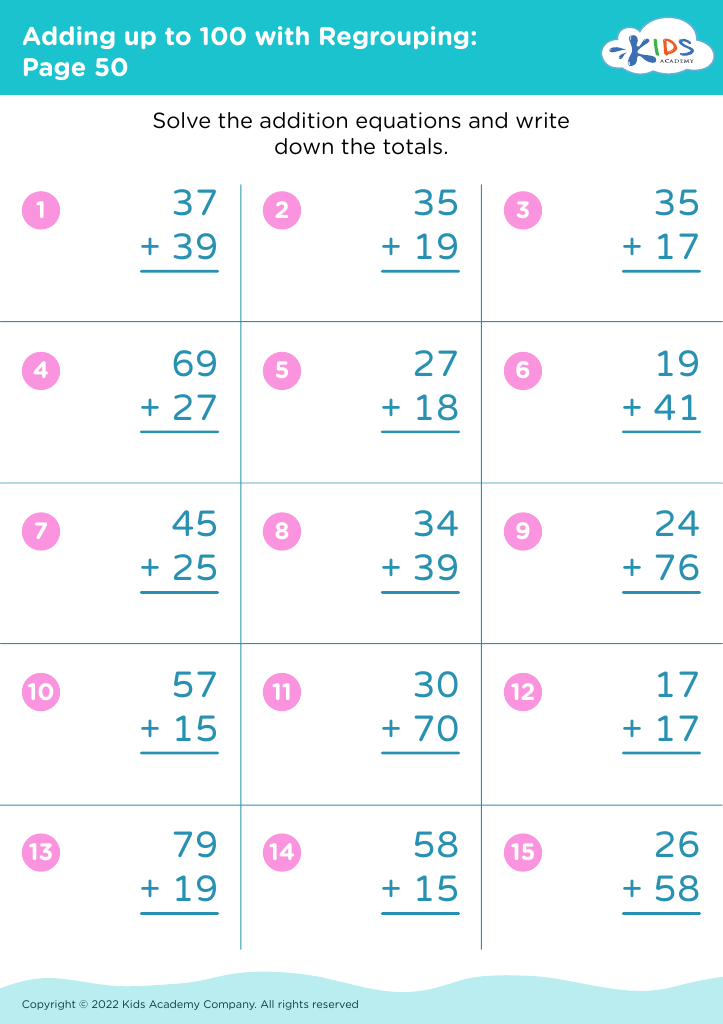
Enhance your child's fine motor skills with our "Adding up to 100" worksheets designed for ages 4-8. These engaging activities not only introduce basic math concepts but also promote dexterity and hand-eye coordination. Each worksheet features interactive elements that require cutting, coloring, and gluing, making learning both fun and effective. Children can practice addition while developing essential fine motor skills crucial for handwriting and other physical tasks. Perfect for homeschooling, classrooms, or supplementary practice at home, these worksheets create a holistic learning experience that nurtures your child's growth in both math and motor abilities. Download now and start their adventure!

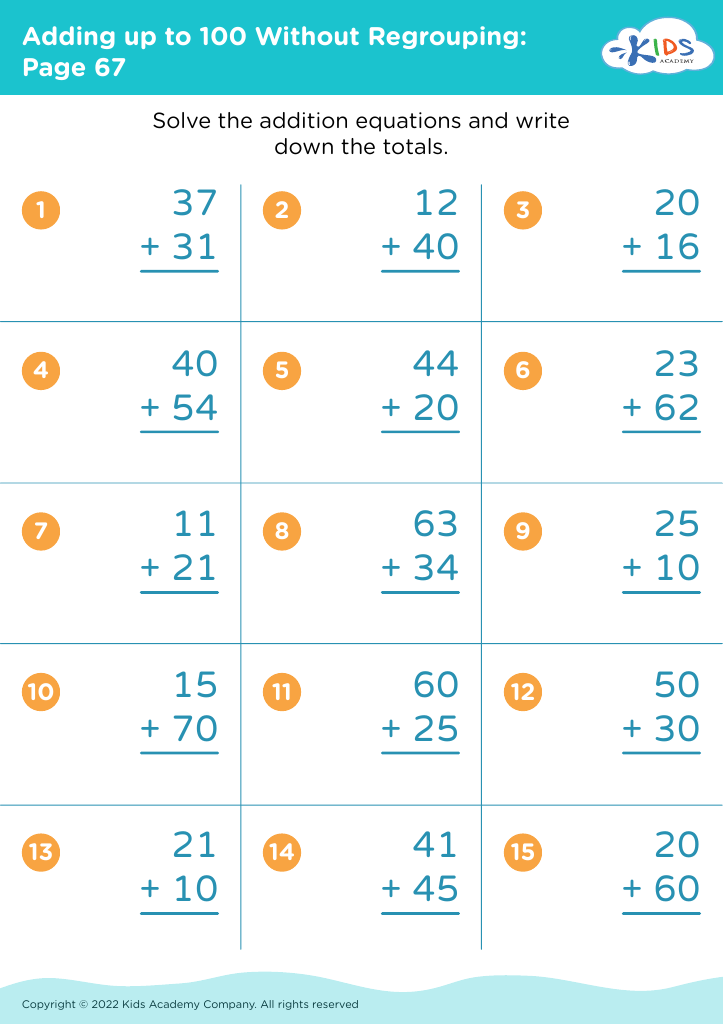
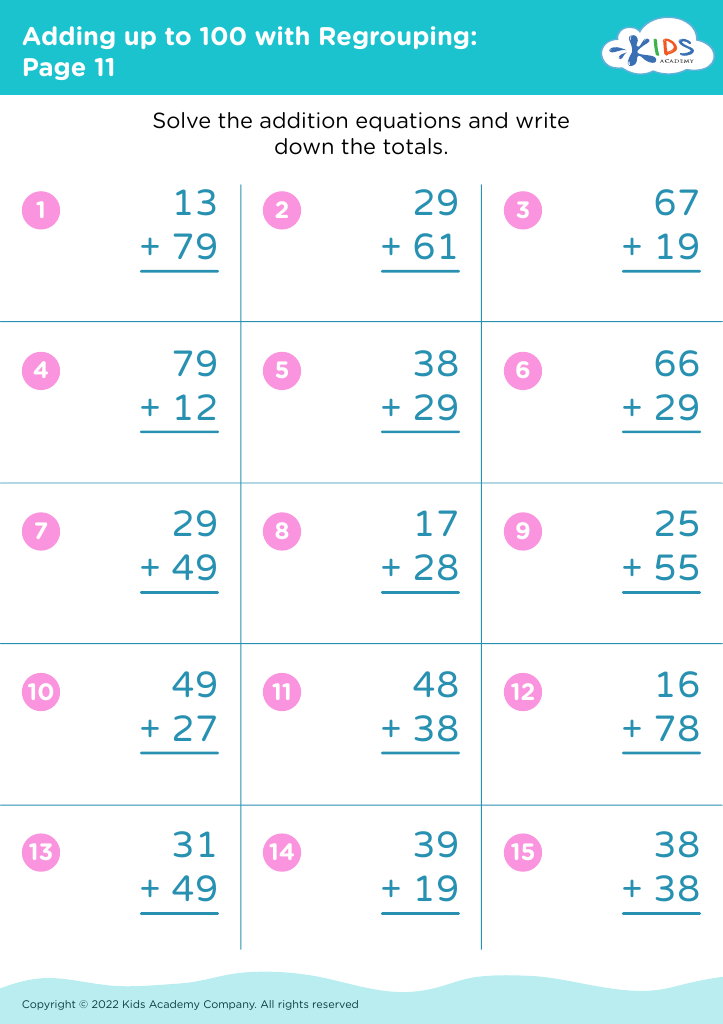
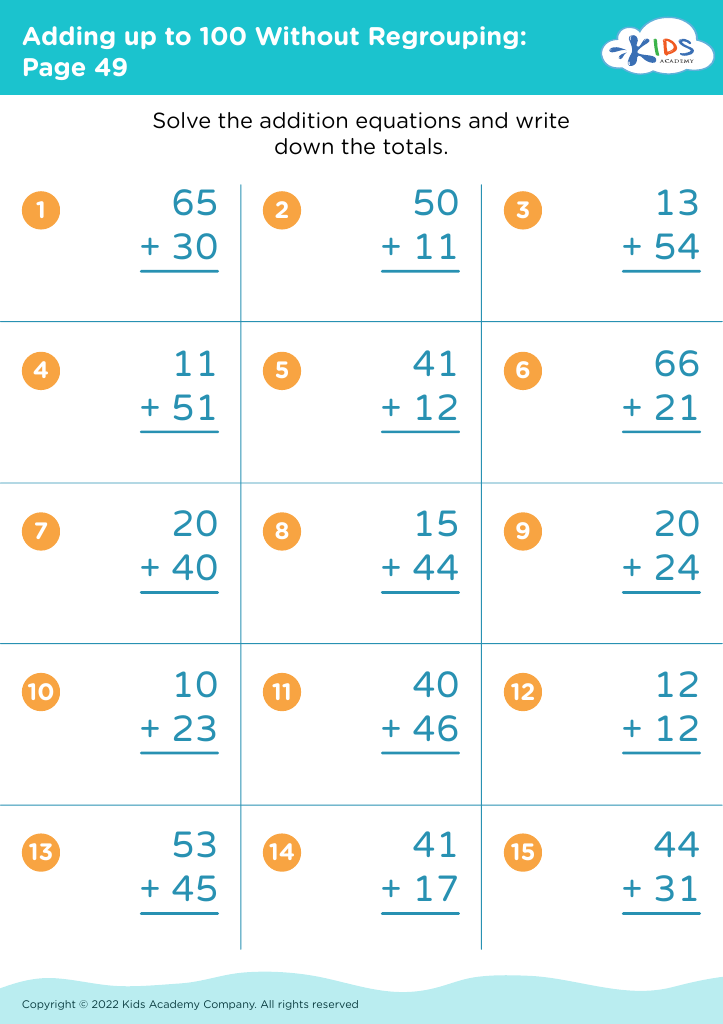
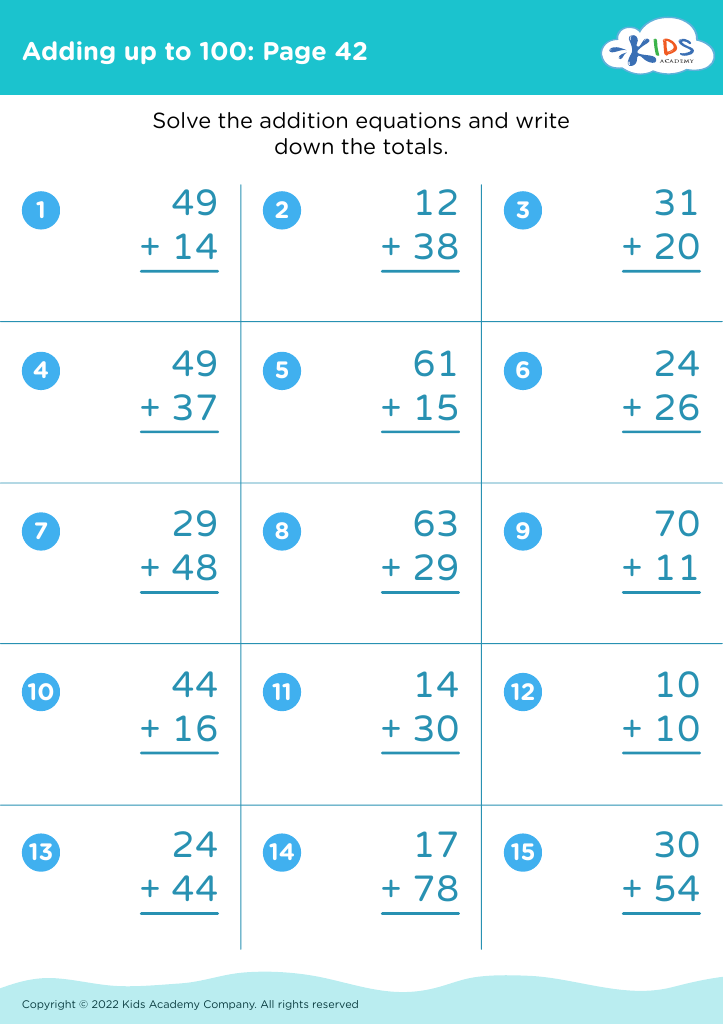





%20(1).jpg)

Fine motor skills are critical for children's overall development, especially for those aged 4-8. These skills involve the coordinated use of small muscles in hands and fingers, enabling tasks like grasping, cutting, drawing, and writing. Parents and teachers should prioritize fine motor skills development because they lay the foundation for academic success and daily living skills.
Firstly, fine motor skills directly impact a child's ability to write legibly and complete school assignments. Proficient fine motor skills allow for better hand-eye coordination, leading to improved performance in various subjects like art, math, and literacy.
Moreover, fine motor skills contribute to a child’s self-esteem and independence. Mastering tasks such as buttoning a shirt or tying shoelaces fosters a sense of accomplishment and confidence. Children who struggle with these skills may feel frustrated or embarrassed, which can affect their social interactions and emotional well-being.
Lastly, engaging in activities that promote fine motor skills—like crafting or puzzles—encourages creativity and problem-solving, essential skills for lifelong learning. By focusing on these skills, parents and teachers can support children's overall growth, self-confidence, and readiness for future challenges. In summary, nurturing fine motor skills enables children to thrive both academically and socially.








