Identify shapes Adding up to 100 Worksheets for Ages 4-8
4 filtered results
-
From - To
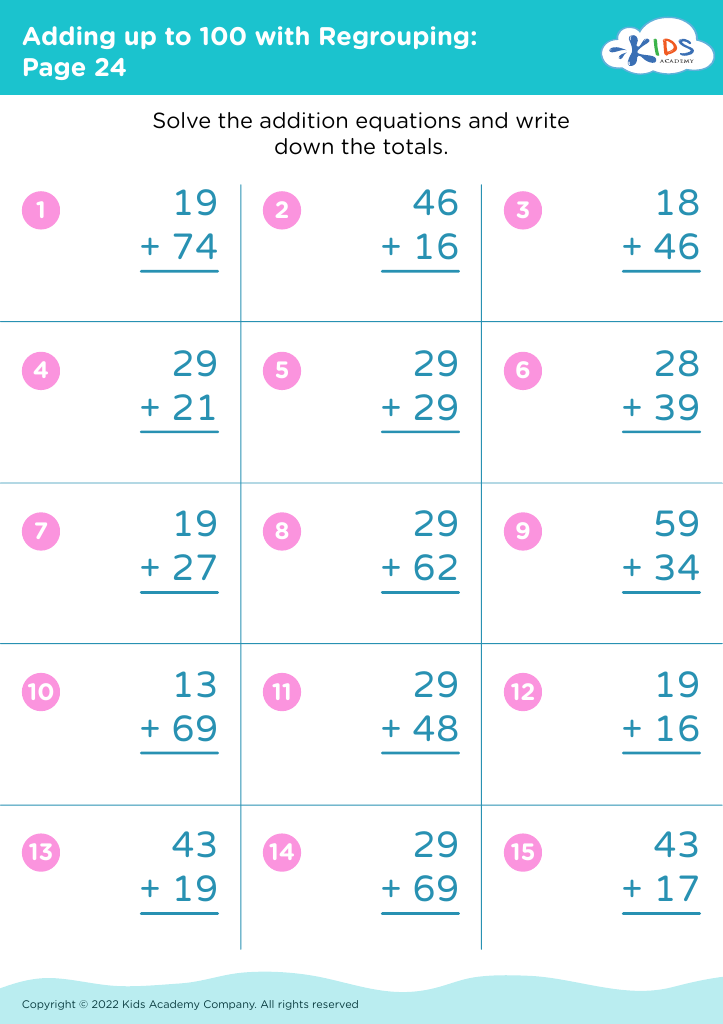
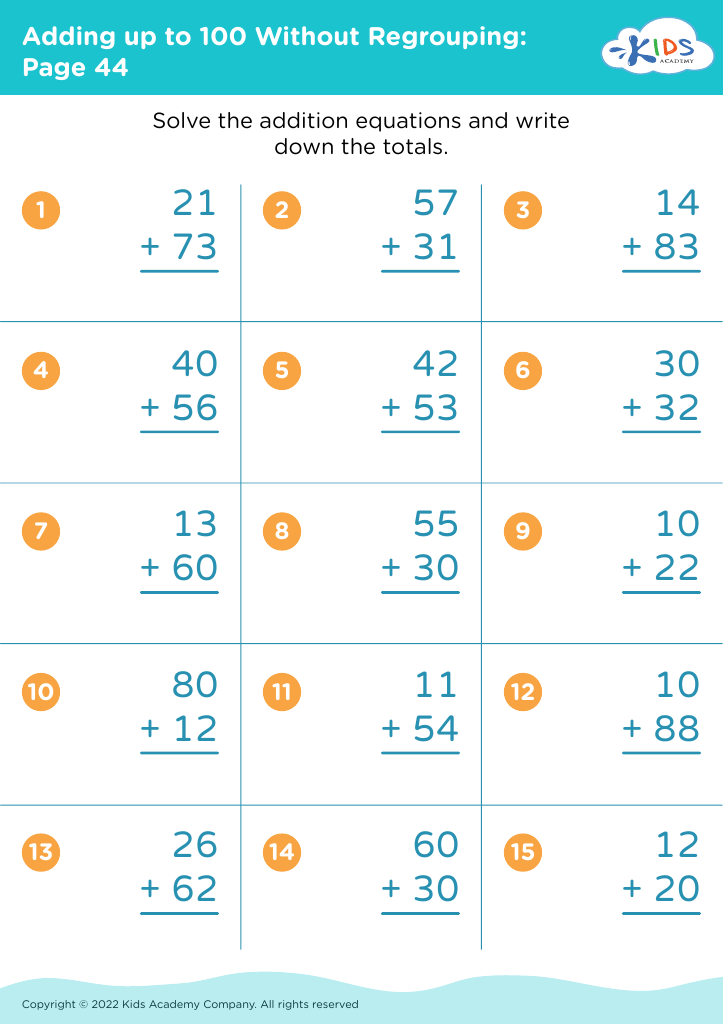
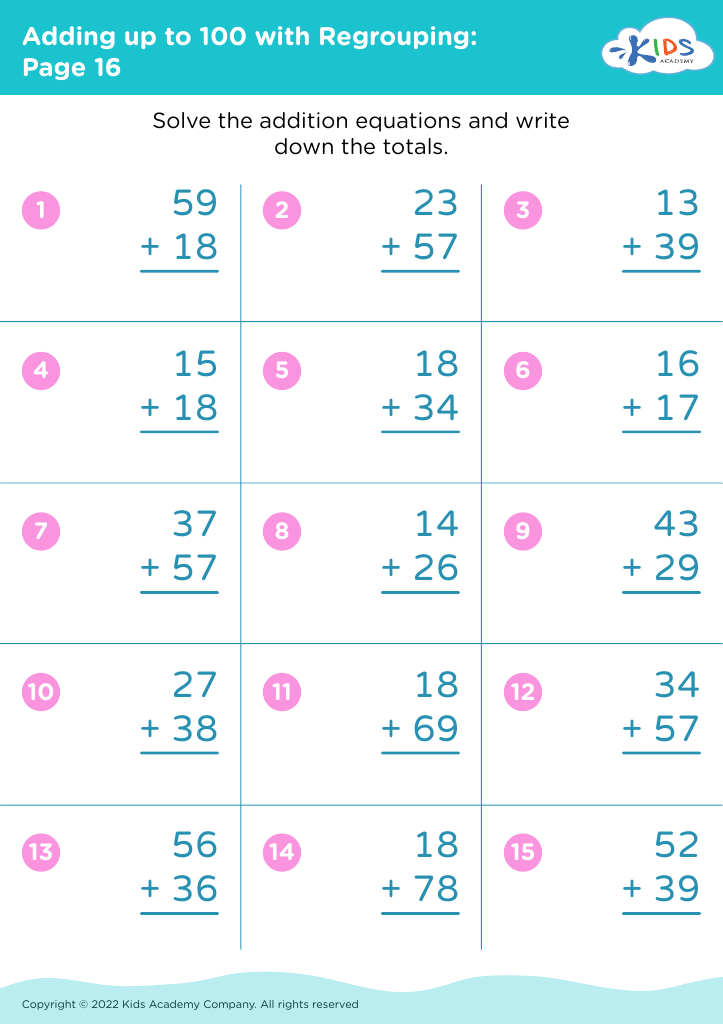
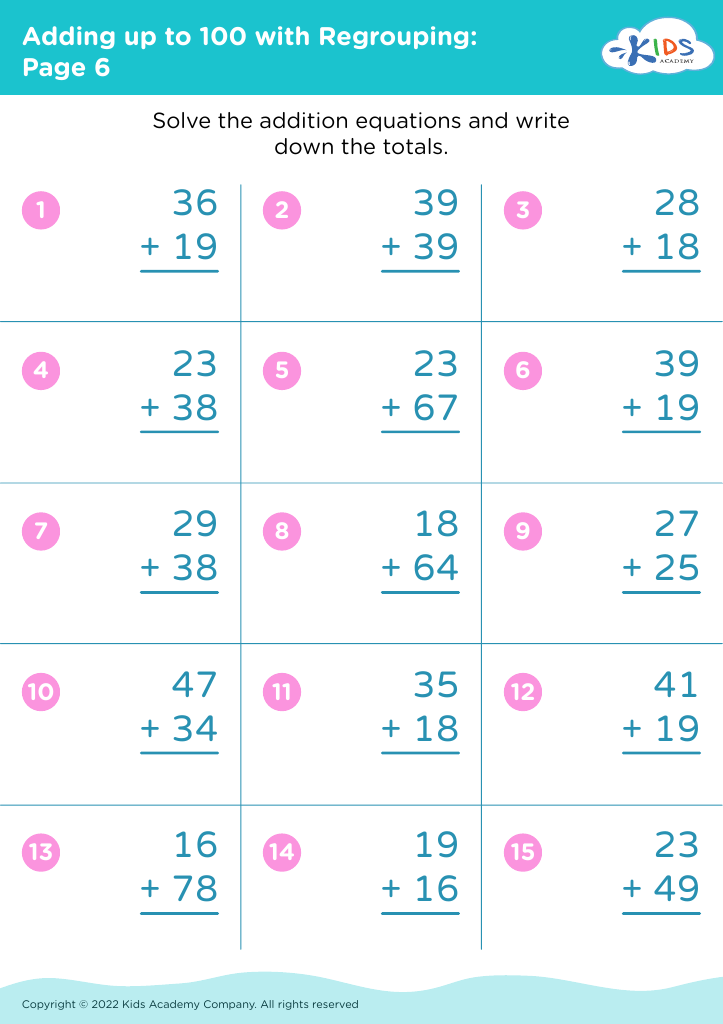
Welcome to our "Identify Shapes Adding Up to 100 Worksheets" designed for children aged 4-8! These engaging worksheets combine essential math skills with fun shape recognition, perfect for building foundational understanding. Kids will enjoy identifying various shapes while practicing addition, reinforcing their counting skills as they learn to add up to 100. Each worksheet is carefully crafted to promote critical thinking and problem-solving in a playful manner, making math enjoyable! Ideal for home or classroom use, these printables support young learners in developing essential cognitive abilities while enhancing their confidence in mathematics. Download our worksheets today and watch your child thrive!


%20(1).jpg)




Understanding shapes and numbers is foundational for young learners aged 4-8, setting the stage for their future in mathematics and critical thinking. Identifying shapes helps children develop spatial awareness, which is crucial for everyday problem-solving, from basic navigation to art and architecture. Shapes are everywhere, and being able to recognize and classify them boosts children's observational skills and cognitive development.
Adding concepts, particularly when incorporating numbers that add up to 100, encourages financial literacy and confidence in handling money as they grow. It also aids in grasping larger math concepts such as place value and addition, making these ideas more tangible. Comprehending the relationship between numbers and shapes through activities and games reinforces learning, enhances memory retention, and fosters a love for mathematics.
Moreover, engaging with math through fun, supportive environments cultivates a positive attitude toward learning overall, contributing to better academic performance. Parents and teachers should care because early exposure to these concepts significantly impacts children's analytical skills, creativity, and future success in STEM fields. Encouraging skill development in these areas not only enriches children’s overall educational experiences but also prepares them for essential life skills.








