Vocabulary Building Adding up to 100 Worksheets for Ages 4-8
3 filtered results
-
From - To
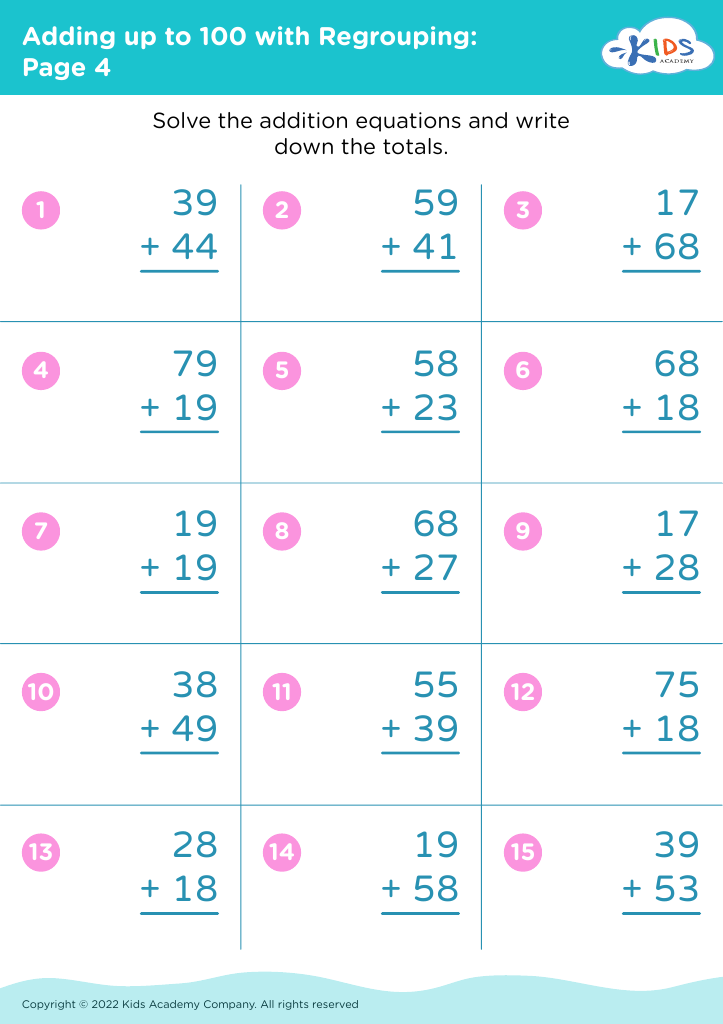
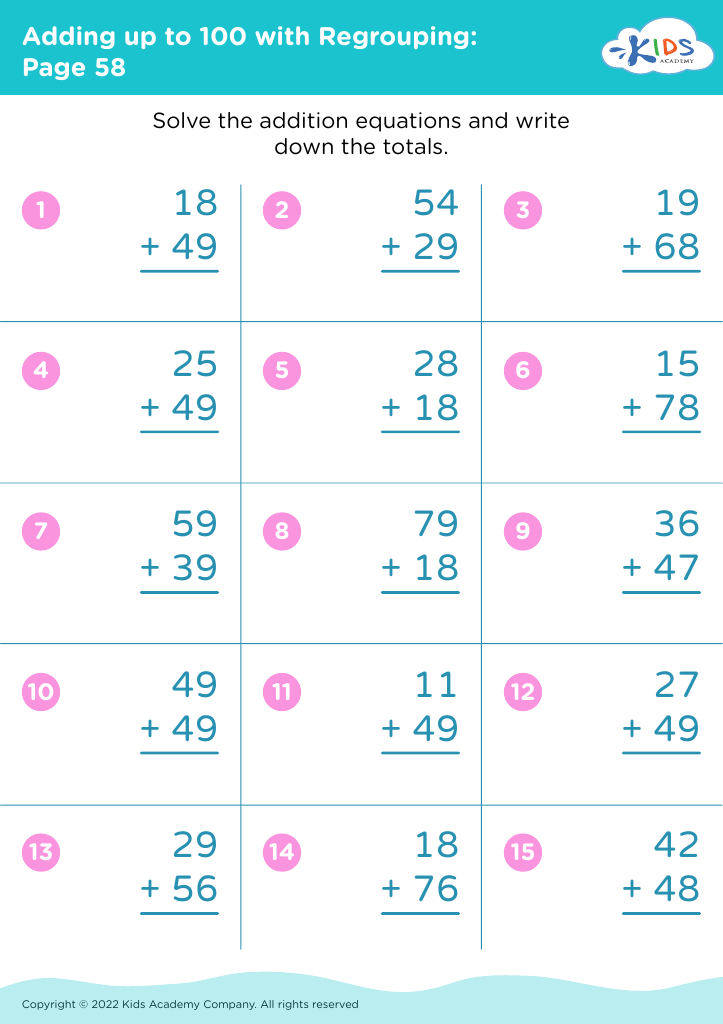
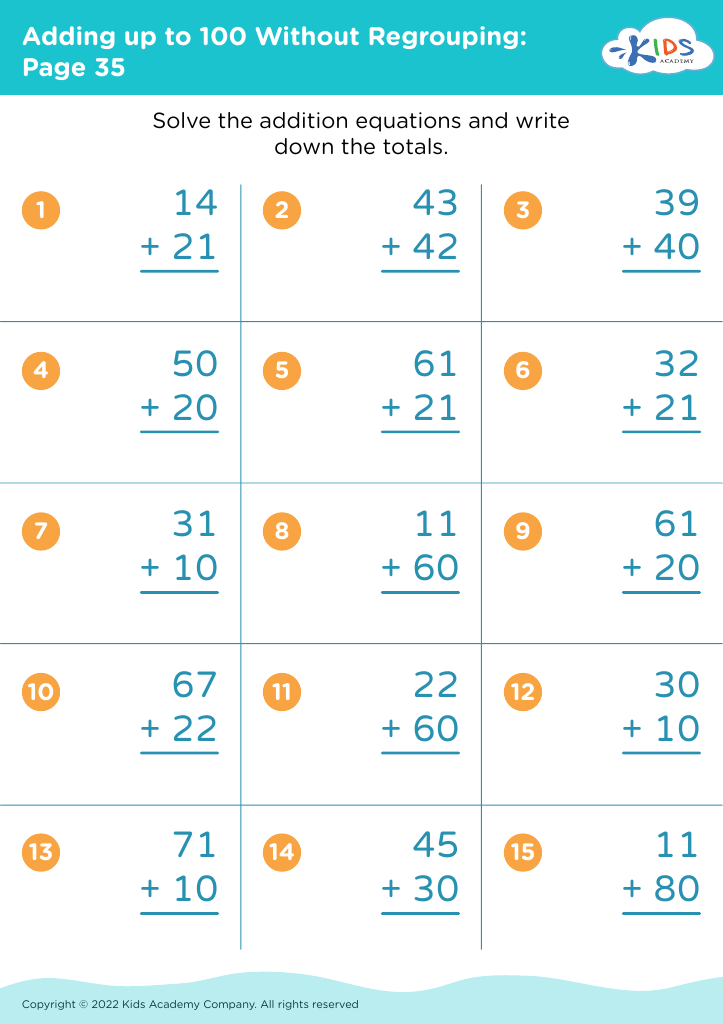
Enhance your child's vocabulary while developing mathematical skills with our "Vocabulary Building Adding up to 100 Worksheets" designed for ages 4-8. These engaging worksheets combine fun and education, helping young learners connect math concepts to everyday words. Each activity is crafted to foster language development through interactive exercises that bolster comprehension and retention. As children work on their addition skills up to 100, they'll simultaneously expand their vocabulary, making learning a holistic experience. Perfect for teachers and parents alike, these worksheets provide a valuable resource that promotes cognitive growth and confidence in both math and language. Let's make learning enjoyable and effective!



%20(1).jpg)



Vocabulary building is essential for children aged 4-8 as it lays the foundation for effective communication, cognitive development, and academic success. For this age group, exploring numbers through vocabulary, such as learning to count and understand concepts that add up to 100, enriches their learning experience and comprehension skills.
Incorporating vocabulary linked to numbers helps children develop a better understanding of mathematical concepts and enhances their ability to express their thoughts clearly. When children can articulate their understanding of numbers and their relationships, they become more confident in tackling mathematical problems, fostering a positive attitude towards learning.
Furthermore, a robust vocabulary equips children with essential life skills, such as problem-solving and critical thinking. As they learn to describe their reasoning and exhibit mathematical concepts verbally, they develop a deeper understanding of the content.
For parents and teachers, promoting vocabulary building around numbers provides opportunities for engaging interactions, making learning enjoyable and interactive. Engaging activities can include storytelling, games, and discussions that incorporate math vocabulary. In doing so, we not only enhance literacy skills but also create a child’s love for learning that will resonate throughout their educational journey.








