Addition Practice Adding Up to 5 Worksheets for Ages 4-8 - Page 2
50 filtered results
-
From - To
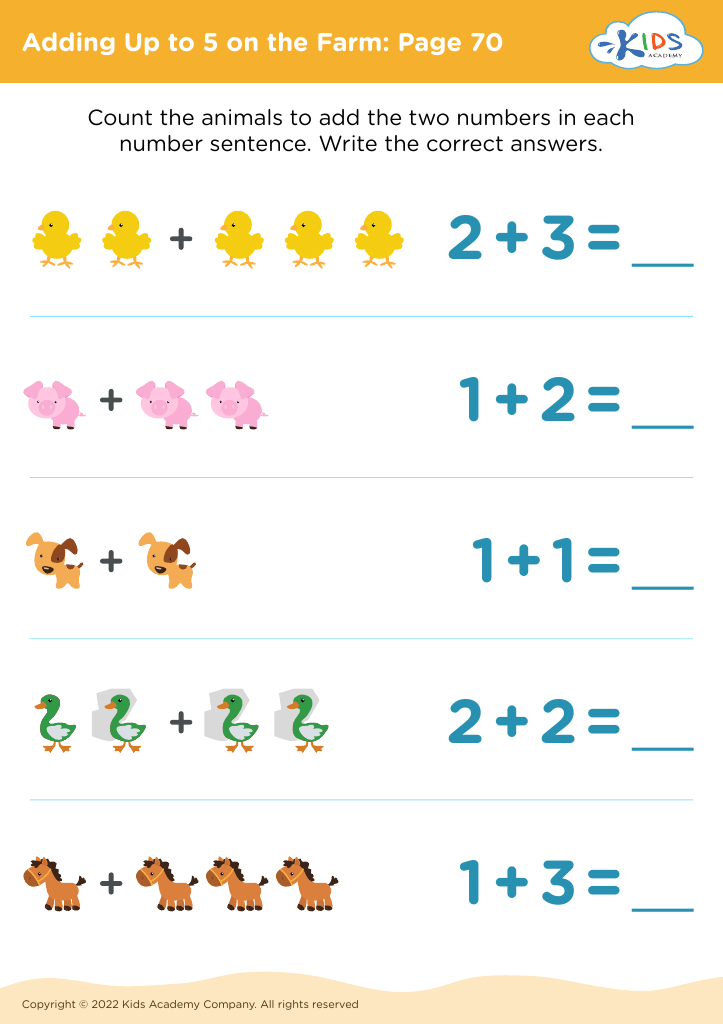
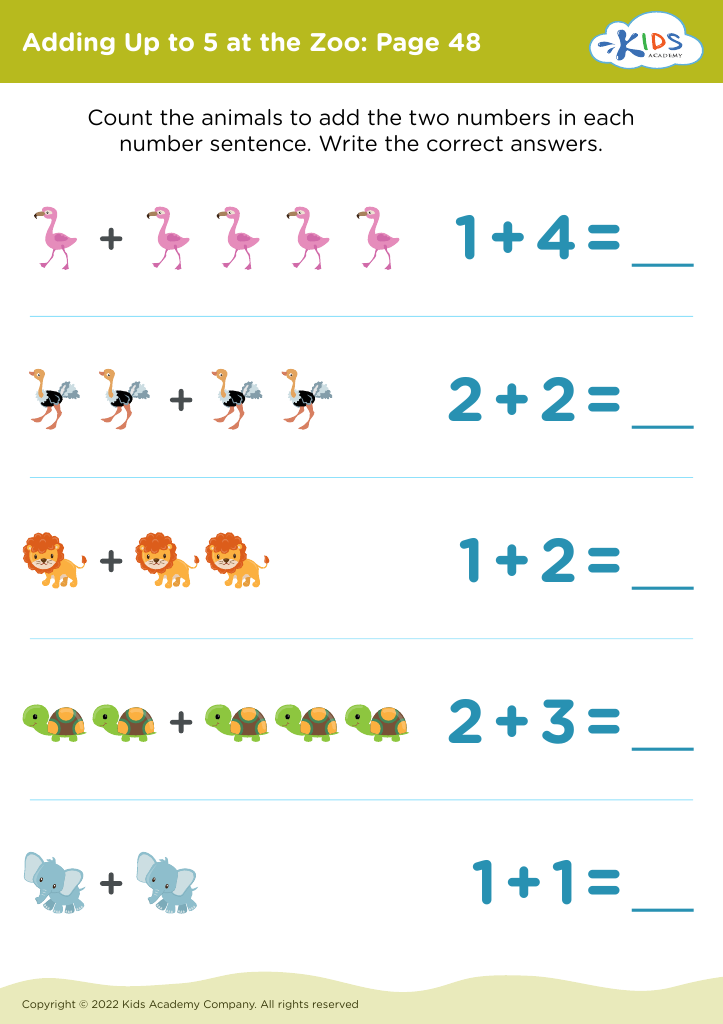
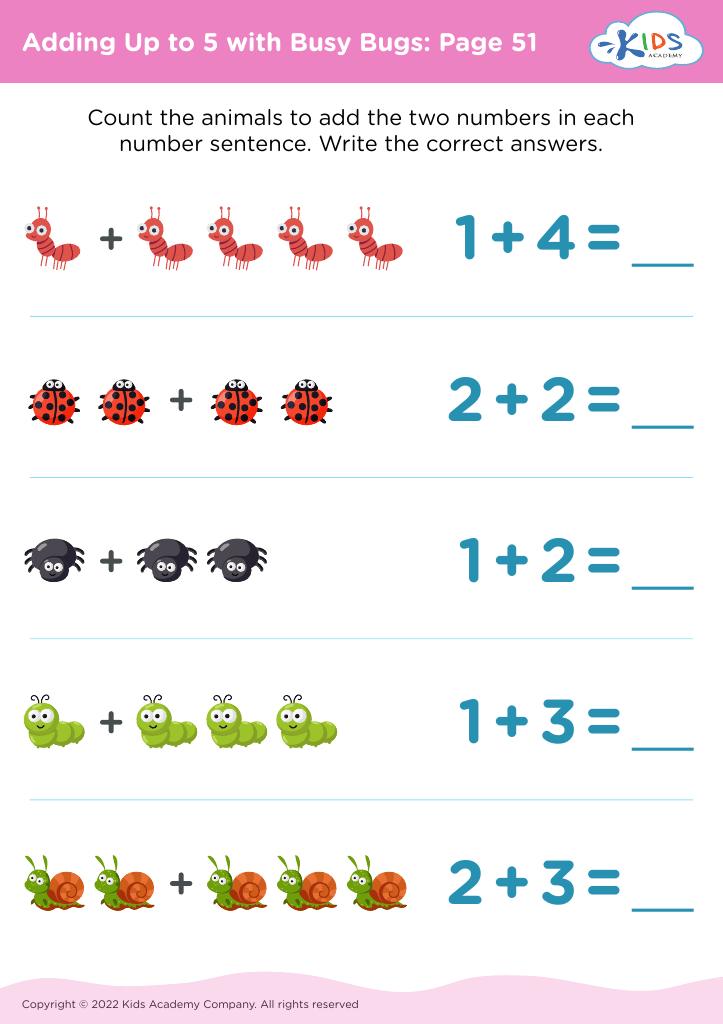
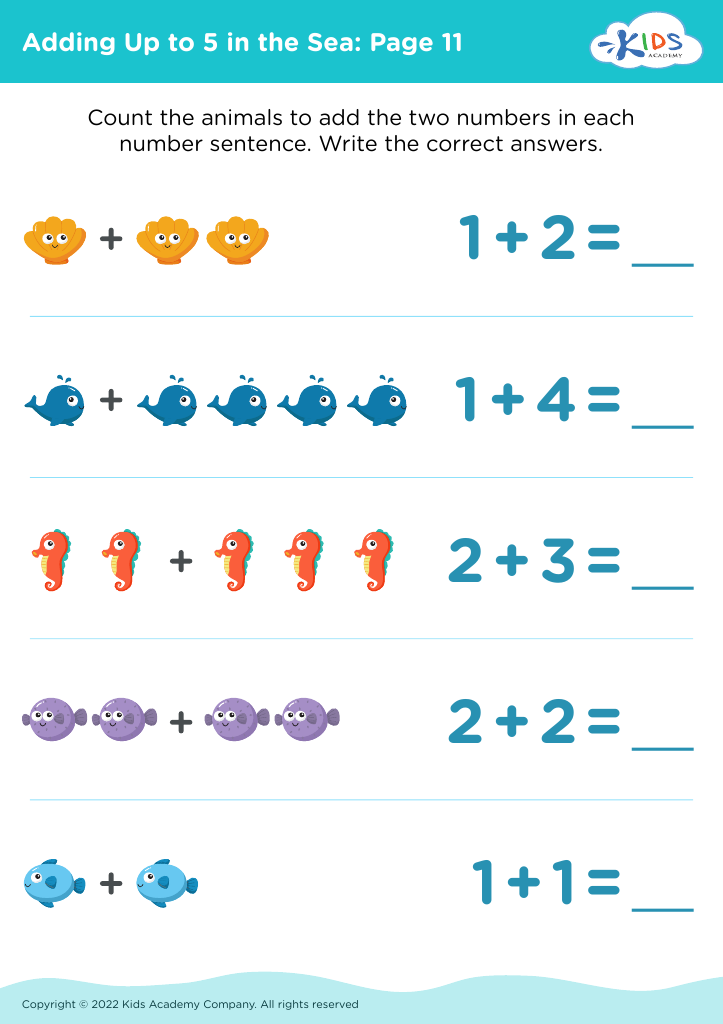
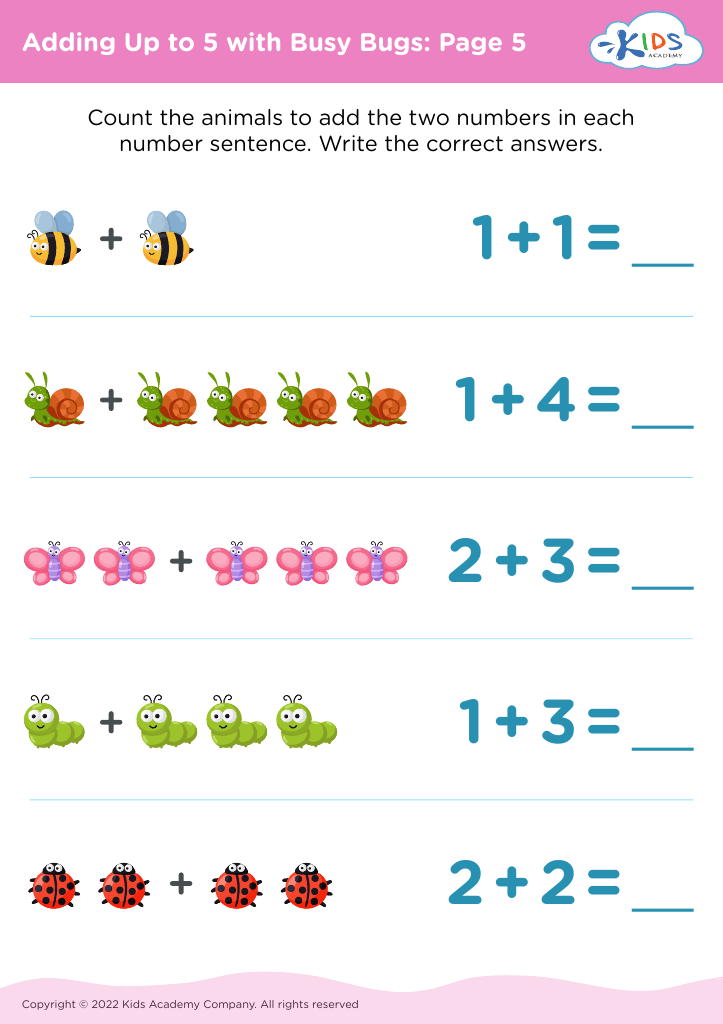
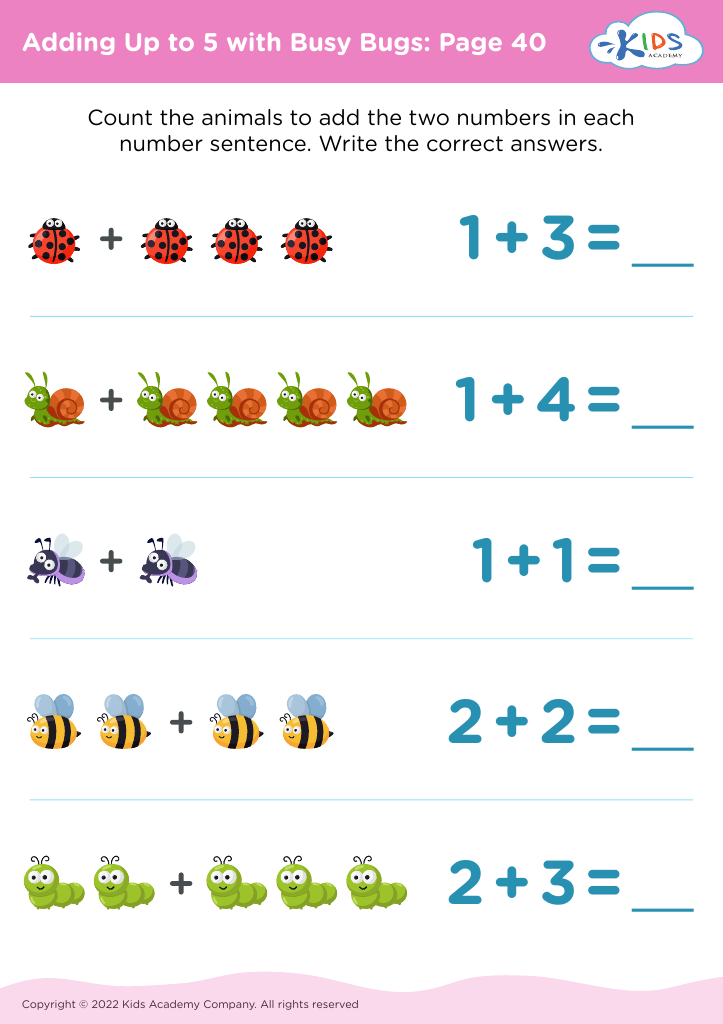
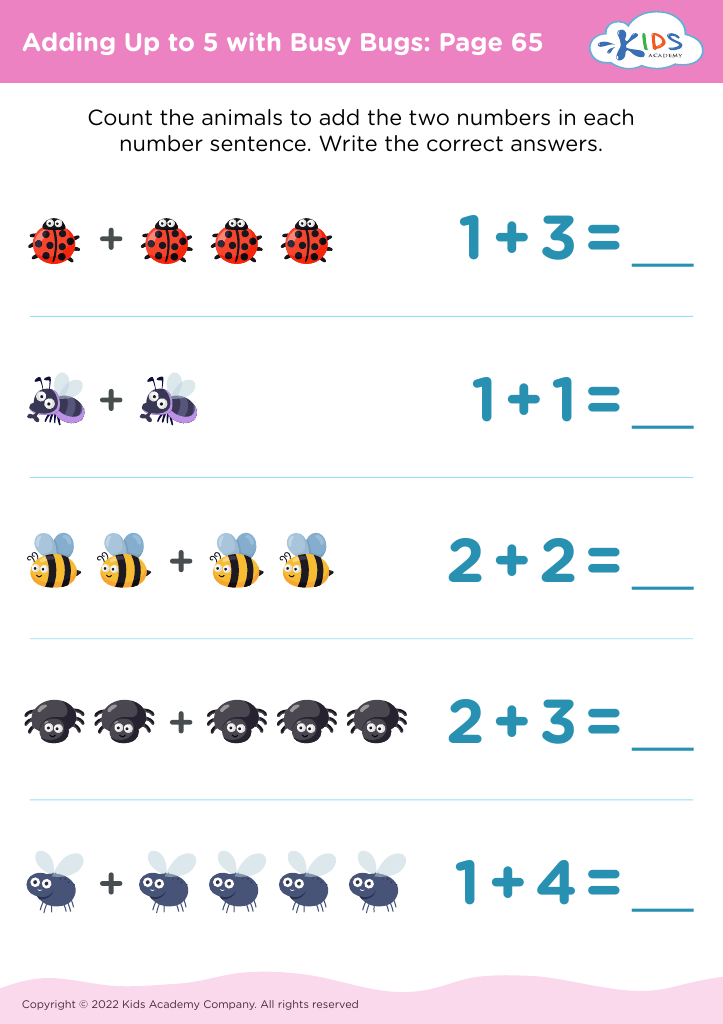
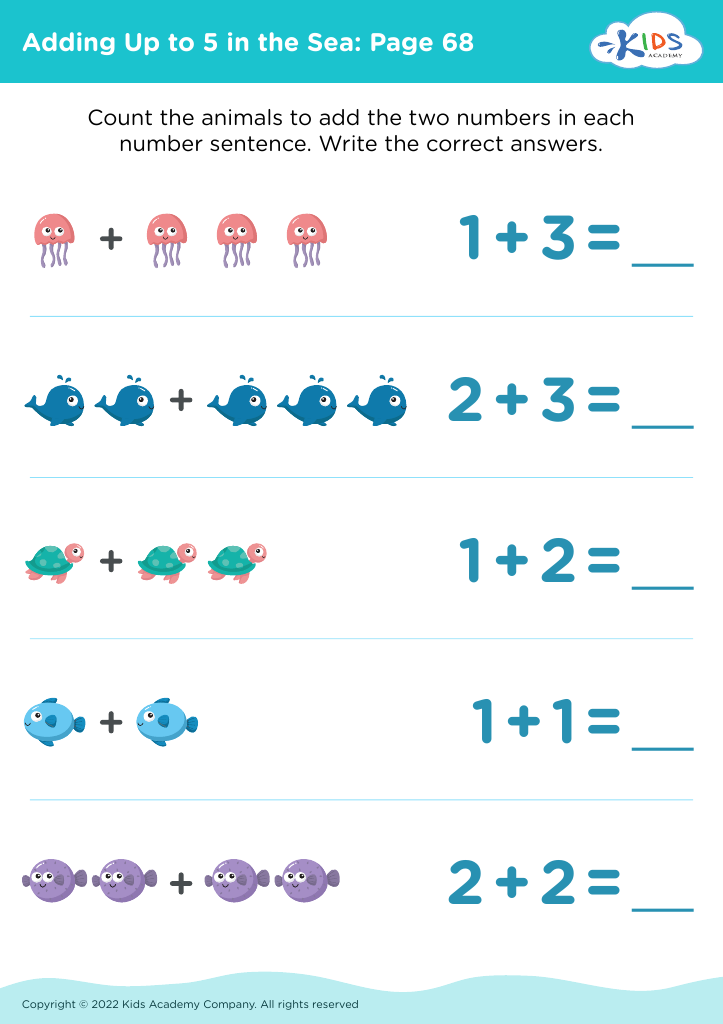



.jpg)




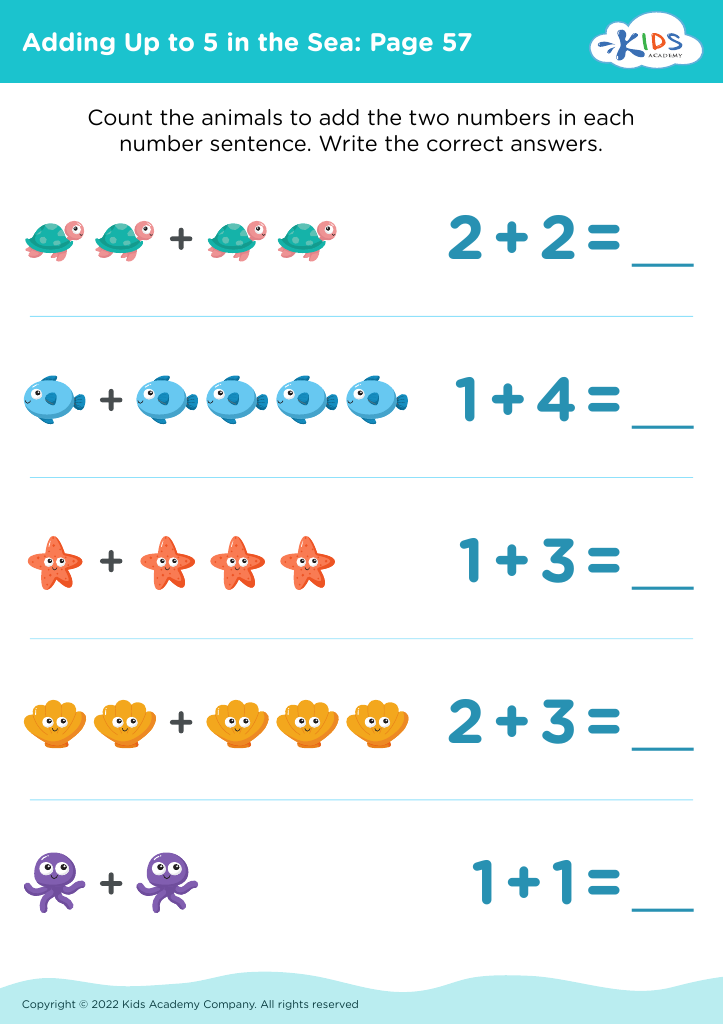
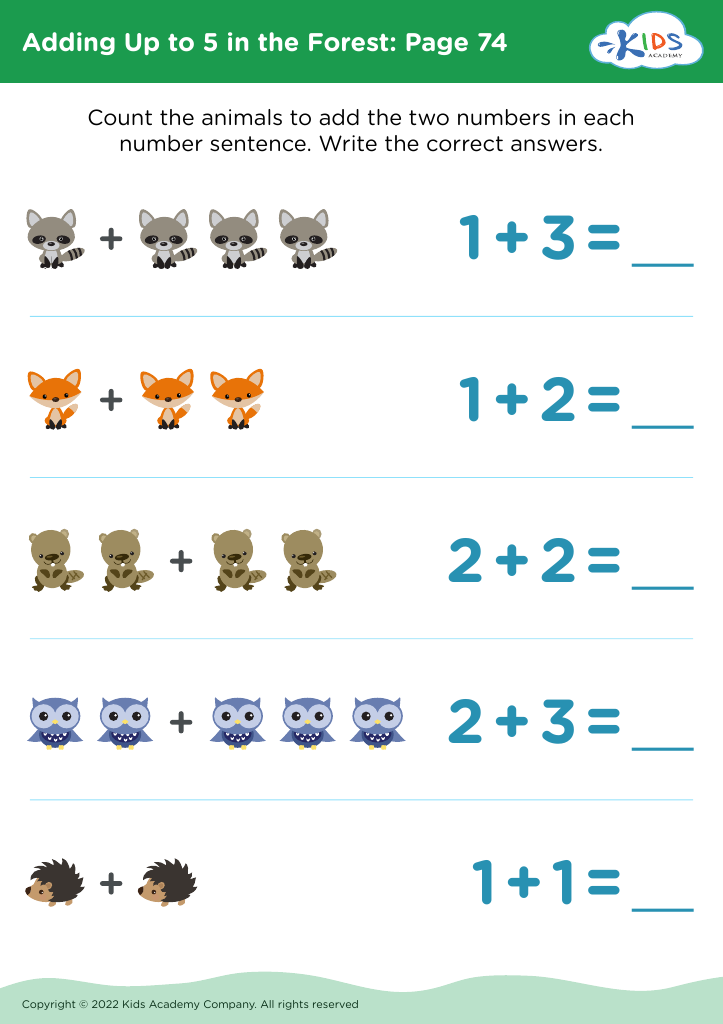
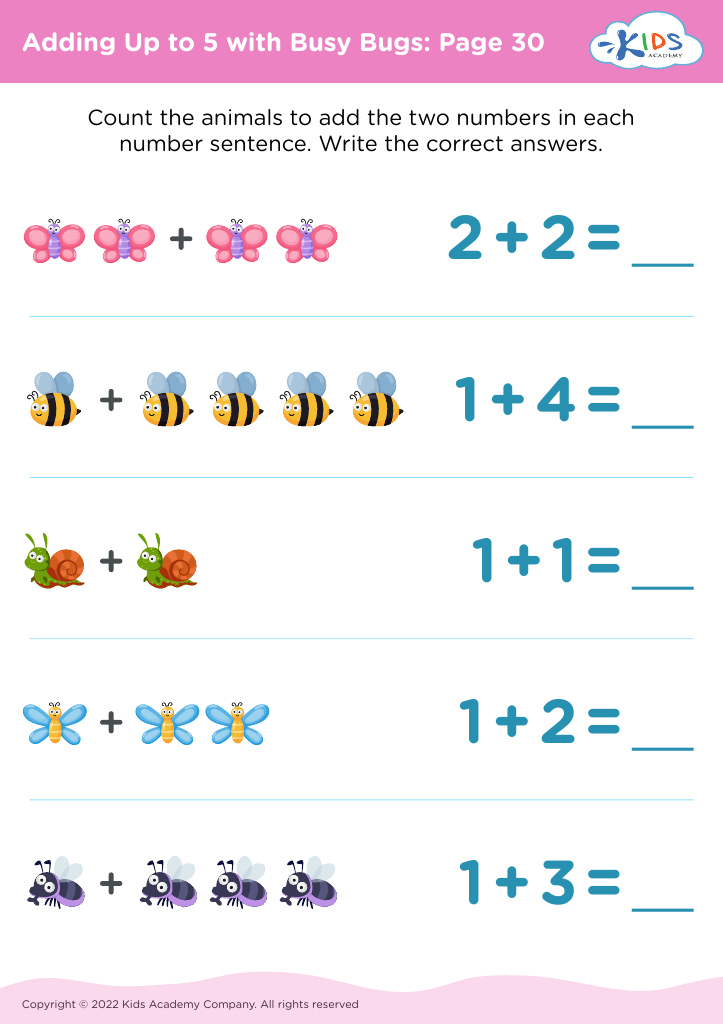
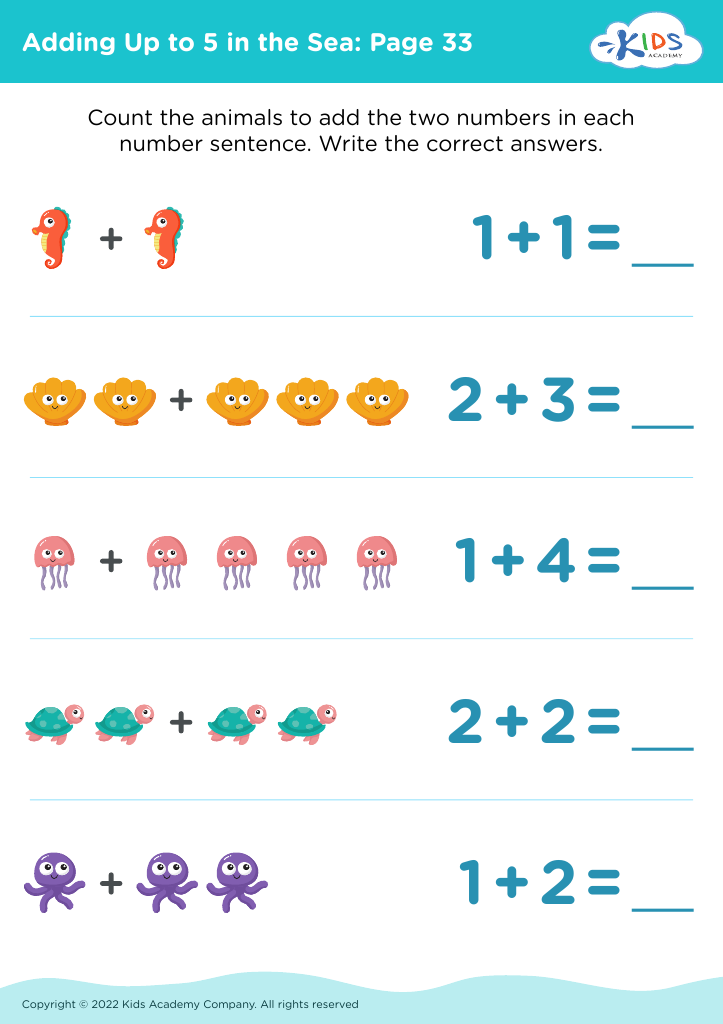
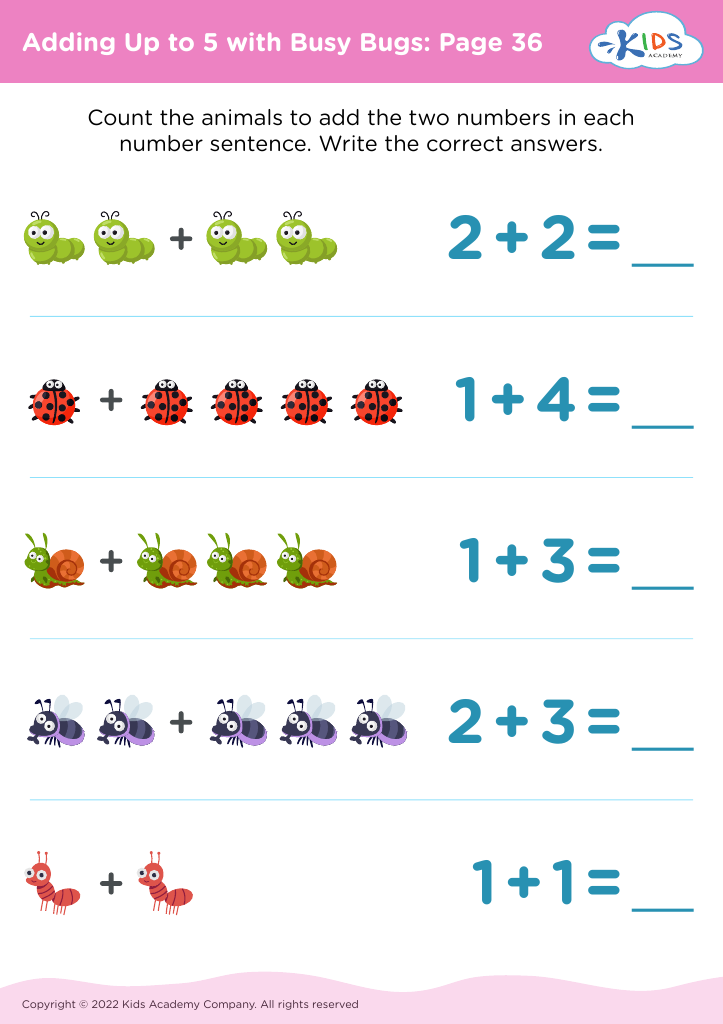
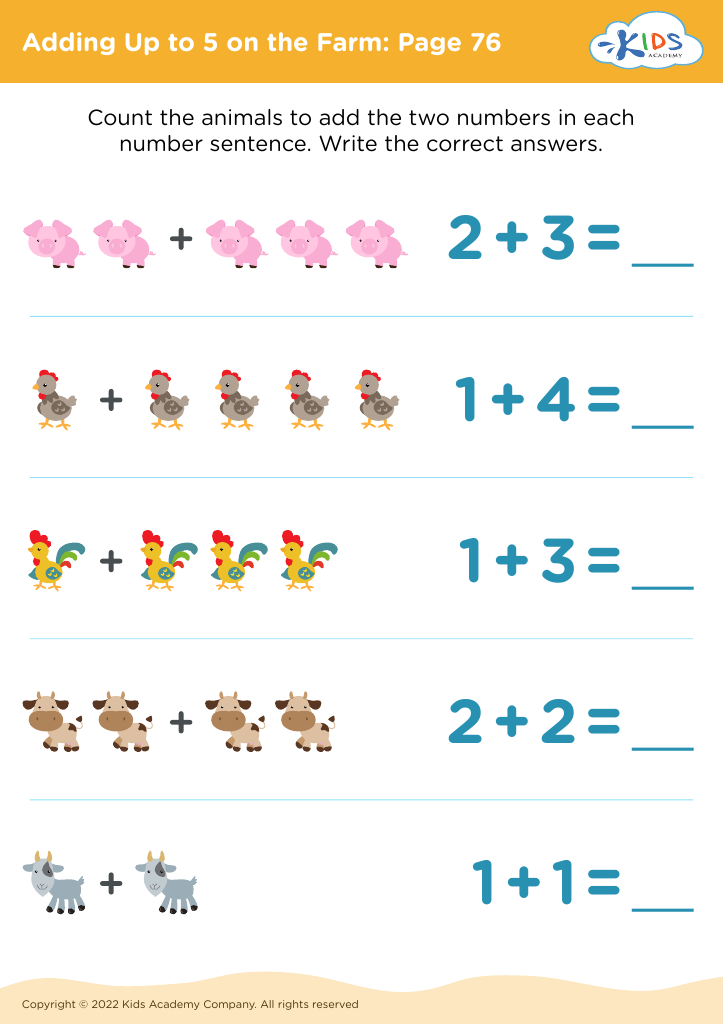
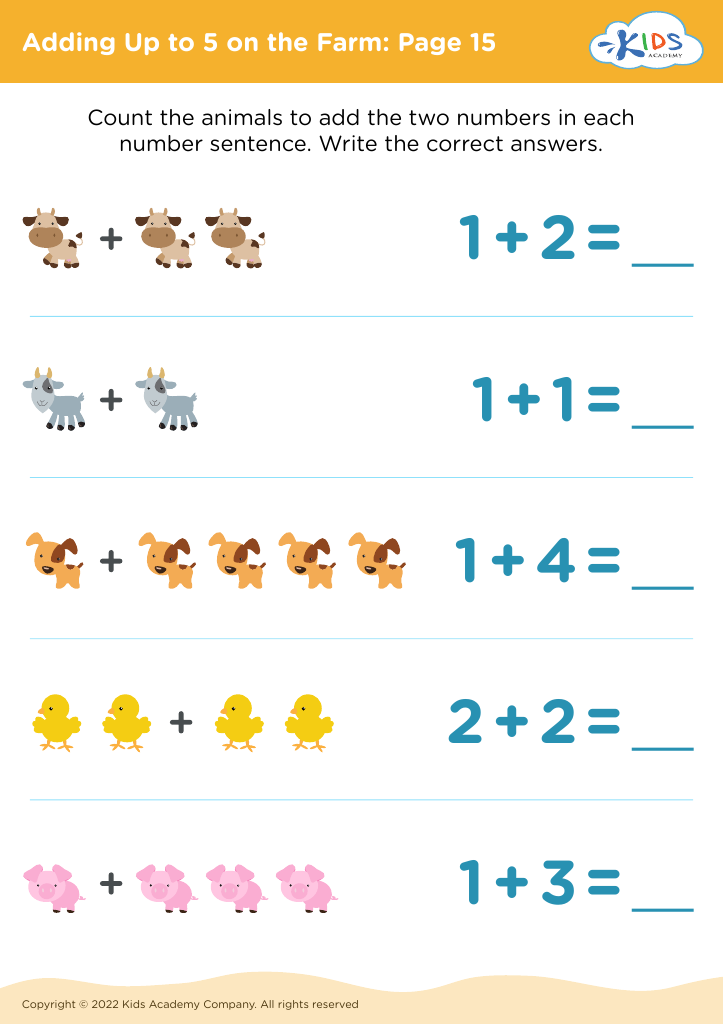
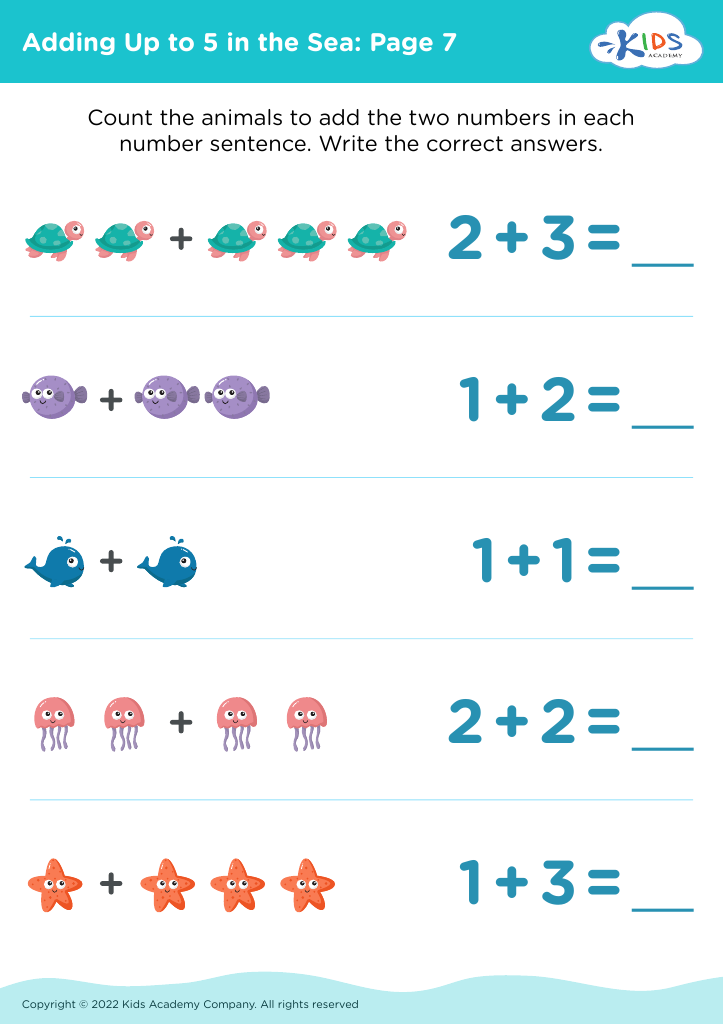
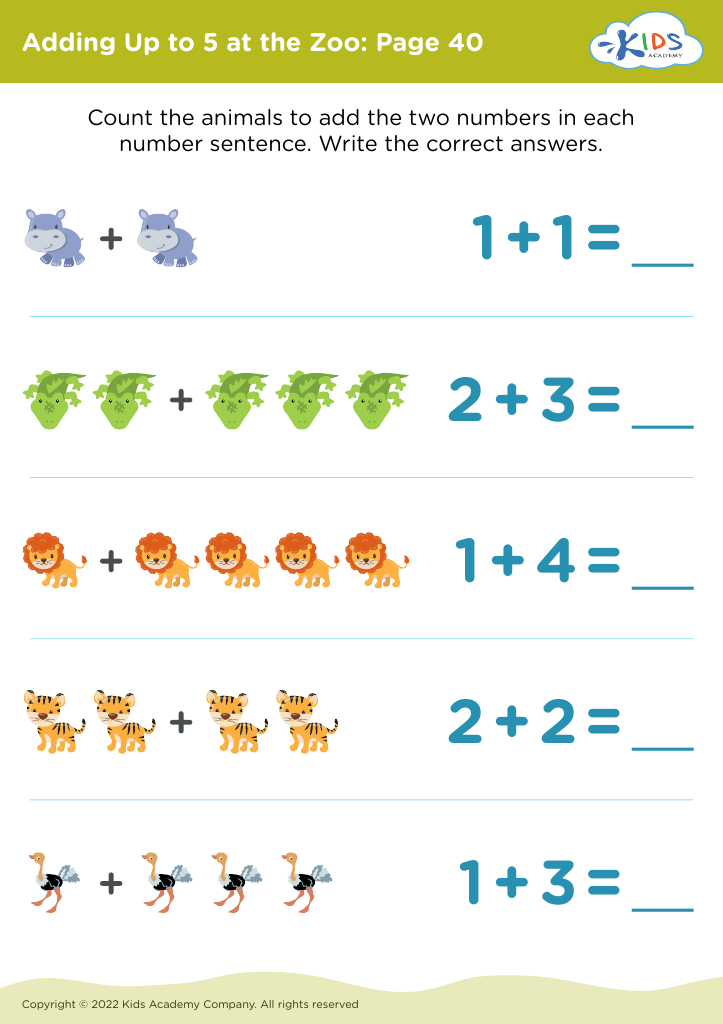
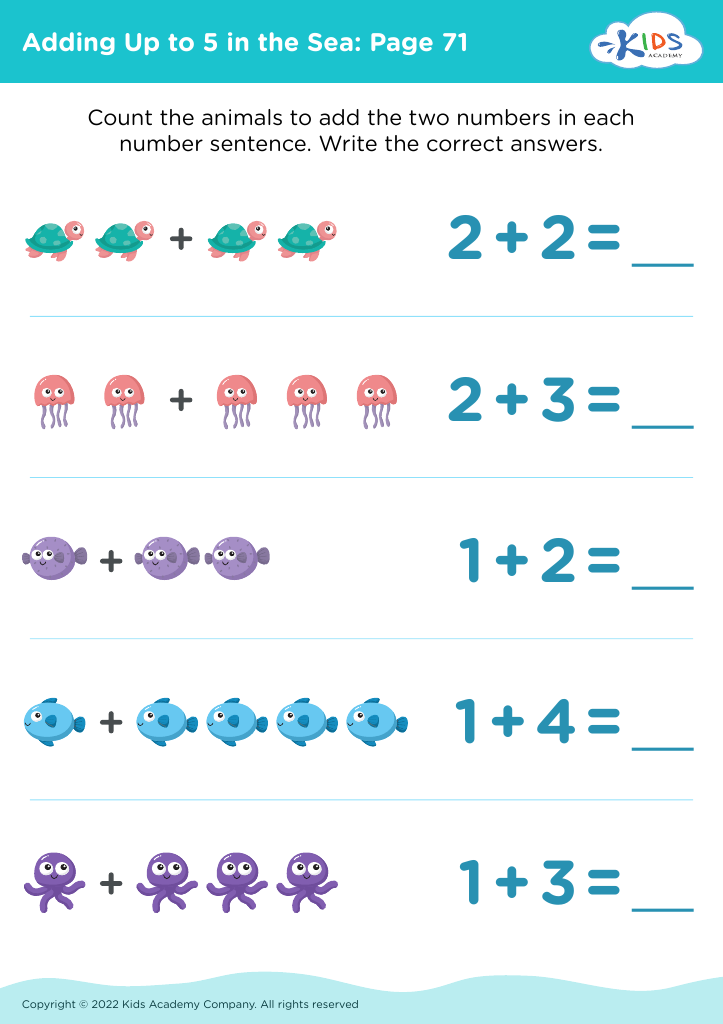
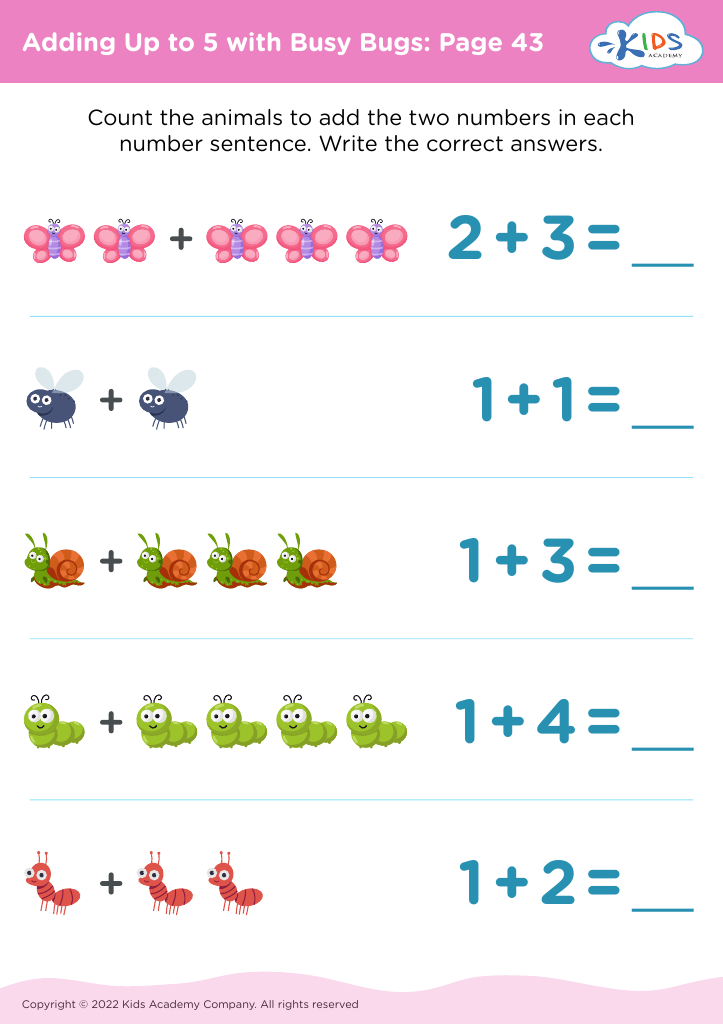
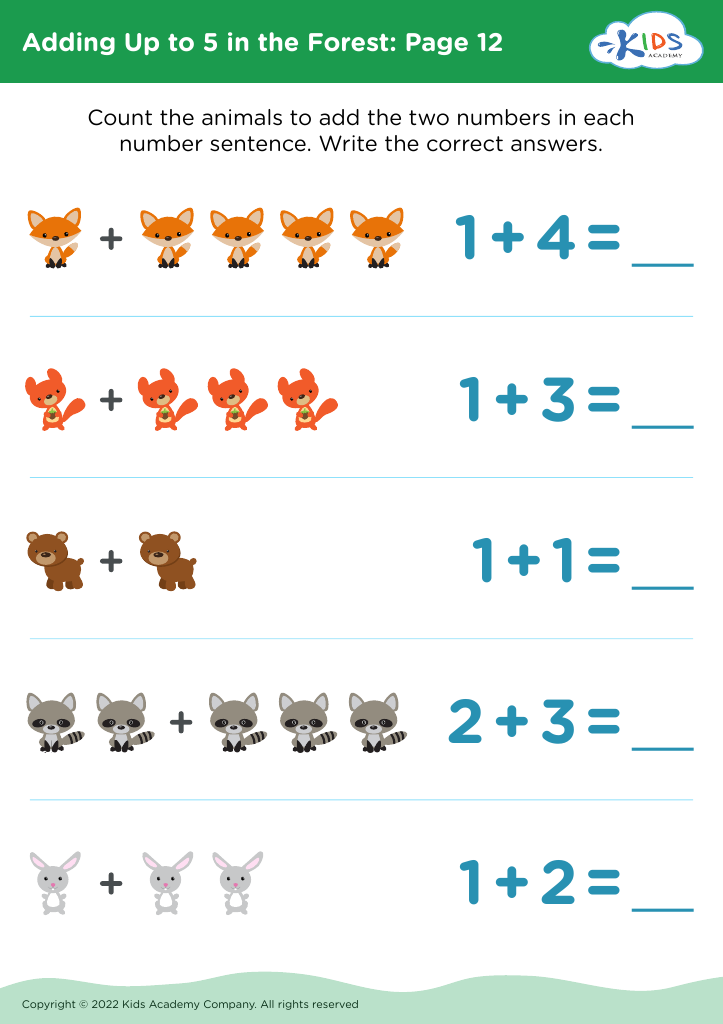
Addition practice for young learners, particularly adding up to 5, is essential for several reasons. First, mastering basic addition lays a solid foundation for future math skills. Children aged 4 to 8 are in a critical phase of cognitive development where they begin to acquire mathematical concepts. By practicing addition within this limited range, children can build confidence and develop fluency in basic arithmetic, which is crucial as they progress to more complex mathematics.
Moreover, addition practice encourages problem-solving skills. When children engage with simple addition exercises, they learn to think critically and approach challenges systematically. This practice not only enhances their mathematical understanding but also promotes a positive attitude towards learning and encourages a growth mindset.
Parents and teachers should also recognize that incorporating fun and engaging activities—like games and hands-on manipulatives—can make learning enjoyable. This interaction fosters an environment where children feel comfortable making mistakes and asking questions, vital aspects of effective learning.
In essence, focusing on addition up to 5 serves as an important stepping stone in a child's educational journey, equipping them with skills and confidence that will benefit them in mathematics and beyond.








