Filters

34 filtered results

Clear all filters
Favorites
With answer key
Interactive

34 filtered results

Difficulty Level

Grade


Check out this FREE Trial Lesson on Adding Up to 5 for age 4-8!

L

Favorites
With answer key
Interactive
  • 4-8
  • Basic Arithmetic
  • Adding Up to 5
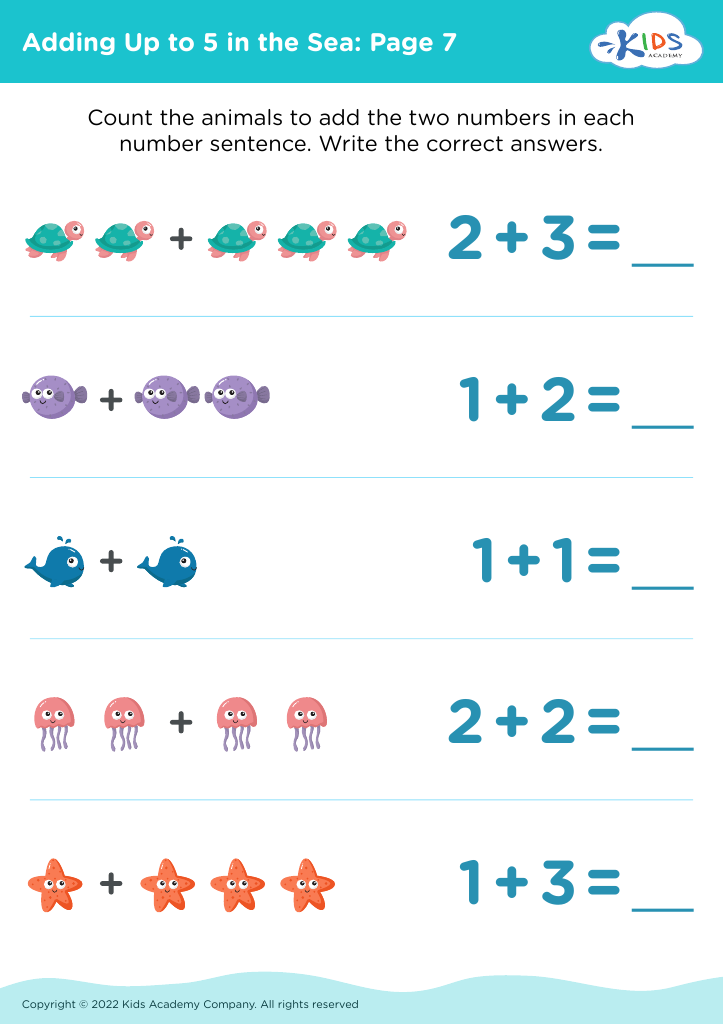
Adding Up to 5 in the Sea: Page 7

Adding Up to 5 in the Sea: Page 7

Adding Up to 5 in the Sea: Page 7
Worksheet
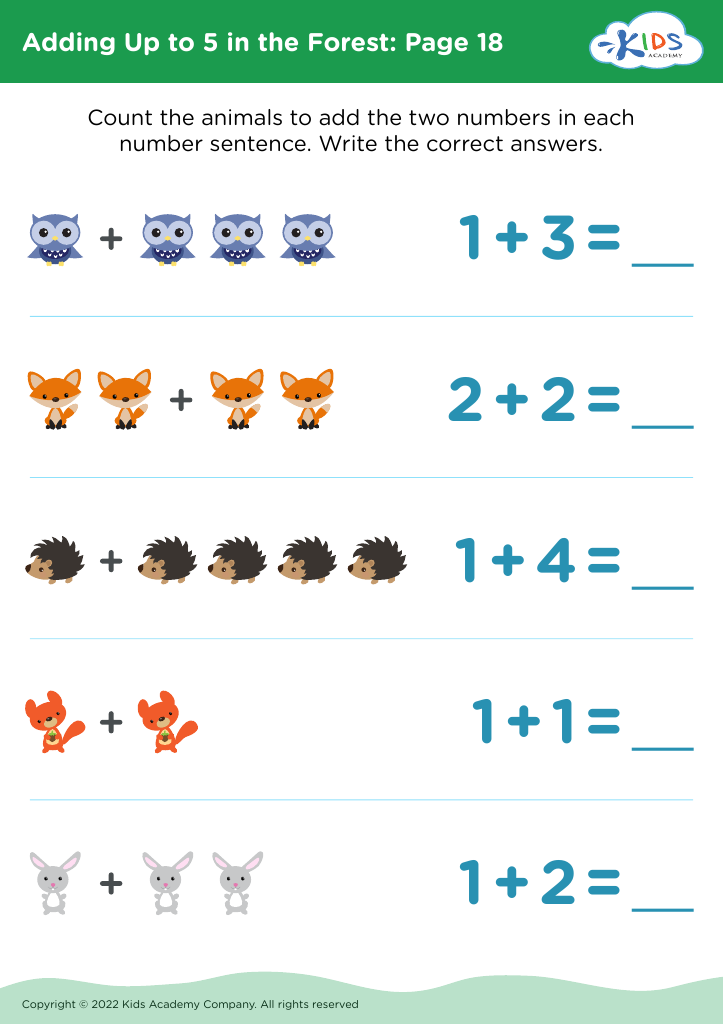
Adding Up to 5 in the Forest: Page 18
Worksheet
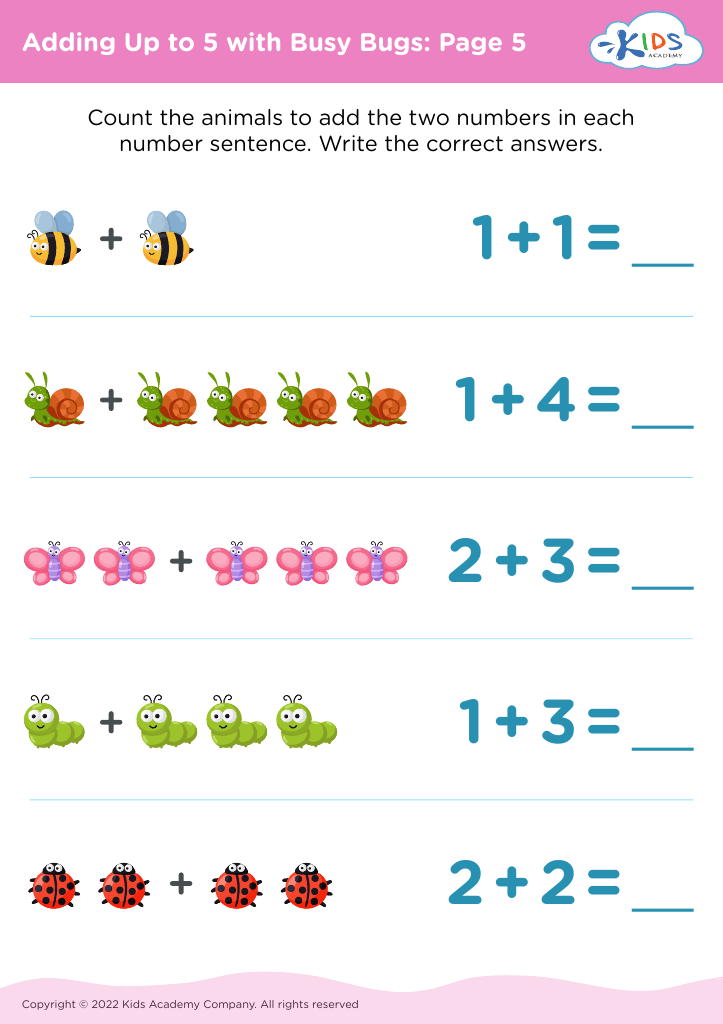
Adding Up to 5 with Busy Bugs: Page 5
Worksheet
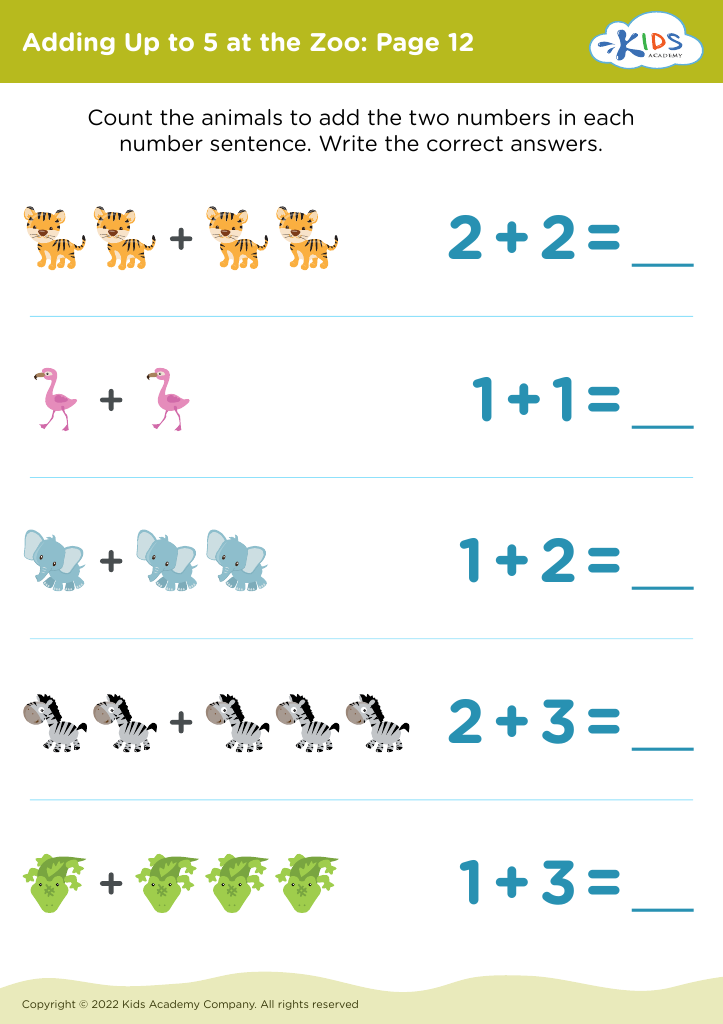
Adding Up to 5 at the Zoo: Page 12
Worksheet
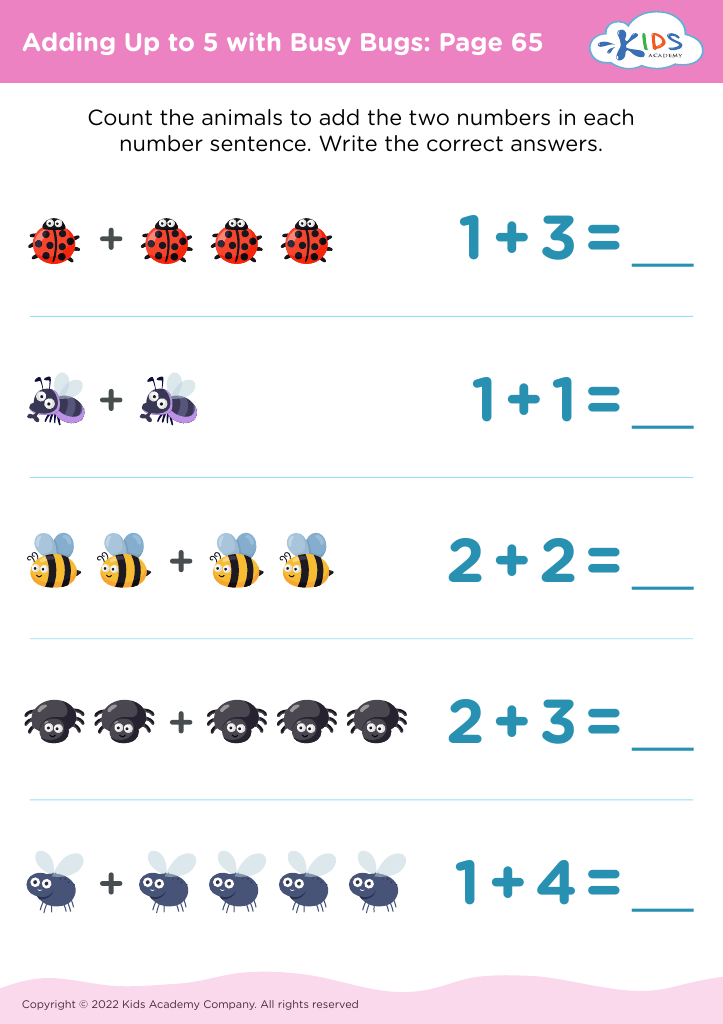
Adding Up to 5 with Busy Bugs: Page 65
Worksheet
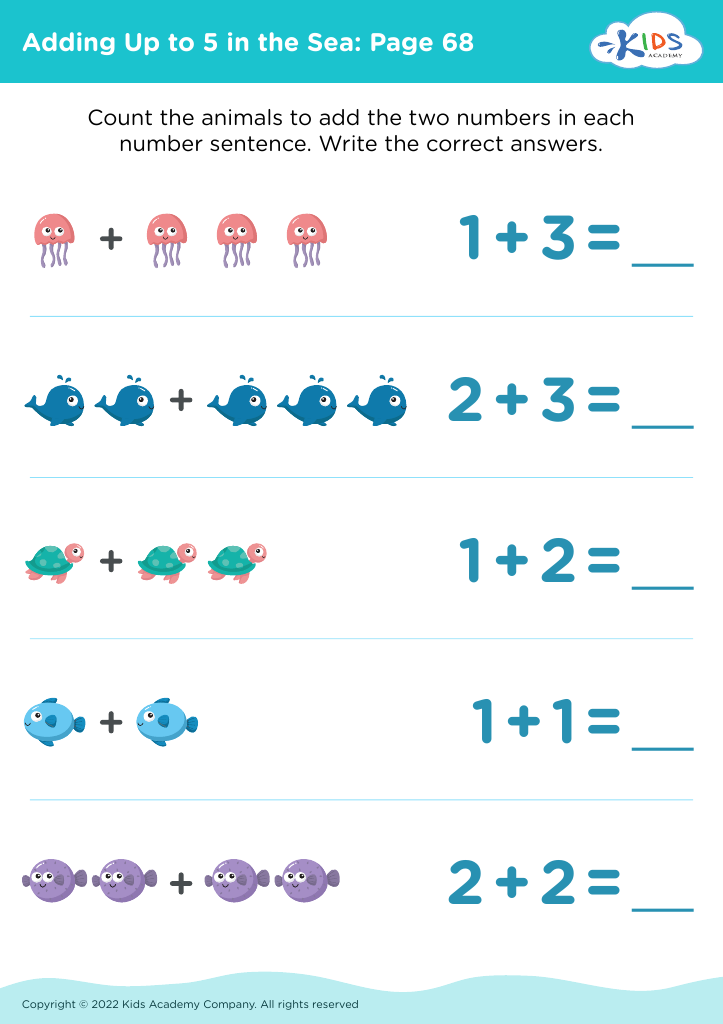
Adding Up to 5 in the Sea: Page 68
Worksheet
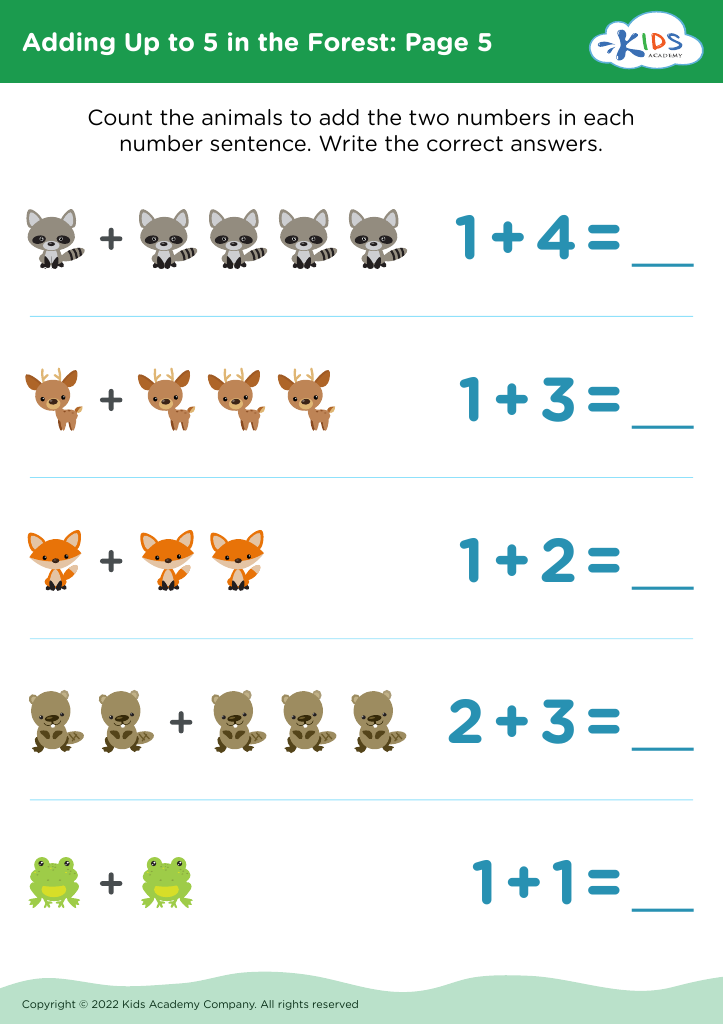
Adding Up to 5 in the Forest: Page 5
Worksheet
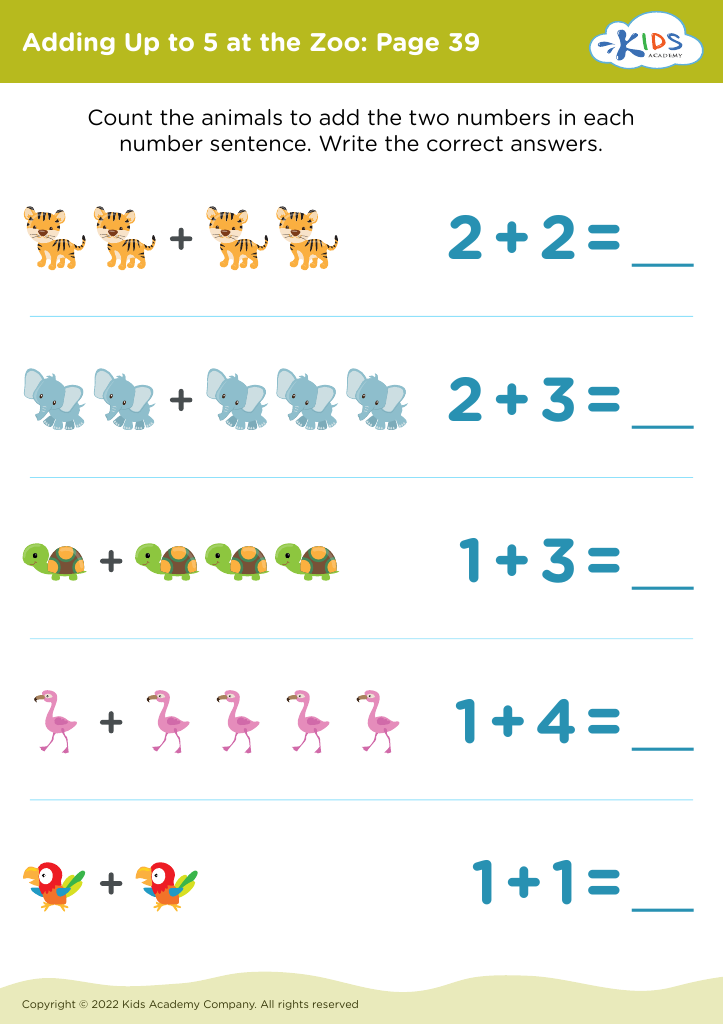
Adding Up to 5 at the Zoo: Page 39
Worksheet
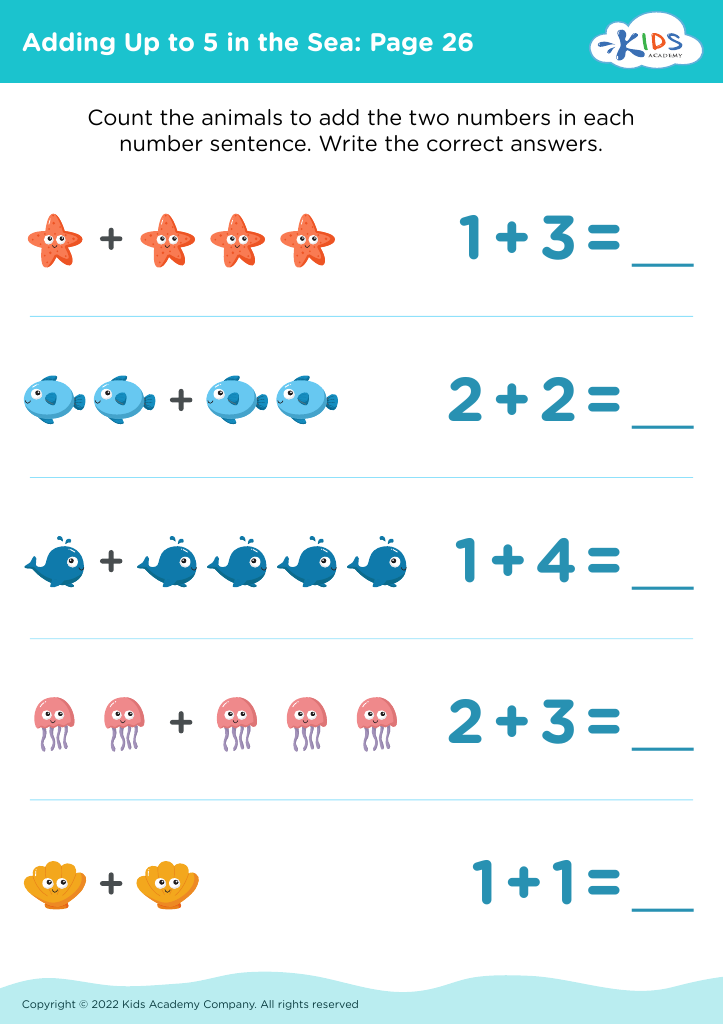
Adding Up to 5 in the Sea: Page 26
Worksheet
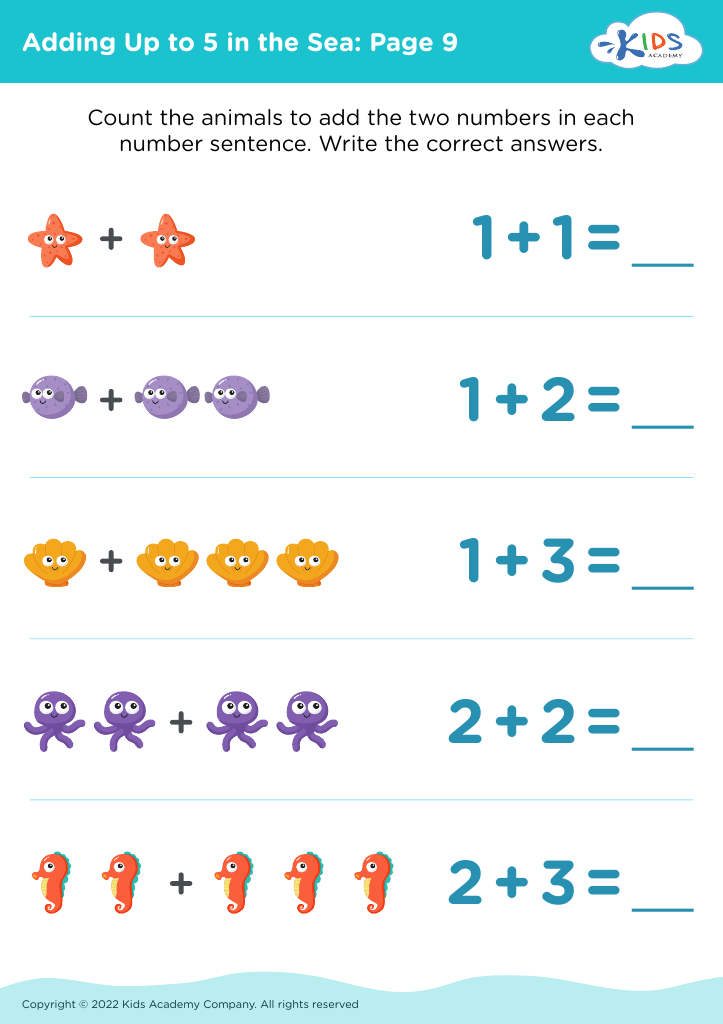
Adding Up to 5 in the Sea: Page 9

Adding Up to 5 in the Sea: Page 9

Adding Up to 5 in the Sea: Page 9
Worksheet


Basic arithmetic, particularly adding up to 5, is foundational for young learners aged 4-8. This stage of development is crucial, as children begin to form their early numeracy skills, which lay the groundwork for future math understanding. Mastery of basic addition enhances cognitive skills such as problem-solving and critical thinking. When children grasp the concept of combining numbers, they cultivate a sense of confidence and competence in their abilities.

Moreover, learning to add within this range promotes early mathematical concepts, such as one-to-one correspondence and number recognition, all essential for more advanced topics in the future. Engaging parents and teachers in this learning process creates a supportive environment where children can explore math in a fun and engaging way.

Furthermore, early proficiency in simple arithmetic can lead to better performance in later academic subjects. It also fosters a positive attitude toward math, breaking potential barriers of math anxiety. In summary, by prioritizing basic arithmetic skills, parents and educators empower children with lifelong learning tools, ensuring they are well-prepared for the educational challenges ahead while shaping their overall cognitive development and self-esteem.