Cognitive Development Adding Up to 5 Worksheets for Ages 4-8
95 filtered results
-
From - To
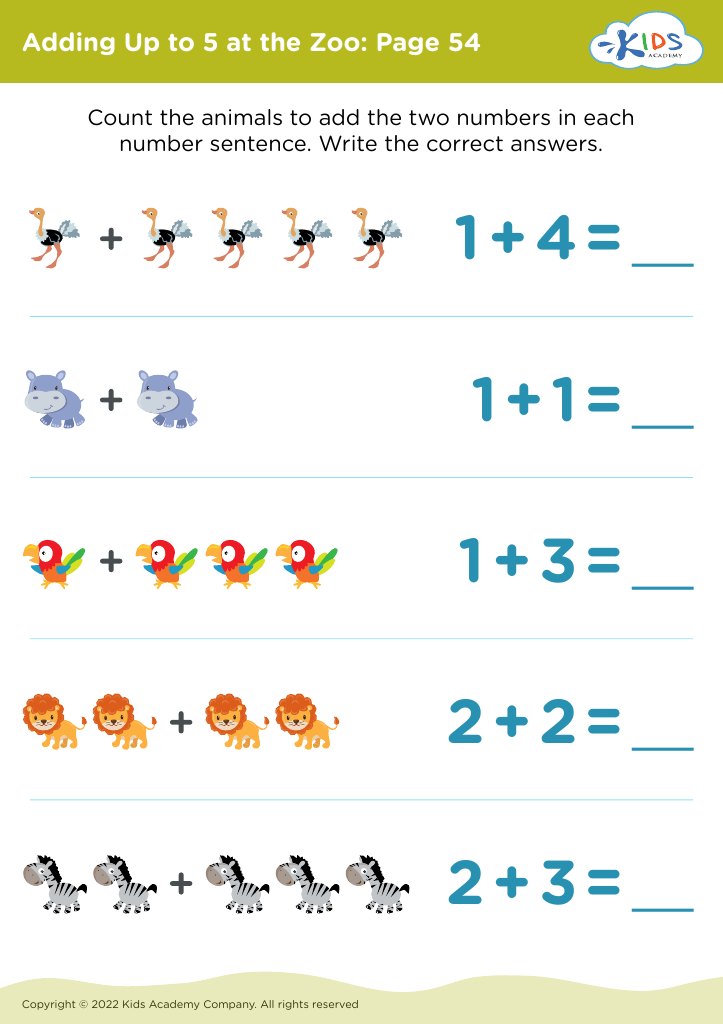
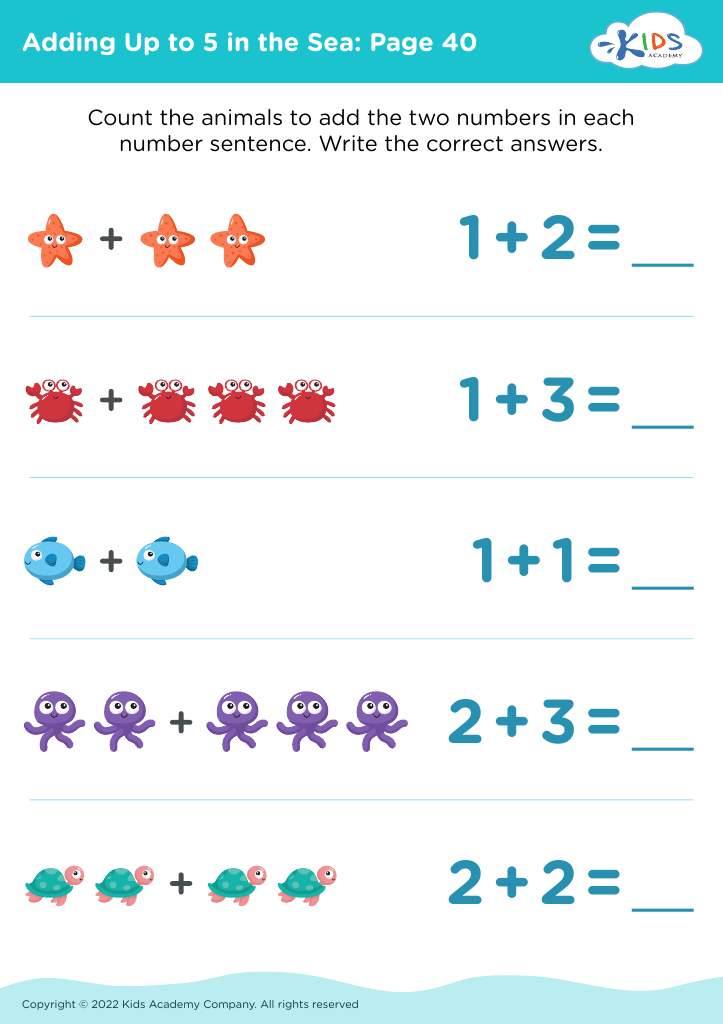
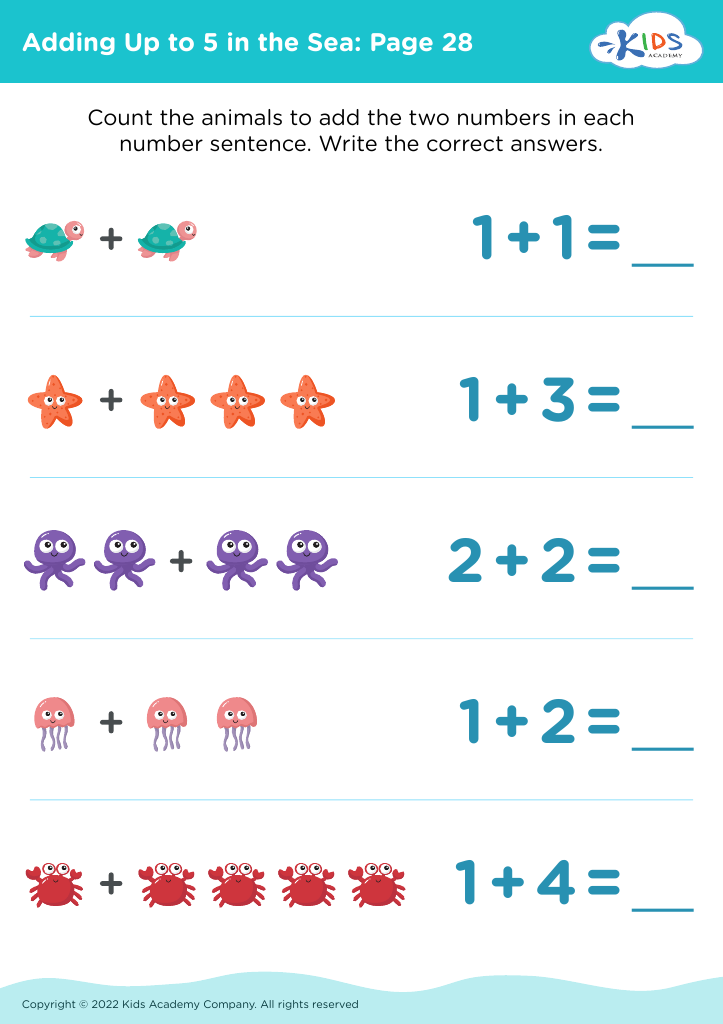
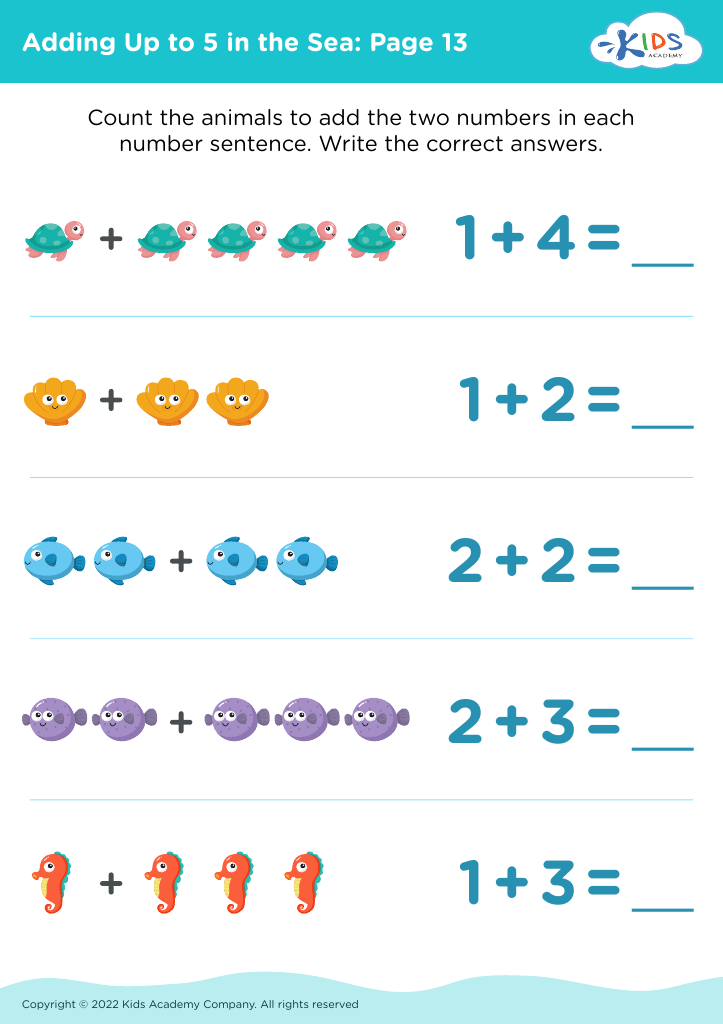
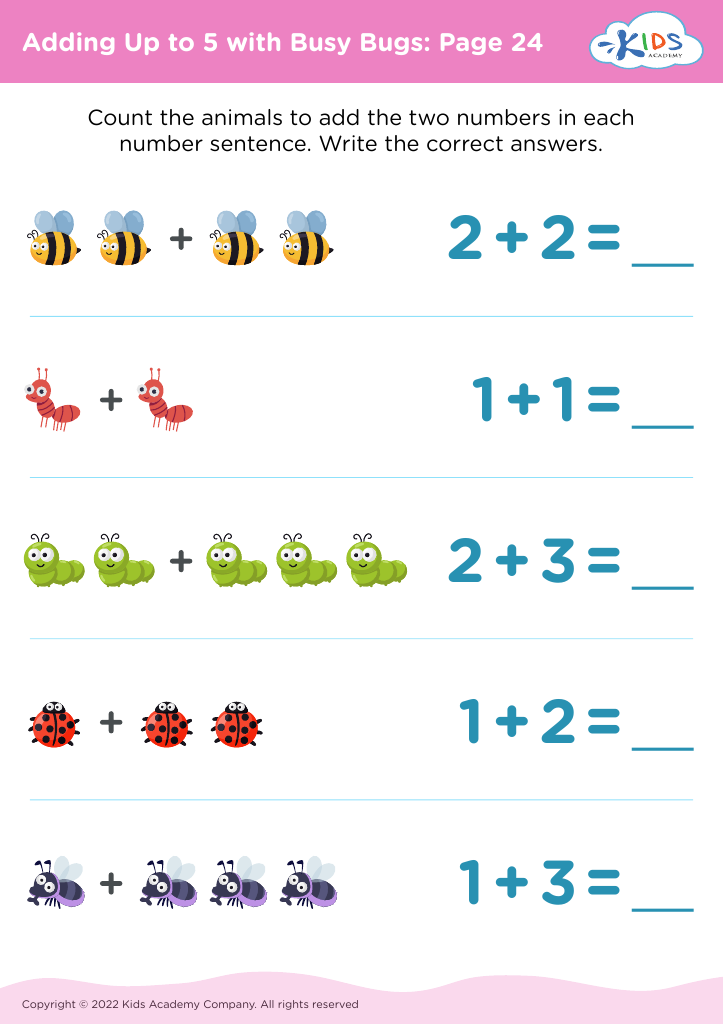
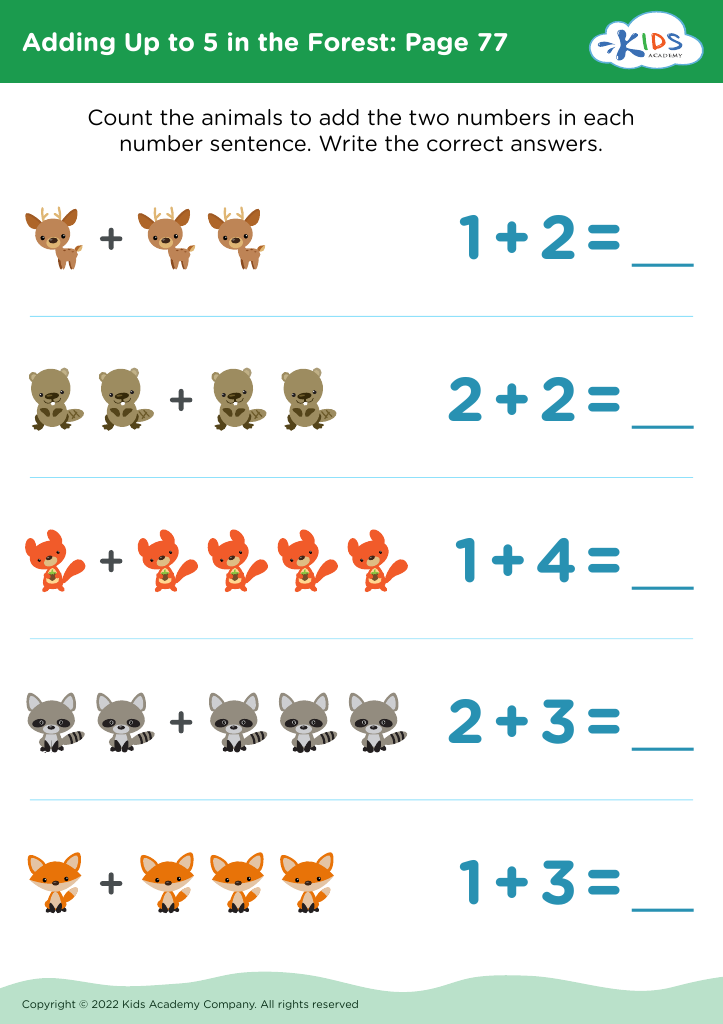
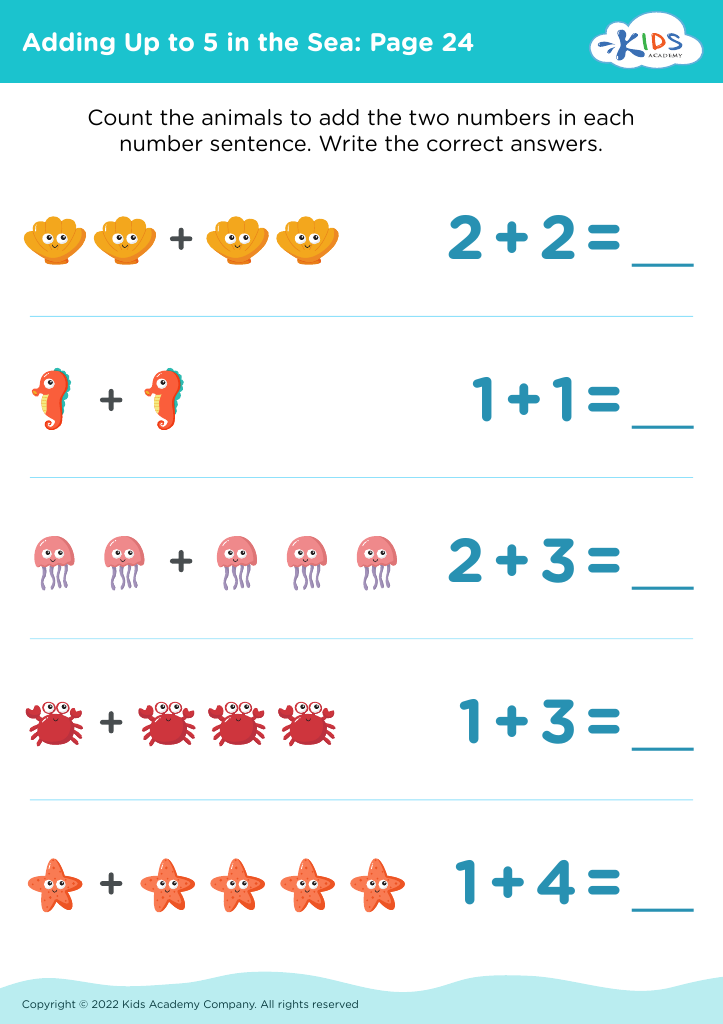
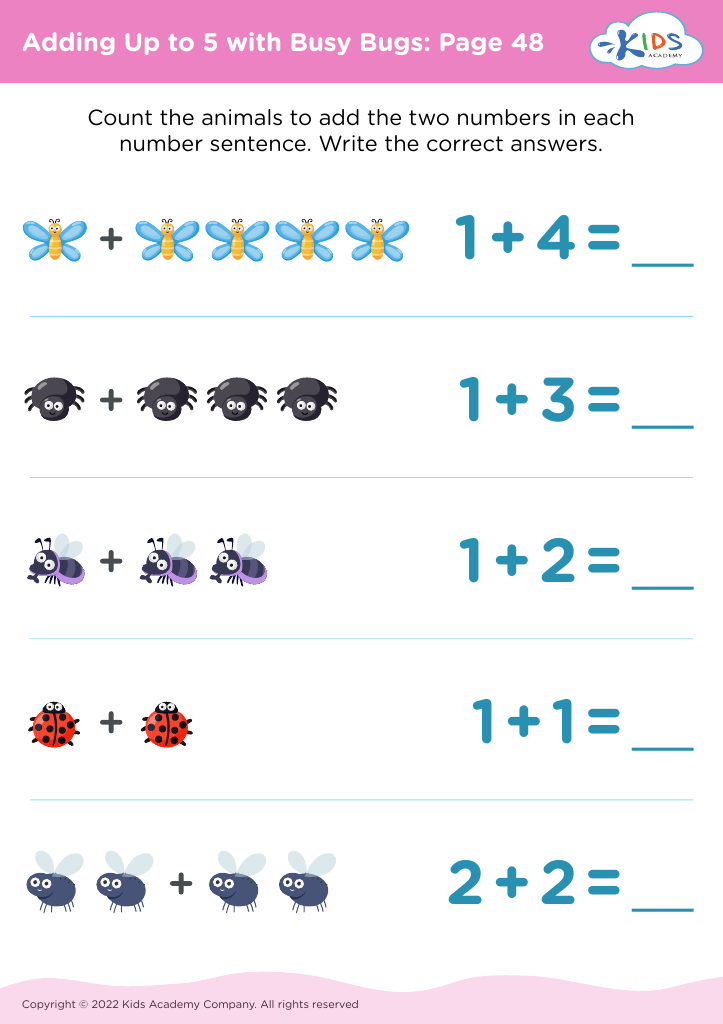
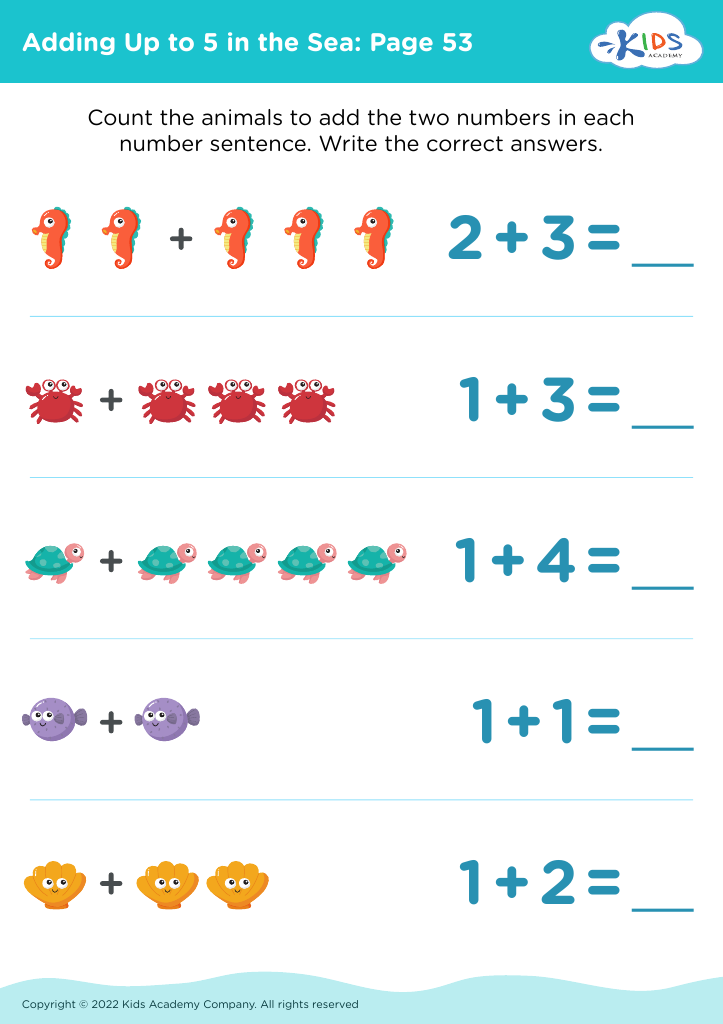
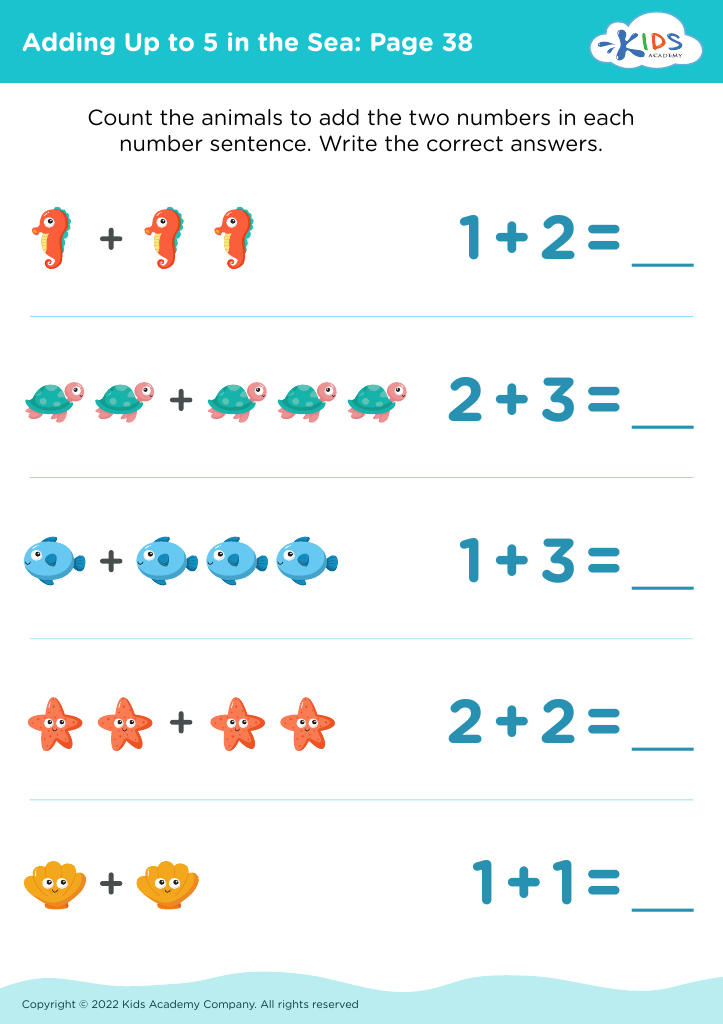
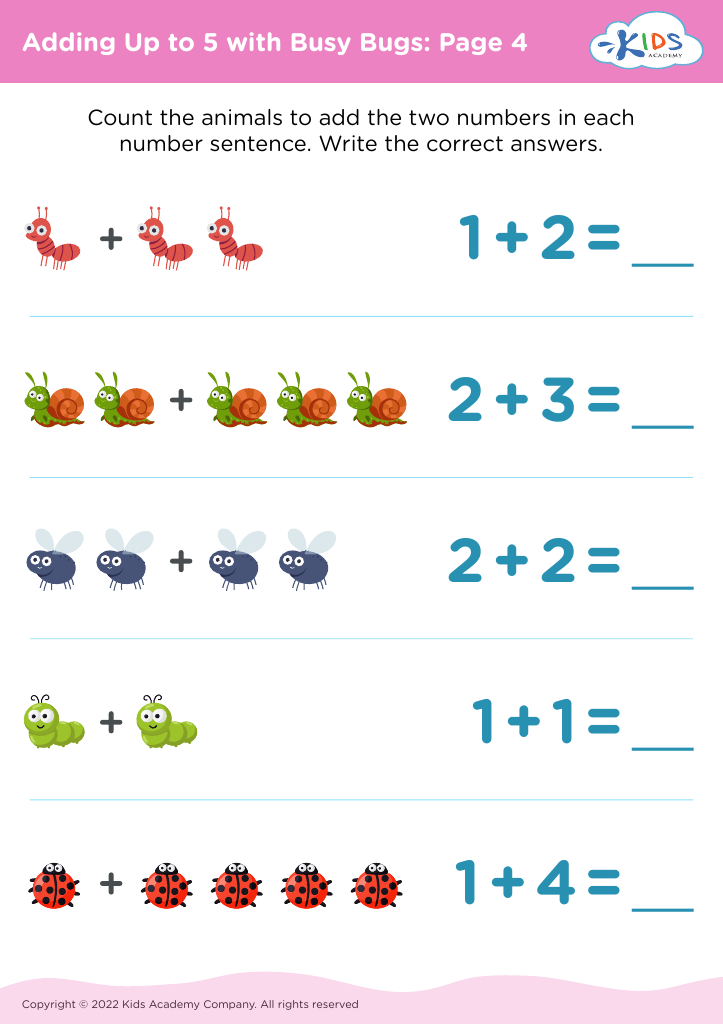
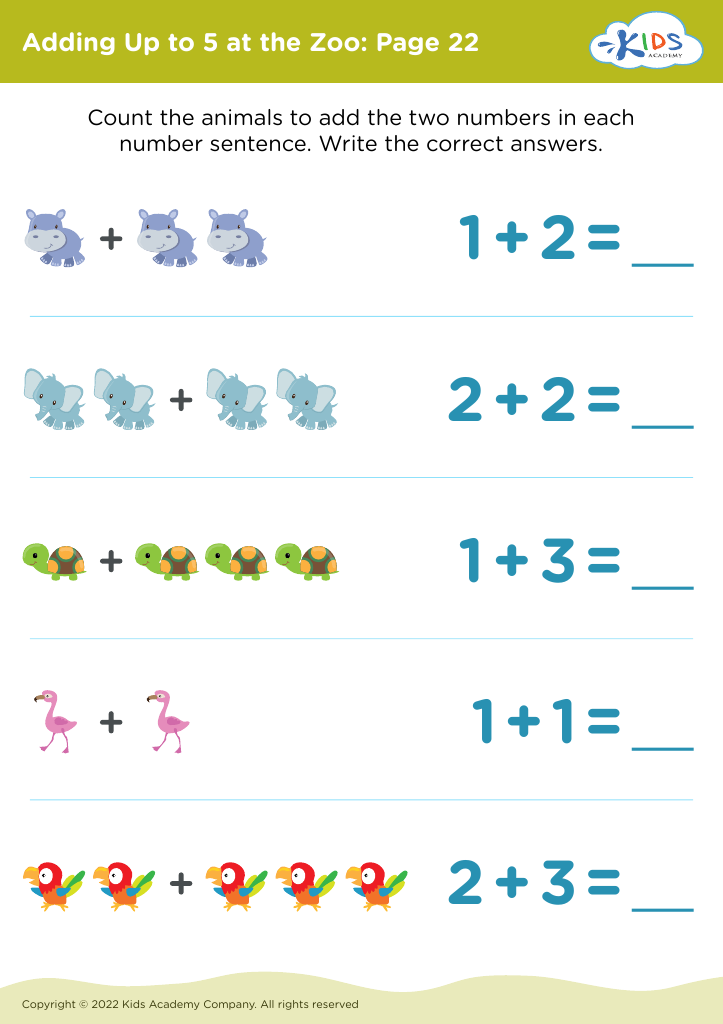
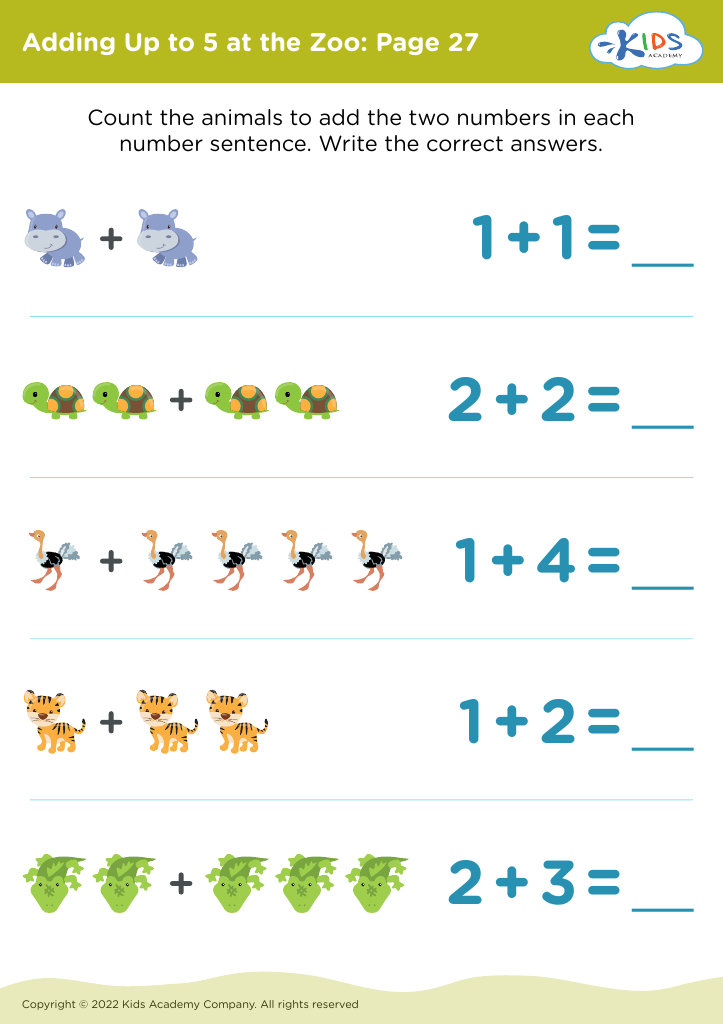
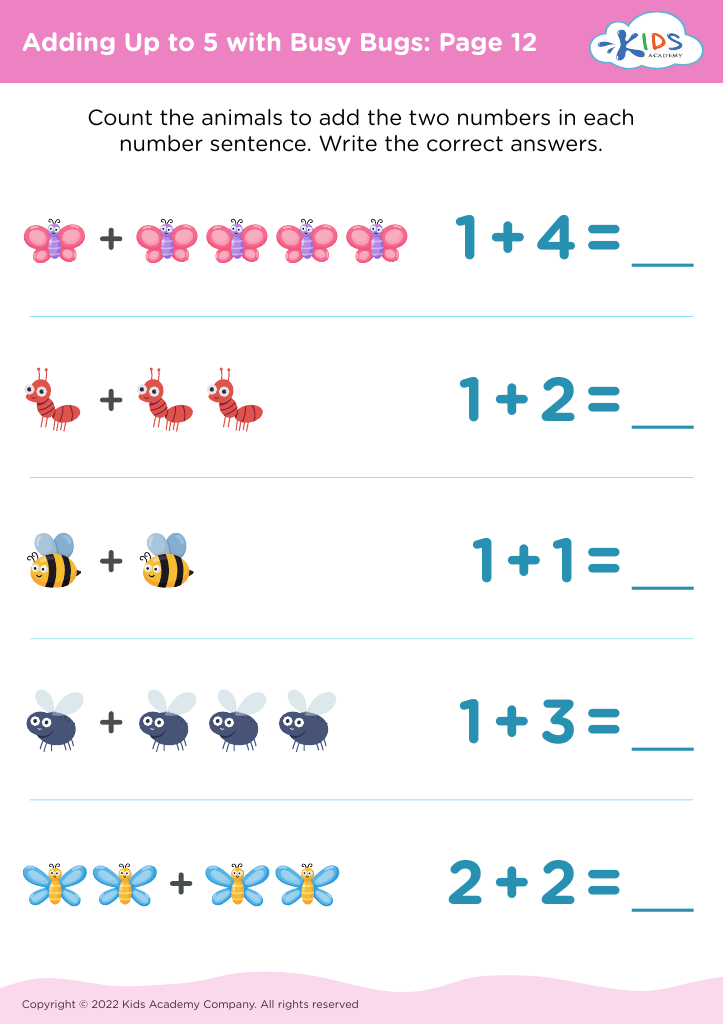
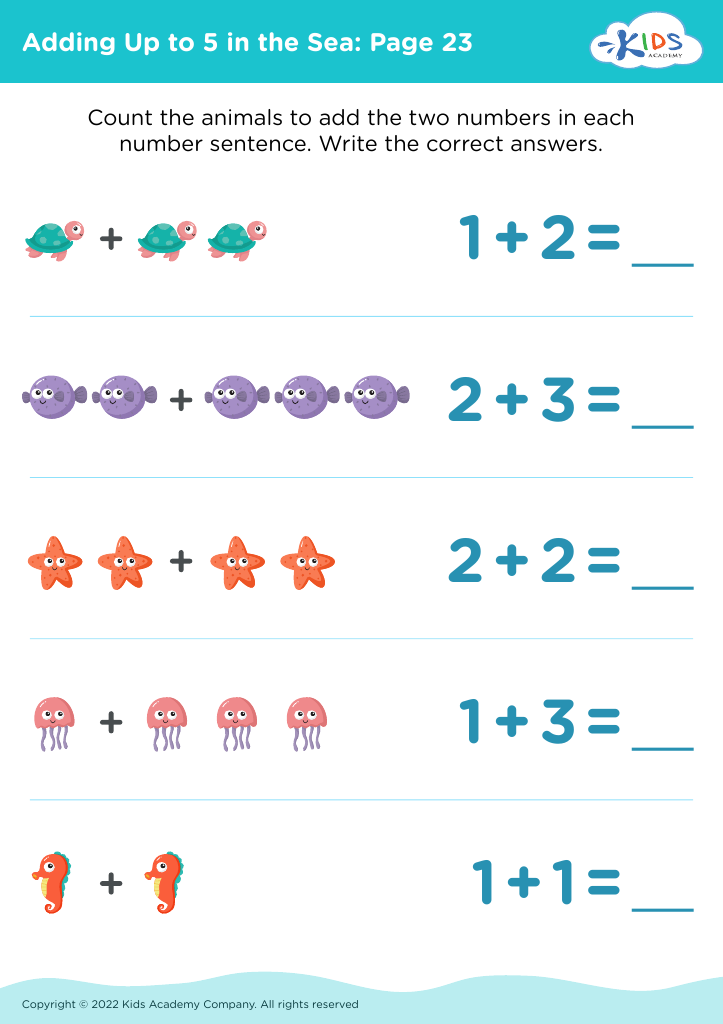
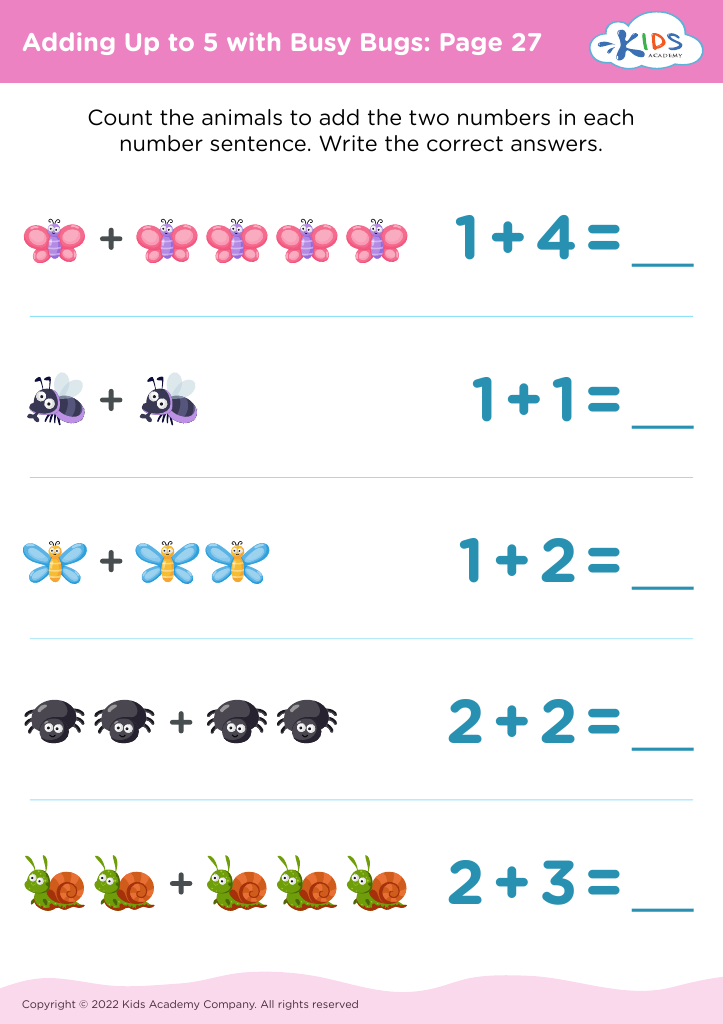
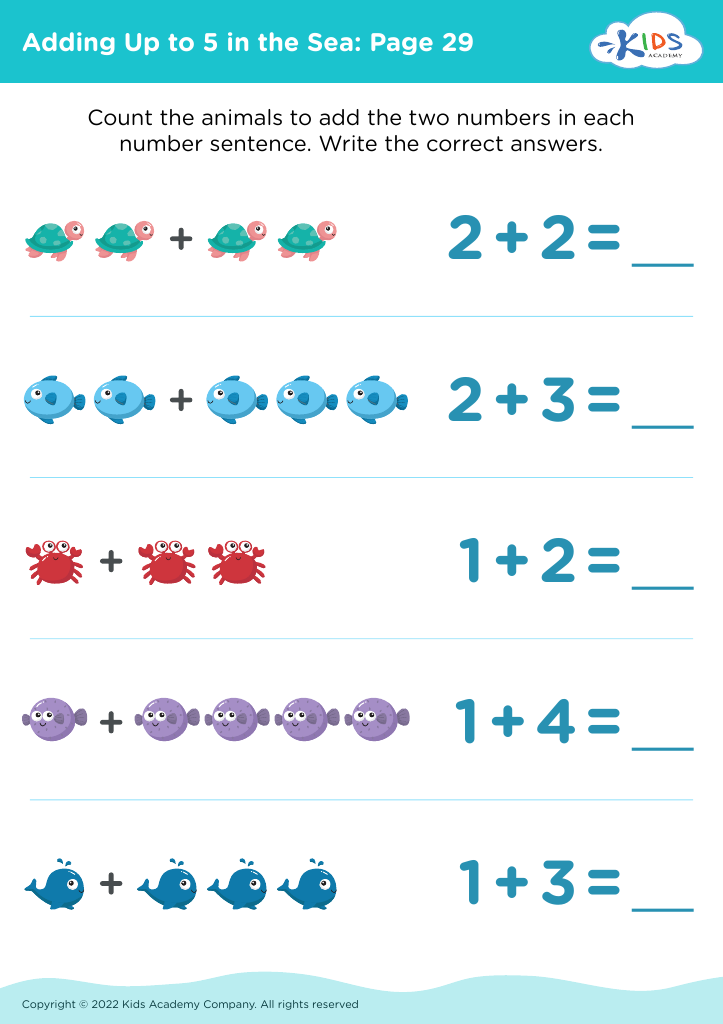
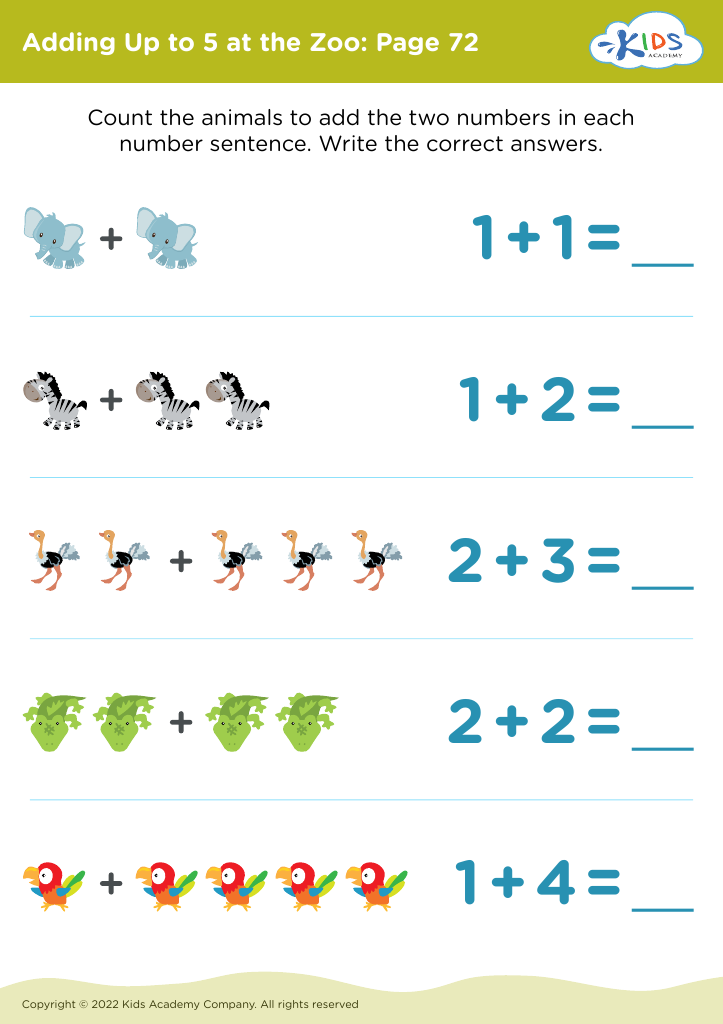
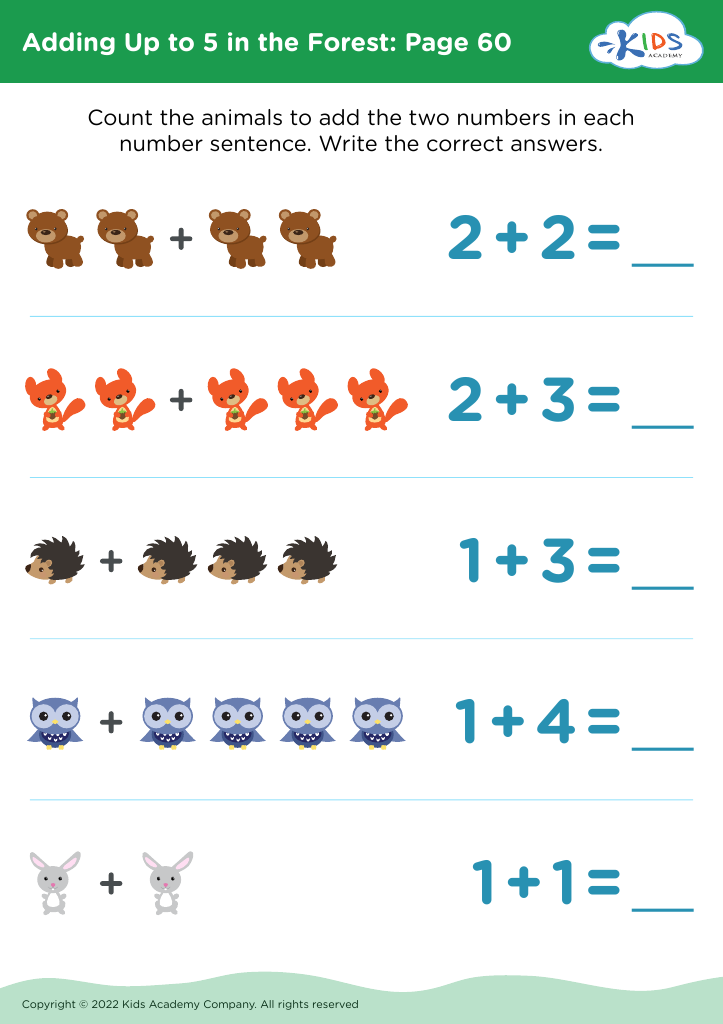
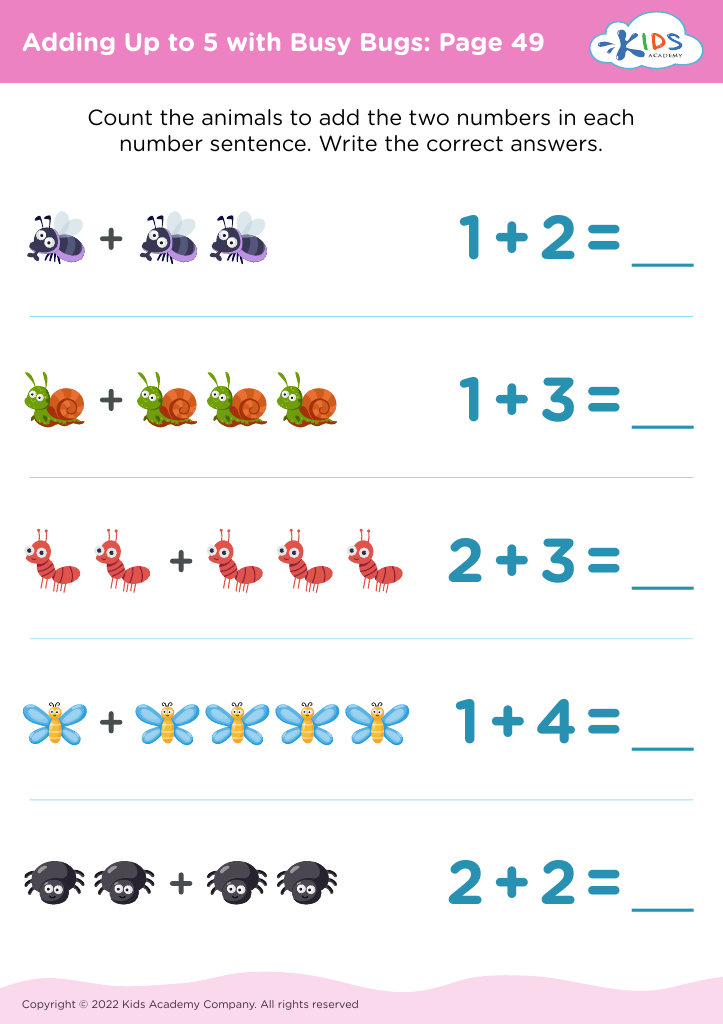
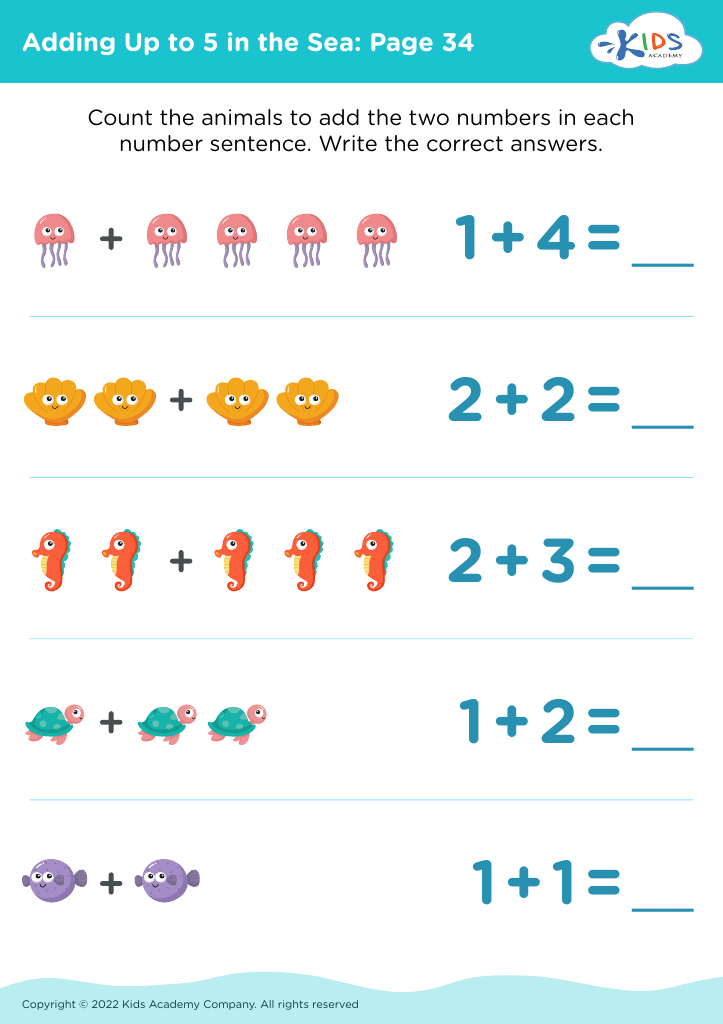
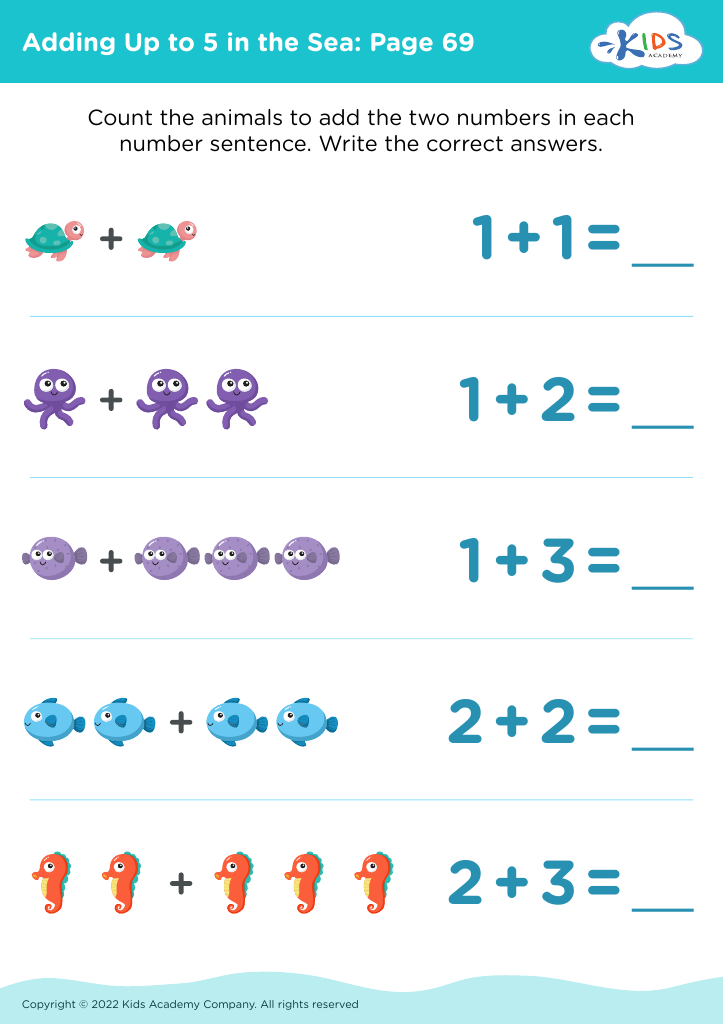
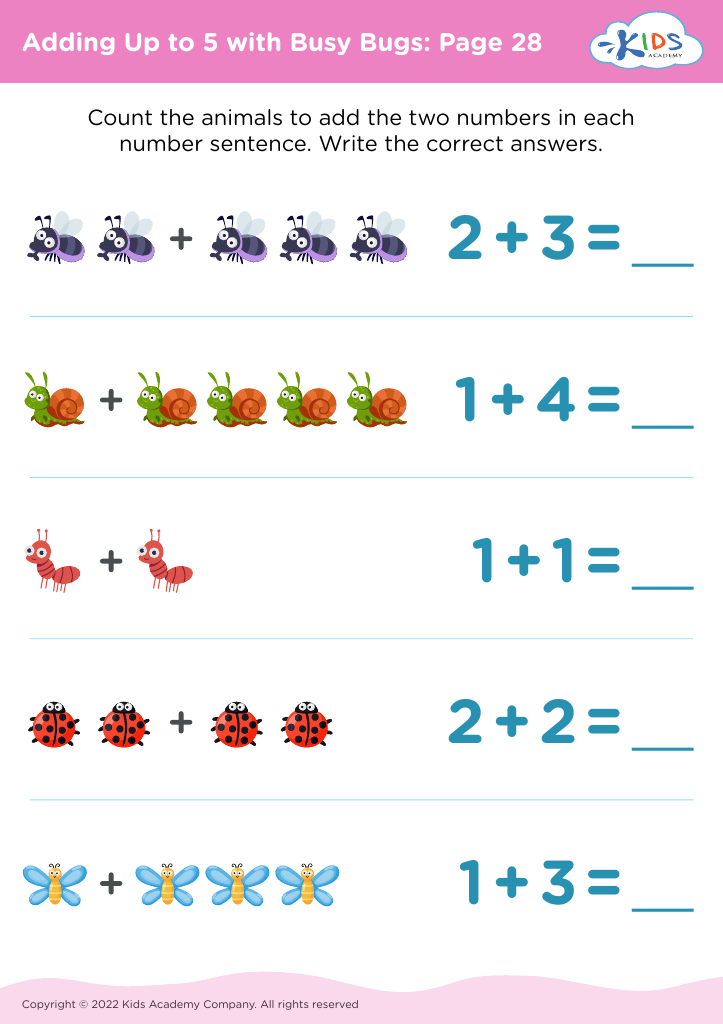
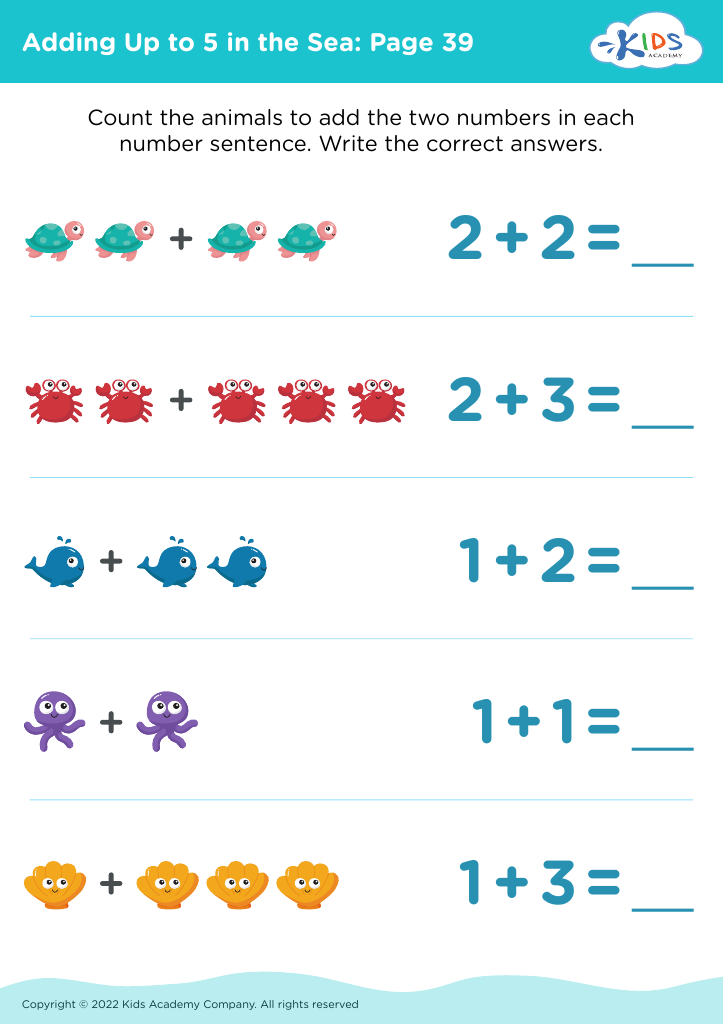
Enhance your child's cognitive development with our engaging "Adding Up to 5 Worksheets" designed specifically for ages 4-8. These thoughtfully crafted activities introduce early math concepts through fun exercises that stimulate critical thinking and problem-solving skills. By engaging in addition up to 5, children learn to recognize numbers, improve their counting abilities, and develop a strong foundation for future math success. Our worksheets incorporate colorful illustrations and interactive tasks to keep young learners motivated and excited about learning math. Foster confidence and enthusiasm in mathematics with these effective resources that make learning enjoyable! Download our worksheets today to support your child's growth!





%20(1).jpg)


Cognitive development in early childhood, particularly in the domain of mathematics like "Adding Up to 5," is crucial for building a strong foundation for future learning. Children aged 4 to 8 are at a critical stage where they develop key cognitive skills, including problem-solving, logical reasoning, and number sense. Mastering basic addition concepts fosters confidence and engenders a positive attitude toward mathematics.
Parents and teachers play an essential role in nurturing these skills and can utilize engaging methods such as games and hands-on activities to reinforce addition. Understanding how to add small numbers cultivates a child’s ability to tackle more complex math concepts in later years. Additionally, cognitive skills acquired during this period directly influence children's academic performance in various subjects, as critical thinking and analytical skills are vital across the curriculum.
Furthermore, early mastery of these skills helps in social interactions—by encouraging collaborative play and communication about math. Therefore, investing time in developing cognitive skills linked to adding up to 5 not only supports immediate academic goals but also sets children on a path toward lifelong learning and adaptability in an increasingly complex world. This makes it imperative for parents and teachers to actively engage in this foundational learning significant for children's overall development.








