Filters

36 filtered results

Clear all filters
Favorites
With answer key
Interactive

36 filtered results

Difficulty Level

Grade


Check out this FREE Trial Lesson on Adding Up to 5 for age 4-8!

P

Favorites
With answer key
Interactive
  • 4-8
  • Understanding Quantities
  • Adding Up to 5
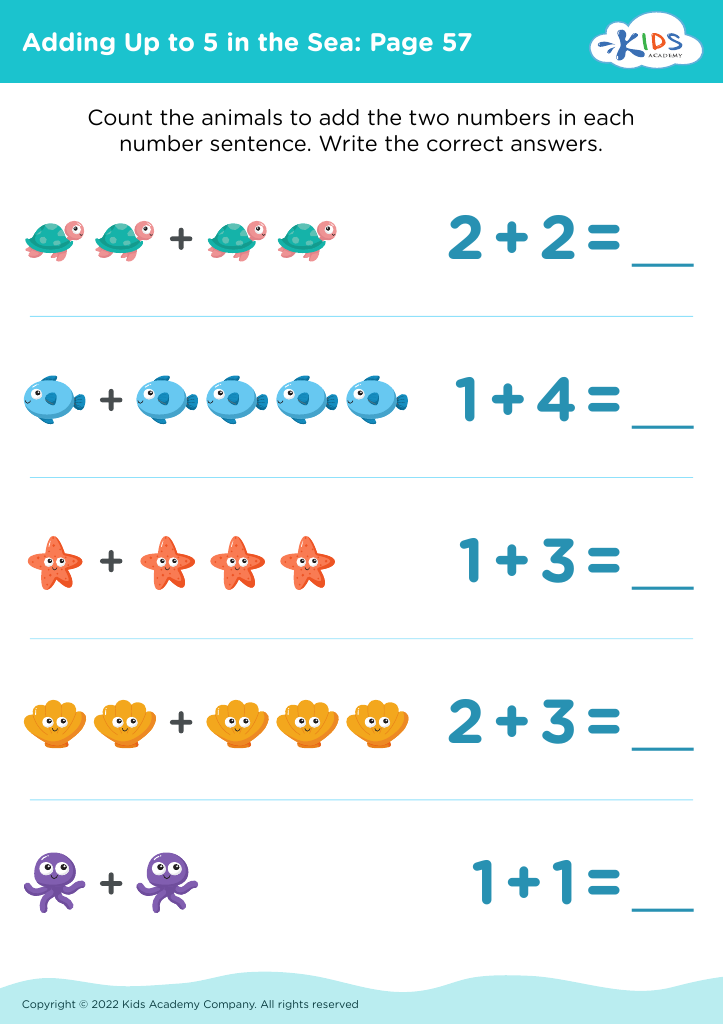
Adding Up to 5 in the Sea: Page 57
Worksheet
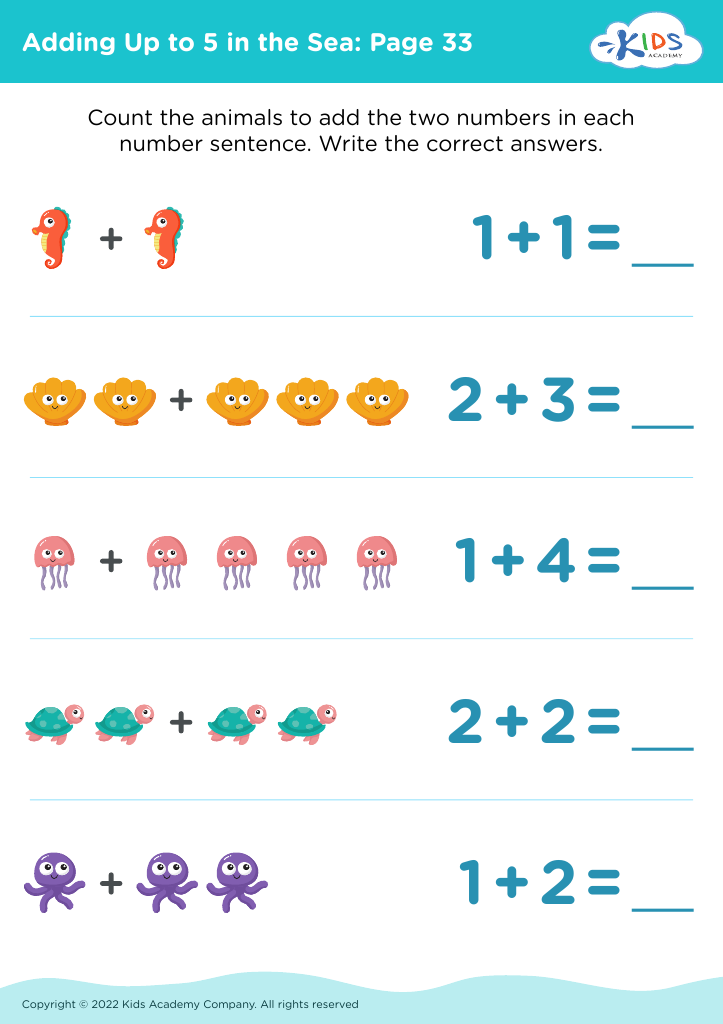
Adding Up to 5 in the Sea: Page 33
Worksheet
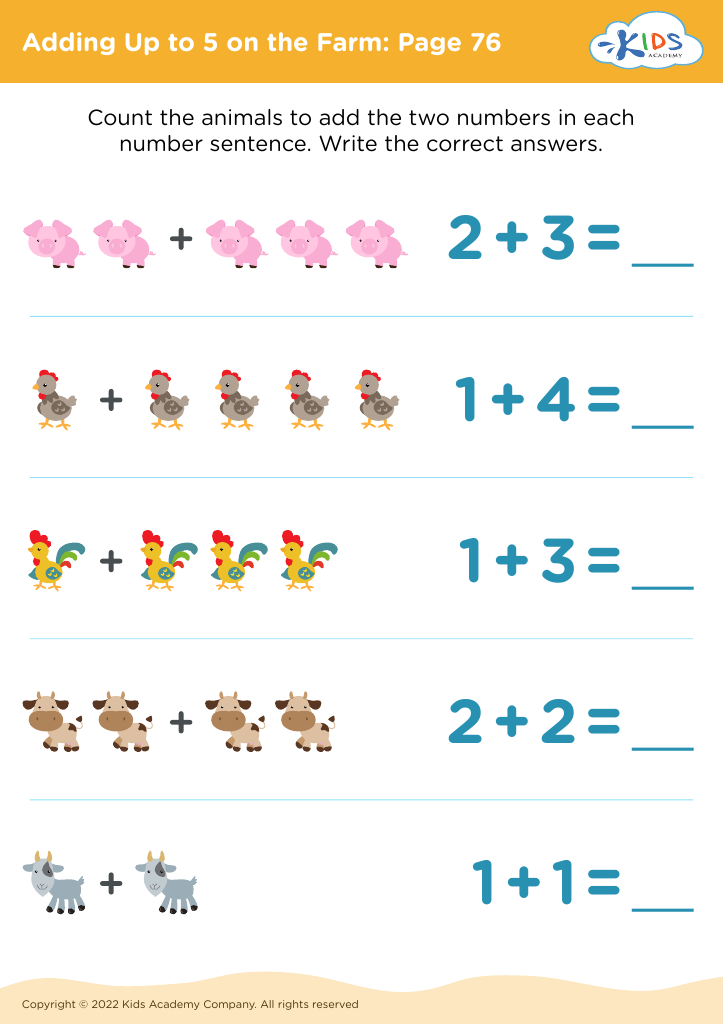
Adding Up to 5 on the Farm: Page 76
Worksheet
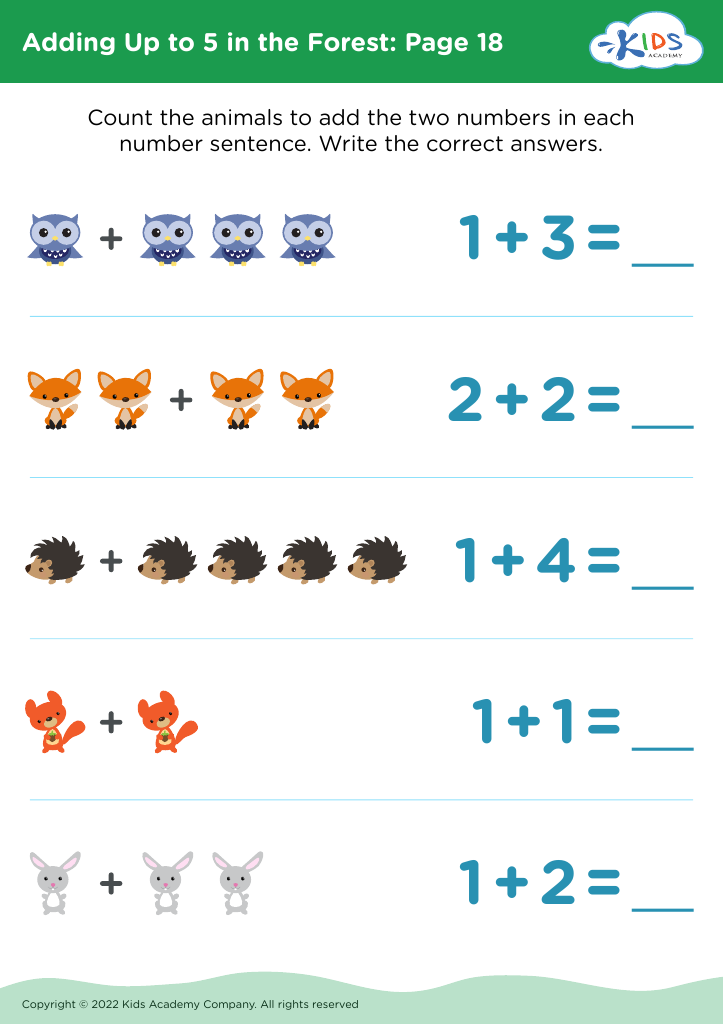
Adding Up to 5 in the Forest: Page 18
Worksheet
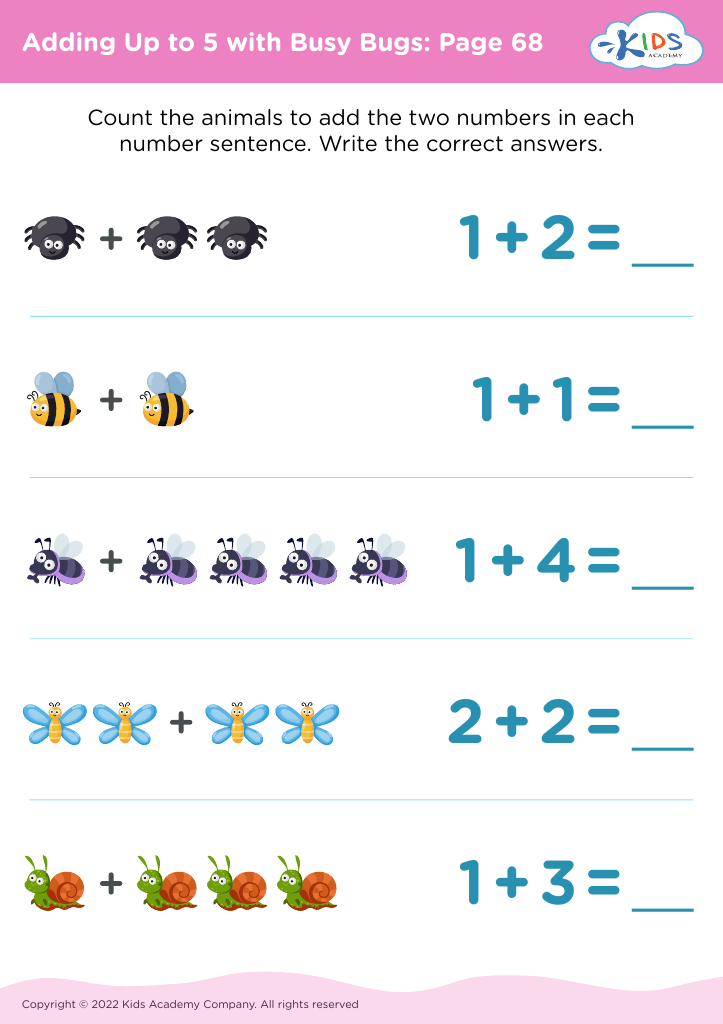
Adding Up to 5 with Busy Bugs: Page 68
Worksheet
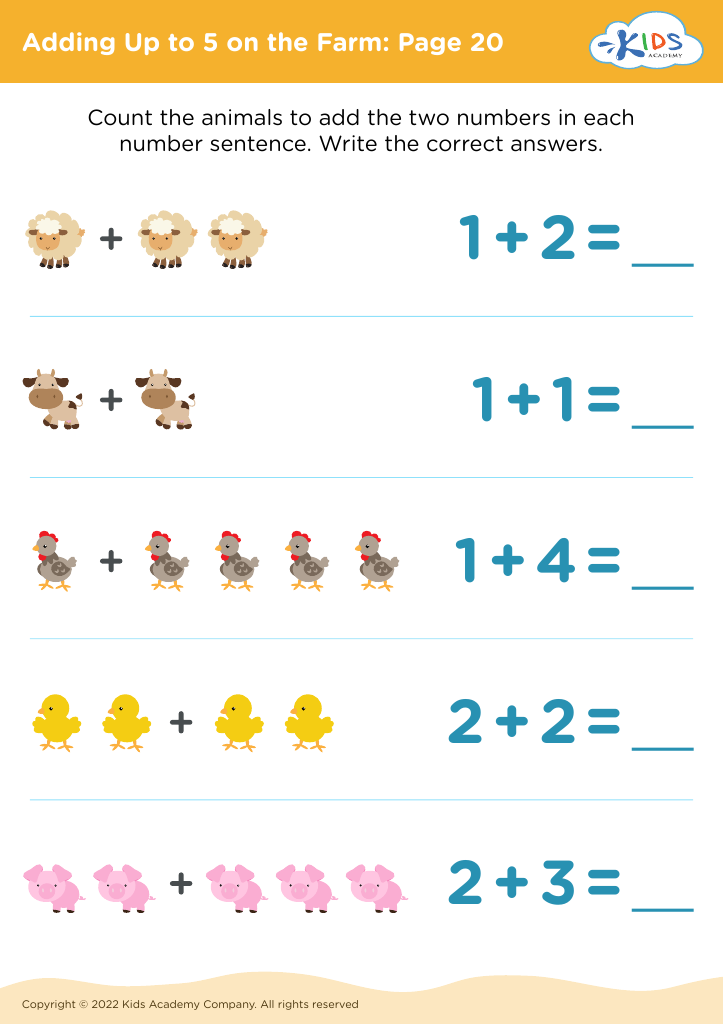
Adding Up to 5 on the Farm: Page 20
Worksheet
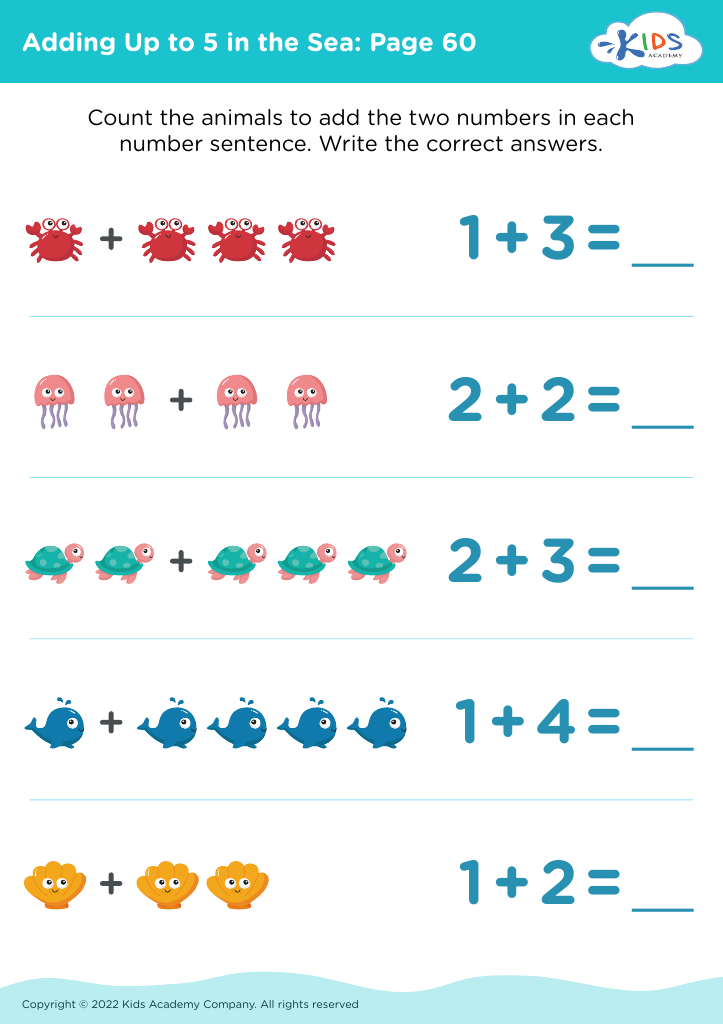
Adding Up to 5 in the Sea: Page 60
Worksheet
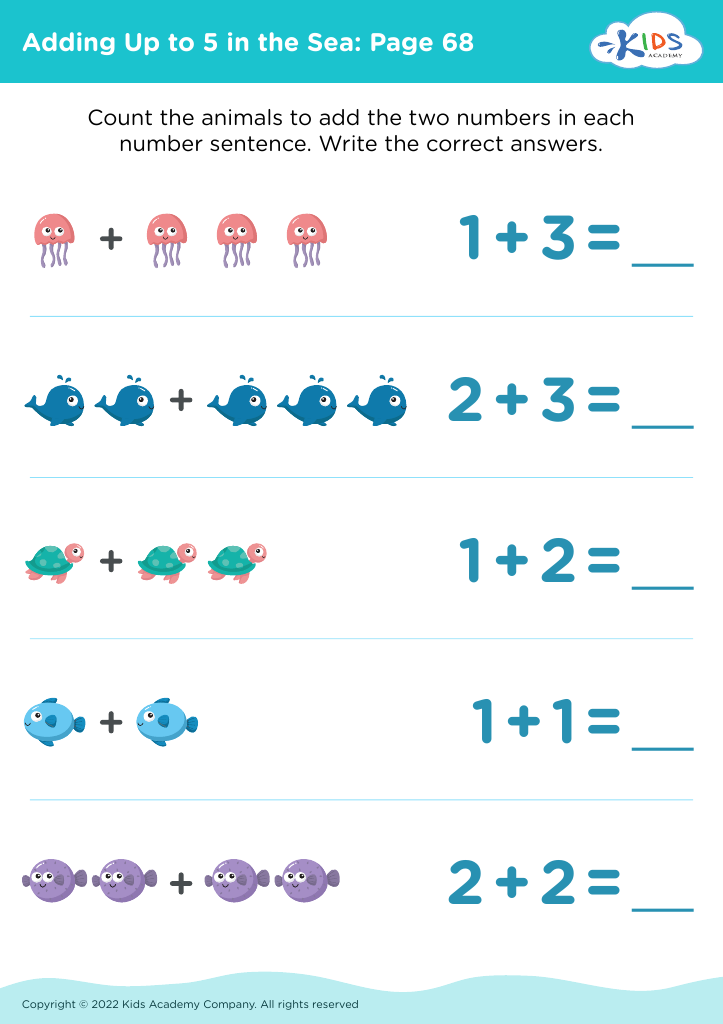
Adding Up to 5 in the Sea: Page 68
Worksheet
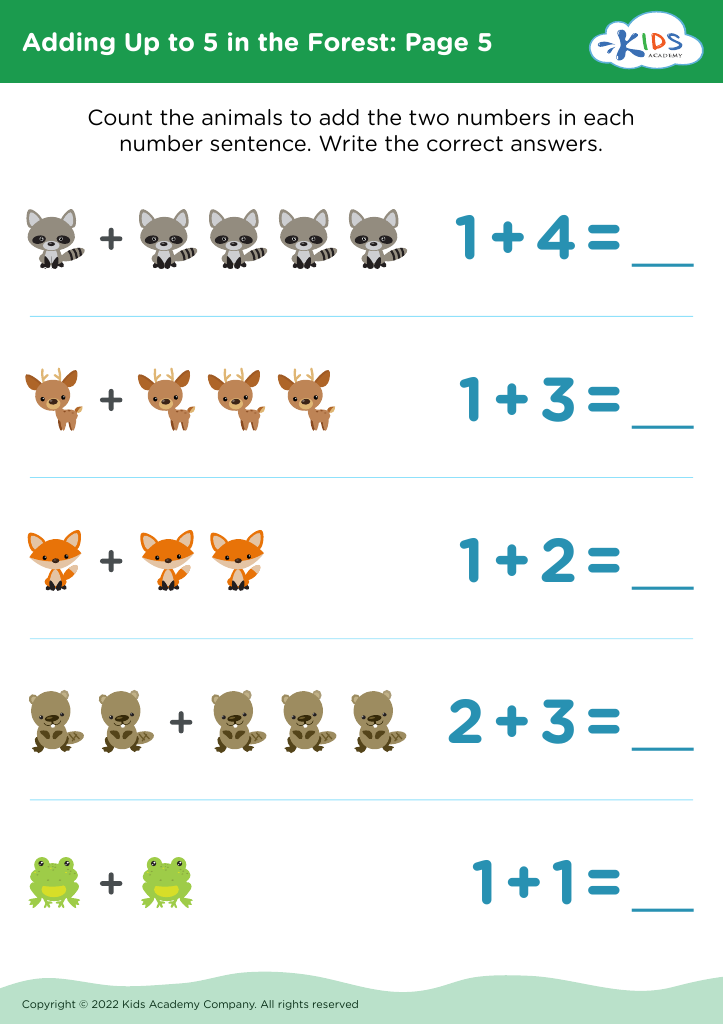
Adding Up to 5 in the Forest: Page 5
Worksheet
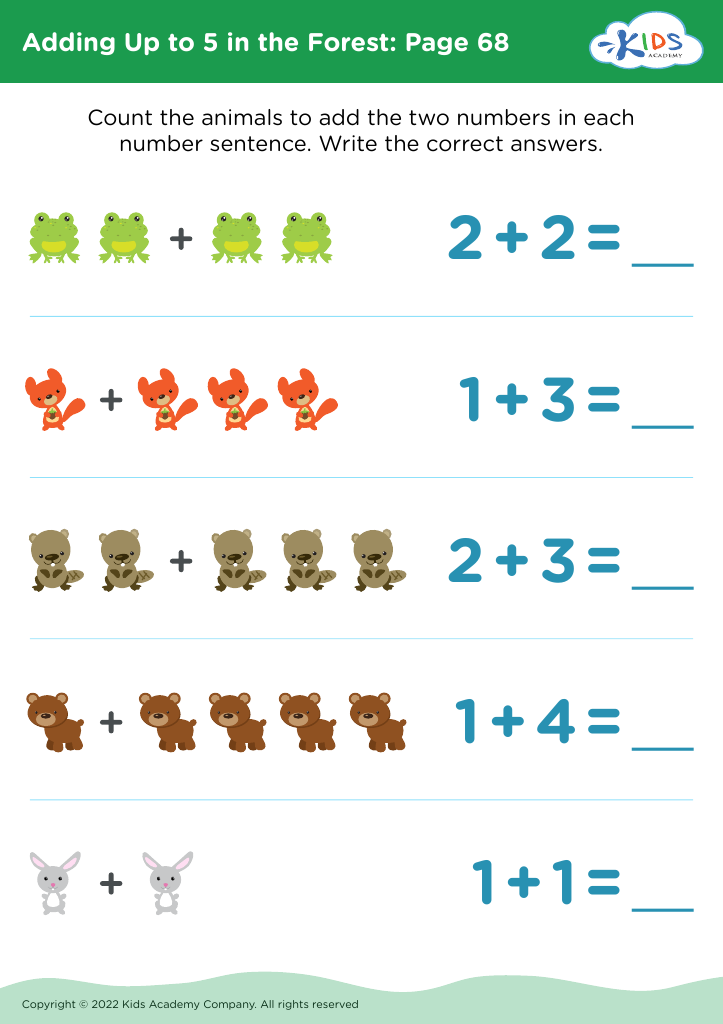
Adding Up to 5 in the Forest: Page 68
Worksheet
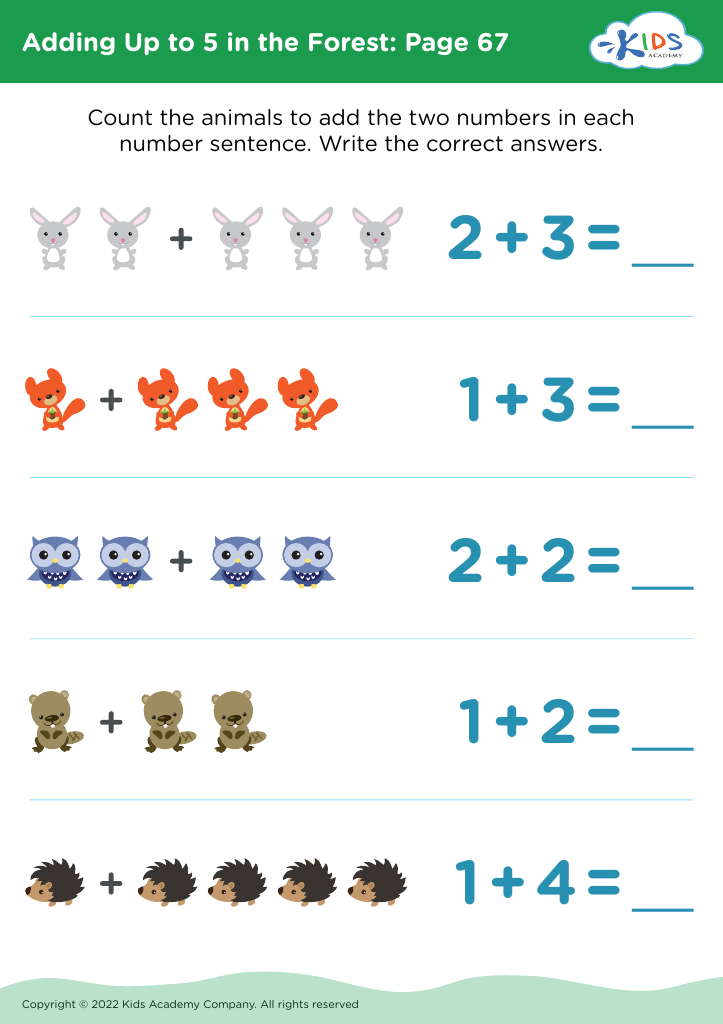
Adding Up to 5 in the Forest: Page 67
Worksheet
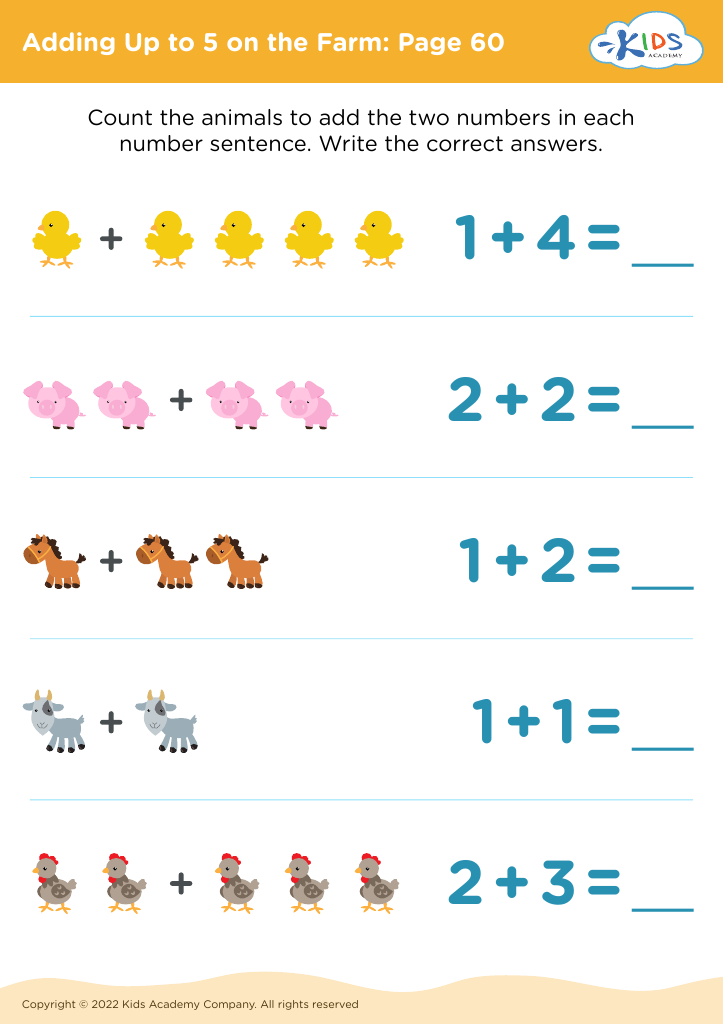
Adding Up to 5 on the Farm: Page 60
Worksheet


Understanding quantities that add up to 5 is a fundamental math concept for children aged 4-8, laying the groundwork for future mathematical learning. Mastery of addition and number sense in this range fosters critical thinking skills and promotes a solid understanding of basic arithmetic. When children grasp that different combinations can equal 5, they begin to develop strategies for solving problems, enhancing their ability to think mathematically.

Moreover, this concept supports early cognitive development; it encourages children to explore, manipulate, and visualize numbers. For parents and teachers, being fluent in these foundational skills increases learners’ confidence and engagement with math. Understanding these simple equations aids in spatial awareness, pattern recognition, and problem-solving skills, necessary tools for advanced mathematical reasoning later in their education.

Encouraging fun and interactive activities focused on quantities adding up to 5 can turn learning into an enjoyable experience. Tools such as manipulatives, games, and real-world situations make abstract concepts tangible, ensuring children stay invested in their learning journey. Ultimately, fostering an understanding of these basics not only prepares young learners for future academic success but also cultivates a positive attitude towards math, equipping them with essential skills for life.