Visual comprehension Adding Up to 5 Worksheets for Ages 4-8
7 filtered results
-
From - To
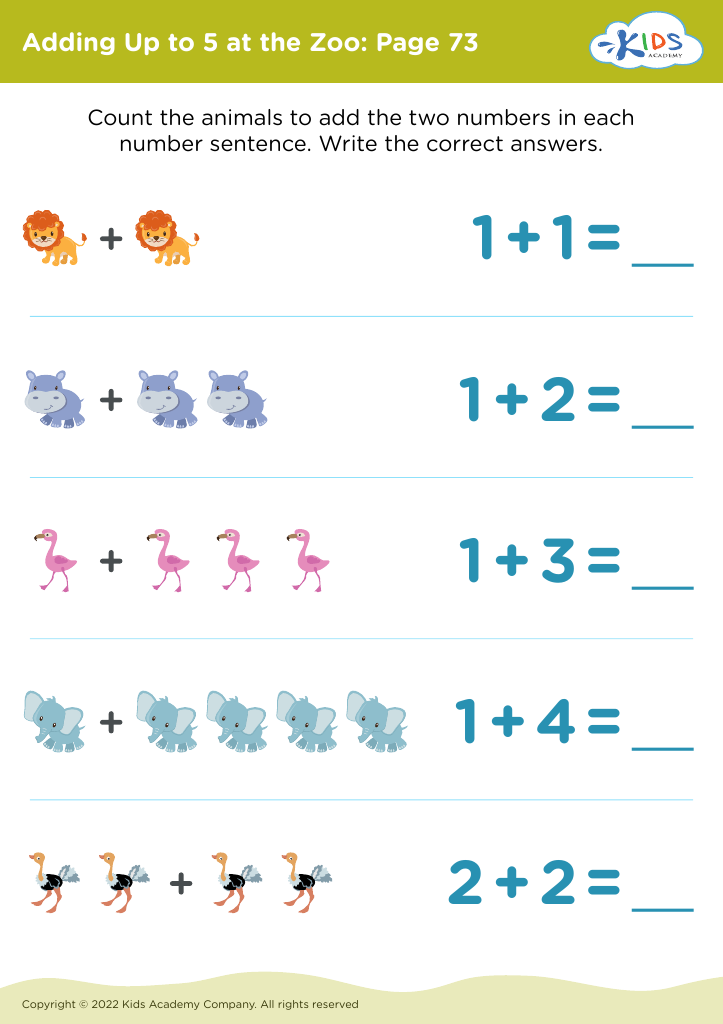
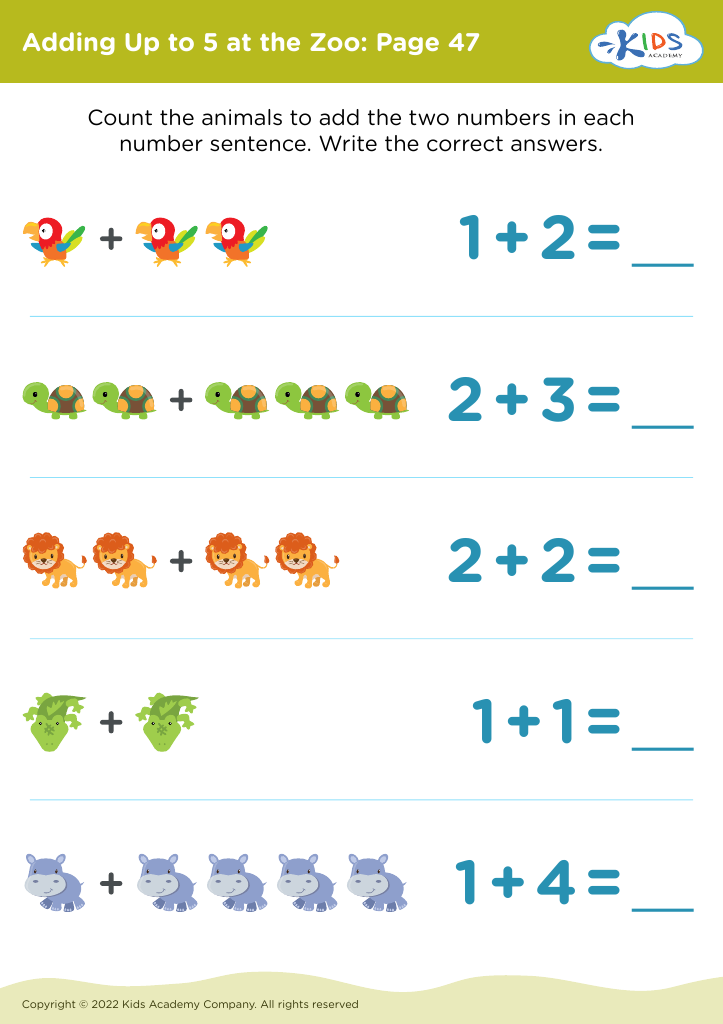
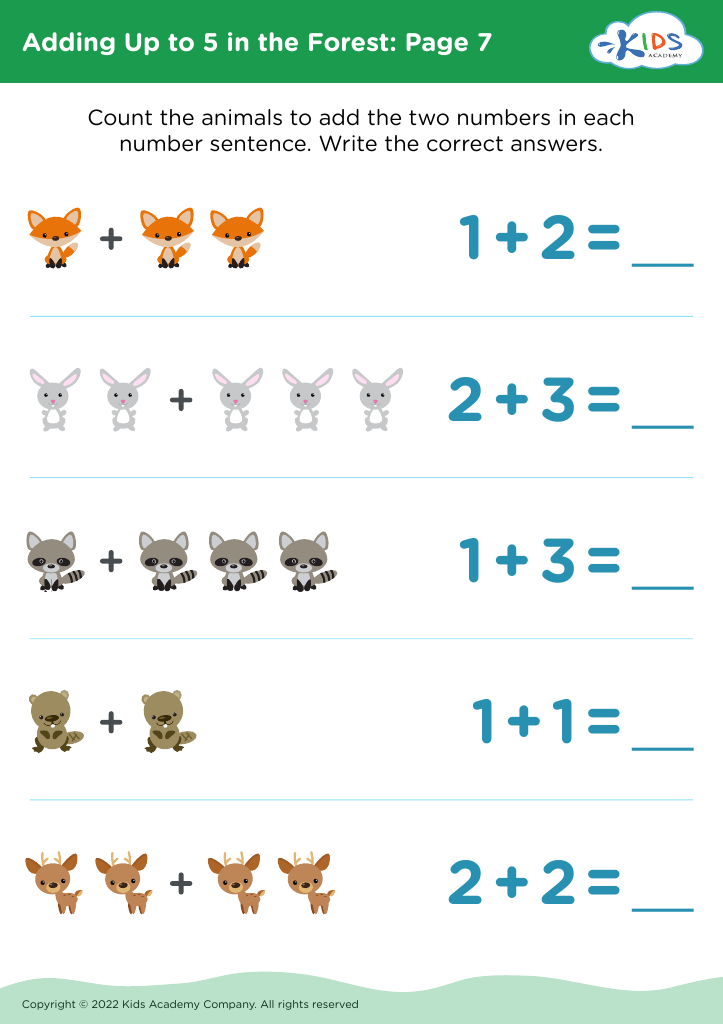
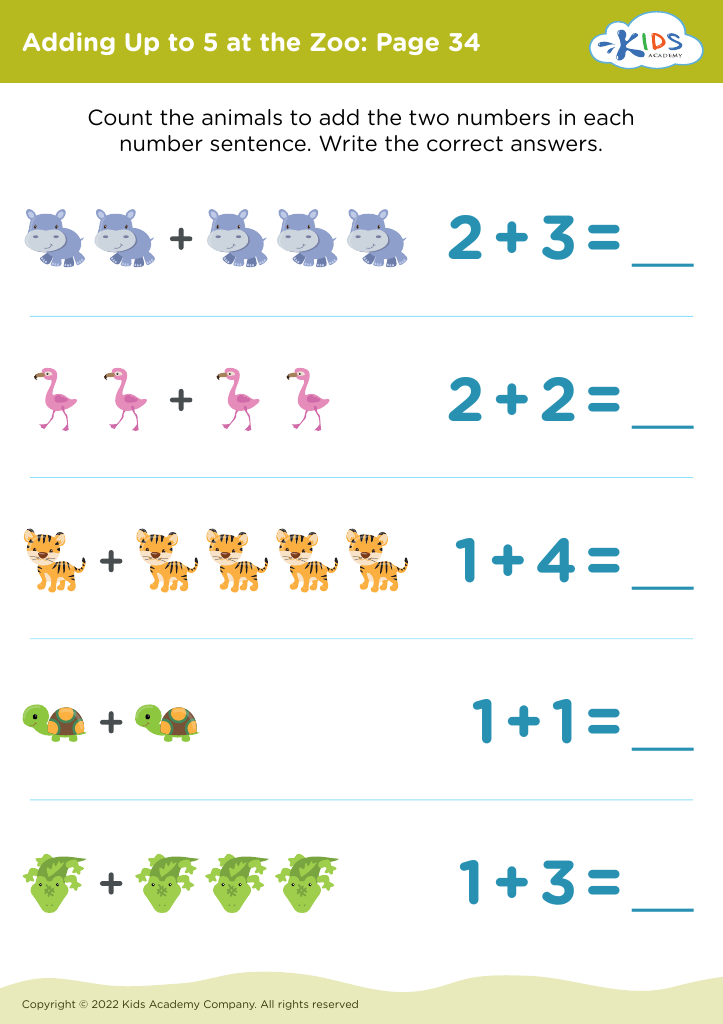
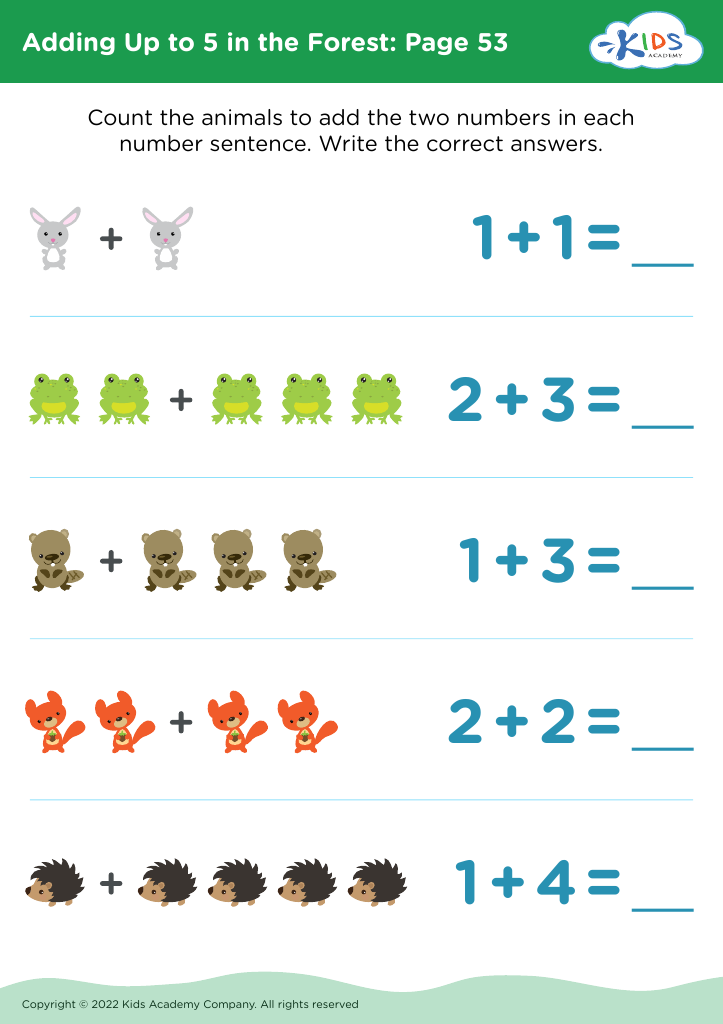
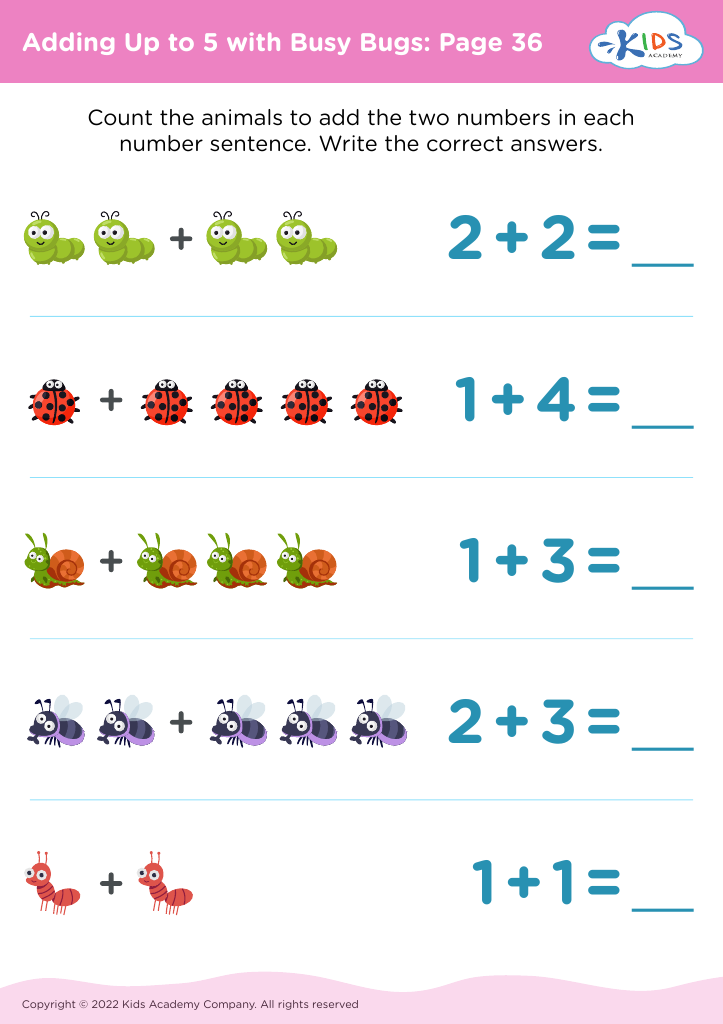
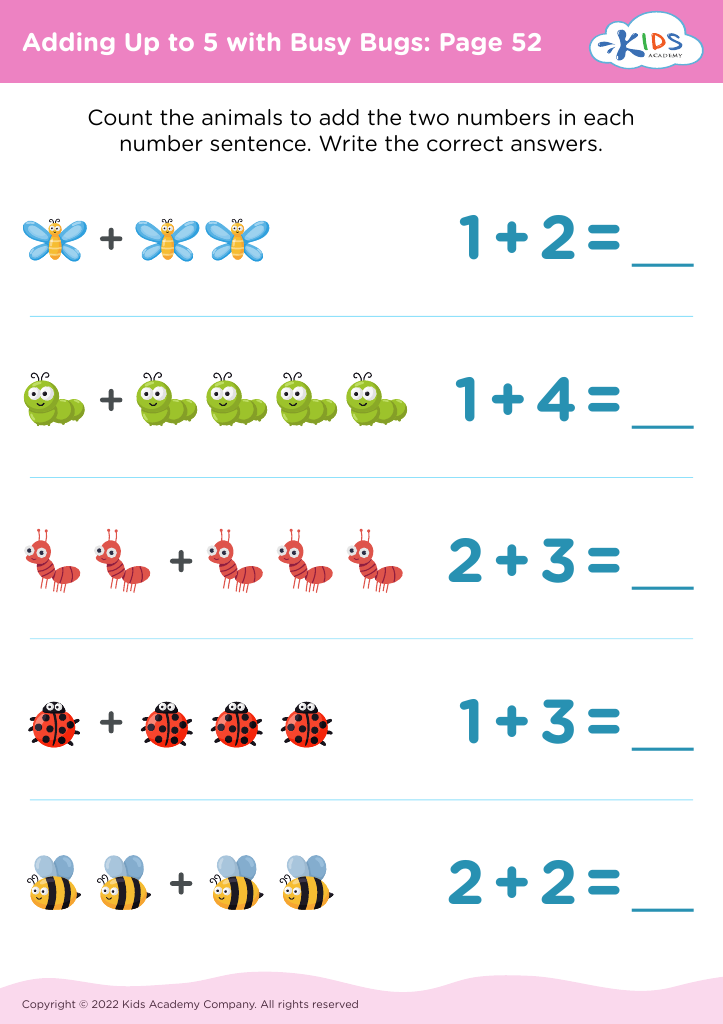
Enhance your child's learning journey with our "Visual Comprehension Adding Up to 5 Worksheets" designed for children aged 4-8. These engaging worksheets focus on developing counting skills and visual recognition, helping young learners grasp the concept of addition in a fun and interactive way. Through vibrant visuals and diverse activities, children will strengthen their ability to associate numbers with quantities, fostering their mathematical understanding. Ideal for preschoolers and early elementary students, these worksheets can be used at home or in the classroom, making learning enjoyable. Encourage your child’s confidence in math with our thoughtfully crafted resources today!




.jpg)



Visual comprehension, particularly in activities like "Adding Up to 5," is crucial for children aged 4-8 as it lays the foundational skills necessary for mathematical understanding and problem-solving. At this age, kids are developing their ability to interpret visual information, which includes recognizing numbers, shapes, and patterns. Engaging with visual aids, such as pictures or manipulatives, helps strengthen their ability to visualize mathematical concepts, making abstract ideas more concrete.
Moreover, strong visual comprehension supports language development and critical thinking skills. When children can visualize and understand what's being represented, they are better equipped to articulate their thought processes and justify their reasoning. This not only enhances their mathematical competence but also boosts their confidence in tackling more complex concepts in later grades.
Teachers and parents play a vital role in fostering this skill. By integrating visual comprehension activities into their learning routines, such as games or hands-on activities that require counting and adding, they encourage a deeper engagement with numbers. This approach cultivates a positive attitude toward mathematics, essential for lifelong learning. Ultimately, investing time in enhancing a child's visual comprehension in early education can lead to better academic outcomes and a greater enthusiasm for learning.








