Adding up to 50 Misc Worksheets for Ages 4-8 - Page 2
73 filtered results
-
From - To
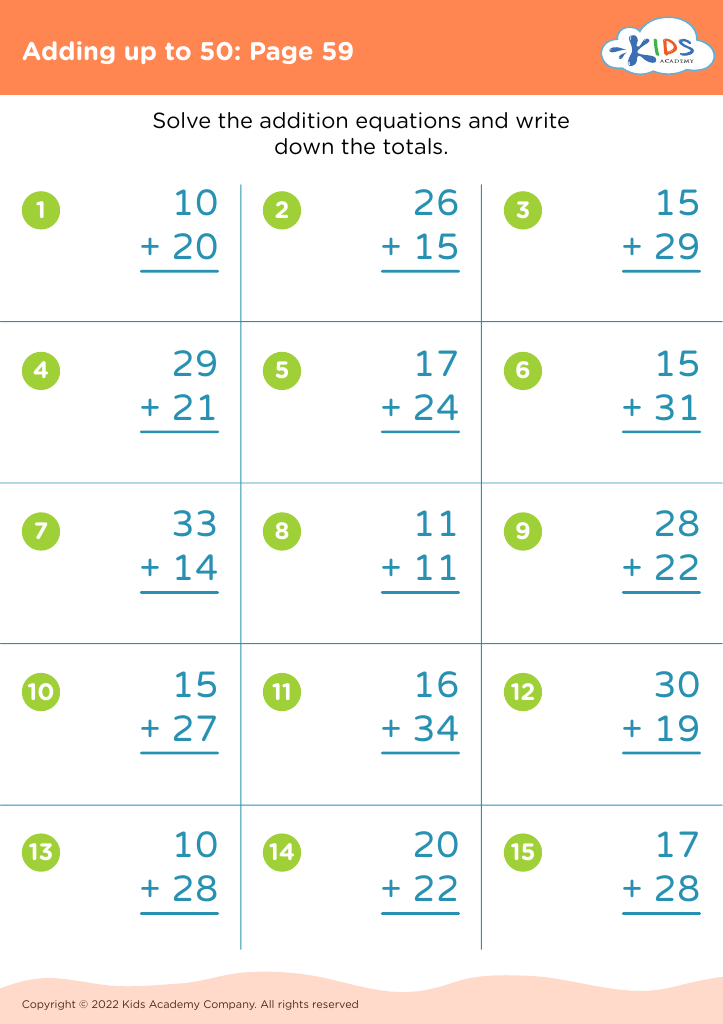
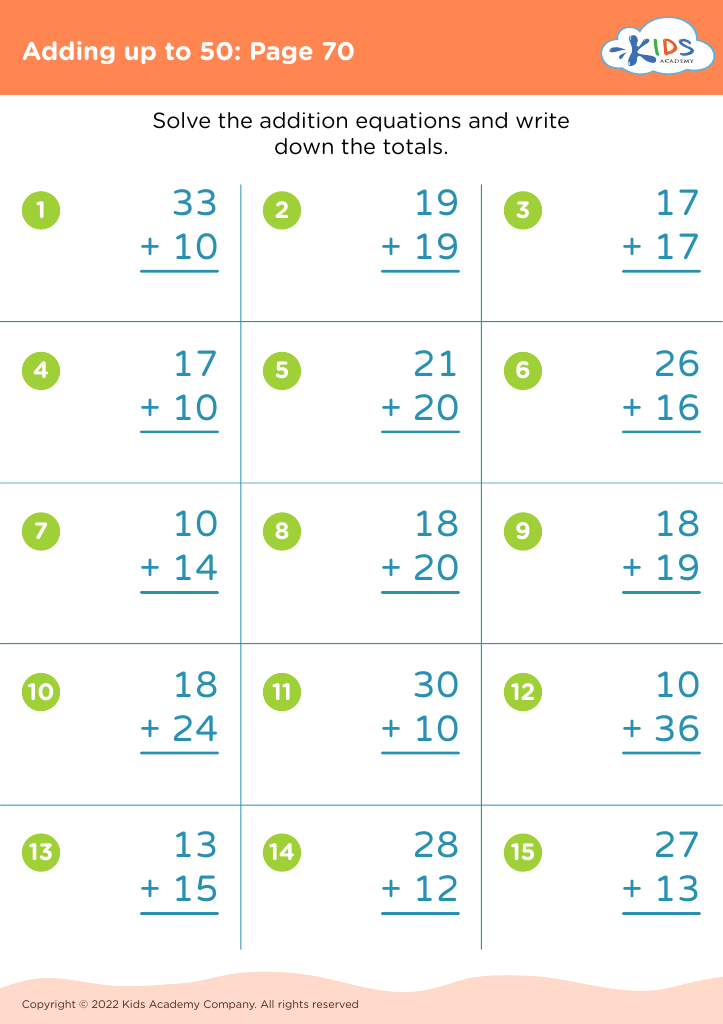
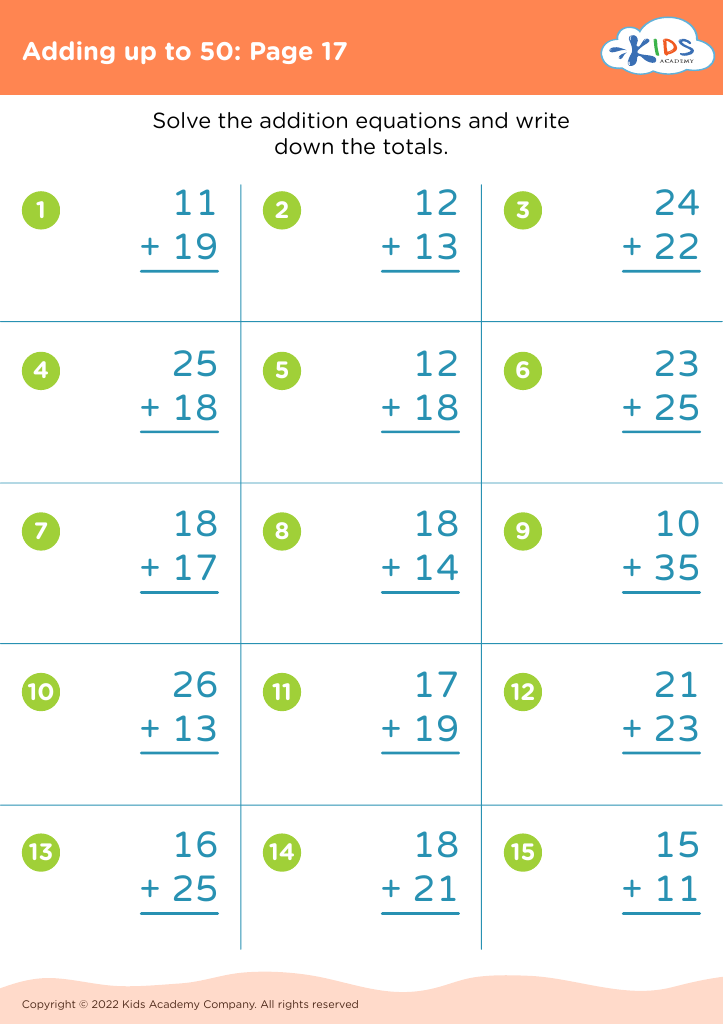
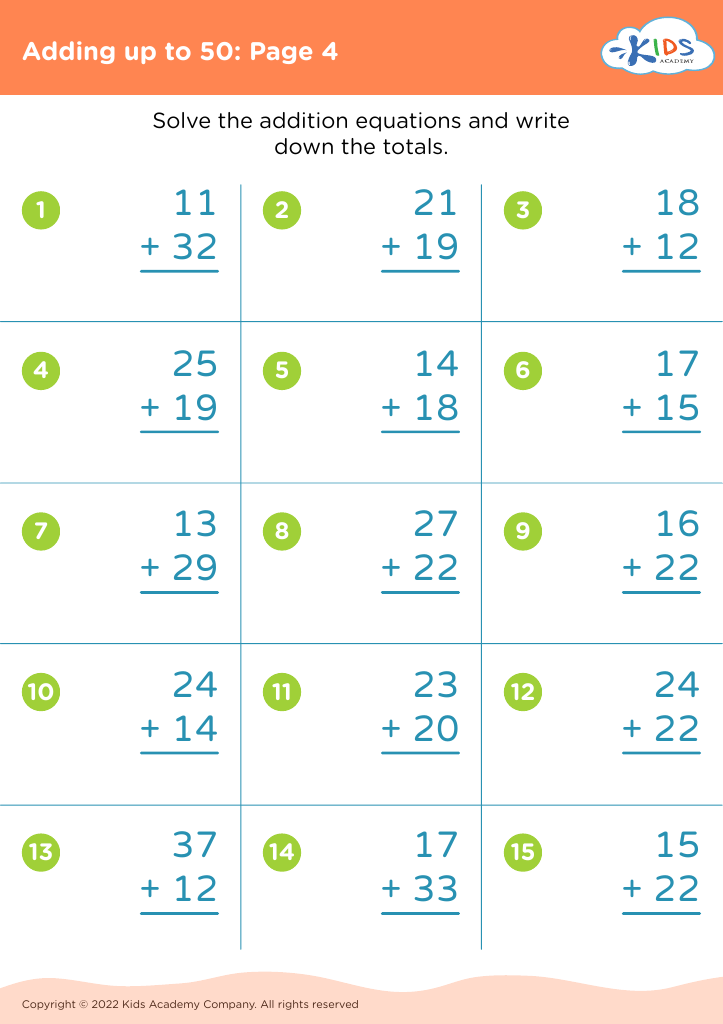
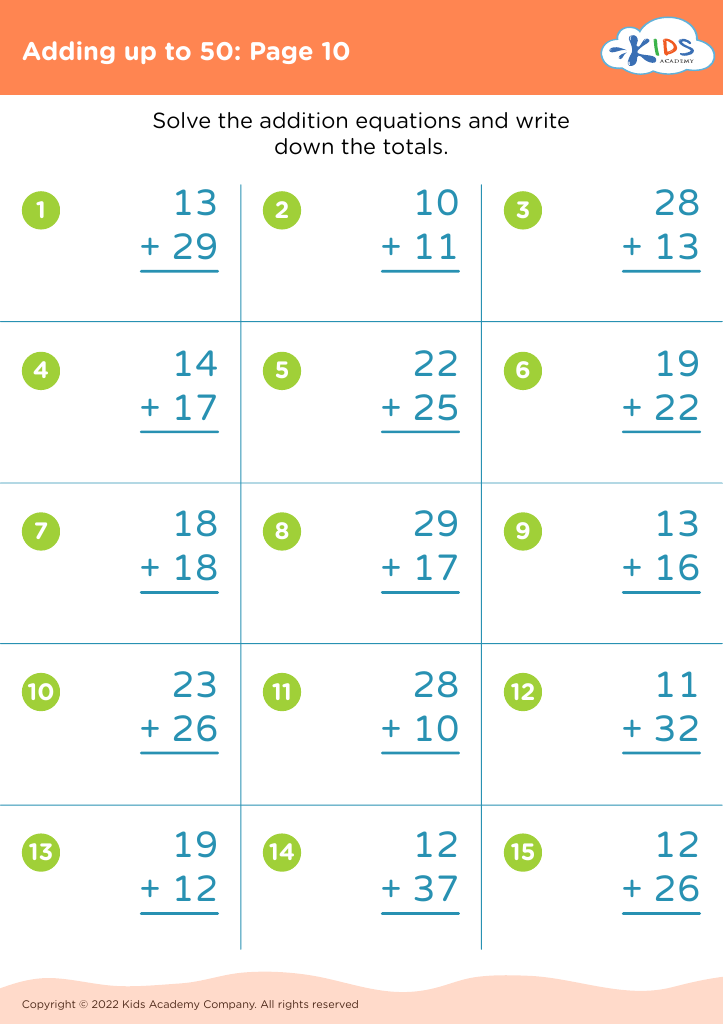
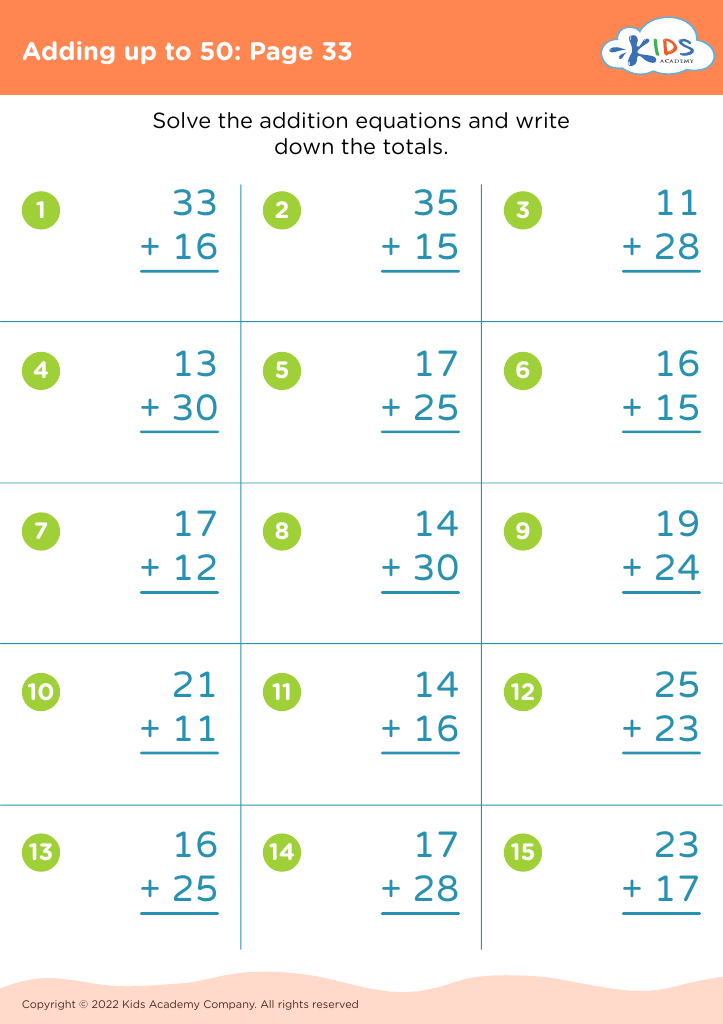
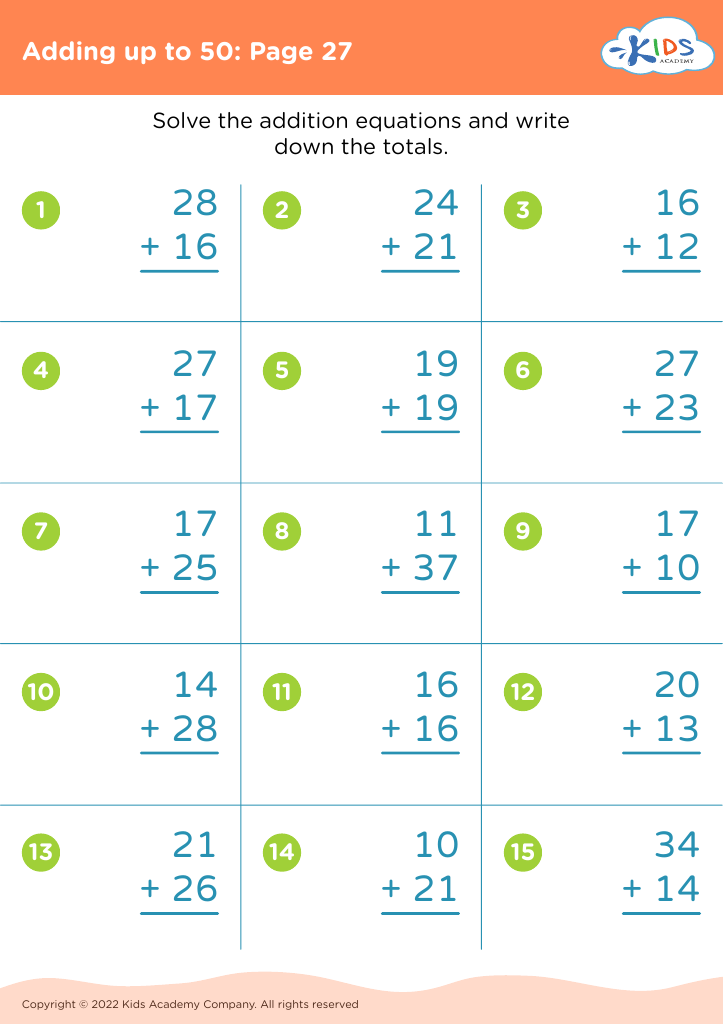
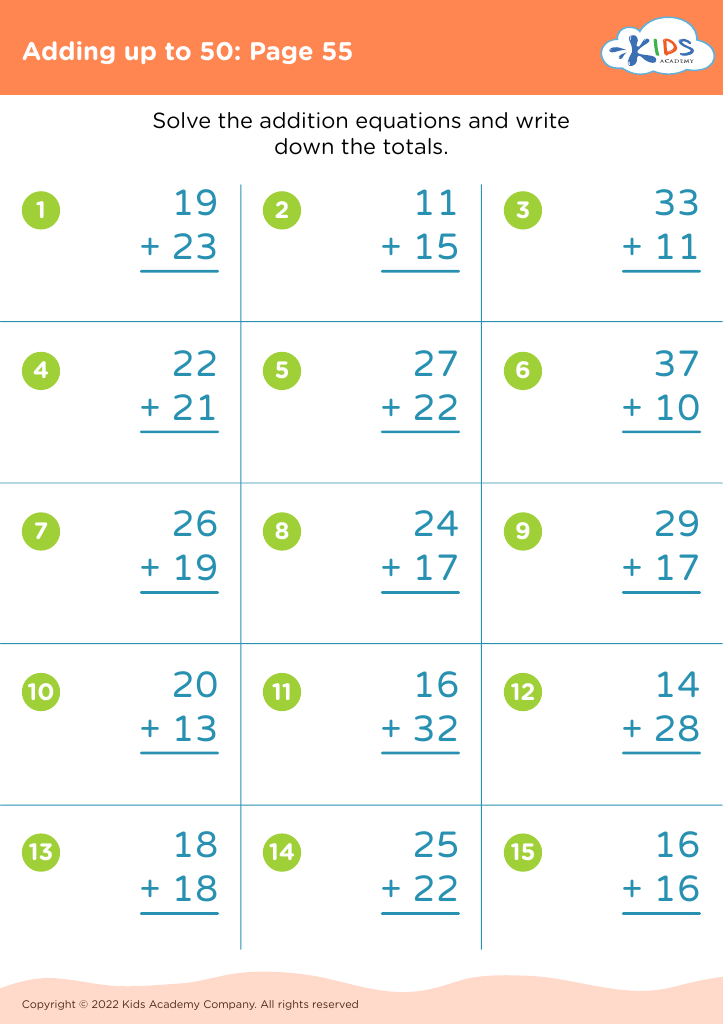
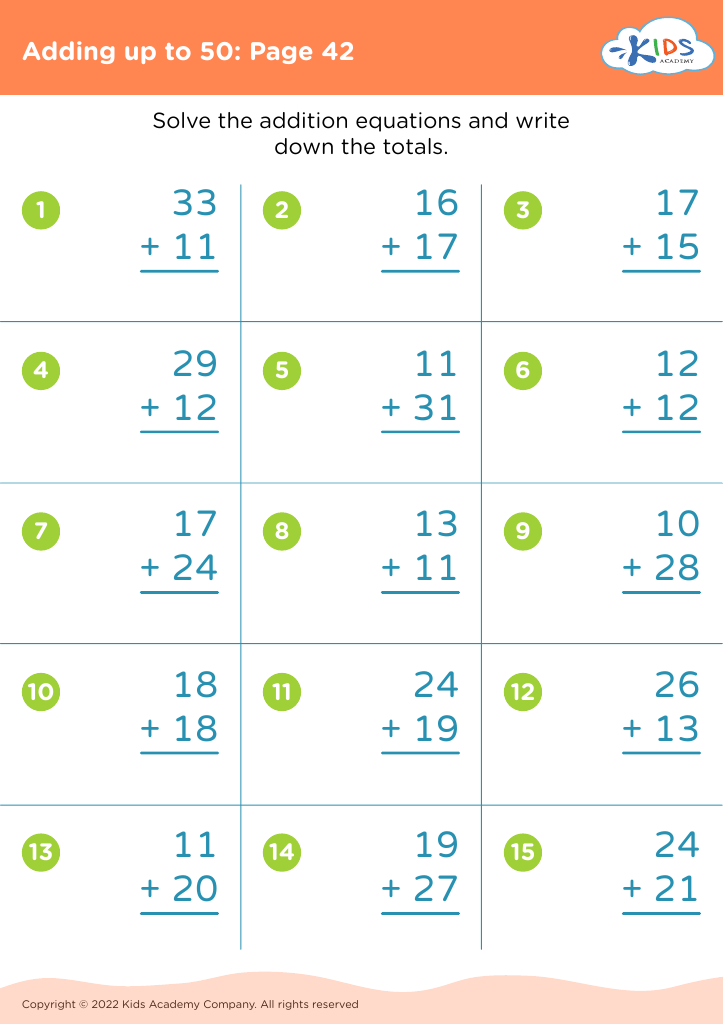
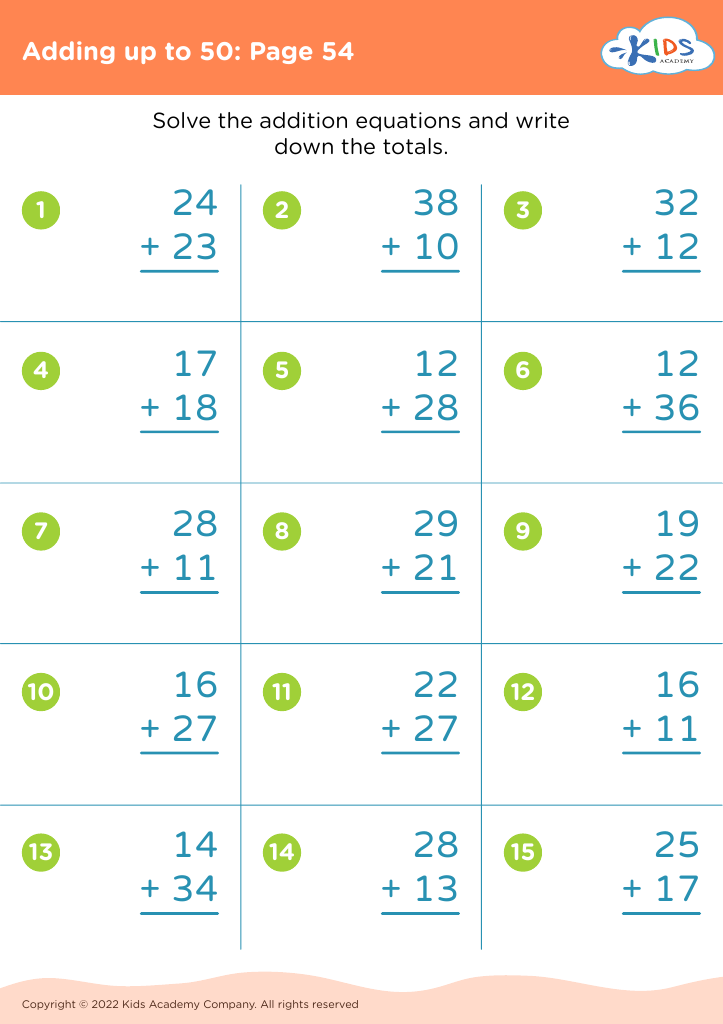
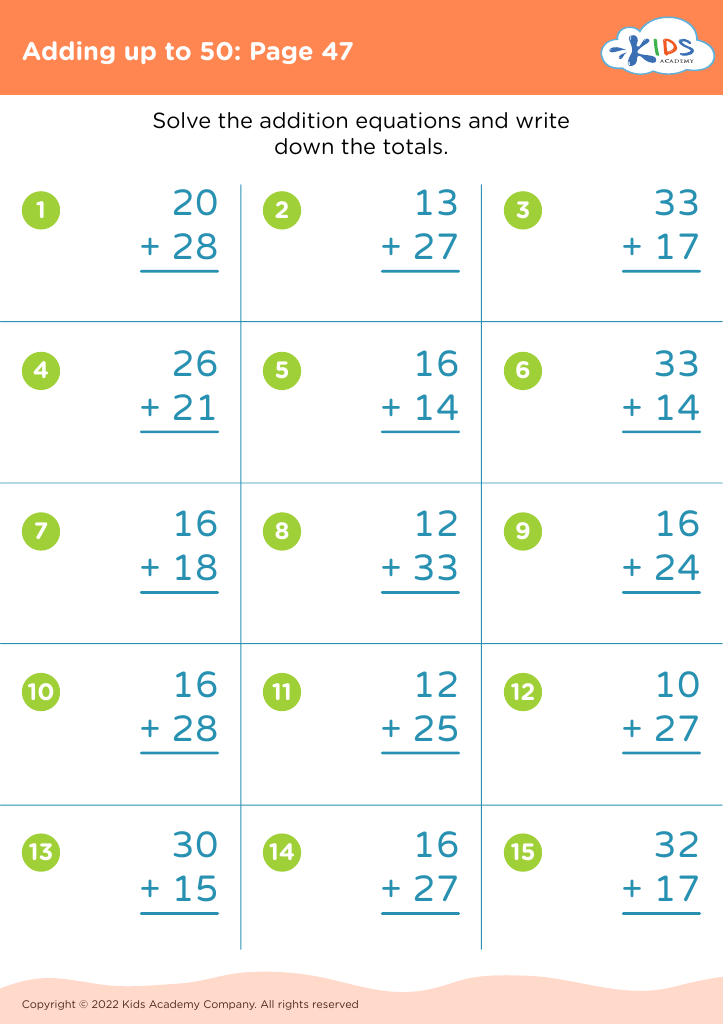
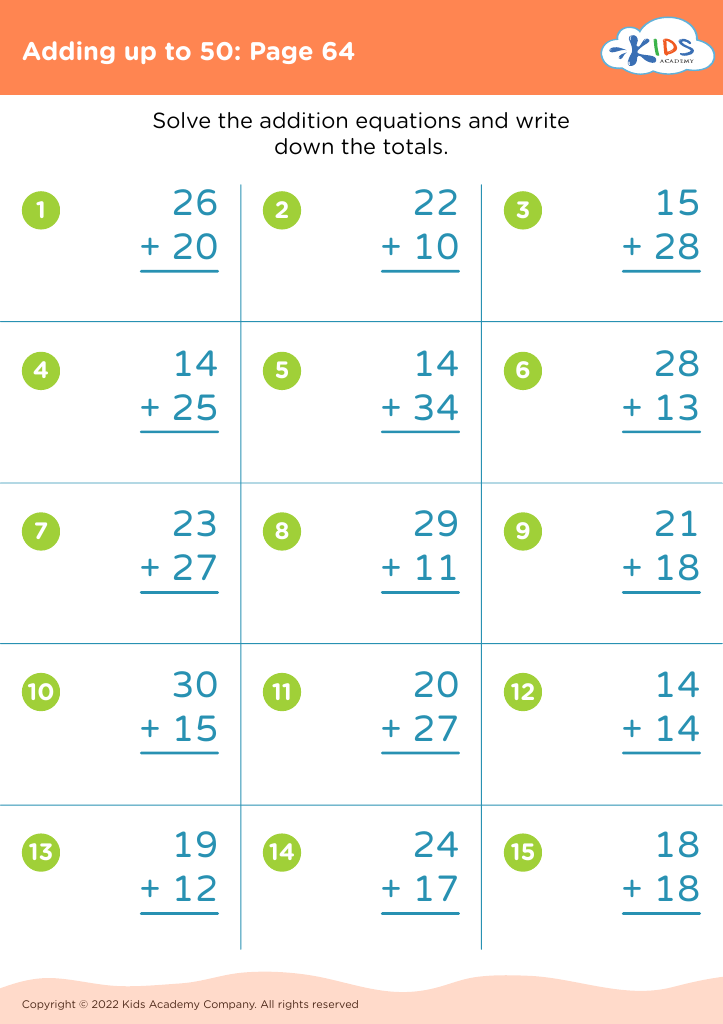
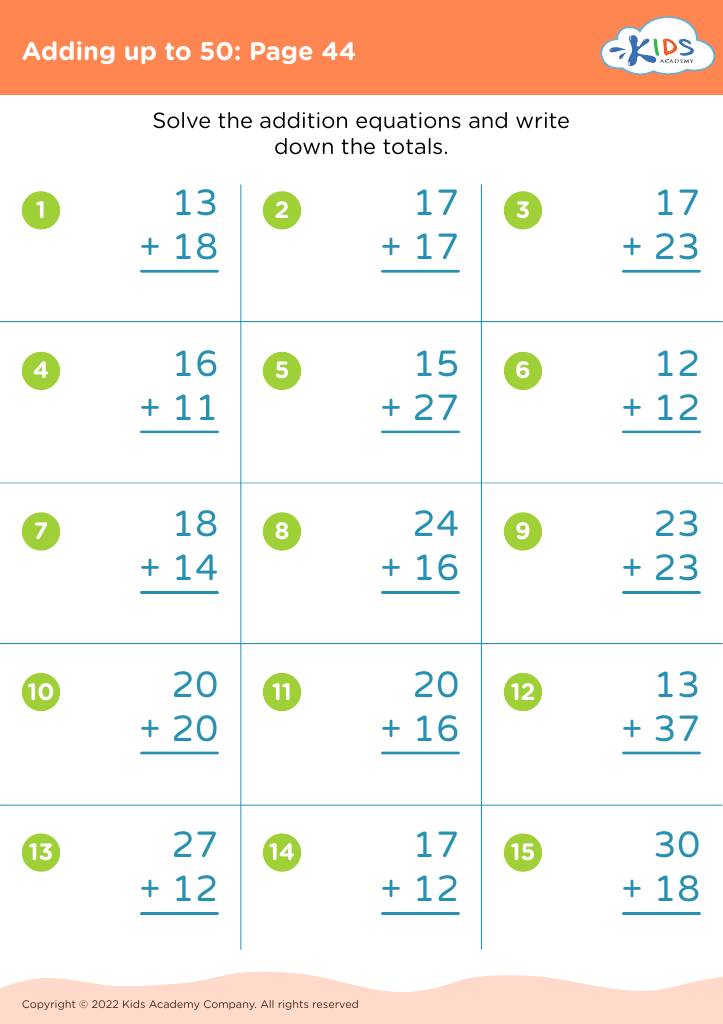
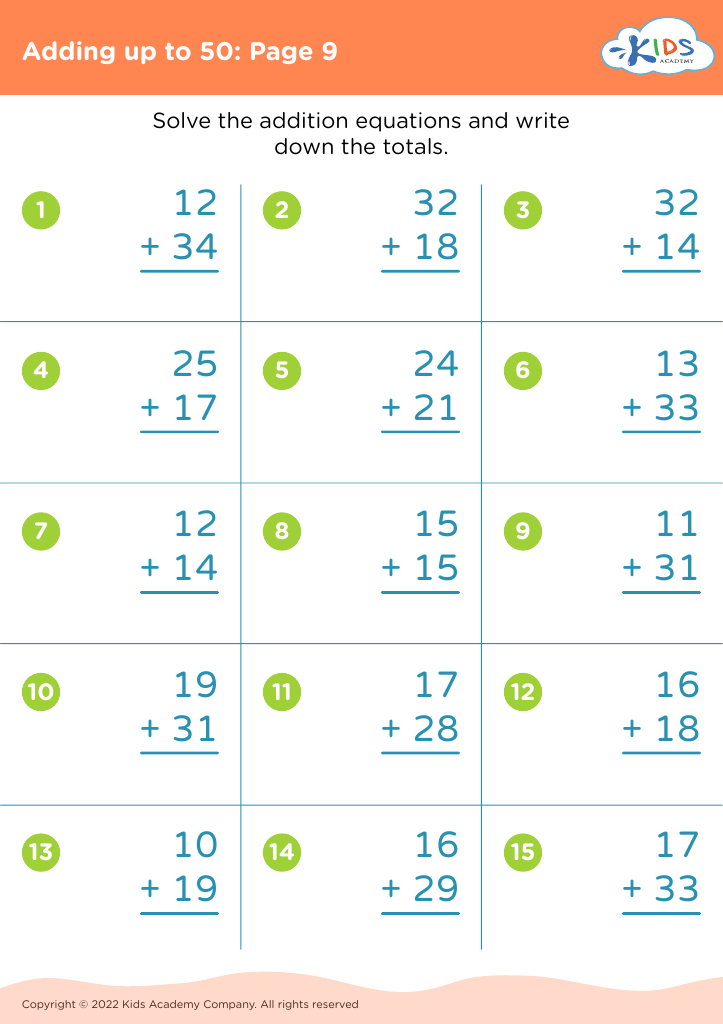
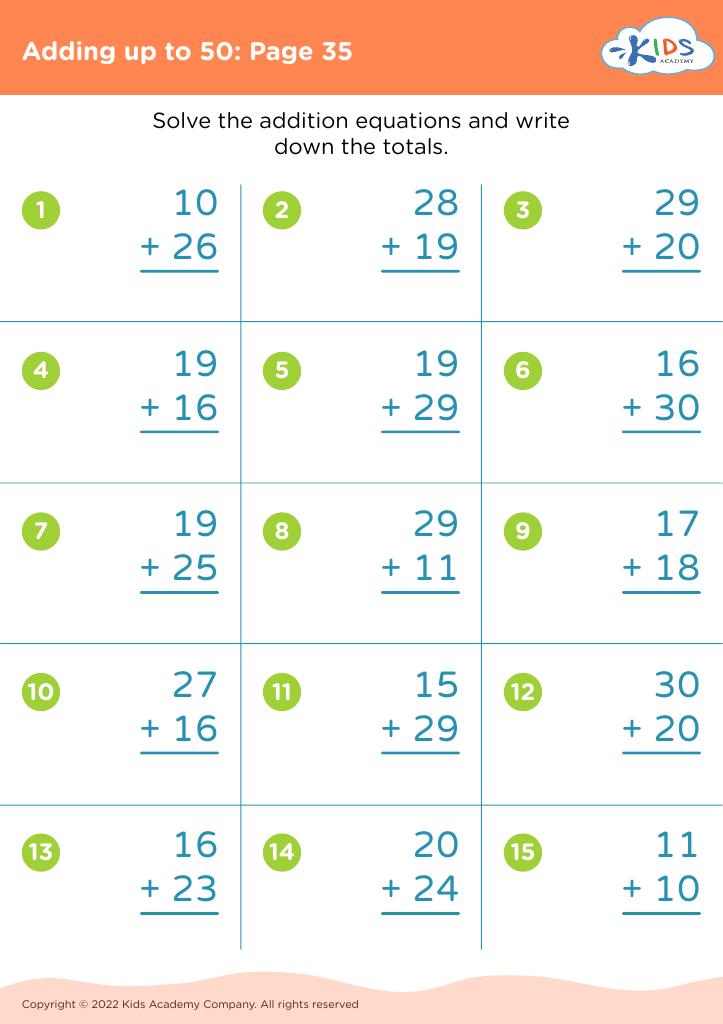
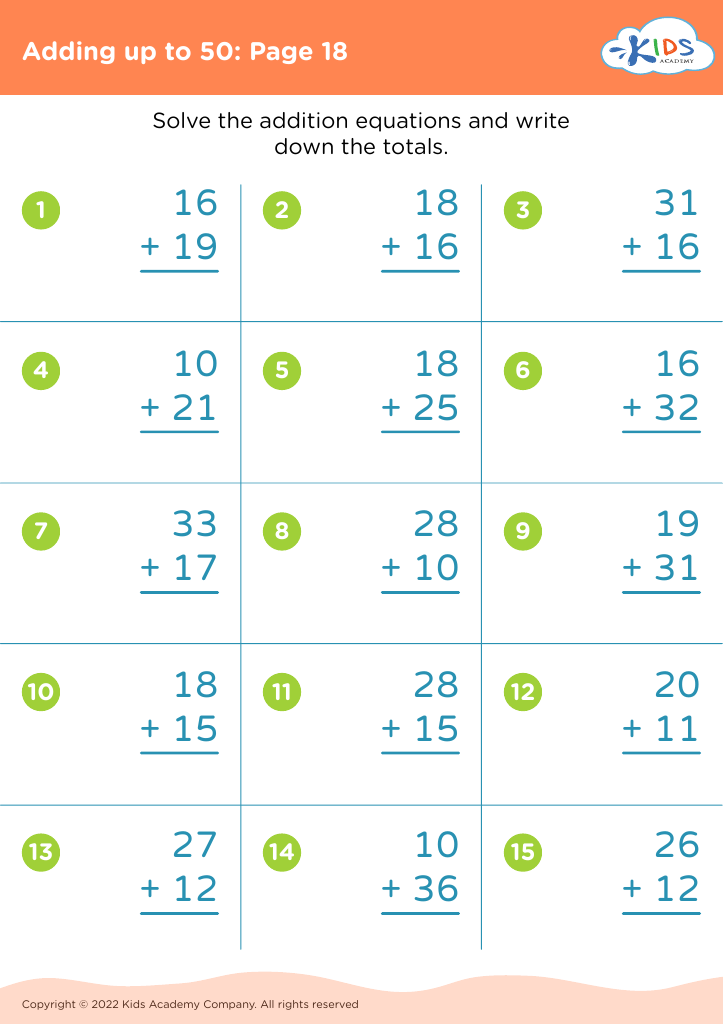
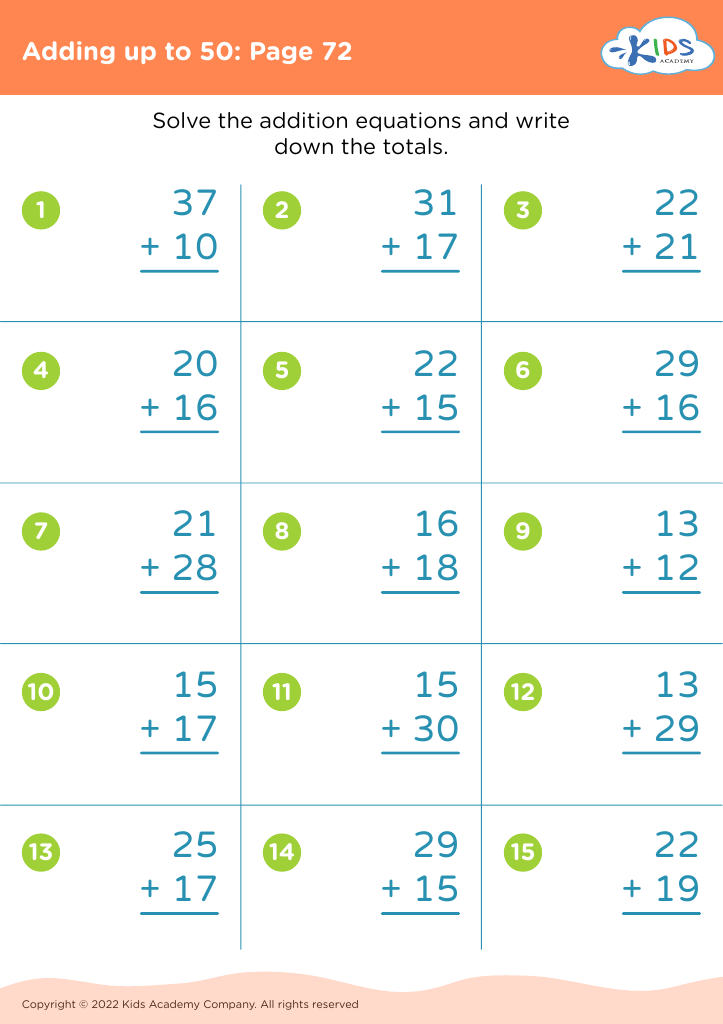
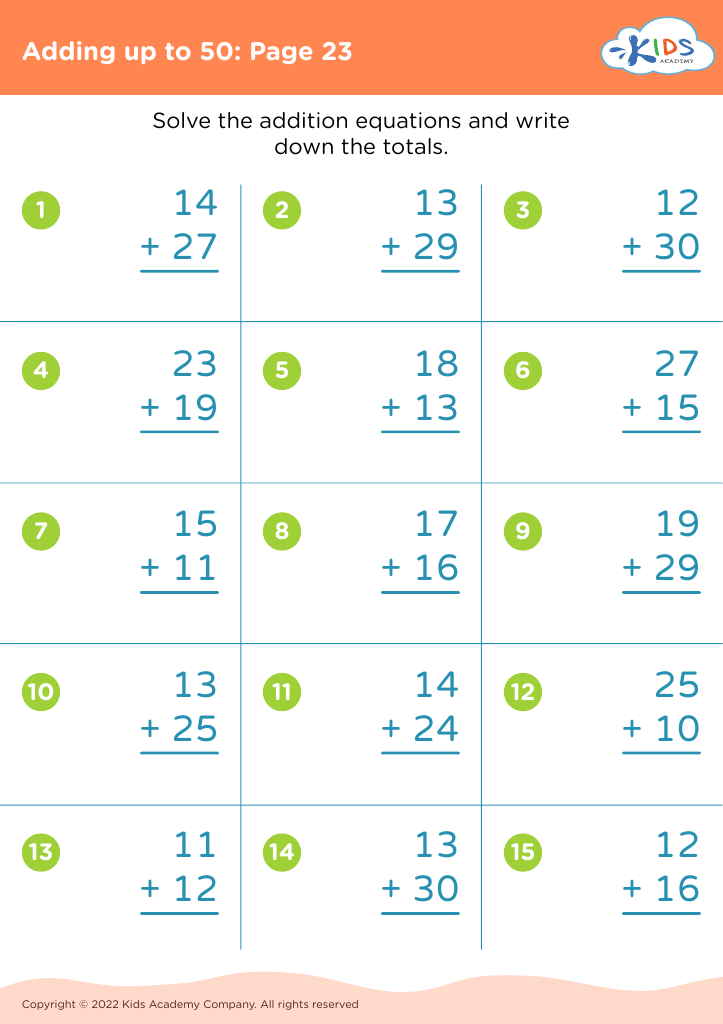
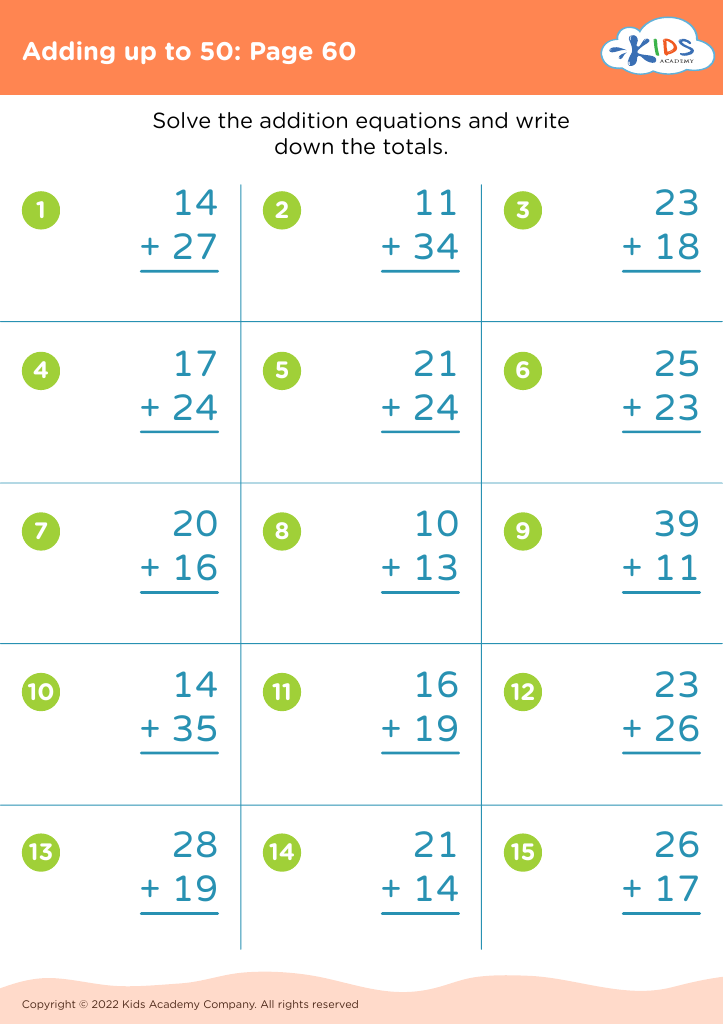
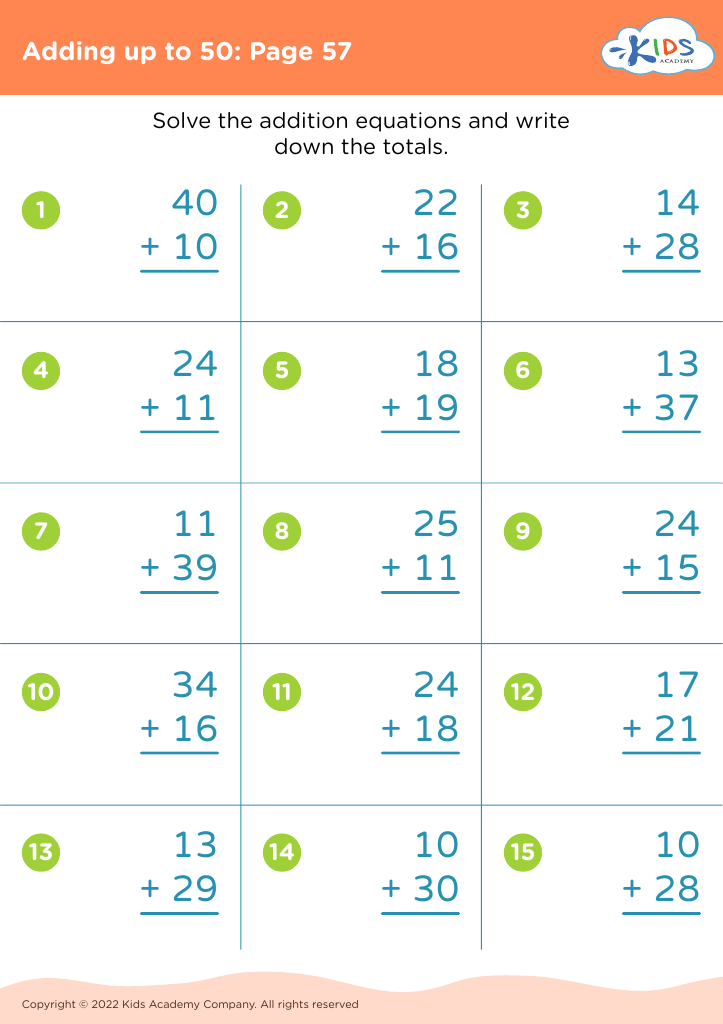
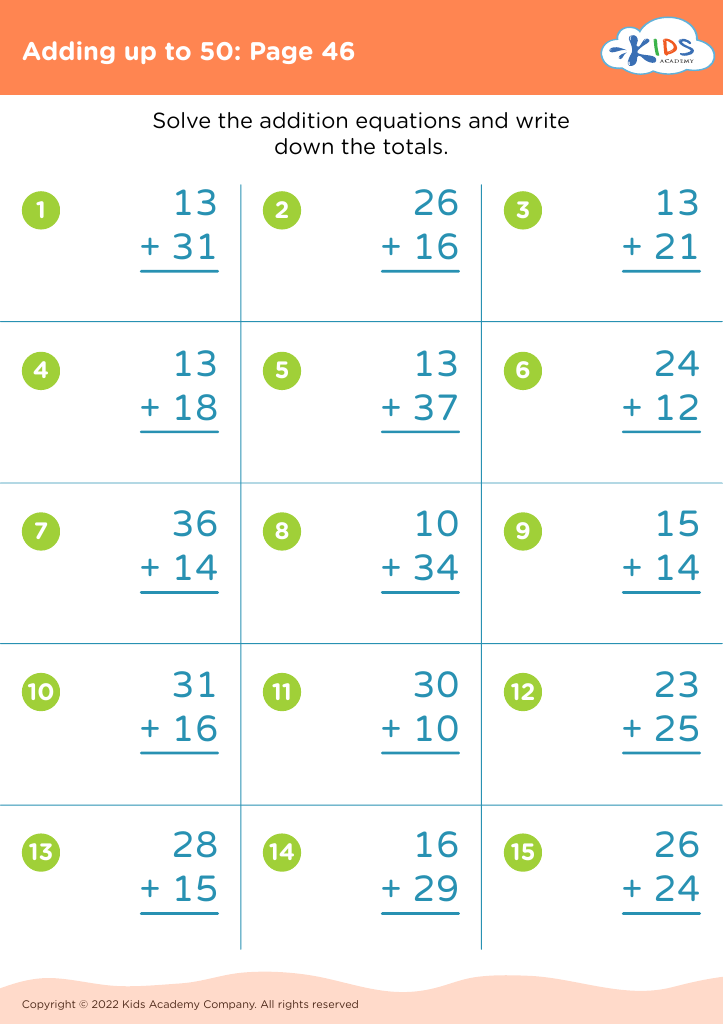
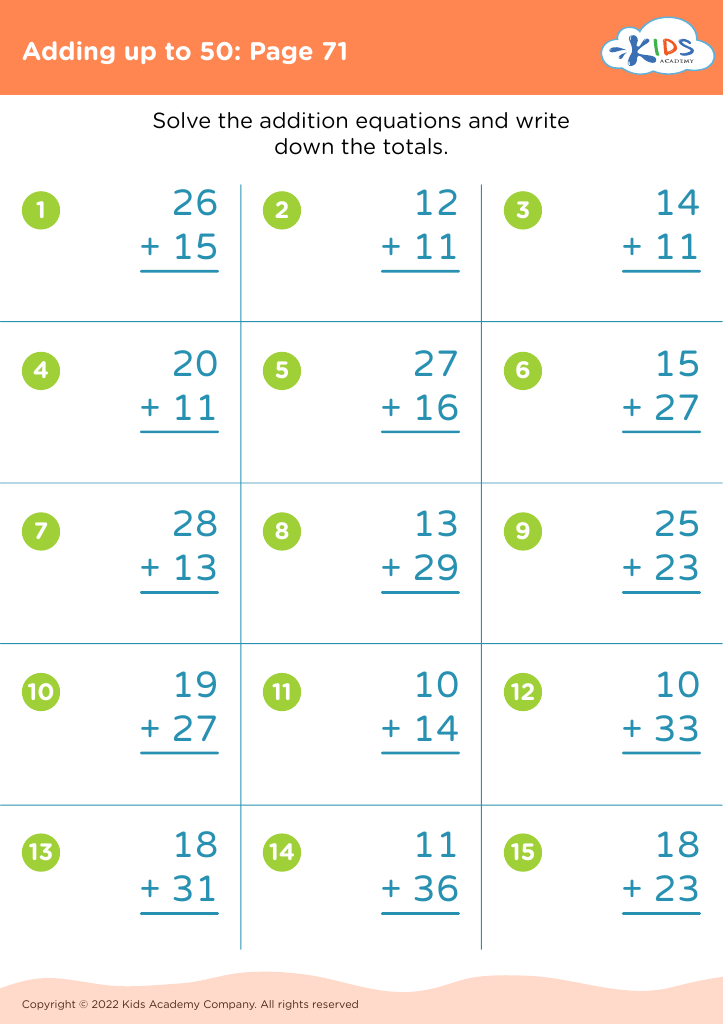
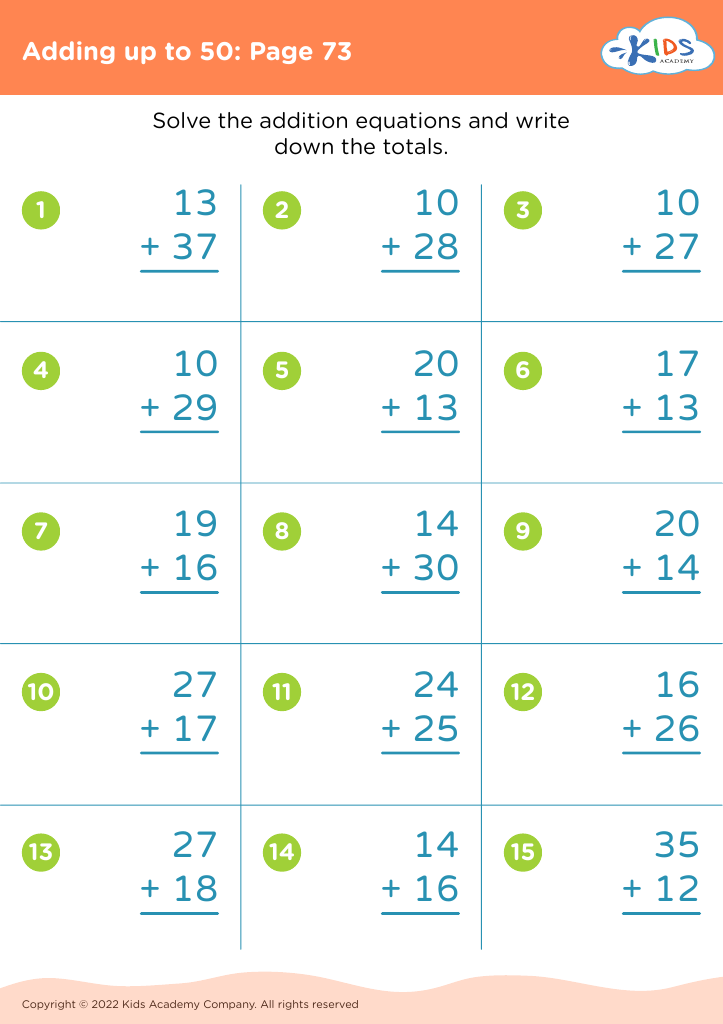
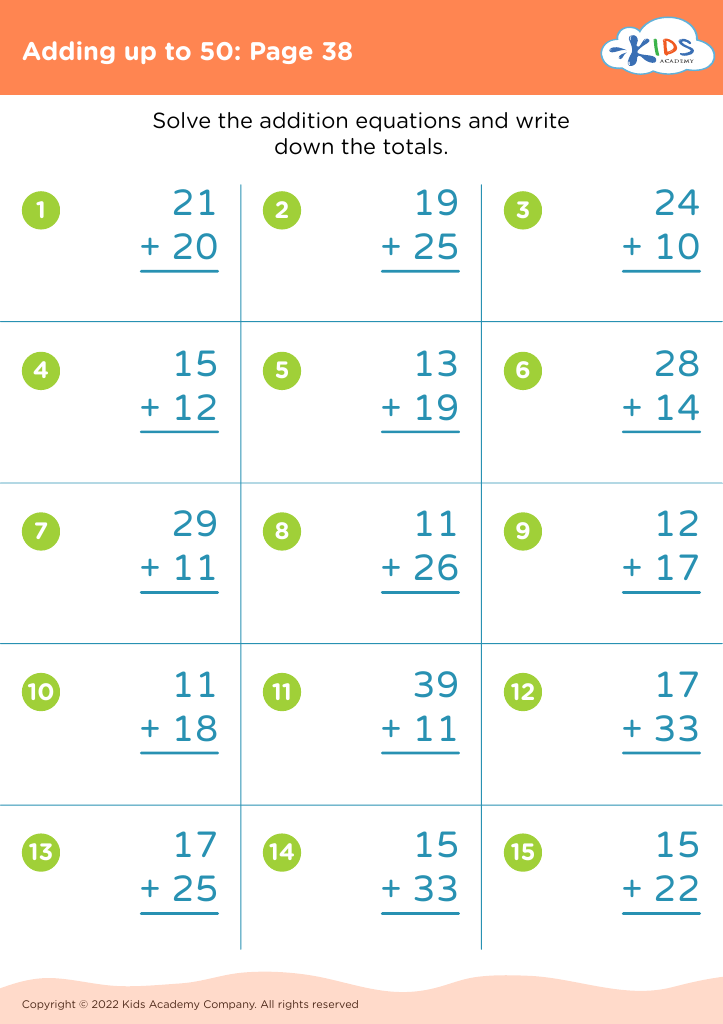


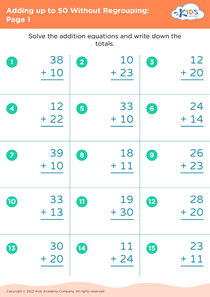
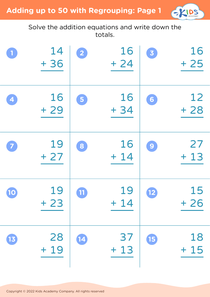
Parents and teachers should care about "Adding up to 50 Misc" for ages 4-8 because it provides a vital foundation for children’s mathematical development. Early exposure to basic arithmetic, particularly addition, cultivates essential cognitive skills that are critical for academic success. By engaging with addition problems involving sums up to 50, children within this age group not only learn number recognition and counting principles but also enhance their problem-solving abilities and logical thinking.
Moreover, developing proficiency in addition at an early age breeds confidence in young learners. This confidence can help mitigate math anxiety and build a positive attitude toward more complex math subjects encountered later in their educational journey. Practicing addition also helps improve memory and attention span as children need to understand and remember numbers and operations.
For parents and teachers, structured math activities promote an interactive and supportive learning environment. Through guided practice, children receive immediate feedback, which reinforces learning and corrects misunderstandings promptly. Strengthening these early math skills will ultimately lay a strong foundation for future STEM (Science, Technology, Engineering, and Mathematics) success, making early childhood a critical period for fostering lifelong competence and enthusiasm in mathematics.