Filters

73 filtered results

Clear all filters
Favorites
With answer key
Interactive

73 filtered results

Difficulty Level

Grade


Subject

    Boost your child's math skills with our "Adding Up to 50 Without Regrouping Worksheets," specially designed for kids aged 4-8. These engaging worksheets provide a fun and interactive way for young learners to practice basic addition, reinforcing their understanding of numbers up to 50 without the need for regrouping. Perfect for classroom use or at-home practice, these worksheets help build confidence in mathematics while developing essential problem-solving skills. Each worksheet features colorful illustrations and varied exercises to keep children motivated and excited about learning. Promote foundational math skills today with these printable resources that encourage independent practice and mastery of addition!
    Check out this FREE Trial Lesson on Adding up to 50 Without Regrouping for age 4-8!

    P

    Favorites
    With answer key
    Interactive
    • 4-8
    • Adding up to 50 Without Regrouping
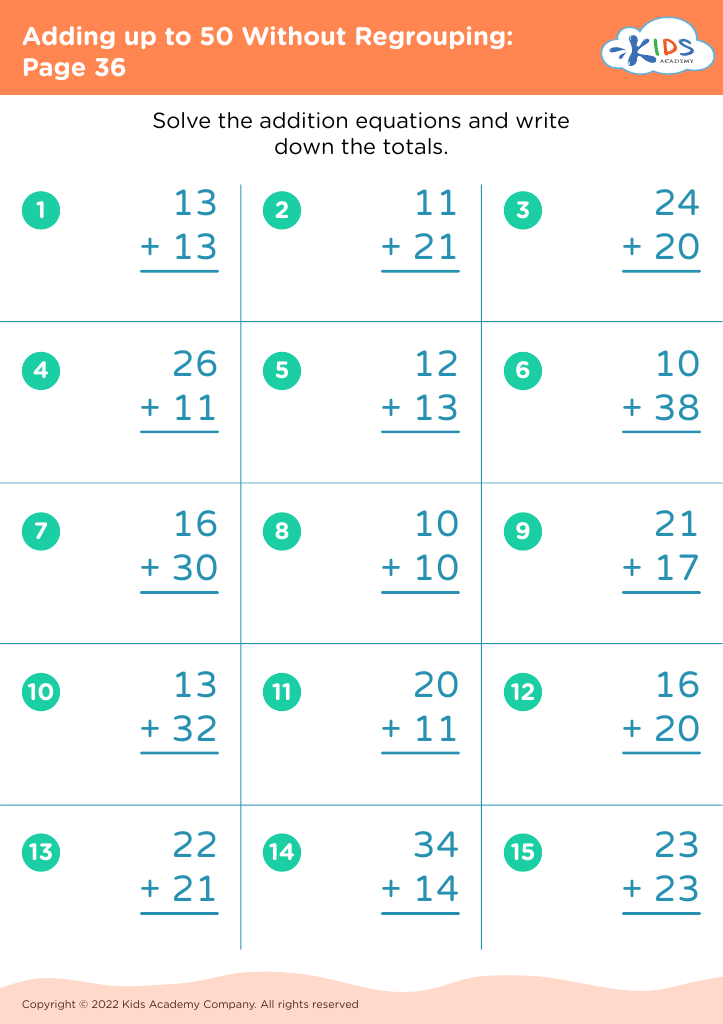
    Adding up to 50 Without Regrouping: Page 36
    Adding up to 50 Without Regrouping: Page 36
    Adding up to 50 Without Regrouping: Page 36
    Worksheet
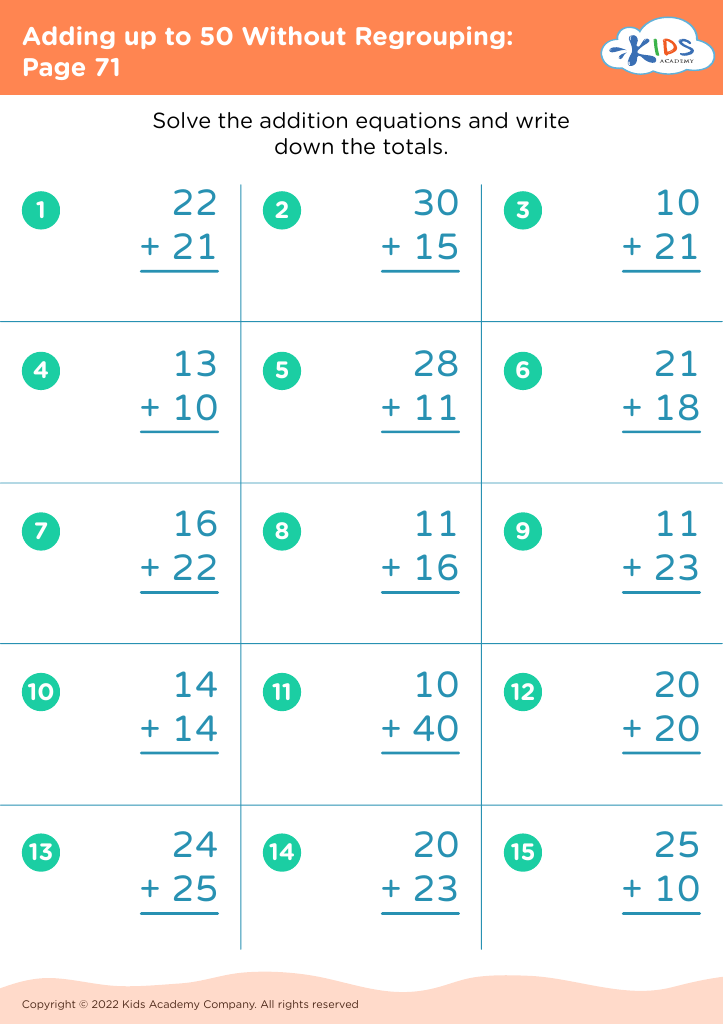
    Adding up to 50 Without Regrouping: Page 71
    Adding up to 50 Without Regrouping: Page 71
    Adding up to 50 Without Regrouping: Page 71
    Worksheet
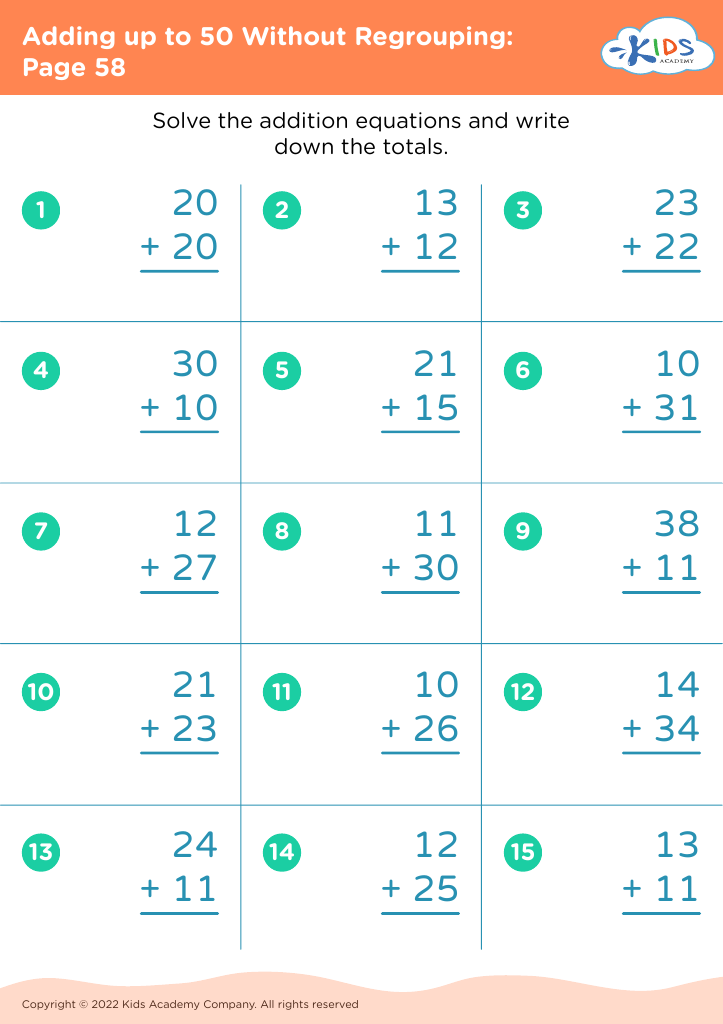
    Adding up to 50 Without Regrouping: Page 58
    Adding up to 50 Without Regrouping: Page 58
    Adding up to 50 Without Regrouping: Page 58
    Worksheet
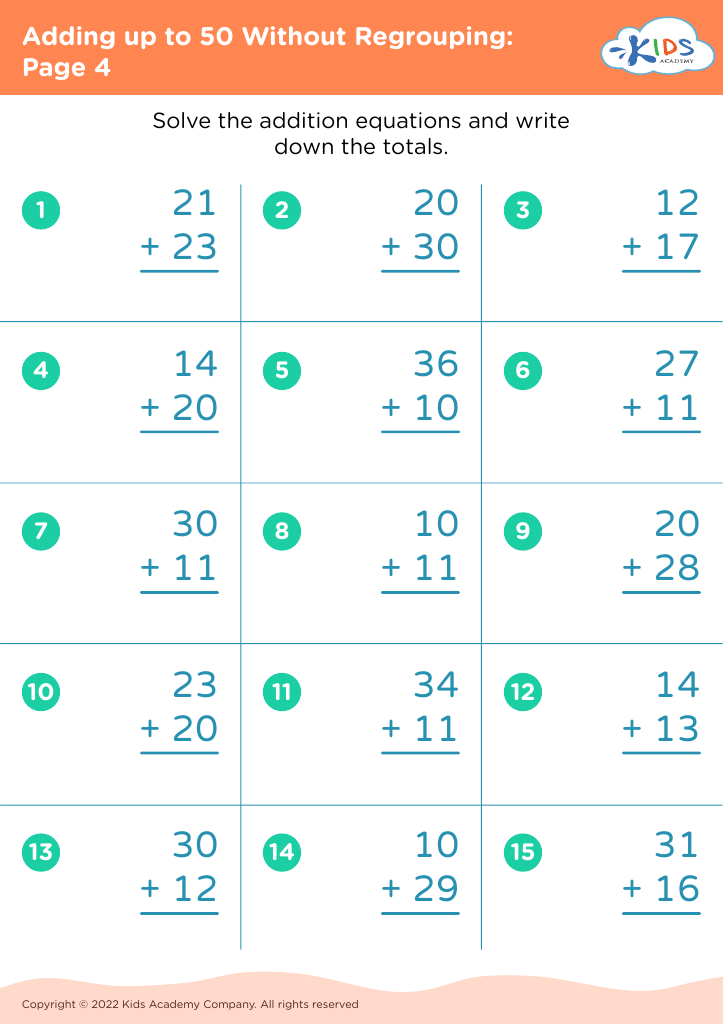
    Adding up to 50 Without Regrouping: Page 4
    Adding up to 50 Without Regrouping: Page 4
    Adding up to 50 Without Regrouping: Page 4
    Worksheet
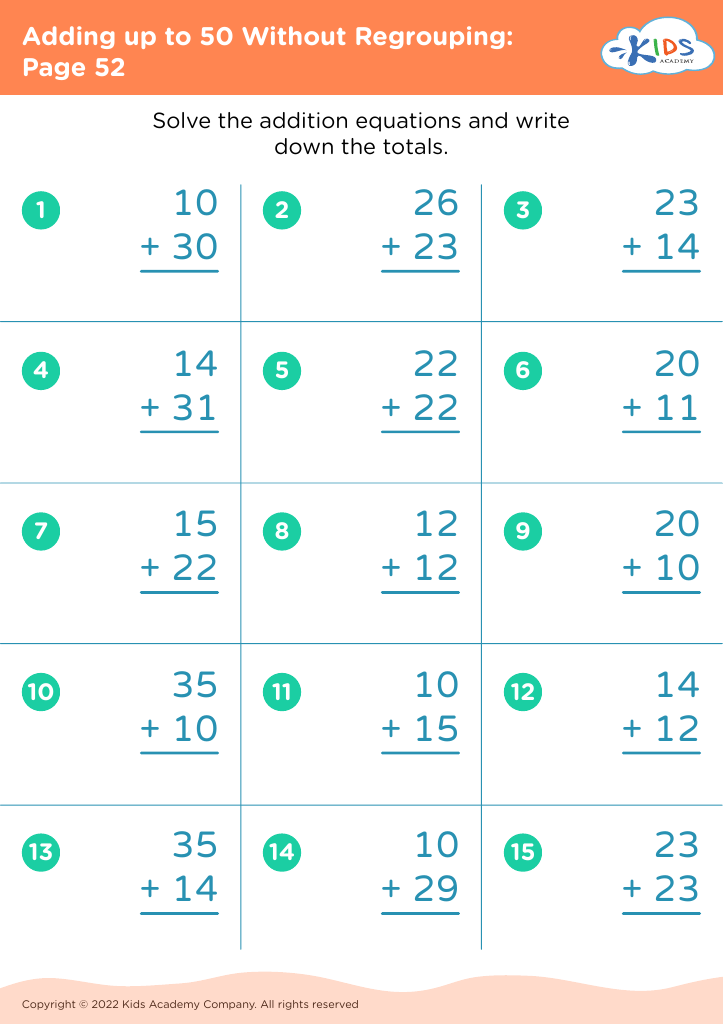
    Adding up to 50 Without Regrouping: Page 52
    Adding up to 50 Without Regrouping: Page 52
    Adding up to 50 Without Regrouping: Page 52
    Worksheet
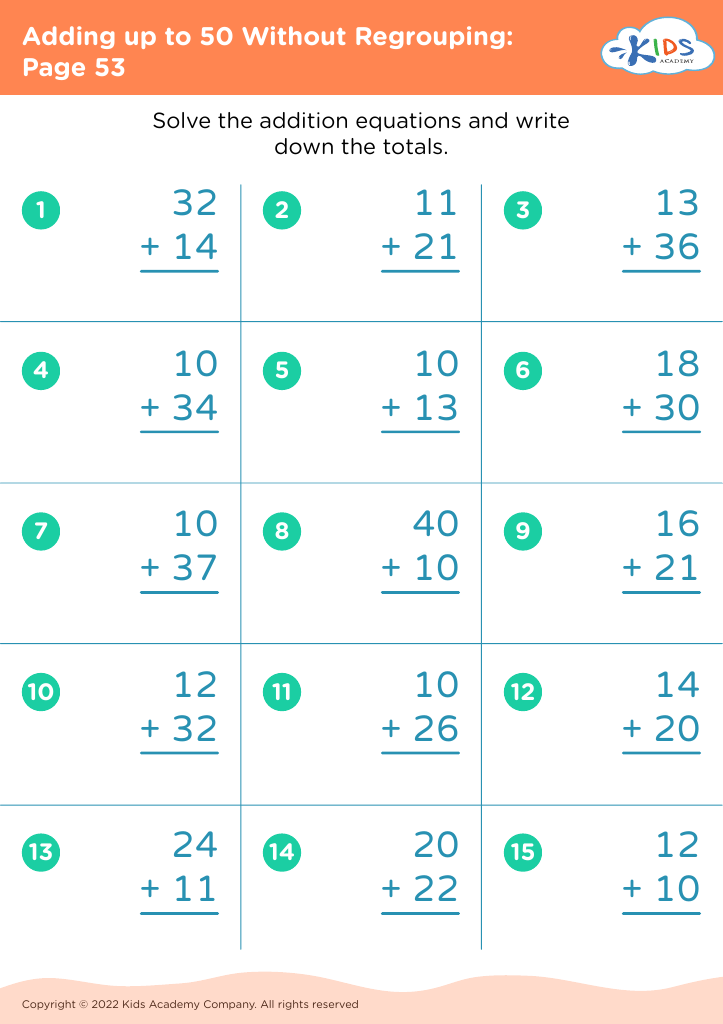
    Adding up to 50 Without Regrouping: Page 53
    Adding up to 50 Without Regrouping: Page 53
    Adding up to 50 Without Regrouping: Page 53
    Worksheet
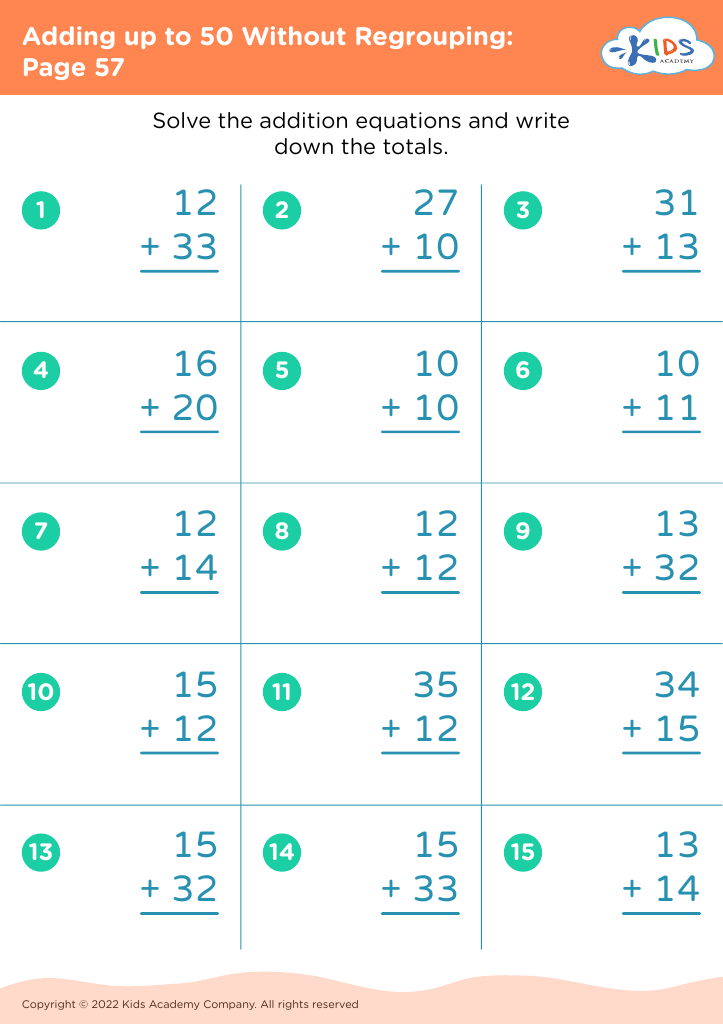
    Adding up to 50 Without Regrouping: Page 57
    Adding up to 50 Without Regrouping: Page 57
    Adding up to 50 Without Regrouping: Page 57
    Worksheet
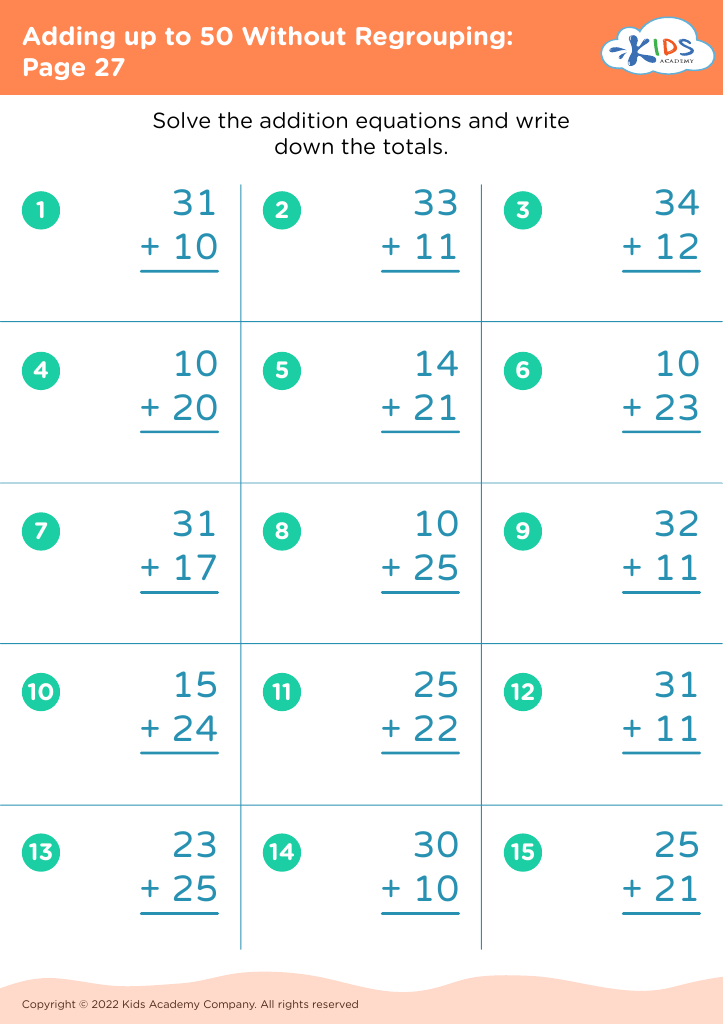
    Adding up to 50 Without Regrouping: Page 27
    Adding up to 50 Without Regrouping: Page 27
    Adding up to 50 Without Regrouping: Page 27
    Worksheet
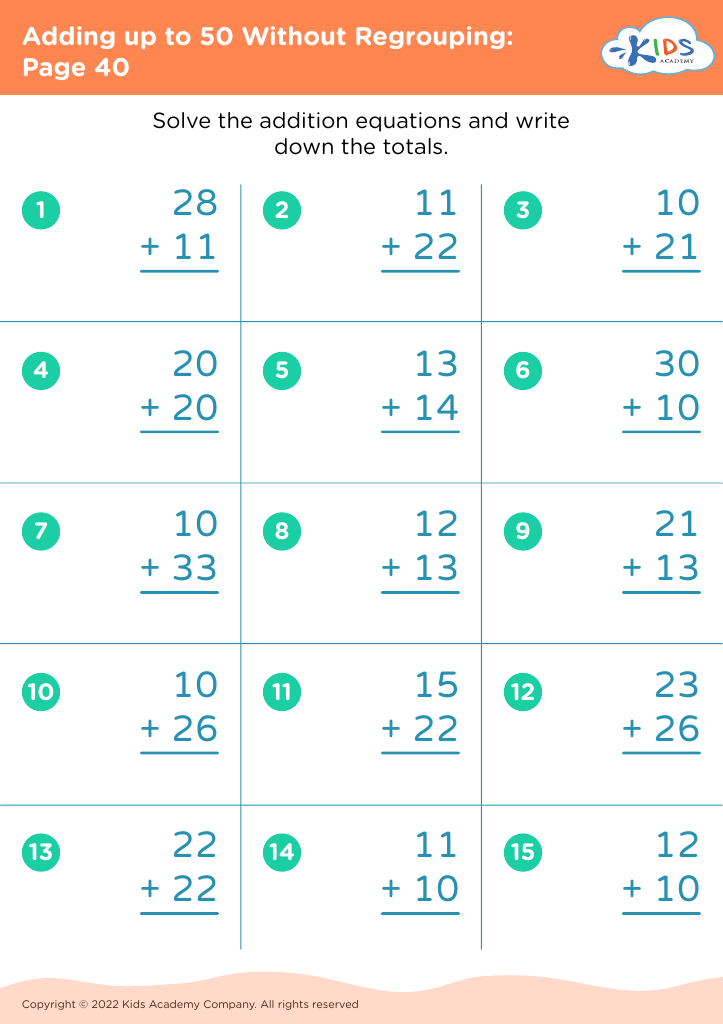
    Adding up to 50 Without Regrouping: Page 40
    Adding up to 50 Without Regrouping: Page 40
    Adding up to 50 Without Regrouping: Page 40
    Worksheet
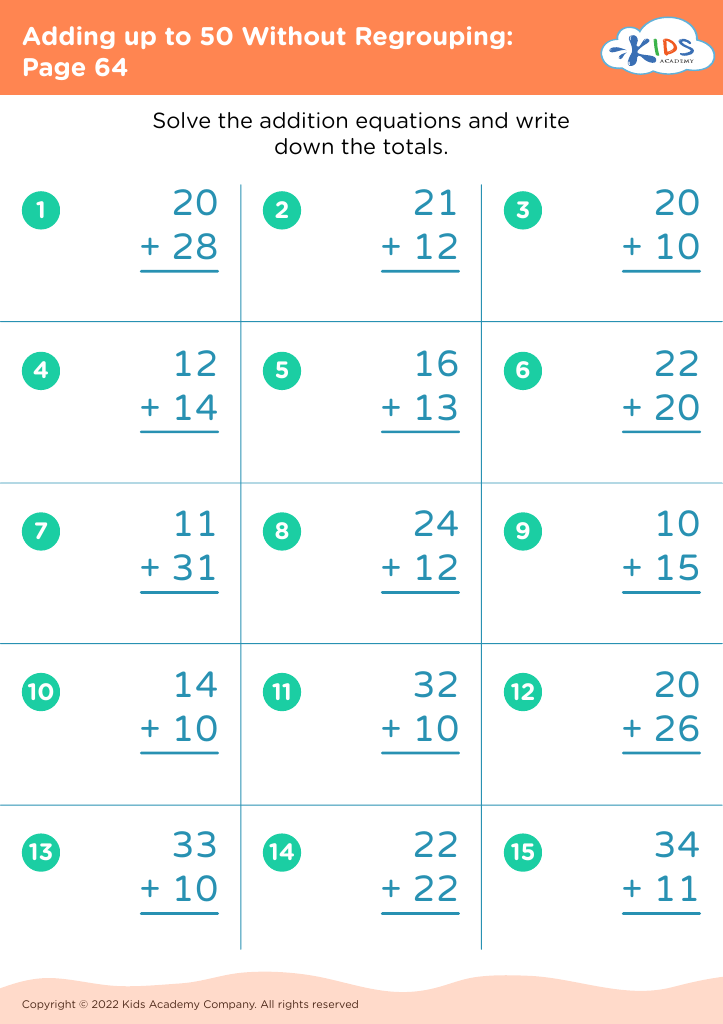
    Adding up to 50 Without Regrouping: Page 64
    Adding up to 50 Without Regrouping: Page 64
    Adding up to 50 Without Regrouping: Page 64
    Worksheet
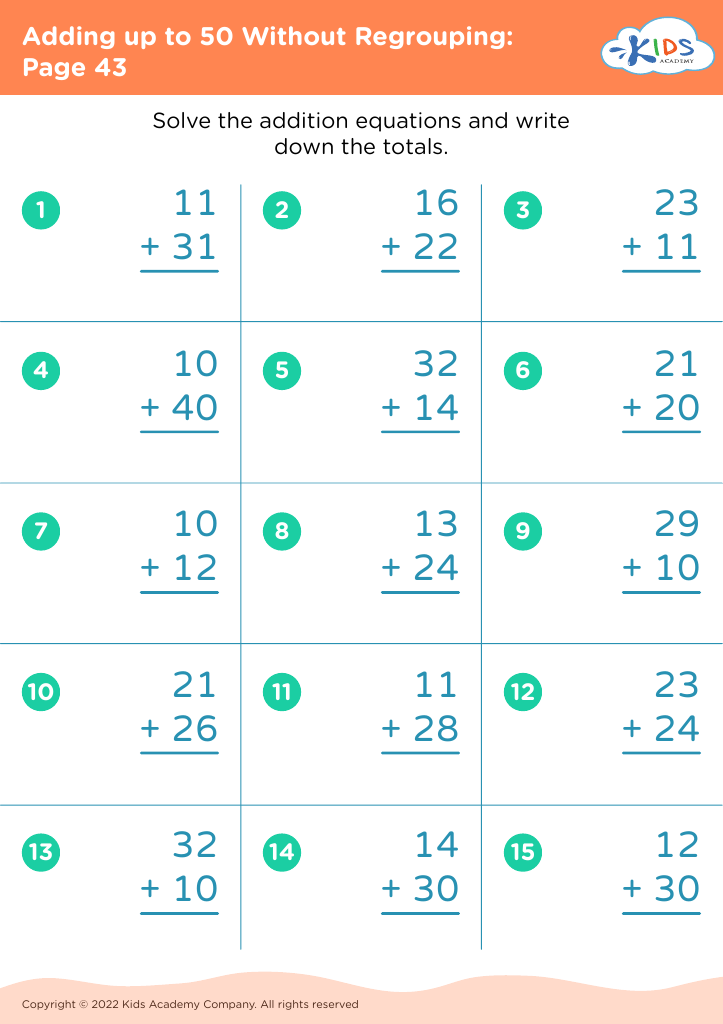
    Adding up to 50 Without Regrouping: Page 43
    Adding up to 50 Without Regrouping: Page 43
    Adding up to 50 Without Regrouping: Page 43
    Worksheet
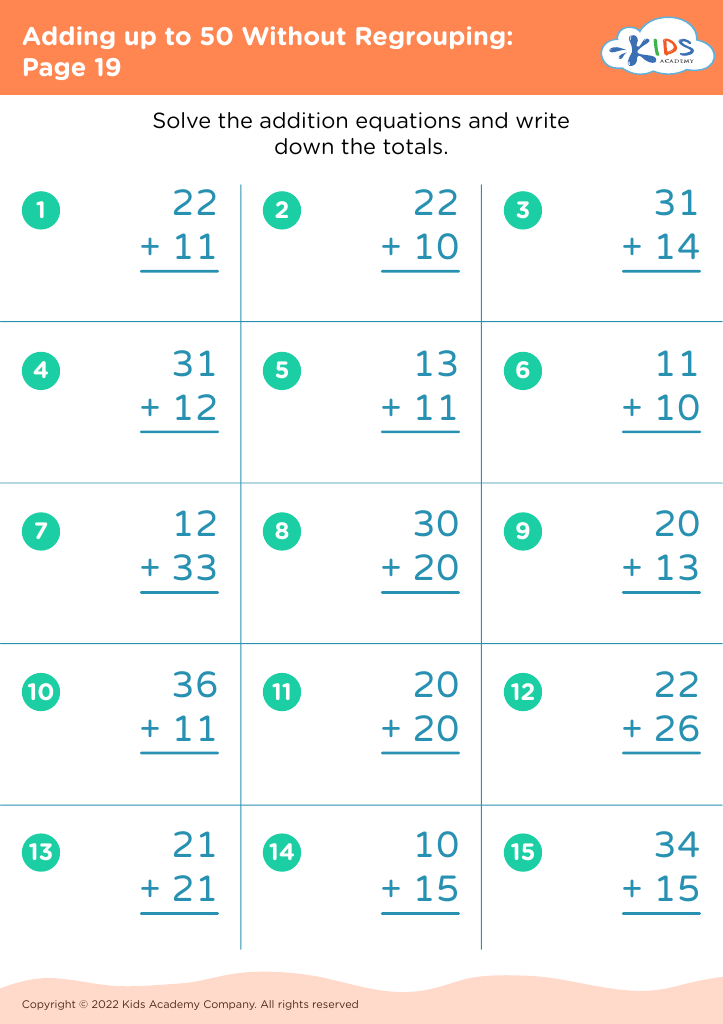
    Adding up to 50 Without Regrouping: Page 19
    Adding up to 50 Without Regrouping: Page 19
    Adding up to 50 Without Regrouping: Page 19
    Worksheet
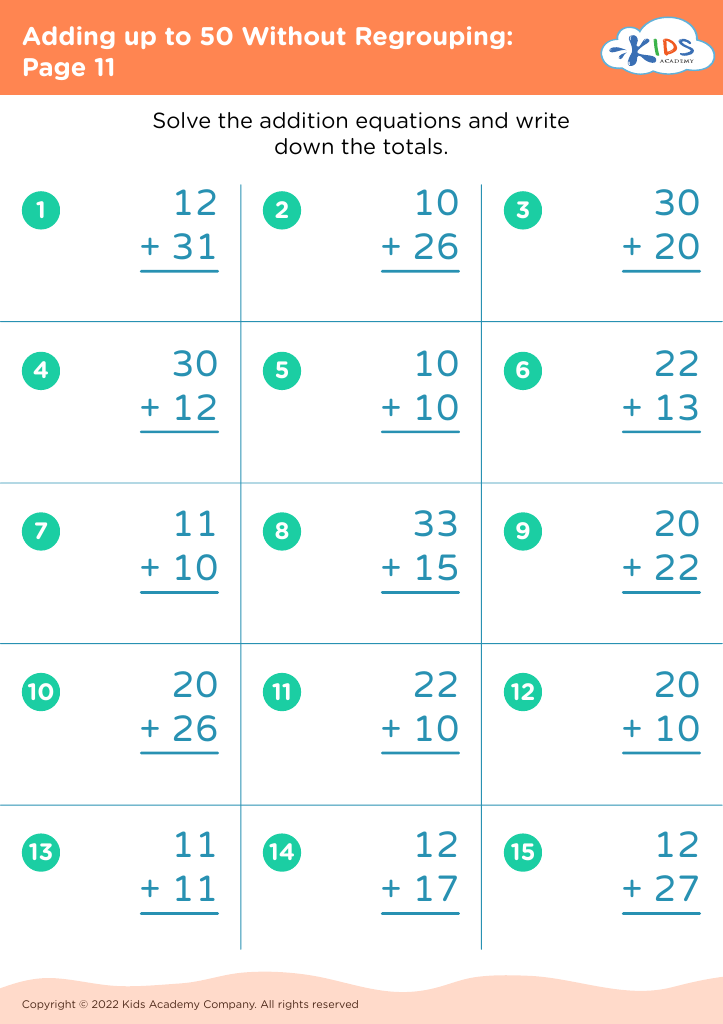
    Adding up to 50 Without Regrouping: Page 11
    Adding up to 50 Without Regrouping: Page 11
    Adding up to 50 Without Regrouping: Page 11
    Worksheet
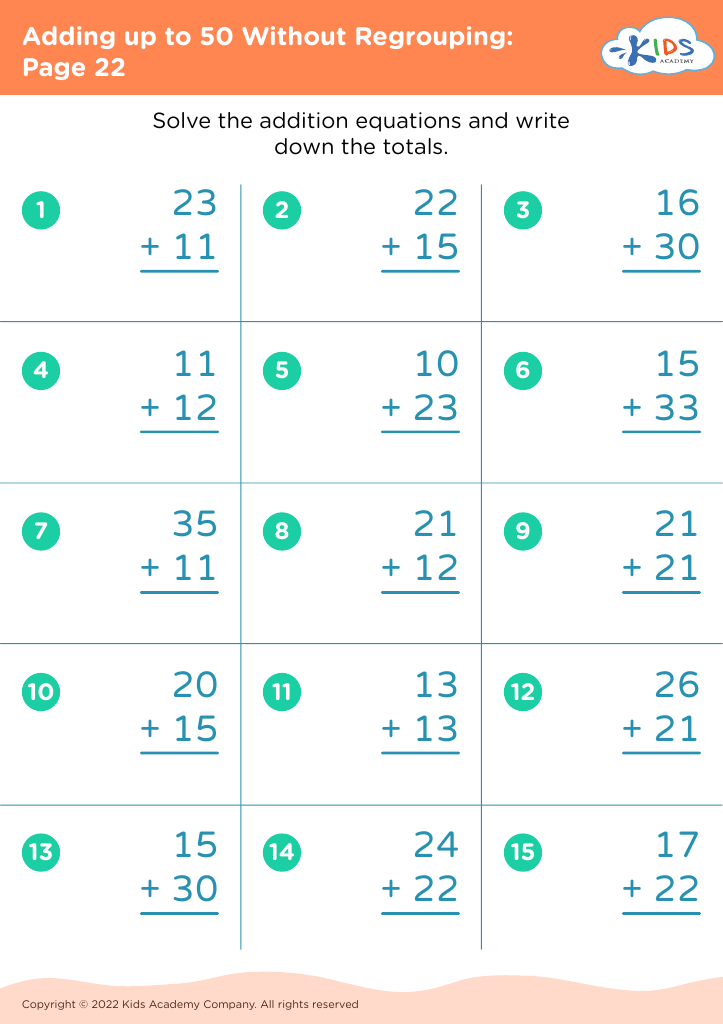
    Adding up to 50 Without Regrouping: Page 22
    Adding up to 50 Without Regrouping: Page 22
    Adding up to 50 Without Regrouping: Page 22
    Worksheet
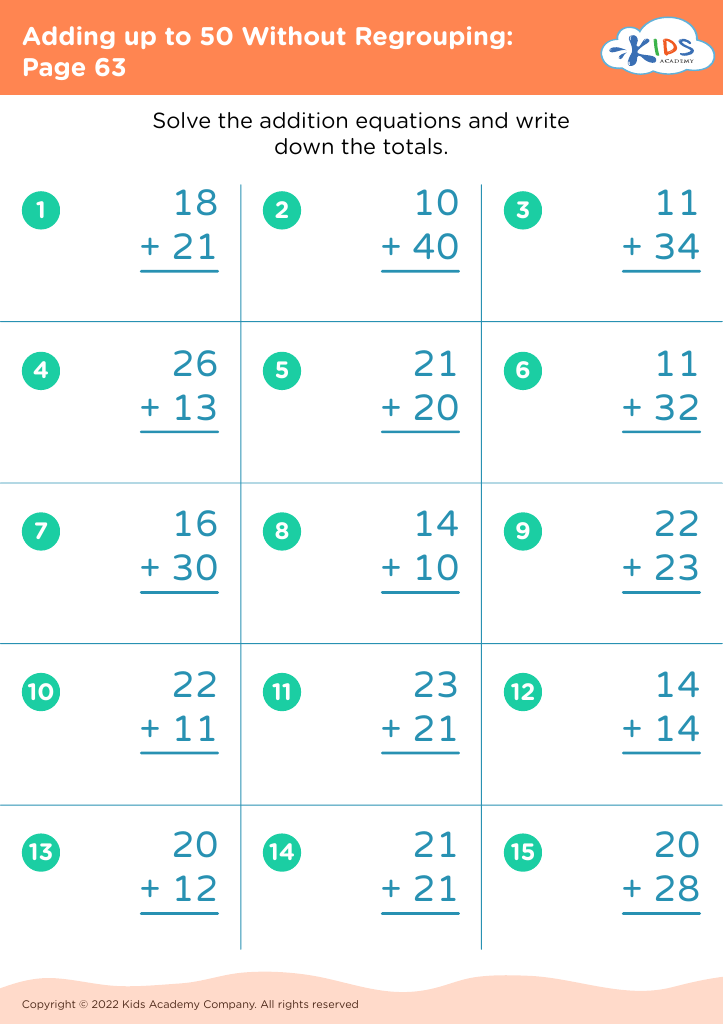
    Adding up to 50 Without Regrouping: Page 63
    Adding up to 50 Without Regrouping: Page 63
    Adding up to 50 Without Regrouping: Page 63
    Worksheet
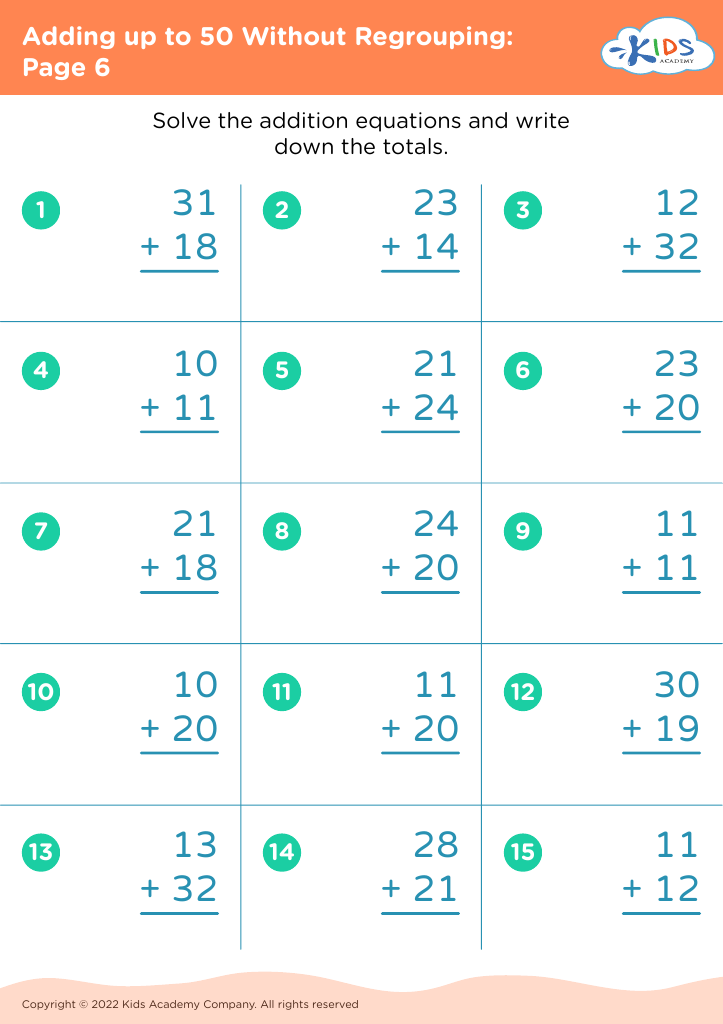
    Adding up to 50 Without Regrouping: Page 6
    Adding up to 50 Without Regrouping: Page 6
    Adding up to 50 Without Regrouping: Page 6
    Worksheet
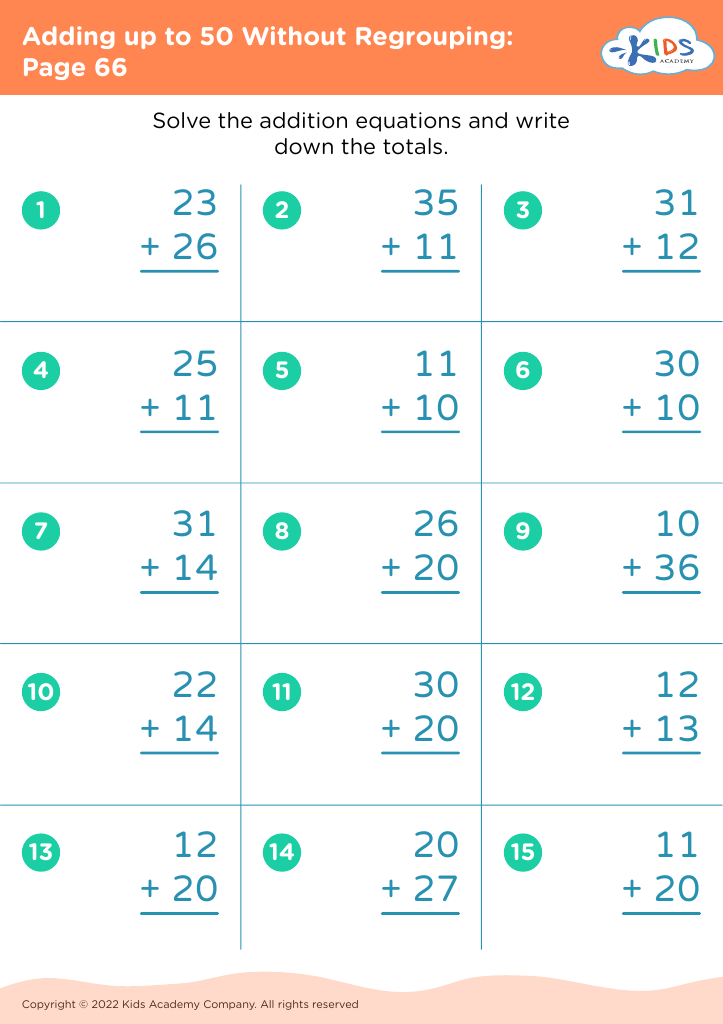
    Adding up to 50 Without Regrouping: Page 66
    Adding up to 50 Without Regrouping: Page 66
    Adding up to 50 Without Regrouping: Page 66
    Worksheet
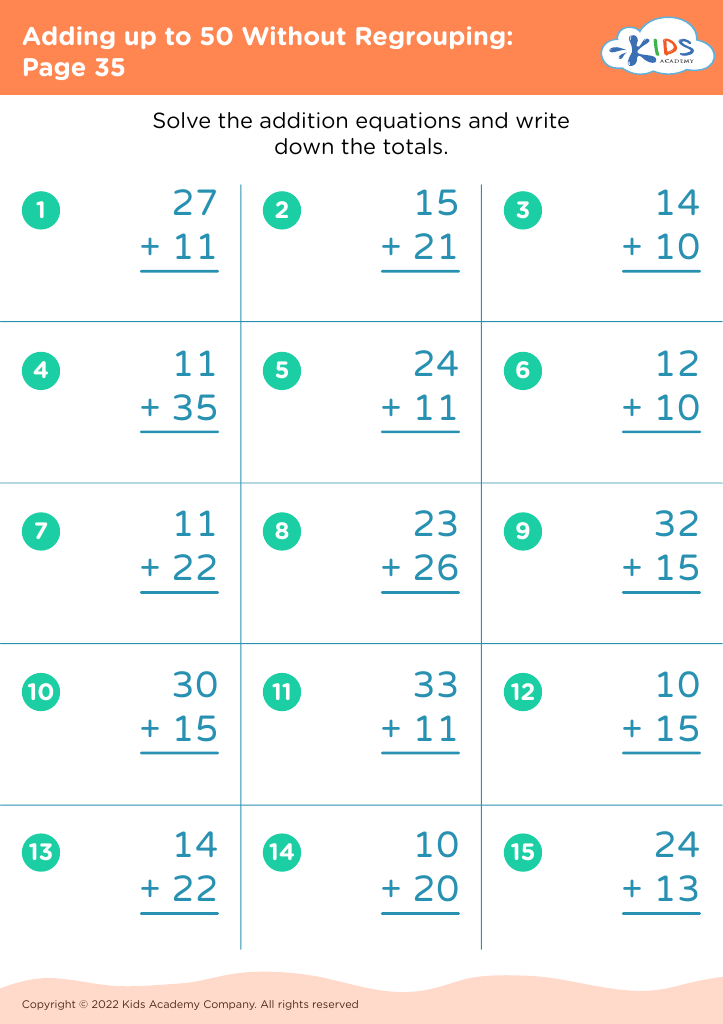
    Adding up to 50 Without Regrouping: Page 35
    Adding up to 50 Without Regrouping: Page 35
    Adding up to 50 Without Regrouping: Page 35
    Worksheet
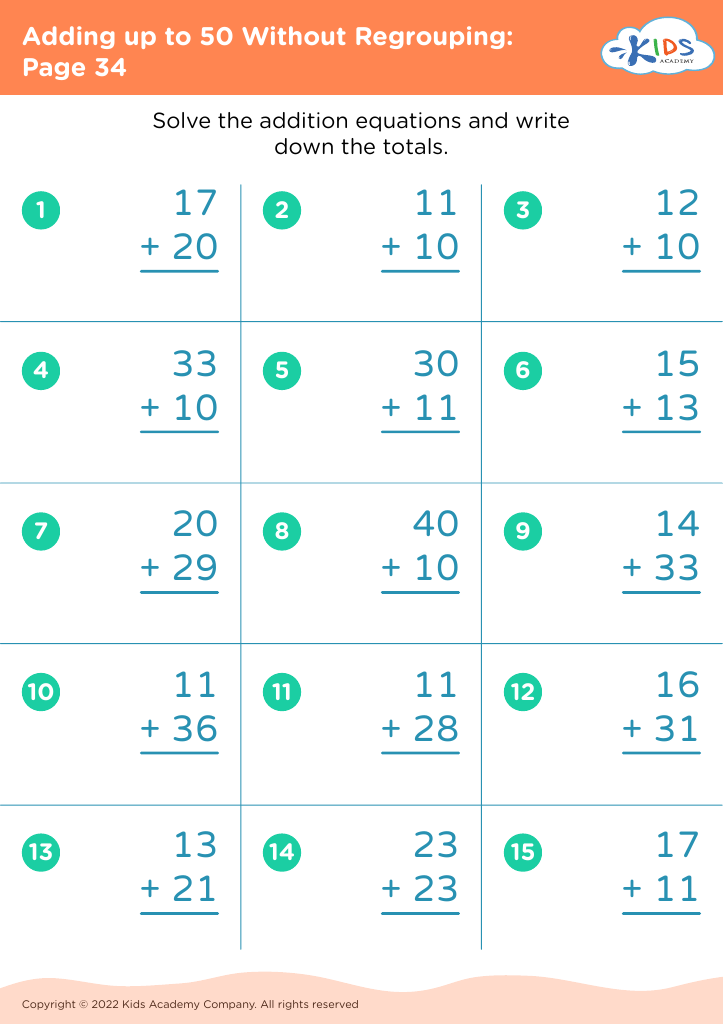
    Adding up to 50 Without Regrouping: Page 34
    Adding up to 50 Without Regrouping: Page 34
    Adding up to 50 Without Regrouping: Page 34
    Worksheet
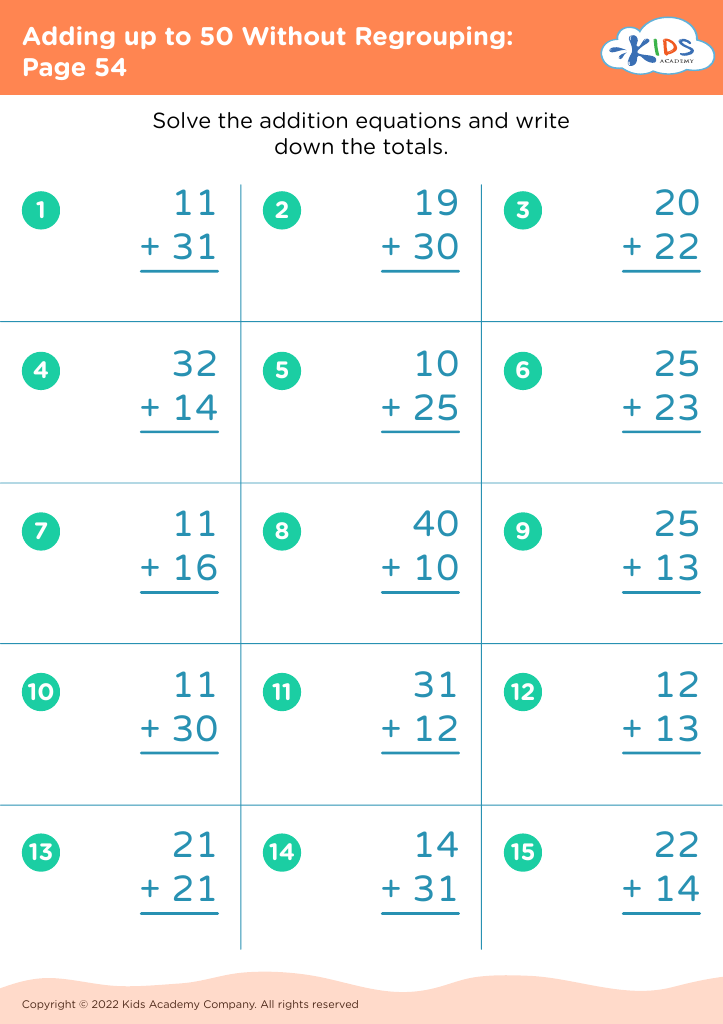
    Adding up to 50 Without Regrouping: Page 54
    Adding up to 50 Without Regrouping: Page 54
    Adding up to 50 Without Regrouping: Page 54
    Worksheet
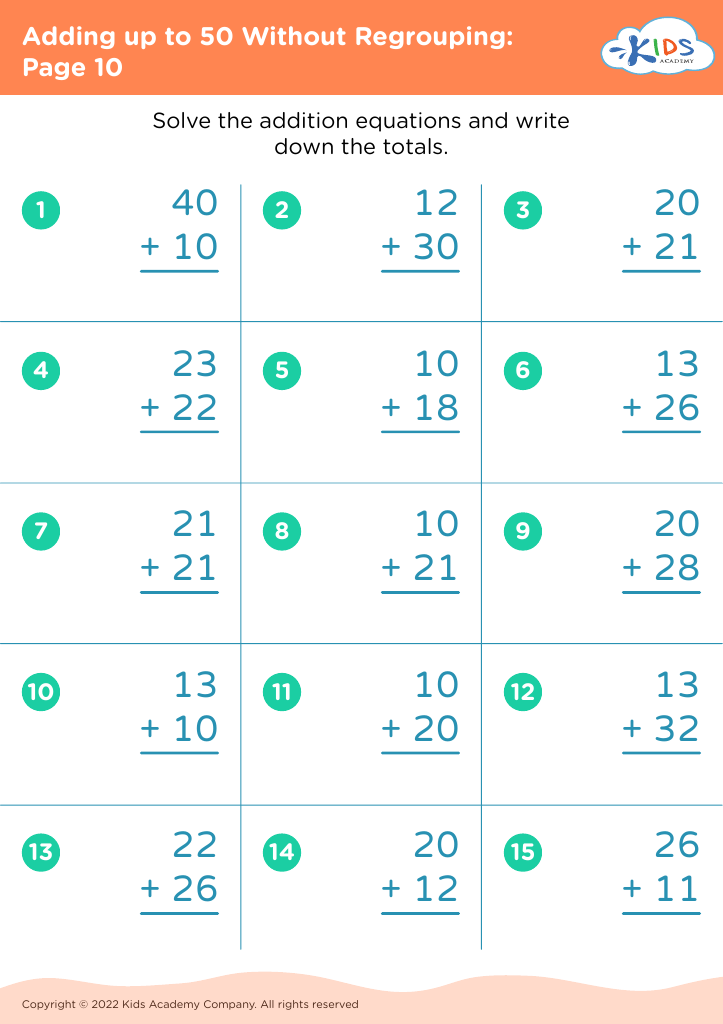
    Adding up to 50 Without Regrouping: Page 10
    Adding up to 50 Without Regrouping: Page 10
    Adding up to 50 Without Regrouping: Page 10
    Worksheet
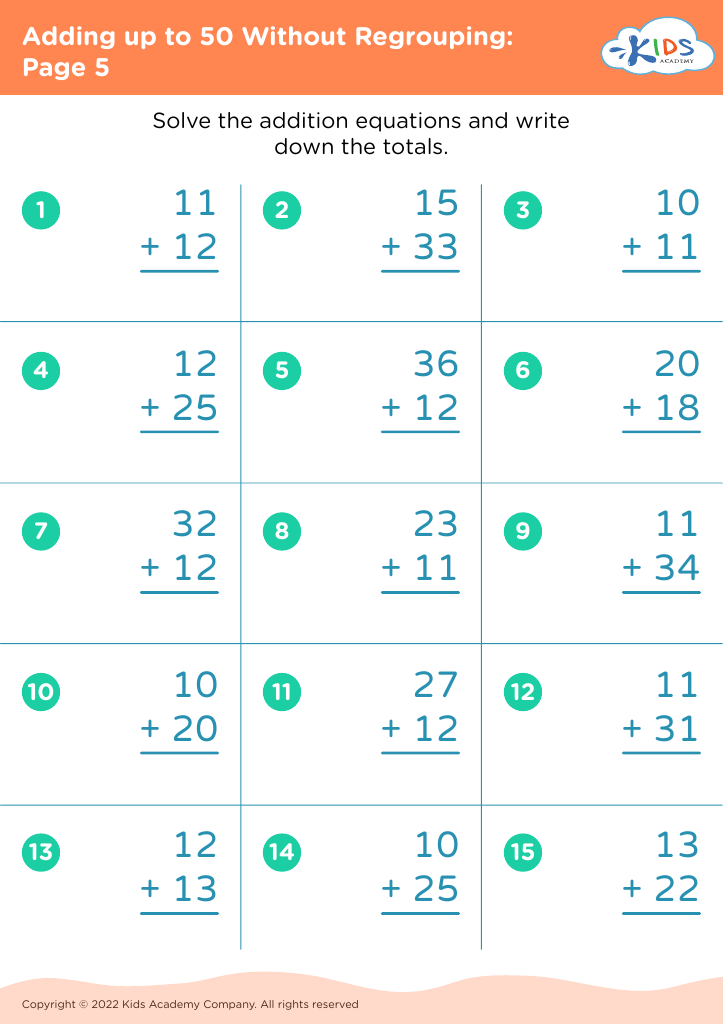
    Adding up to 50 Without Regrouping: Page 5
    Adding up to 50 Without Regrouping: Page 5
    Adding up to 50 Without Regrouping: Page 5
    Worksheet
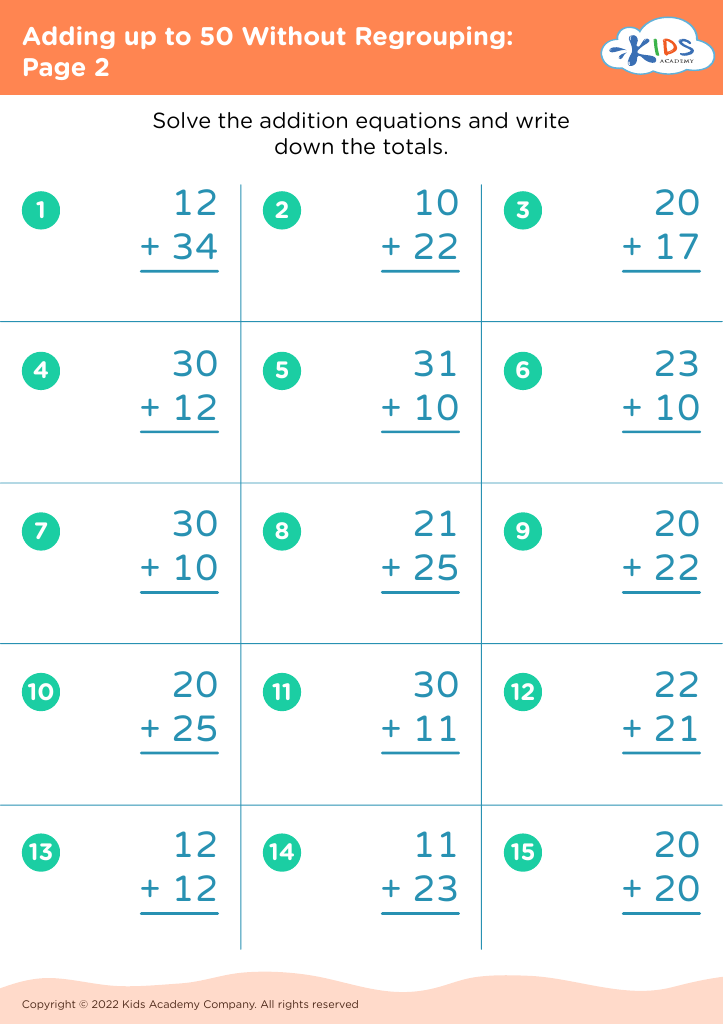
    Adding up to 50 Without Regrouping: Page 2
    Adding up to 50 Without Regrouping: Page 2
    Adding up to 50 Without Regrouping: Page 2
    Worksheet
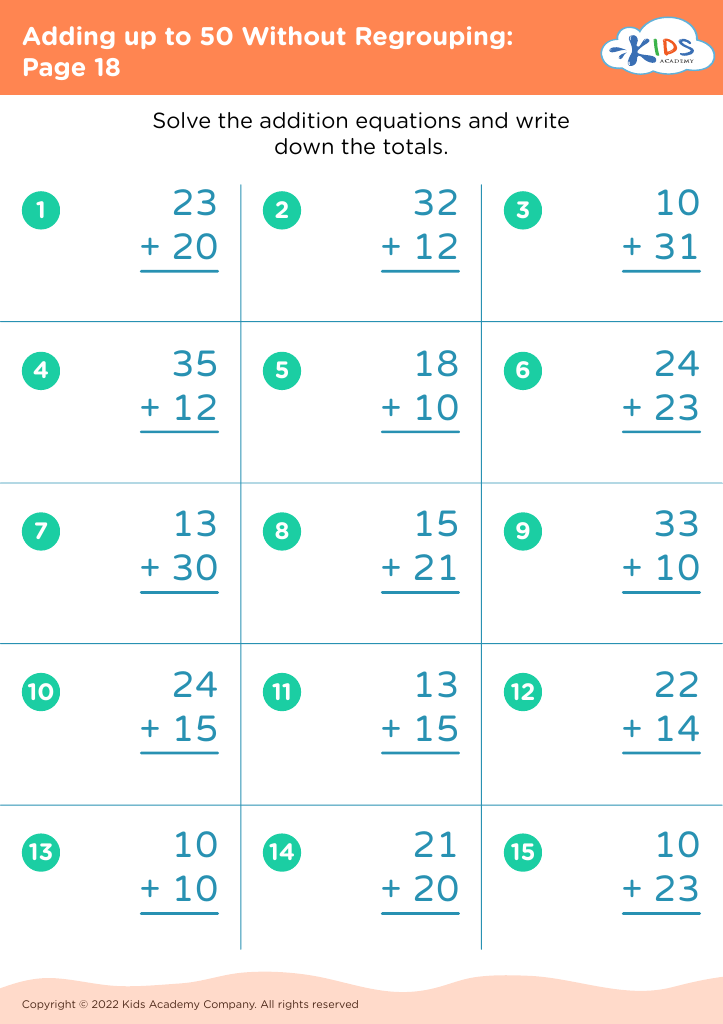
    Adding up to 50 Without Regrouping: Page 18
    Adding up to 50 Without Regrouping: Page 18
    Adding up to 50 Without Regrouping: Page 18
    Worksheet


    Parents and teachers should prioritize teaching young children how to add up to 50 without regrouping for several reasons. First, this foundational skill enhances early numeracy, developing children's confidence in manipulating numbers – a critical aspect of their mathematical journey. Mastering addition within this range helps children understand number relationships and places a strong emphasis on mental arithmetic, which is vital for problem-solving and advanced mathematics later on.

    Moreover, learning to add without regrouping reinforces sequential counting and number sense. It provides a stepping stone for more complex mathematical concepts, such as carrying over in addition or borrowing in subtraction. When children are comfortable with mental addition, they can tackle math problems with greater ease, which can reduce anxiety toward the subject.

    Games and interactive approaches make this learning engaging, nurturing a positive attitude toward mathematics. Additionally, it equips parents and teachers with the tools to create collaborative learning environments, fostering communication and teamwork. By emphasizing skills like adding up to 50 without regrouping, adults support children’s overall cognitive development and prepare them for future academic challenges, laying a strong foundation for their lifelong learning in mathematics and problem-solving strategies.