Filters

279 filtered results

Clear all filters
Favorites
With answer key
Interactive

279 filtered results

Difficulty Level

Grade


Check out this FREE Trial Lesson on Addition & Subtraction for age 4-8!

L

Favorites
With answer key
Interactive
  • 4-8
  • Basic Addition Skills
  • Addition & Subtraction
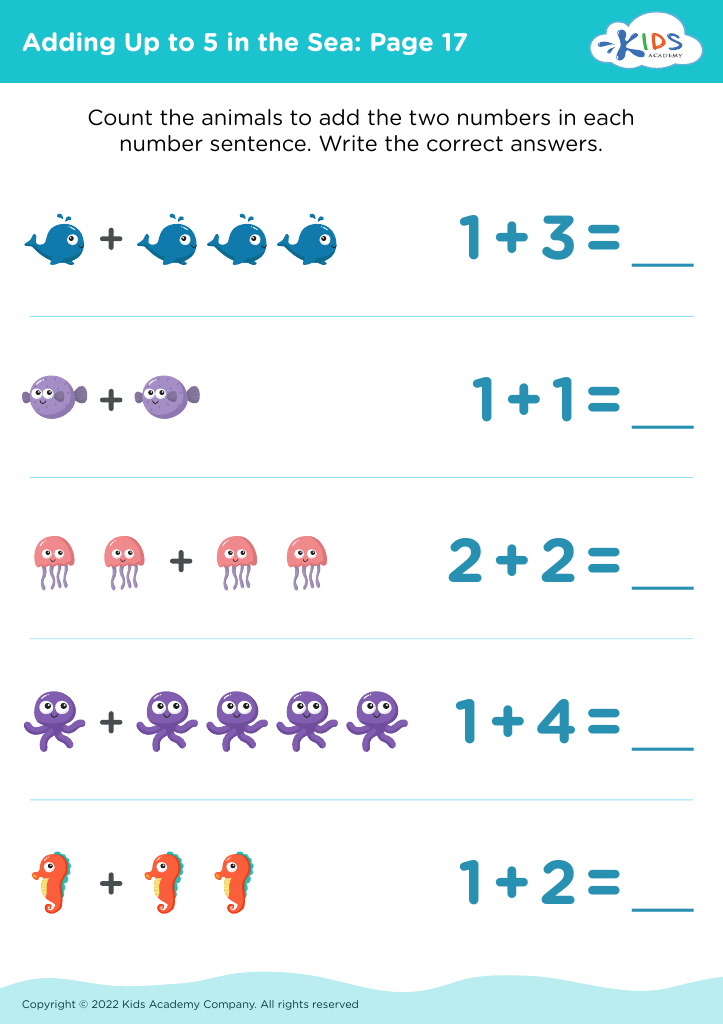
Adding Up to 5 in the Sea: Page 17
Worksheet
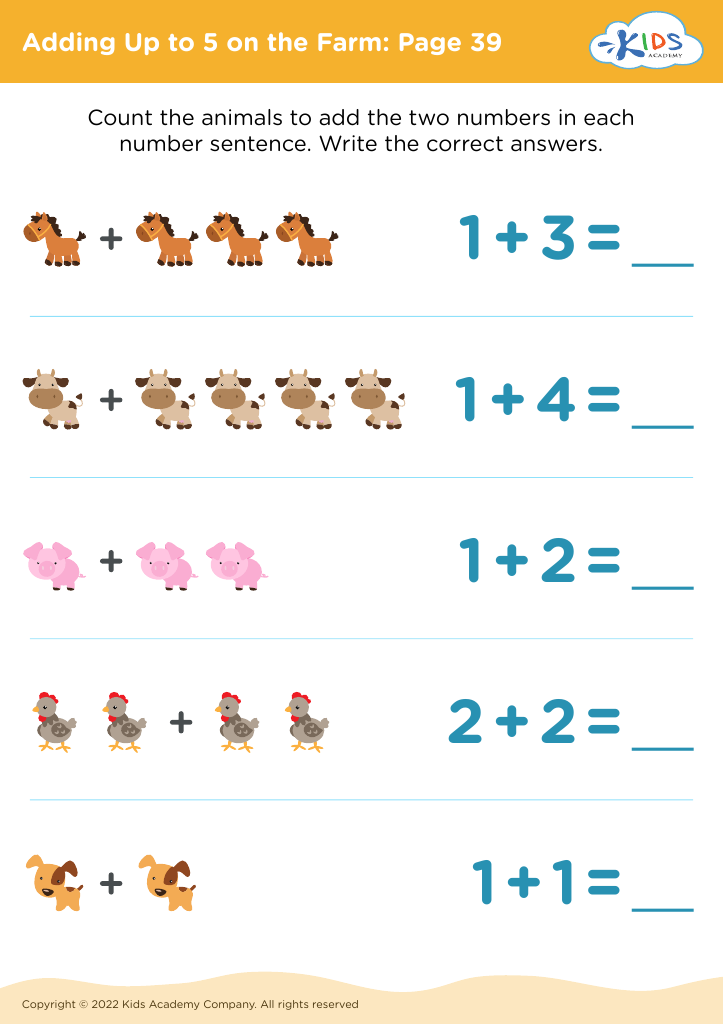
Adding Up to 5 on the Farm: Page 39
Worksheet
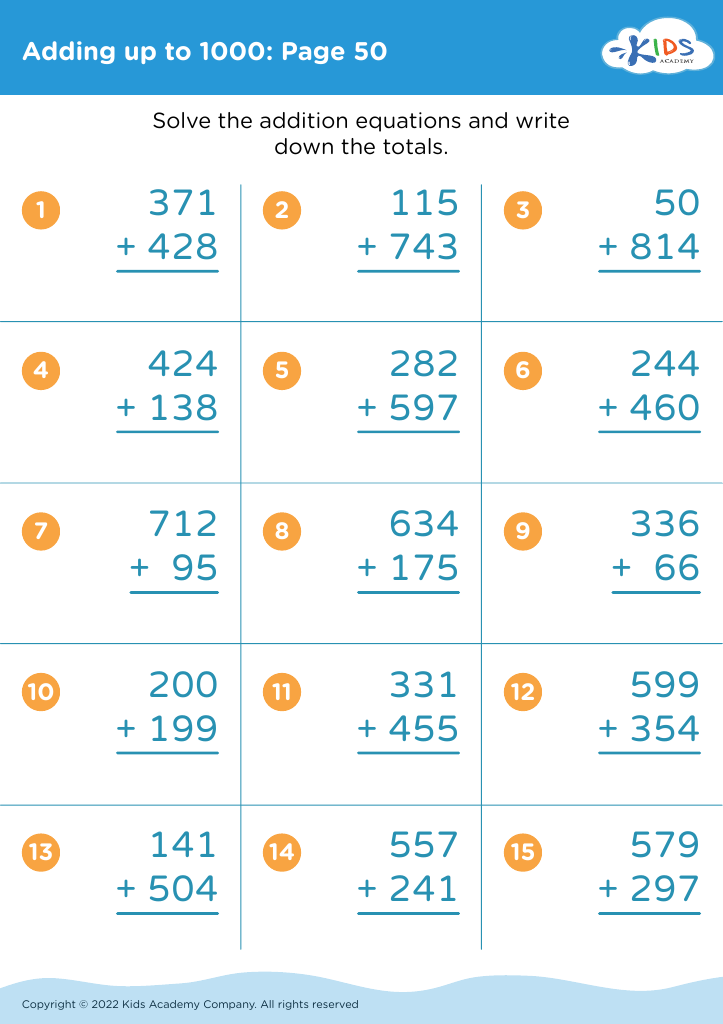
Adding up to 1000: Page 50

Adding up to 1000: Page 50

Adding up to 1000: Page 50
Worksheet
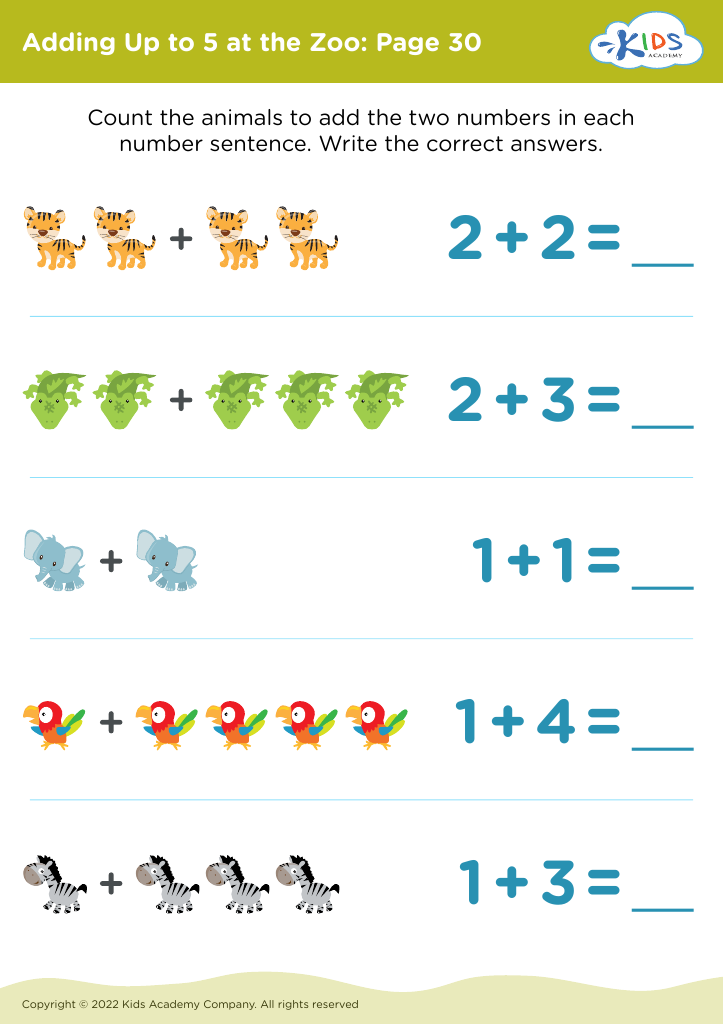
Adding Up to 5 at the Zoo: Page 30
Worksheet
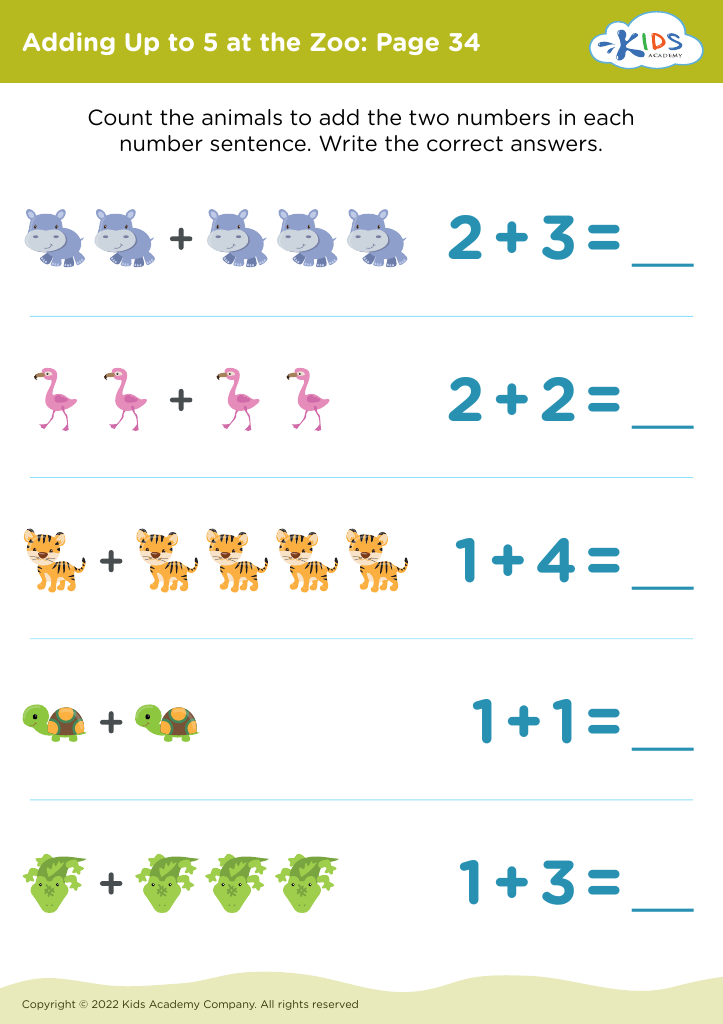
Adding Up to 5 at the Zoo: Page 34
Worksheet
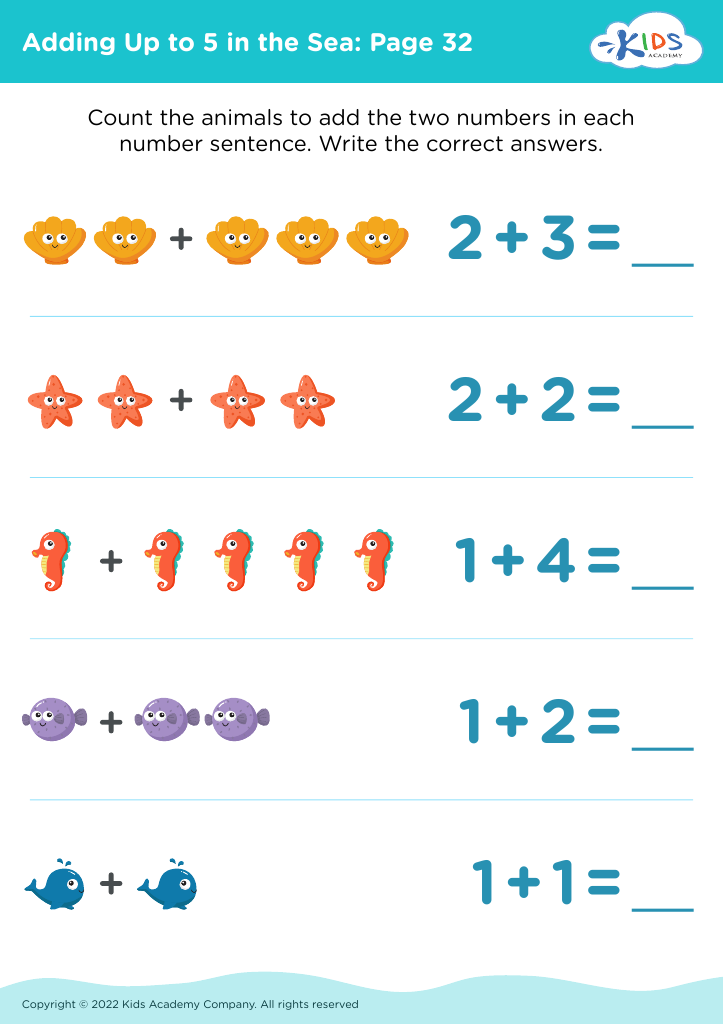
Adding Up to 5 in the Sea: Page 32
Worksheet
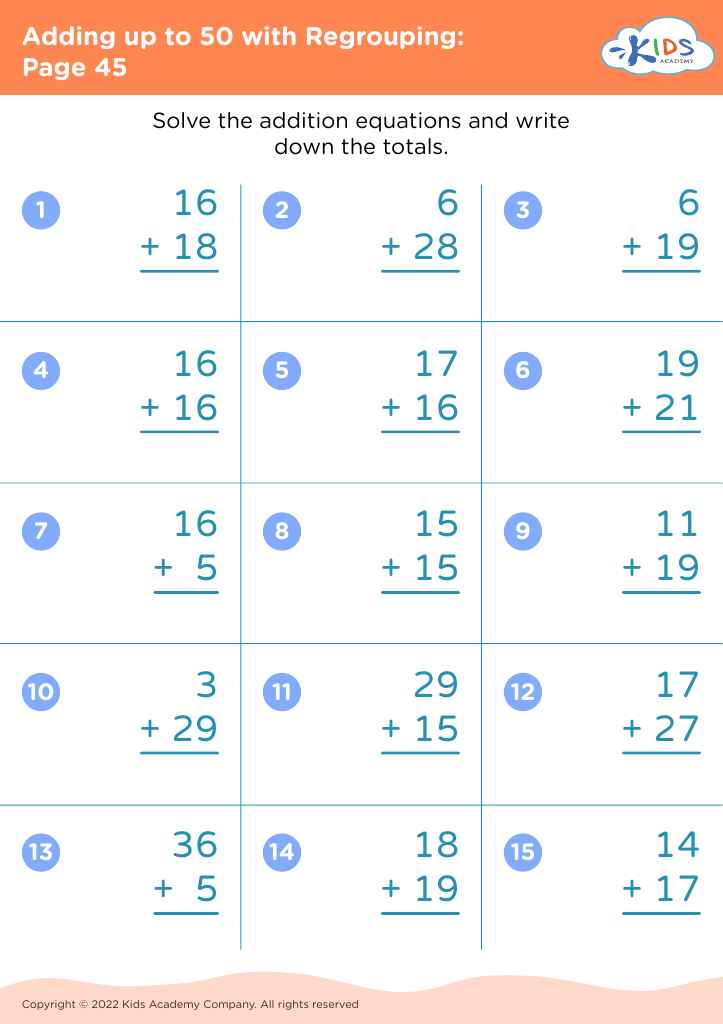
Adding up to 50 with Regrouping: Page 45
Worksheet
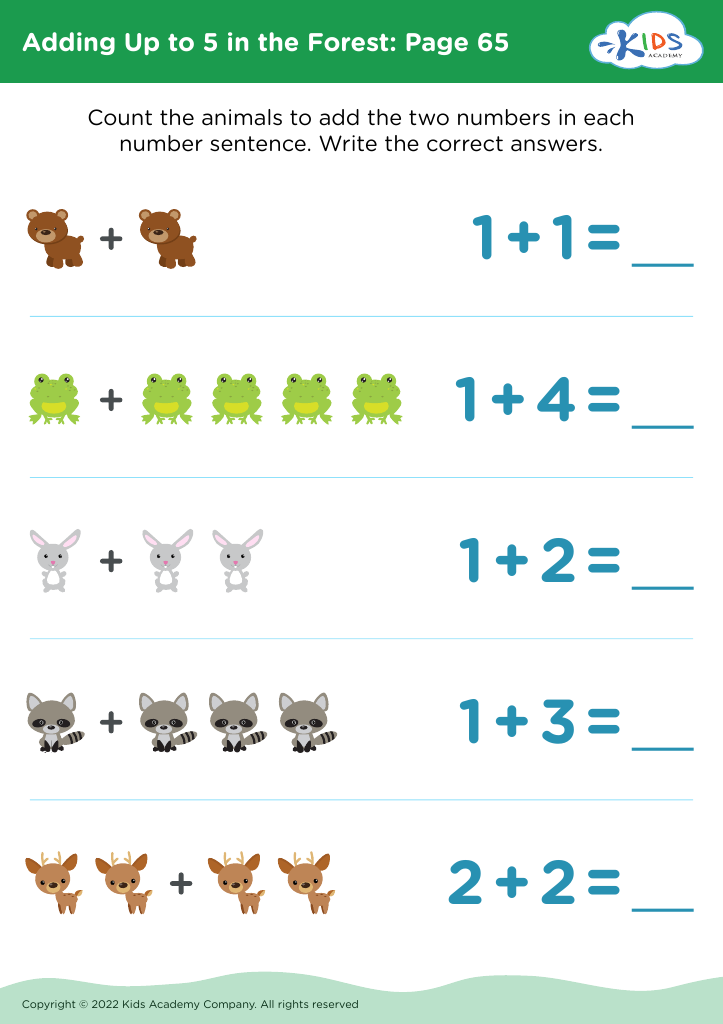
Adding Up to 5 in the Forest: Page 65
Worksheet
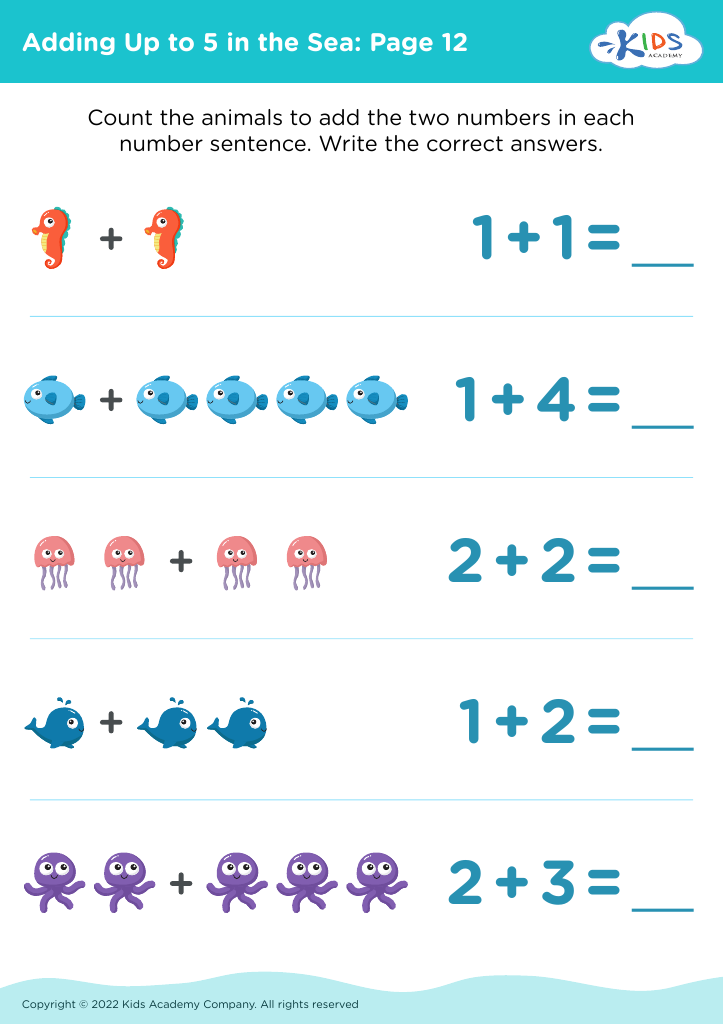
Adding Up to 5 in the Sea: Page 12
Worksheet
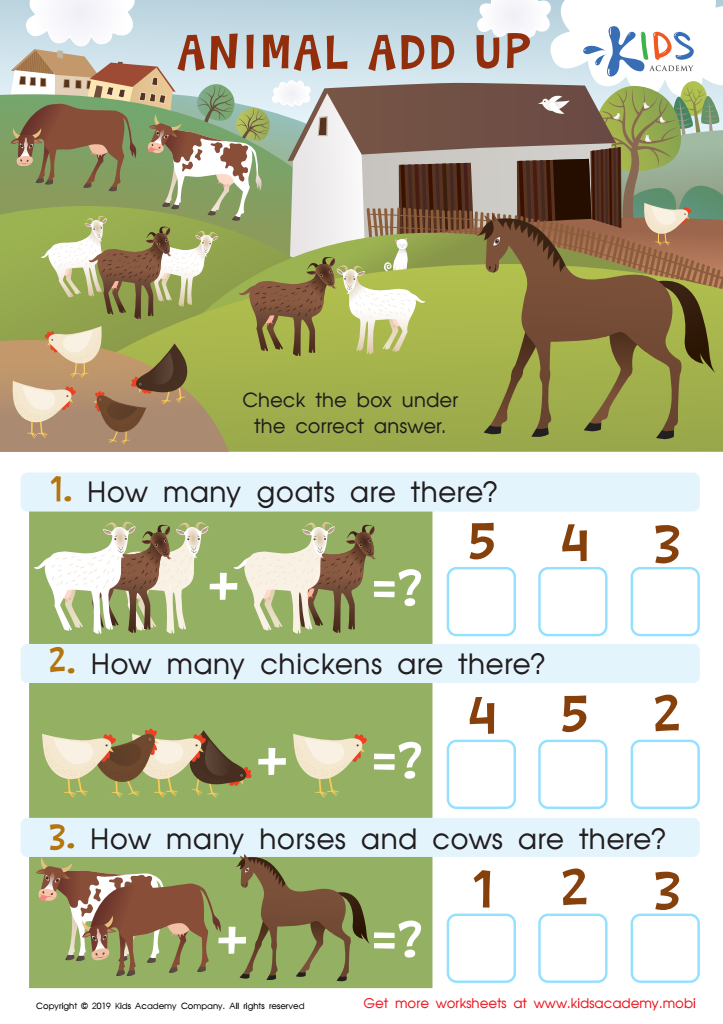
Animal Add Up Worksheet

Animal Add Up Worksheet

Animals are fun to observe and interact with. They can be seen at the zoo, parks, farms and in homes with pets. This worksheet helps kids identify animals, and build addition skills. Look at the picture with them and help name each animal. After that, add the animals up and check the box for the correct answer. 80 words.
Animal Add Up Worksheet
Worksheet
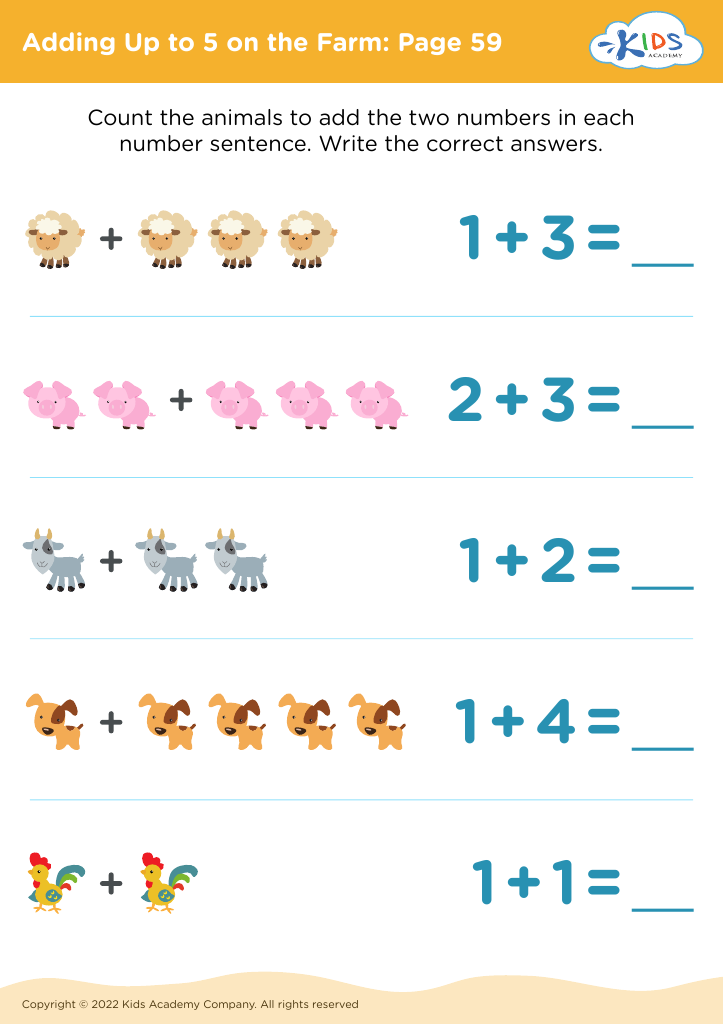
Adding Up to 5 on the Farm: Page 59
Worksheet
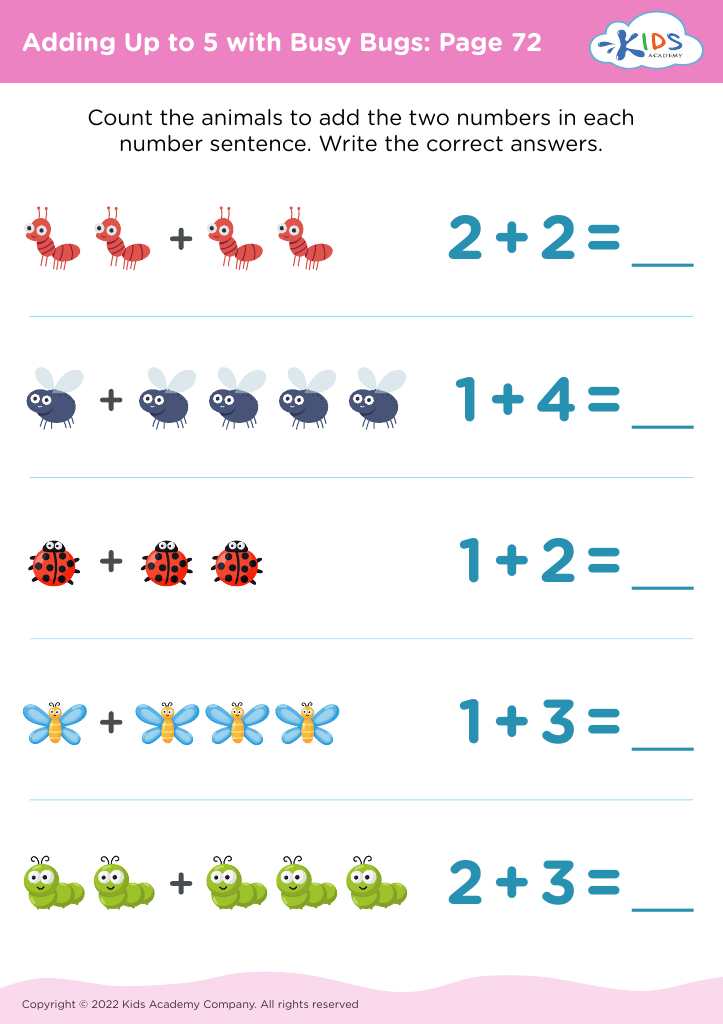
Adding Up to 5 with Busy Bugs: Page 72
Worksheet
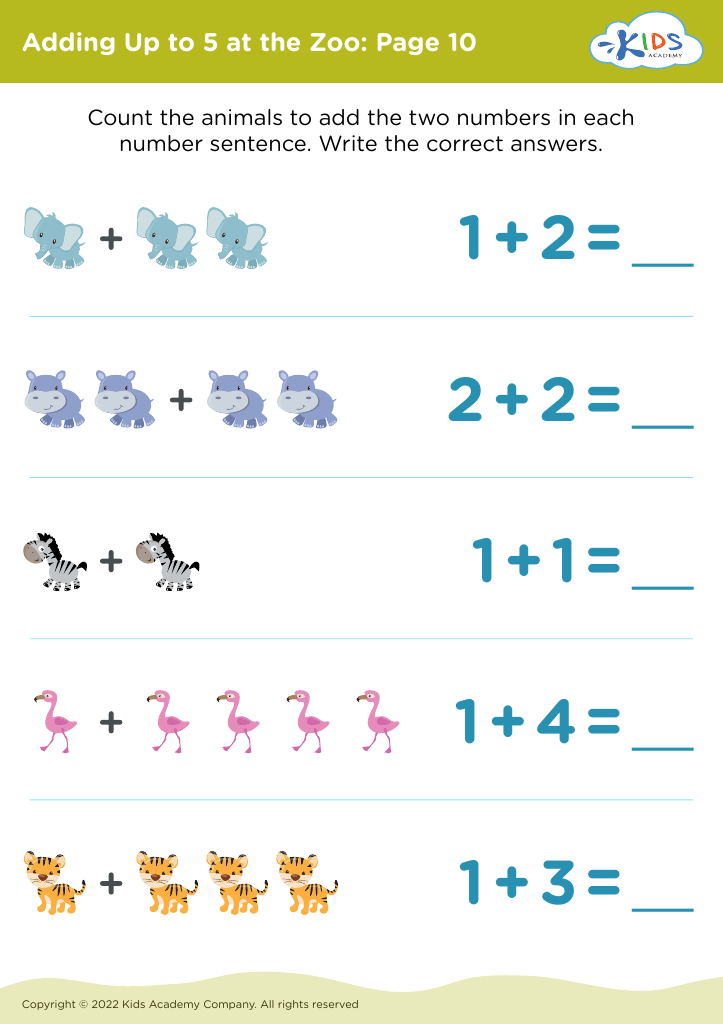
Adding Up to 5 at the Zoo: Page 10
Worksheet
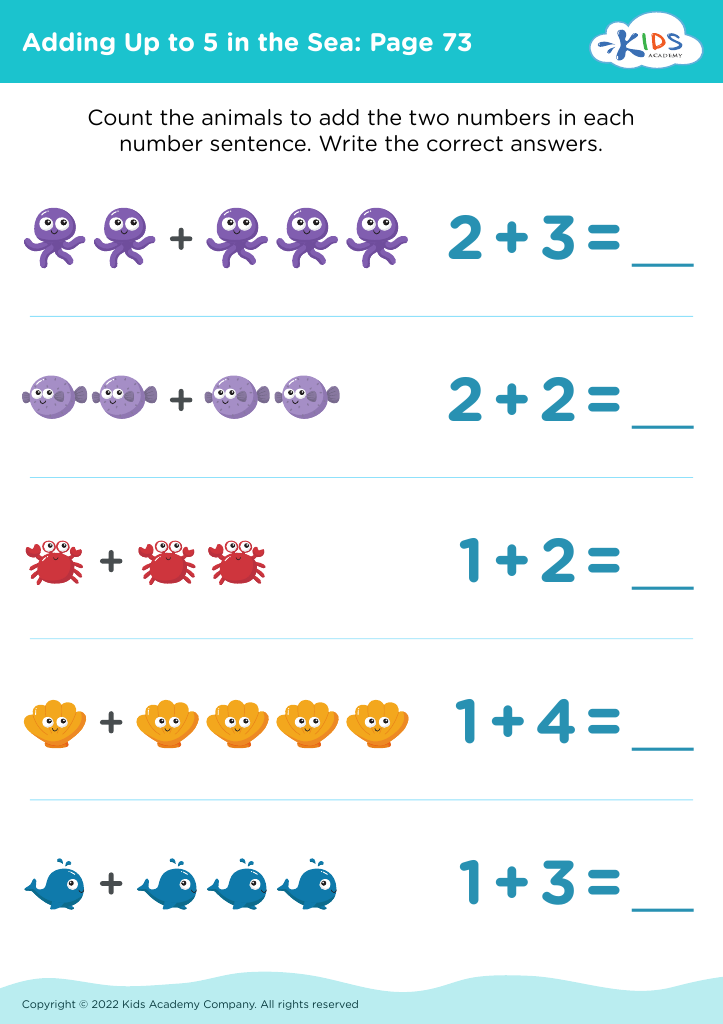
Adding Up to 5 in the Sea: Page 73
Worksheet
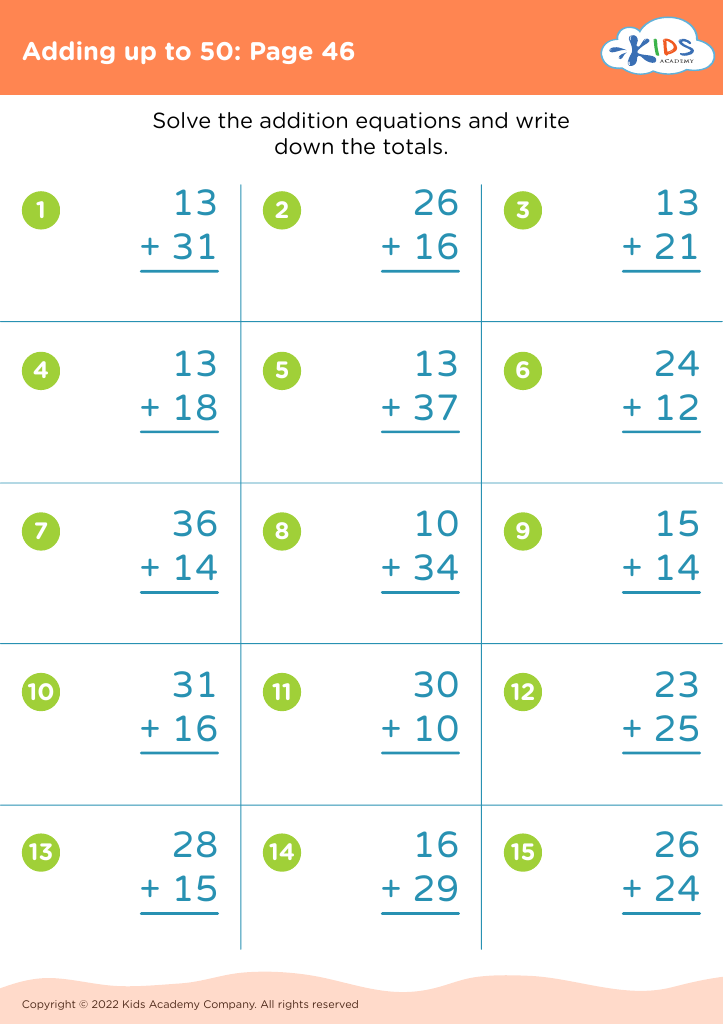
Adding up to 50: Page 46

Adding up to 50: Page 46

Adding up to 50: Page 46
Worksheet
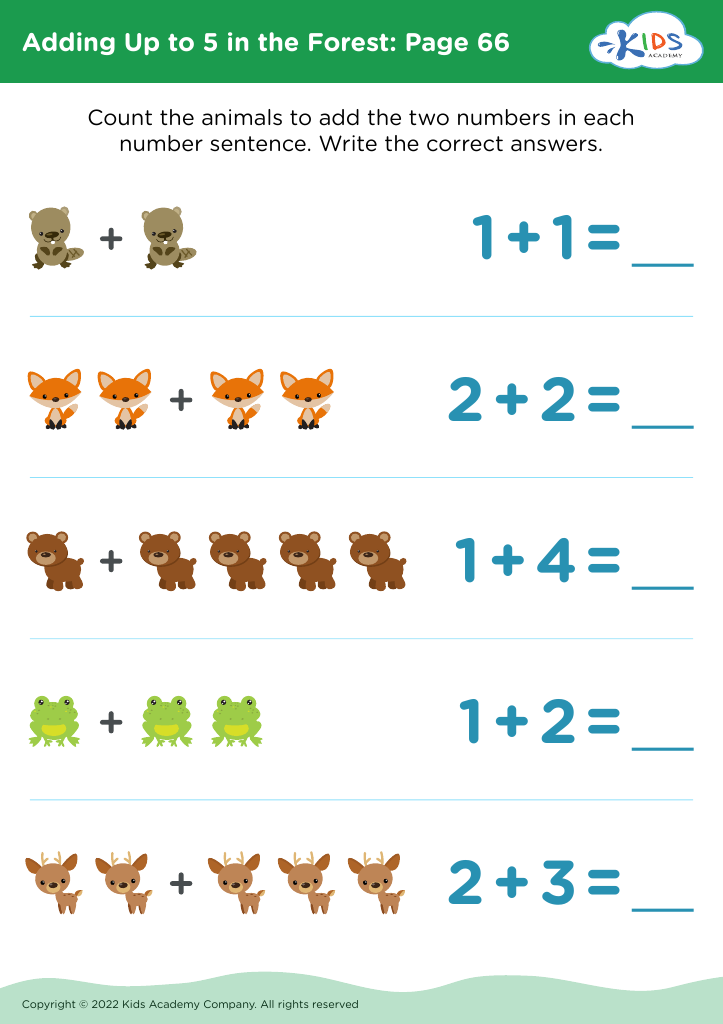
Adding Up to 5 in the Forest: Page 66
Worksheet
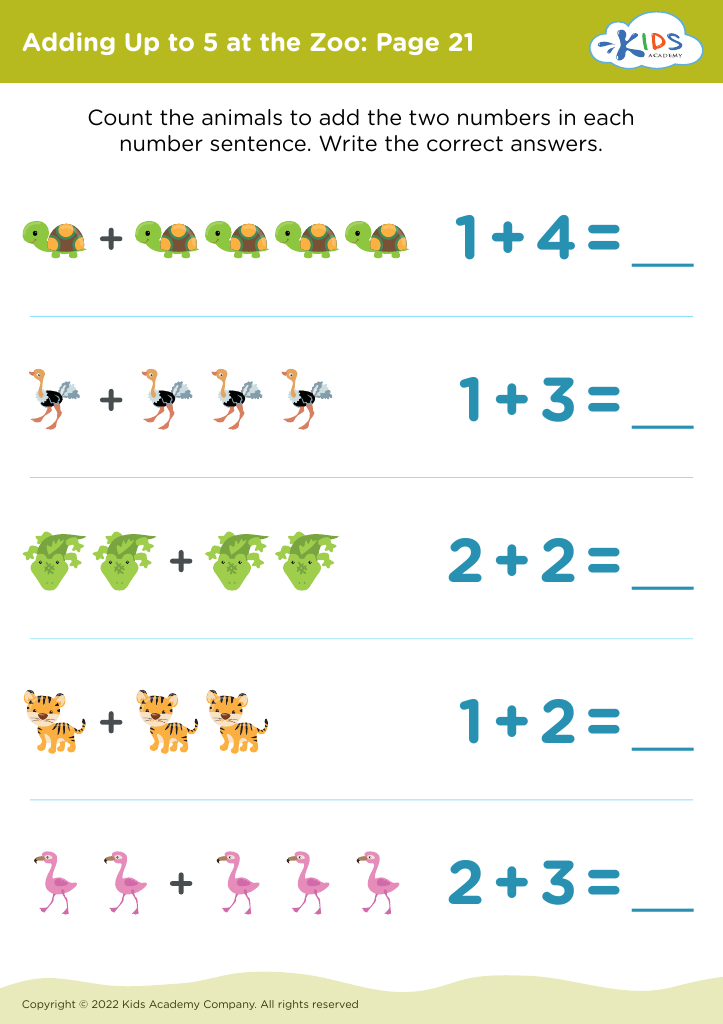
Adding Up to 5 at the Zoo: Page 21
Worksheet
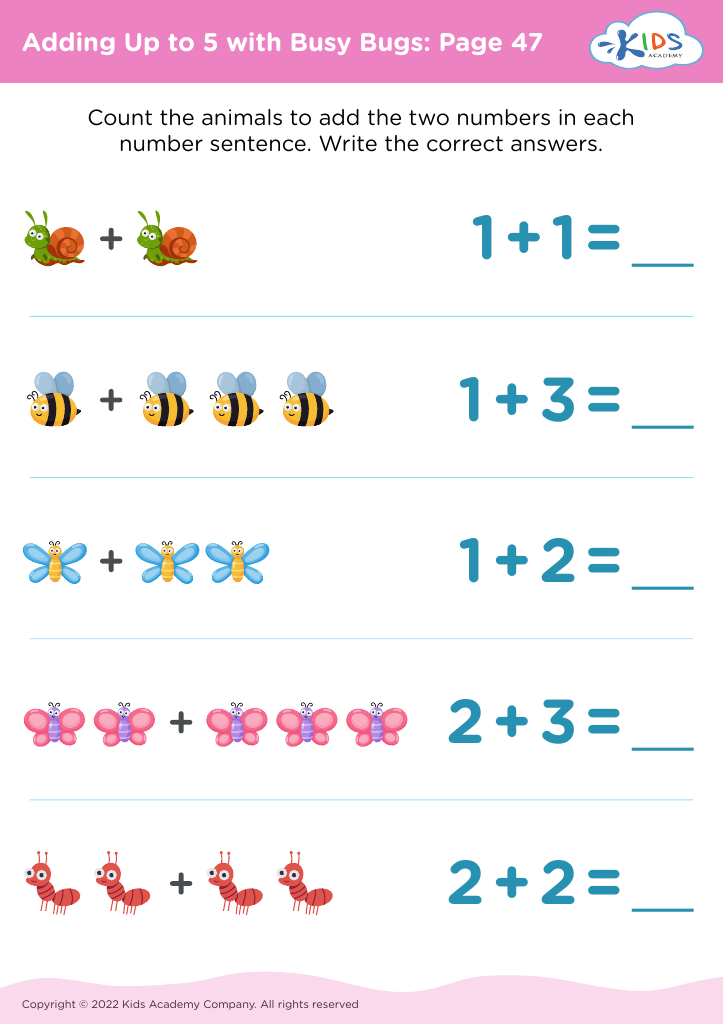
Adding Up to 5 with Busy Bugs: Page 47
Worksheet
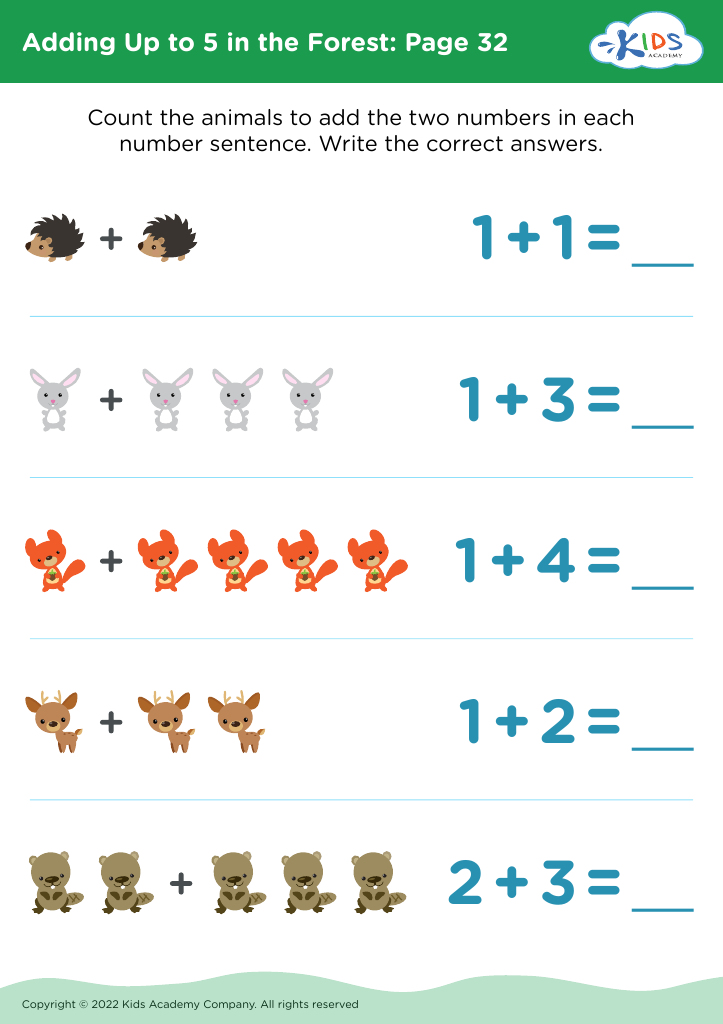
Adding Up to 5 in the Forest: Page 32
Worksheet
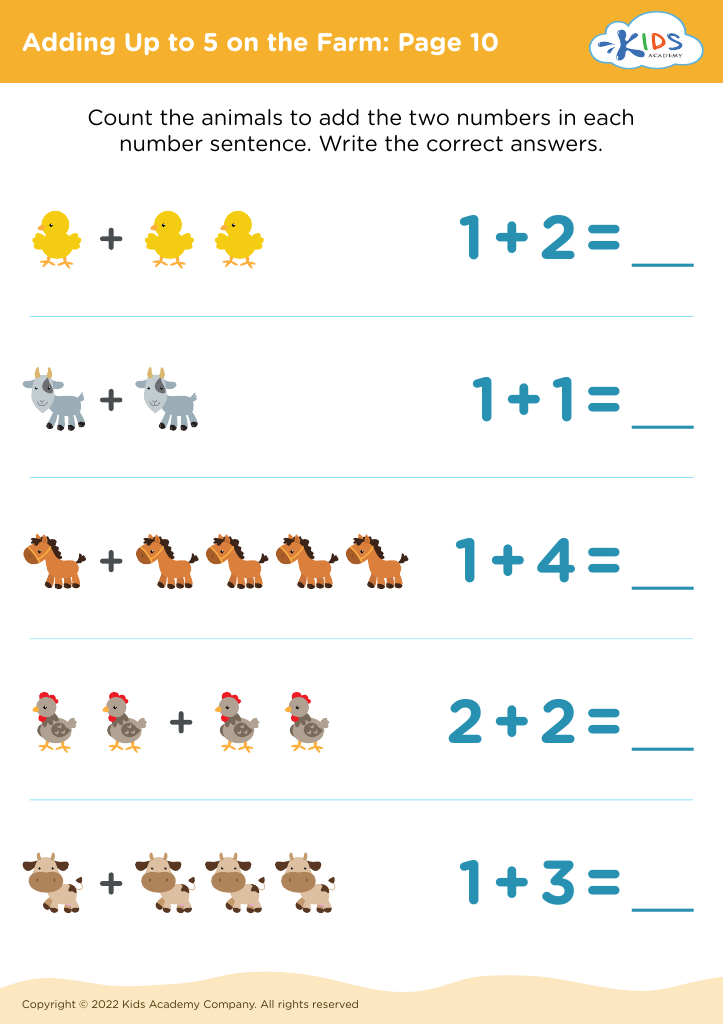
Adding Up to 5 on the Farm: Page 10
Worksheet
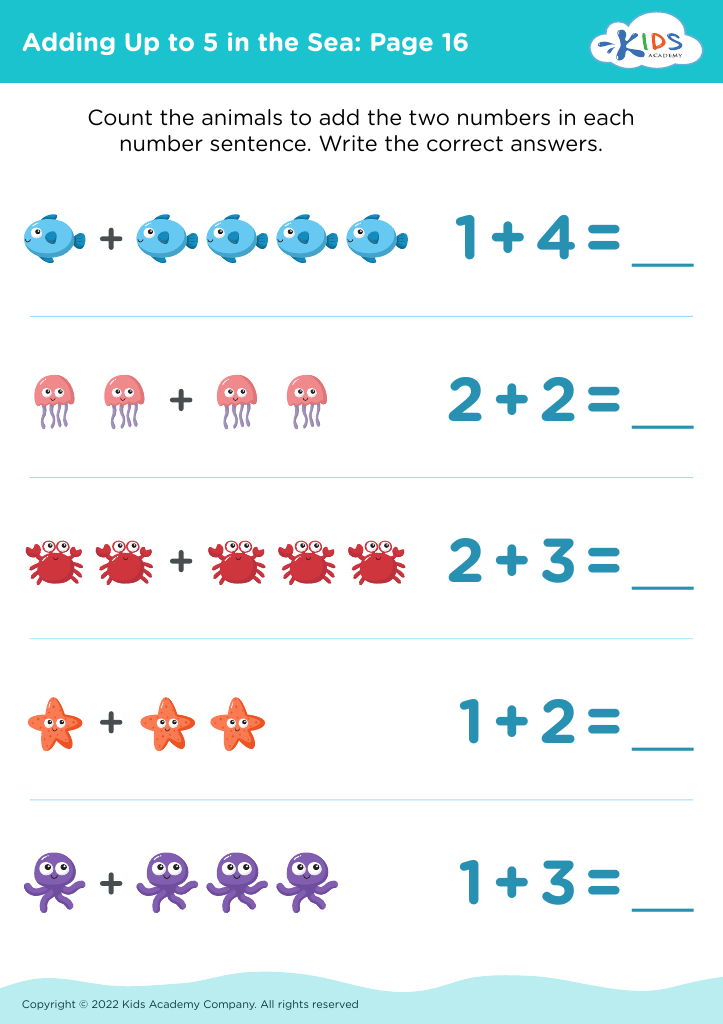
Adding Up to 5 in the Sea: Page 16
Worksheet
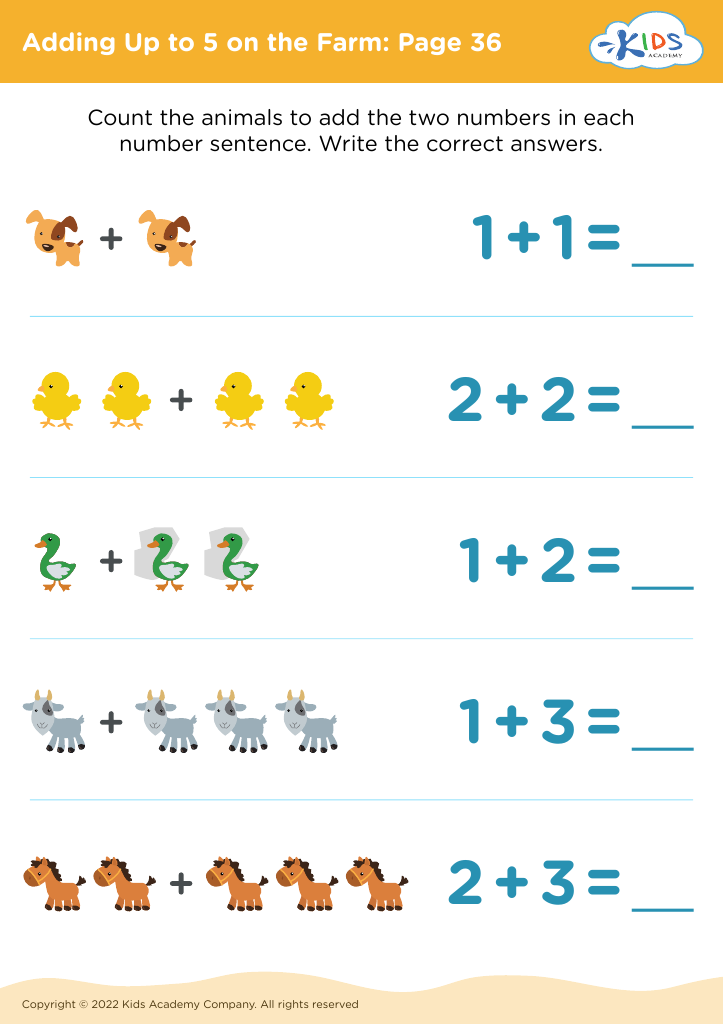
Adding Up to 5 on the Farm: Page 36
Worksheet
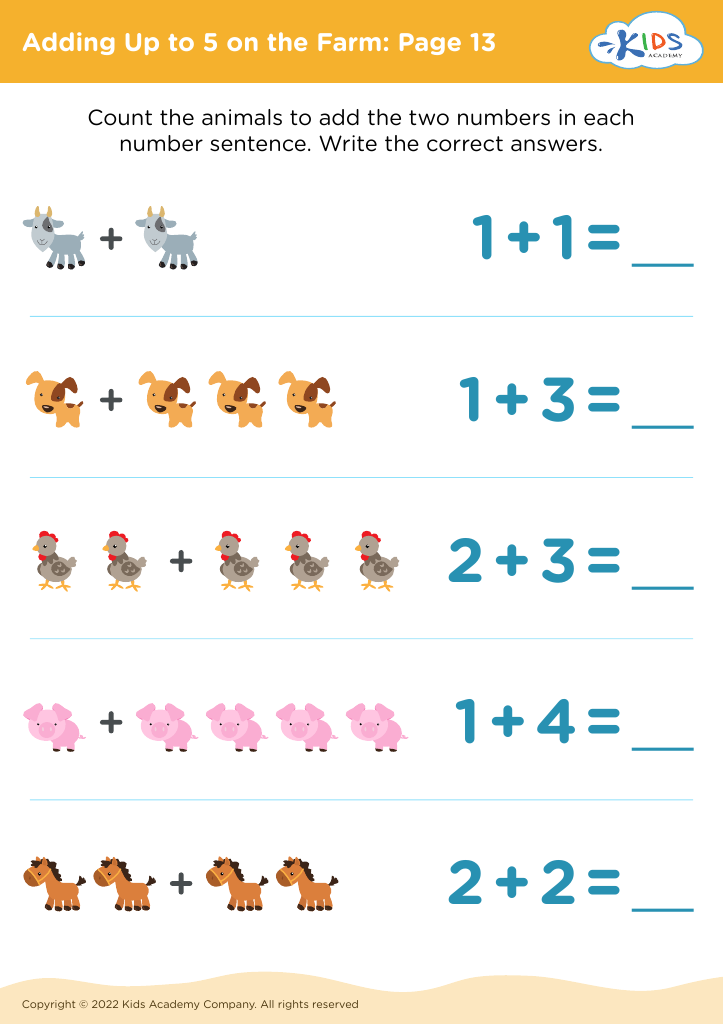
Adding Up to 5 on the Farm: Page 13
Worksheet
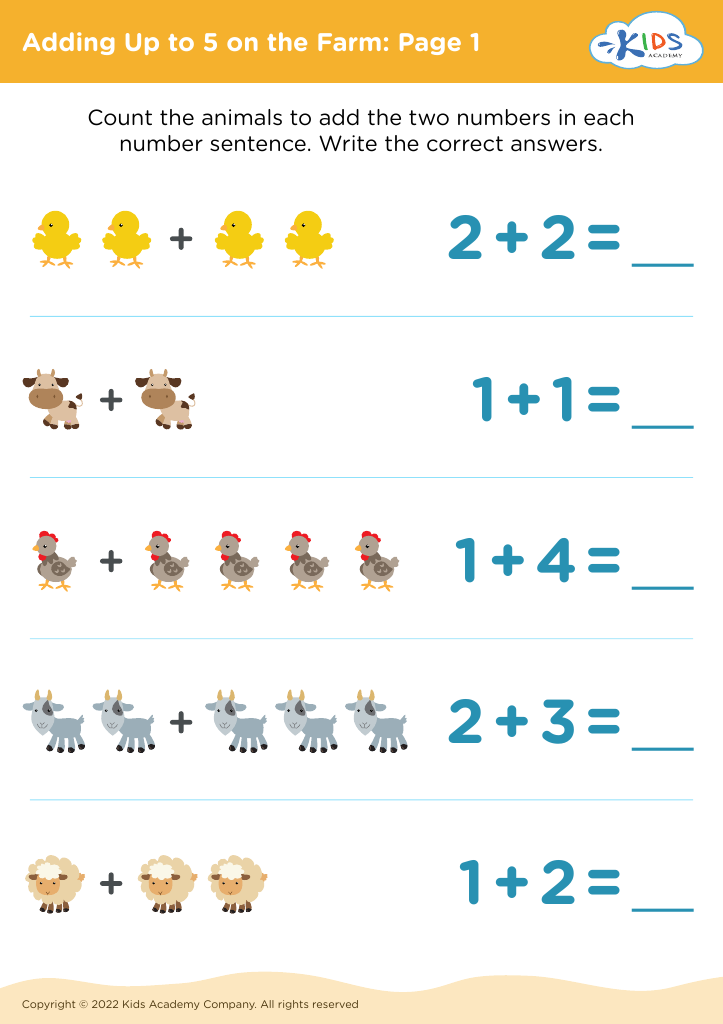
Adding Up to 5 on the Farm: Page 1
Worksheet


Developing basic addition and subtraction skills in children aged 4-8 is crucial for their overall cognitive development and academic success. At this age, children are primarily focused on building foundational skills that will support their future learning. Mastering these arithmetic concepts not only facilitates their understanding of more complex mathematics but also enhances critical thinking and problem-solving abilities.

Moreover, early proficiency in addition and subtraction can significantly boost a child's confidence and foster a positive attitude towards learning mathematics. When children feel capable of mastering these skills, they are more likely to engage actively in classroom activities, participate in discussions, and approach new concepts with enthusiasm.

Highlighting the importance of these skills helps parents and teachers create a supportive learning environment. Engaging children in fun, hands-on activities—using everyday objects, games, or visual aids—can make learning enjoyable and interactive. Furthermore, strong basic math skills contribute to a child’s readiness for more advanced topics in later grades, ensuring a smoother educational journey.

Ultimately, investment in these fundamental skills lays a sturdy groundwork for lifelong learning, critical thinking, and personal development, making it vital for parents and teachers to prioritize basic addition and subtraction for young learners.