Filters

97 filtered results

Clear all filters
Favorites
With answer key
Interactive

97 filtered results

Difficulty Level

Grade


Check out this FREE Trial Lesson on Addition & Subtraction for age 4-8!

Addition with Arrays - Part 2

Favorites
With answer key
Interactive
  • 4-8
  • Basic Math Skills
  • Addition & Subtraction
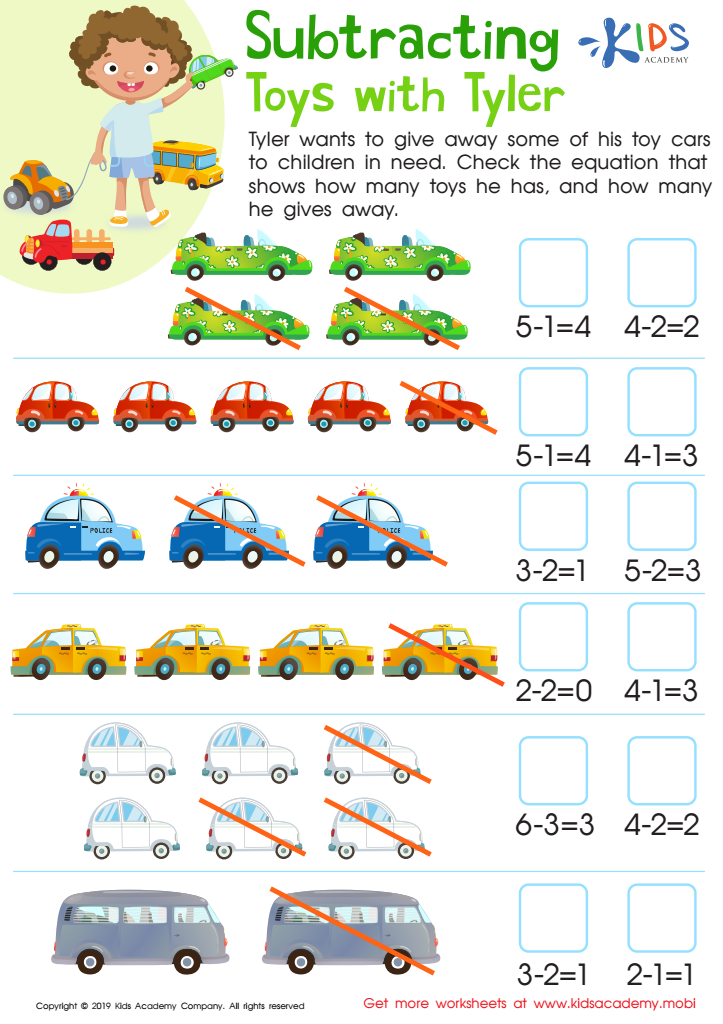
Subtracting Toys with Tyler Worksheet

Subtracting Toys with Tyler Worksheet

Kids can use cheerful cars and busses to help Tyler donate toys to needy children. The worksheet provides one-to-one representation to help them select the correct subtraction equation, while sharpening their math skills and accuracy. It's exciting and educational!
Subtracting Toys with Tyler Worksheet
Worksheet
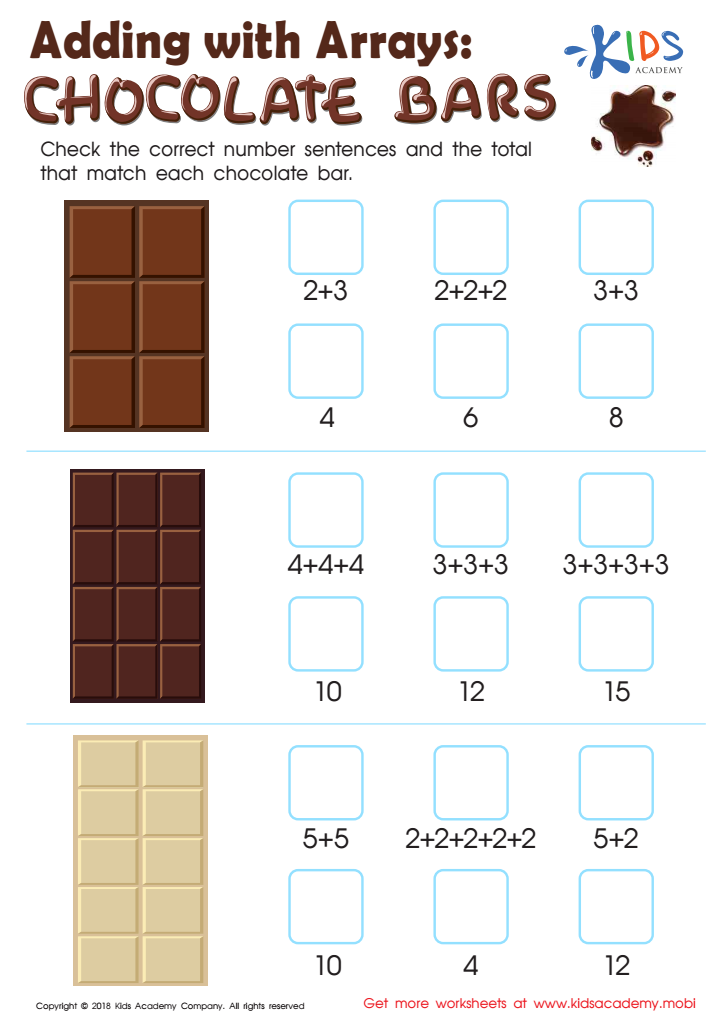
Adding with Arrays: Chocolate Bars Worksheet
Adding with Arrays: Chocolate Bars Worksheet
Kids love chocolates! Gauge how enthused your kids get when you mention them. This worksheet is a fun exercise about chocolates - get your kids to check the correct number sentences and totals for each chocolate bar. Reward their hard work with some chocolates - extra incentive for a job well done!
Adding with Arrays: Chocolate Bars Worksheet
Worksheet
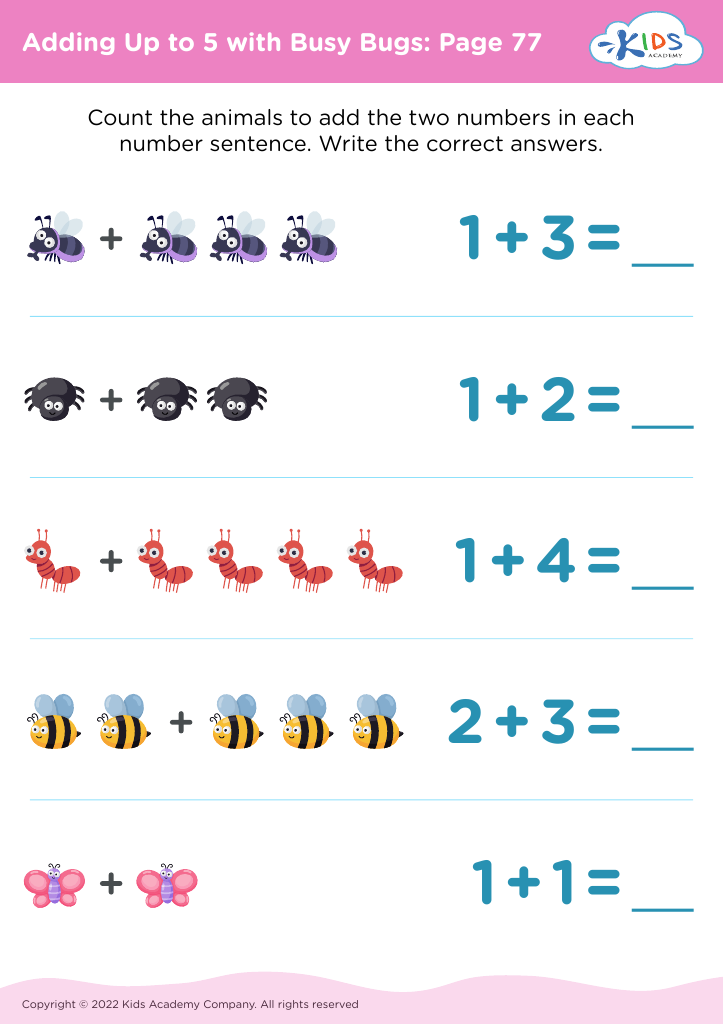
Adding Up to 5 with Busy Bugs: Page 77
Worksheet
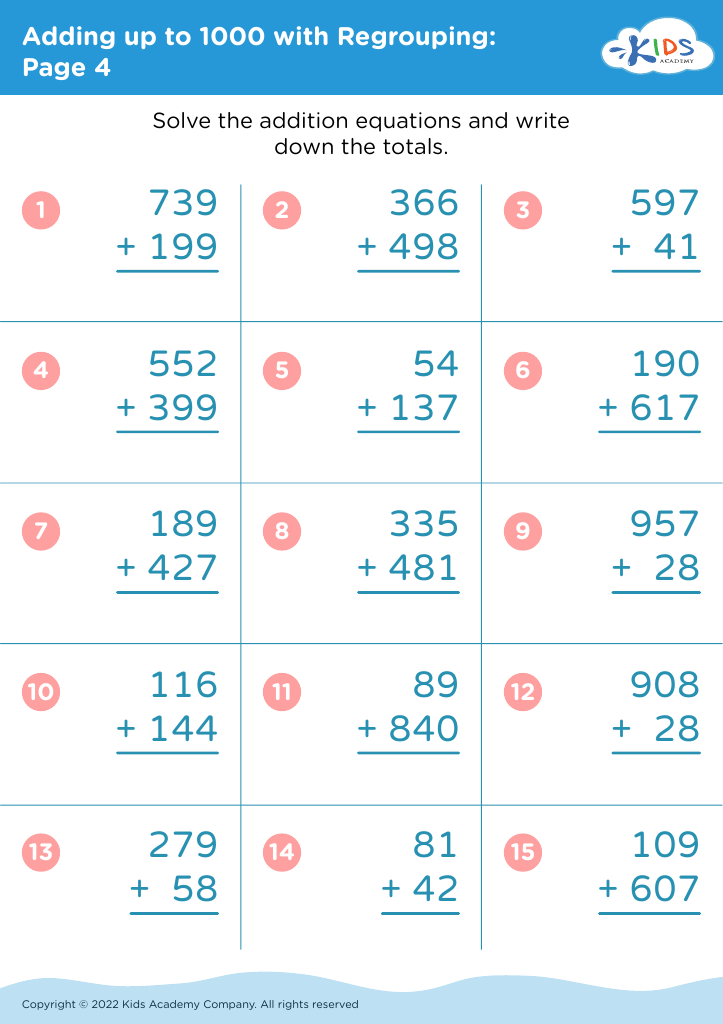
Adding up to 1000 with Regrouping: Page 4
Worksheet
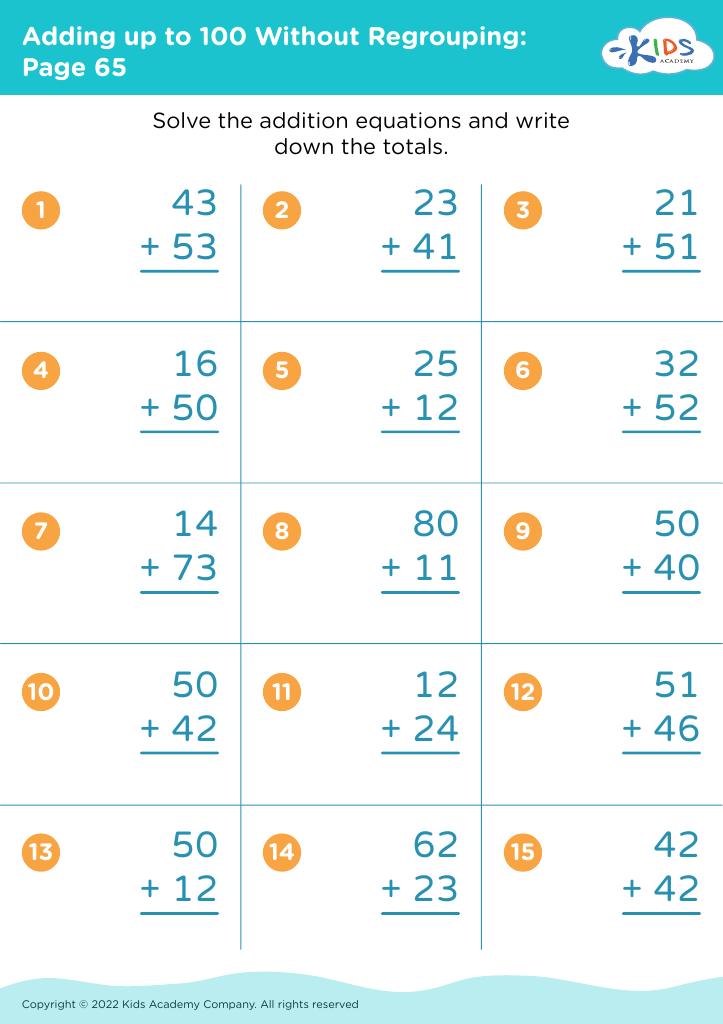
Adding up to 100 Without Regrouping: Page 65
Worksheet
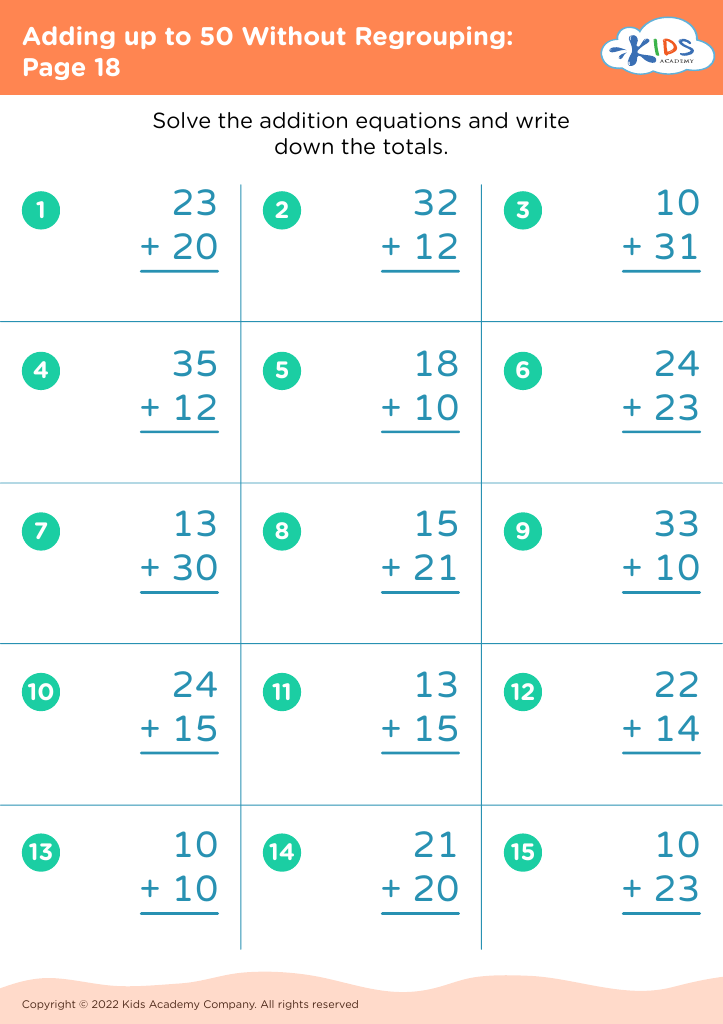
Adding up to 50 Without Regrouping: Page 18
Worksheet
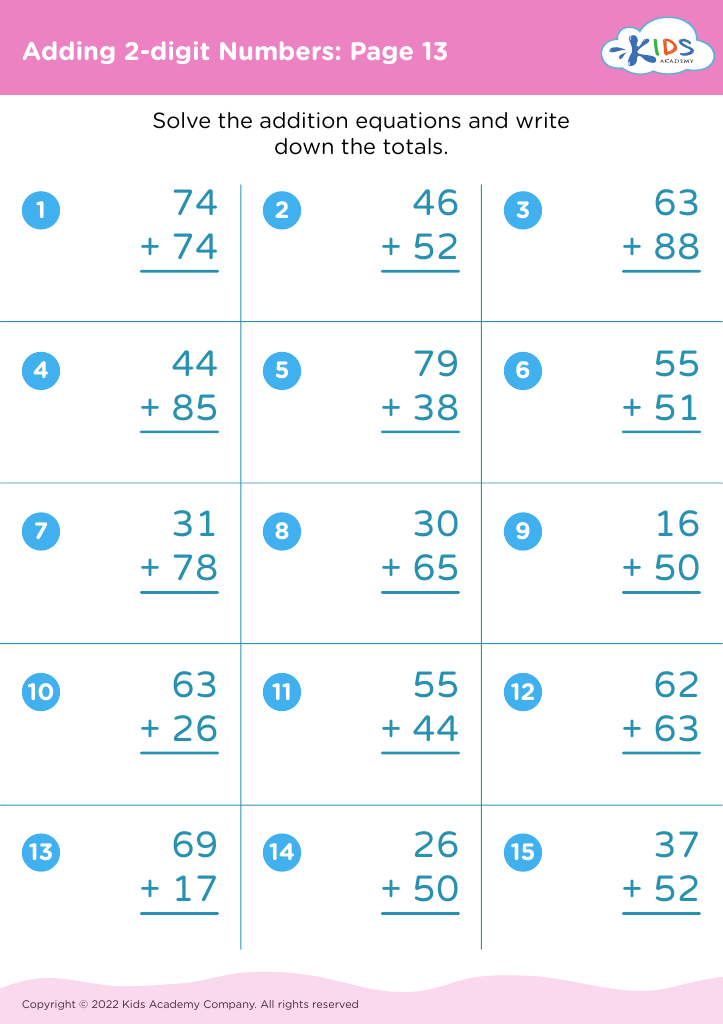
Adding 2-digit Numbers: Page 13

Adding 2-digit Numbers: Page 13

Adding 2-digit Numbers: Page 13
Worksheet
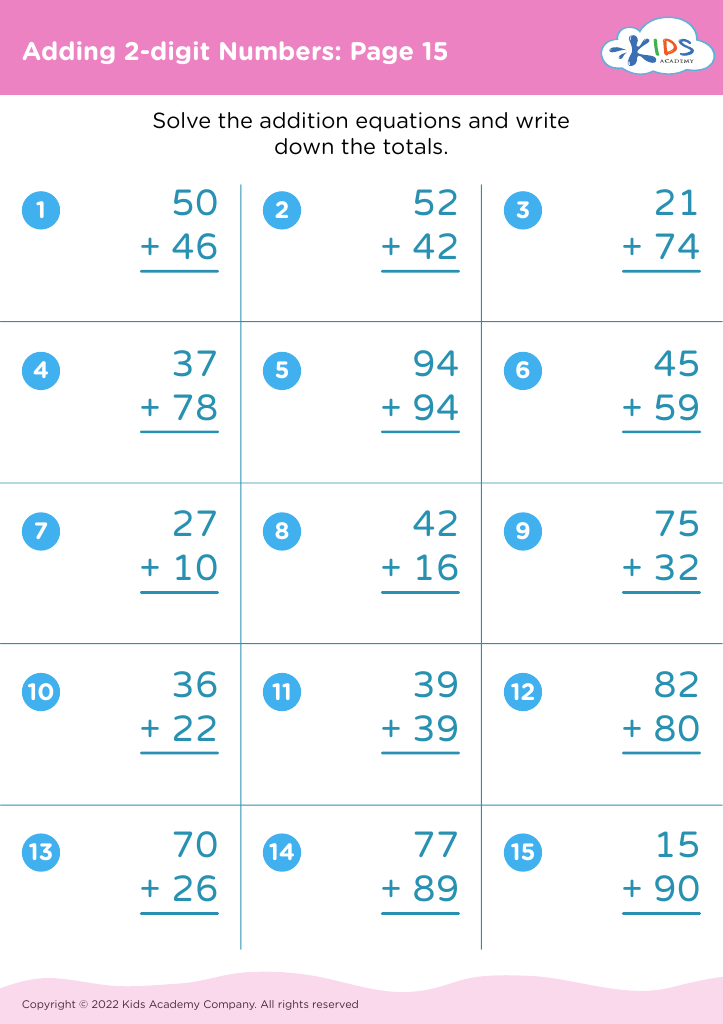
Adding 2-digit Numbers: Page 15

Adding 2-digit Numbers: Page 15

Adding 2-digit Numbers: Page 15
Worksheet
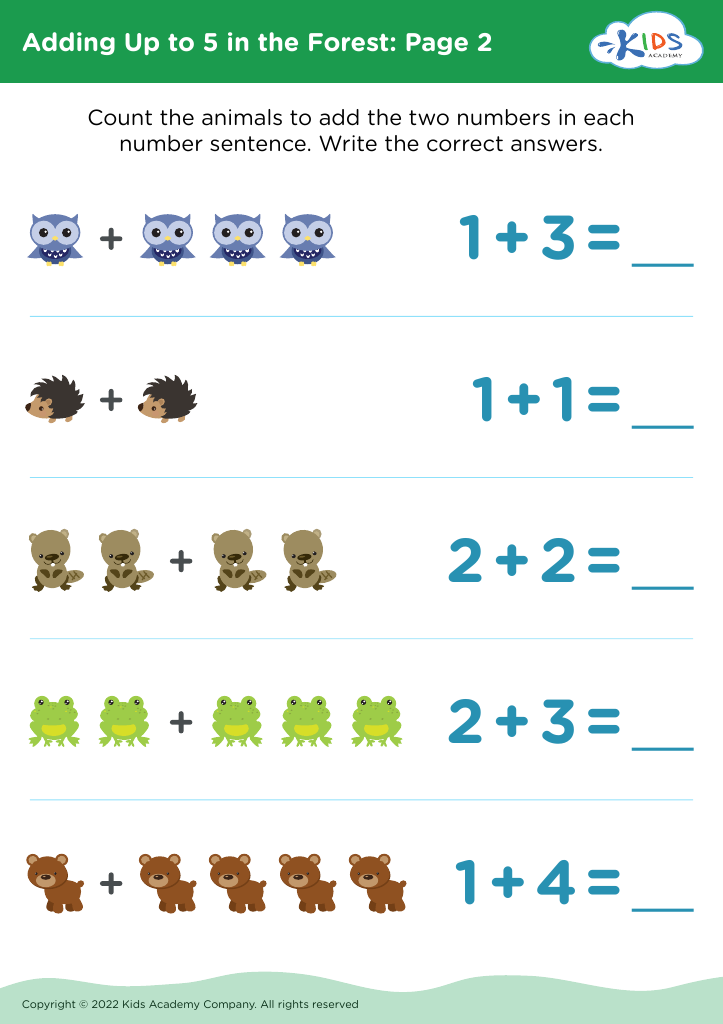
Adding Up to 5 in the Forest: Page 2
Worksheet
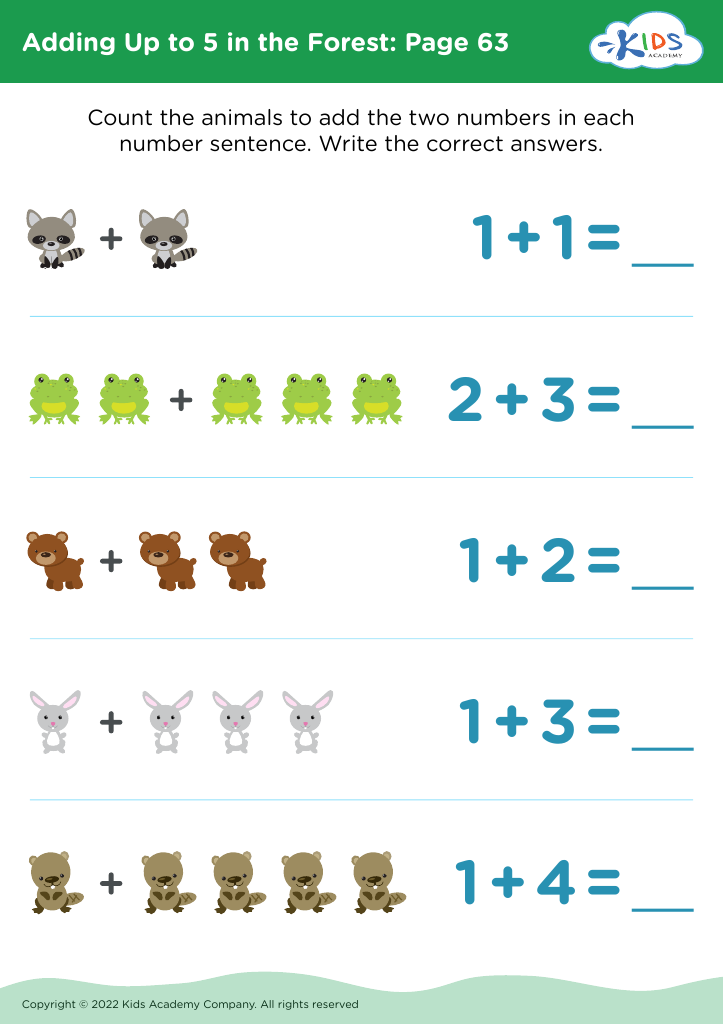
Adding Up to 5 in the Forest: Page 63
Worksheet
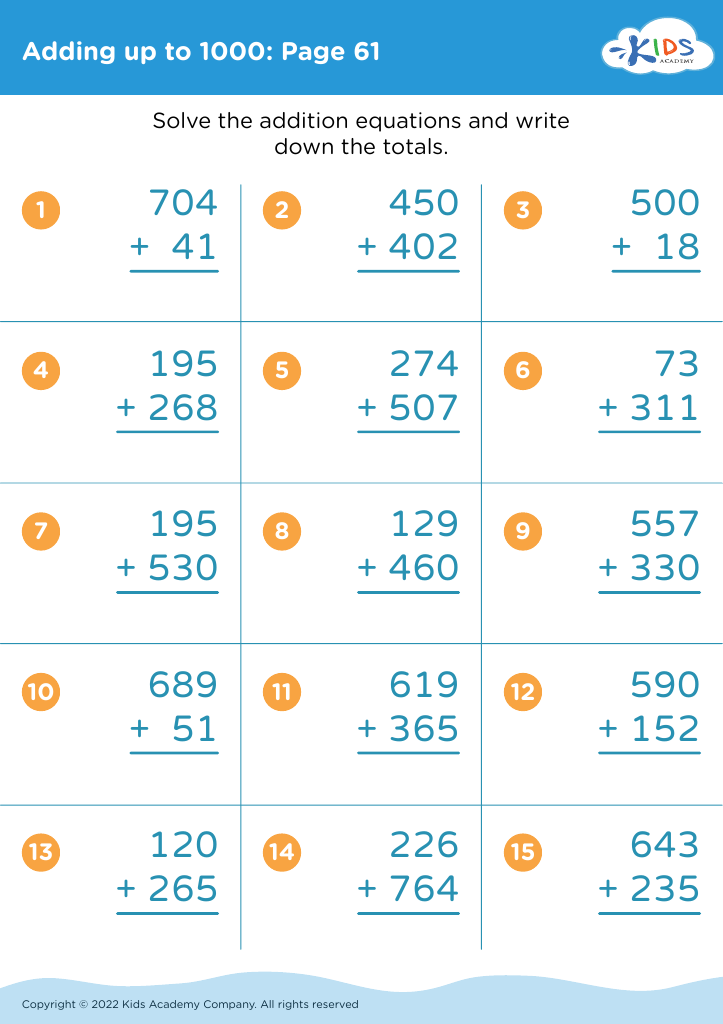
Adding up to 1000: Page 61

Adding up to 1000: Page 61

Adding up to 1000: Page 61
Worksheet
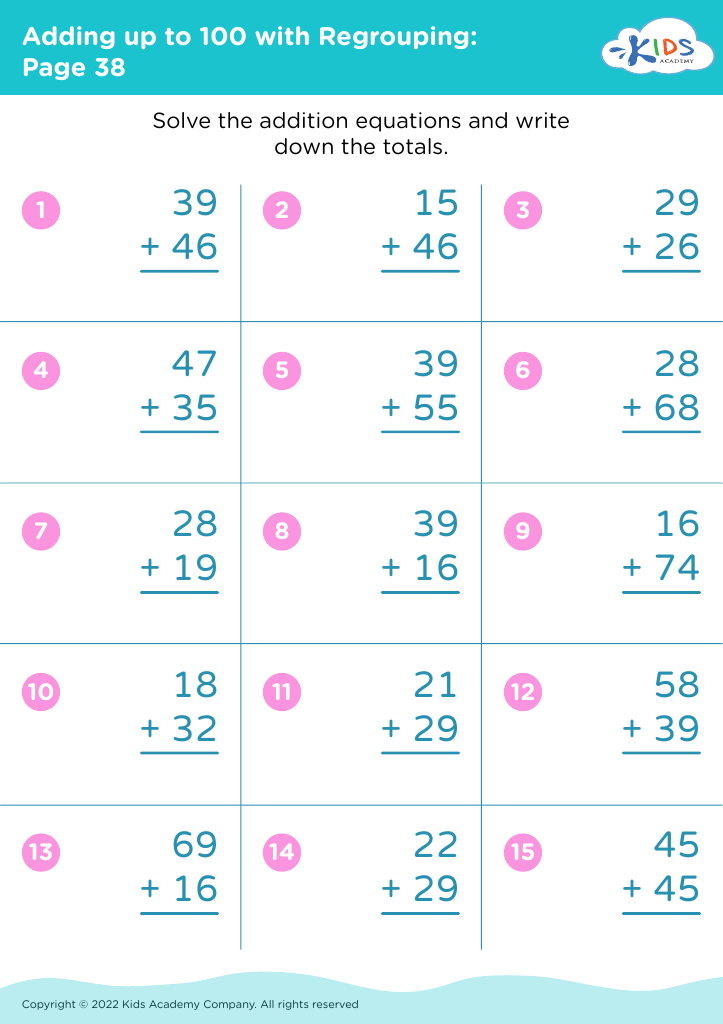
Adding up to 100 with Regrouping: Page 38
Worksheet
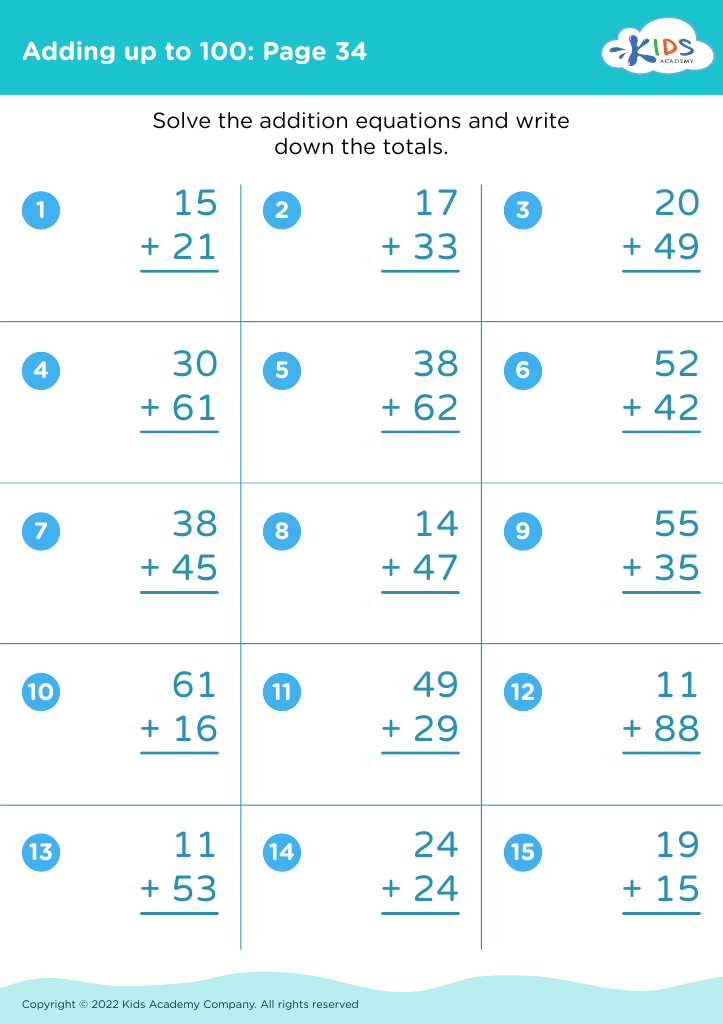
Adding up to 100: Page 34

Adding up to 100: Page 34

Adding up to 100: Page 34
Worksheet
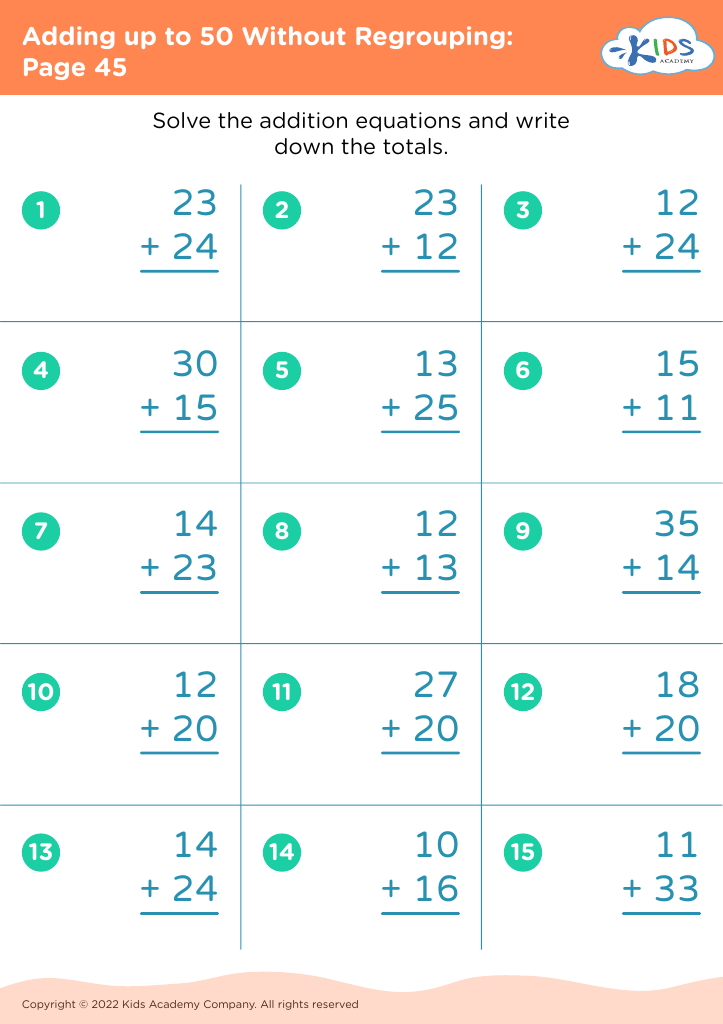
Adding up to 50 Without Regrouping: Page 45
Worksheet
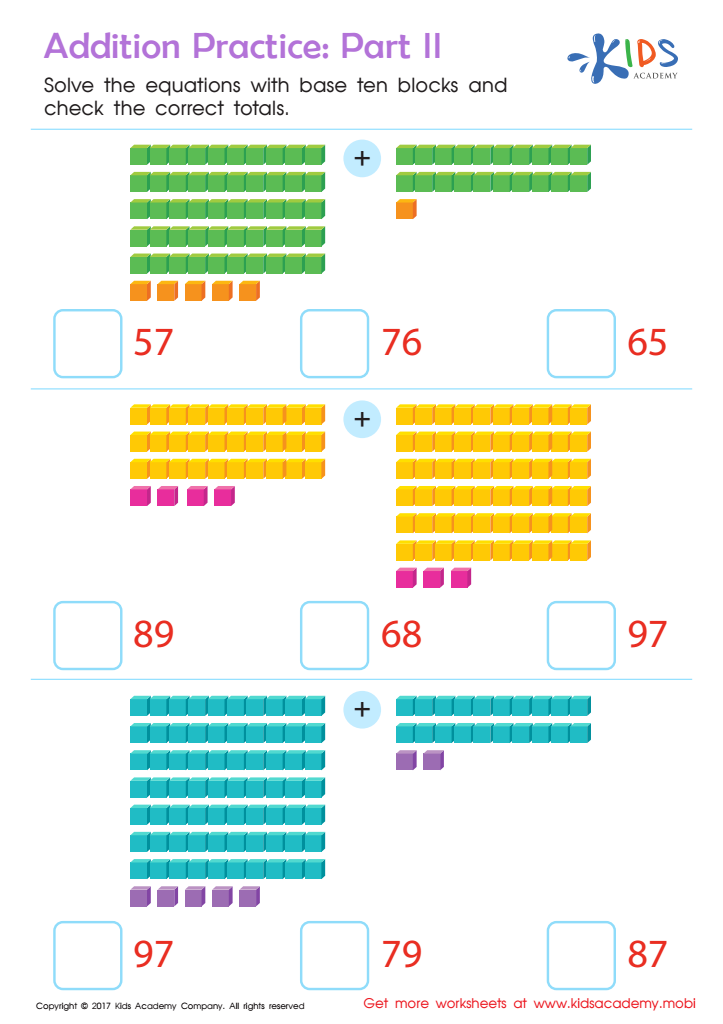
Addition Practice Sheet: Part 2
Addition Practice Sheet: Part 2
Make sure your kids understand place value before introducing two/three-digit addition. To help, use Kids Academy's colorful cube worksheet. It provides all the manipulatives needed to solve the problem and find totals. A great way to explain the concept behind the addition!
Addition Practice Sheet: Part 2
Worksheet
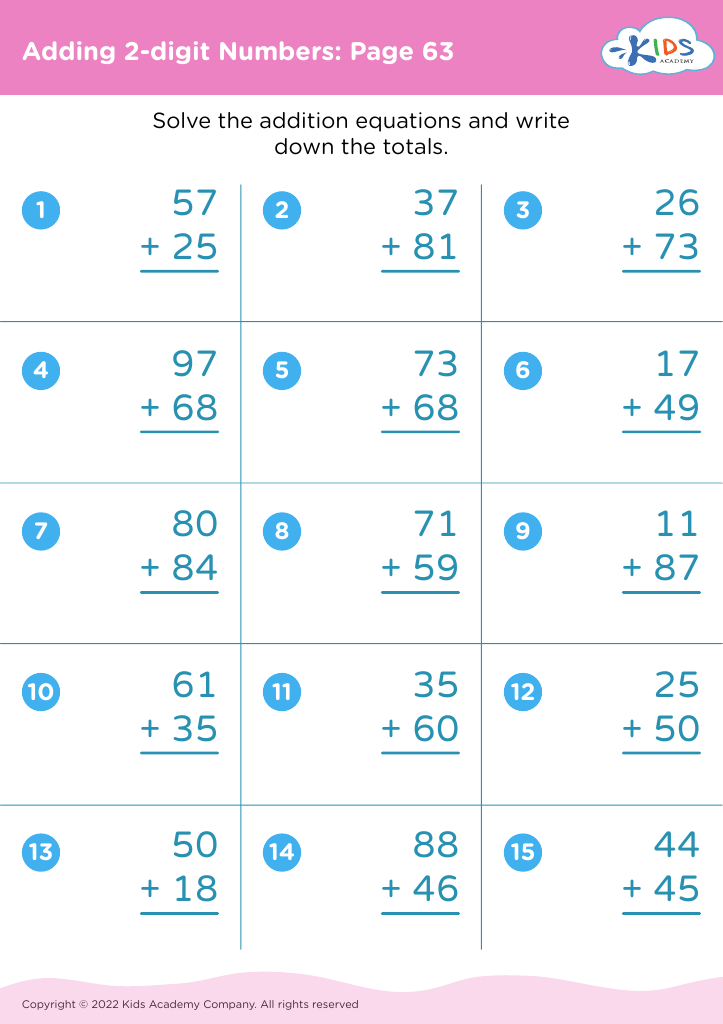
Adding 2-digit Numbers: Page 63

Adding 2-digit Numbers: Page 63

Adding 2-digit Numbers: Page 63
Worksheet
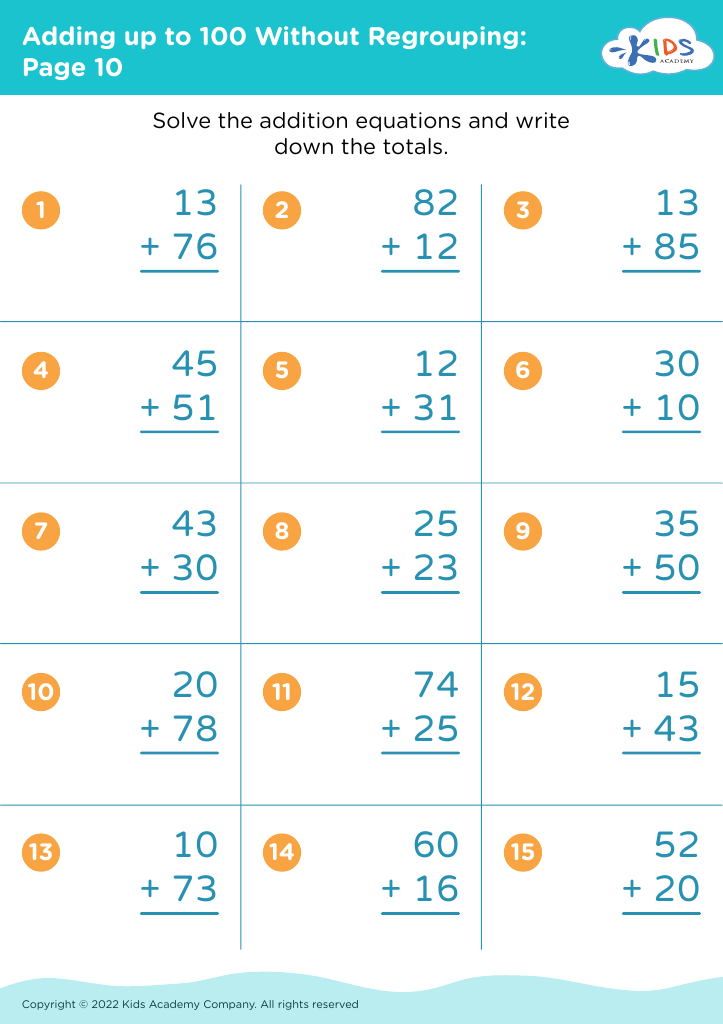
Adding up to 100 Without Regrouping: Page 10
Worksheet
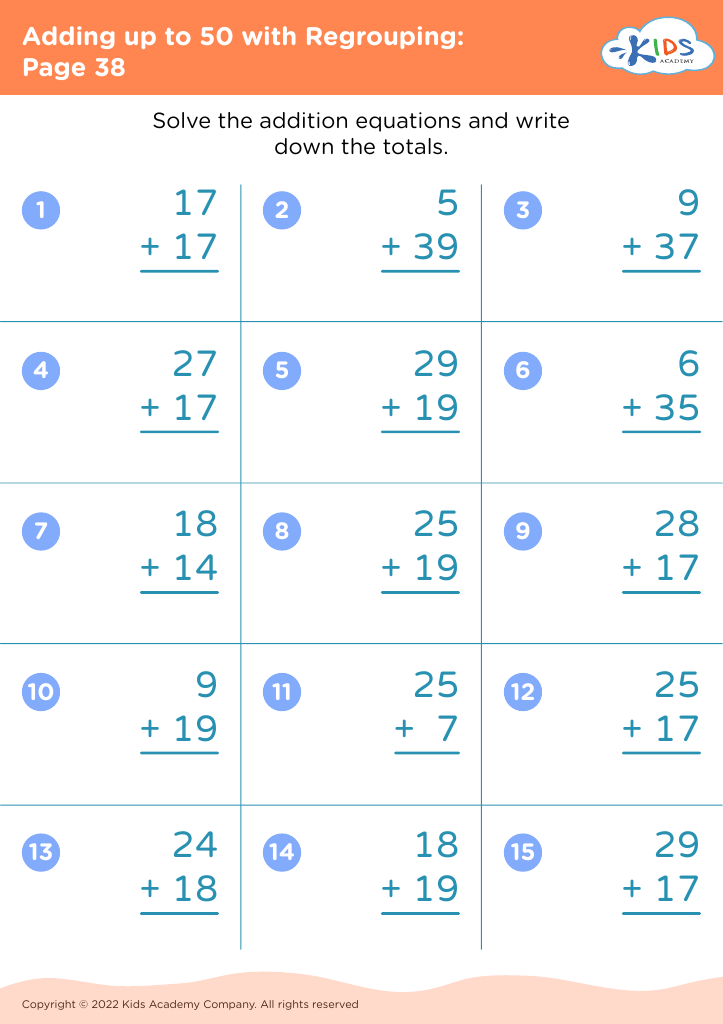
Adding up to 50 with Regrouping: Page 38
Worksheet
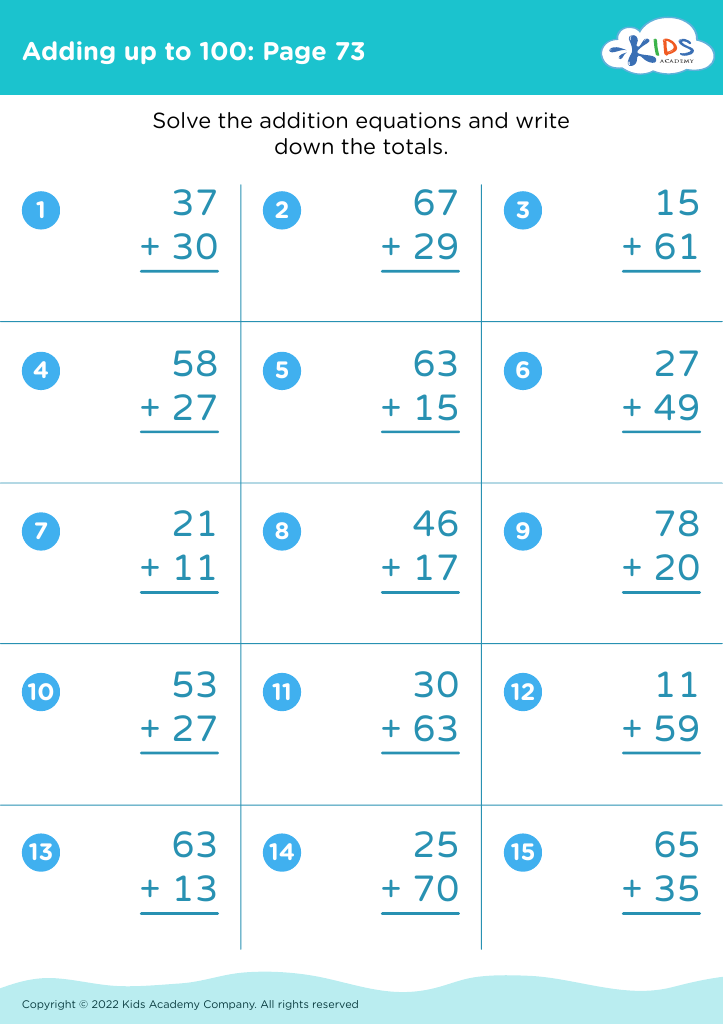
Adding up to 100: Page 73

Adding up to 100: Page 73

Adding up to 100: Page 73
Worksheet
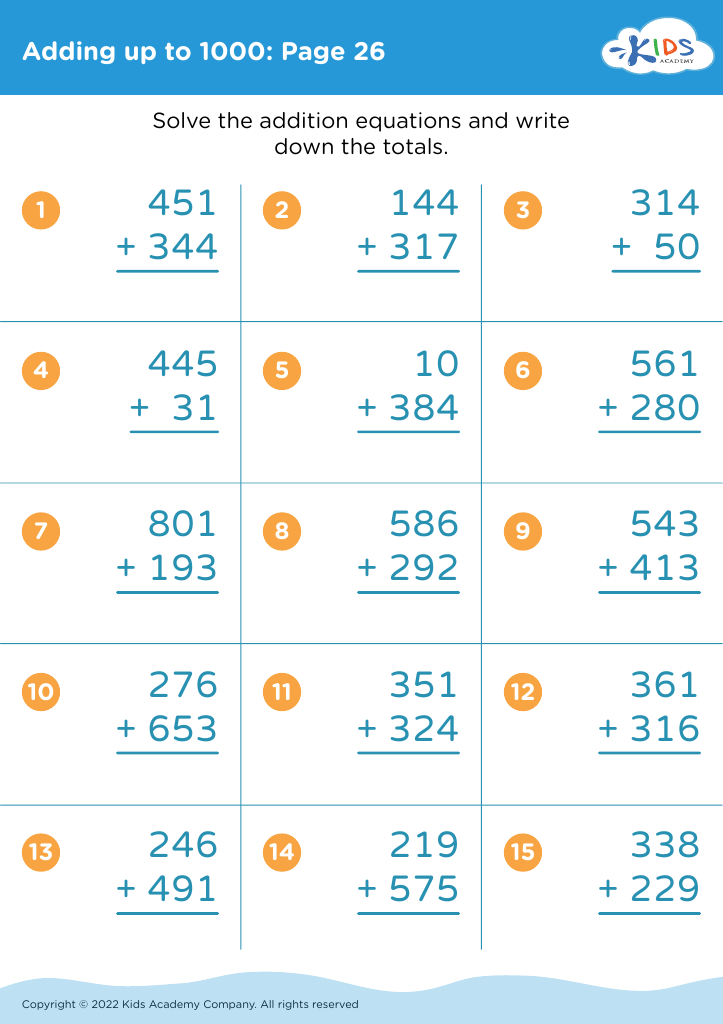
Adding up to 1000: Page 26

Adding up to 1000: Page 26

Adding up to 1000: Page 26
Worksheet
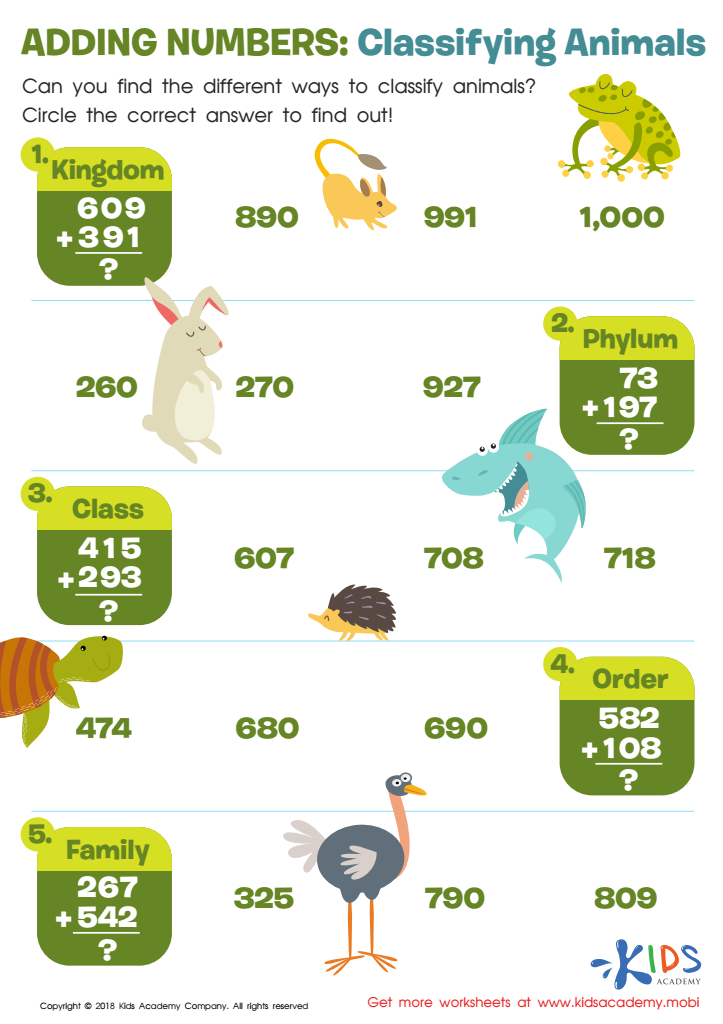
Adding Numbers: Classifying Animals Worksheet

Adding Numbers: Classifying Animals Worksheet

Your kids can learn to classify animals in Biology. This worksheet helps them do this by solving 5 equations. Circle the right answer to complete the task.
Adding Numbers: Classifying Animals Worksheet
Worksheet
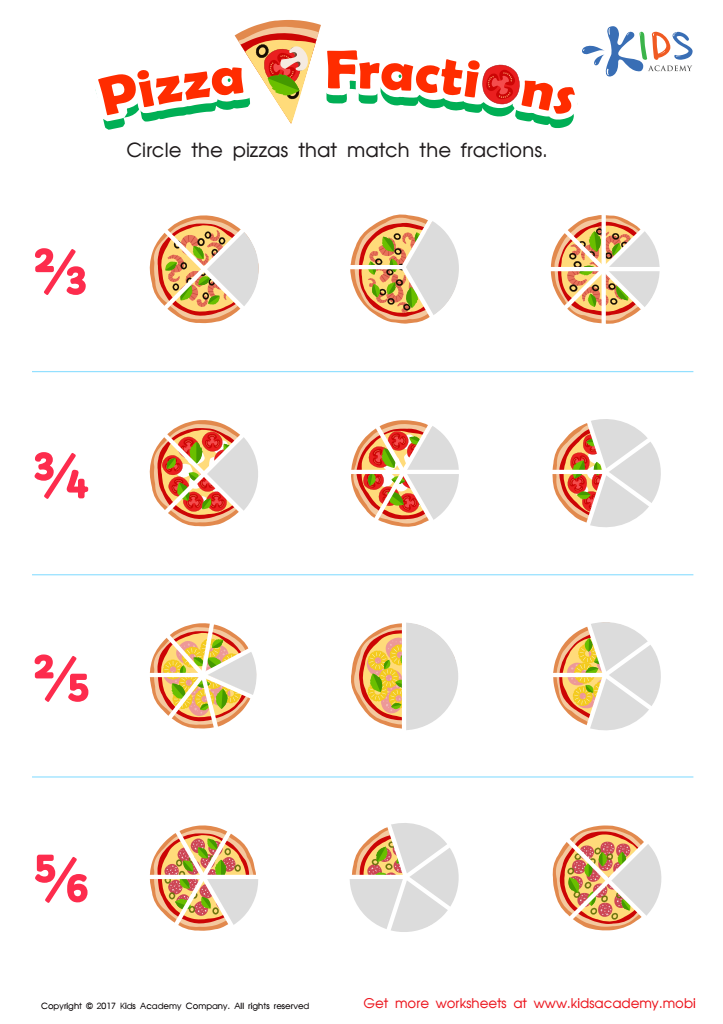
Pizza Fraction Printable

Fractions: Pizza Printable

Fractions can be tricky for kids, but this pizza fractions printable can help! Kids can understand fractions by seeing them, as they use one of their favorite foods. It helps them grasp the concept and gain a deeper understanding of what fractions represent. Extend their learning by quizzing them when you order pizza next time.
Fractions: Pizza Printable
Worksheet
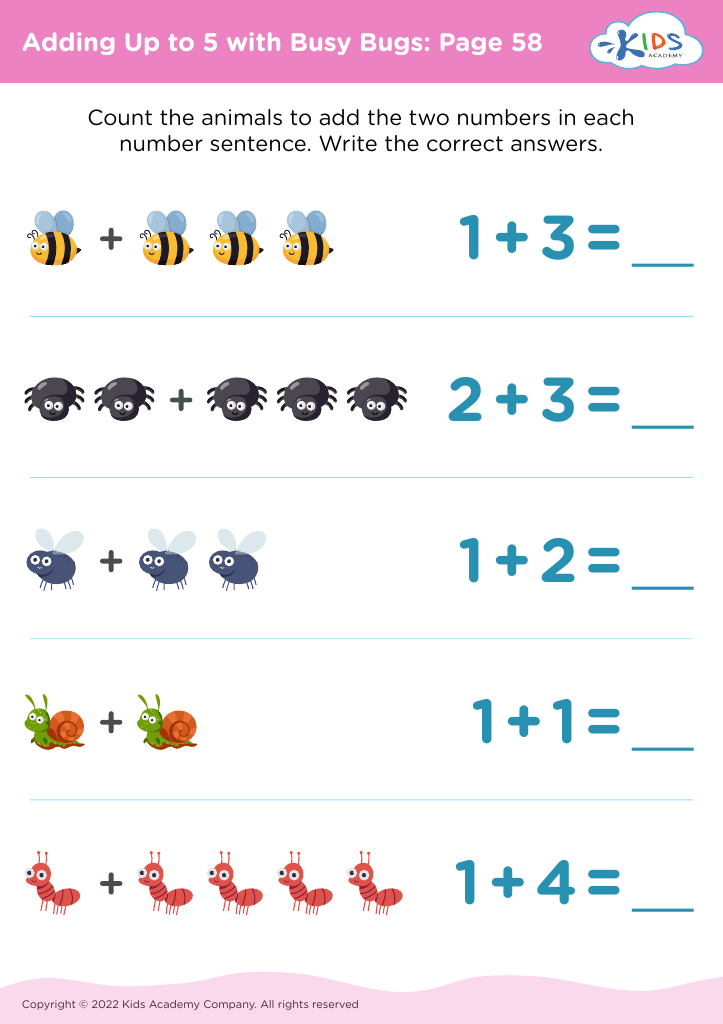
Adding Up to 5 with Busy Bugs: Page 58
Worksheet
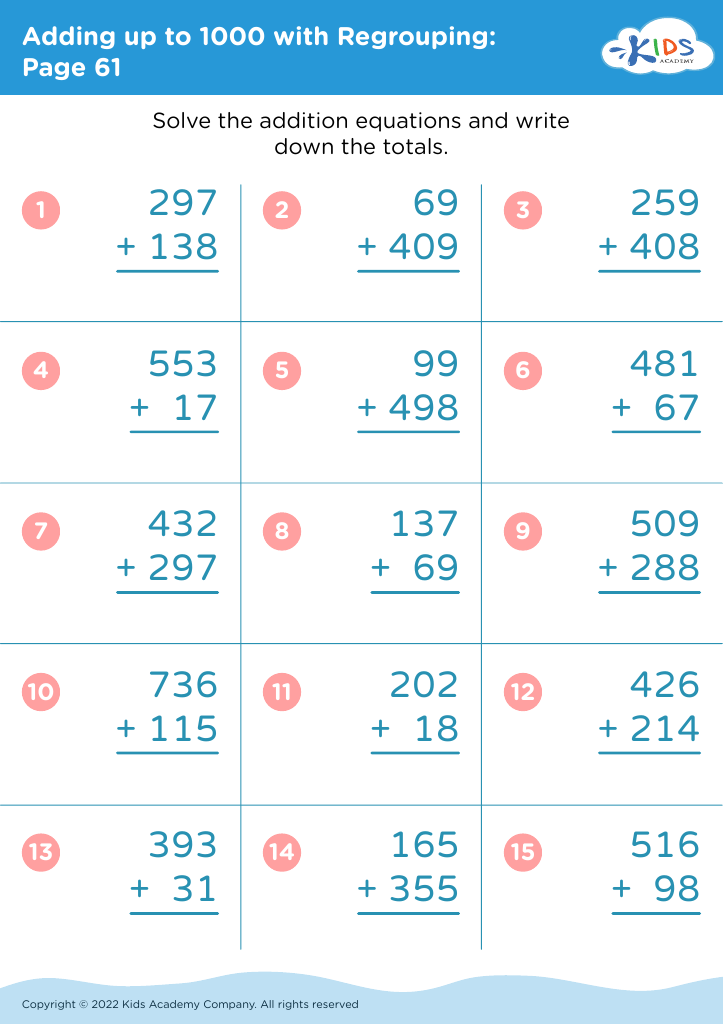
Adding up to 1000 with Regrouping: Page 61
Worksheet


Basic math skills, particularly addition and subtraction, are crucial for children aged 4-8 as they lay the foundation for future learning and problem-solving abilities. At this early age, children are naturally curious and eager to learn, making it the perfect time to introduce mathematical concepts. Mastering addition and subtraction enhances critical thinking and fosters logical reasoning, essential skills in everyday life.

These foundational skills support children’s transition into more complex math topics, ensuring they feel confident in their abilities. Early proficiency in addition and subtraction also equips children with tools to tackle real-world situations, such as counting objects, budgeting their allowances, or understanding time.

Furthermore, solid math skills can improve children’s academic performance overall, promoting self-esteem and a positive attitude towards learning. Parents and teachers should focus on engaging and interactive methods to teach these concepts, incorporating games, stories, and hands-on activities that resonate with this age group's learning styles.

Finally, early math skills have been linked to future academic achievement, making it essential for educators and parents to prioritize this stage of learning. By investing in these core competencies, caregivers can support children in developing lifelong skills that extend well beyond the classroom.