Discover engaging Counting Objects Addition and Subtraction Worksheets designed specifically for children aged 4-8. These worksheets provide an interactive way for young learners to strengthen their early math skills by counting objects and solving simple addition and subtraction problems. With colorful images and fun themes, kids will love practicing their math abilities while developing essential counting skills. Ideal for home and classroom use, our worksheets are perfect for reinforcing concepts through playful learning. Help your child build a solid foundation in math with our easily accessible resources that make learning enjoyable and effective! Start counting and calculating today!
Check out this FREE Trial Lesson on Addition & Subtraction for age 4-8!

Sorting Objects into 3 Categories

Favorites
With answer key
Interactive
  • 4-8
  • Counting objects
  • Addition & Subtraction
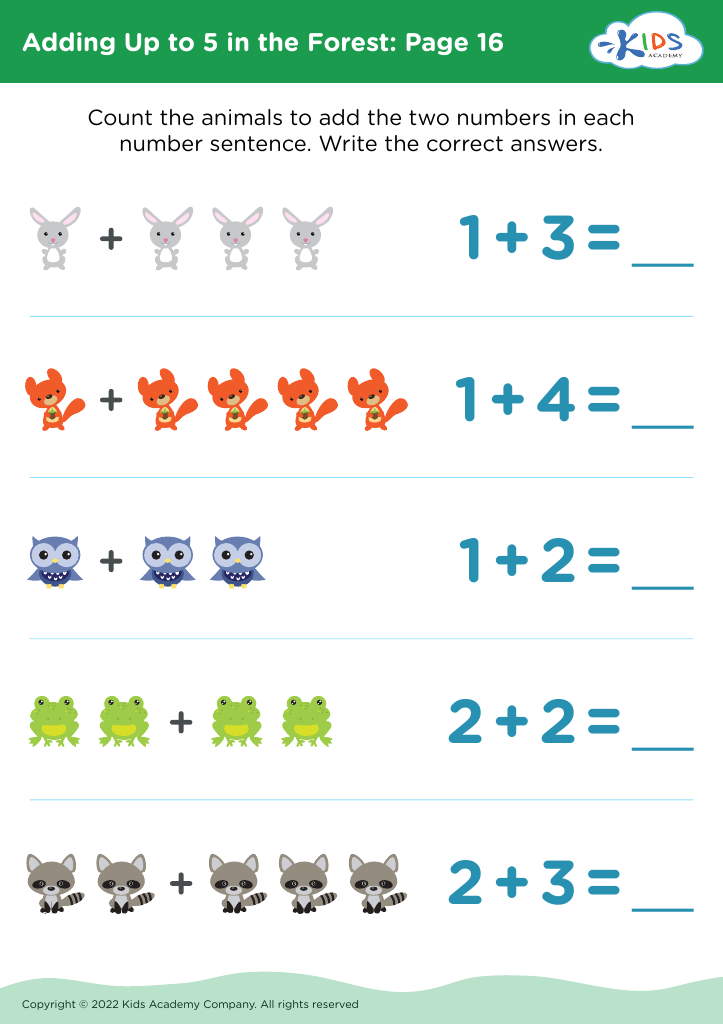
Adding Up to 5 in the Forest: Page 16
Worksheet
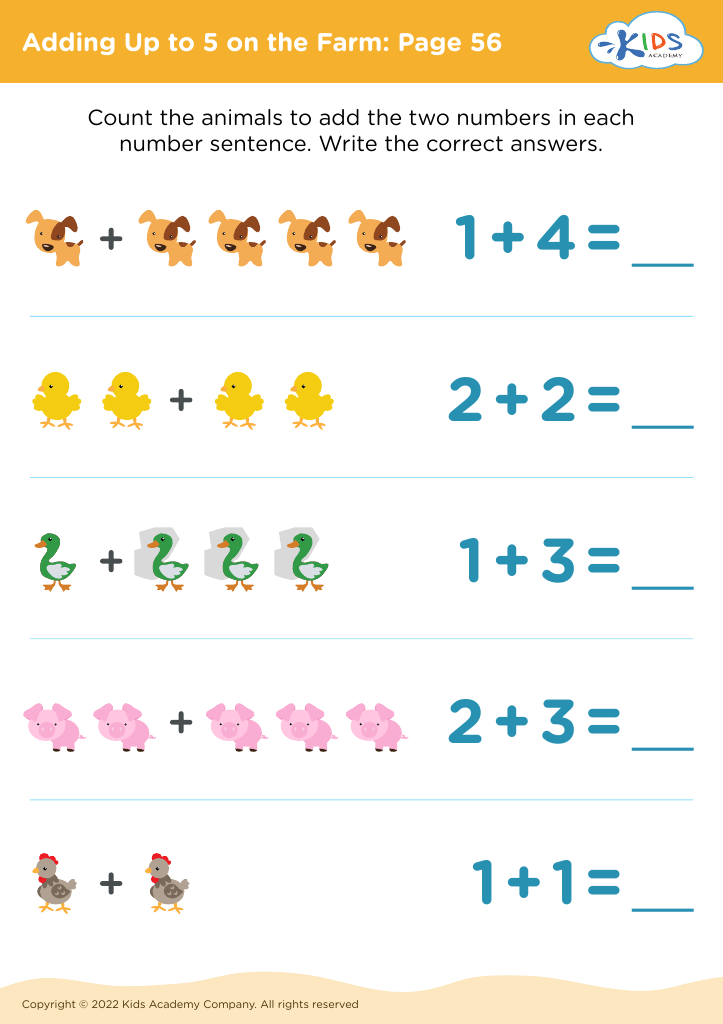
Adding Up to 5 on the Farm: Page 56
Worksheet
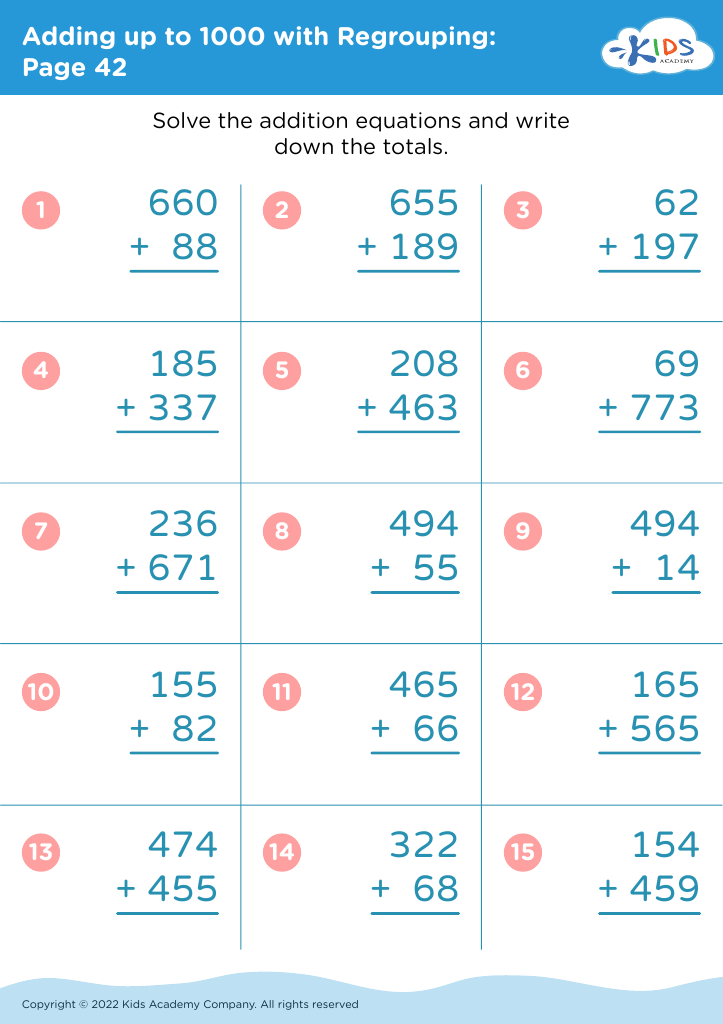
Adding up to 1000 with Regrouping: Page 42
Worksheet
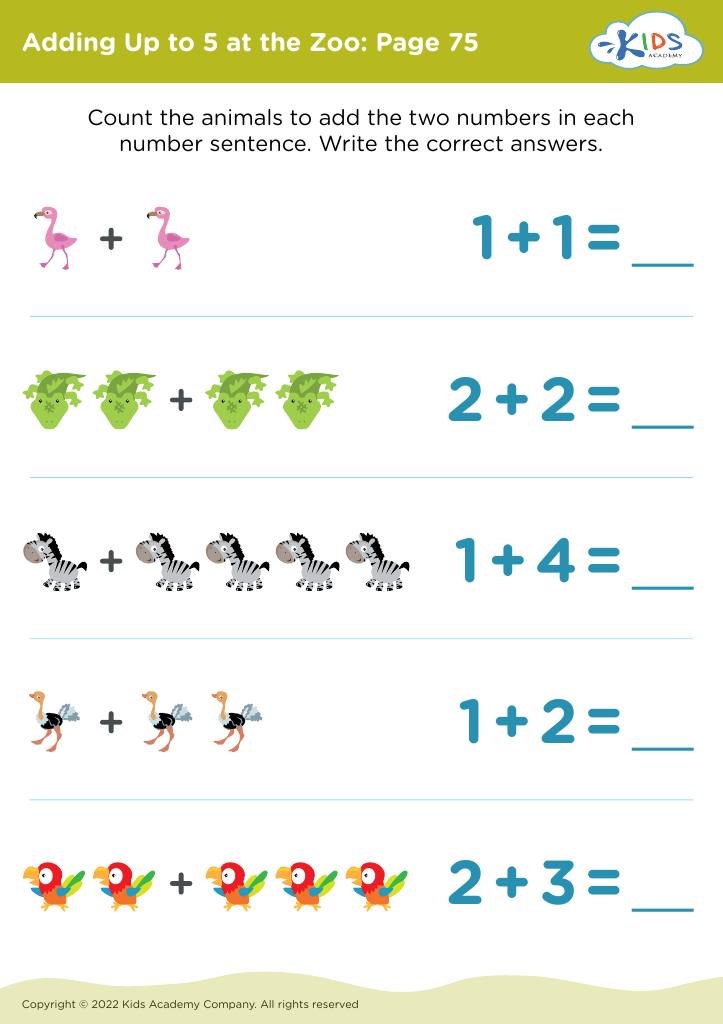
Adding Up to 5 at the Zoo: Page 75
Worksheet
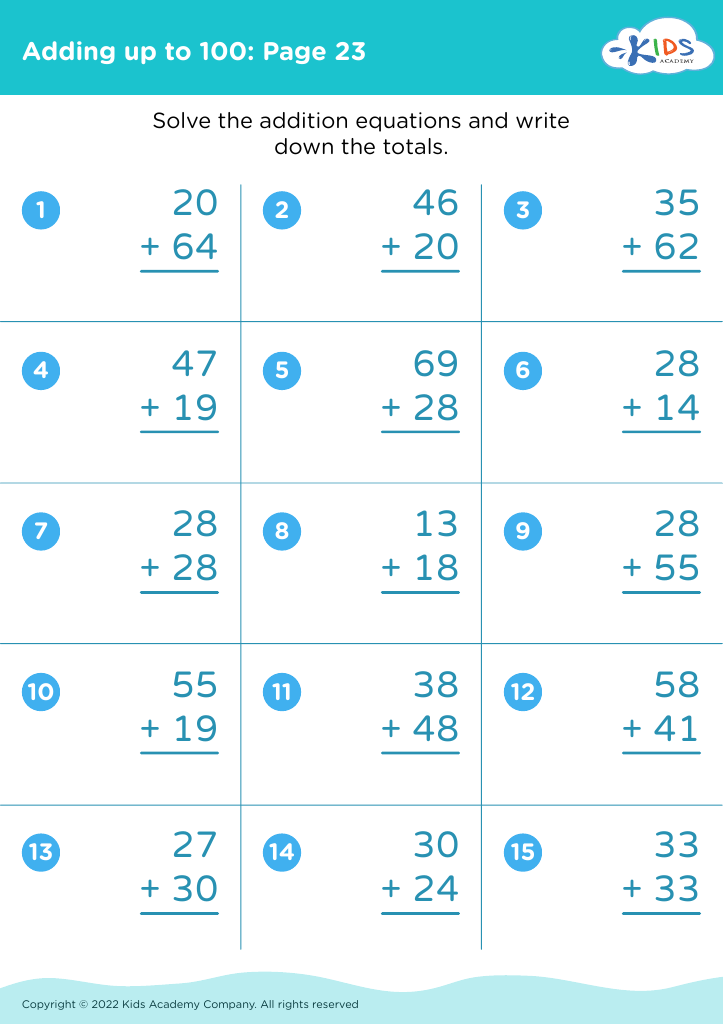
Adding up to 100: Page 23

Adding up to 100: Page 23

Adding up to 100: Page 23
Worksheet
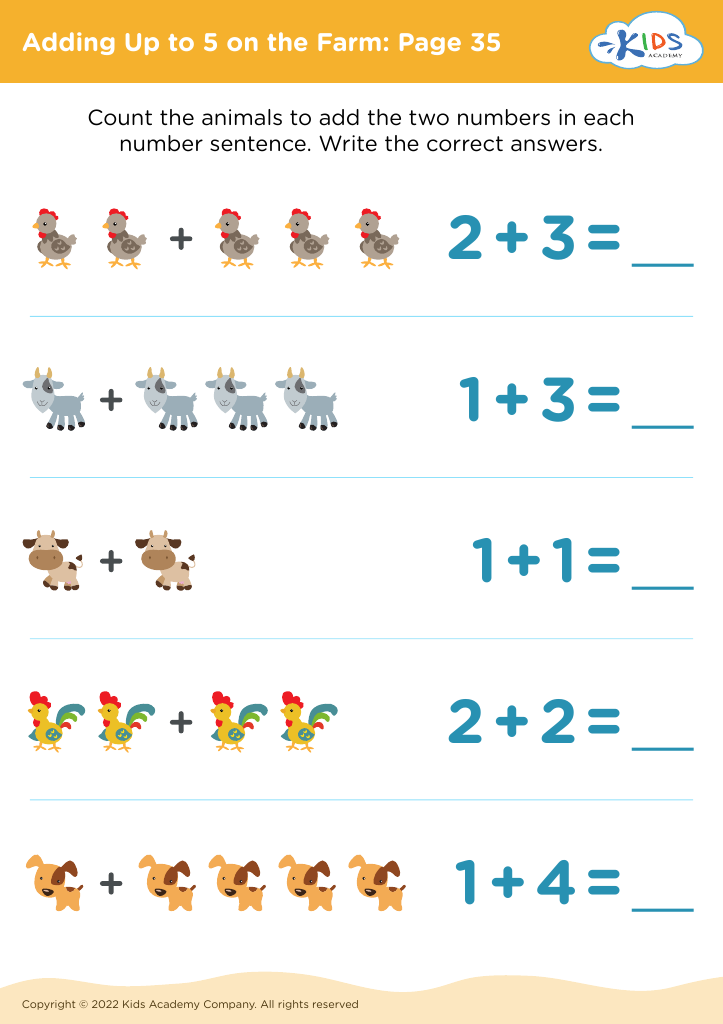
Adding Up to 5 on the Farm: Page 35
Worksheet
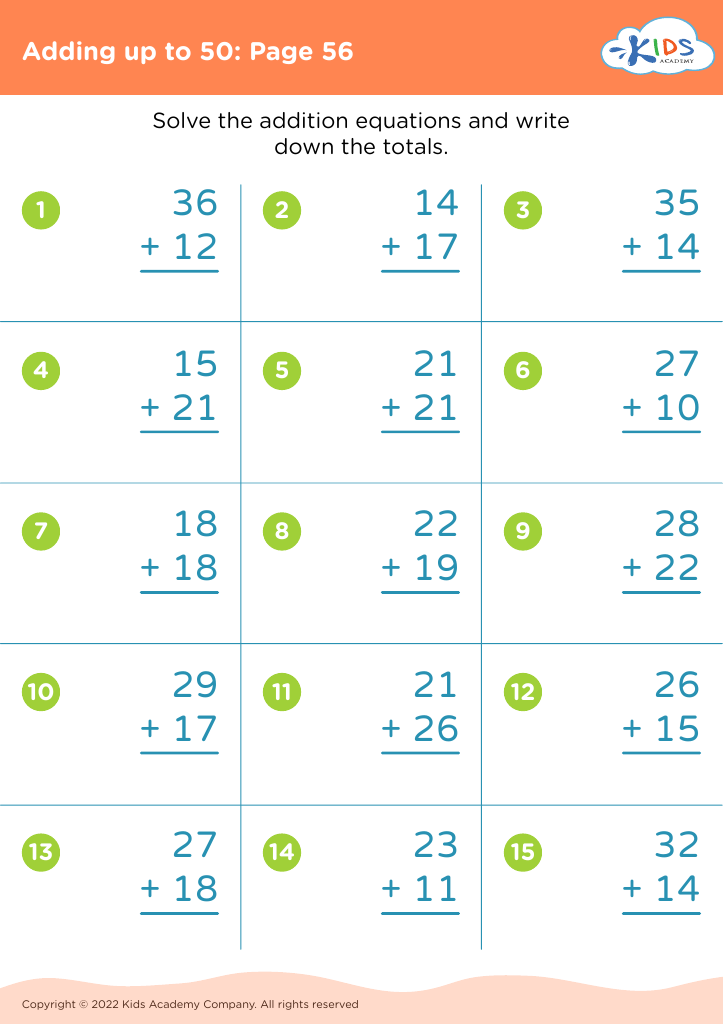
Adding up to 50: Page 56

Adding up to 50: Page 56

Adding up to 50: Page 56
Worksheet
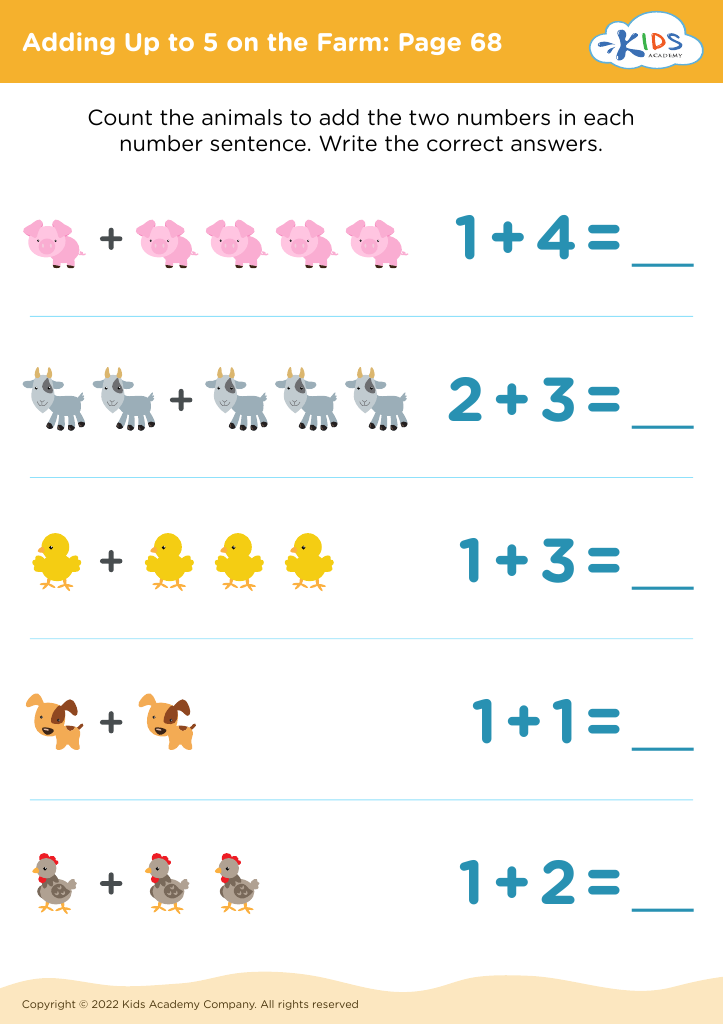
Adding Up to 5 on the Farm: Page 68
Worksheet
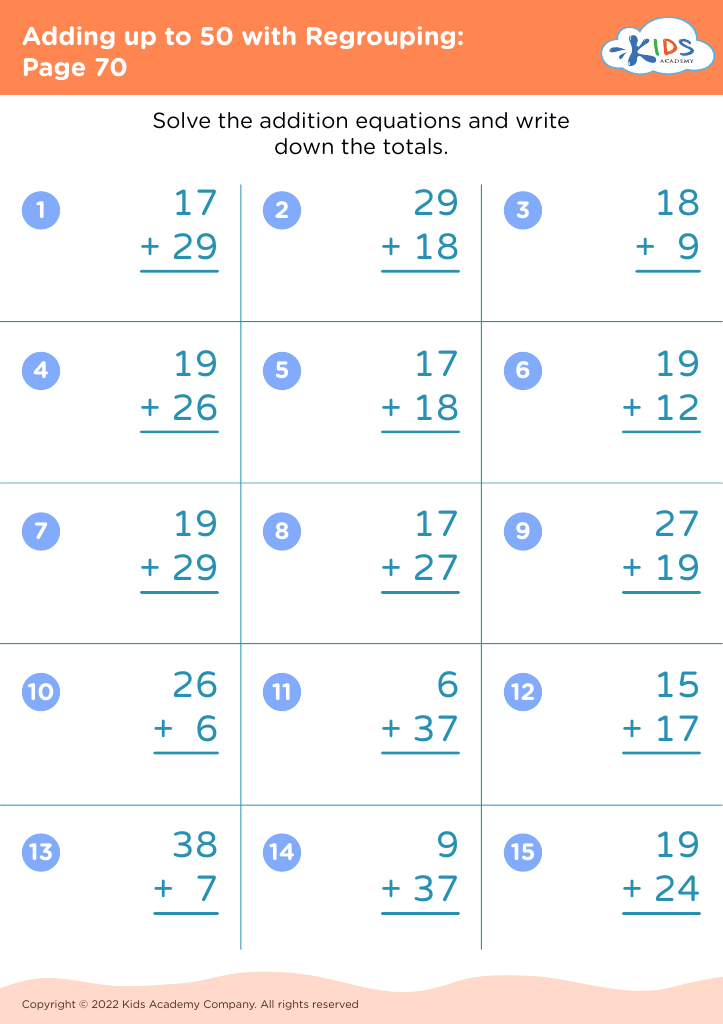
Adding up to 50 with Regrouping: Page 70
Worksheet
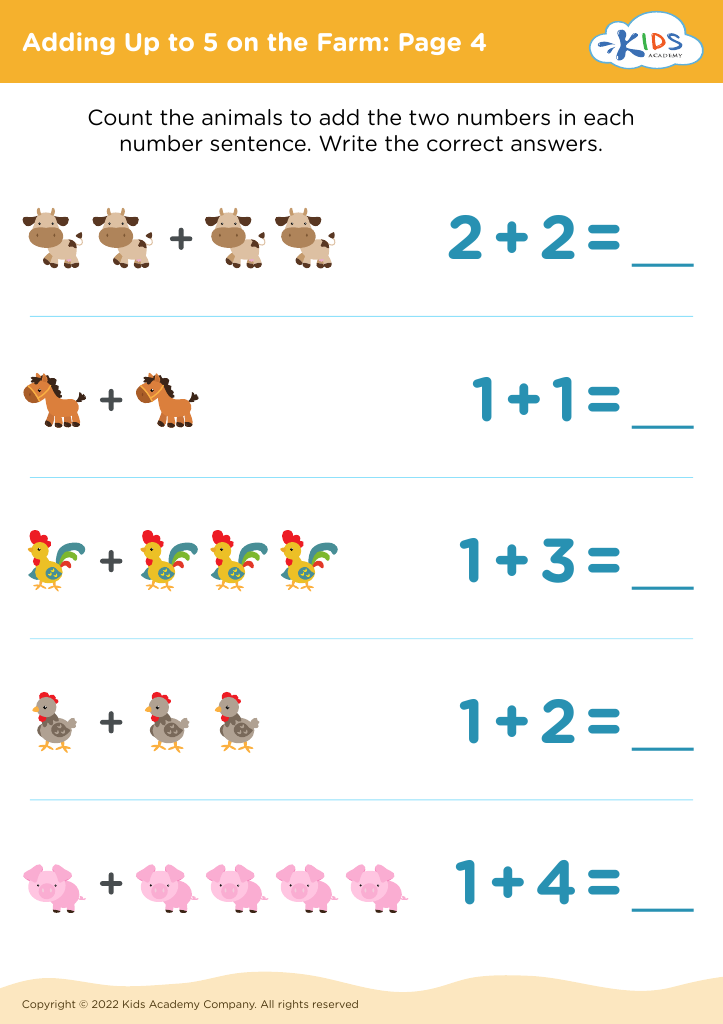
Adding Up to 5 on the Farm: Page 4
Worksheet
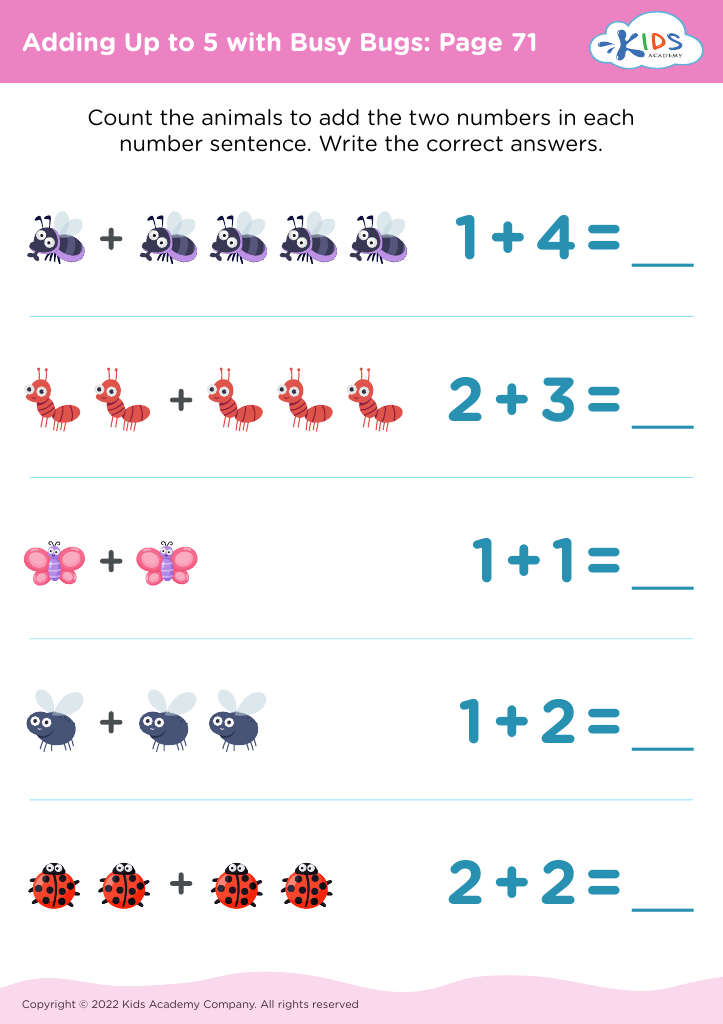
Adding Up to 5 with Busy Bugs: Page 71
Worksheet
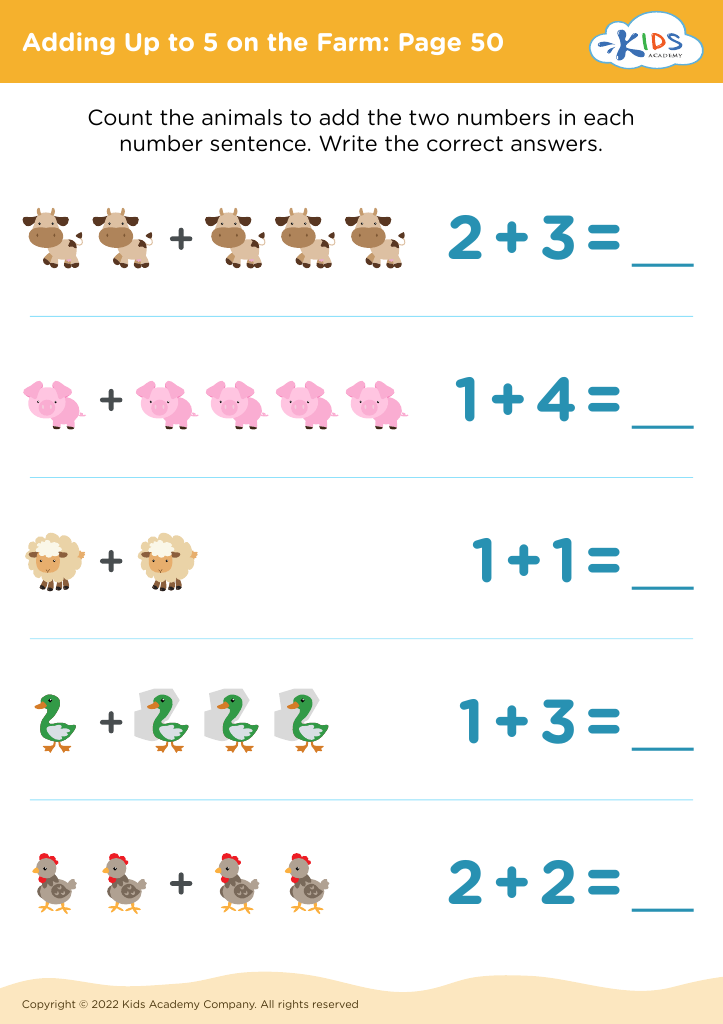
Adding Up to 5 on the Farm: Page 50
Worksheet
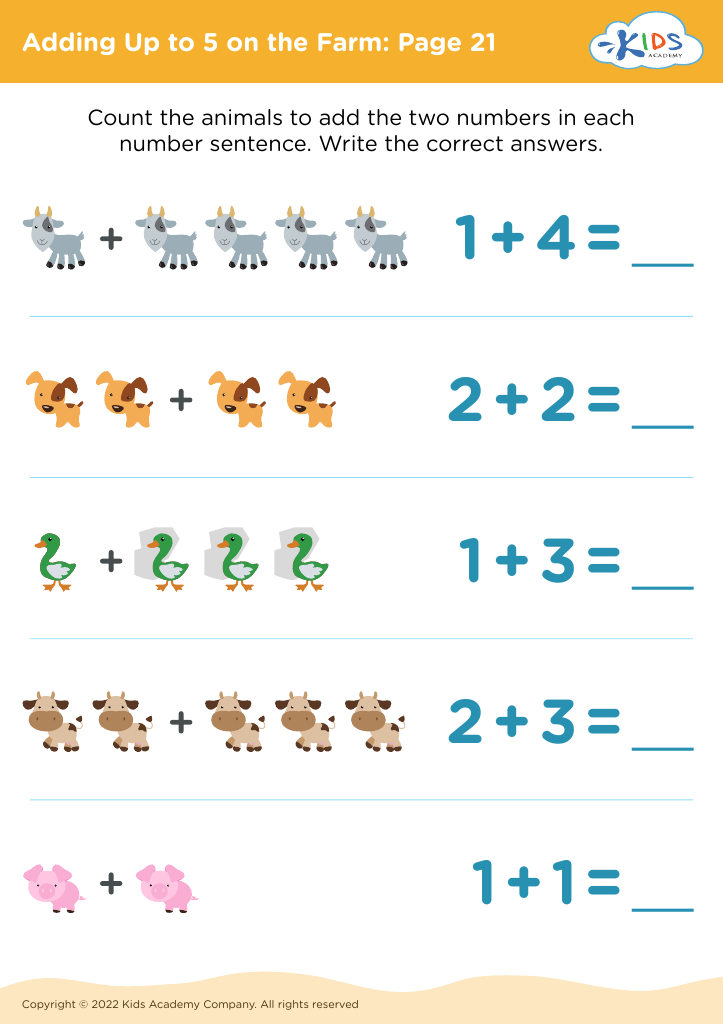
Adding Up to 5 on the Farm: Page 21
Worksheet
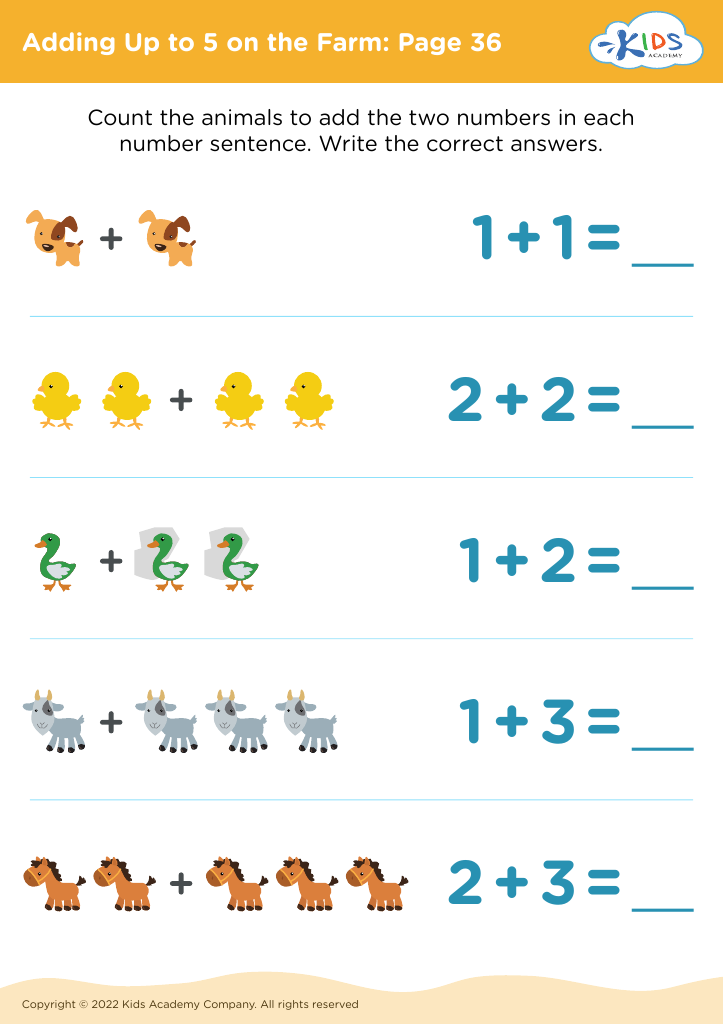
Adding Up to 5 on the Farm: Page 36
Worksheet
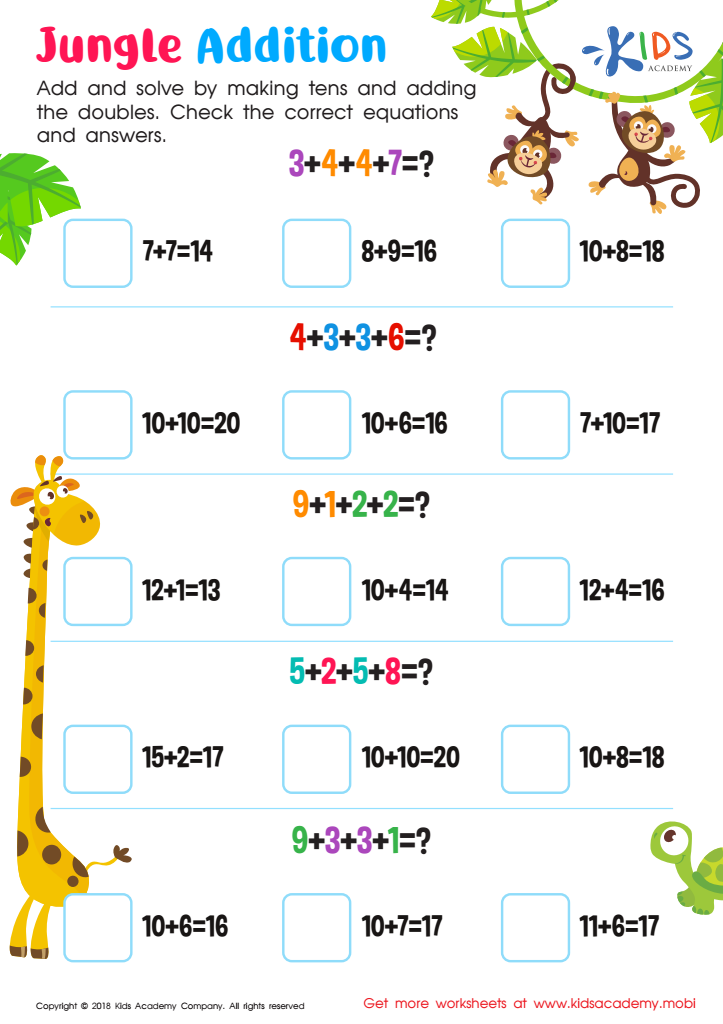
Jungle Addition Worksheet

Jungle Addition Worksheet

With this worksheet, kids can use the strategies of making tens and adding doubles to add numbers with more than three addends. They'll practice choosing the right method and become more confident in their calculations, enabling quicker, more efficient computation.
Jungle Addition Worksheet
Worksheet
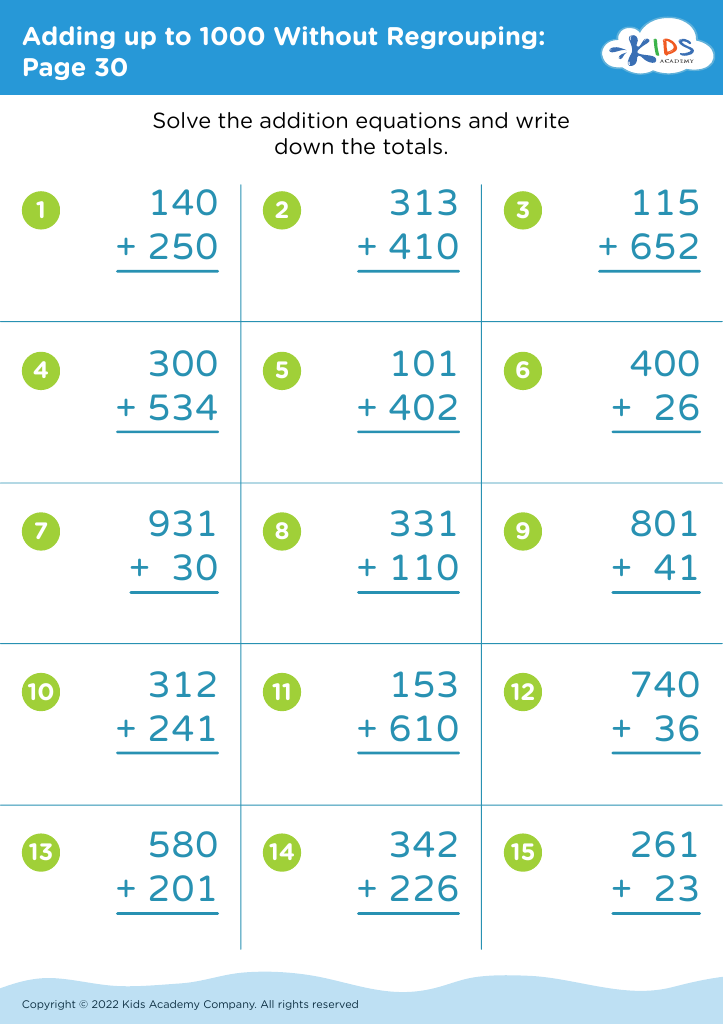
Adding up to 1000 Without Regrouping: Page 30
Worksheet
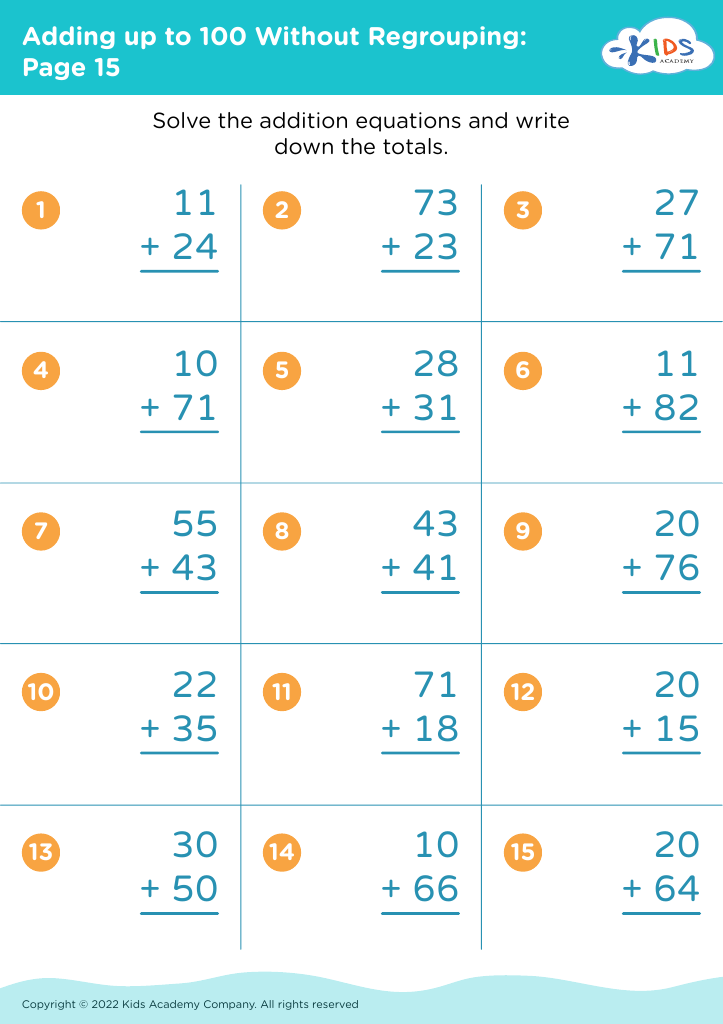
Adding up to 100 Without Regrouping: Page 15
Worksheet
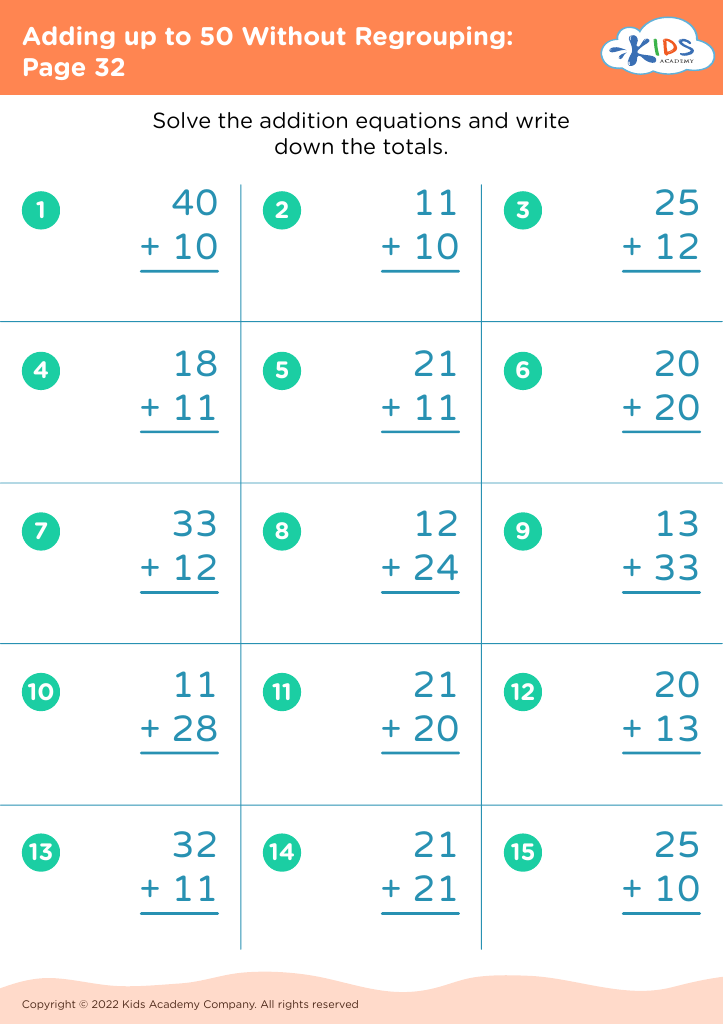
Adding up to 50 Without Regrouping: Page 32
Worksheet
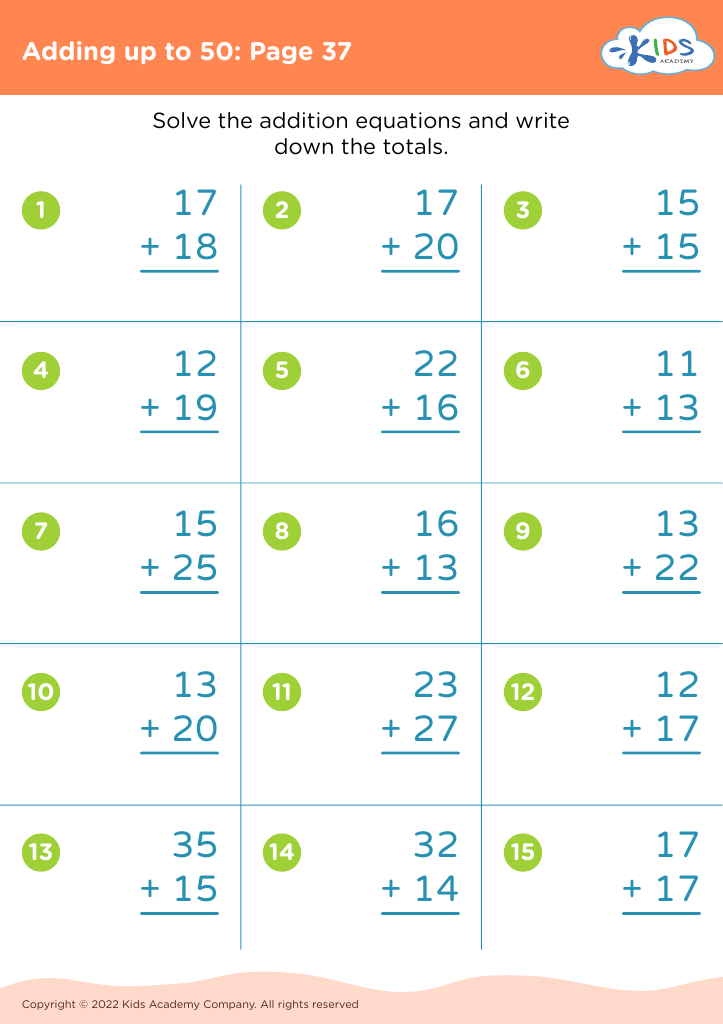
Adding up to 50: Page 37

Adding up to 50: Page 37

Adding up to 50: Page 37
Worksheet
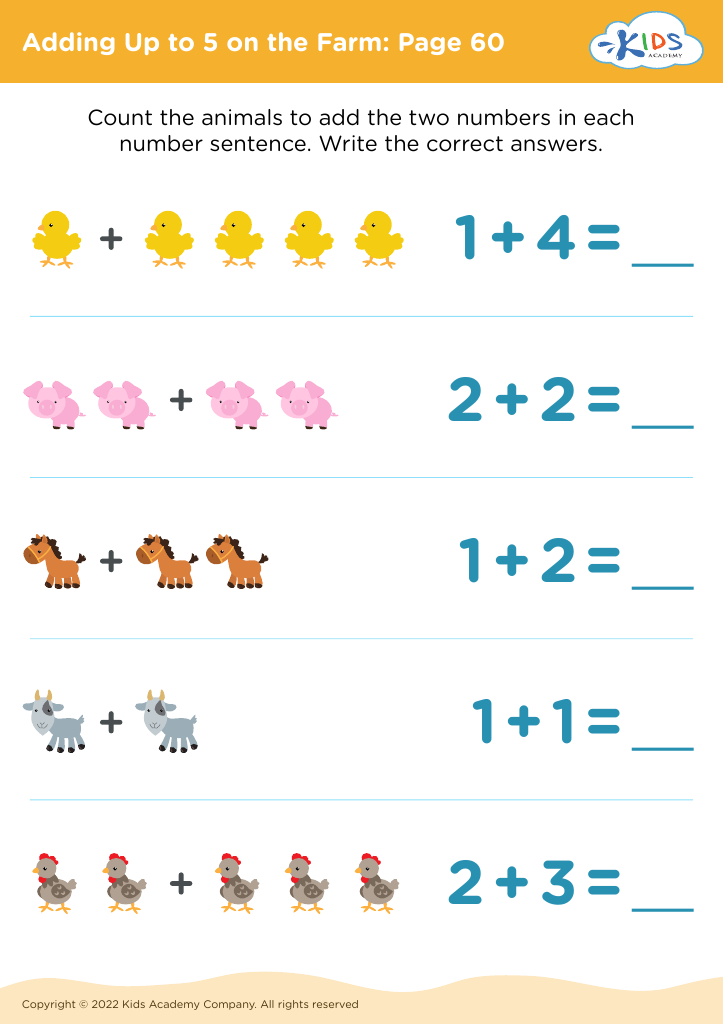
Adding Up to 5 on the Farm: Page 60
Worksheet


Counting objects, addition, and subtraction are fundamental skills crucial for early childhood development between ages 4-8. Understanding these concepts lays the groundwork for mathematical reasoning and problem-solving abilities. At this age, children are naturally curious about their environment and often explore numbers in playful ways. Engaging them in counting objects helps solidify number recognition and optimizes their cognitive development.

Parents and teachers should prioritize these activities because they promote critical thinking and pattern recognition. Mastering addition and subtraction fosters a sense of accomplishment and boosts self-confidence as children tackle new challenges. Additionally, as they learn to manipulate numbers, they develop important verbal skills and vocabulary related to math.

Moreover, early math skills are predictive of later academic success. Many students struggle with math in later grades if foundational concepts are not grasped early on. Encouraging playful, interactive experiences, such as counting snacks, toys, or using songs and games, makes learning enjoyable and relatable. This approach nurtures a lifelong love for mathematics and equips children with the tools for everyday problem-solving. Therefore, parents and teachers play a vital role in fostering these skills, shaping children into confident learners ready to tackle future academic challenges.