Enhancing mathematical logic Addition & Subtraction Worksheets for Ages 4-8
3 filtered results
-
From - To
Discover our "Enhancing Mathematical Logic: Addition & Subtraction Worksheets for Ages 4-8" at Kids Academy. These thoughtfully designed worksheets provide engaging and age-appropriate exercises to bolster young learners' arithmetic skills. Perfect for building a strong foundation in math, our printable resources foster critical thinking and problem-solving abilities. With fun themes and colorful illustrations, children will enjoy practicing addition and subtraction while enhancing their mathematical logic. Explore our comprehensive collection and support your child's learning journey with creative and educational activities. Visit Kids Academy to unlock a world of math mastery for your little ones!
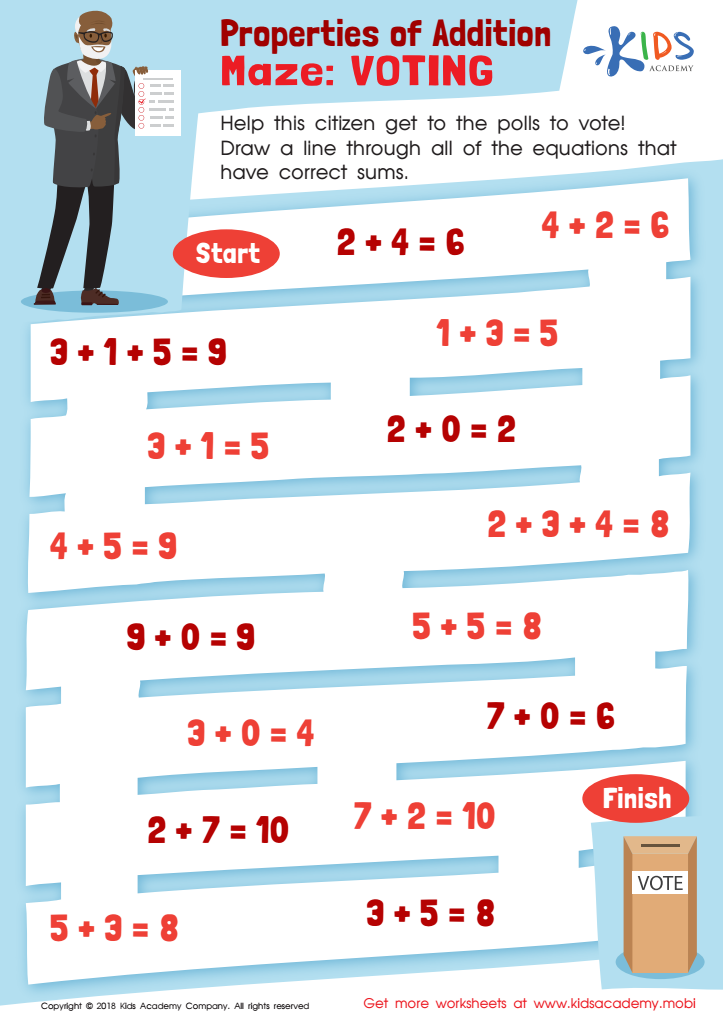
Properties of Addition Maze: Voting Worksheet
 Assign to My Students
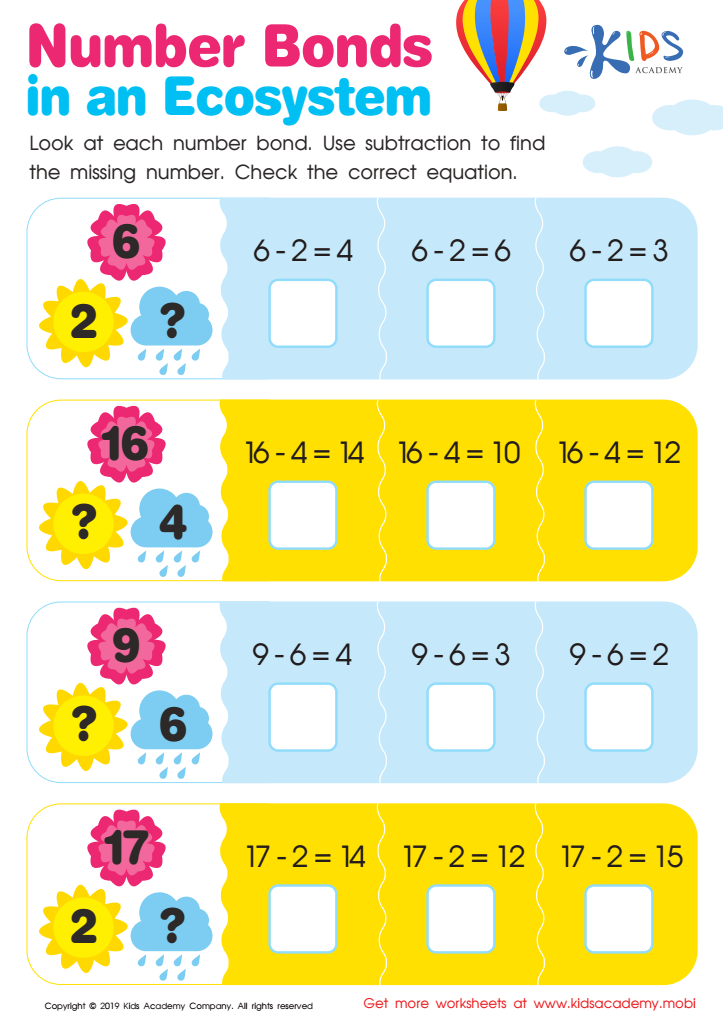
Number Bonds in an Ecosystem Worksheet








Enhancing mathematical logic related to addition and subtraction for children ages 4-8 is crucial because it forms the cornerstone for their future mathematical understanding and overall cognitive development. At this formative stage, young minds are particularly receptive to learning fundamental concepts which underpin more complex problem-solving skills.
First and foremost, early proficiency in addition and subtraction fosters number sense, an intuitive understanding of numbers and their relationships. This foundational fluency allows children to approach mathematical problems with confidence and prepares them for more advanced topics. Moreover, mastering these basic operations aids in developing critical thinking skills. When children learn to add and subtract, they engage in logic-based problem solving, which enhances their ability to think systematically and make reasoned decisions.
From an educational perspective, early mastery of mathematical concepts is linked to improved academic performance across various subjects. Math-related success often boosts a child's self-esteem and attitude towards school. Furthermore, these early math skills are not limited to academic gains; they are essential in real-life situations, such as sharing resources or understanding costs and savings.
Parents and teachers should prioritize nurturing these skills to support a child's holistic development, thereby setting a robust foundation for lifelong learning and practical, everyday competence.








