Enhancing problem-solving skills Addition & Subtraction Worksheets for Ages 4-8
9 filtered results
-
From - To
Transform your child's problem-solving skills with our engaging Addition & Subtraction Worksheets for Ages 4-8 from Kids Academy! Designed by education experts, these printable worksheets blend fun with learning, enhancing essential math skills. Each worksheet features intuitive exercises that make addition and subtraction approachable for young learners, fostering confidence and mastery. Ideal for home or classroom use, our worksheets incorporate various problem-solving techniques to engage young minds and nurture critical thinking. Unlock your child's potential and pave the way for academic success with these interactive, skill-building math worksheets. Sign up today and inspire a love for learning!
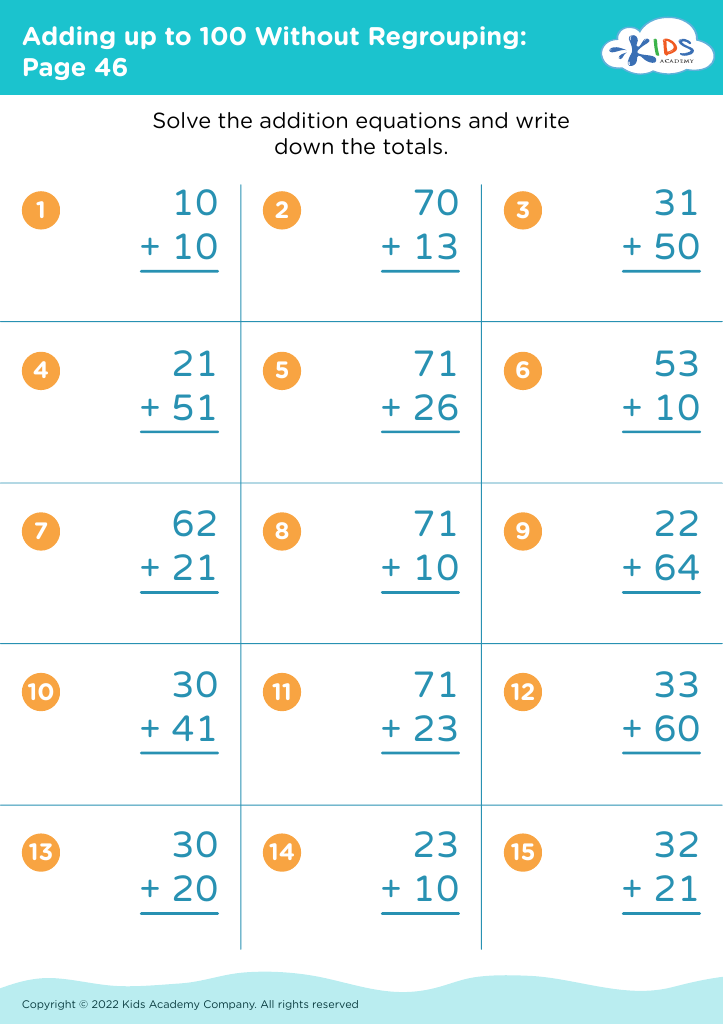
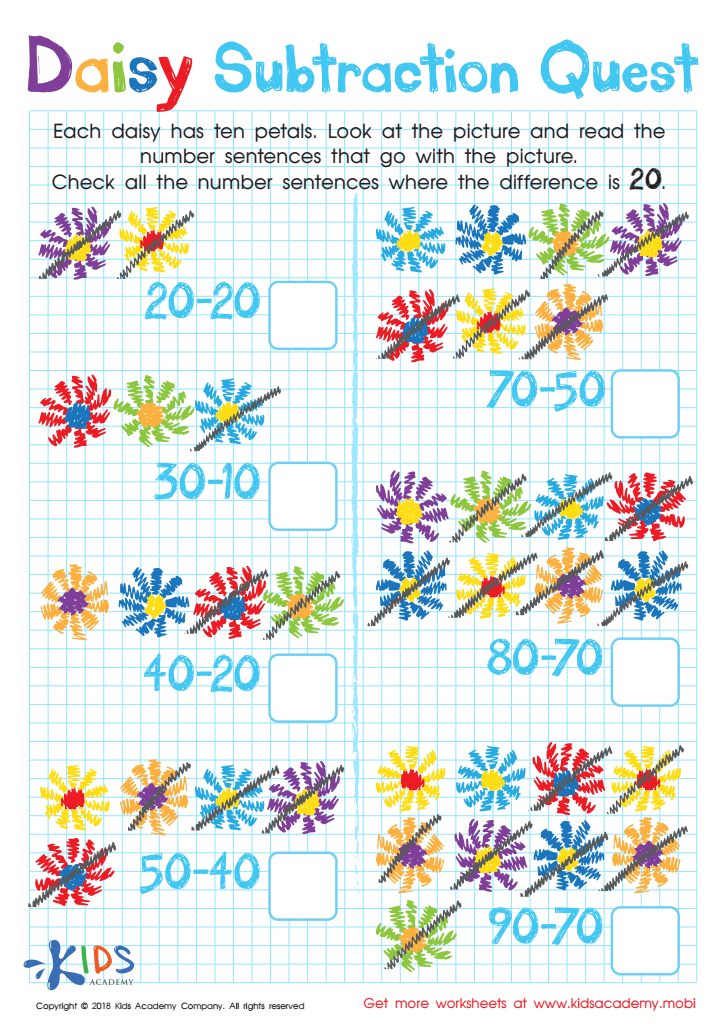
Daisy Subtraction Quest Worksheet
 Assign to My Students
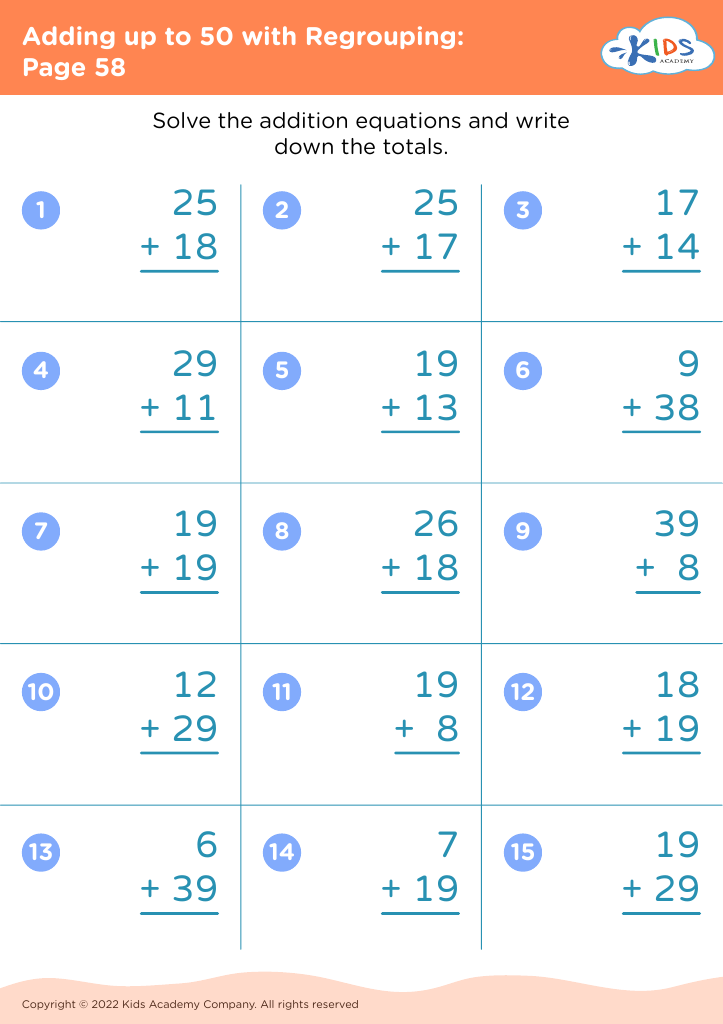
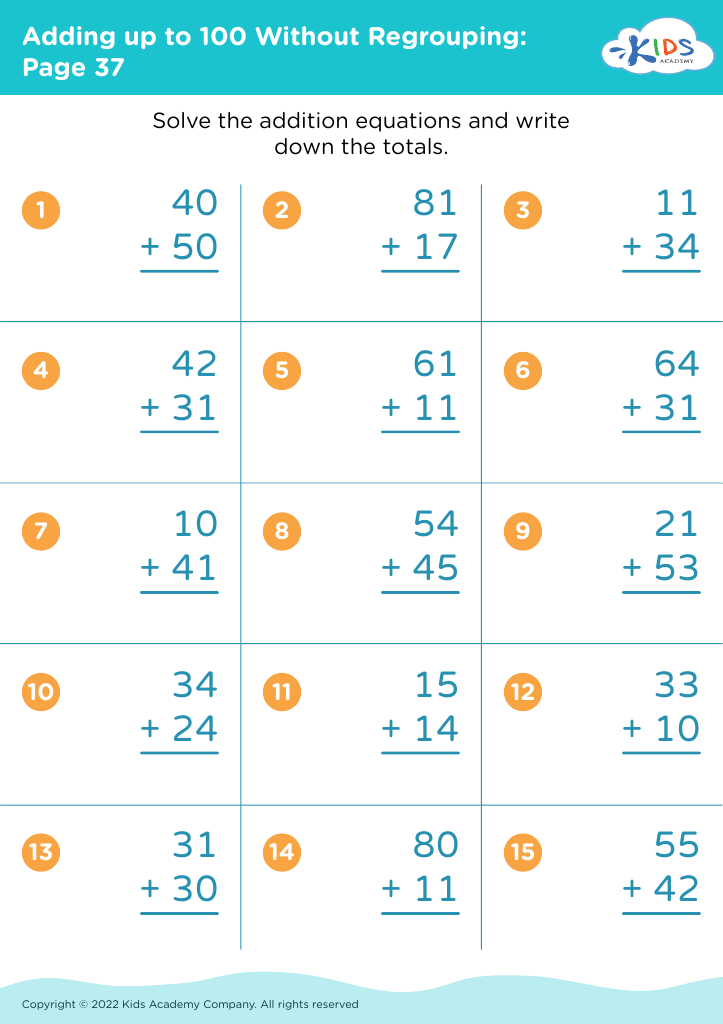
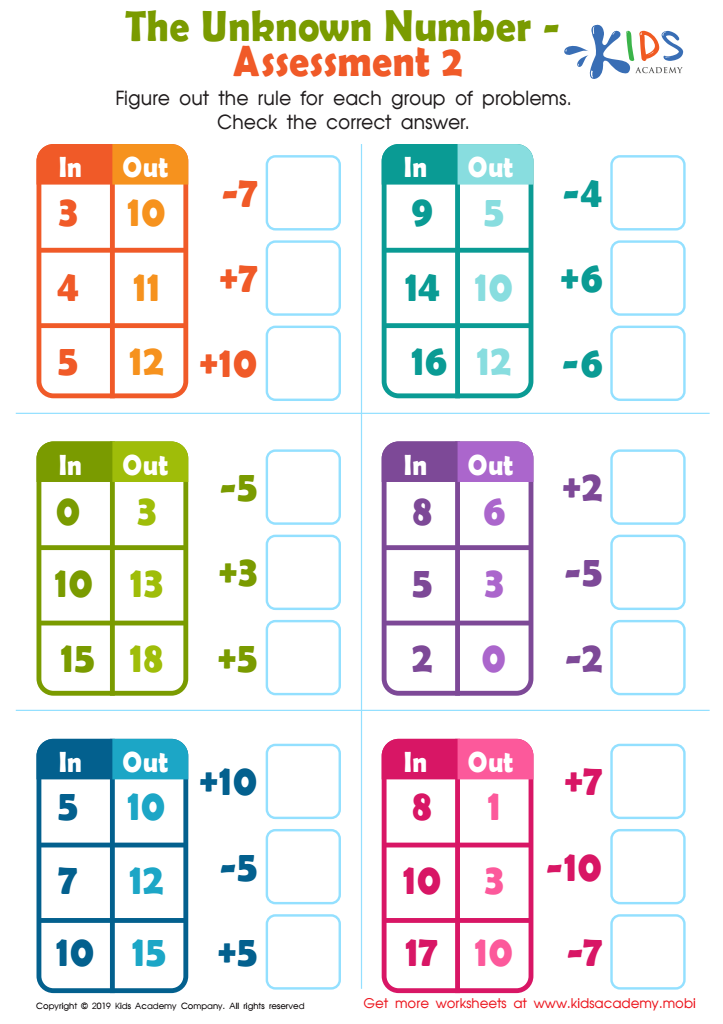
The Unknown Number - Assessment 2 Worksheet
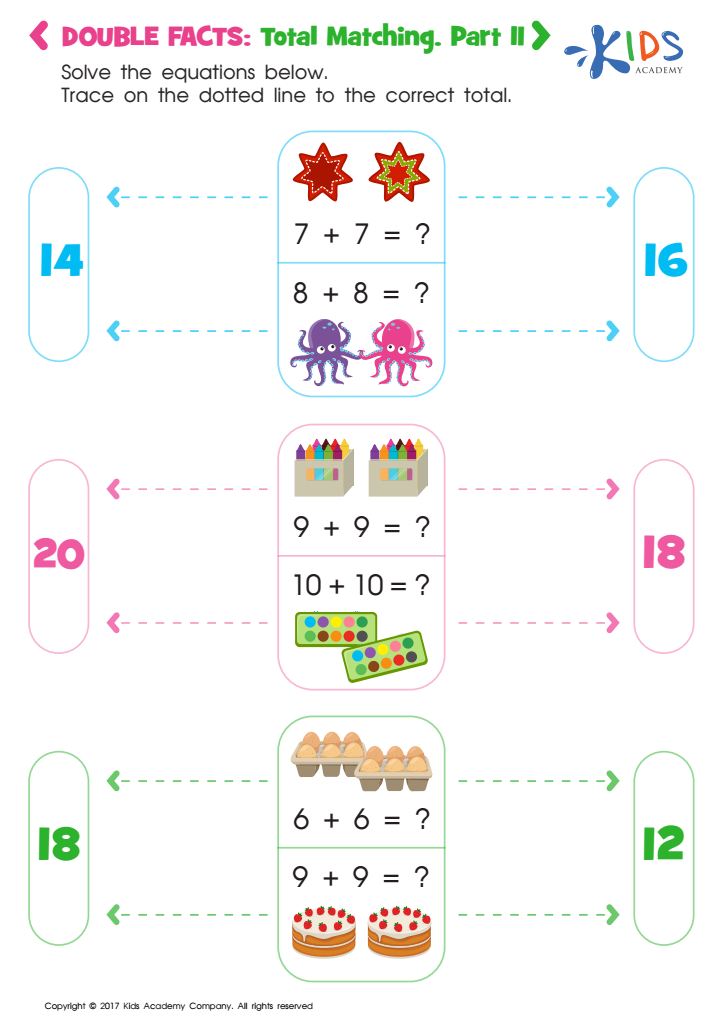
Double Facts: Total Matching 2 Worksheet
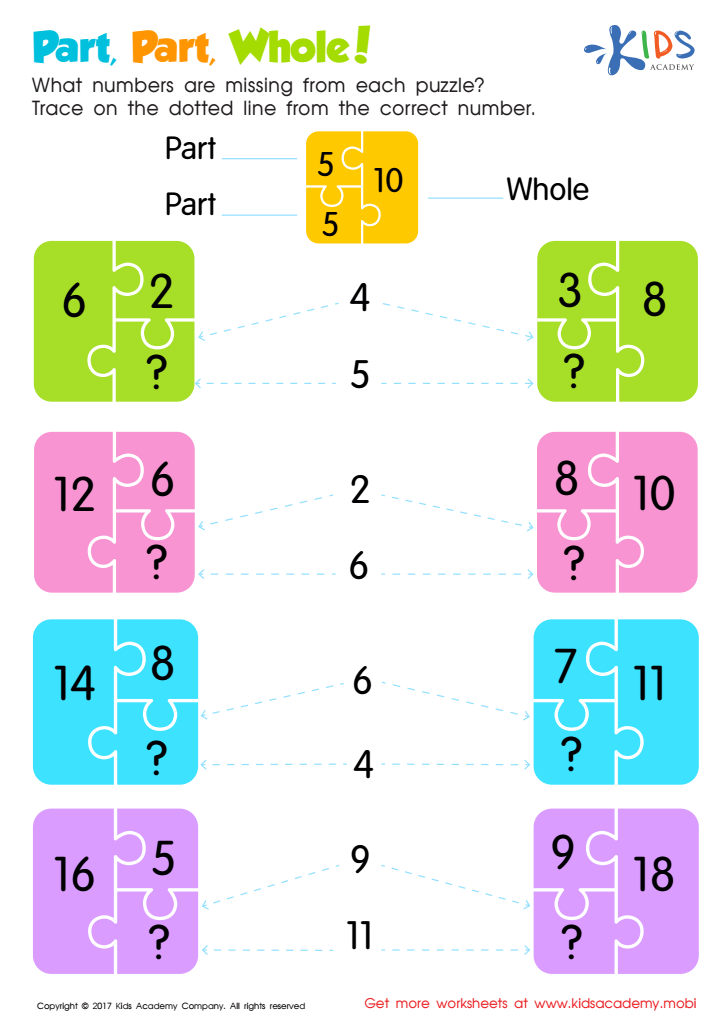
Part, Part, Whole Worksheet
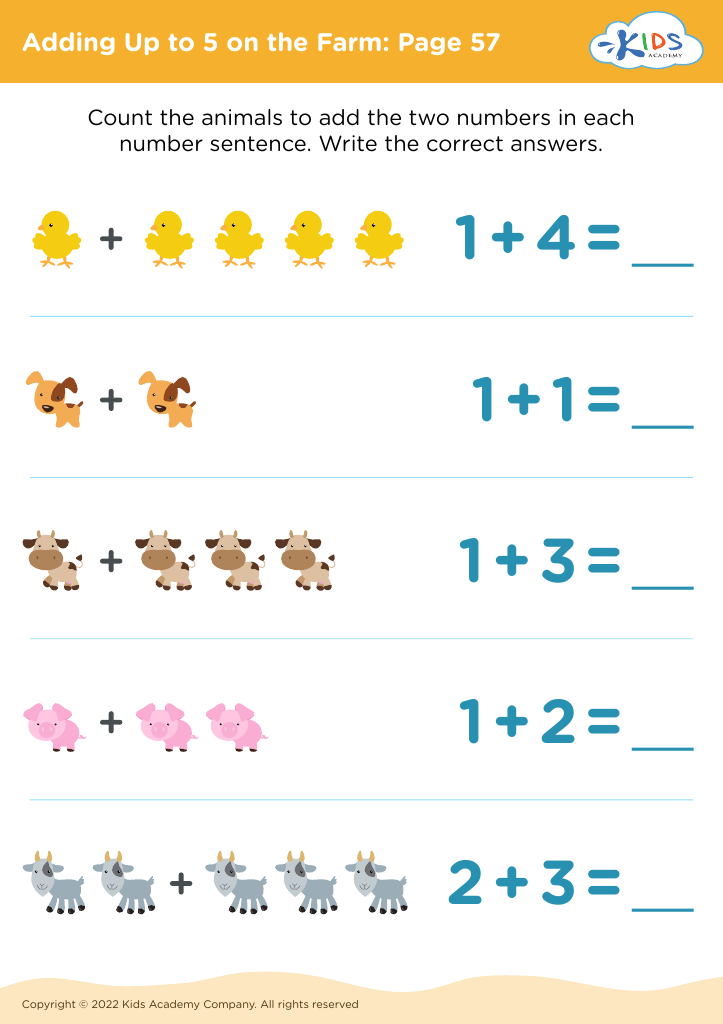








Parents and teachers should prioritize enhancing problem-solving skills in addition and subtraction for children aged 4-8 because these skills form the foundational building blocks for future learning and everyday life. At this critical developmental stage, children's brains are highly receptive to new information and forming neural connections that support cognitive growth. Introducing problem-solving through addition and subtraction helps cultivate analytical thinking, logical reasoning, and the ability to approach challenges methodically.
Math skills, particularly in basic arithmetic, are integral to a child's ability to understand more complex mathematical concepts later on. Early familiarity with problem-solving in math can boost a child's confidence and interest in the subject, making them more likely to engage enthusiastically with math as they progress in school. Moreover, these skills can be cross-applied to other areas, enhancing overall academic performance.
Additionally, arithmetic problem-solving nurtures patience and perseverance, two critical life skills. By working through problems step-by-step, children learn that persistence leads to solutions and success. Practical daily applications, such as managing time or money, benefit greatly from these early skills. Hence, parents and teachers investing in developing these foundational abilities are setting children up for both academic success and effective daily functioning.








