Fraction representation Addition & Subtraction Worksheets for Ages 4-8
3 filtered results
-
From - To
Discover the perfect way to introduce young learners to the exciting world of fractions with our "Fraction Representation Addition & Subtraction Worksheets" designed for ages 4-8. These carefully crafted worksheets make learning fun and engaging while teaching foundational math skills. Through visually appealing activities, children can effortlessly grasp the concepts of adding and subtracting fractions. Our worksheets are ideal for both classroom and home use, and they are designed to nurture a love for math from an early age. Boost your child's mathematical confidence and skills with these comprehensive and kid-friendly resources from Kids Academy.
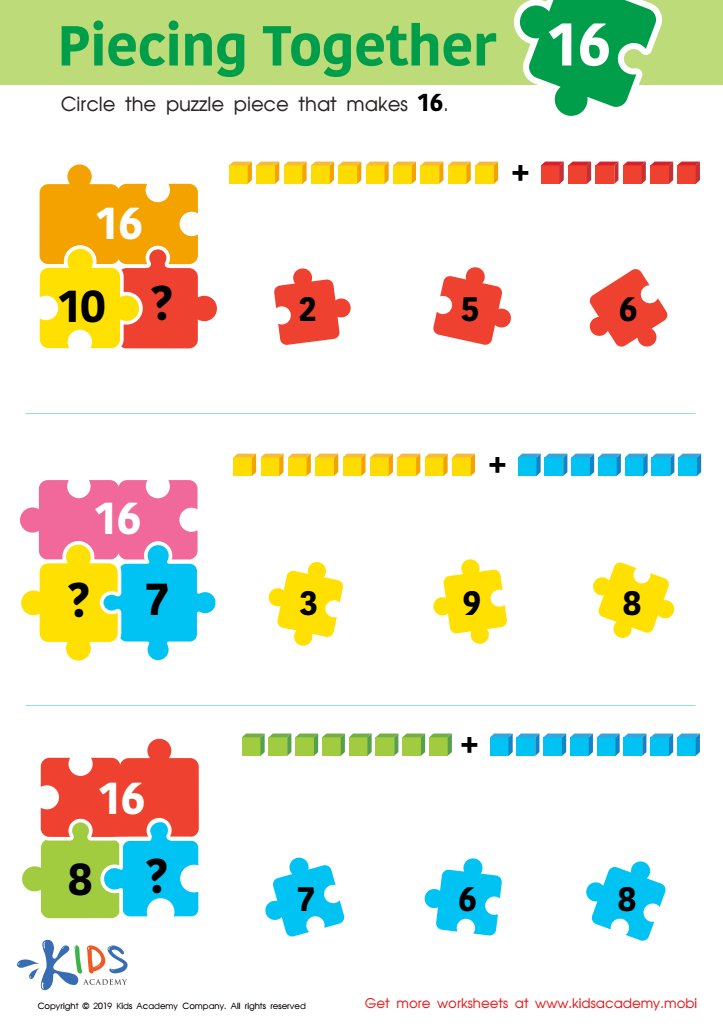
Piecing Together 16 Worksheet
 Assign to My Students
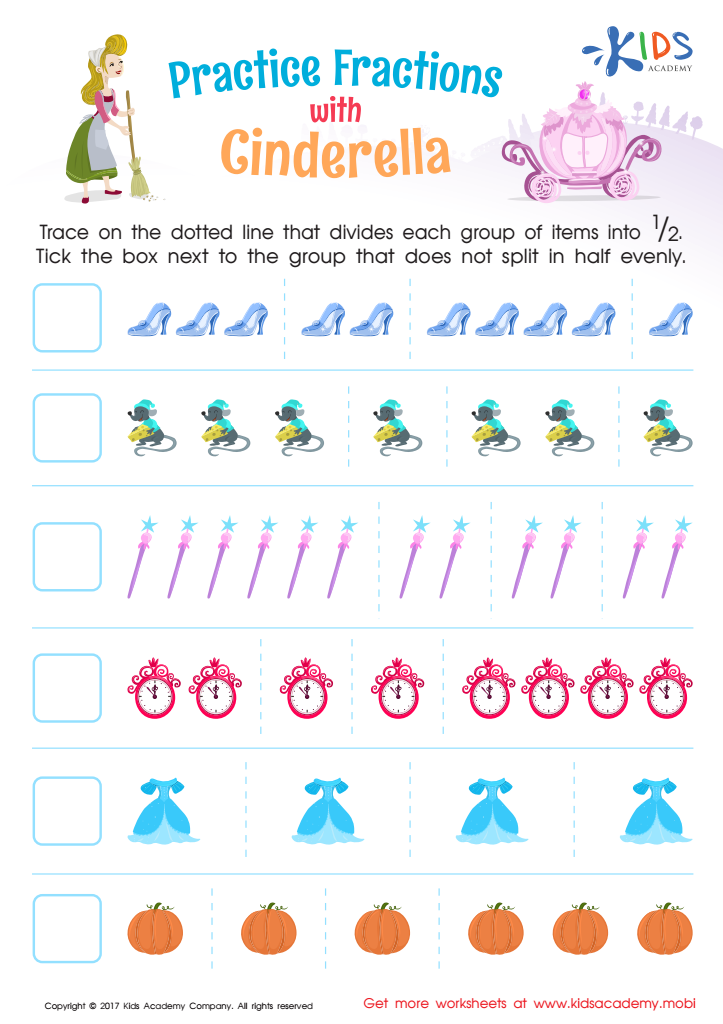
Fractions: Cinderella Printable








Parents and teachers should prioritize teaching fraction representation, addition, and subtraction to children ages 4-8 for several essential reasons. Early exposure to these concepts lays the essential foundation for mathematical understanding, helping young learners develop strong numerical and problem-solving skills. At this formative age, children are typically more receptive and can grasp visual and hands-on learning effectively, which is crucial when introducing abstract concepts like fractions.
Understanding fractions promotes critical thinking and a more comprehensive grasp of numbers, which is indispensable for advanced math topics encountered later in school. By learning how to represent, add, and subtract fractions, children become adept at recognizing the part-to-whole relationship, a concept that extends beyond math to real-life situations like cutting fruits or dividing toys fairly among friends.
Additionally, confidence in mathematics can foster a positive attitude towards learning and academic challenges. Mastery of foundational math skills prevents future learning gaps, ensuring children are well-prepared for the increasingly complex curriculum of higher grades. Overall, a strong emphasis on fractions during early education supports cognitive development and builds a solid groundwork for lifelong numeracy and analytical skills.








