Fraction simplification Addition & Subtraction Worksheets for Ages 4-8 - Page 3
58 filtered results
-
From - To
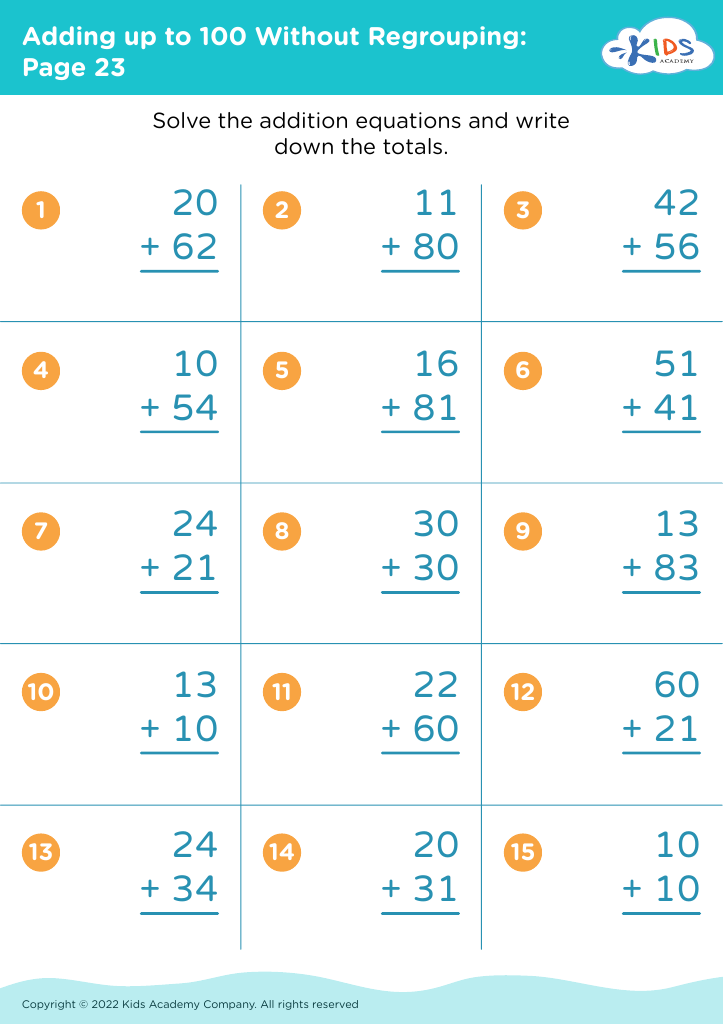
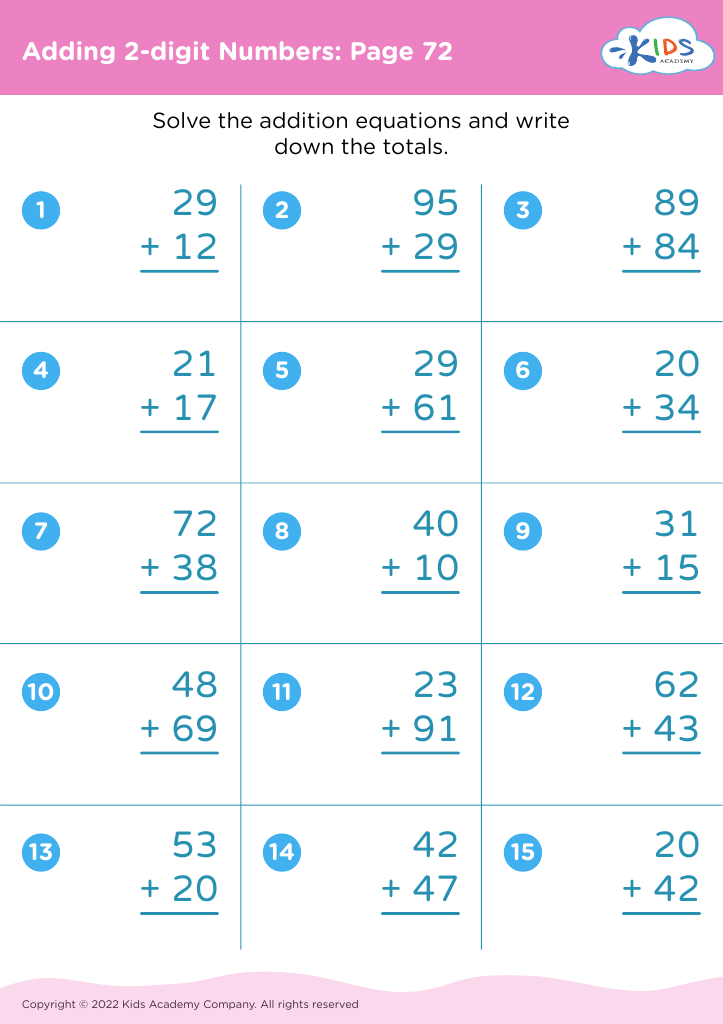
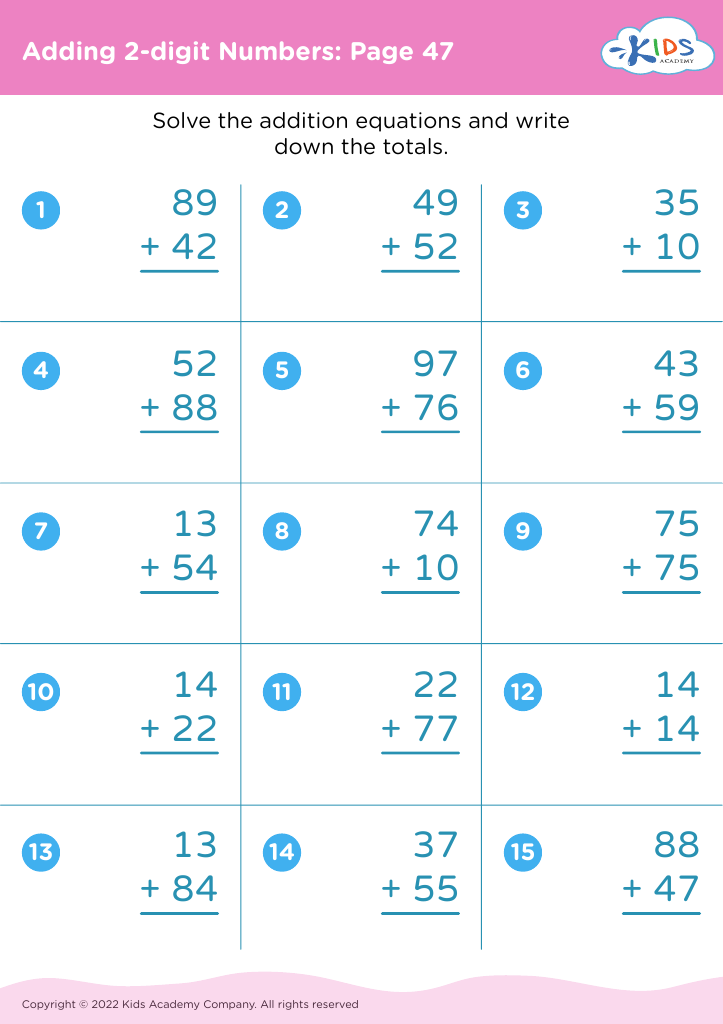
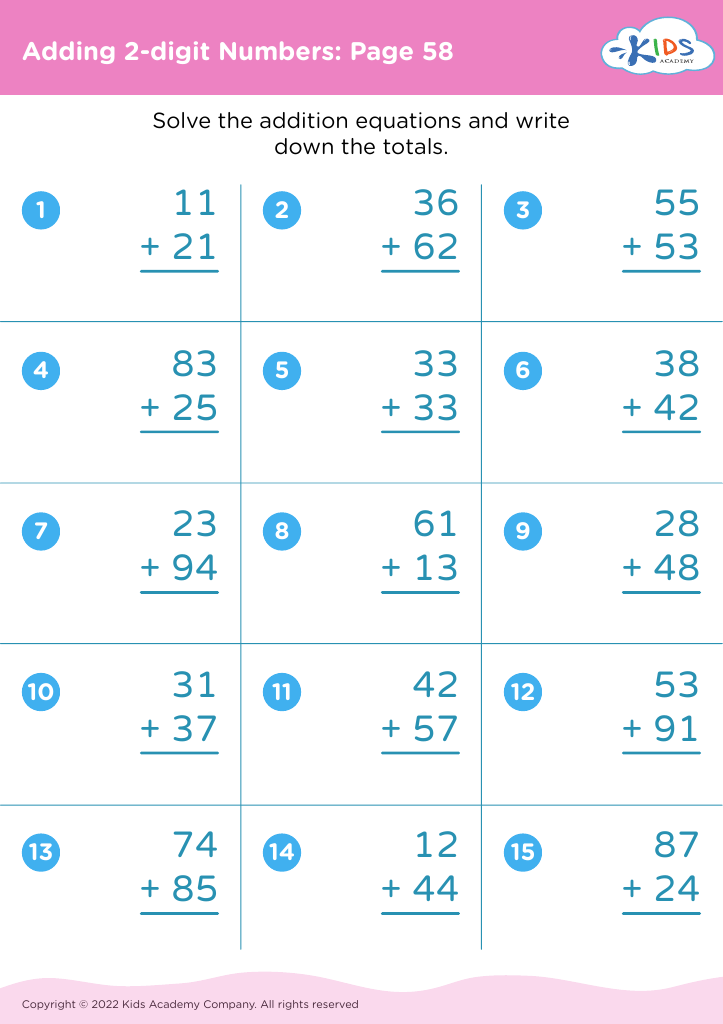








Understanding fraction simplification, addition, and subtraction at an early age (4-8 years) is crucial for several reasons. First, developing these foundational mathematical skills fosters a stronger overall number sense, which is essential for more advanced math concepts encountered in later education. Learning how to simplify fractions and perform basic operations with them enables children to grasp the idea of parts and wholes, comparisons, and proportions, which are critical analytical skills across various domains, including science and everyday life.
Additionally, early proficiency with fractions boosts children’s confidence and reduces "math anxiety." By demystifying these concepts early on, children are more likely to approach math with a positive attitude and readiness. For parents and teachers, encouraging a strong grasp of fractions sets the stage for children to experience smoother transitions into more complex topics like algebra and calculus.
Practical applications—such as sharing food, dividing tasks, or understanding clocks and measurements—make fractions relevant in real life. Therefore, instilling a foundational understanding of fraction simplification, addition, and subtraction significantly contributes to a child's intellectual growth, fostering logical thinking, problem-solving abilities, and making everyday tasks more manageable and comprehensible.








