Improve calculation skills Addition & Subtraction Worksheets for Ages 4-8
6 filtered results
-
From - To
Boost your child's math confidence with our engaging addition and subtraction worksheets designed specifically for ages 4-8! These developmental resources focus on improving calculation skills through fun, interactive activities that make learning enjoyable. Each worksheet is tailored to reinforce foundational concepts, build number sense, and enhance problem-solving abilities. Ideal for classroom settings or at-home practice, our printable worksheets cater to various learning styles, ensuring every child can progress at their own pace. Encourage your young learners to master basic math operations with these stimulating exercises while tracking their growth and achievement. Equip them for a successful math journey today!
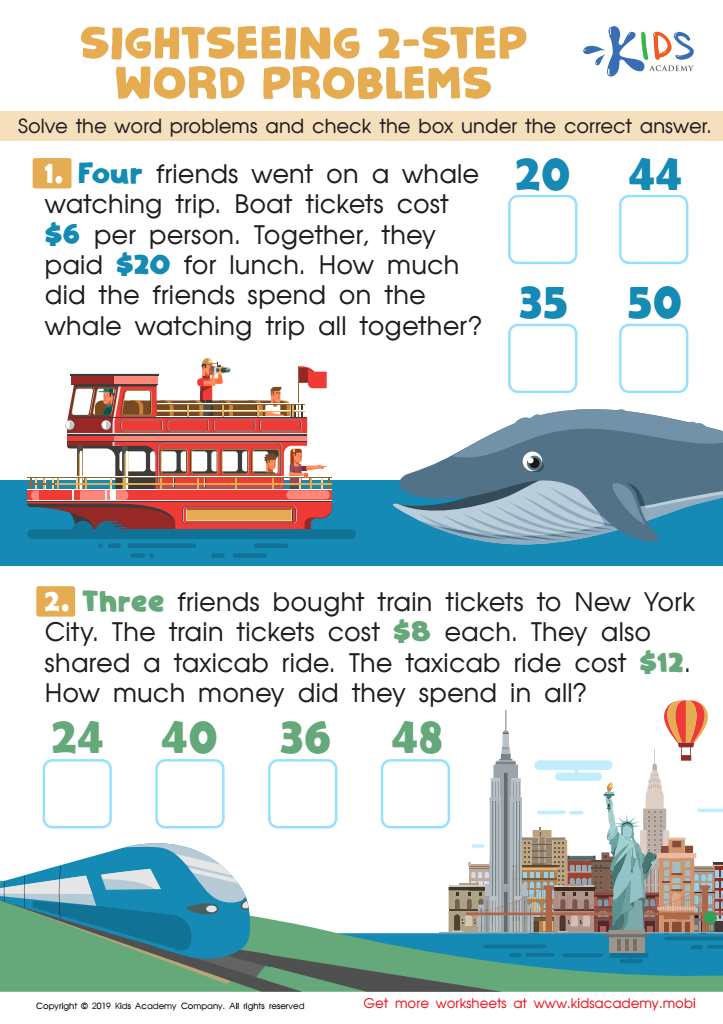
Sightseeing 2-Step Word Problems Worksheet
 Assign to My Students
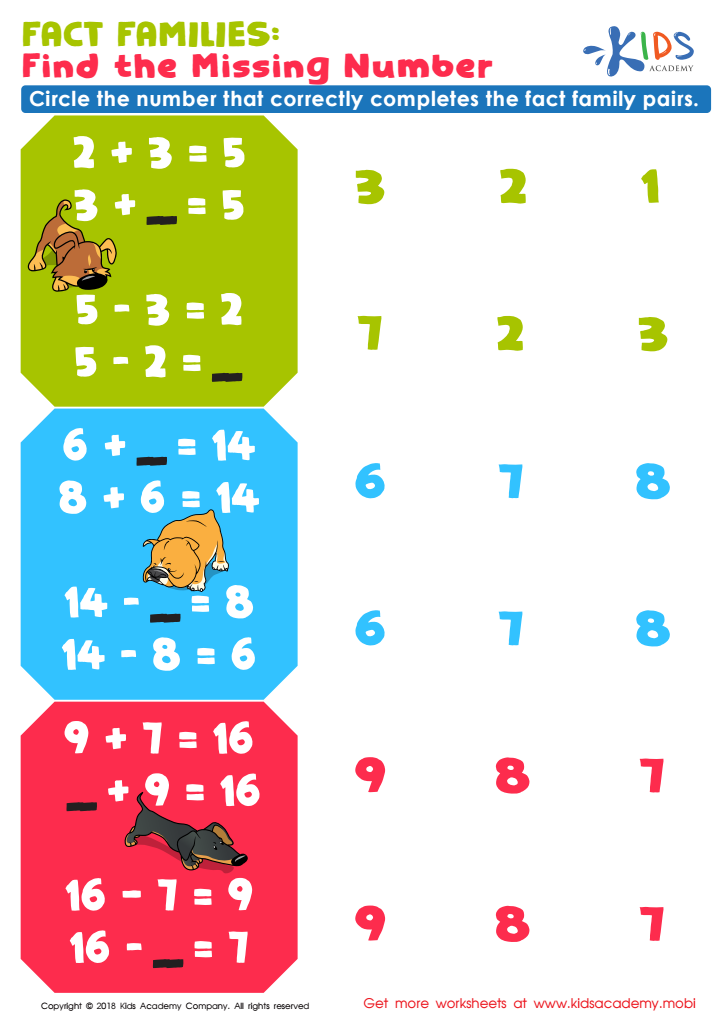
Fact Families: Find Missing Number Worksheet
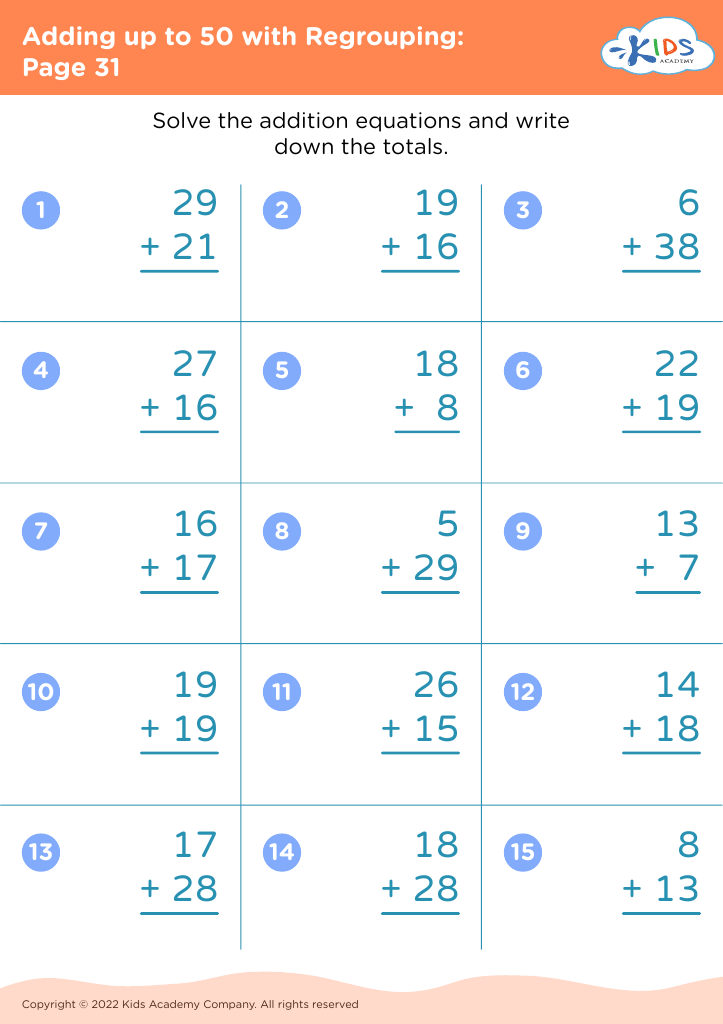
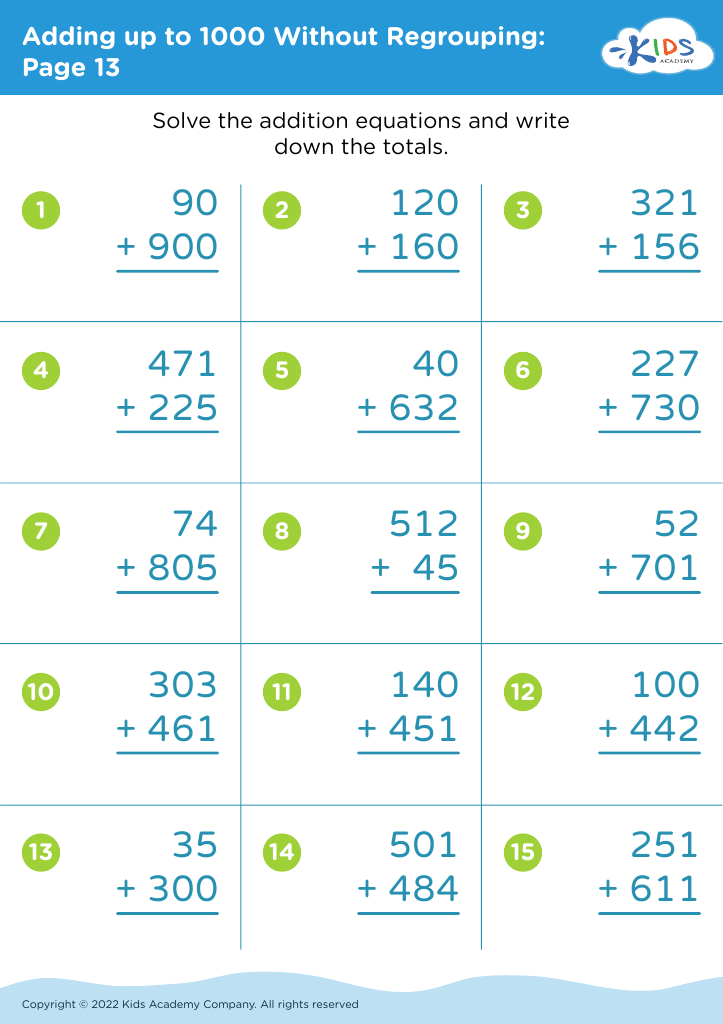
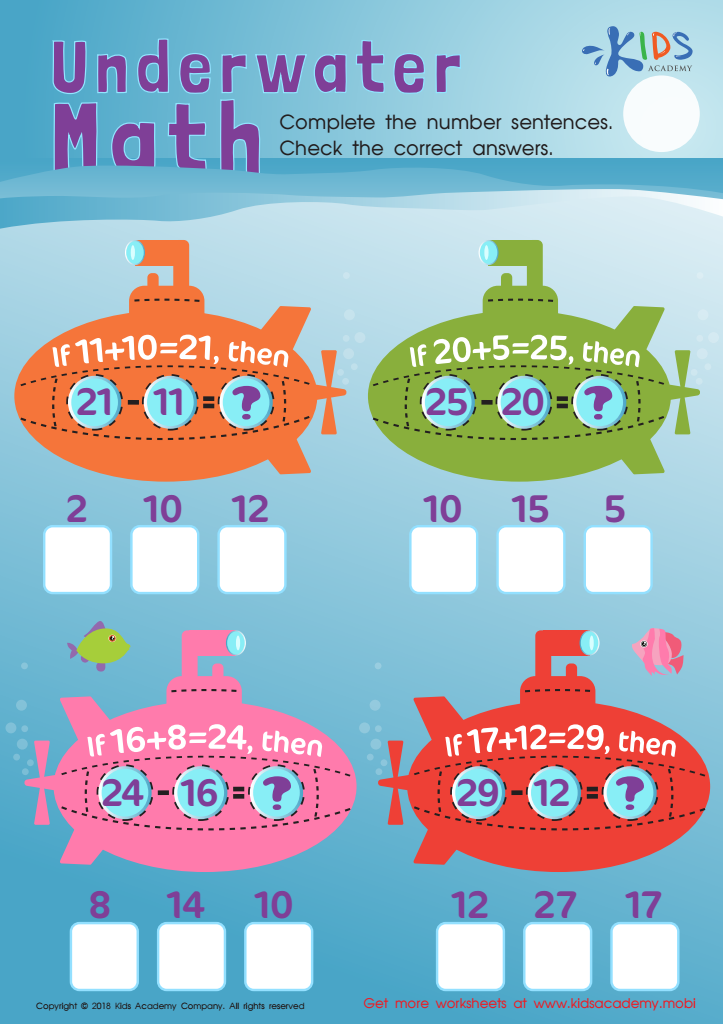
Addition and Subtraction: Underwater Math Worksheet
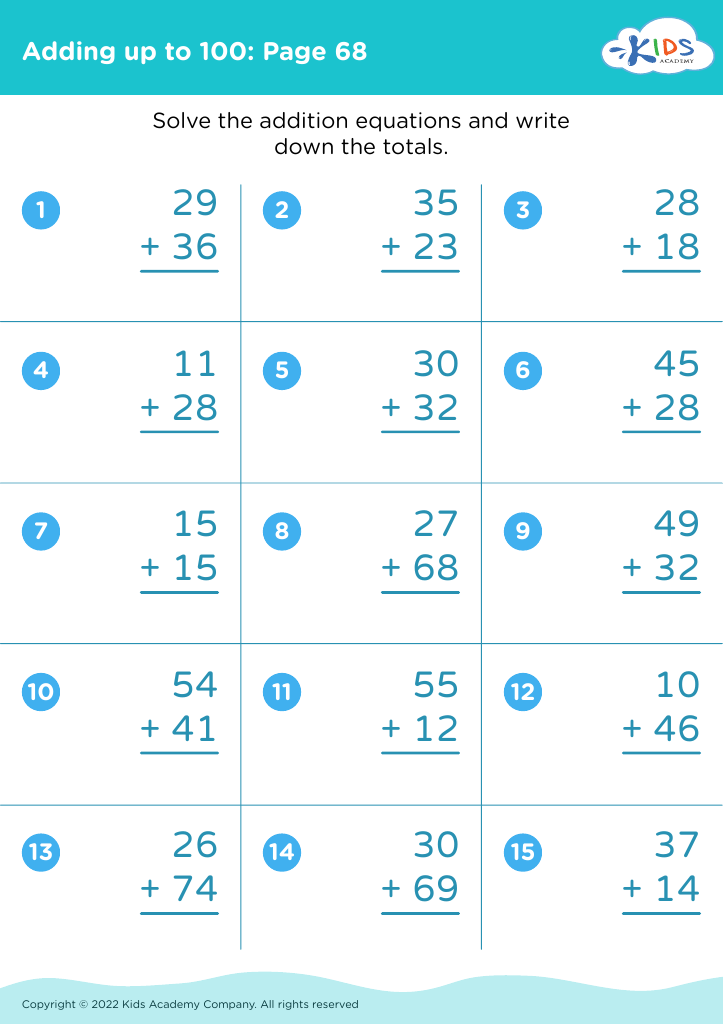








Parents and teachers should prioritize improving calculation skills in addition and subtraction for children aged 4 to 8 because these foundational skills are critical for overall mathematical understanding and success. At this age, children are naturally exploring numbers, and developing strong calculation abilities not only enhances their confidence but also fosters a positive attitude towards mathematics.
Mastering addition and subtraction forms the basis for more complex mathematical concepts, such as multiplication and division, introduced later. Early success in basic calculations can lead to academic motivation, as children experience the satisfaction of solving problems independently. Additionally, these skills are essential for daily life: understanding money, measuring ingredients for cooking, and telling time all rely on these basic calculations.
Moreover, improved calculation skills can aid in cognitive development, promoting logical reasoning and problem-solving abilities. Engaging in interactive and fun activities, such as games and hands-on exercises, can make learning these skills enjoyable, creating lasting positive associations with math.
Ultimately, fostering strong addition and subtraction skills equips children not just for academic challenges, but also for life's practical situations, laying a strong foundation for their future educational journey. Both teachers and parents play a crucial role in this essential developmental phase.








