Improve problem-solving Addition & Subtraction Worksheets for Ages 4-8
4 filtered results
-
From - To
Enhance your child's mathematical skills with our "Improve Problem-Solving Addition & Subtraction Worksheets for Ages 4-8". These engaging and educational worksheets are designed specifically for young learners to develop essential addition and subtraction techniques. Through fun, interactive exercises, children will not only master basic arithmetic but also improve their critical thinking and problem-solving abilities. These worksheets provide a solid foundation for future math success, making learning enjoyable and effective. Perfect for use at home or in the classroom, our worksheets are a valuable resource to support your child's educational journey. Start building their math skills today!
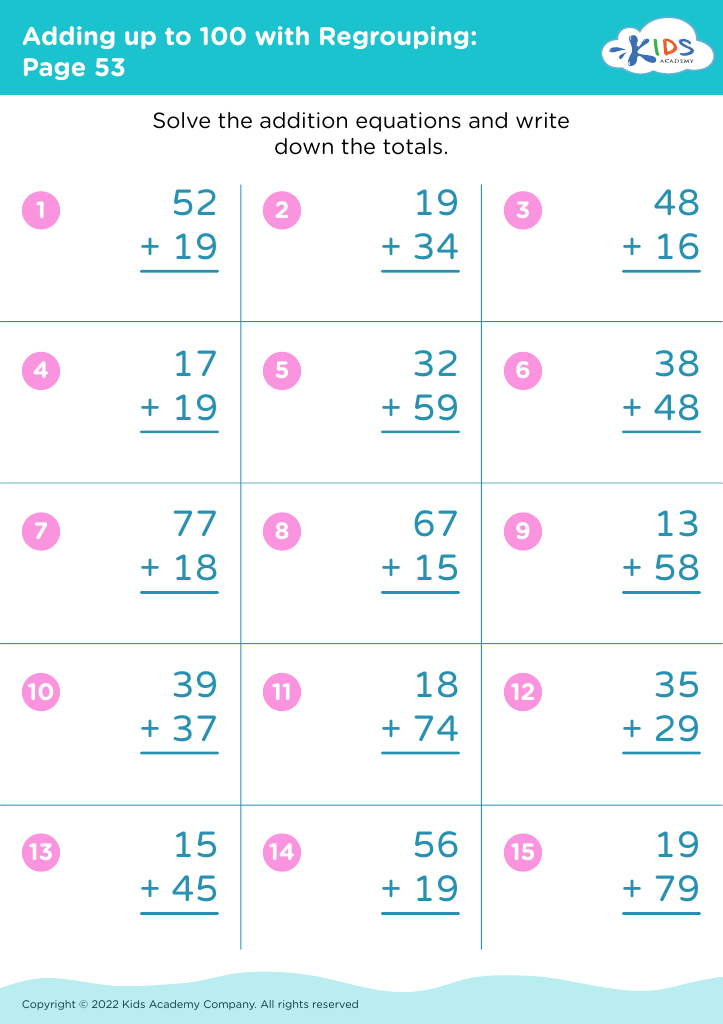
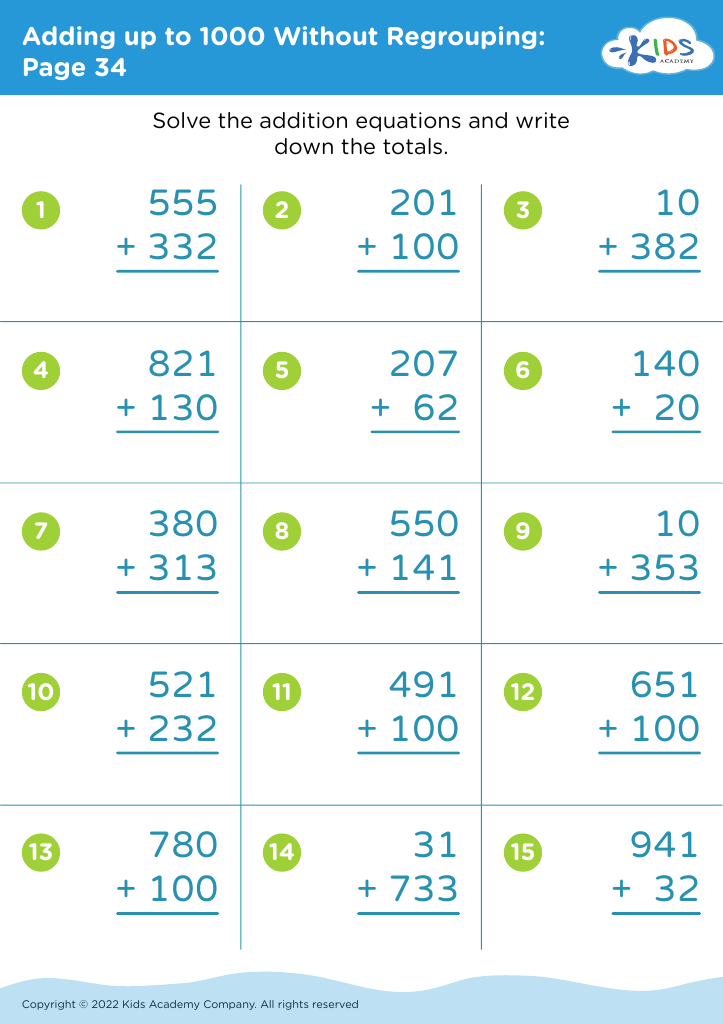
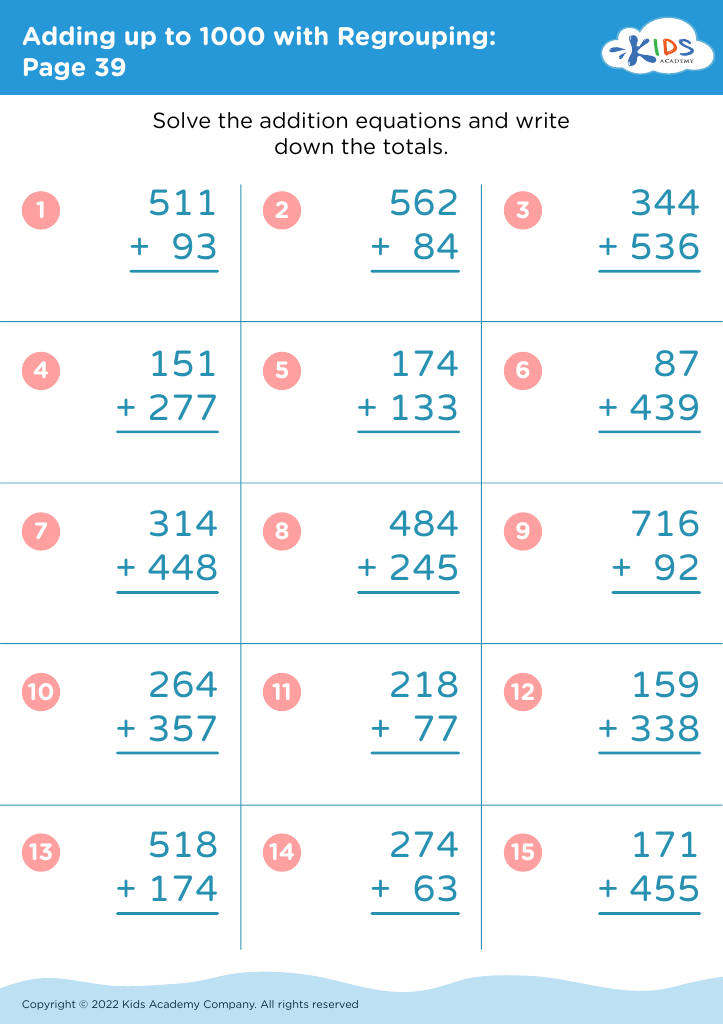
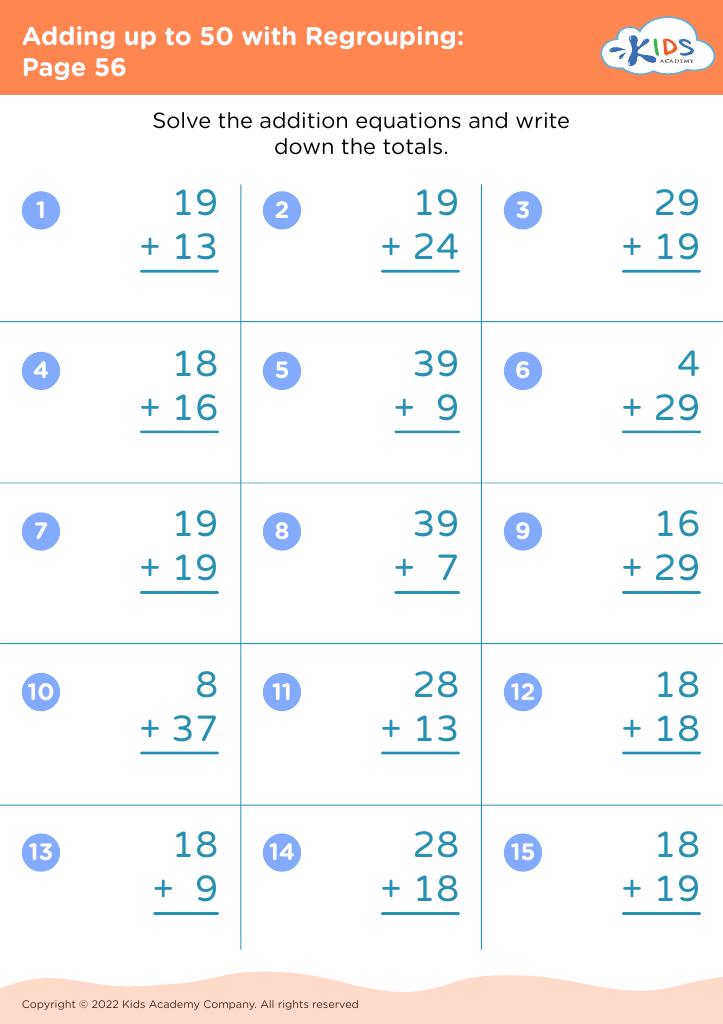








Parents and teachers should prioritize improving problem-solving skills, specifically in addition and subtraction, for children aged 4-8 because these foundational math operations set the groundwork for future mathematical learning and logical reasoning. During these formative years, kids' brains are incredibly receptive to new information and developing cognitive skills that will impact their educational journey.
First, mastering addition and subtraction provides a solid base for more complex mathematical concepts, such as multiplication and division, which will be introduced in later grades. Early competence in these skills can foster a positive attitude toward math, reducing anxiety and building confidence in young learners.
Moreover, problem-solving activities in math help children develop critical thinking and analytical skills. These include recognizing patterns, weighing different approaches, and making informed decisions—abilities that are transferable to other areas of learning and everyday life.
Additionally, teaching problem-solving through addition and subtraction enhances children’s innate curiosity and perseverance. As they encounter challenges, they learn the importance of trying different methods and learning from mistakes, which are essential life skills.
In conclusion, honing these skills at an early age supports overall intellectual development, encourages a love for learning, and prepares children for academic success across various subjects. Therefore, it’s crucial for parents and teachers to integrate practice and encouragement of problem-solving using addition and subtraction into their daily educational routines.








