Improving subtraction skills Addition & Subtraction Worksheets for Ages 4-8
3 filtered results
-
From - To
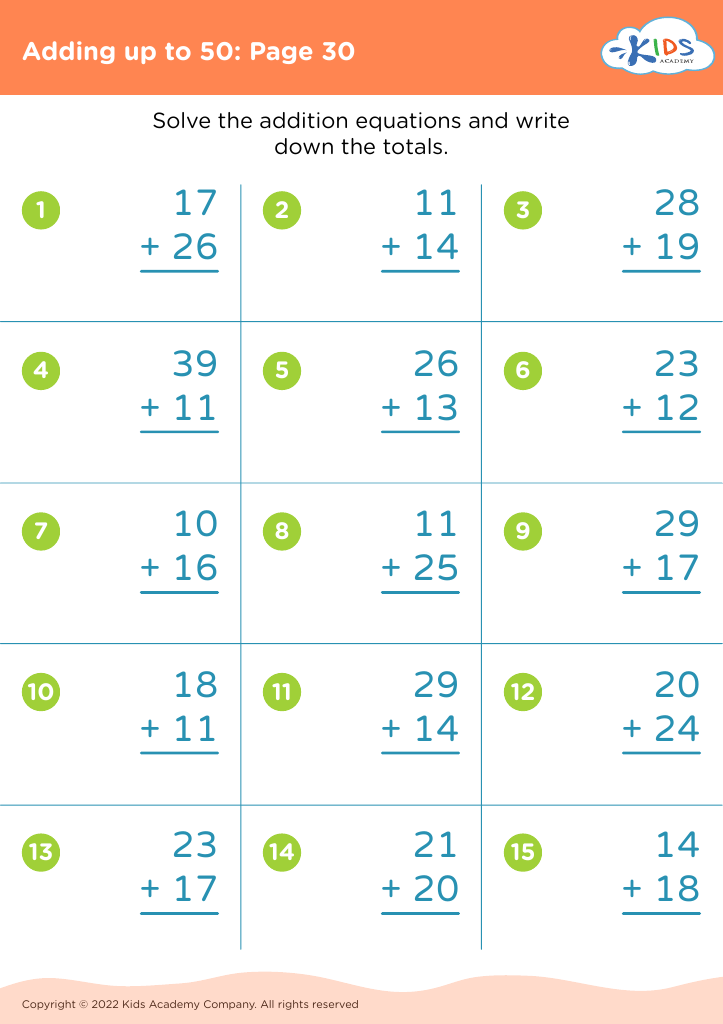
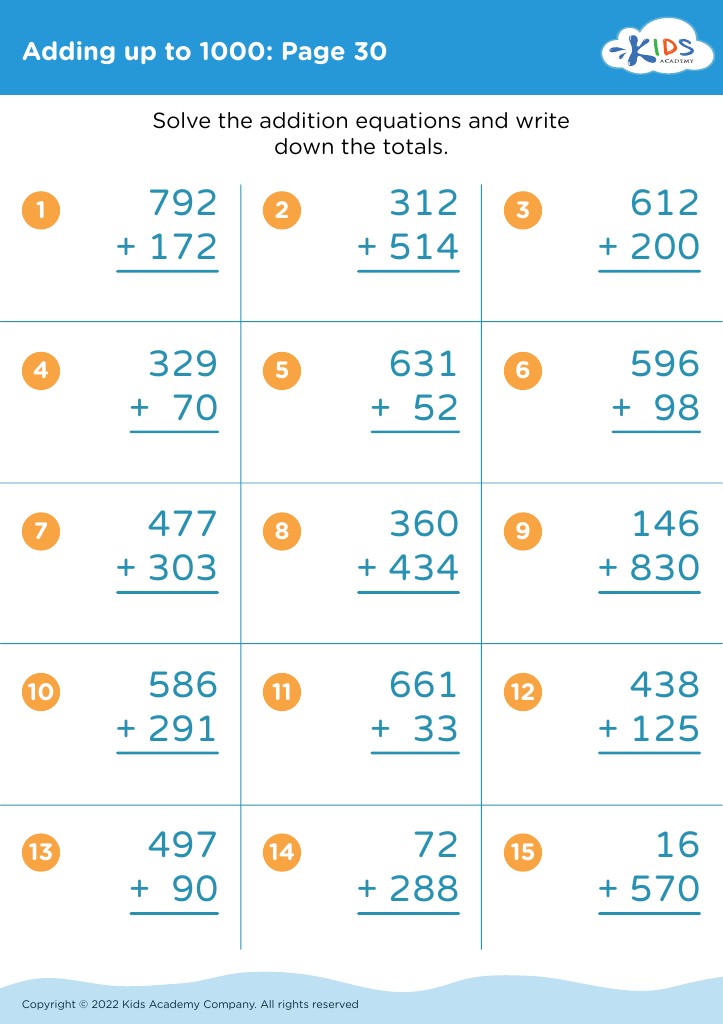
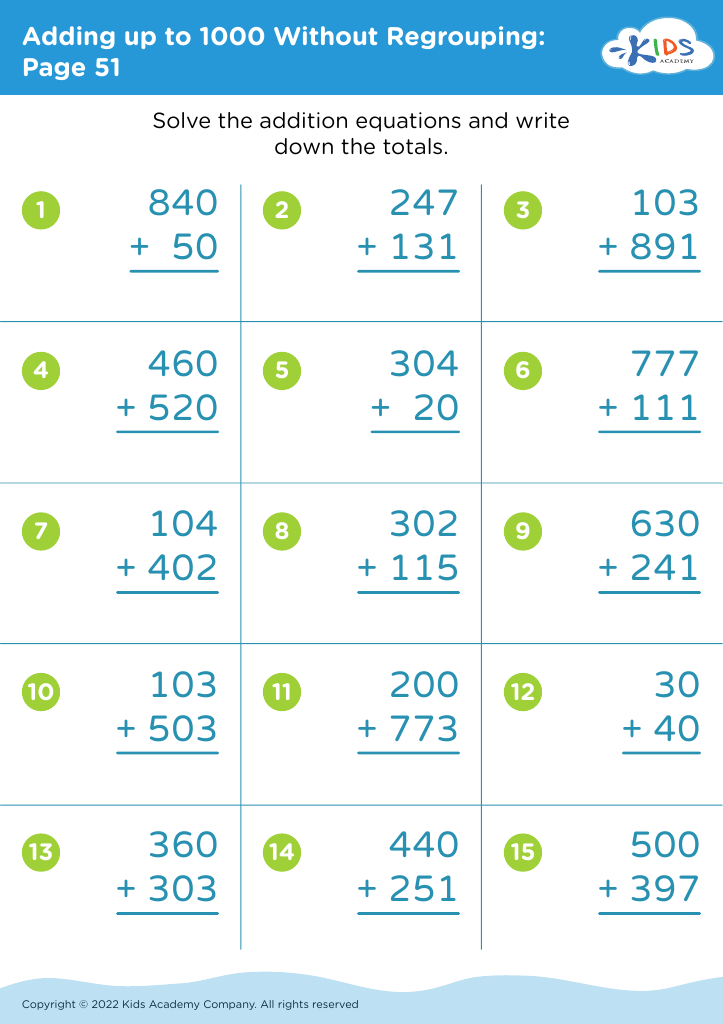
Enhance your child's subtraction skills with our engaging addition and subtraction worksheets designed for ages 4-8. These resources provide a fun and interactive way to practice essential mathematics concepts. Featuring colorful illustrations and age-appropriate exercises, our worksheets help children develop confidence and proficiency in subtraction, transforming challenges into achievable tasks. Each worksheet focuses on a variety of skills, allowing young learners to grasp subtraction concepts at their own pace. Perfect for home or classroom use, our materials ensure a comprehensive learning experience. Explore our collection today and support your child's journey towards mastering subtraction with joy!








Improving subtraction skills in young children, especially those aged 4-8, is crucial for their overall mathematical development and critical thinking abilities. Mastering subtraction, alongside addition, provides a strong foundation for understanding more complex mathematical concepts later on. At this stage, children are developing essential cognitive skills, and learning to subtract supports their problem-solving abilities and logical reasoning.
Additionally, subtraction is a key operation used in everyday life, from sharing snacks to managing allowances and telling time. By fostering proficiency in subtraction, parents and teachers equip children with practical skills that enhance their confidence in real-world situations. Early math competencies are also linked to better academic performance, as children with strong numerical skills in early grades tend to excel in higher-level math later.
Furthermore, instruction in subtraction can be integrated with fun, engaging activities that stimulate interest and enthusiasm, allowing children to explore math in innovative ways. By focusing on improving these skills collaboratively, parents and teachers can create a supportive learning environment that solidifies students' understanding and makes math enjoyable. This foundation not only opens doors for future learning but also fosters a lifelong appreciation for mathematics.








