Logic development Addition & Subtraction Worksheets for Ages 4-8
3 filtered results
-
From - To
Unlock your child's potential with our engaging Logic Development Addition & Subtraction Worksheets, designed specifically for children aged 4-8. These interactive worksheets blend fun and learning, helping young learners build essential math skills through logical reasoning. Each activity focuses on fostering critical thinking as children navigate addition and subtraction concepts in a playful manner. Perfect for classroom settings or at-home practice, our worksheets encourage problem-solving and enhance cognitive abilities while keeping children entertained. Start your child's math journey today and watch their confidence soar as they master fundamental math concepts with creative logic challenges!
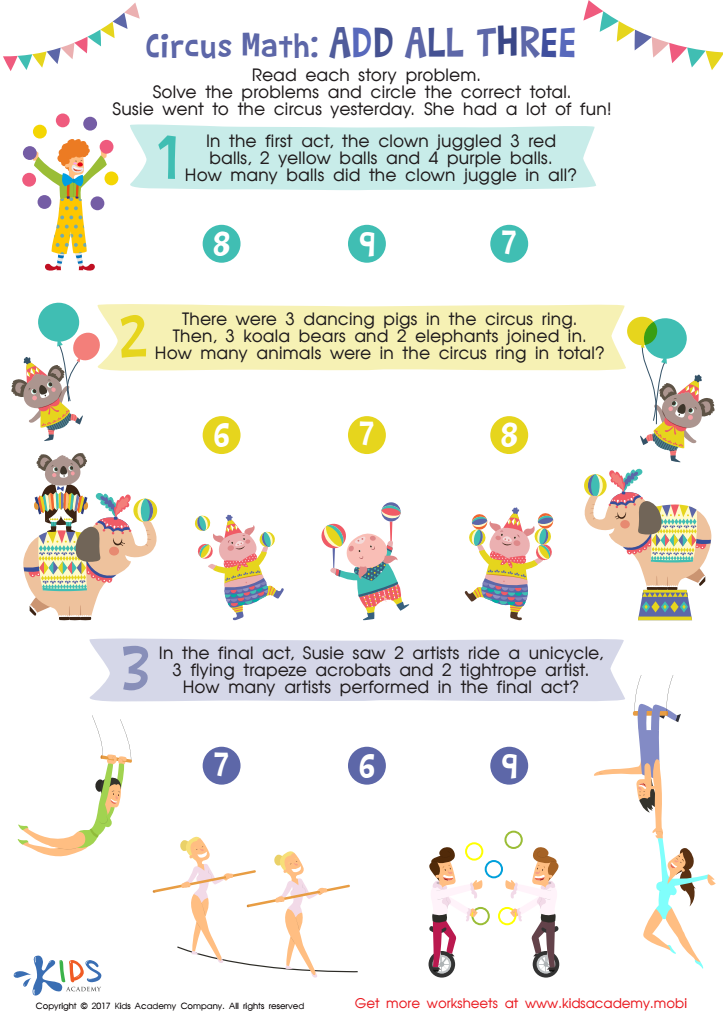
Circus Math Printable
 Assign to My Students
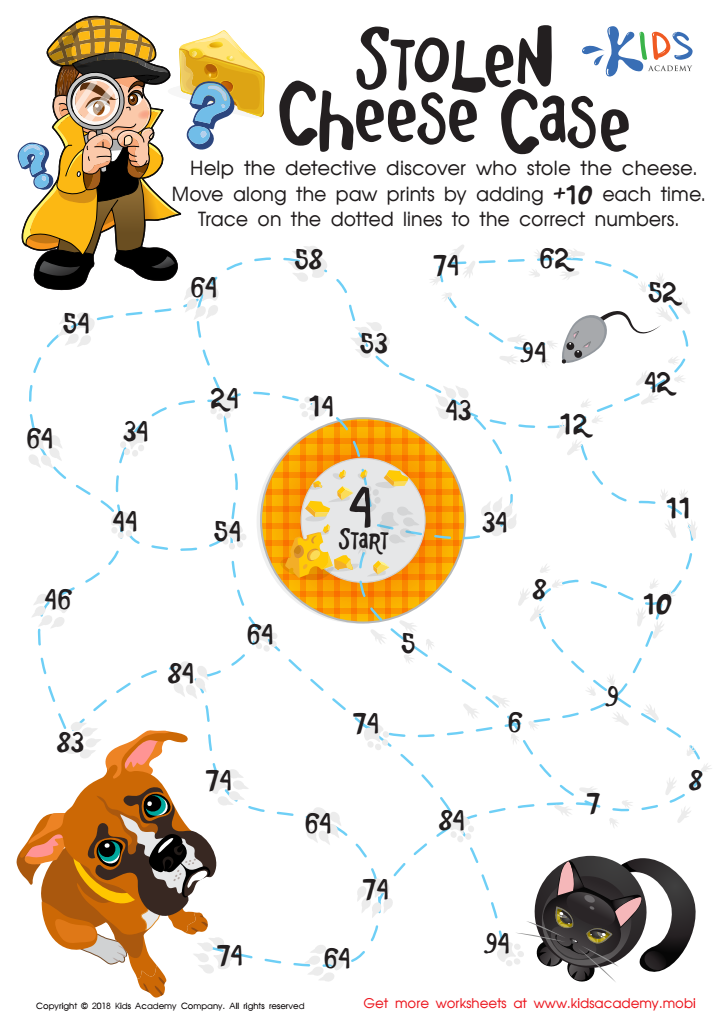
Stolen Cheese Case Maze Worksheet
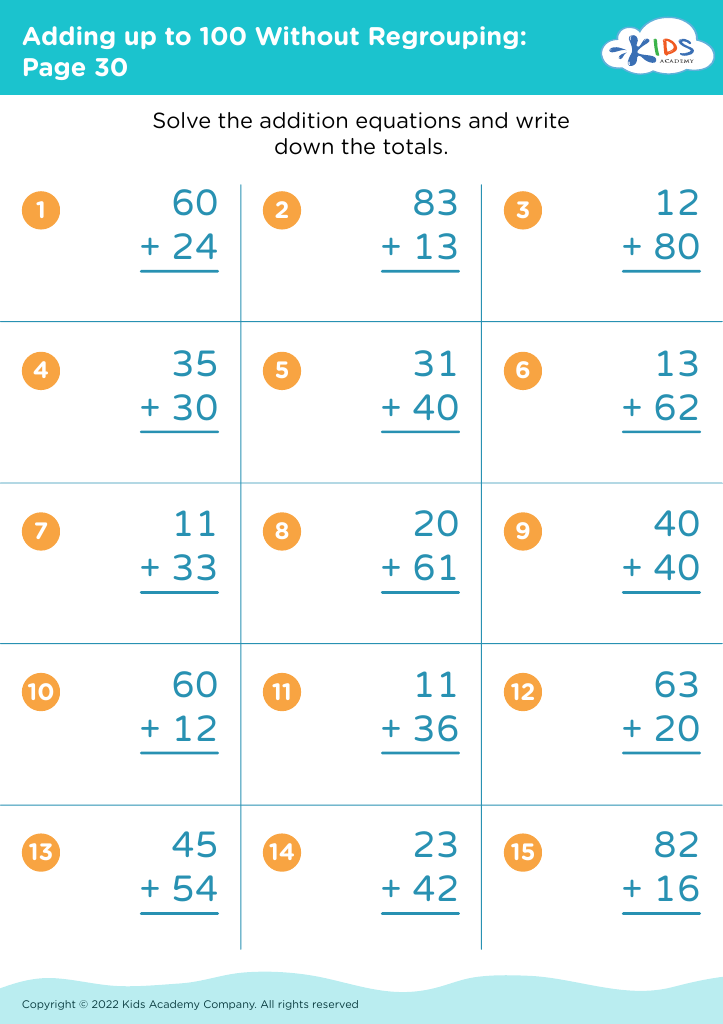








Parents and teachers should prioritize logic development in addition and subtraction for children ages 4-8 because these foundational skills are crucial for academic success and critical thinking. Early exposure to mathematical concepts not only builds number sense but also enhances problem-solving abilities that extend beyond math. This stage of cognitive development is vital; children begin to think more abstractly, allowing them to understand relationships between numbers and operations.
By fostering skills in addition and subtraction, parents and teachers equip children to tackle increasingly complex mathematical concepts in later grades, including multiplication, division, and fractions. Mastery in these areas also supports logical reasoning and analytical skills essential in everyday life, from budgeting to measuring.
Moreover, developing a solid grasp of math at a young age boosts confidence, reduces anxiety surrounding learning, and encourages a growth mindset. Engaging children in fun and interactive ways—such as games and storytelling—can make learning enjoyable and enhance retention of concepts. Ultimately, by investing time and resources in strengthening these foundational math skills early on, parents and teachers contribute to a child's overall intellectual and emotional development, setting the stage for future academic endeavors and lifelong problem-solving capabilities.








