Numeracy development Addition & Subtraction Worksheets for Ages 4-8
3 filtered results
-
From - To
Boost your child's early numeracy skills with our engaging Addition & Subtraction Worksheets, specifically designed for ages 4-8. These interactive resources aim to nurture a strong foundation in basic math concepts through fun and age-appropriate activities. From simple equations to engaging visual aids, each worksheet enhances problem-solving abilities, promotes number recognition, and fosters critical thinking. Our expertly crafted exercises cater to varying levels of proficiency, ensuring every child feels confident and motivated as they practice. Ideal for classroom use or at-home learning, these worksheets provide a perfect pathway for developing essential math skills while keeping learning enjoyable!
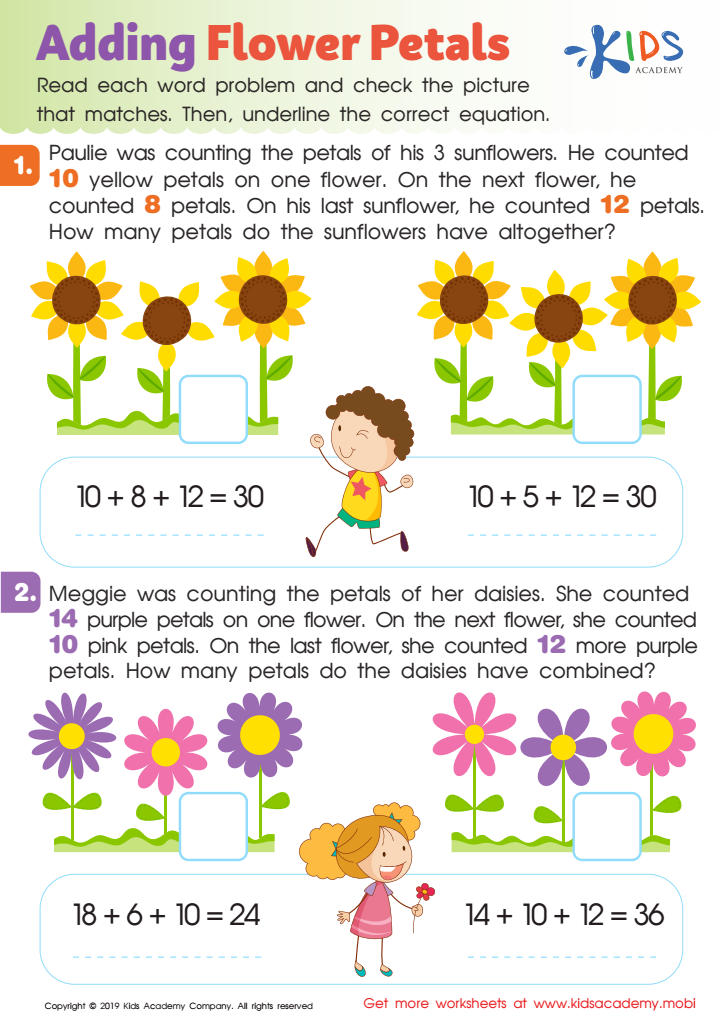
Adding Flower Petals Worksheet
 Assign to My Students
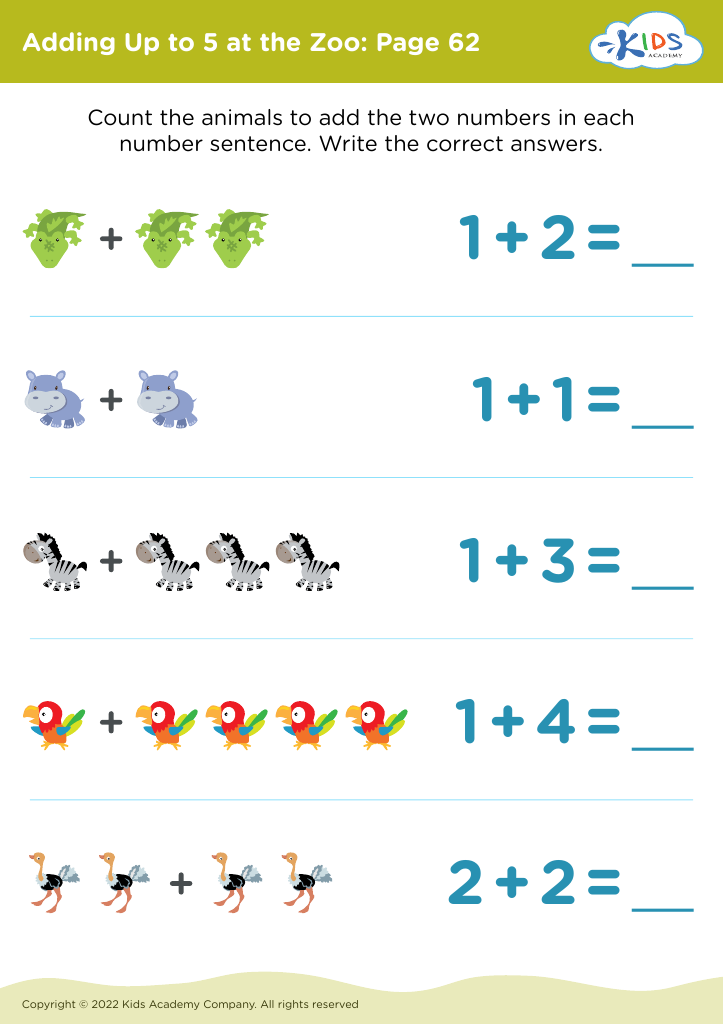
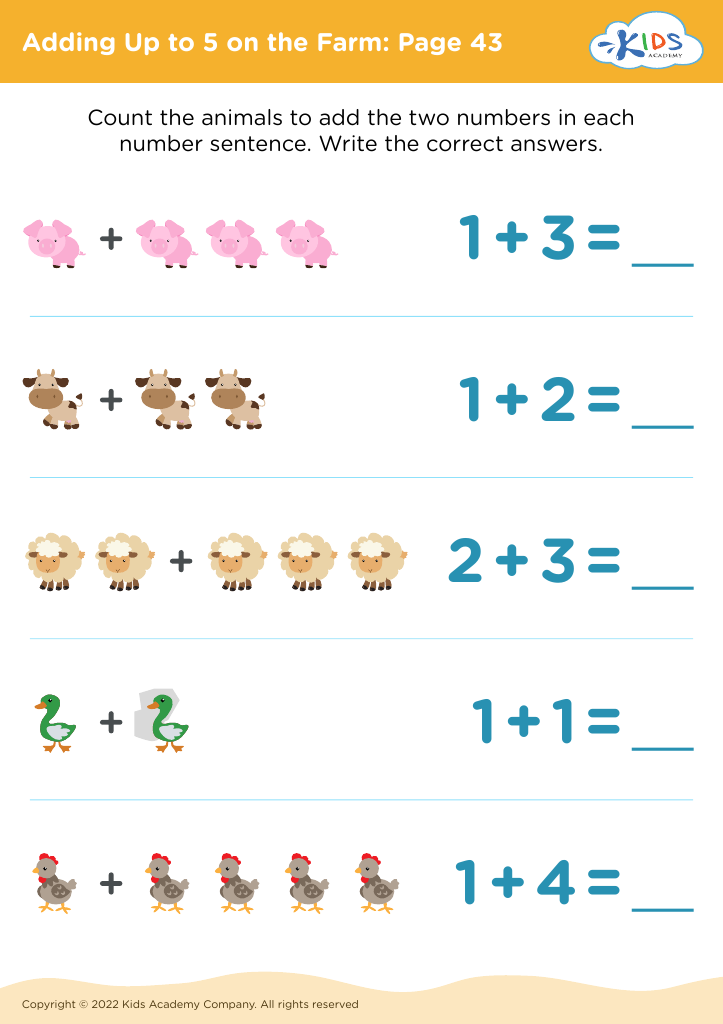








Numeracy development, particularly in addition and subtraction, is crucial for children aged 4 to 8 as it lays the foundation for their mathematical understanding and problem-solving skills. During these formative years, children are transitioning from concrete counting to more abstract mathematical concepts. Proficient in addition and subtraction, they gain essential skills for everyday situations, such as managing money, measuring, and distinguishing quantities.
Parents and teachers play a vital role in this development by creating a supportive environment that fosters a positive attitude towards math. Engaging in hands-on activities, such as counting objects around the house or using fun games that incorporate math, can help make learning enjoyable and relevant. Furthermore, early mastery of these skills contributes to academic success in later grades, where larger mathematical concepts build on these basics.
Additionally, strong numeracy skills promote critical thinking, improve cognitive abilities, and enhance reasoning skills—traits that benefit children beyond mathematics. By being actively involved in their child’s numeracy journey, parents and teachers can not only help build a strong mathematical foundation but also instill confidence and encourage a lifelong appreciation for learning in their young learners.








