Practice writing numbers Addition & Subtraction Worksheets for Ages 4-8
6 filtered results
-
From - To
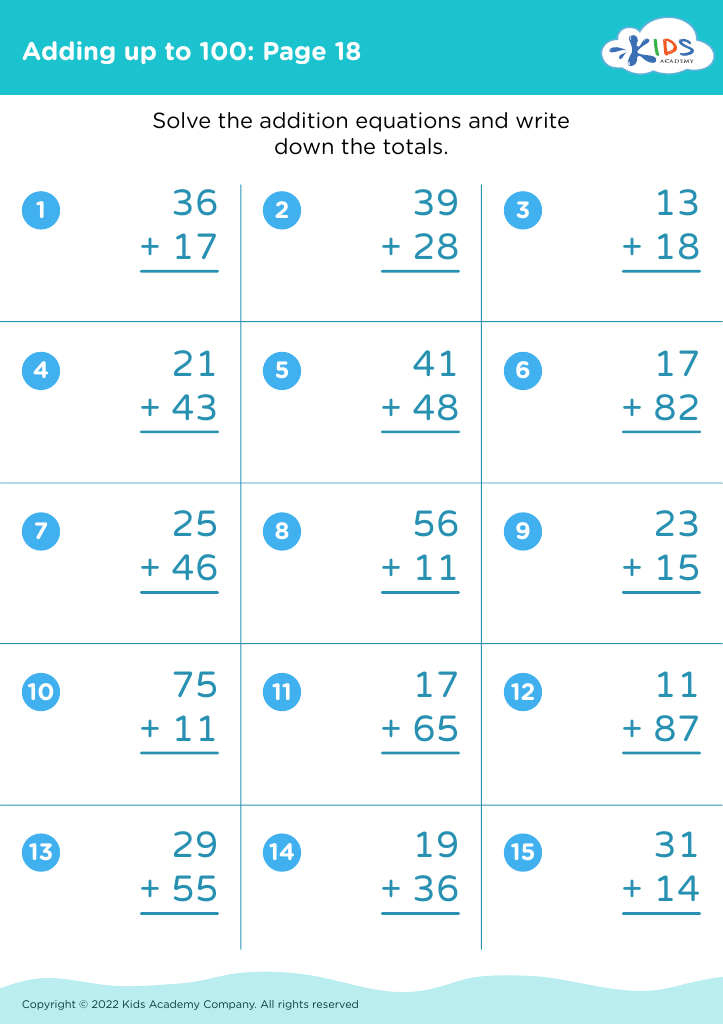
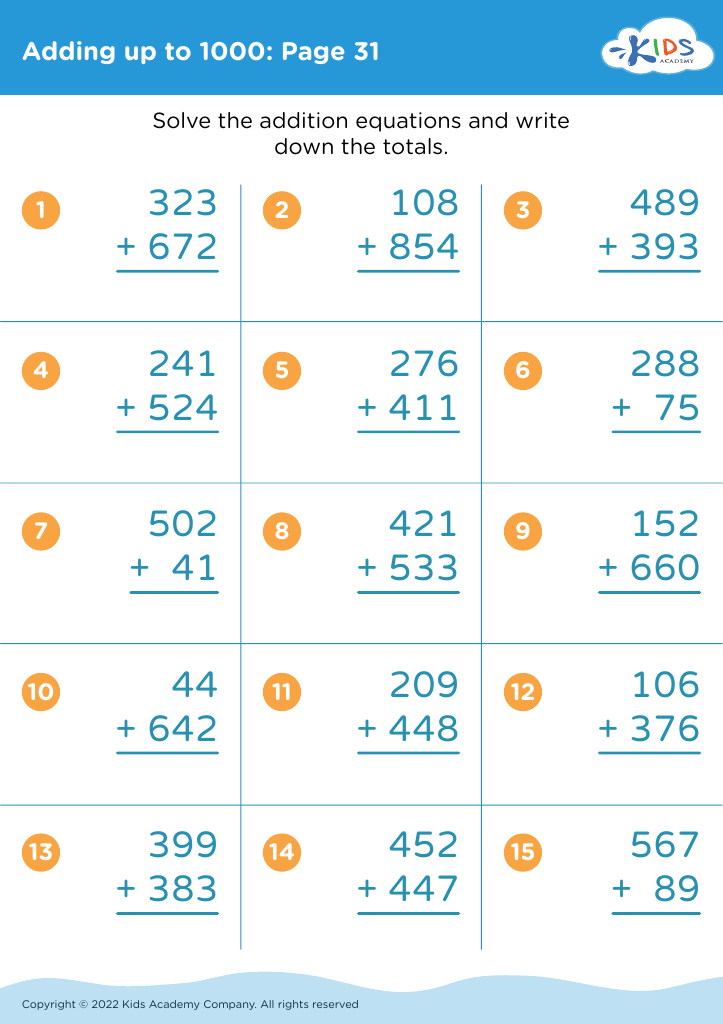
Our "Practice Writing Numbers Addition & Subtraction Worksheets for Ages 4-8" provide engaging activities to help children develop essential math skills. Designed specifically for young learners, these worksheets focus on addition and subtraction while reinforcing number writing practice. Each page offers a variety of exercises that encourage mastery of basic arithmetic and number formation. Kids will enjoy the fun illustrations and clear instructions, making learning both effective and enjoyable. Perfect for parents and educators, these printables ensure kids build a solid math foundation and improve their handwriting in a playful and supportive environment. Start their journey to math success today!
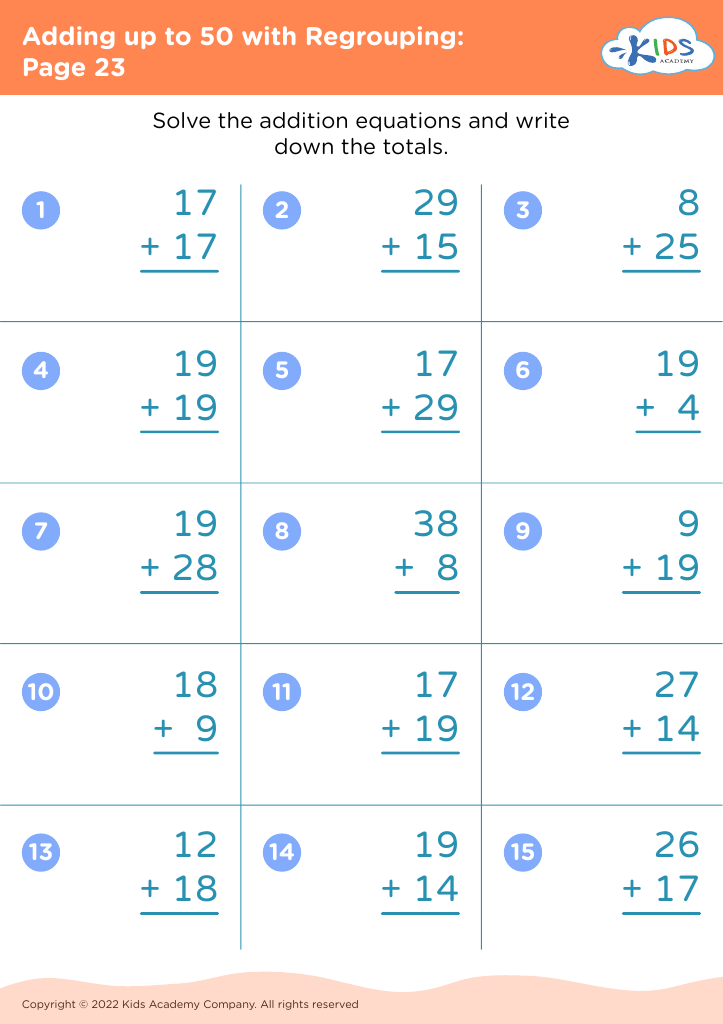
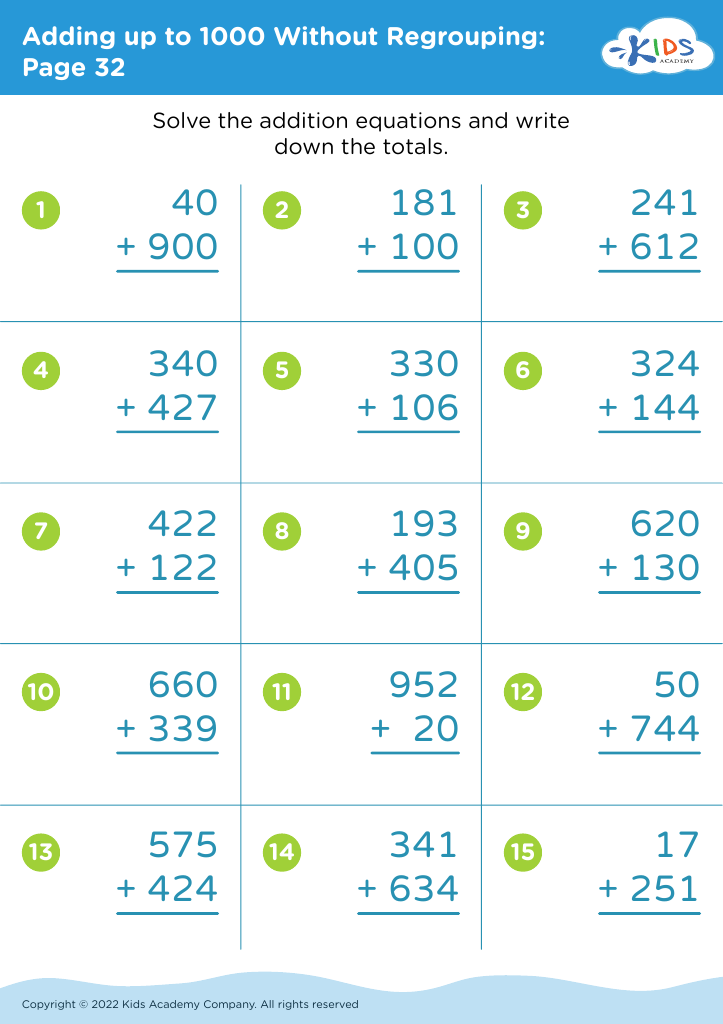
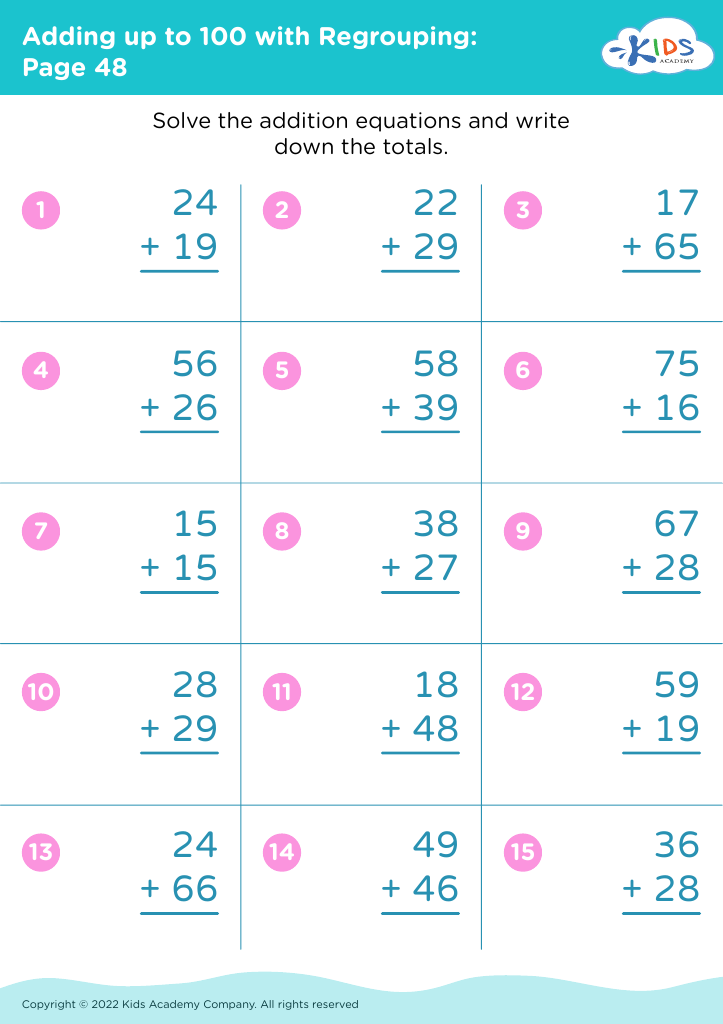
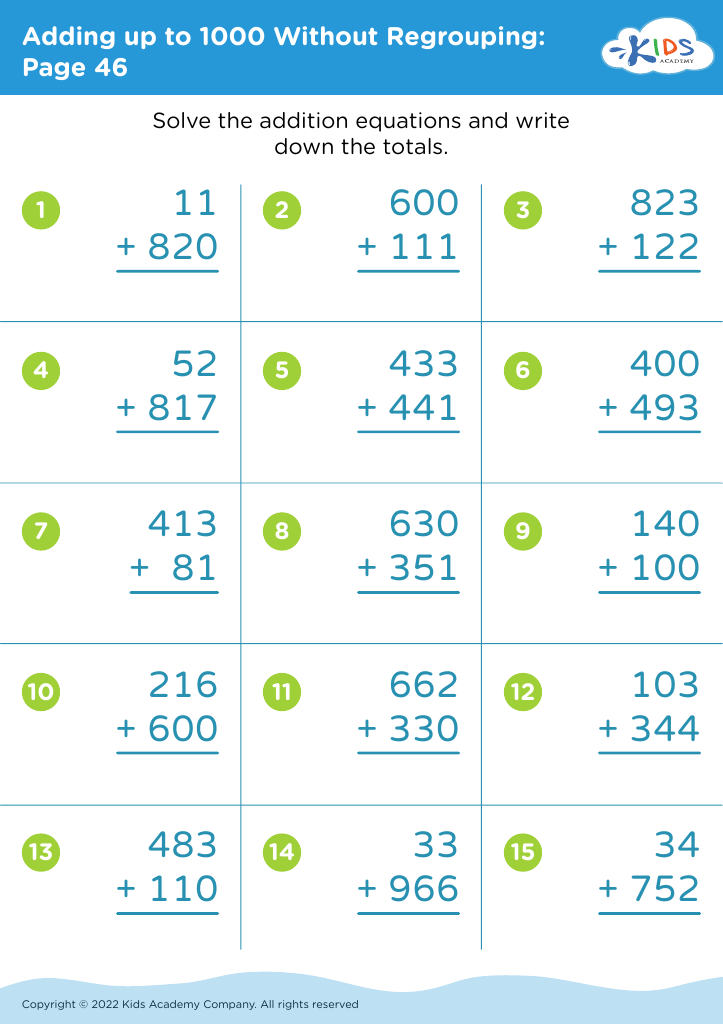








Parents and teachers should prioritize practicing writing numbers and understanding basic addition and subtraction for children aged 4-8 because these skills form the foundation of mathematical proficiency and overall cognitive development. First, writing numbers correctly ensures that children can communicate mathematical ideas clearly and avoid misunderstandings later in their education. This practice enhances fine motor skills and hand-eye coordination, preparing them for more complex tasks.
Moreover, familiarity with addition and subtraction at an early age is crucial as these are the building blocks of mathematics. Mastering these operations paves the way for more advanced mathematical concepts such as multiplication, division, and problem-solving. Applying these skills in everyday situations helps children understand the practical value of mathematics, nurturing a positive attitude towards the subject.
Additionally, early competency in math has been linked to better academic performance overall. It boosts a child’s confidence and encourages a growth mindset, fostering a love for learning. Cognitive skills such as logical thinking, pattern recognition, and decision-making are also sharpened through early math practice.
In short, focusing on these foundational skills for ages 4-8 sets the stage for future academic success and equips children with vital problem-solving tools that will benefit them throughout their lives.








