Filters

34 filtered results

Clear all filters
Favorites
With answer key
Interactive

34 filtered results

Difficulty Level

Grade


Discover our engaging Shape Recognition Addition and Subtraction Worksheets tailored for children ages 4 to 8! These thoughtfully designed resources combine the fun of exploring shapes with essential math skills. Our worksheets help young learners identify, match, and incorporate shapes into their addition and subtraction practices. With vibrant illustrations and age-appropriate challenges, children will build confidence in their mathematical abilities while enhancing their shape recognition. Perfect for parents and educators, our printable worksheets are great for in-class activities or at-home learning. Encourage your child's early math success today with our interactive and enjoyable worksheets! Start your math adventure now!
Check out this FREE Trial Lesson on Addition & Subtraction for age 4-8!

Sorting Objects into 3 Categories

Favorites
With answer key
Interactive
  • 4-8
  • Shape Recognition
  • Addition & Subtraction
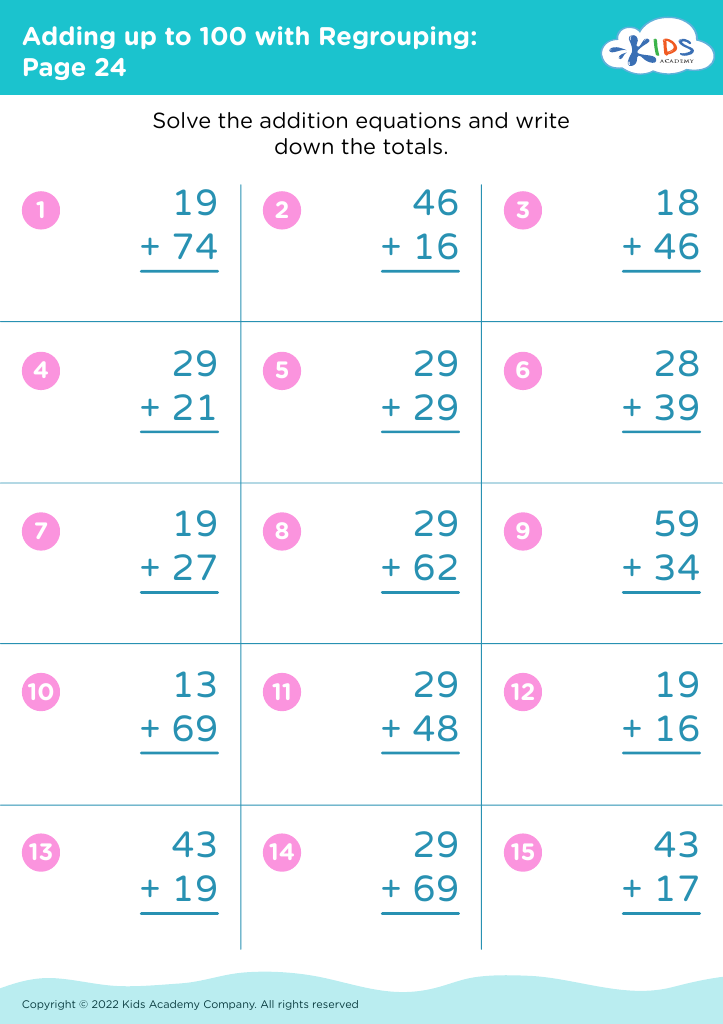
Adding up to 100 with Regrouping: Page 24
Worksheet
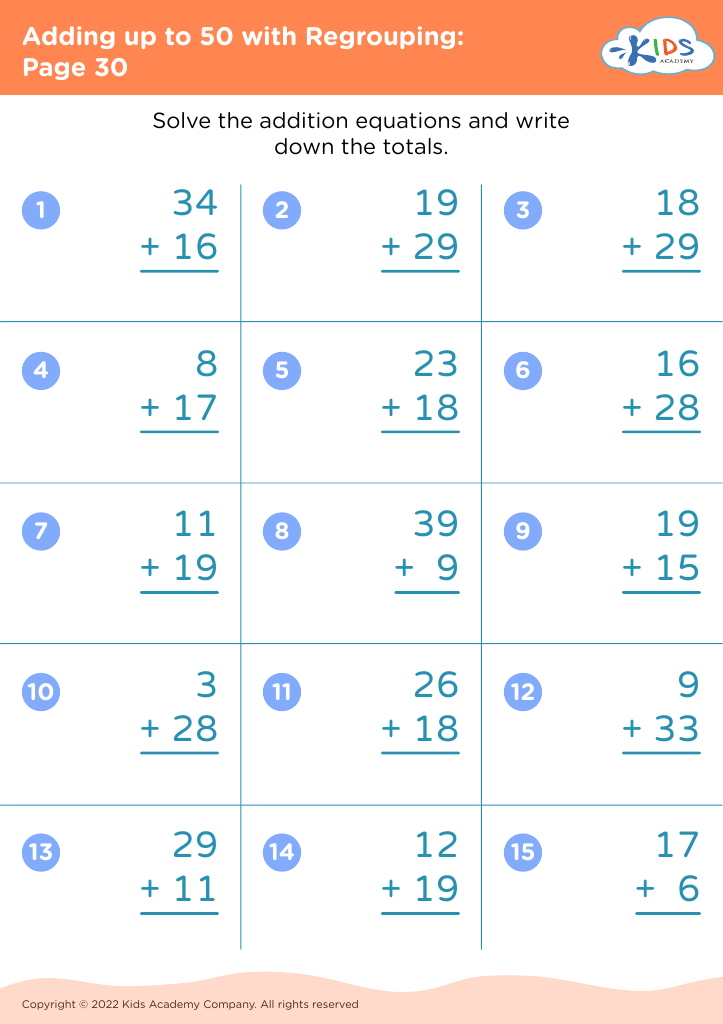
Adding up to 50 with Regrouping: Page 30
Worksheet
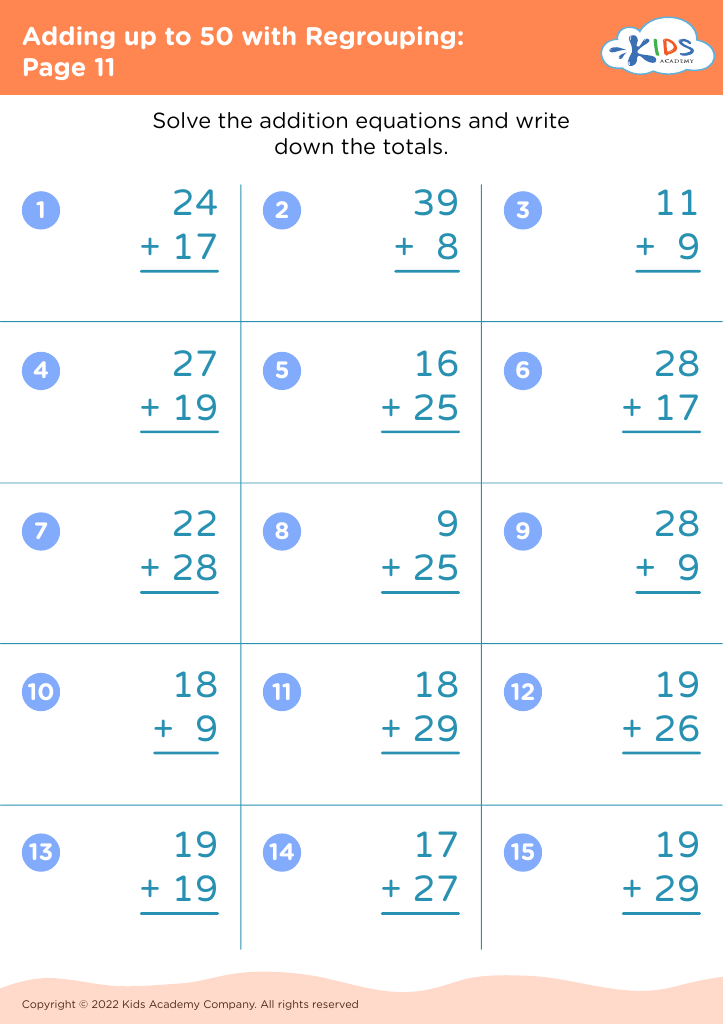
Adding up to 50 with Regrouping: Page 11
Worksheet
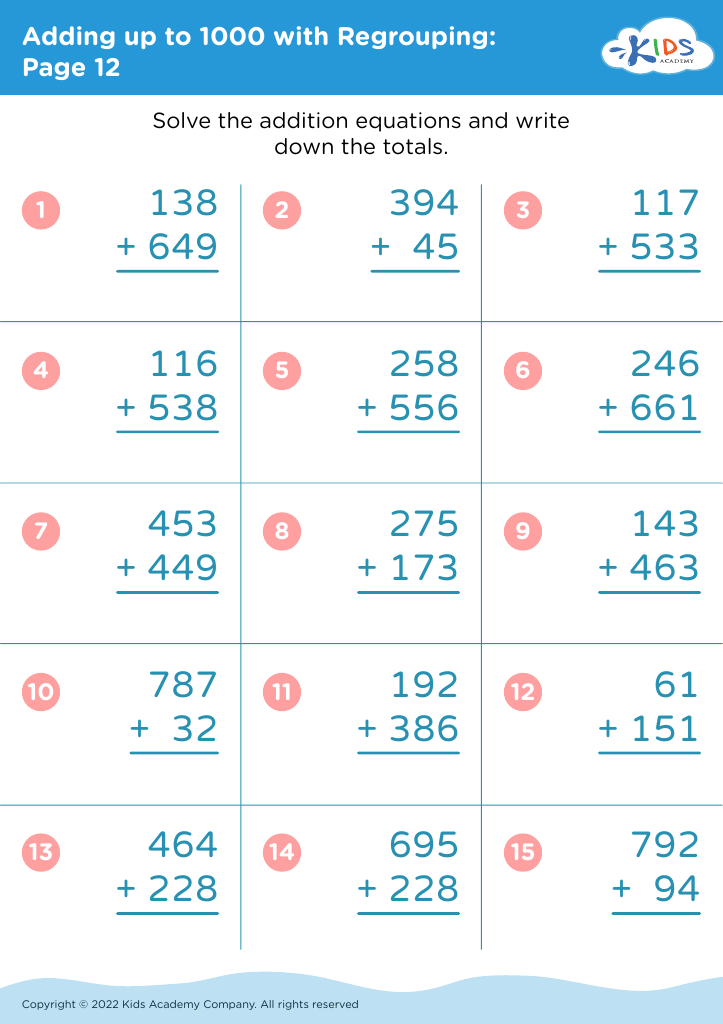
Adding up to 1000 with Regrouping: Page 12
Worksheet
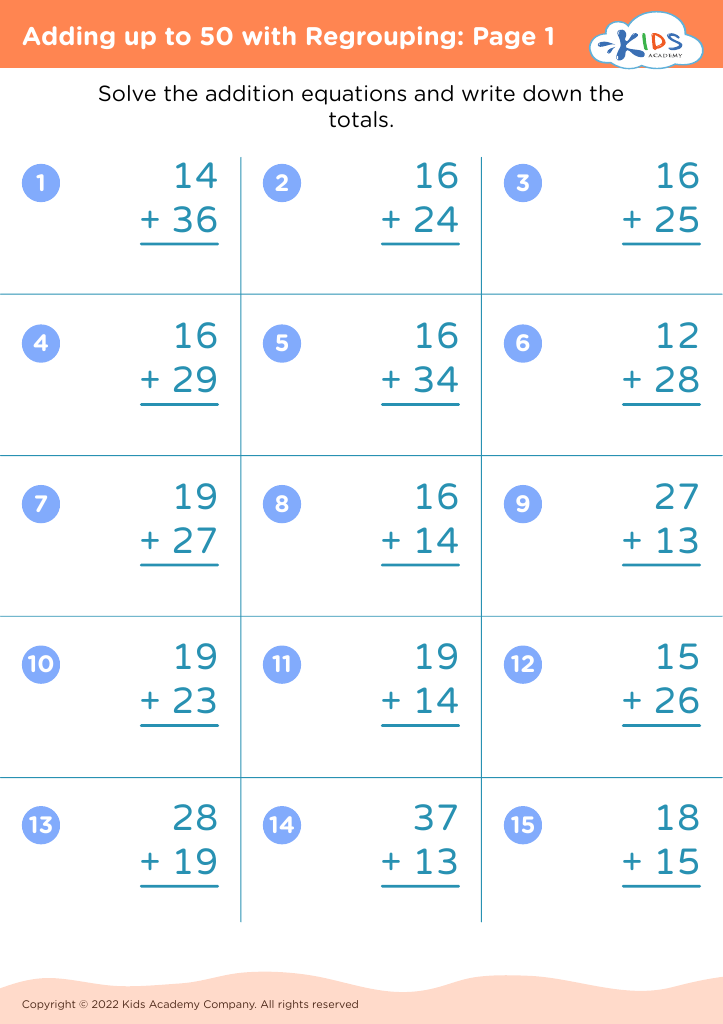
Adding up to 50 with Regrouping: Page 1
Worksheet
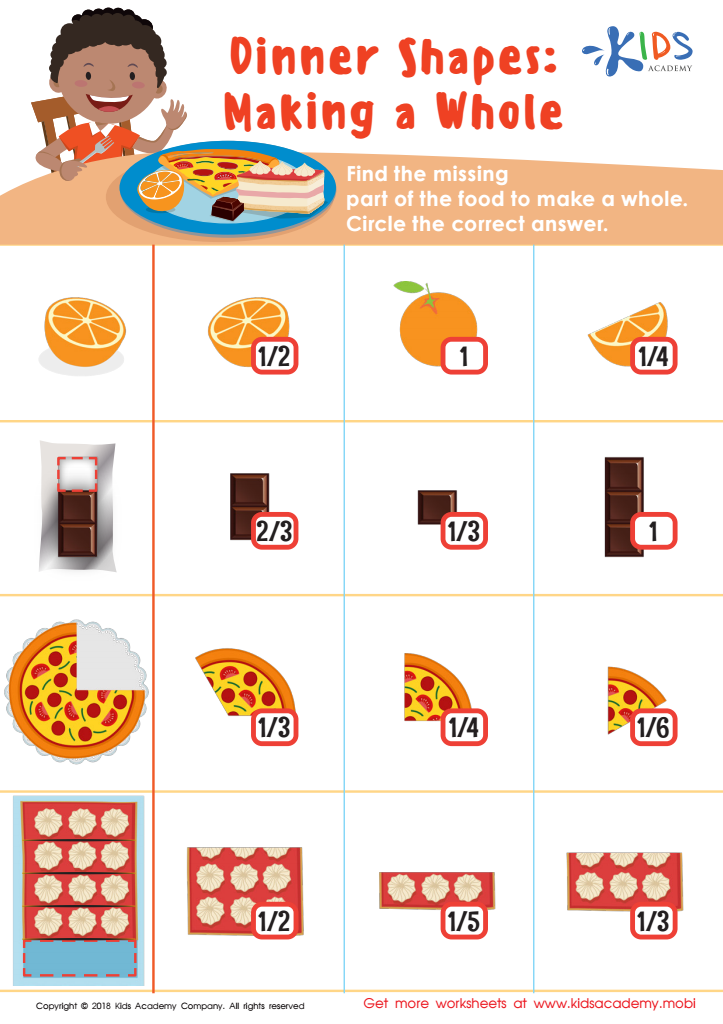
Dinner Shapes: Making a Whole Worksheet

Dinner Shapes: Making a Whole Worksheet

Using food and snacks to stimulate learning and interest in topics is a great strategy. Fractions can prove tricky, but this worksheet can help your child become an expert. Have them look for the missing parts of the food to make a whole, then circle the answer.
Dinner Shapes: Making a Whole Worksheet
Worksheet
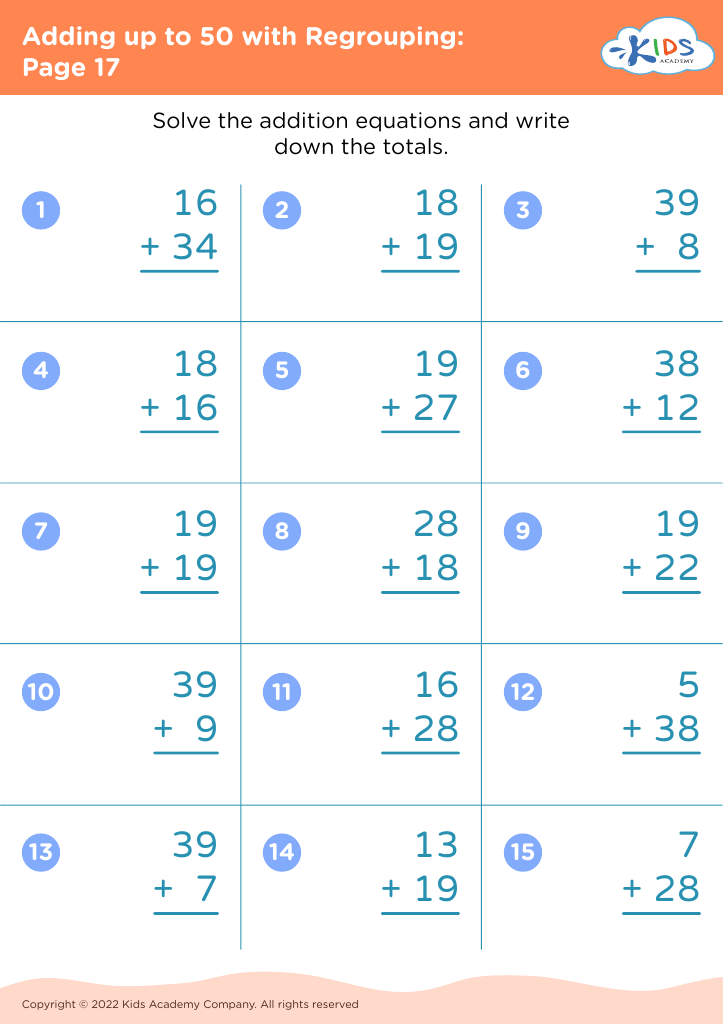
Adding up to 50 with Regrouping: Page 17
Worksheet
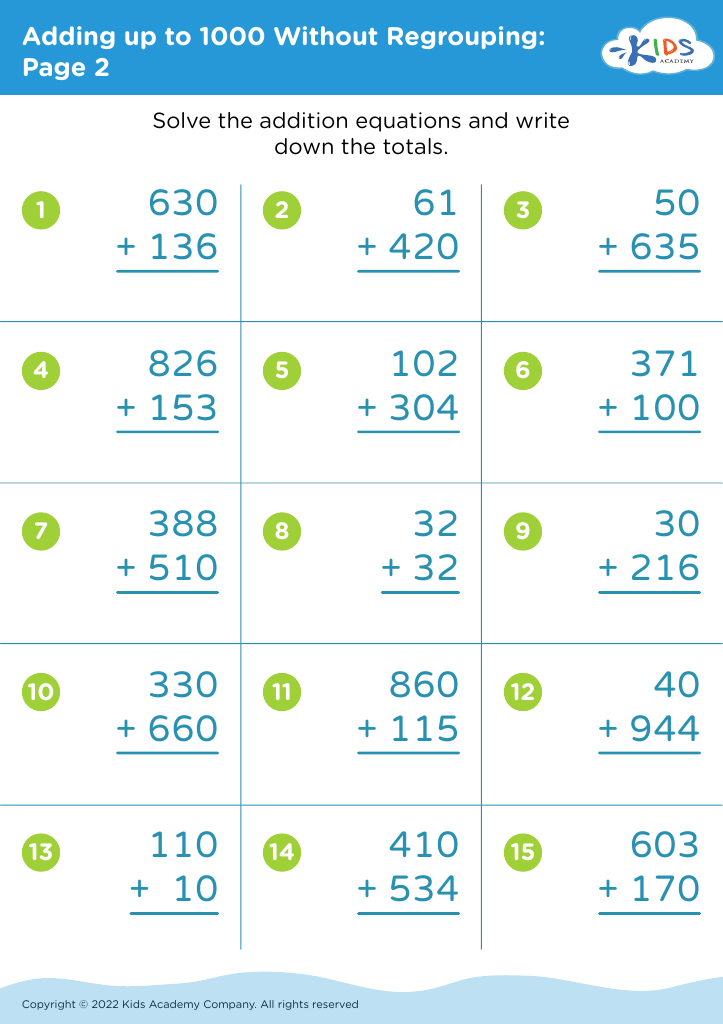
Adding up to 1000 Without Regrouping: Page 2
Worksheet
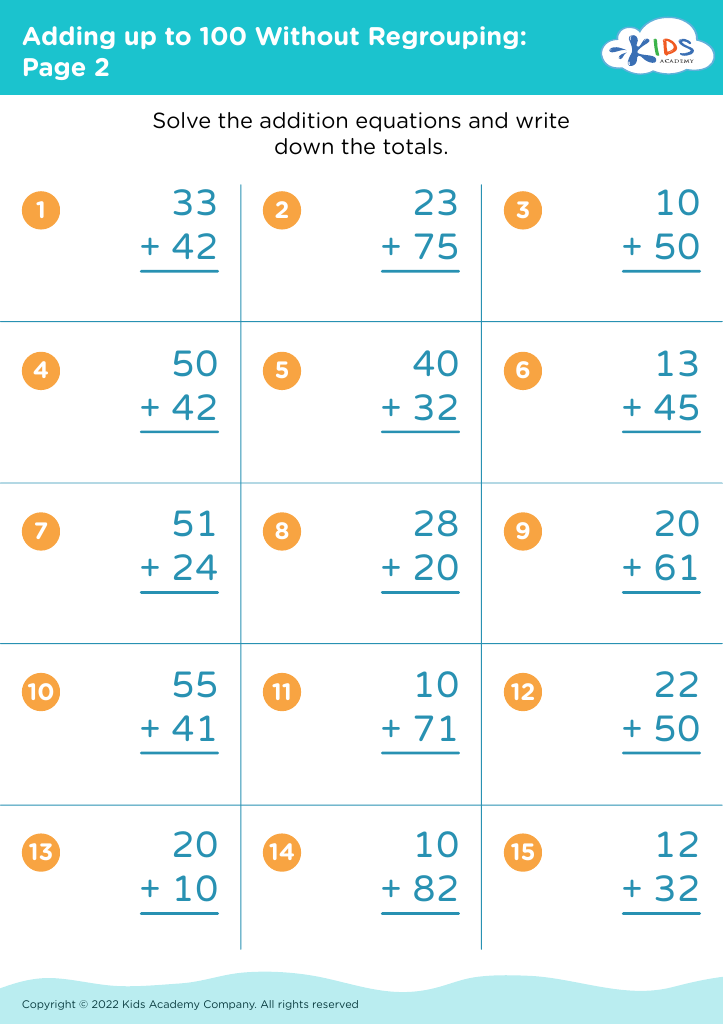
Adding up to 100 Without Regrouping: Page 2
Worksheet
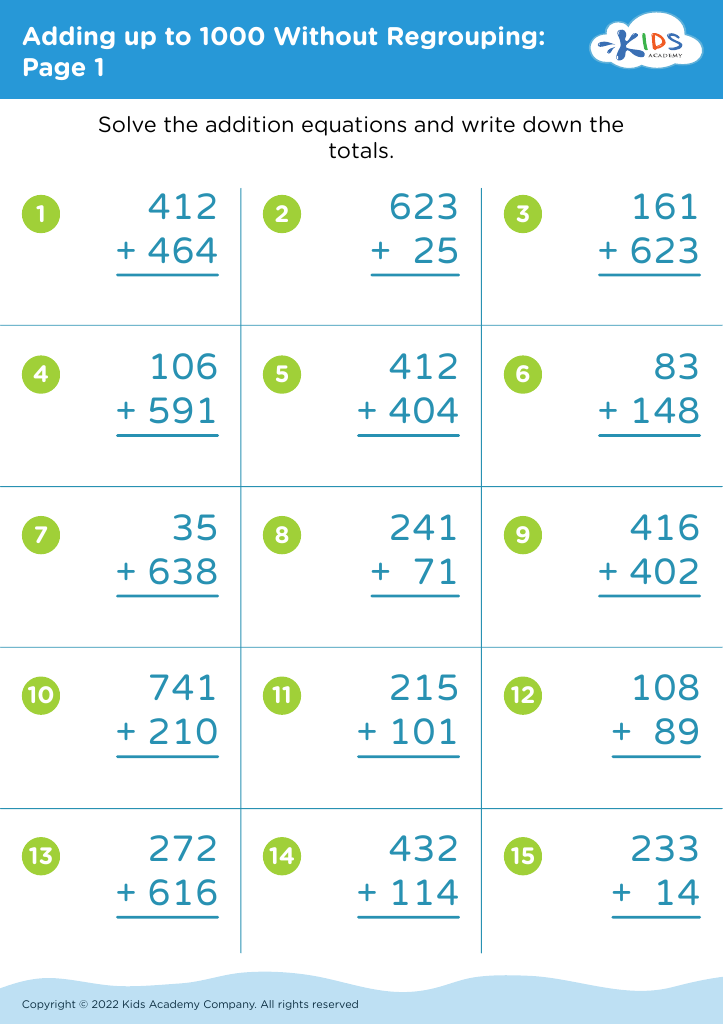
Adding up to 1000 Without Regrouping: Page 1
Worksheet
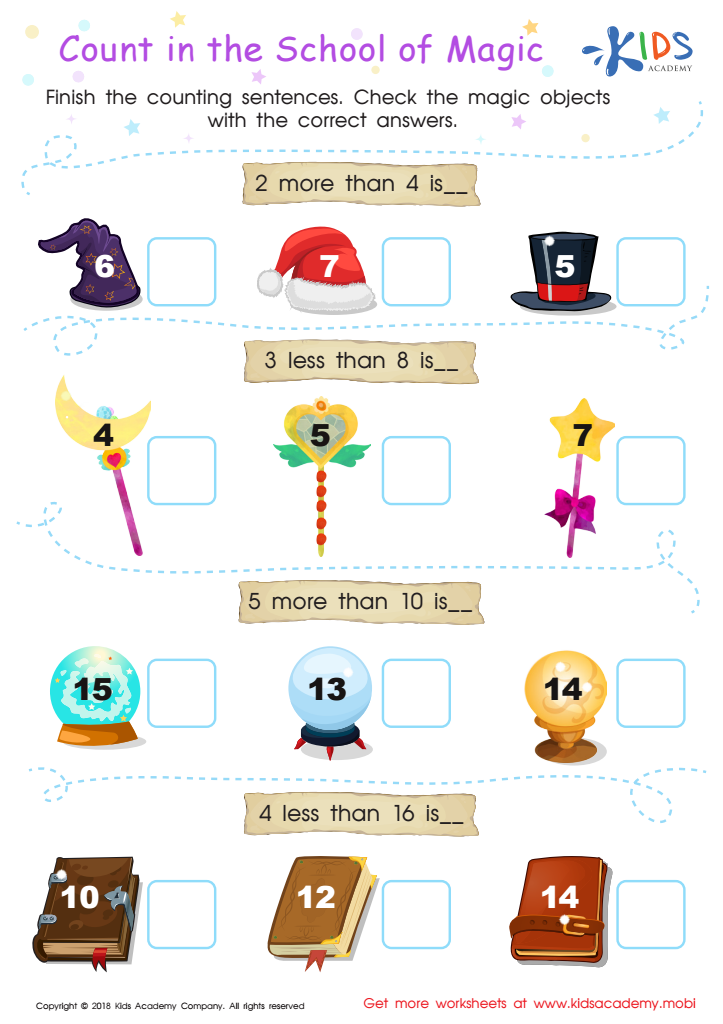
Count in the School of Magic Worksheet

Count in the School of Magic Worksheet

Your math learners can explore the School of Magic with this worksheet. They'll read equations with addition and subtraction numbers under 20, count back and forth to find the answer, then complete the counting sentences. Fun pictures and easy accuracy make it an enjoyable and successful learning experience.
Count in the School of Magic Worksheet
Worksheet
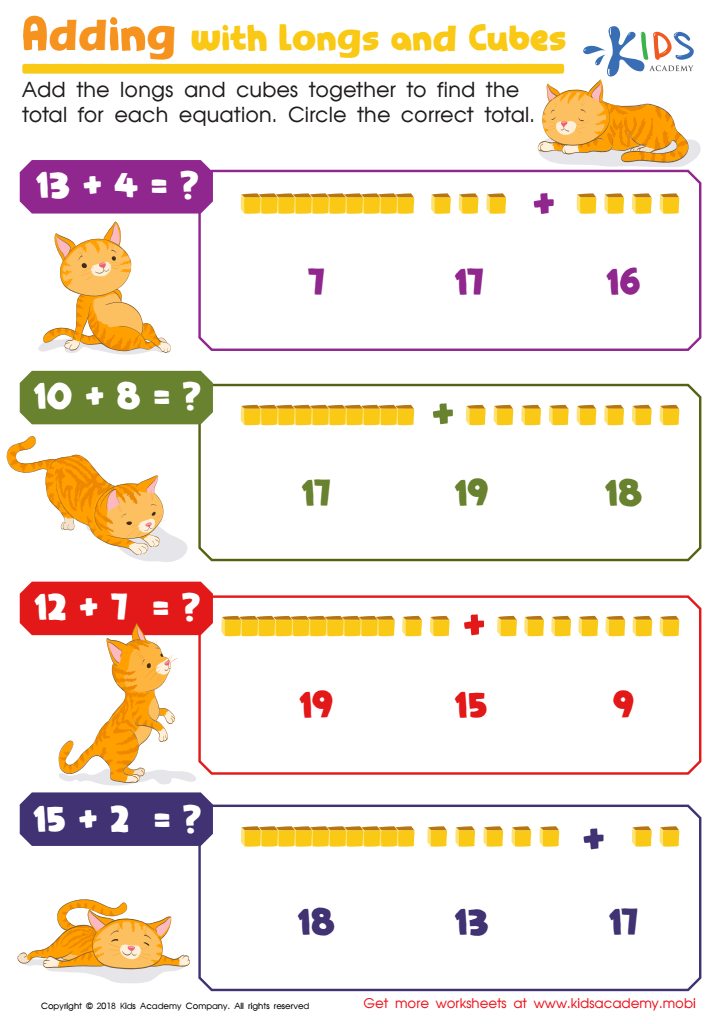
Adding With Longs and Cubes Worksheet
Adding With Longs and Cubes Worksheet
Math might not be your child's favorite, but they must master it to advance. If they're having difficulties or don't like it, use this worksheet to make it easier. Have them add longs and cubes together to find the total for each question, then circle the correct answer. This exercise can help make math experiences better.
Adding With Longs and Cubes Worksheet
Worksheet
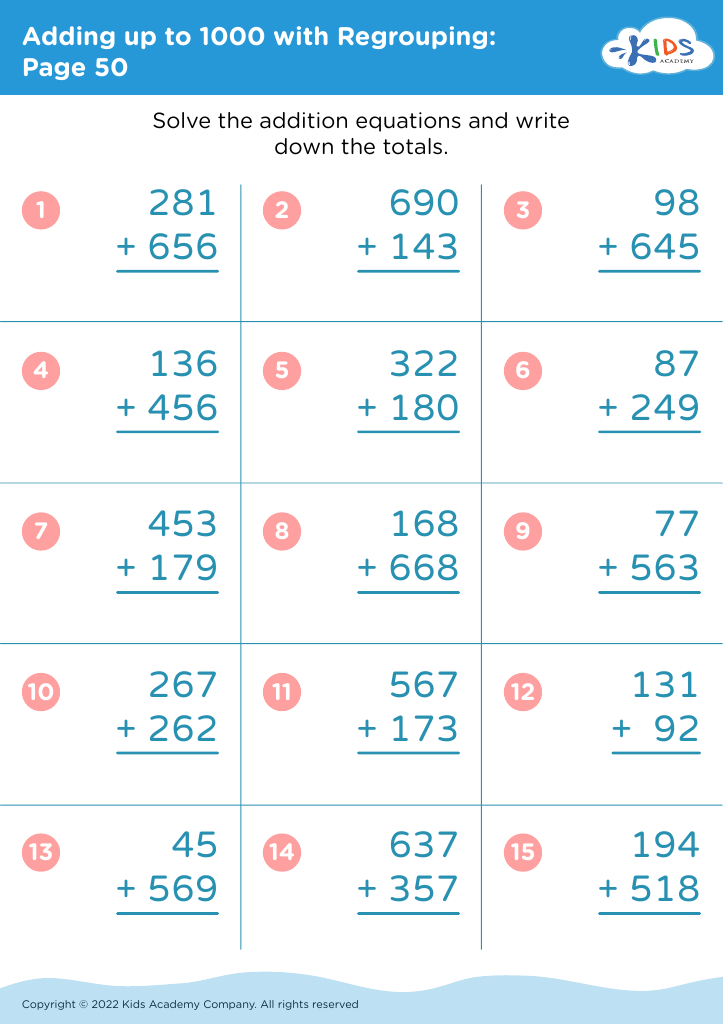
Adding up to 1000 with Regrouping: Page 50
Worksheet
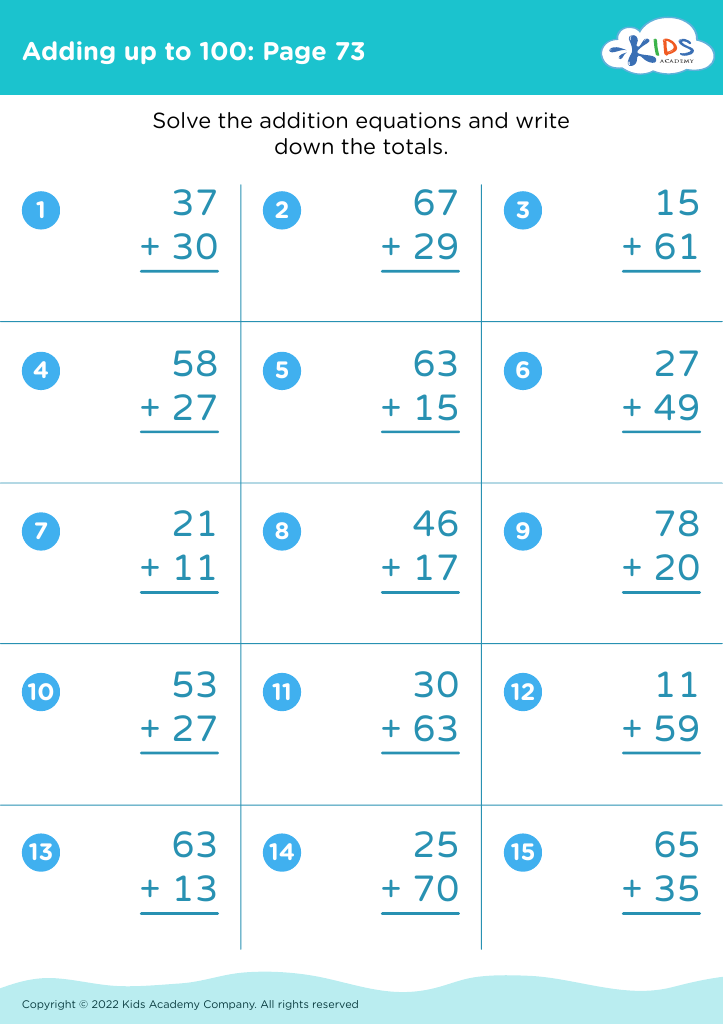
Adding up to 100: Page 73

Adding up to 100: Page 73

Adding up to 100: Page 73
Worksheet
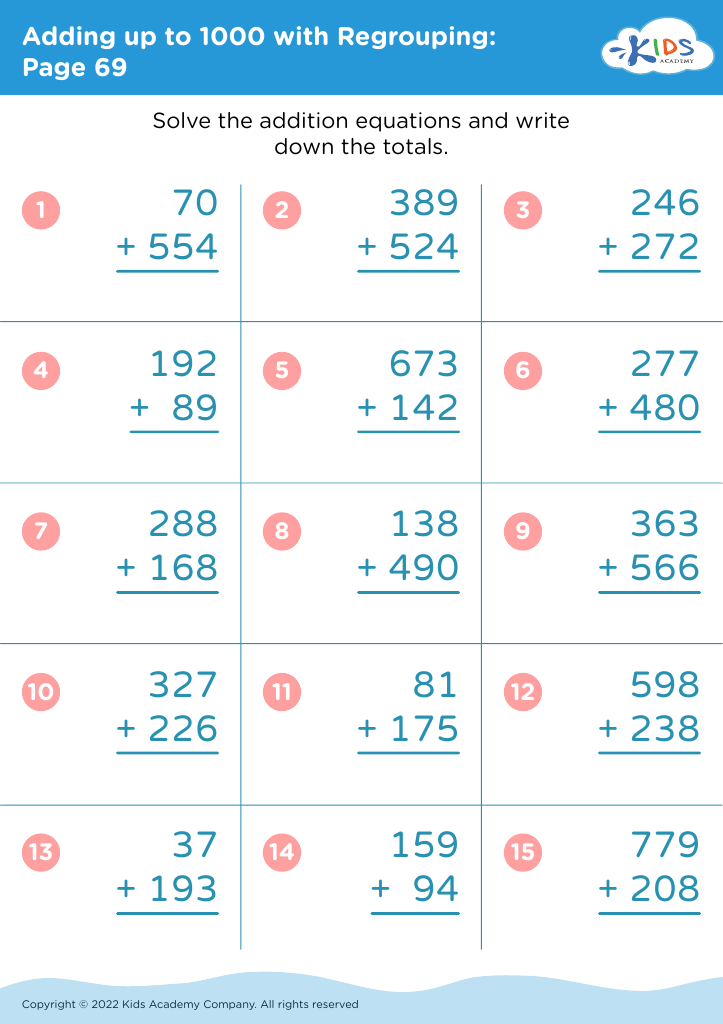
Adding up to 1000 with Regrouping: Page 69
Worksheet
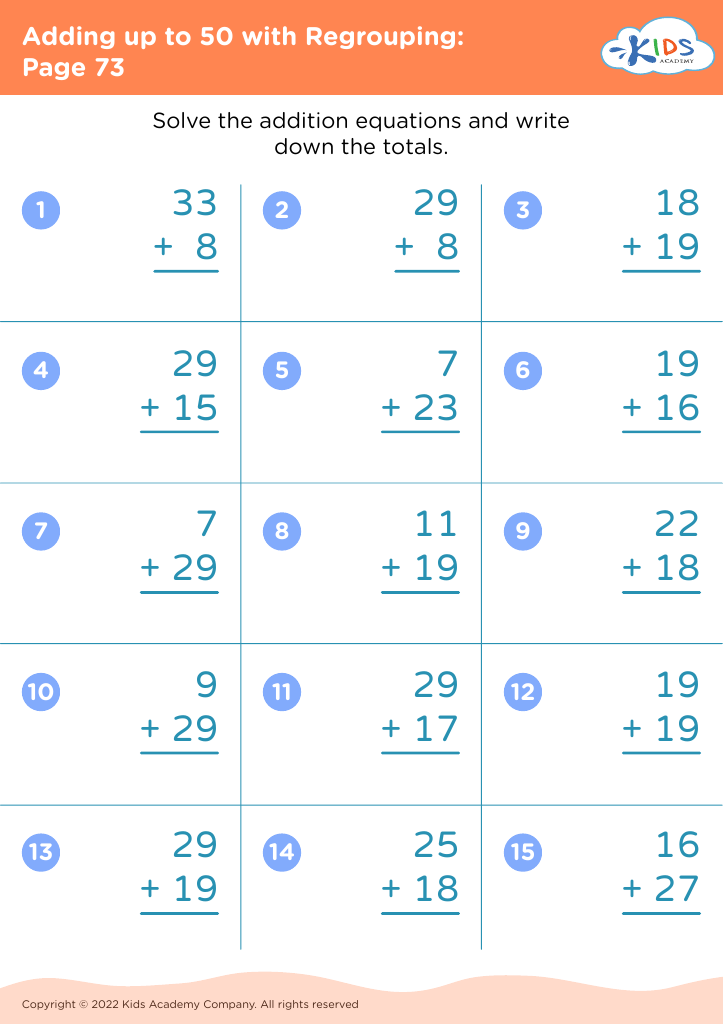
Adding up to 50 with Regrouping: Page 73
Worksheet
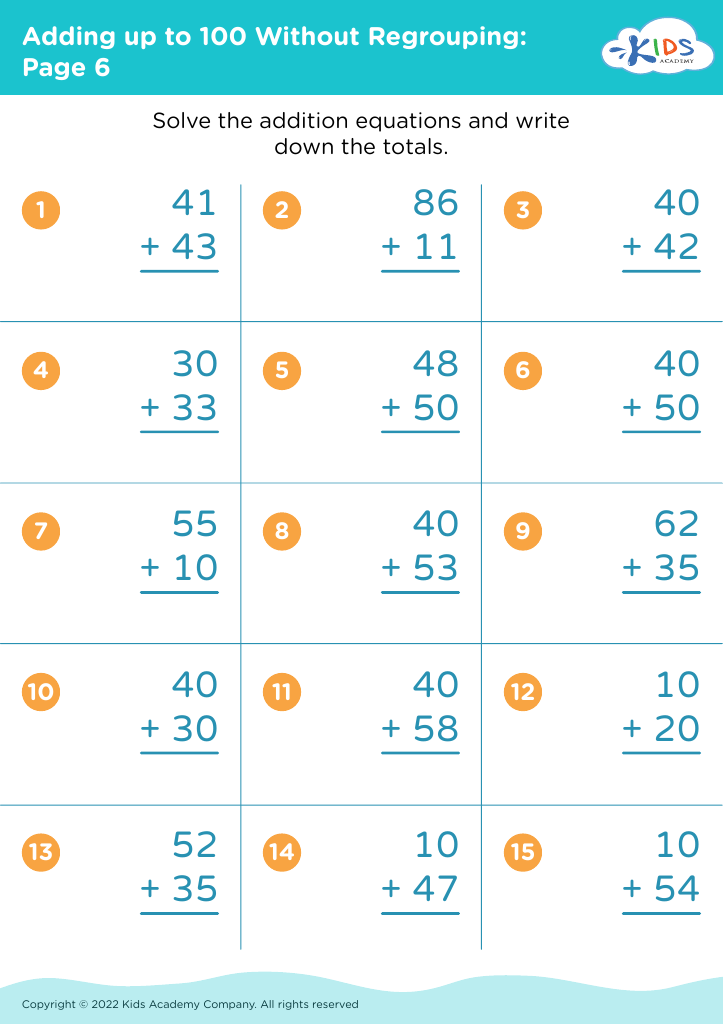
Adding up to 100 Without Regrouping: Page 6
Worksheet
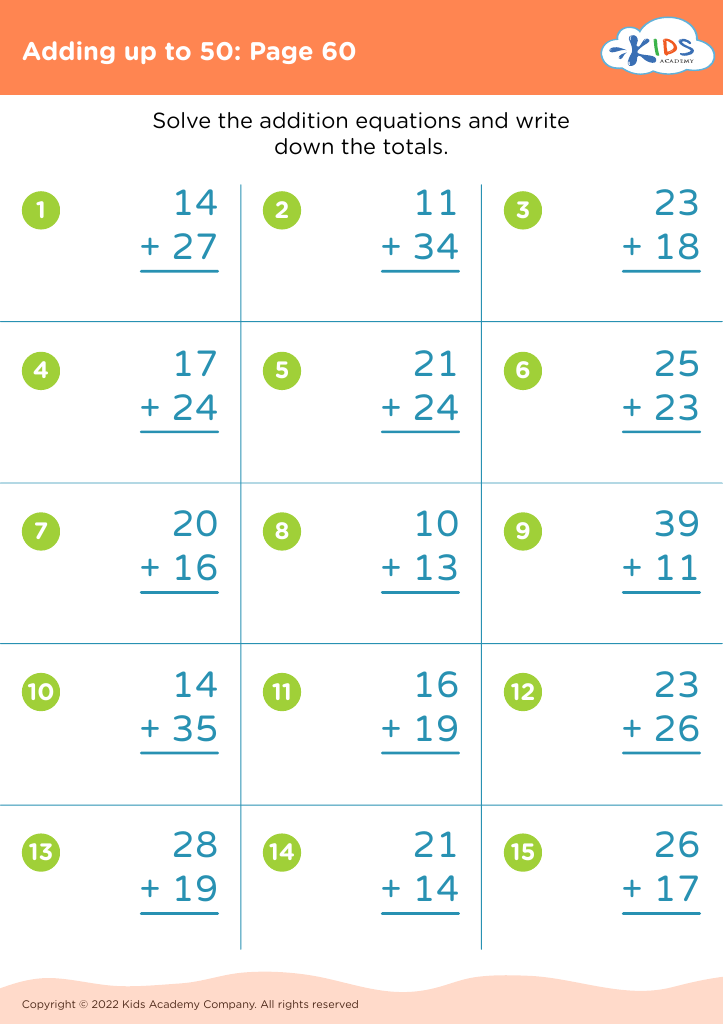
Adding up to 50: Page 60

Adding up to 50: Page 60

Adding up to 50: Page 60
Worksheet
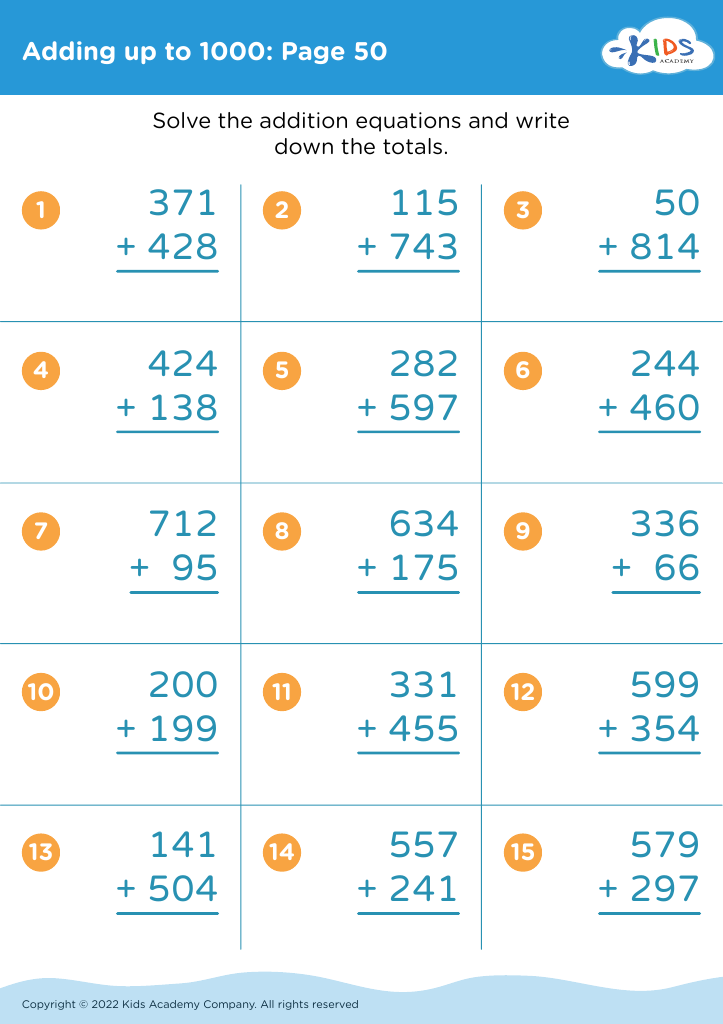
Adding up to 1000: Page 50

Adding up to 1000: Page 50

Adding up to 1000: Page 50
Worksheet
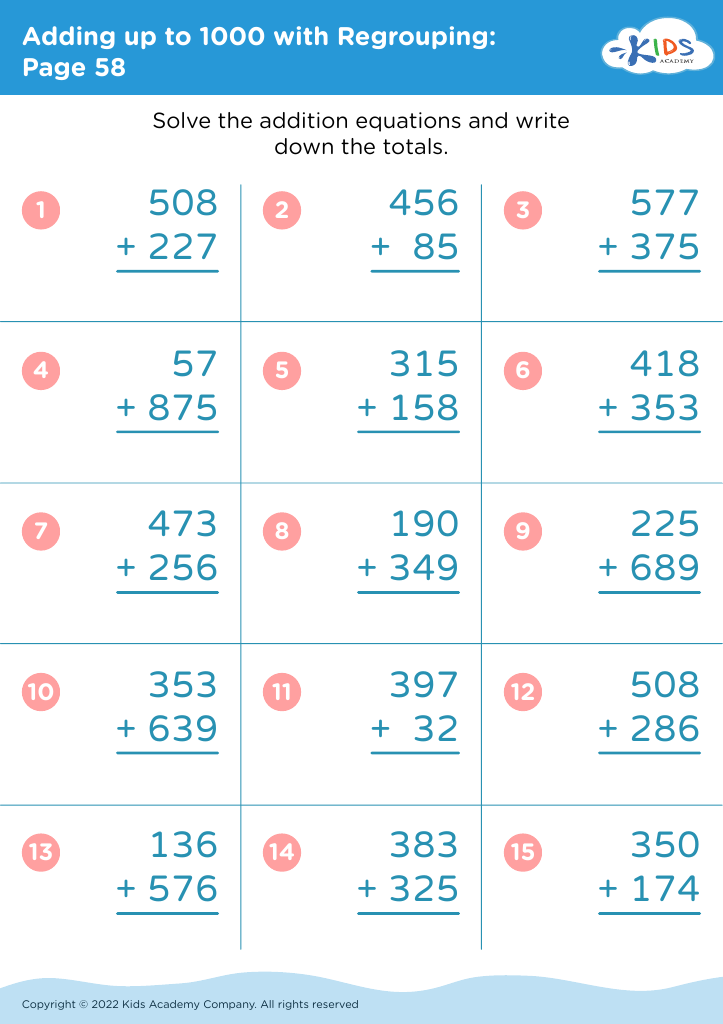
Adding up to 1000 with Regrouping: Page 58
Worksheet
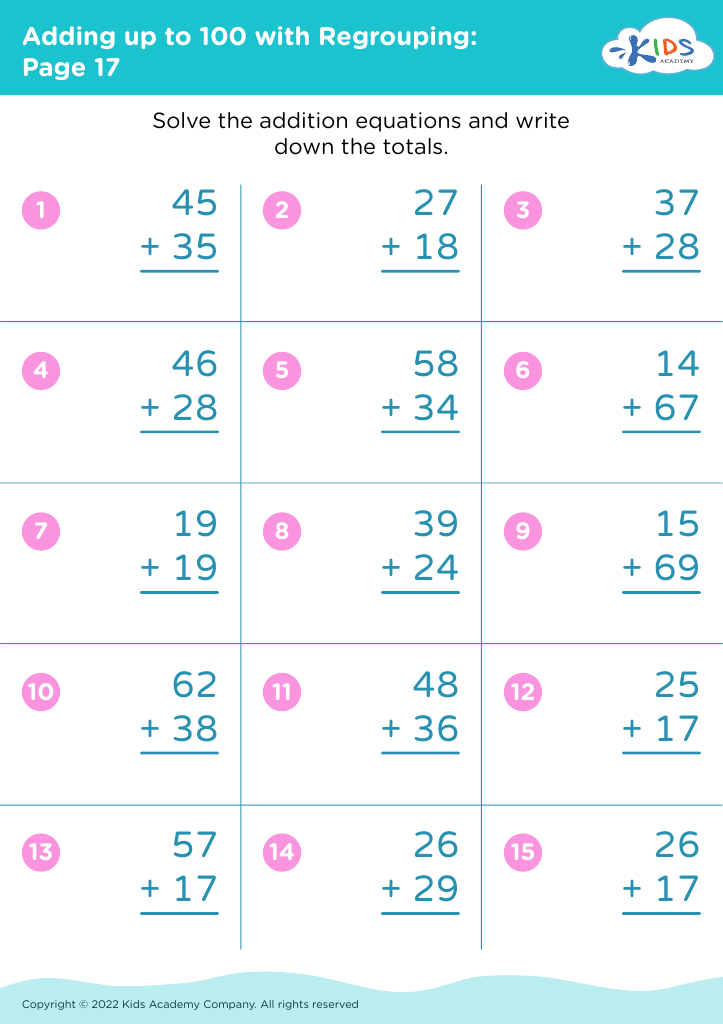
Adding up to 100 with Regrouping: Page 17
Worksheet
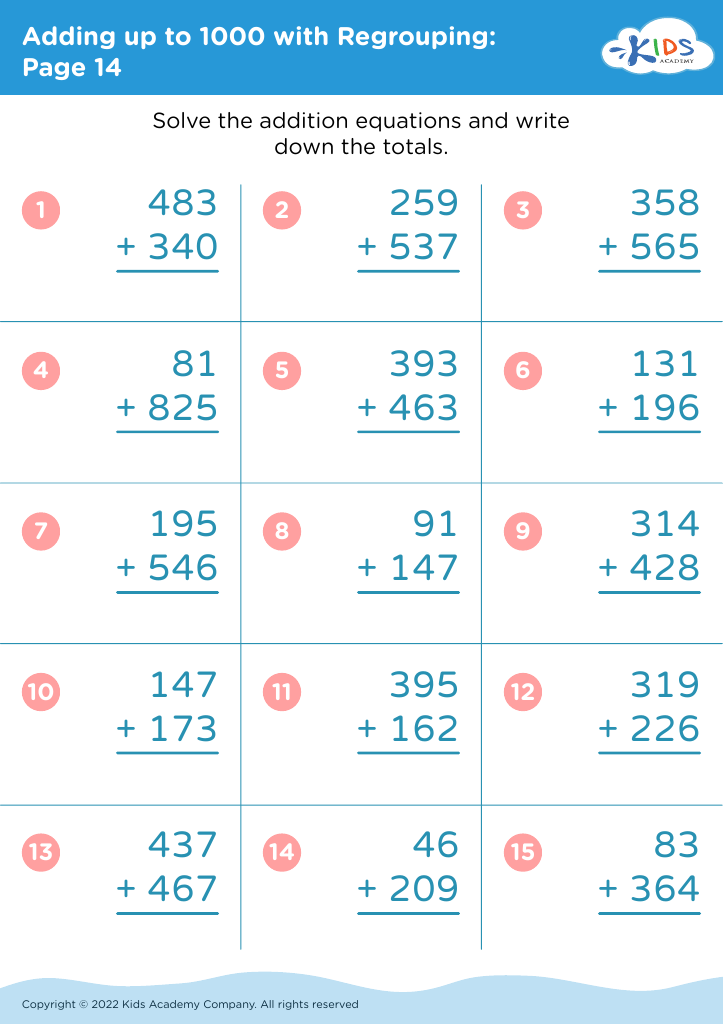
Adding up to 1000 with Regrouping: Page 14
Worksheet
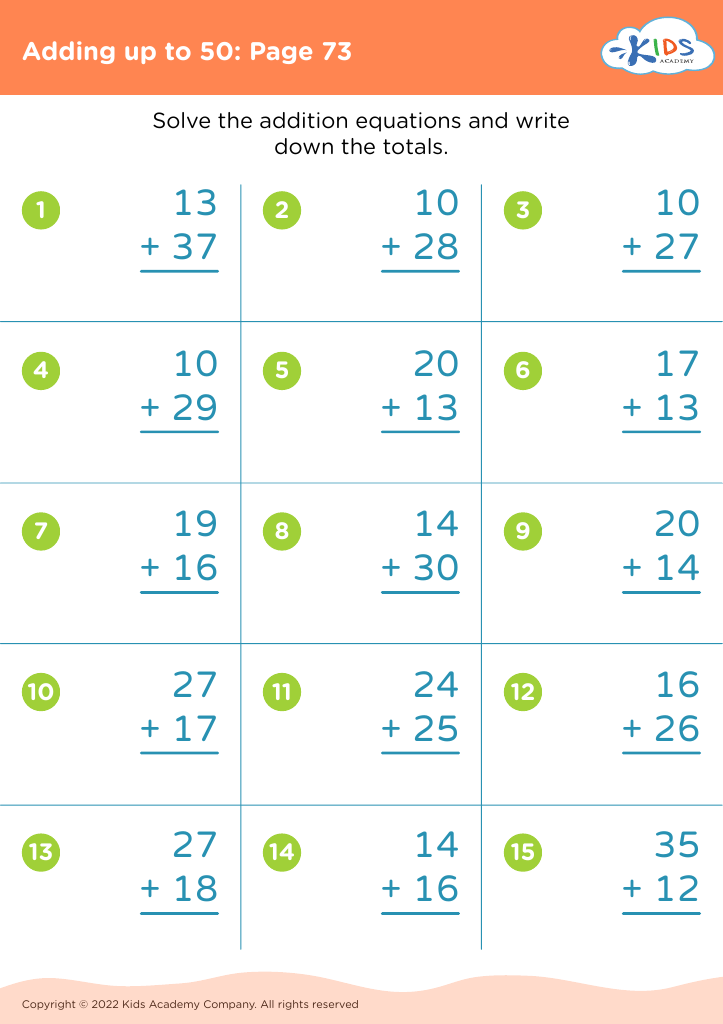
Adding up to 50: Page 73

Adding up to 50: Page 73

Adding up to 50: Page 73
Worksheet
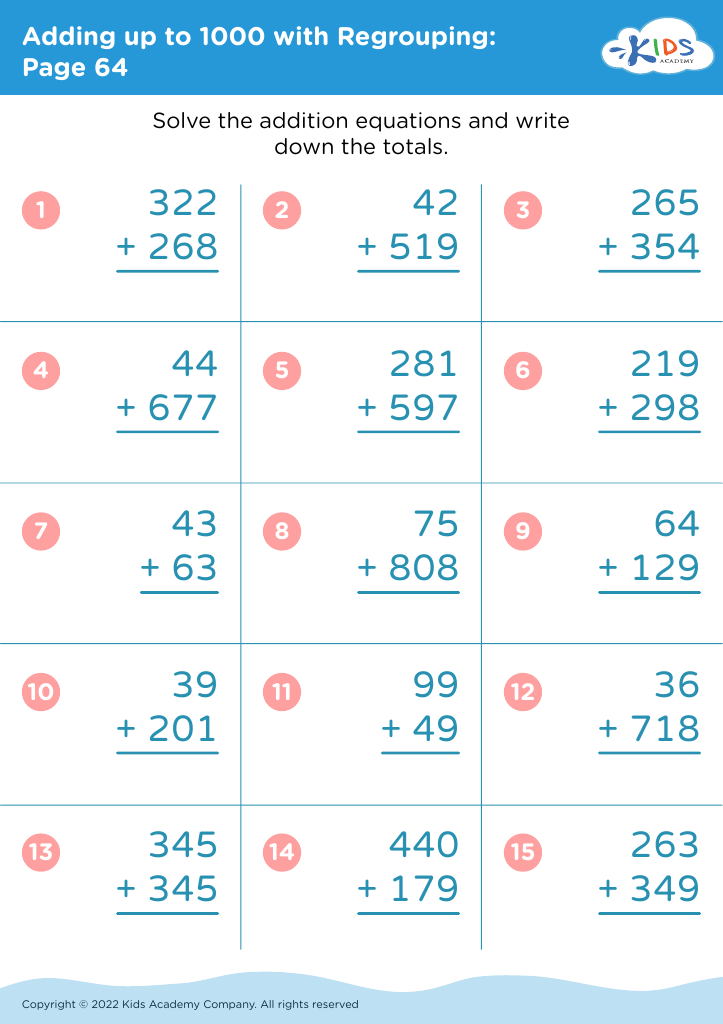
Adding up to 1000 with Regrouping: Page 64
Worksheet


Shape recognition and basic addition and subtraction skills are foundational elements in early childhood education for children aged 4-8. Parents and teachers should care about these skills because they are essential for cognitive development and future mathematical learning. Understanding shapes helps children make sense of the world around them; it aids in visual discrimination, spatial awareness, and reasoning skills. By recognizing different shapes, children also enhance their ability to classify and sort objects, developing critical thinking abilities.

Moreover, addition and subtraction at this age are crucial for introducing the concepts of number sense and operations. Mastering these basic arithmetic skills builds a strong mathematical foundation, encouraging confidence in problem-solving as they progress through their education. Engaging with shape and number recognition promotes active learning, where educators can incorporate hands-on activities and interactive play, making learning enjoyable.

Ultimately, reinforcing shape recognition and basic math operations cultivates an essential skill set that not only supports academic success but also encourages logical reasoning, organization, and perseverance in children's daily lives. By prioritizing these skills, parents and teachers ensure that children are well-prepared for future challenges in math and related disciplines.