Understanding Math Concepts Addition & Subtraction Worksheets for Ages 4-8
3 filtered results
-
From - To
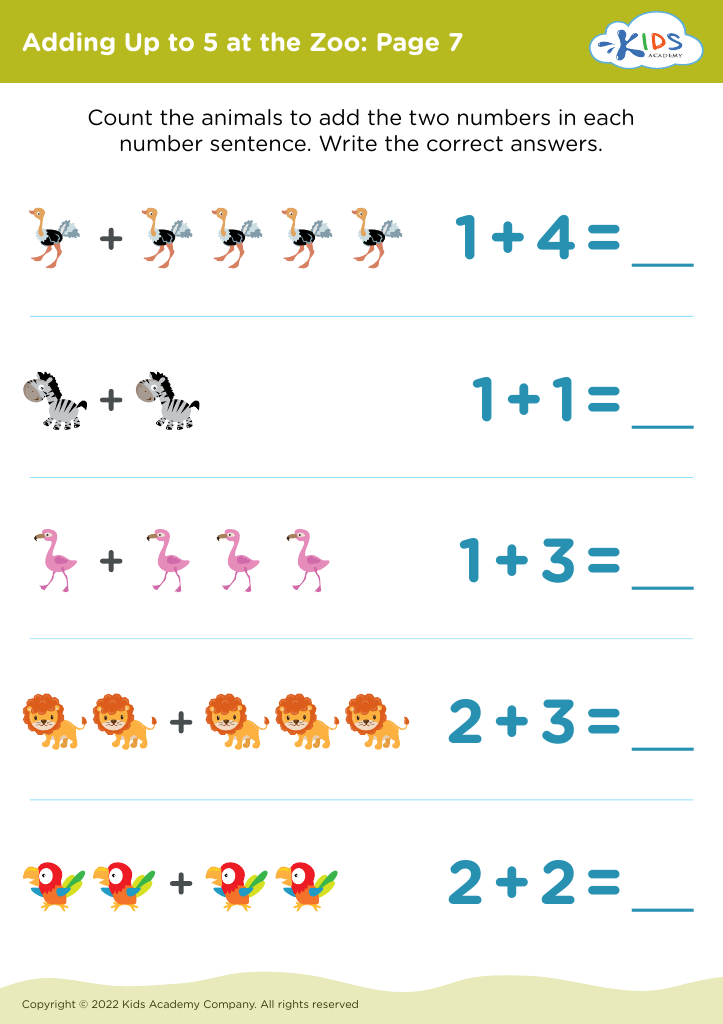
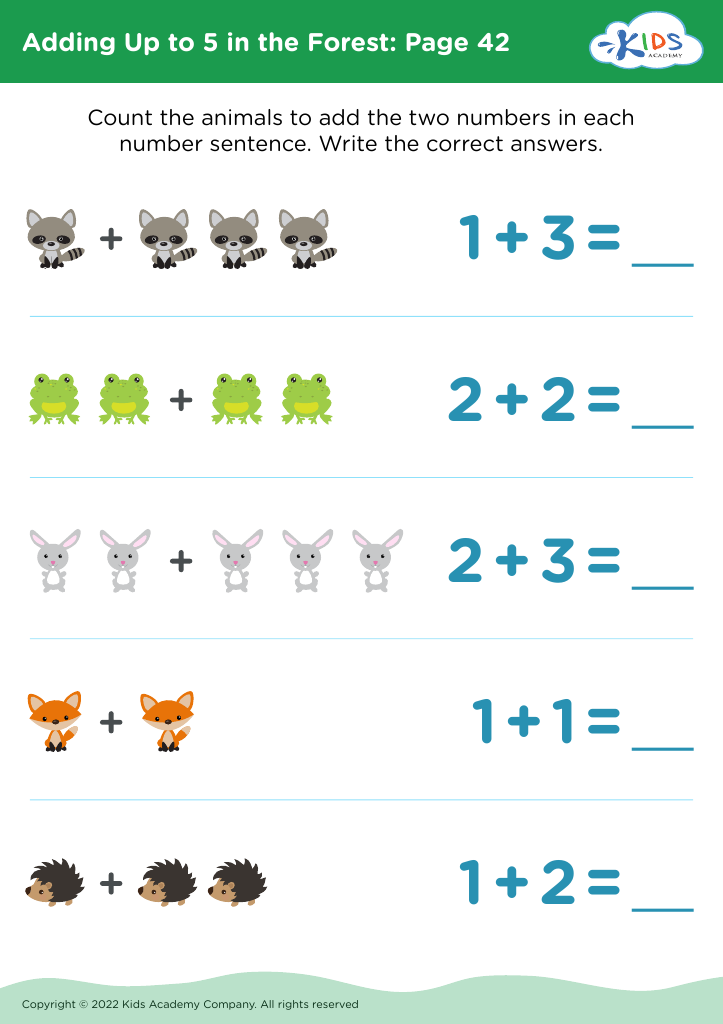
Discover our "Understanding Math Concepts: Addition & Subtraction Worksheets" designed for children ages 4-8. These engaging and age-appropriate worksheets focus on foundational math skills, helping young learners grasp the essential concepts of addition and subtraction. Each worksheet encourages critical thinking and promotes hands-on practice, allowing children to explore math in a fun and interactive way. Our thoughtfully crafted resources are perfect for teachers and parents alike, aiming to build confidence and a positive attitude toward math. Explore our extensive collection today to support your child's learning journey and lay a strong mathematical foundation for their future success!
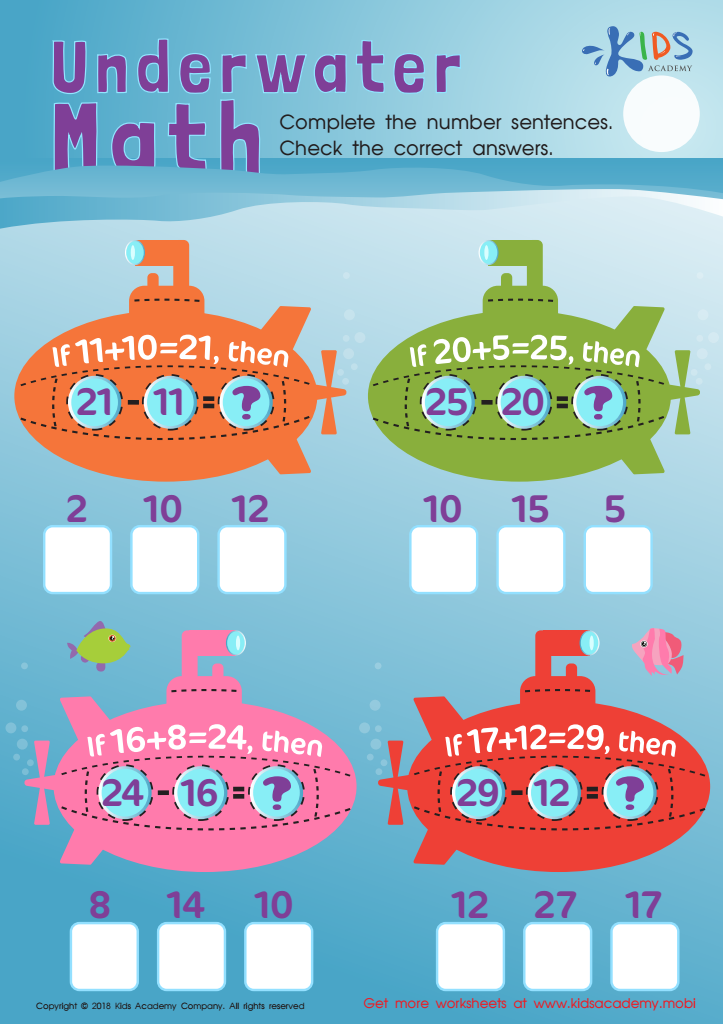
Addition and Subtraction: Underwater Math Worksheet
 Assign to My Students








Understanding math concepts, particularly addition and subtraction, is crucial for children aged 4-8 for several reasons. During these formative years, children's cognitive abilities rapidly develop, and foundational math skills lay the groundwork for future learning. Early mastery of addition and subtraction fosters critical thinking and problem-solving skills, enabling children to approach more complex mathematical concepts with confidence.
Moreover, a solid grasp of these basic operations enhances children's ability to relate math to real-world situations, such as budgeting, time management, and spatial reasoning. Engaging parents and teachers in this learning process helps create a supportive environment where children can ask questions and explore math without fear of failure.
Additionally, proficiency in addition and subtraction boosts children’s self-esteem and engagement in the classroom, potentially leading to better academic outcomes later on. By recognizing patterns, relationships, and sequences through these fundamental operations, children build a love for math that can inspire lifelong learning.
Ultimately, when parents and teachers prioritize understanding addition and subtraction, they not only equip children with essential skills for success in school but also foster positive attitudes toward math that extend far beyond the classroom.








