Understanding patterns Addition & Subtraction Worksheets for Ages 4-8 - Page 2
34 filtered results
-
From - To
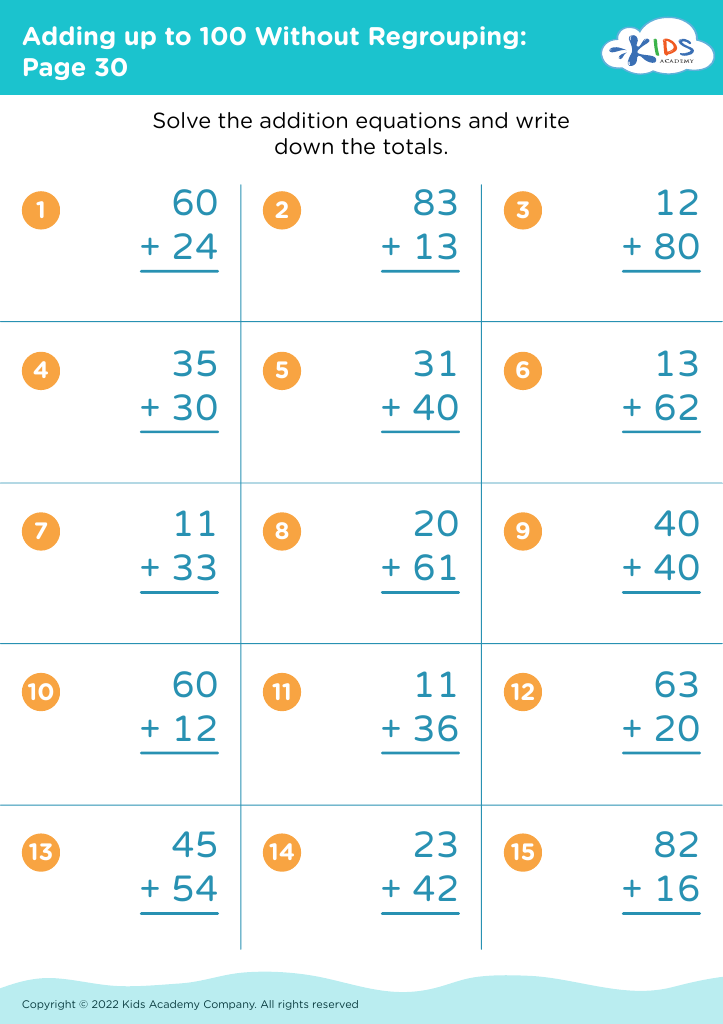
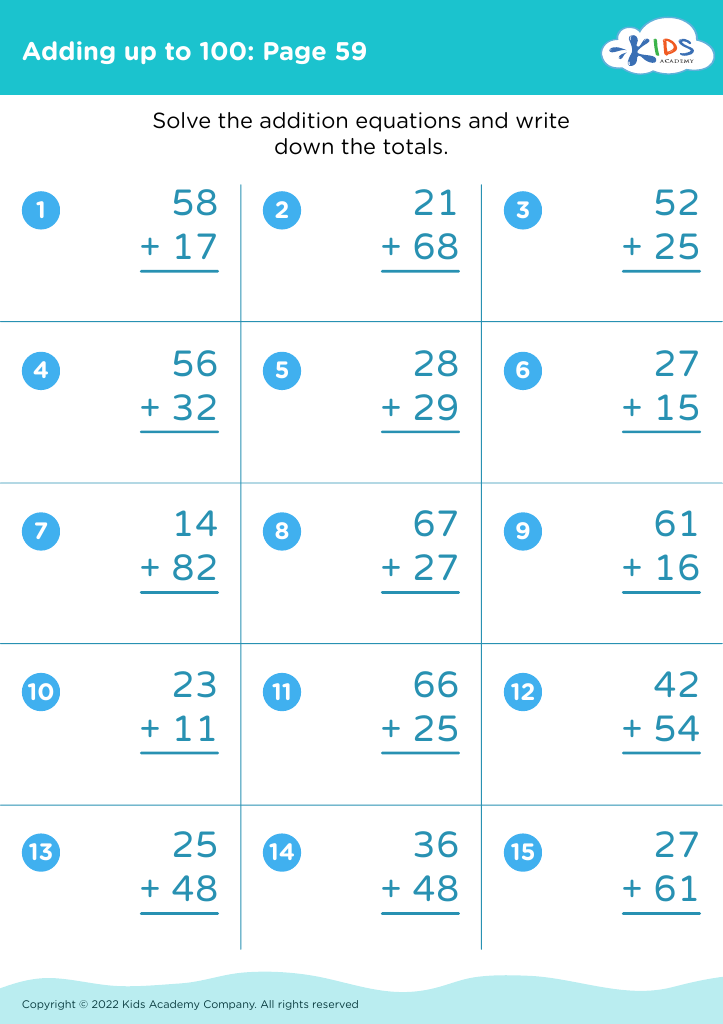
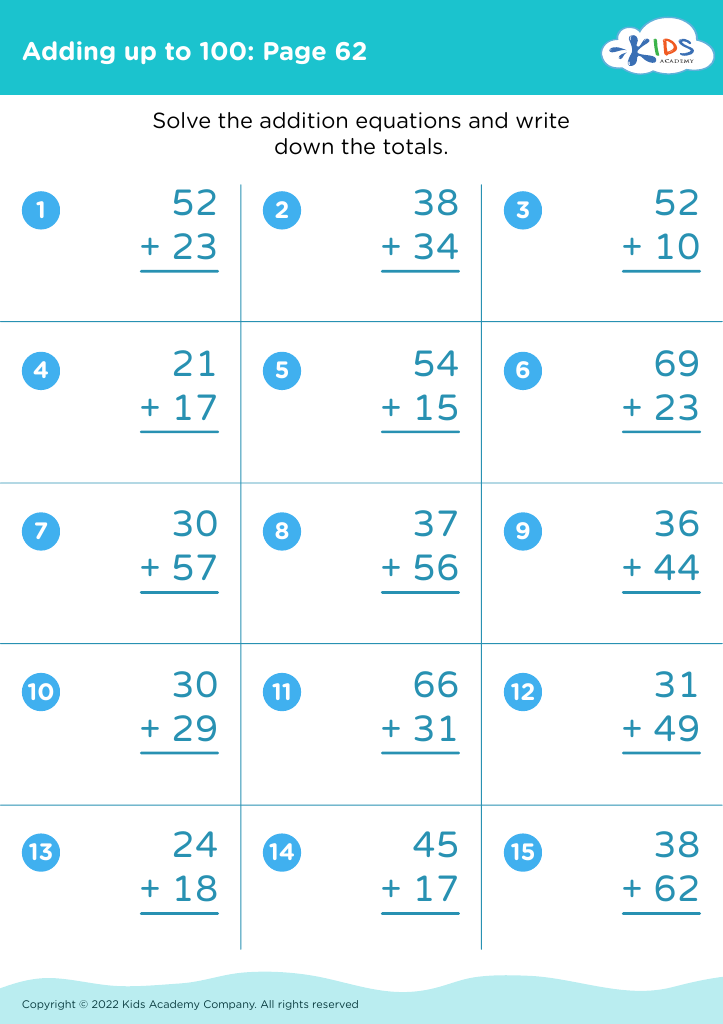
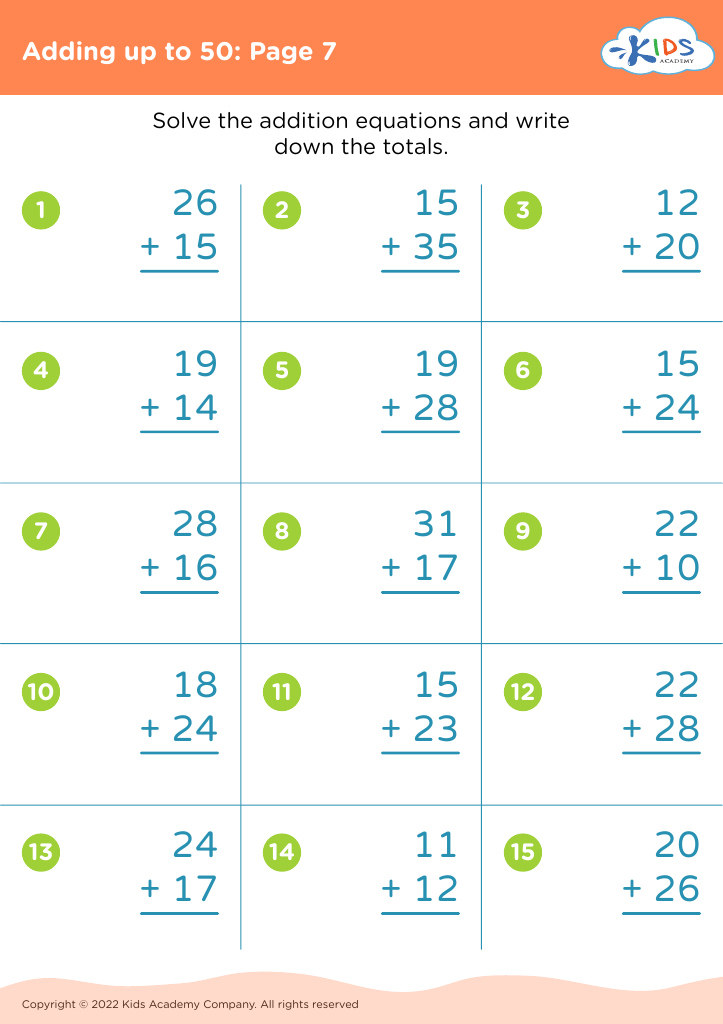
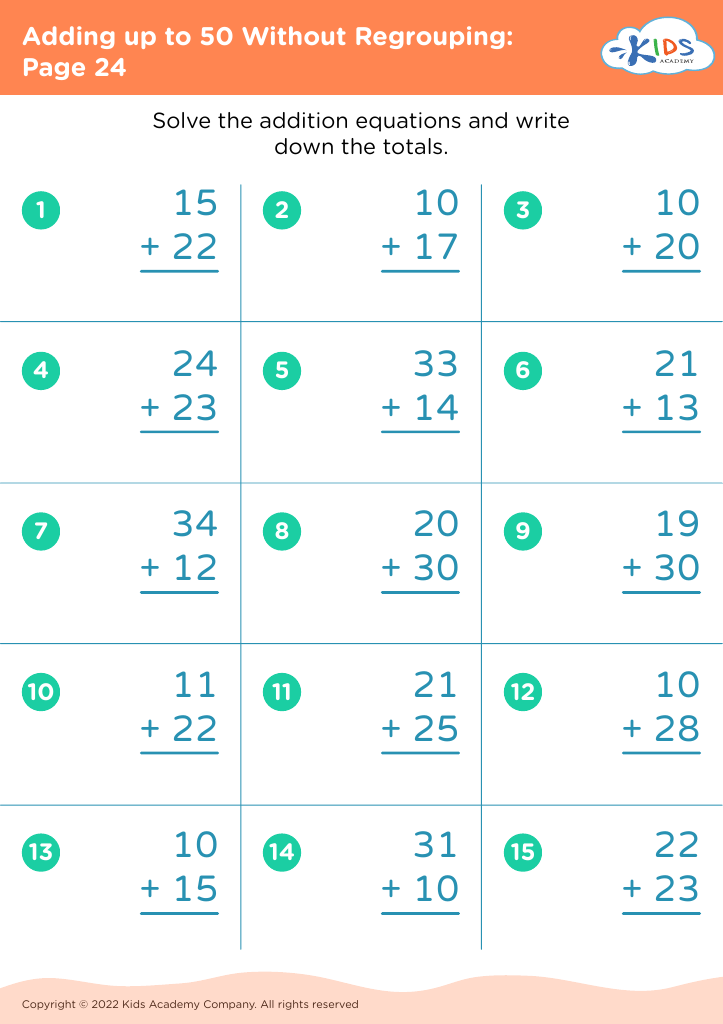
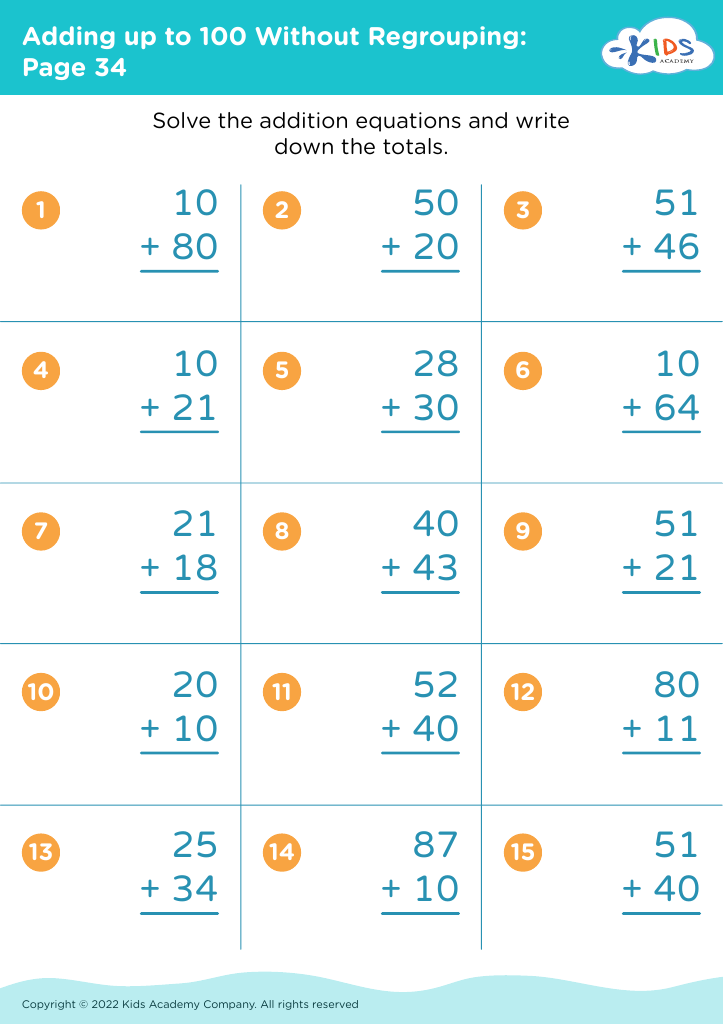
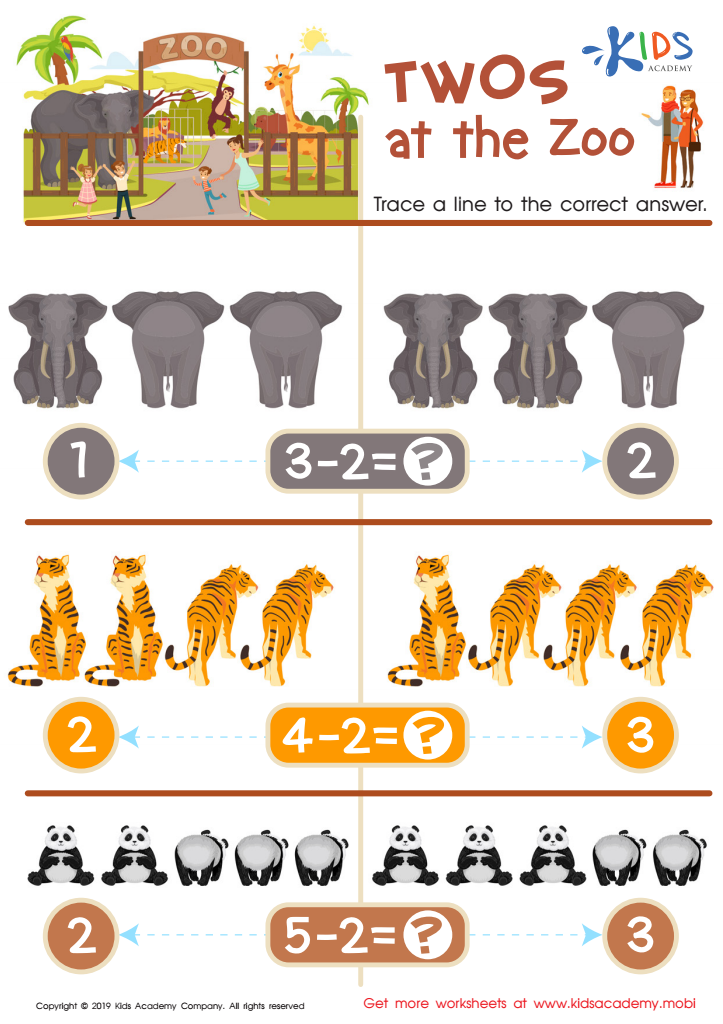
Twos at the Zoo Worksheet
 Assign to My Students
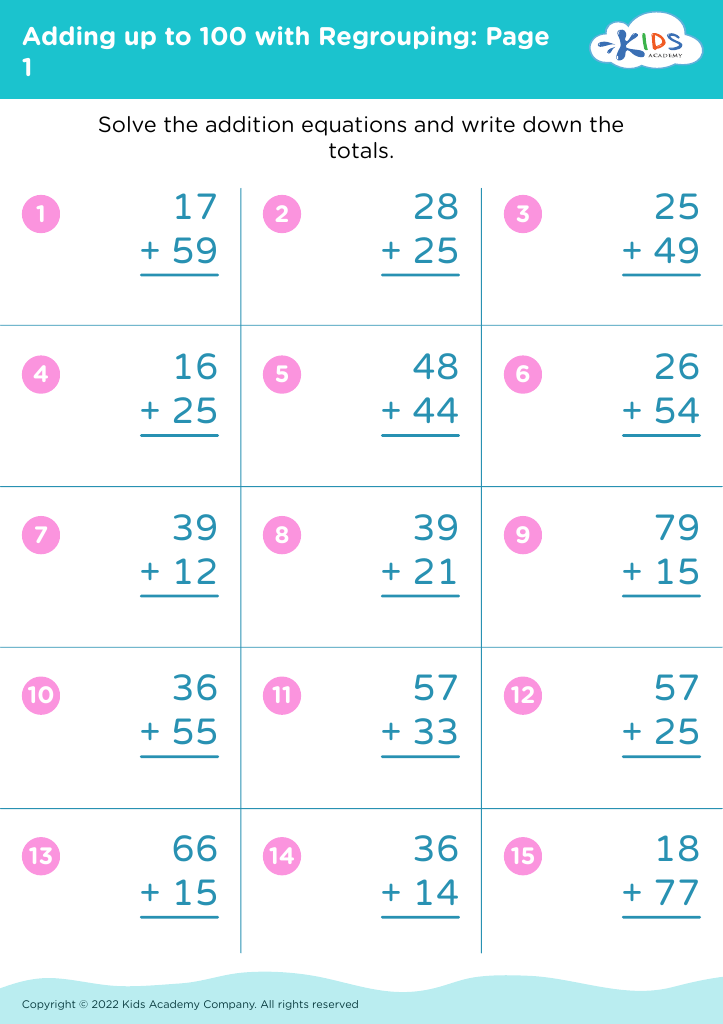
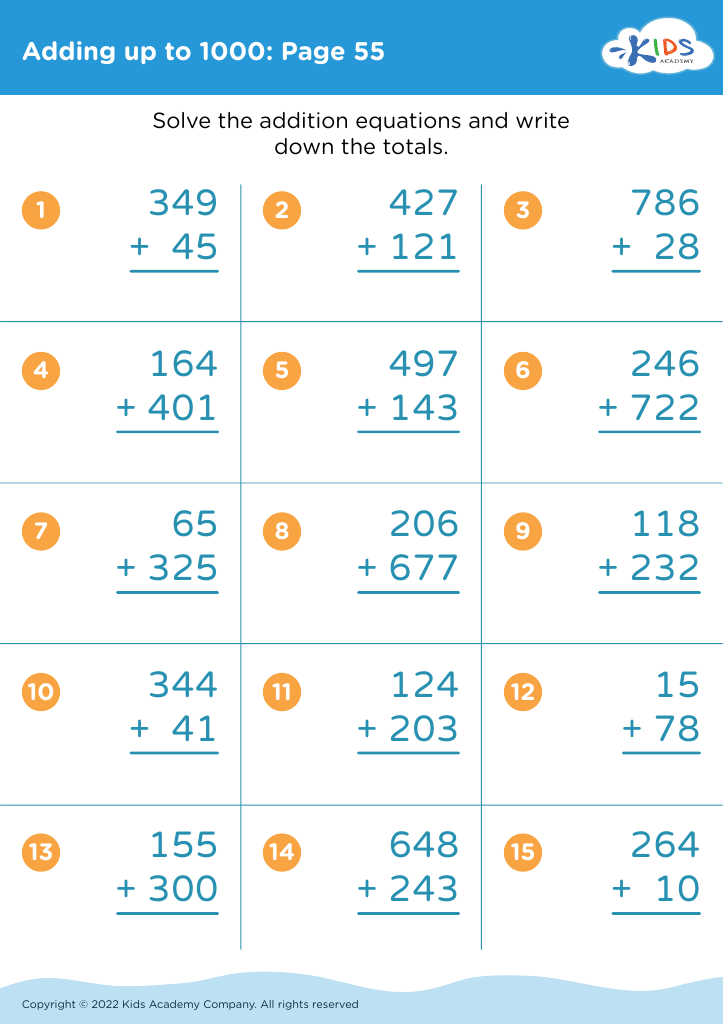
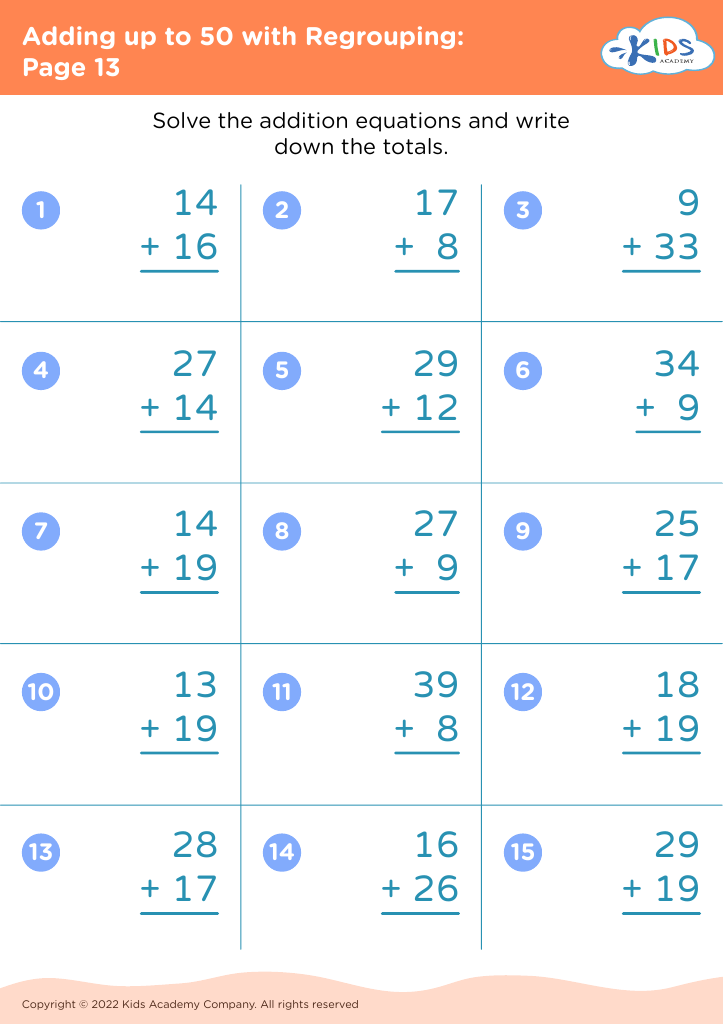








Understanding patterns in addition and subtraction for ages 4-8 is crucial because it forms the foundational basis for future mathematical learning. At this young age, children's brains are highly receptive to recognizing and internalizing patterns, which are essential components of numeracy. When children recognize patterns in addition and subtraction, they are not just memorizing facts; they are developing a deep understanding of how numbers work. This conceptual understanding empowers them to solve problems more efficiently and flexibly.
Patterns help children understand that numbers are related and operate in a predictable manner. For example, recognizing that adding 1 to any number increases the number by just 1 is a fundamental pattern. Similarly, recognizing the inverse relationship—such as understanding that if 5 + 3 = 8, then 8 - 3 = 5—solidifies their grasp on basic arithmetic operations.
For parents and teachers, focusing on these patterns helps make math enjoyable and less intimidating for young learners. It also supports the development of cognitive skills such as logical thinking, problem-solving, and the ability to make connections between different pieces of information. Moreover, these skills extend beyond mathematics and are applicable in science, reading, and daily life, ensuring well-rounded development. In summary, nurturing an early understanding of patterns in addition and subtraction sets children up for academic success and lifelong learning.








