Filters

114 filtered results

Clear all filters
Favorites
With answer key
Interactive

114 filtered results

Difficulty Level

Grade


Subject

    Check out this FREE Trial Lesson on Addition for age 4-8!

    Making 12

    Favorites
    With answer key
    Interactive
    • 4-8
    • Cognitive Development
    • Addition
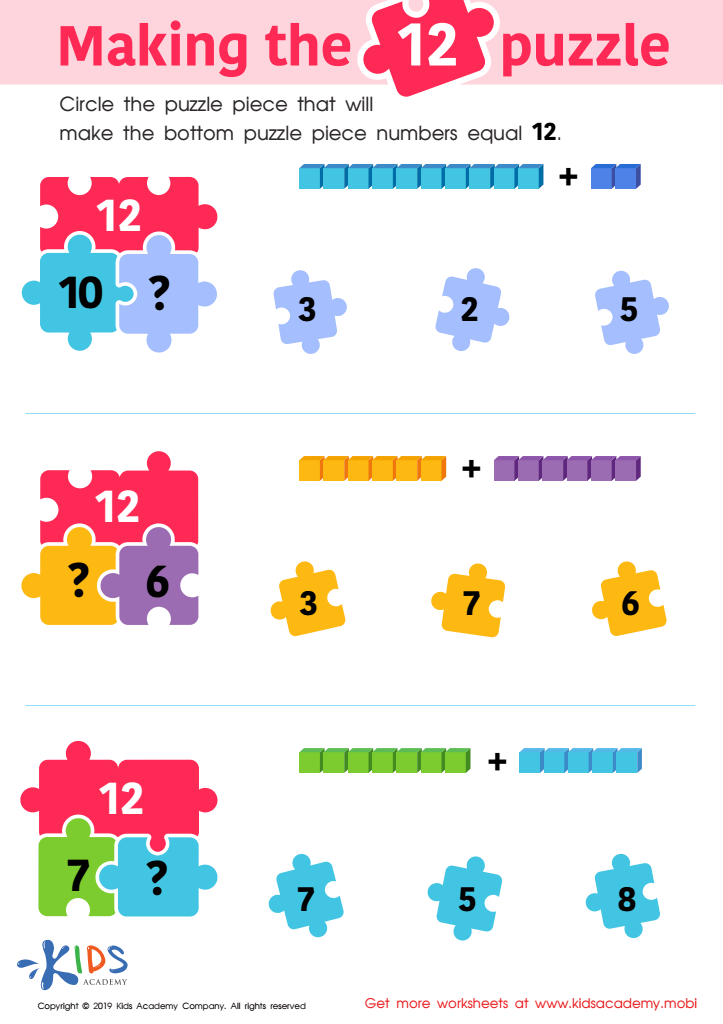
    Making the 12 Puzzle Worksheet
    Making the 12 Puzzle Worksheet

    Making the 12 Puzzle Worksheet

    Engage preschoolers in learning with this fun and colorful worksheet. Ask them to look at the picture and identify the missing equation on each puzzle piece; then help them solve the problems. When all the puzzle pieces make the bottom numbers equal 12, have them circle it. This is a great way to combine learning and fun!
    Making the 12 Puzzle Worksheet
    Worksheet
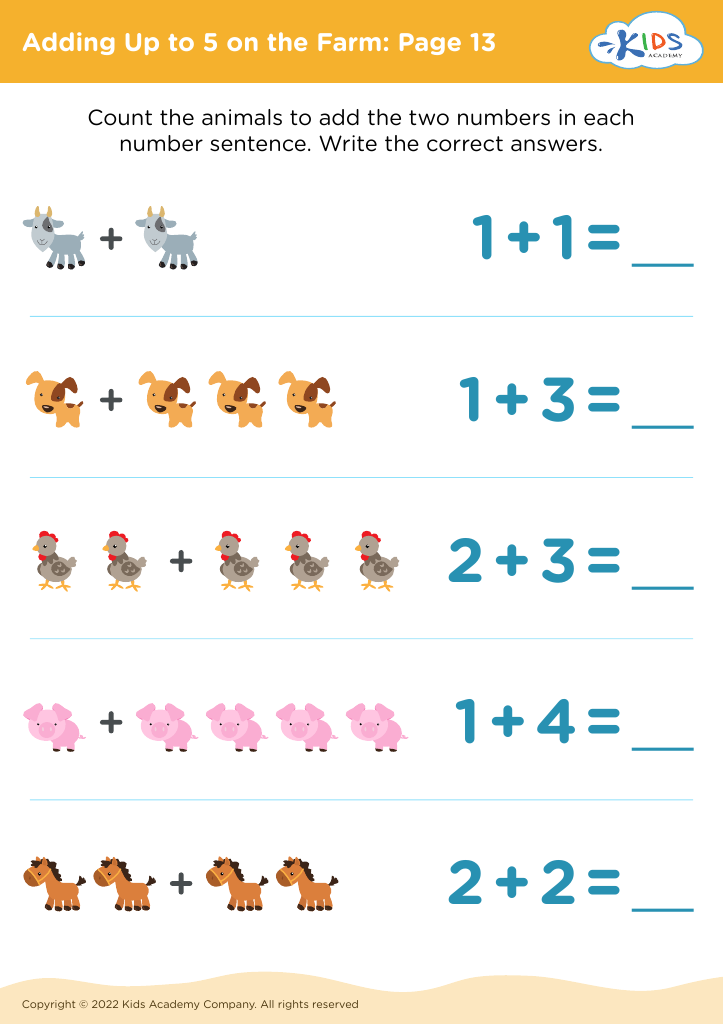
    Adding Up to 5 on the Farm: Page 13
    Adding Up to 5 on the Farm: Page 13
    Adding Up to 5 on the Farm: Page 13
    Worksheet
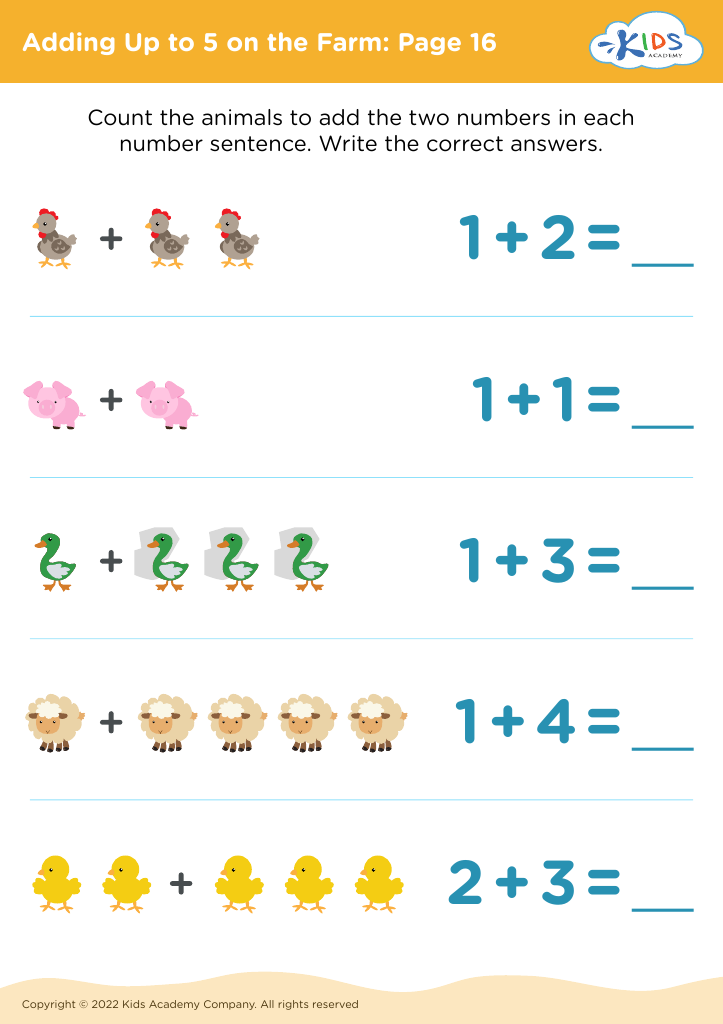
    Adding Up to 5 on the Farm: Page 16
    Adding Up to 5 on the Farm: Page 16
    Adding Up to 5 on the Farm: Page 16
    Worksheet
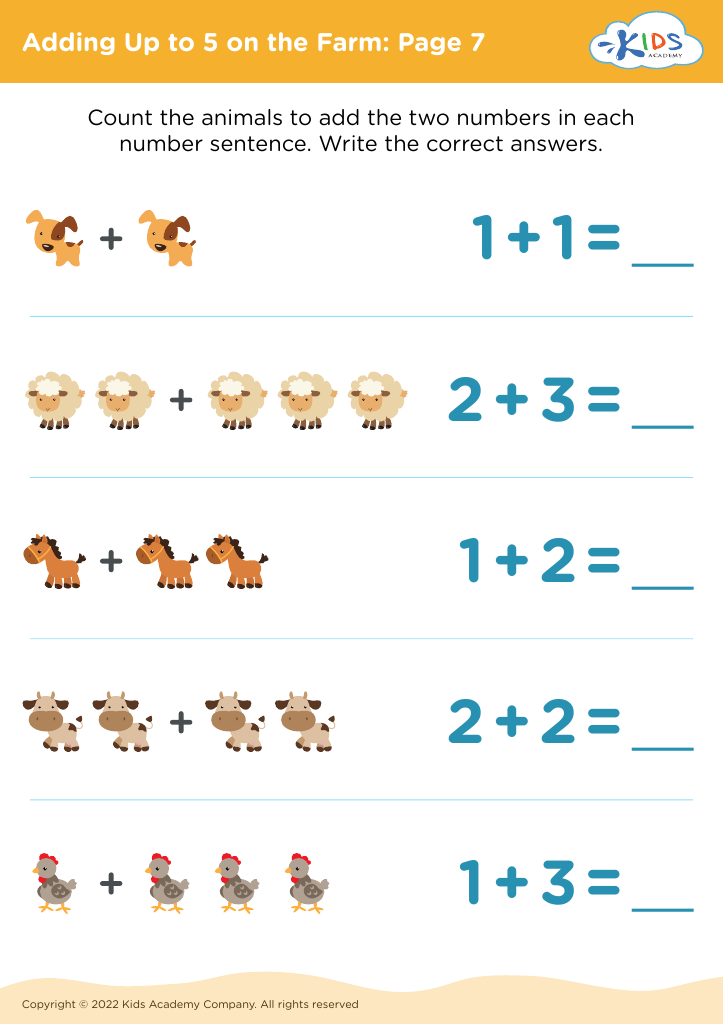
    Adding Up to 5 on the Farm: Page 7
    Adding Up to 5 on the Farm: Page 7
    Adding Up to 5 on the Farm: Page 7
    Worksheet
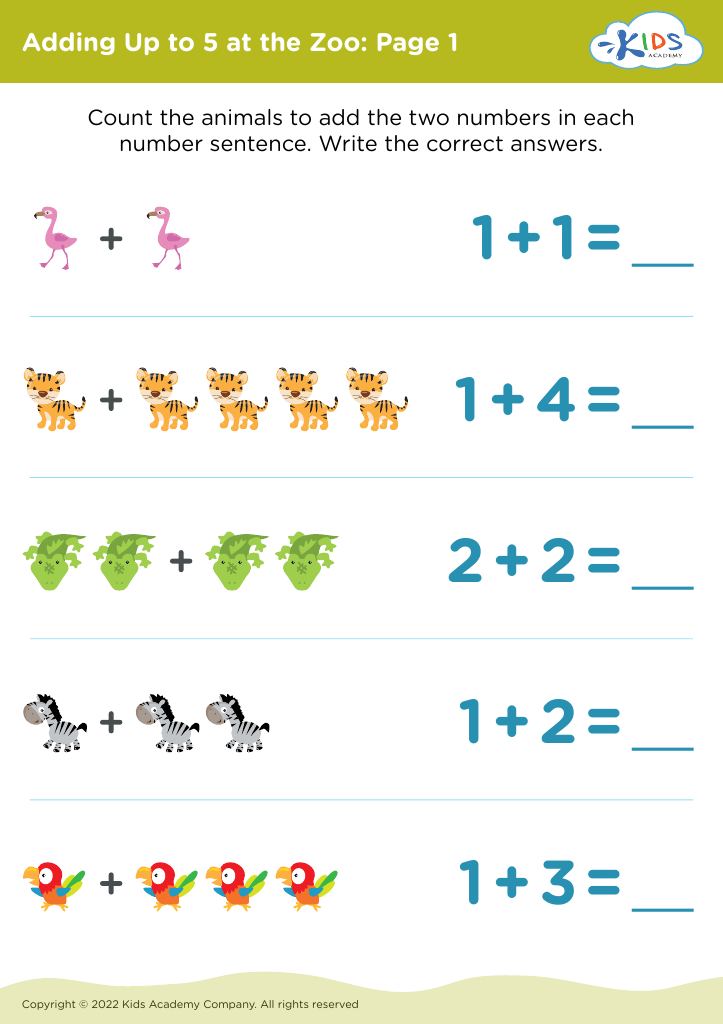
    Adding Up to 5 at the Zoo: Page 1
    Adding Up to 5 at the Zoo: Page 1

    Adding Up to 5 at the Zoo: Page 1

    Adding Up to 5 at the Zoo: Page 1
    Worksheet
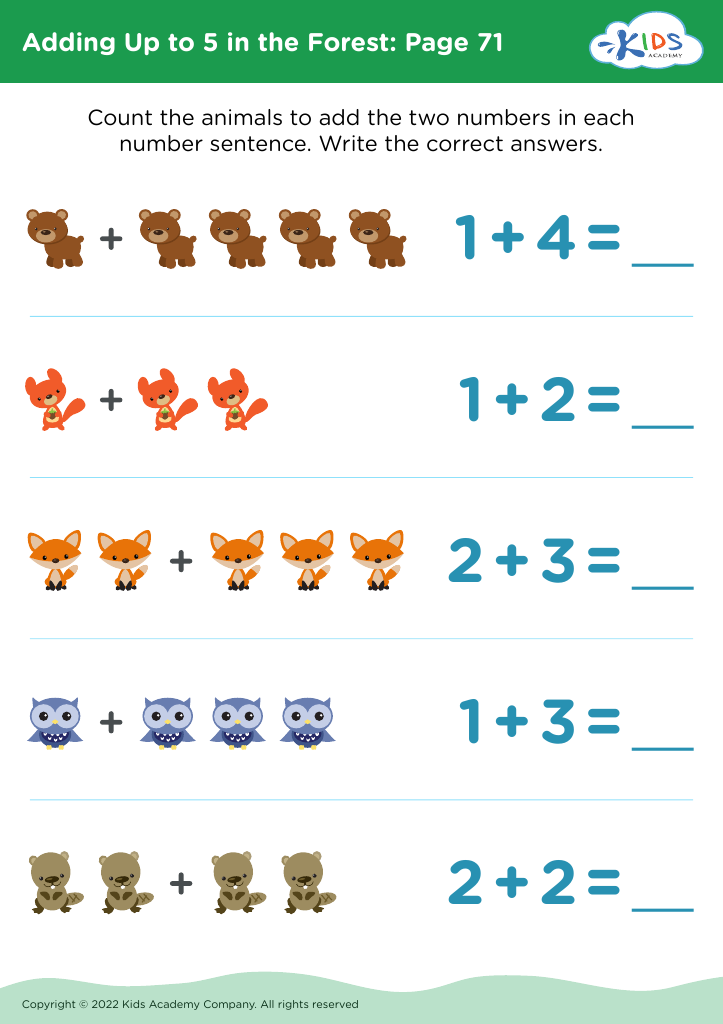
    Adding Up to 5 in the Forest: Page 71
    Adding Up to 5 in the Forest: Page 71
    Adding Up to 5 in the Forest: Page 71
    Worksheet
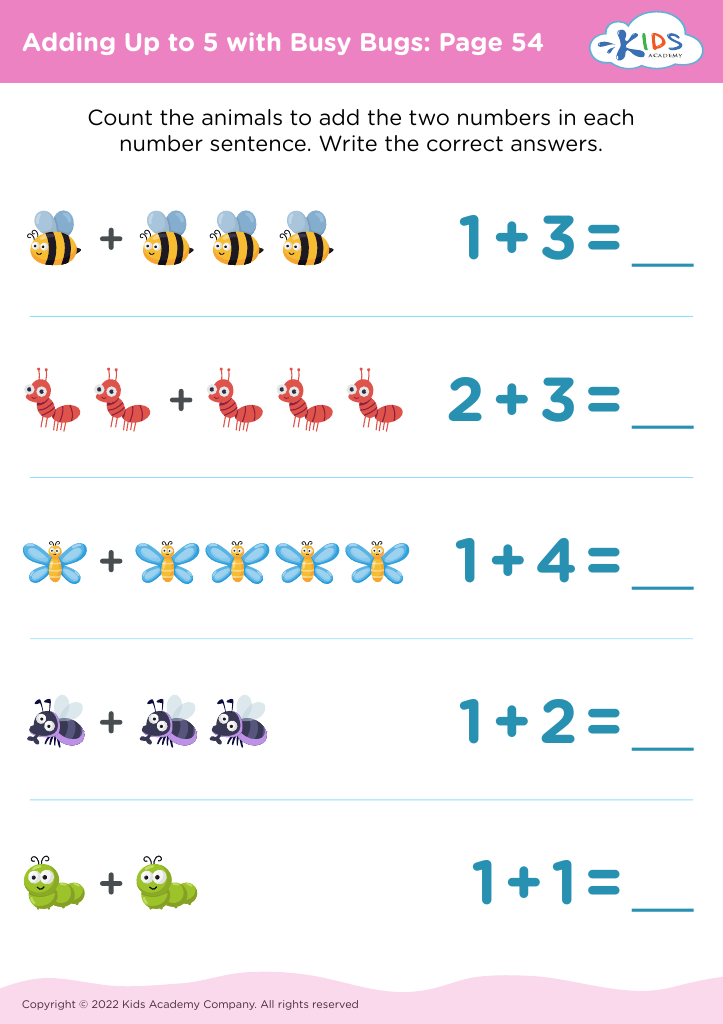
    Adding Up to 5 with Busy Bugs: Page 54
    Adding Up to 5 with Busy Bugs: Page 54
    Adding Up to 5 with Busy Bugs: Page 54
    Worksheet
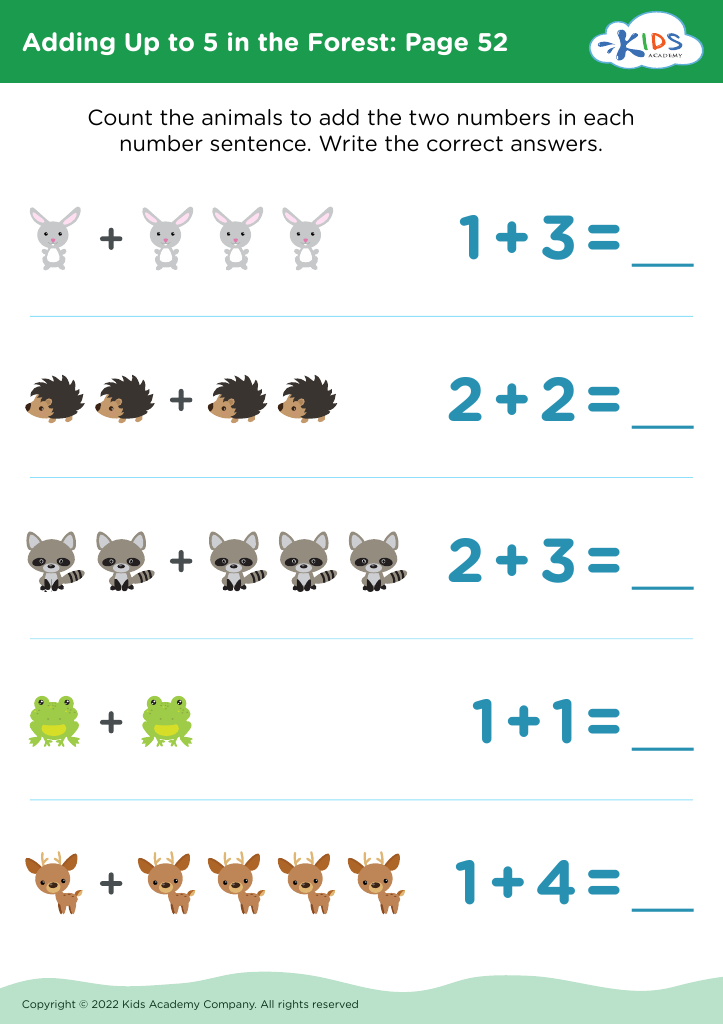
    Adding Up to 5 in the Forest: Page 52
    Adding Up to 5 in the Forest: Page 52
    Adding Up to 5 in the Forest: Page 52
    Worksheet
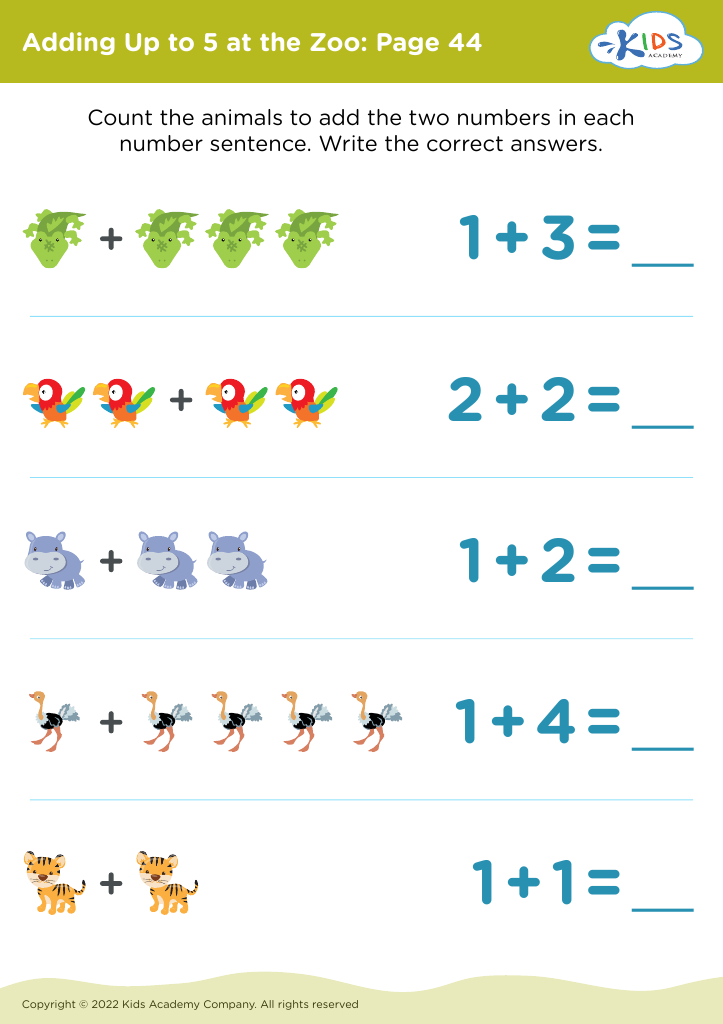
    Adding Up to 5 at the Zoo: Page 44
    Adding Up to 5 at the Zoo: Page 44
    Adding Up to 5 at the Zoo: Page 44
    Worksheet
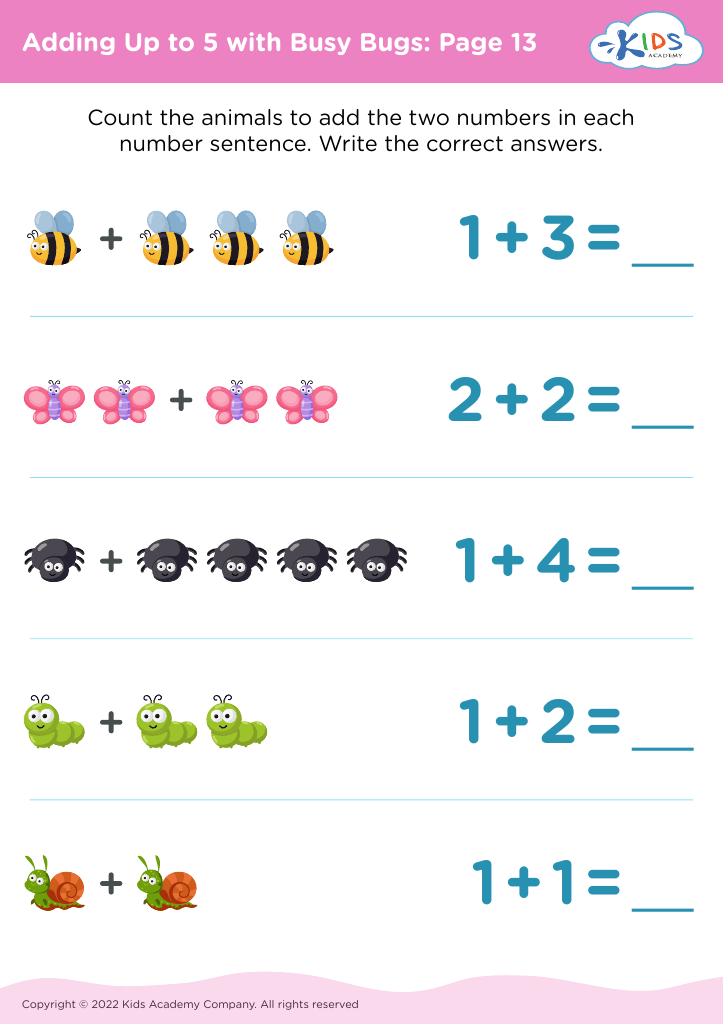
    Adding Up to 5 with Busy Bugs: Page 13
    Adding Up to 5 with Busy Bugs: Page 13
    Adding Up to 5 with Busy Bugs: Page 13
    Worksheet
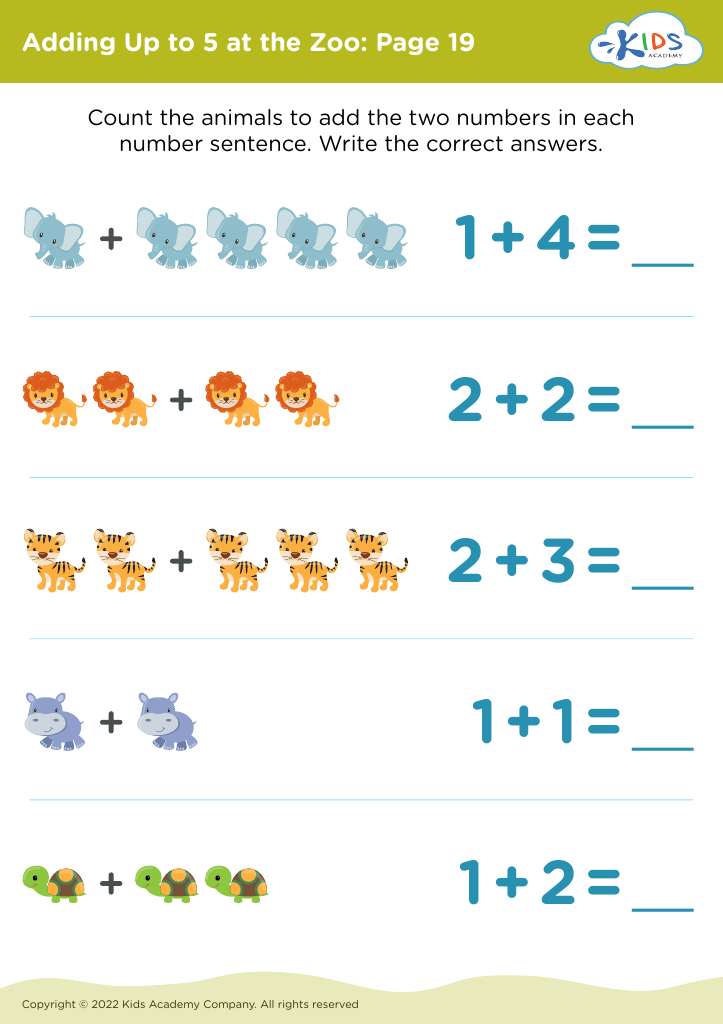
    Adding Up to 5 at the Zoo: Page 19
    Adding Up to 5 at the Zoo: Page 19
    Adding Up to 5 at the Zoo: Page 19
    Worksheet
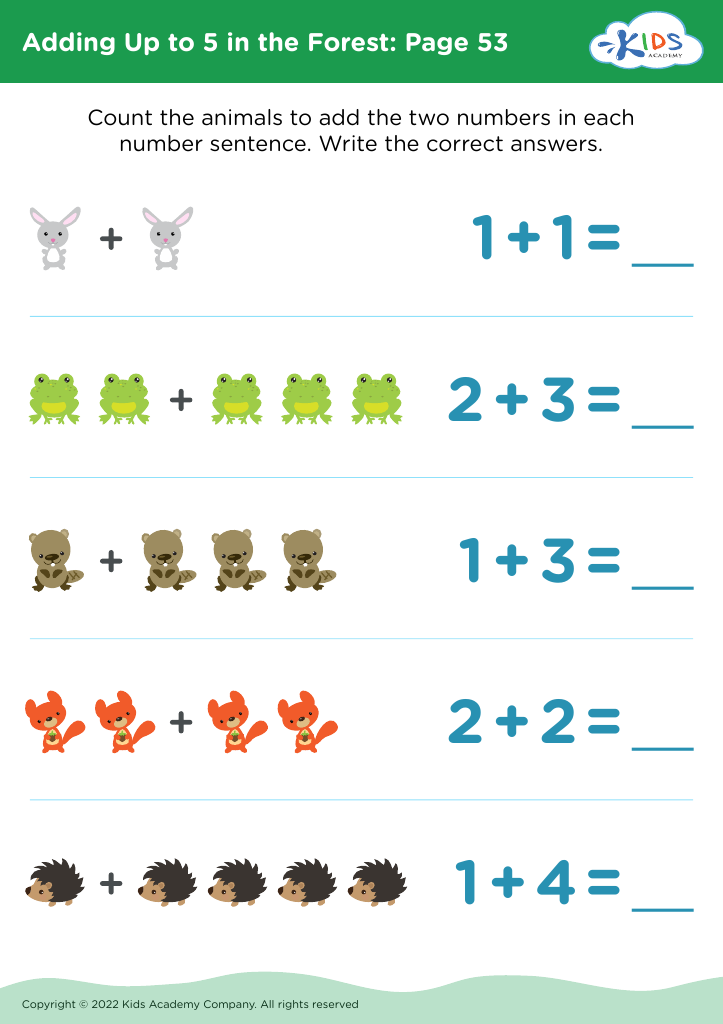
    Adding Up to 5 in the Forest: Page 53
    Adding Up to 5 in the Forest: Page 53
    Adding Up to 5 in the Forest: Page 53
    Worksheet
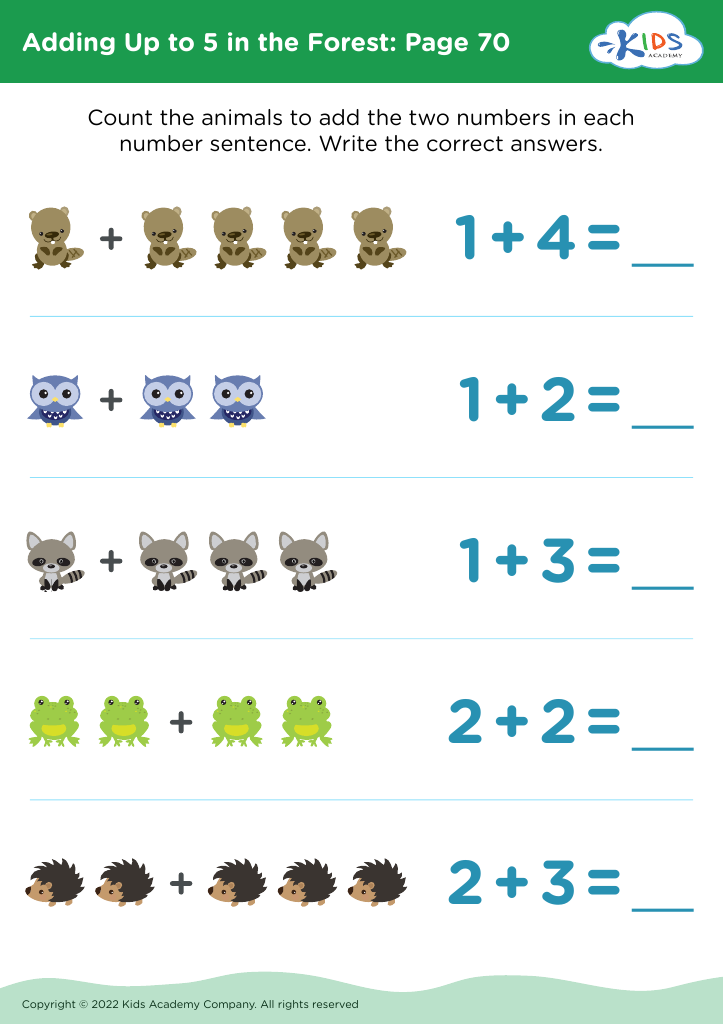
    Adding Up to 5 in the Forest: Page 70
    Adding Up to 5 in the Forest: Page 70
    Adding Up to 5 in the Forest: Page 70
    Worksheet
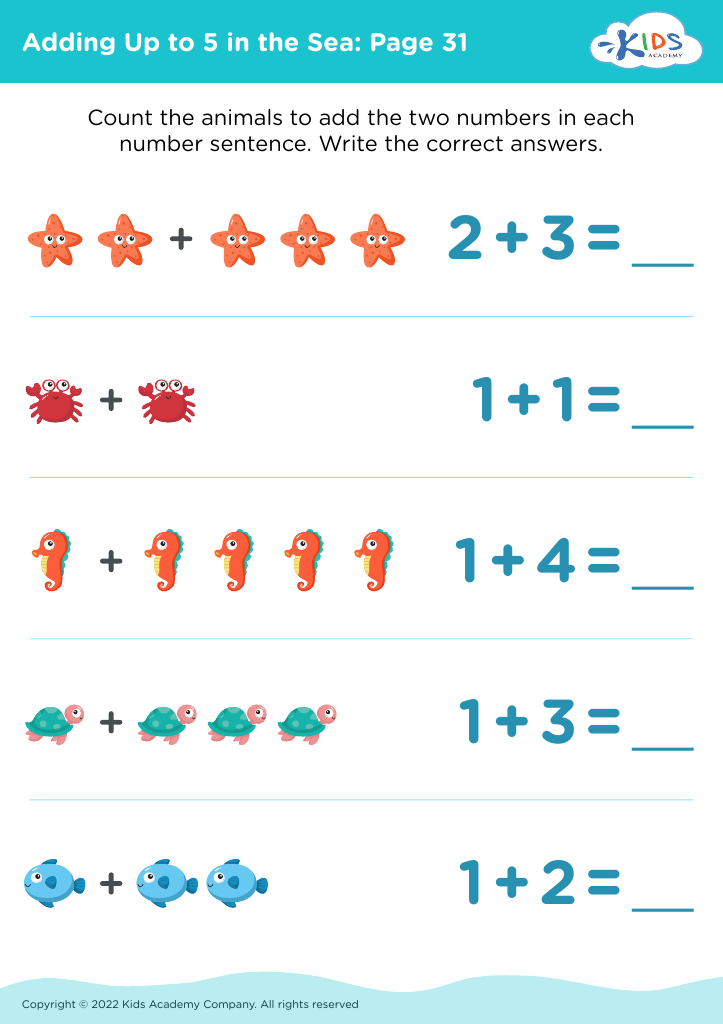
    Adding Up to 5 in the Sea: Page 31
    Adding Up to 5 in the Sea: Page 31
    Adding Up to 5 in the Sea: Page 31
    Worksheet
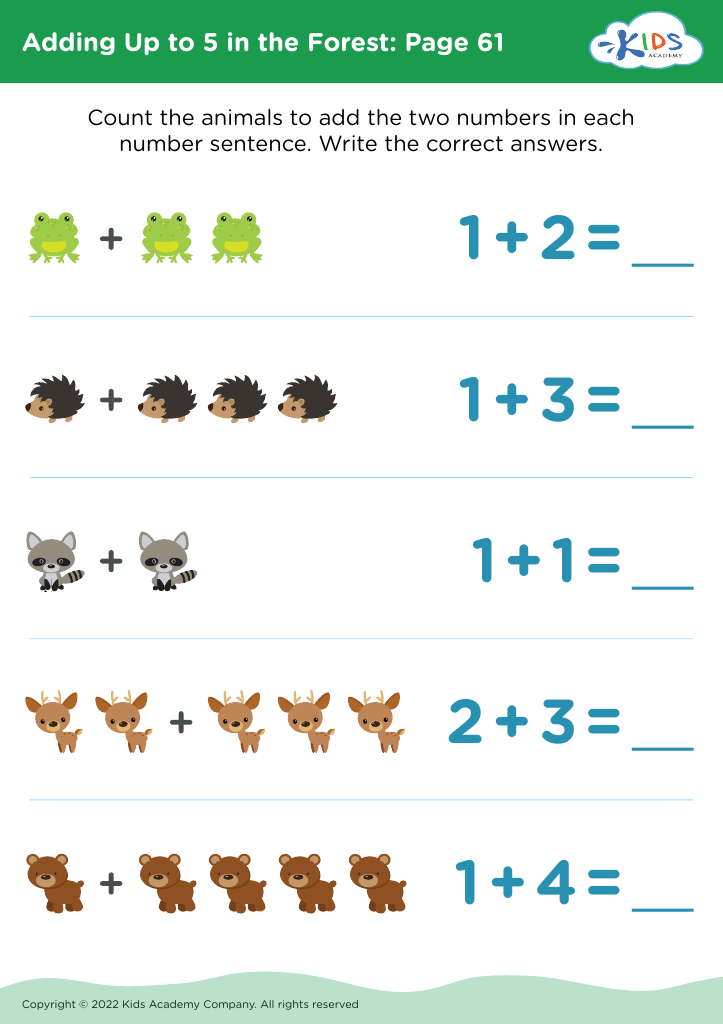
    Adding Up to 5 in the Forest: Page 61
    Adding Up to 5 in the Forest: Page 61
    Adding Up to 5 in the Forest: Page 61
    Worksheet
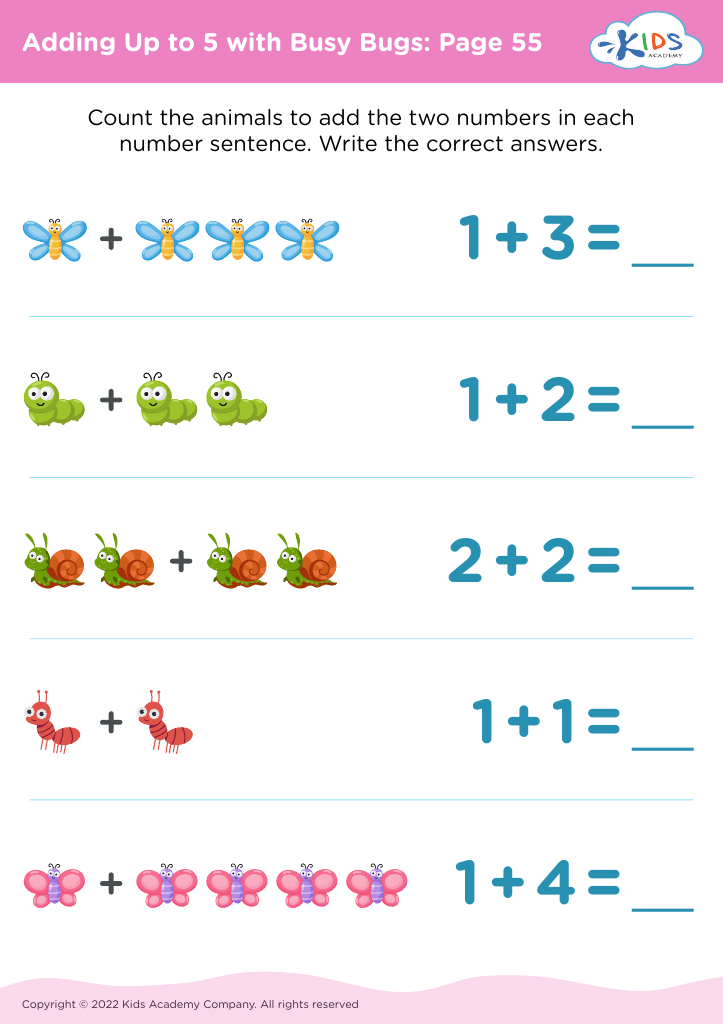
    Adding Up to 5 with Busy Bugs: Page 55
    Adding Up to 5 with Busy Bugs: Page 55
    Adding Up to 5 with Busy Bugs: Page 55
    Worksheet
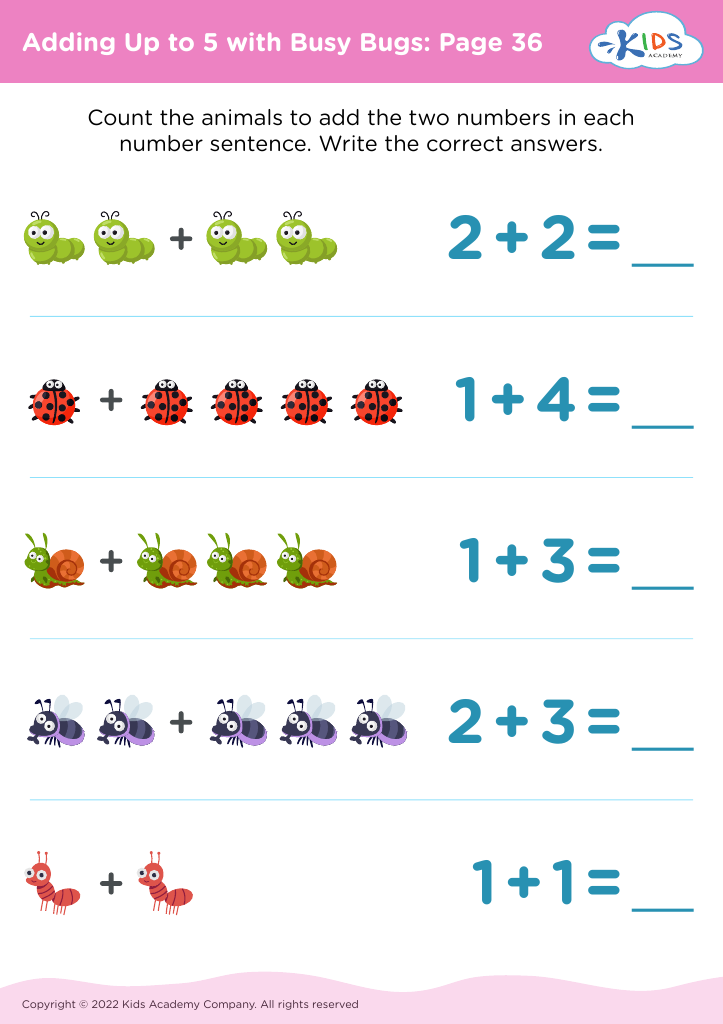
    Adding Up to 5 with Busy Bugs: Page 36
    Adding Up to 5 with Busy Bugs: Page 36
    Adding Up to 5 with Busy Bugs: Page 36
    Worksheet
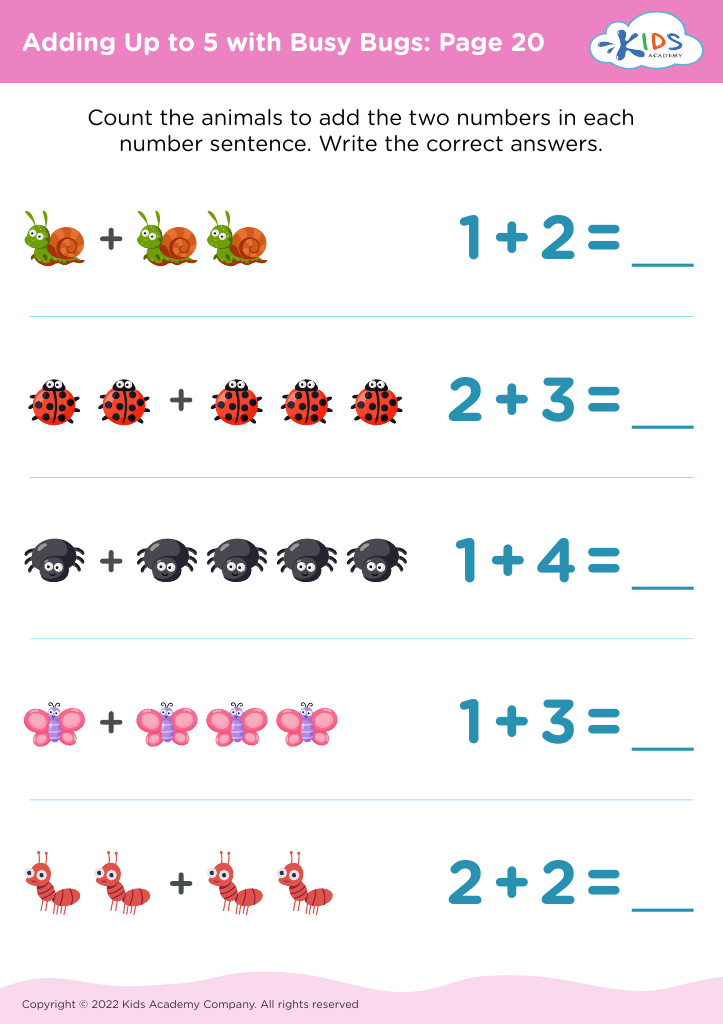
    Adding Up to 5 with Busy Bugs: Page 20
    Adding Up to 5 with Busy Bugs: Page 20
    Adding Up to 5 with Busy Bugs: Page 20
    Worksheet
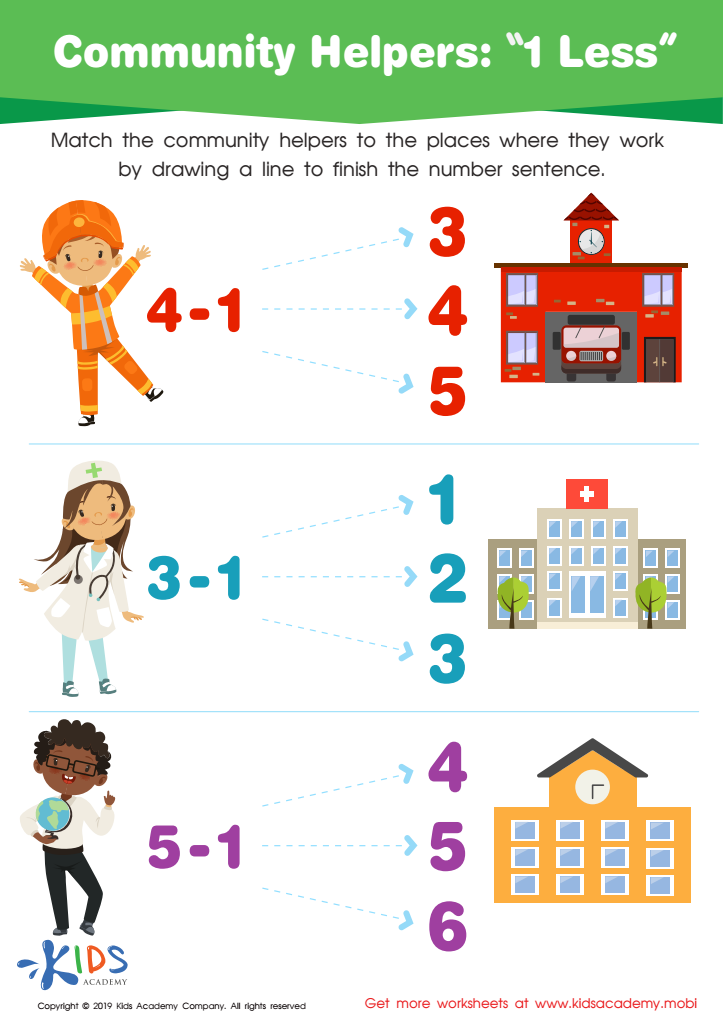
    Community Helpers: 1 less Worksheet
    Community Helpers: 1 less Worksheet
    Community Helpers: 1 less Worksheet
    Look at this worksheet with your child and ask them to identify the different community helpers. Match them to the places where they work by drawing a line to finish the number sentence. This helps them identify the people that help keep the community organized and running smoothly. Examples of community helpers include doctors, police officers, firefighters, teachers, etc.
    Community Helpers: 1 less Worksheet
    Worksheet
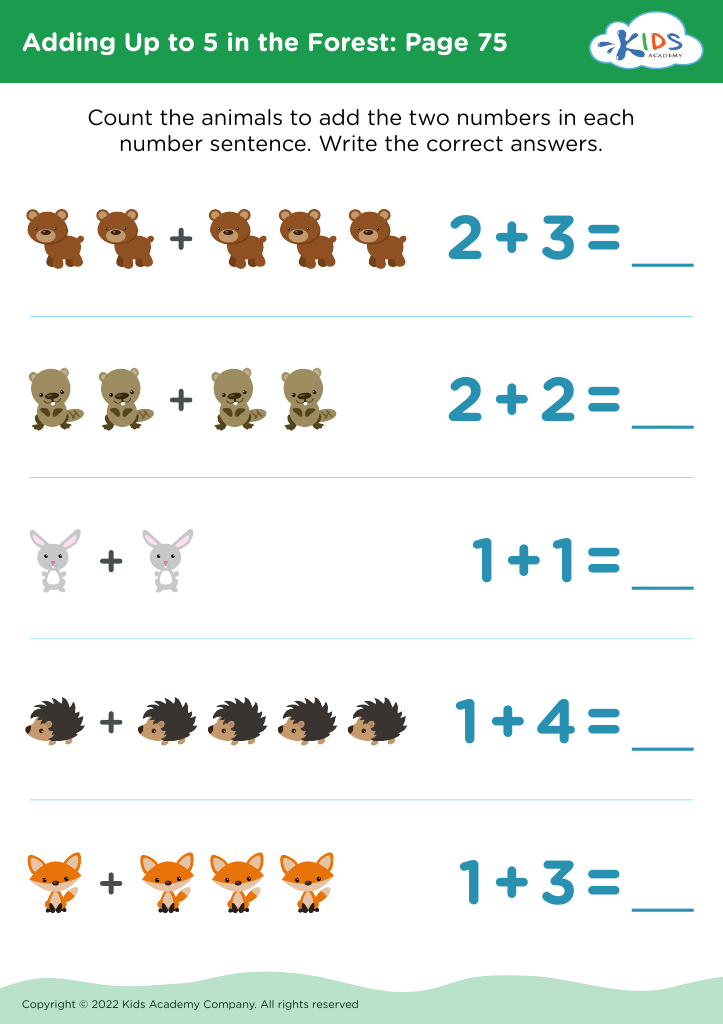
    Adding Up to 5 in the Forest: Page 75
    Adding Up to 5 in the Forest: Page 75
    Adding Up to 5 in the Forest: Page 75
    Worksheet
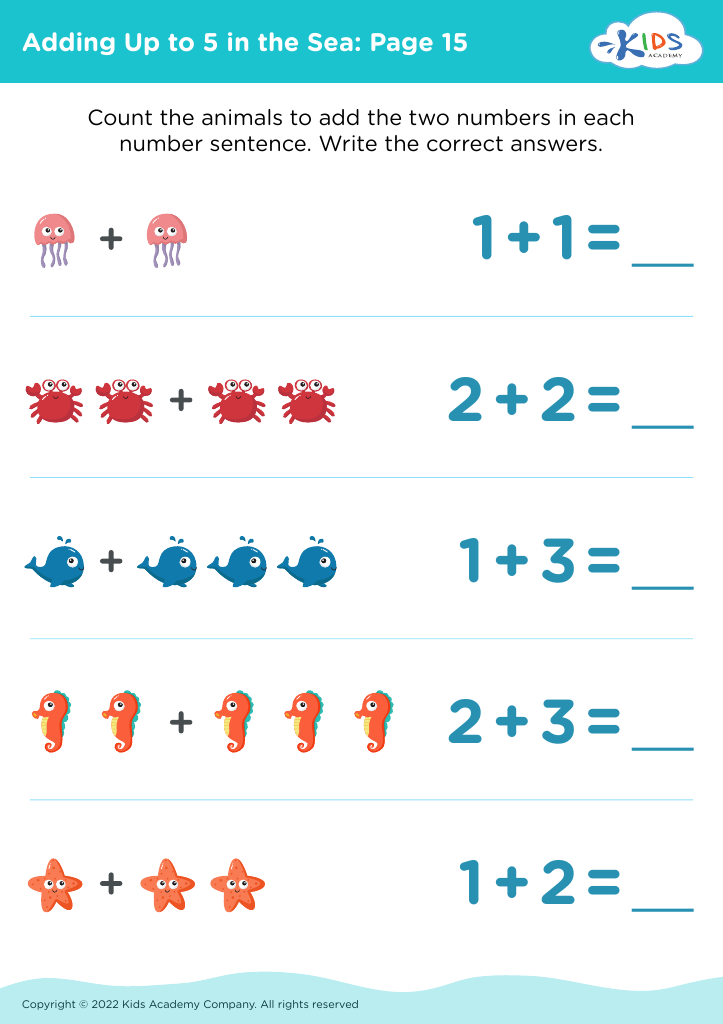
    Adding Up to 5 in the Sea: Page 15
    Adding Up to 5 in the Sea: Page 15
    Adding Up to 5 in the Sea: Page 15
    Worksheet
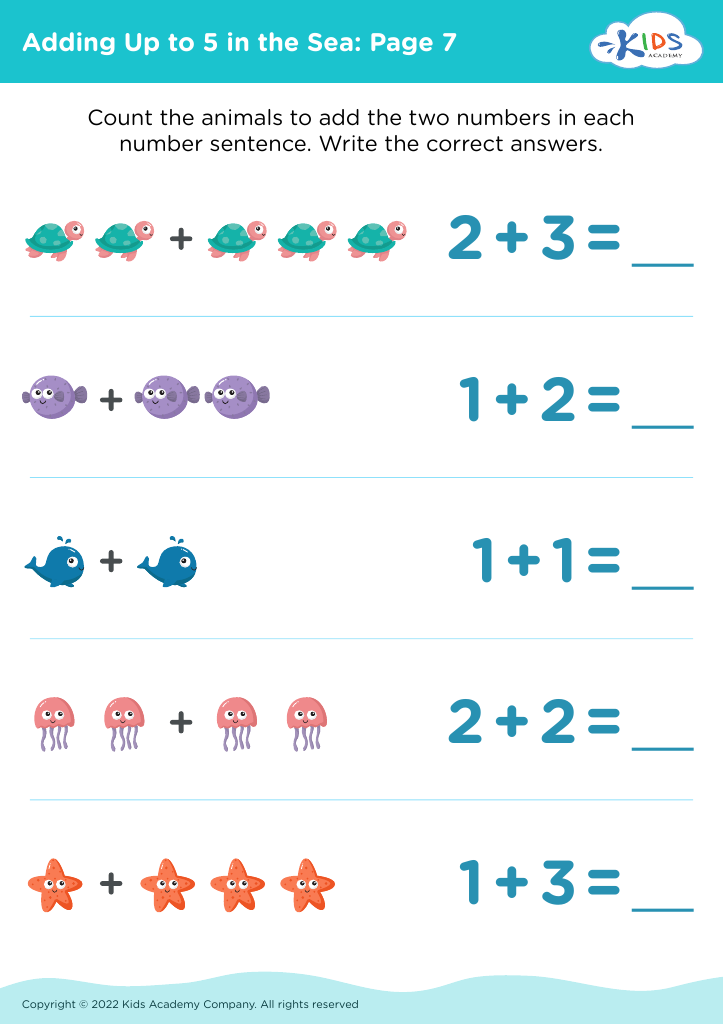
    Adding Up to 5 in the Sea: Page 7
    Adding Up to 5 in the Sea: Page 7

    Adding Up to 5 in the Sea: Page 7

    Adding Up to 5 in the Sea: Page 7
    Worksheet
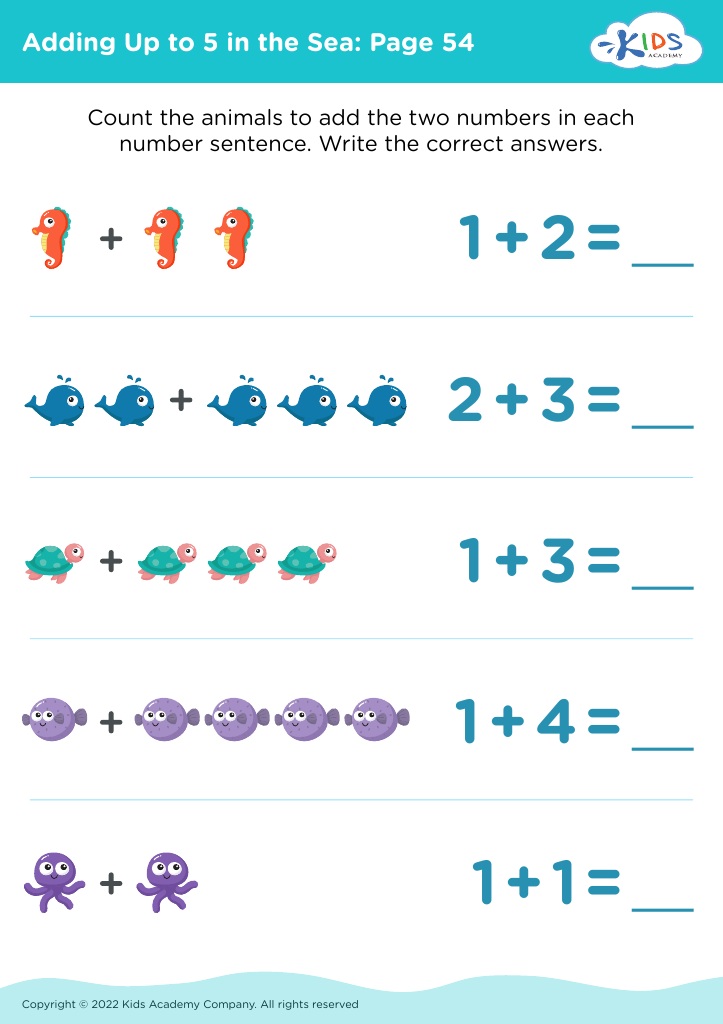
    Adding Up to 5 in the Sea: Page 54
    Adding Up to 5 in the Sea: Page 54
    Adding Up to 5 in the Sea: Page 54
    Worksheet
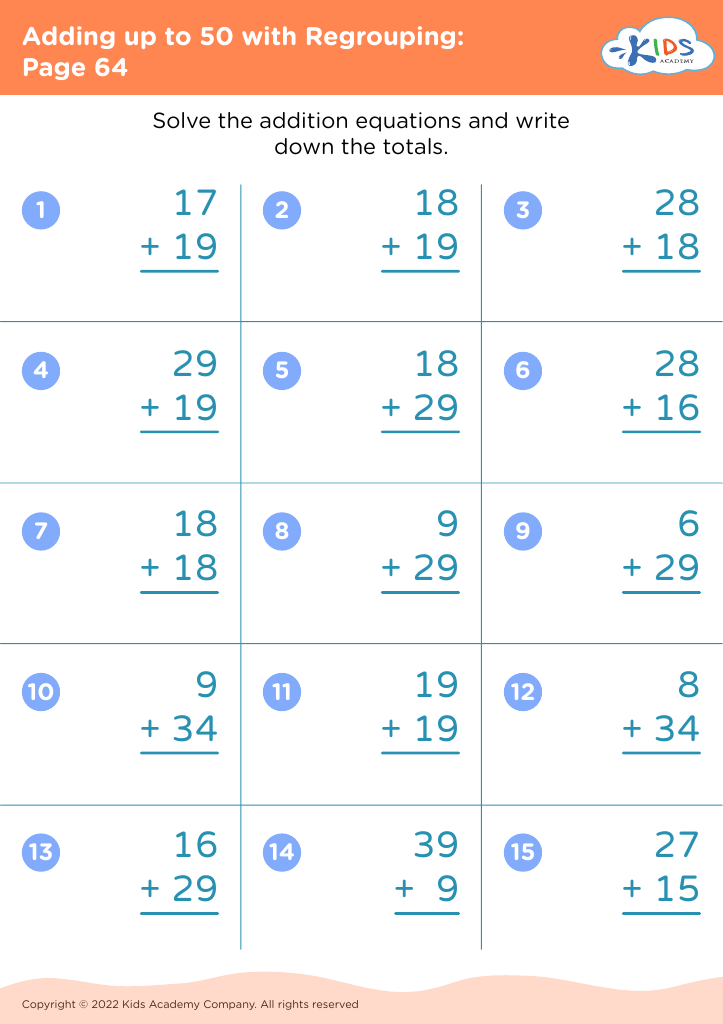
    Adding up to 50 with Regrouping: Page 64
    Adding up to 50 with Regrouping: Page 64
    Adding up to 50 with Regrouping: Page 64
    Worksheet


    Caring about cognitive development through addition for children aged 4-8 is crucial because it lays the foundation for their future learning capabilities and overall academic success. During these formative years, children's brains are highly receptive to new information, making it an ideal time to establish essential math skills. Learning addition not only helps children understand numbers and quantities but also develops critical thinking and problem-solving abilities.

    By introducing addition in engaging and age-appropriate ways, parents and teachers can foster a sense of curiosity and confidence in children. Mastering basic addition sets the stage for more complex mathematical concepts, helping children transition to later skills that they will encounter in school. Additionally, building a solid math foundation early can reduce math anxiety later on, as children feel more prepared to tackle new challenges.

    Moreover, cognitive development isn't just about numbers; it also enhances memory, concentration, and logical reasoning. Engaging in addition activities teaches children to think sequentially and make connections between ideas. Ultimately, supporting cognitive development in these years contributes not only to academic success but also to honing life skills that promote independent thinking and resilience in navigating problems throughout their lives.