Developing logical thinking Addition Worksheets for Ages 4-8
4 filtered results
-
From - To
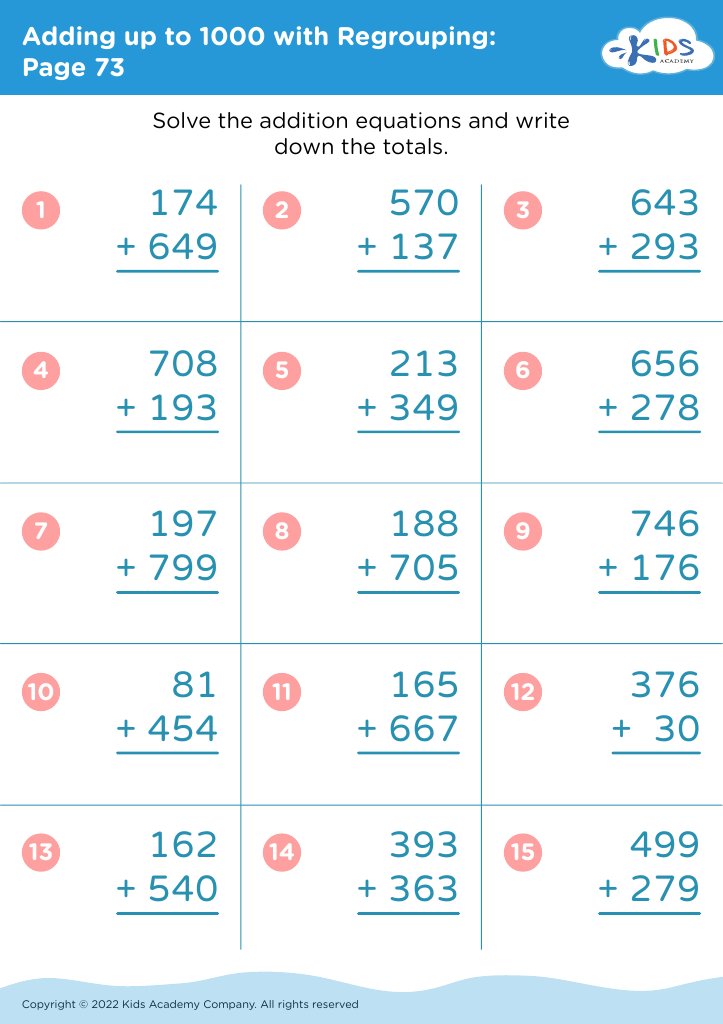
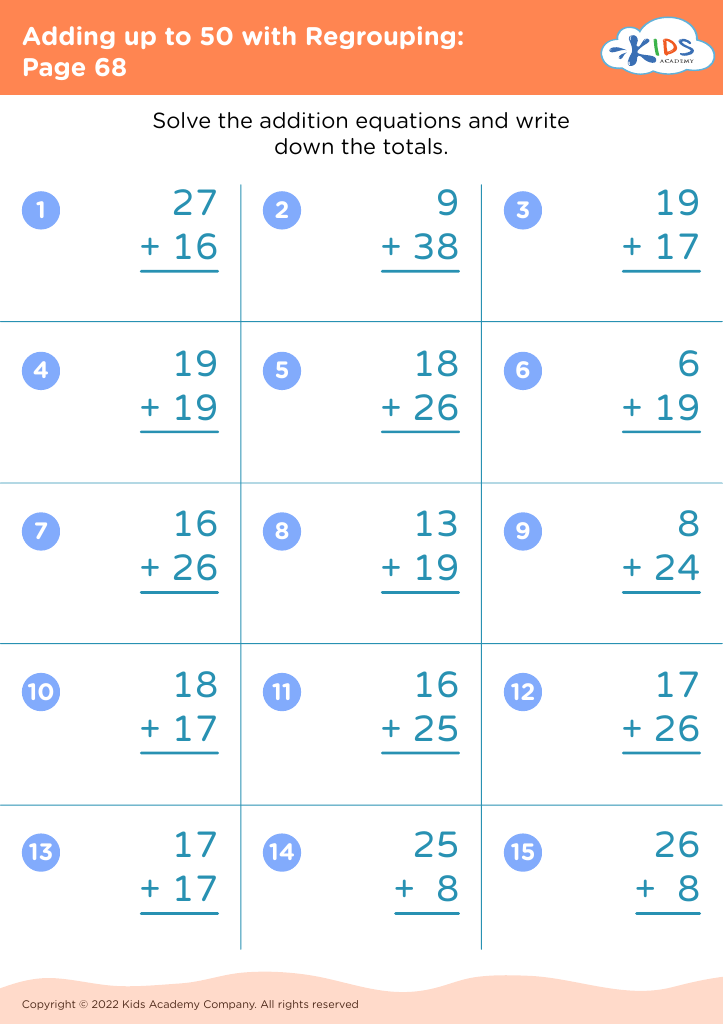
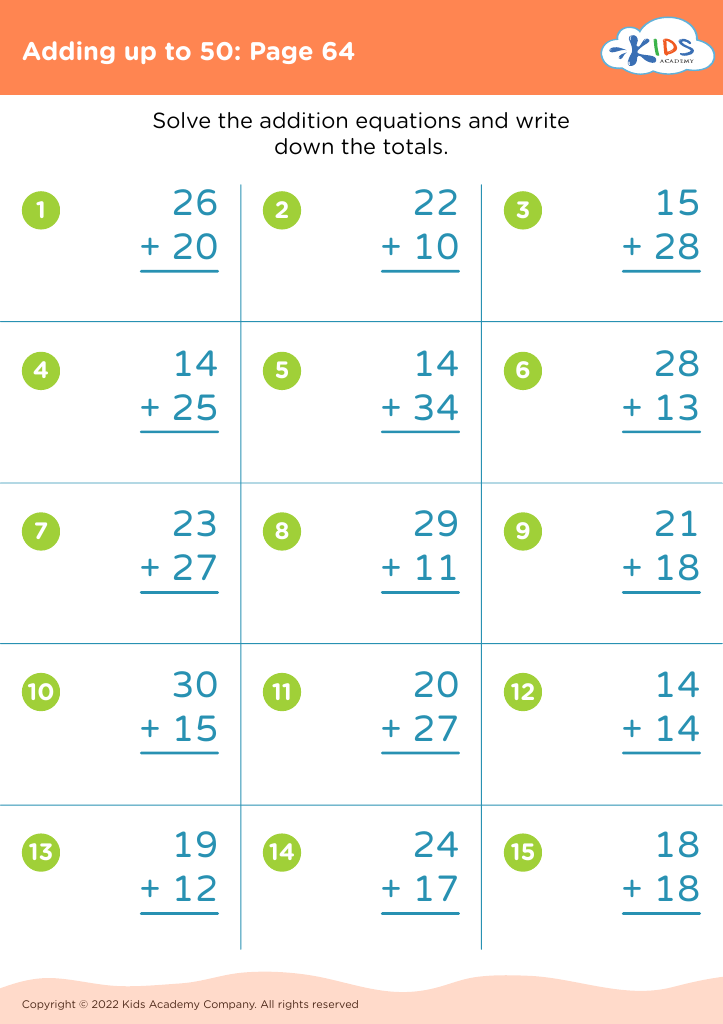
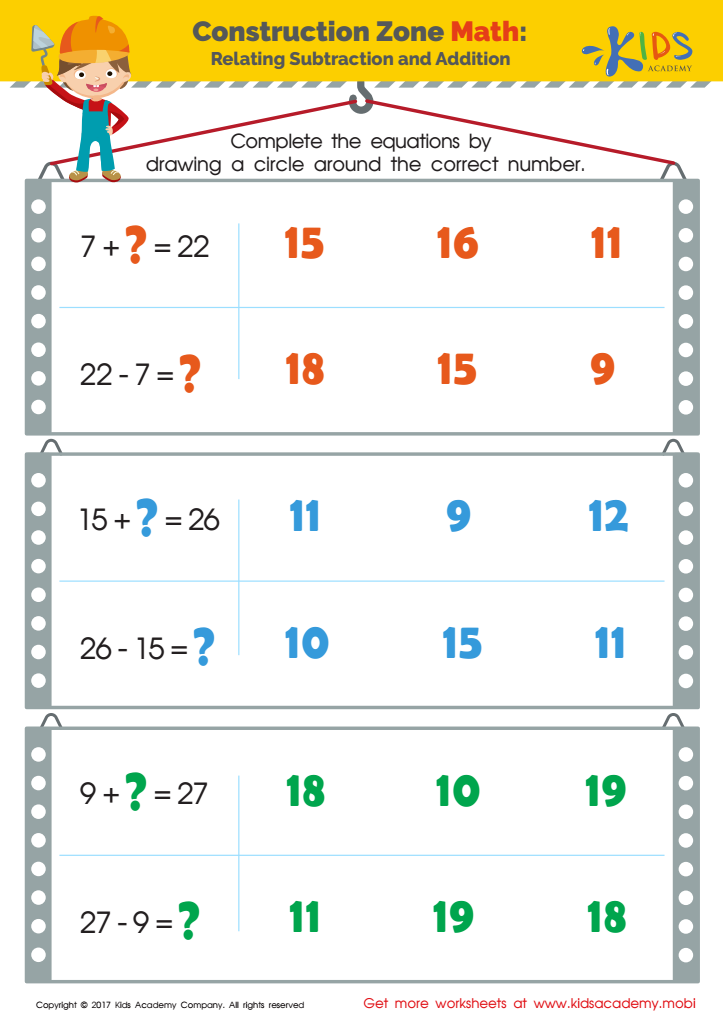
Unlock your child's potential with our "Developing Logical Thinking Addition Worksheets for Ages 4-8"! Designed to nurture young minds, these engaging worksheets blend fun with learning to build foundational math skills. Each sheet is crafted to enhance logical reasoning and critical thinking through age-appropriate addition exercises. Bright visuals and interactive tasks keep kids motivated while solidifying their understanding of basic math principles. Our printable worksheets are perfect for home or classroom use, supporting early learners in a journey towards mathematical confidence and academic success. Spark curiosity and boost brainpower with our thoughtfully designed addition worksheets!
Related Addition and Subtraction Facts Worksheet
 Assign to My Students








Developing logical thinking through addition for ages 4-8 is crucial for several reasons, benefiting both cognitive development and practical life skills. At this formative age, children’s brains are highly adaptable, and learning foundational math concepts like addition significantly enhances their logical thinking and problem-solving abilities.
Logical thinking equips children with the ability to observe situations, identify patterns, and draw conclusions, which are essential skills not only in math but across all subjects and in everyday life. Introducing addition early helps them understand the concept of numbers, recognize relationships between quantities, and develop strategies for solving problems.
Moreover, success in early math can boost confidence and foster a positive attitude toward learning. When children feel competent in understanding and applying basic math, they are likely to be more interested and persistent in tackling more complex challenges.
Parents and teachers thus form a partnership in creating stimulating environments where children are encouraged to explore and practice addition through playful activities, manipulatives, and everyday experiences. This collaborative approach not only nurtures a child’s intellectual growth but also builds a strong foundation for future academic success, making math a fun and integral part of their lives.








