Fraction conversion Addition Worksheets for Ages 4-8
3 filtered results
-
From - To
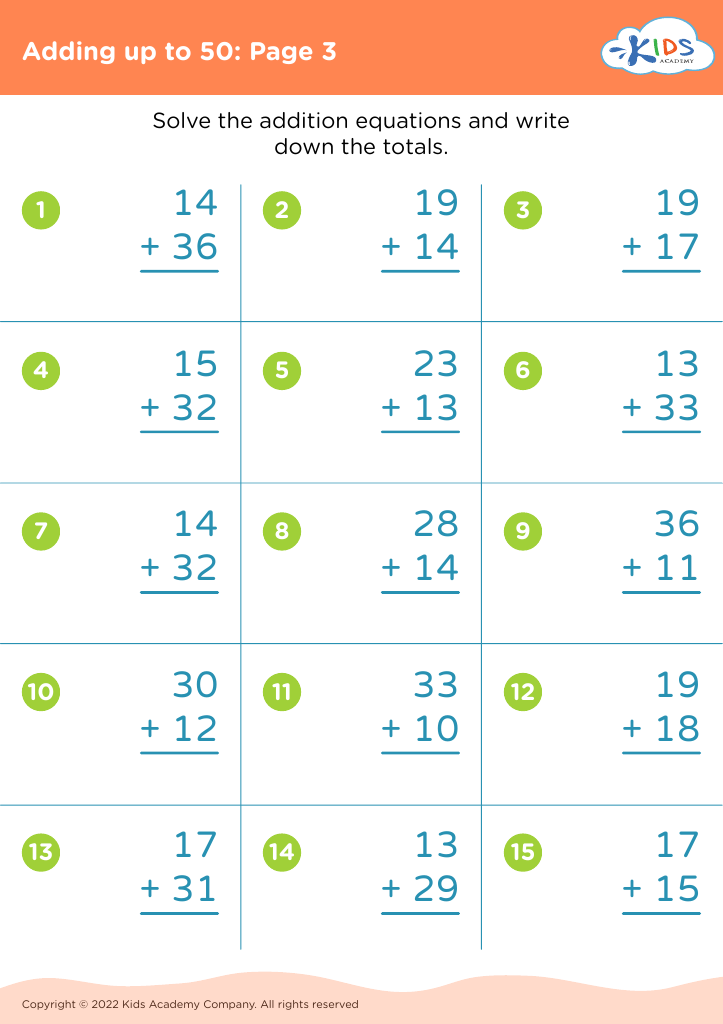
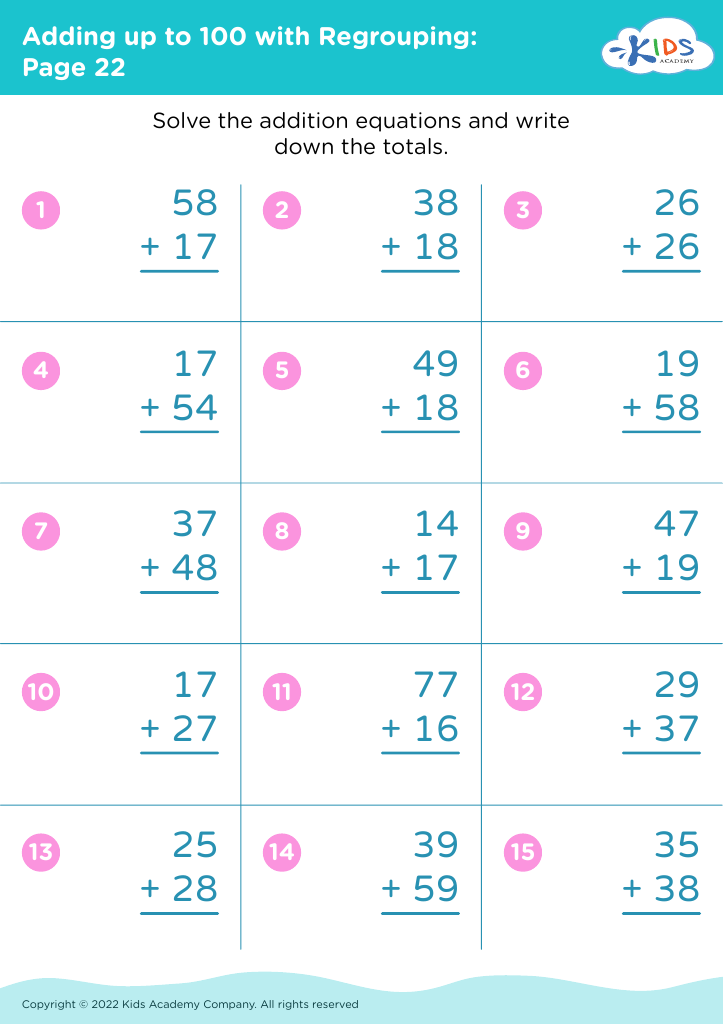
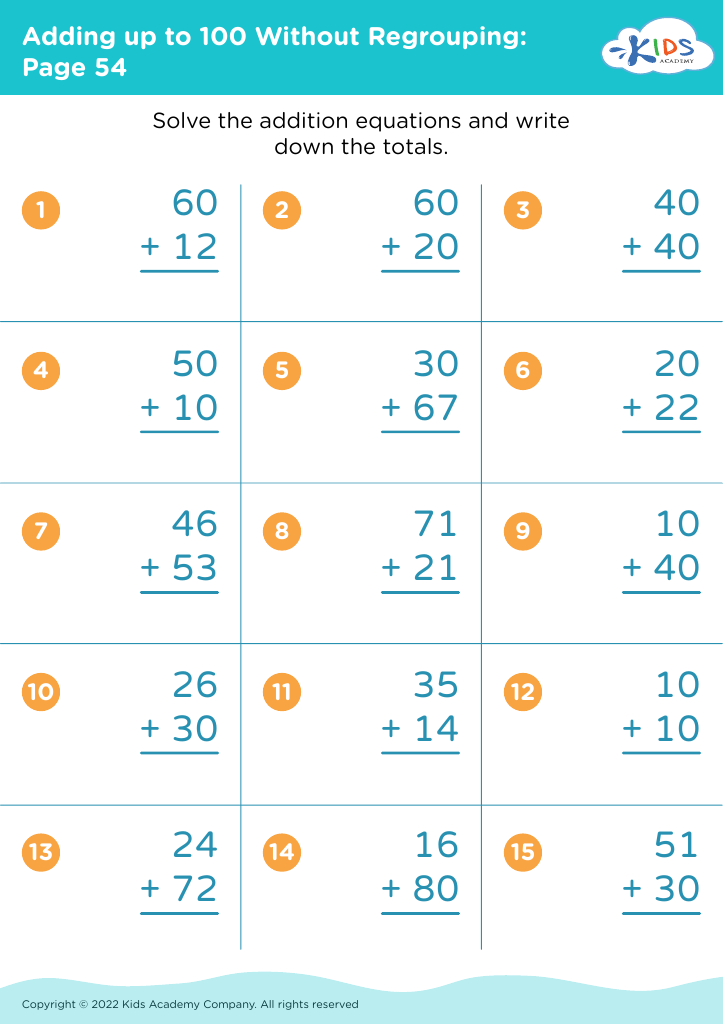
Discover engaging "Fraction Conversion Addition Worksheets" designed for young learners ages 4-8. These worksheets from Kids Academy skillfully introduce the concept of fractions through fun and interactive addition problems. Children will explore colorful fraction visuals, strengthening their understanding of parts and wholes while enjoying the learning process. Aimed at building a solid mathematical foundation, each worksheet incorporates hands-on activities to keep young minds motivated and captivated. Perfect for both classrooms and home practice, these worksheets provide a seamless and enjoyable way for children to master fraction conversions and addition, setting the stage for future math success.








Understanding fraction conversion and addition at an early age, typically ages 4-8, is fundamental in building a strong mathematical foundation.
First, the early grasp of these concepts enhances cognitive development. Learning how parts make up a whole helps children develop critical thinking and problem-solving skills. They get to grips with the idea of magnitudes, proportions, and equivalences, which are crucial in many real-world situations.
Second, fraction conversion and addition serve as stepping stones to more complex math topics they will encounter in higher grades, such as ratios, percentages, and algebraic expressions. Establishing a solid understanding early on sets students up for future academic success and fosters a love for learning mathematics.
Additionally, engaging in such mathematical exercises improves children's numeracy. It supports better performance in other subjects where these concepts are applicable, including science and even art, where spatial understanding and measurement are needed.
For teachers and parents, early introduction to fractions also means identifying and addressing any learning difficulties right away. By engaging kids with interactive methods, like using physical objects or visual aids, schools ensure that children not only learn but also find the observation of numbers enjoyable.
Thus, instilling a strong foundation in fraction conversion and addition benefits young learners both academically and in everyday life.








