Handwriting improvement Addition Worksheets for Ages 4-8
4 filtered results
-
From - To
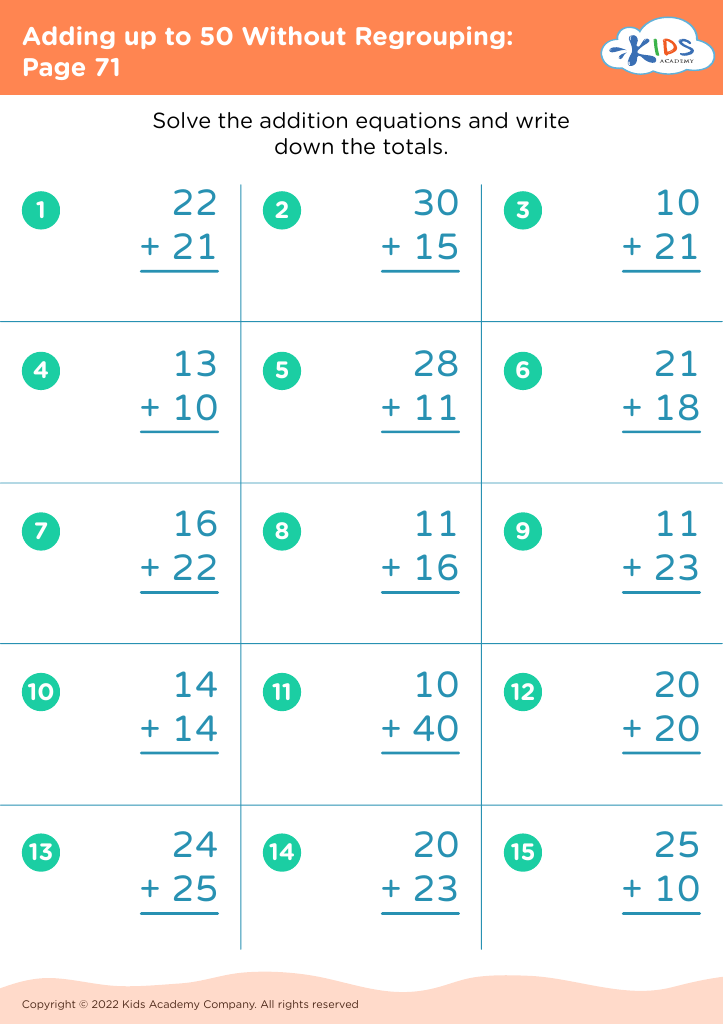
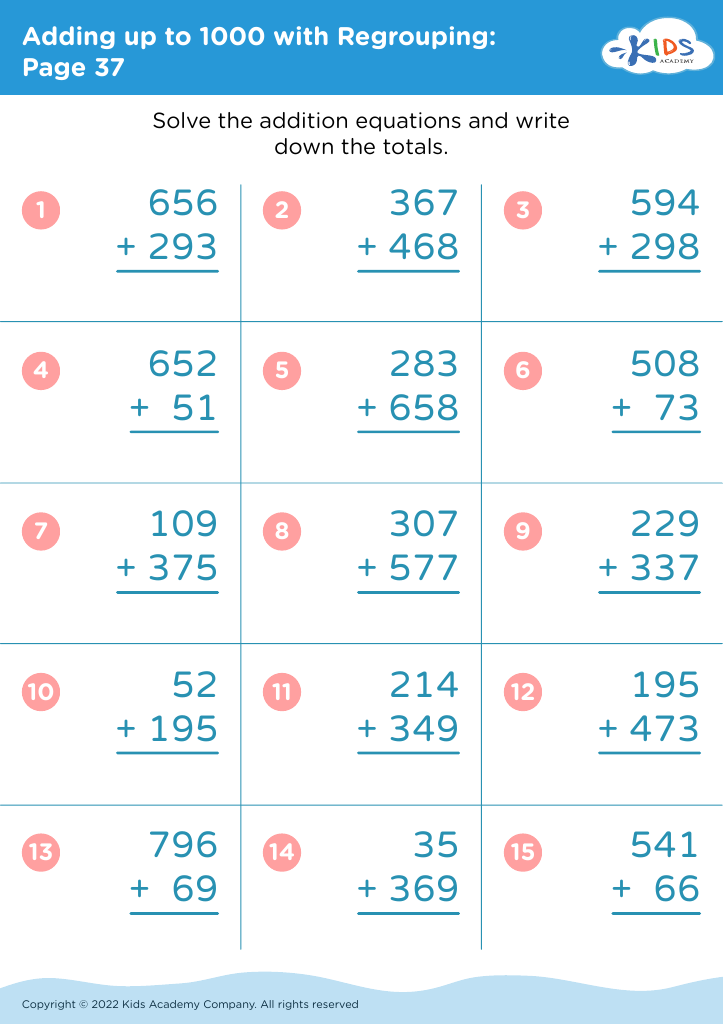
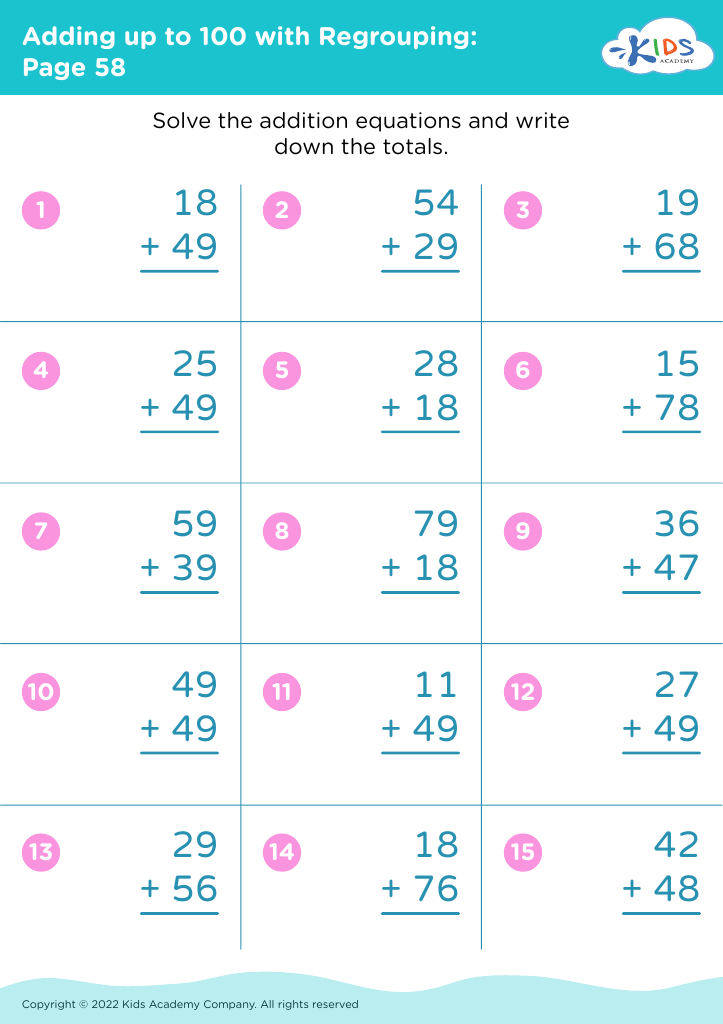
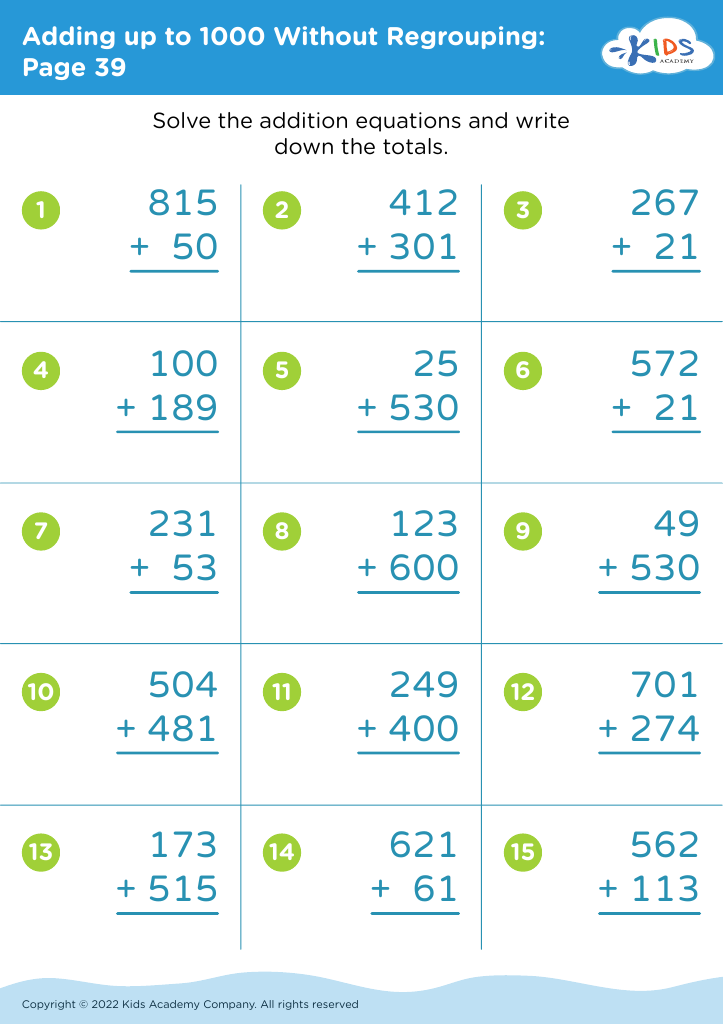
Enhance your child's handwriting while they master addition with our fun and engaging Handwriting Improvement Addition Worksheets designed for ages 4-8! These worksheets combine essential math practice with handwriting exercises, helping young learners develop fine motor skills alongside their numeracy. Each worksheet focuses on different addition concepts while providing ample spaces for writing numbers clearly and confidently. Interactive and colorful designs keep kids motivated as they practice until proficient. Suitable for homeschooling or classroom use, these worksheets are perfect for reinforcing essential skills in a playful way, making learning enjoyable and effective. Start nurturing your child's writing and math skills today!








Handwriting improvement is crucial for children ages 4-8 for several reasons that significantly impact their academic and personal development. At this formative age, fine motor skills are still developing; thus, writing lays the foundation for manual dexterity. Good handwriting promotes legibility, helping children express their thoughts clearly on paper, which is vital for both written communication and assessments. As they learn to spell and formulate sentences, effective handwriting integrates cognitive processing, reinforcing learning retention.
Moreover, handwriting fosters a sense of accomplishment and boosts self-esteem. Children are often motivated by physical outputs of their efforts, and neat, legible writing can make them more confident in sharing their work.
Additionally, the rising prevalence of digital communication shouldn’t diminish the importance of handwriting education. Writing by hand engages different cognitive functions compared to typing, enhancing creativity and critical thinking. Lastly, developing strong handwriting habits early on can prevent future frustration, as poor handwriting often leads to disengagement from the writing process.
Ultimately, ensuring that children establish proficient handwriting skills early enables them to navigate their educational journey with confidence, readiness, and a positive attitude toward learning.








