
Understand multiplication Addition Worksheets for Ages 4-8
6 filtered results
Difficulty Level
Grade
Age
-
From - To
Subject
Activity
Standards
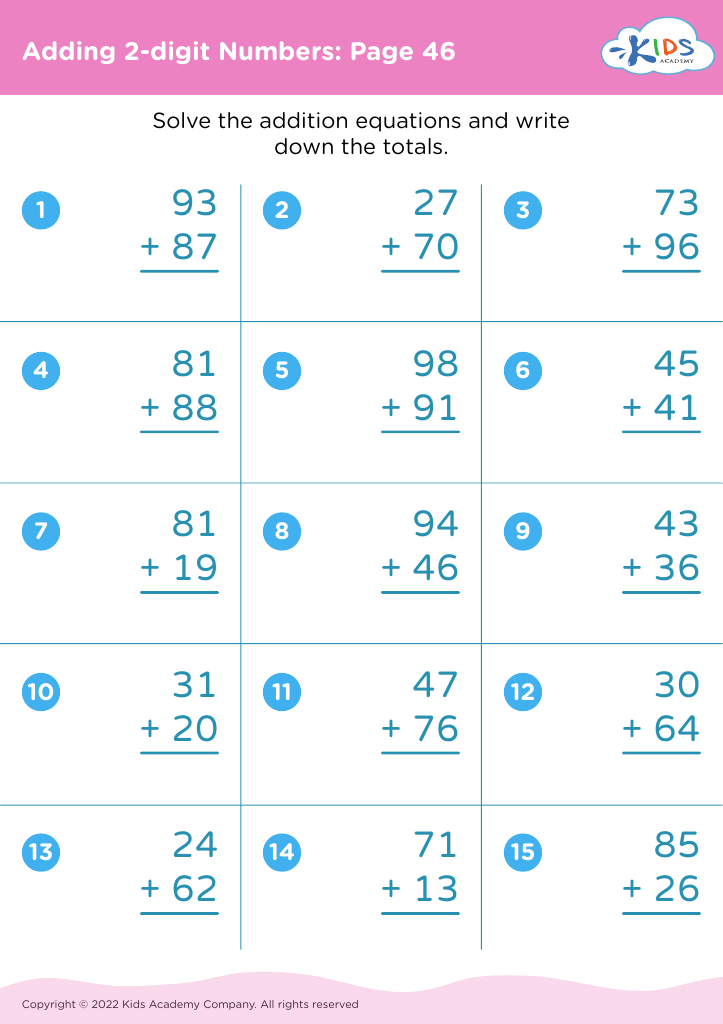
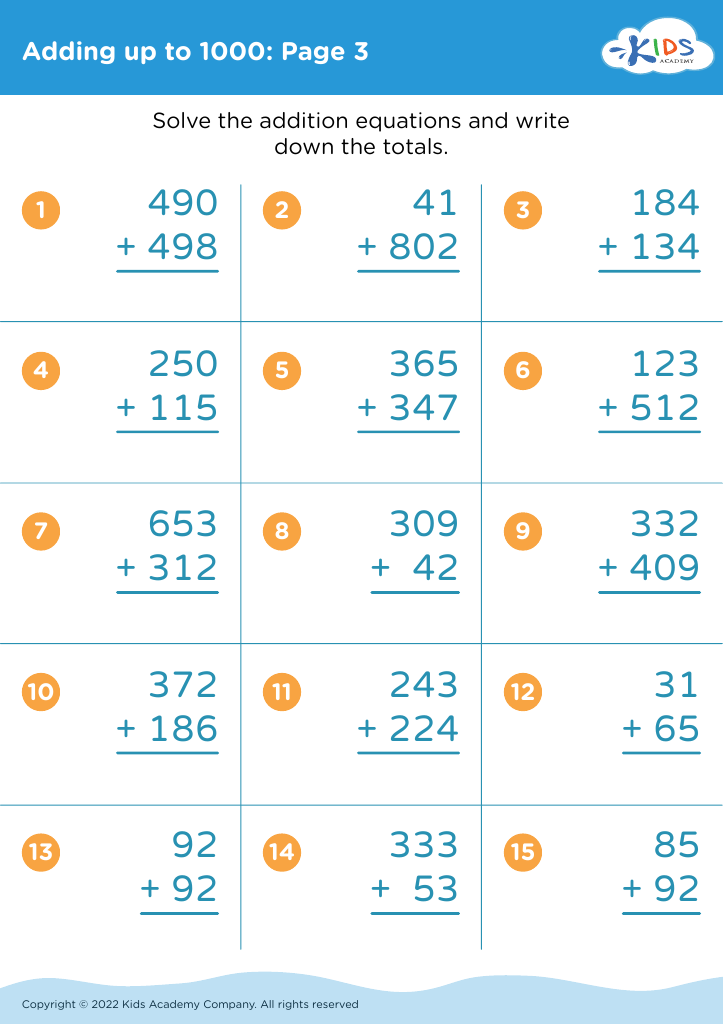
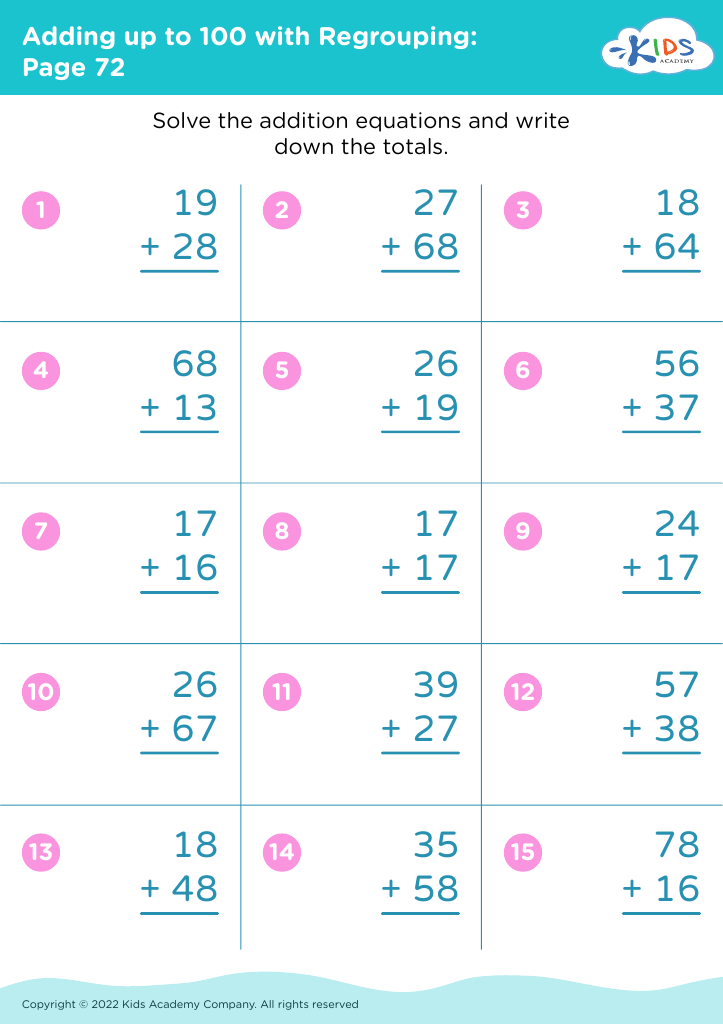
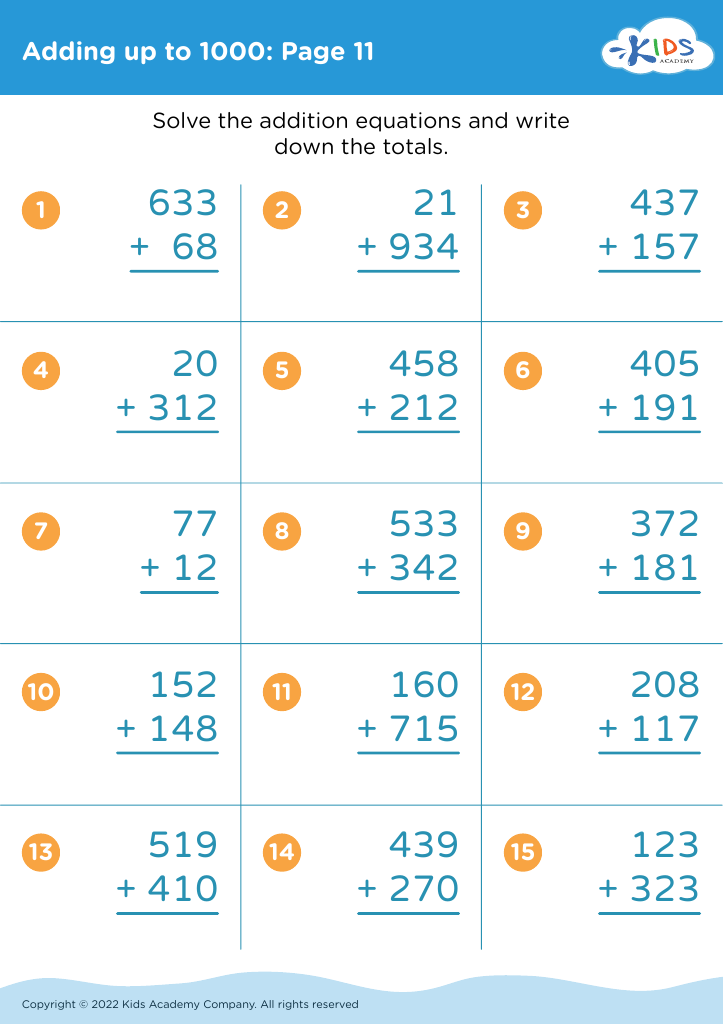
"Understand Multiplication Addition Worksheets for Ages 4-8" from Kids Academy offers engaging and educational resources designed to help young learners decode the principles of multiplication. Through age-appropriate activities, children transition smoothly from simple addition to grasping multiplication concepts. Each worksheet features colorful illustrations and fun exercises, making learning exciting while reinforcing fundamental math skills. Ideal for kids ages 4 to 8, these printable worksheets build a strong mathematical foundation, enhancing cognitive development and boosting confidence. Empower your child with tools that make mastering multiplication an enjoyable journey. Perfect for classroom use or at-home enrichment.
Favorites
With answer key
Interactive
Join Kids Academy for Free
Who is primarily going to use this learning content?








Understanding multiplication and addition from ages 4-8 is crucial since it lays the foundation for a child's future mathematical learning. For parents and teachers, caring about this early understanding is essential for several reasons.
First, addition is one of the basic building blocks in mathematics. Mastery of addition helps children feel confident as they tackle more complex concepts. When a child understands addition, they can progress to mastering subtraction, which together form the backbone of arithmetic.
Introducing multiplication at an early age transforms the perceived complexity of mathematics into manageable units. It's essential because multiplication is an extension of addition—it's essentially repeated addition. For instance, knowing that 3 multiplied by 4 is equivalent to adding 3 four times makes complex problems simpler.
Early grasping of these concepts also establishes a positive attitude towards math. If children find joy and success in these early interactions, they're more likely to approach math with confidence and curiosity later on. Ensuring that learning these fundamental concepts is fun and interactive is key to maintaining their interest.
Educational games, hands-on activities, and real-life examples make learning these concepts engaging. This approach caters to young children's needs and sets them on a trajectory for continued academic success. Therefore, prioritizing these efforts is pivotal in shaping children’s future proficiency and enthusiasm in mathematics.








