Visual comprehension Addition Worksheets for Ages 4-8
7 filtered results
-
From - To
Explore our engaging Visual Comprehension Addition Worksheets, designed specifically for children aged 4-8! These worksheets combine fun visuals with essential math skills, helping young learners develop their addition abilities while enhancing their visual understanding. Colorful illustrations and creative prompts make learning enjoyable, catering to various learning styles. Each activity focuses on key concepts, ensuring kids grasp the fundamentals of addition through interactive exercises. Perfect for classroom use or at-home practice, these worksheets encourage critical thinking and problem-solving. Download and start your child’s journey to math mastery today! Foster a love for learning with our vibrant, hands-on educational resources.
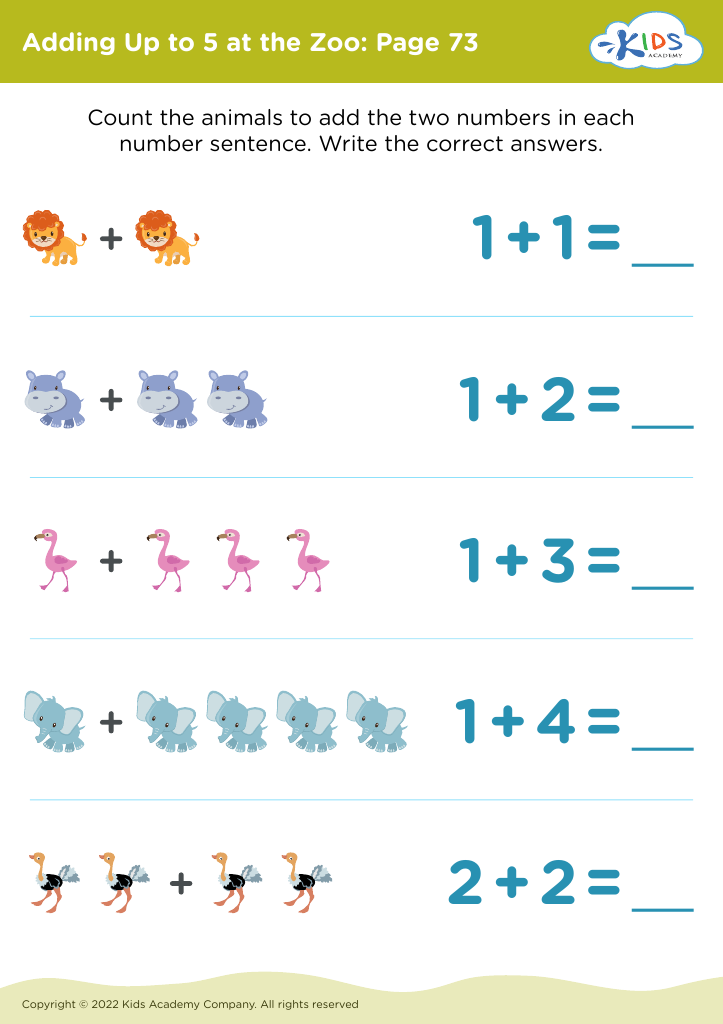
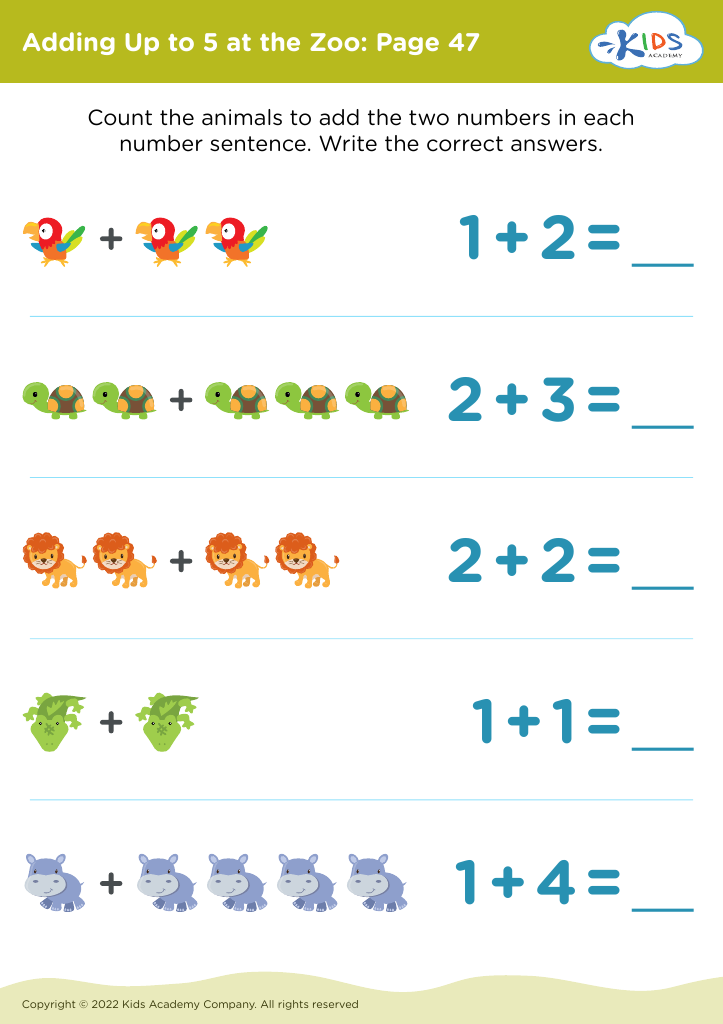
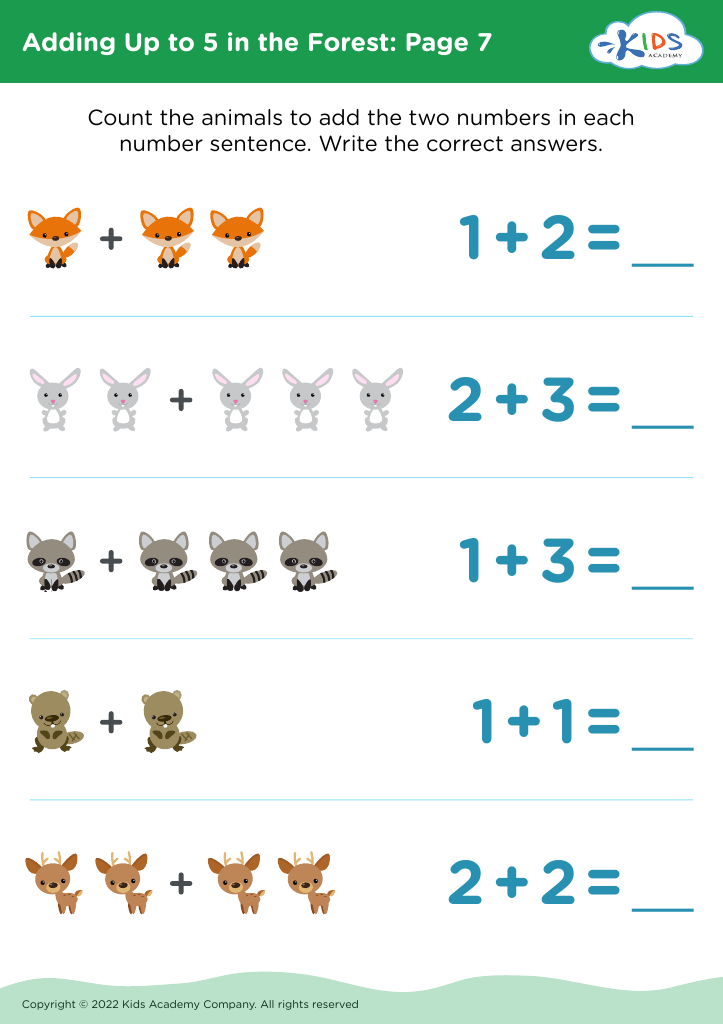
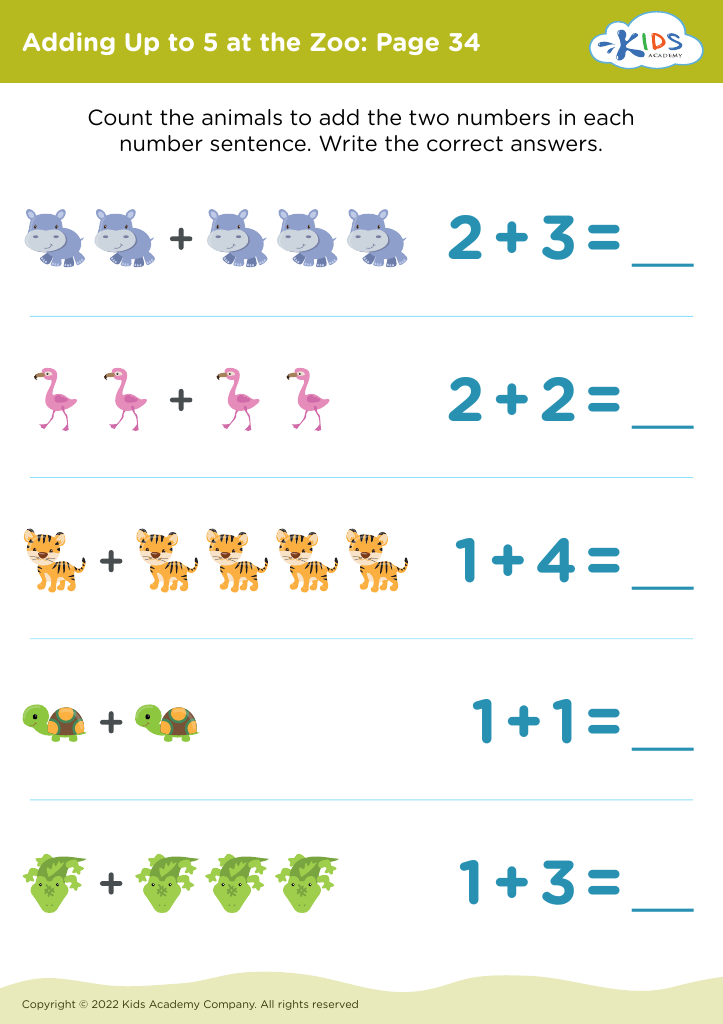
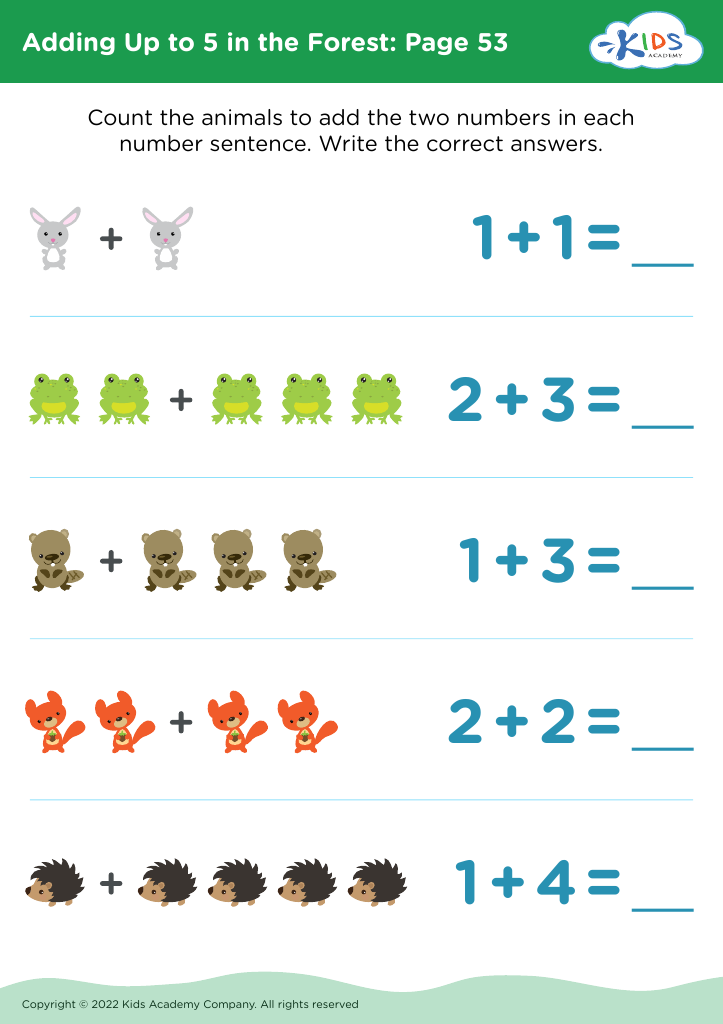
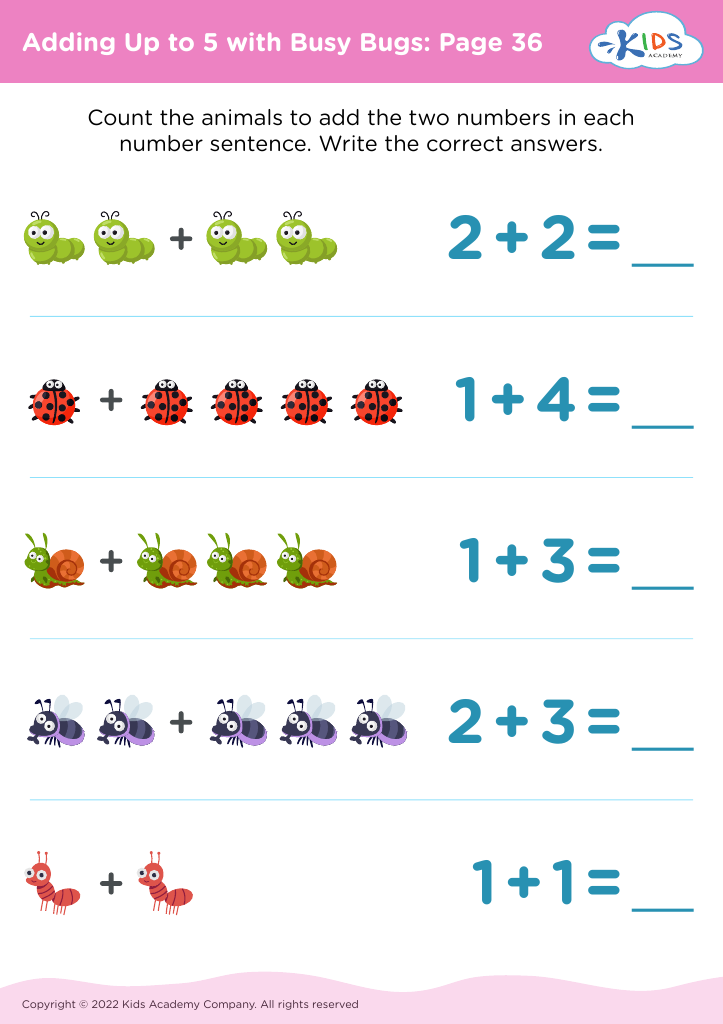
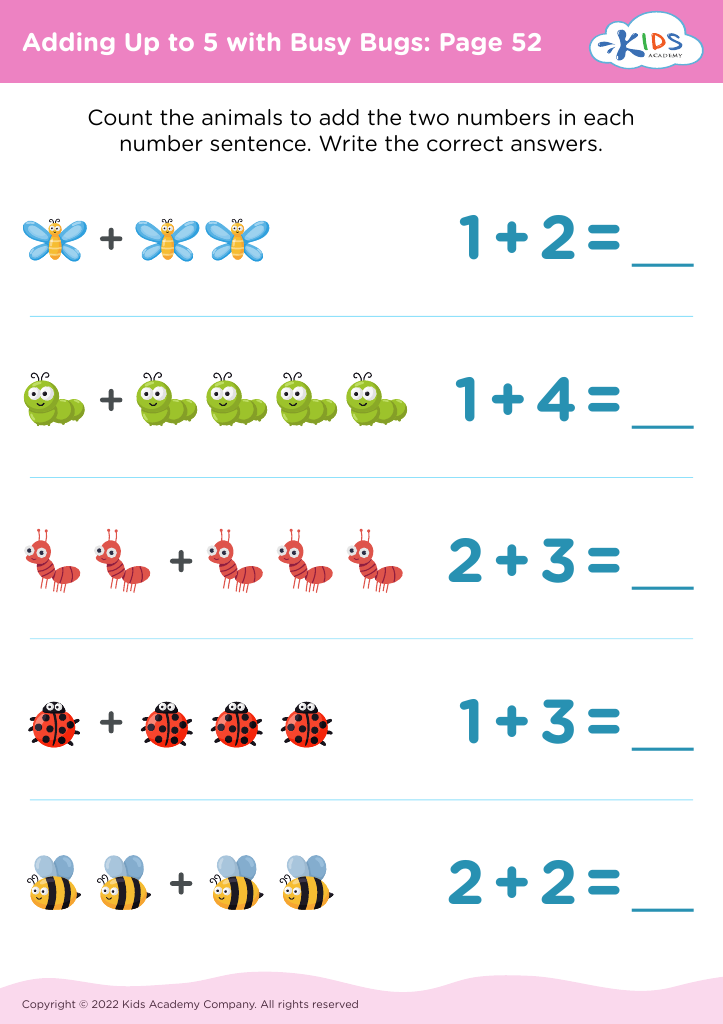








Visual comprehension in addition is crucial for young learners aged 4-8 as it lays the foundation for mathematical thinking and problem-solving skills. At this age, children learn best through visual aids and interactive tools. Visualization helps them understand abstract concepts by allowing them to "see" addition through pictures, objects, or diagrams, making math more relatable and less intimidating.
By focusing on visual comprehension, parents and teachers can engage children in meaningful learning experiences that enhance cognitive abilities. Utilizing visual elements—like drawing groups of objects or using manipulatives—encourages children to grasp the concept of quantity and number relationships effectively.
Moreover, strong visual comprehension skills lead to improved retention and recall of mathematical facts, providing a crucial stepping stone towards more complex operations later in their educational journey. Recognizing patterns and relationships visually enables children to develop critical thinking skills and strategies for solving problems.
Ultimately, caring about visual comprehension in addition fosters not just mathematical proficiency but also boosts confidence, curiosity, and a love for learning. By supporting children in developing these skills, parents and teachers empower them to face mathematical challenges with confidence as they progress through their educational journey.








