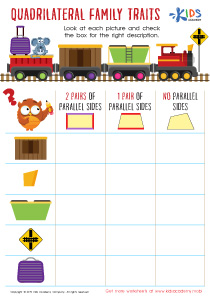
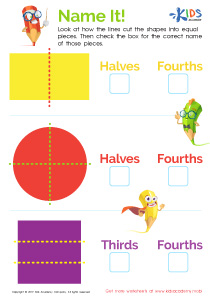
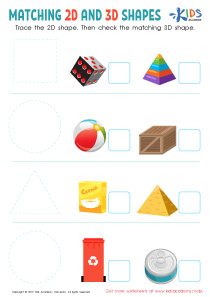
Understanding area Area and Perimeter Worksheets for Ages 4-8
3 filtered results
-
From - To
Explore our engaging "Understanding Area and Perimeter Worksheets" designed for children ages 4-8! These worksheets provide a fun and interactive way for young learners to grasp foundational concepts of area and perimeter through colorful illustrations and hands-on activities. By solving problems and completing creative exercises, kids can develop essential math skills and boost their confidence in measuring spaces. Our resources cater to diverse learning styles, ensuring that all children can thrive in their mathematical journey. Ideal for both classroom settings and at-home practice, these worksheets make learning about area and perimeter a delightful adventure! Start measuring the fun today!
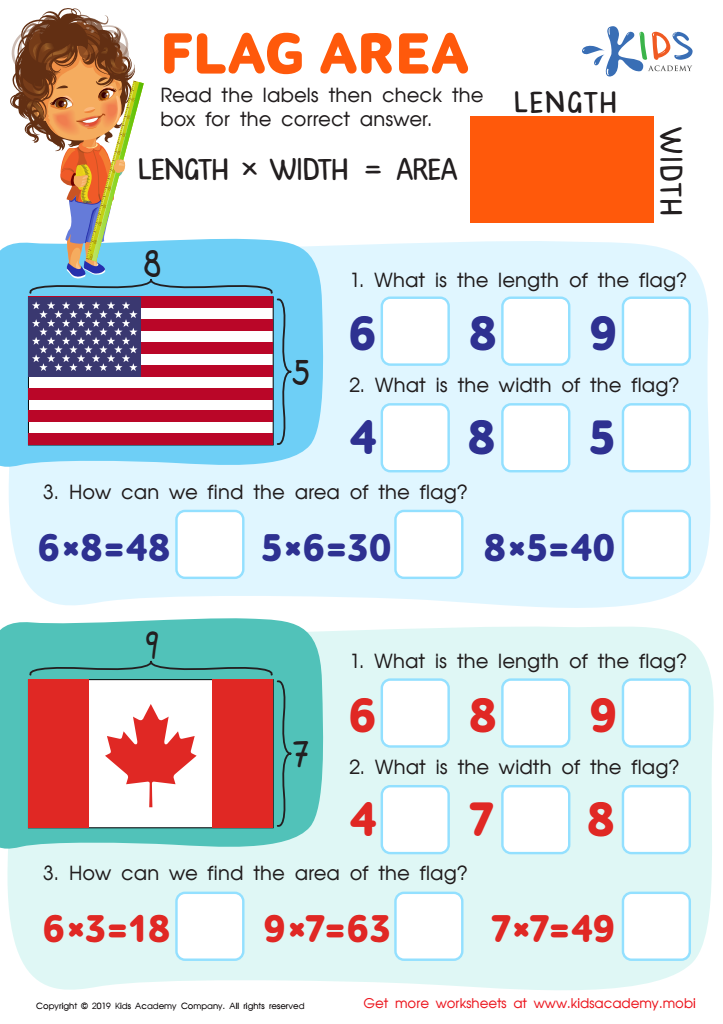
Flag Area Worksheet
 Assign to My Students
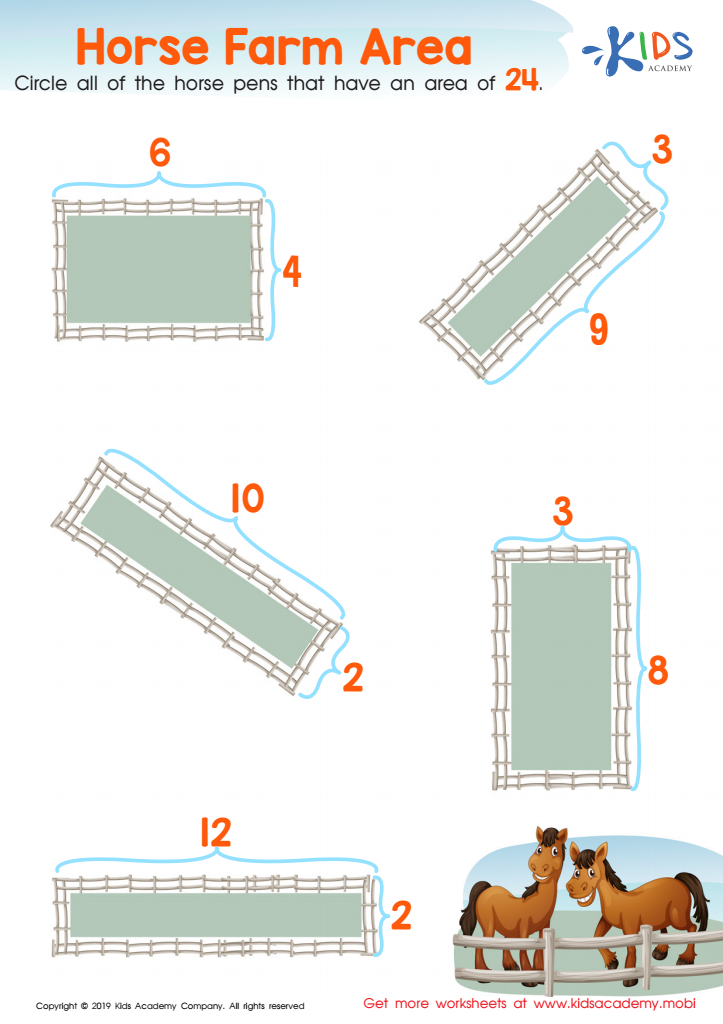
Horse Farm Area Worksheet
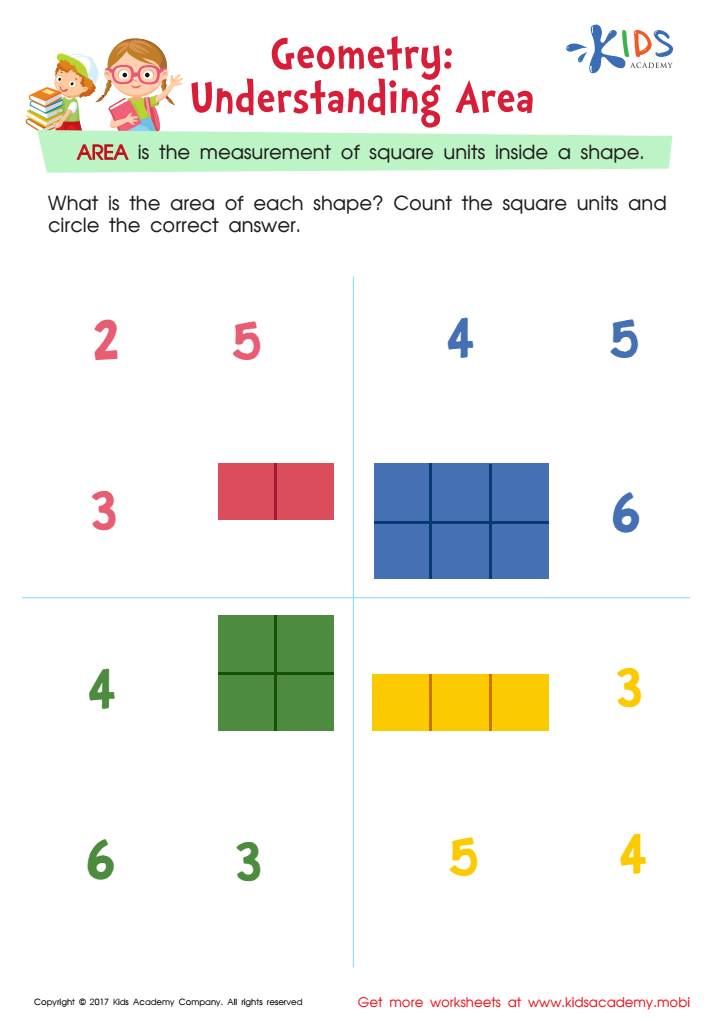
Understanding Area Worksheet








Understanding area and perimeter is essential for children aged 4-8 as it lays the foundation for vital mathematical concepts and real-world applications. By teaching these concepts at an early age, parents and teachers can help children develop spatial awareness and the ability to visualize two-dimensional shapes. This understanding fosters critical thinking skills, as children learn to dissect problems and apply logical reasoning.
Additionally, grasping area and perimeter allows children to engage in practical activities such as measuring spaces for play areas, organizing rooms, or even gardening. Learning about these concepts also enhances their problem-solving skills, preparing them for more complex mathematical challenges in the future. Moreover, incorporating area and perimeter into playful, hands-on activities makes math enjoyable and helps alleviate any anxiety around the subject.
Early exposure to these concepts supports cognitive development, encouraging curiosity and a love for learning. It establishes mathematical language—a precursor to geometry—allowing children to communicate their ideas effectively. When parents and teachers prioritize understanding area and perimeter, they equip children with essential skills for both academic success and everyday life, laying the groundwork for confidence in mathematics as they grow.