Basic Math Skills Comparison Worksheets for Ages 4-8
3 filtered results
-
From - To
Enhance your child's foundational math skills with our engaging Basic Math Skills Comparison Worksheets for ages 4-8. Designed to foster early learning, these worksheets encourage students to compare different quantities and develop essential analytical skills. Activities include identifying greater and lesser values, understanding more and less, and engaging with visuals to solidify concepts. Our worksheets are perfect for at-home practice or classroom use, tailored to boost confidence and enthusiasm in young learners. With fun designs and interactive exercises, children will not only grasp fundamental math comparisons but also enjoy the journey of learning. Start building your child's mathematical foundation today!
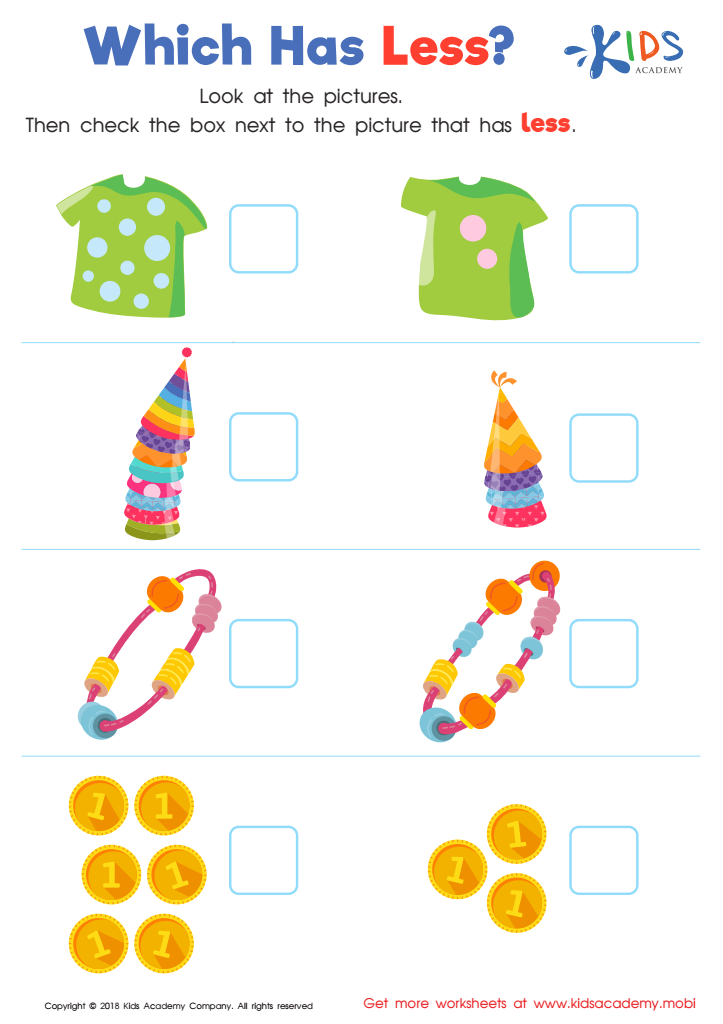
Which Has Less? Worksheet
 Assign to My Students
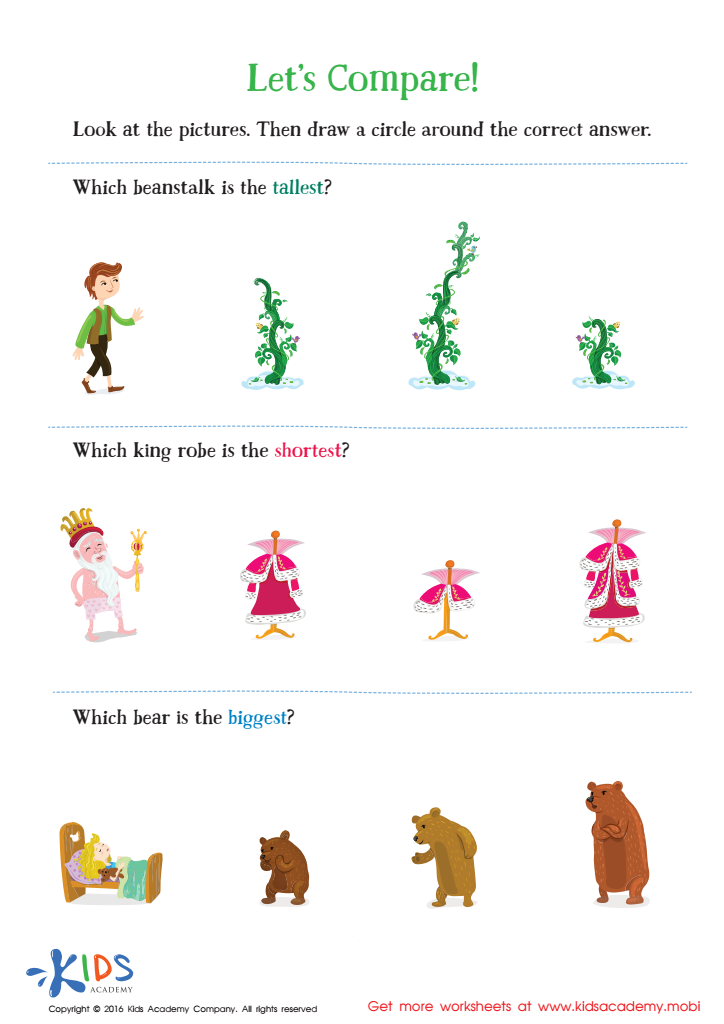
Fairy Tale Worksheet: Let's Compare
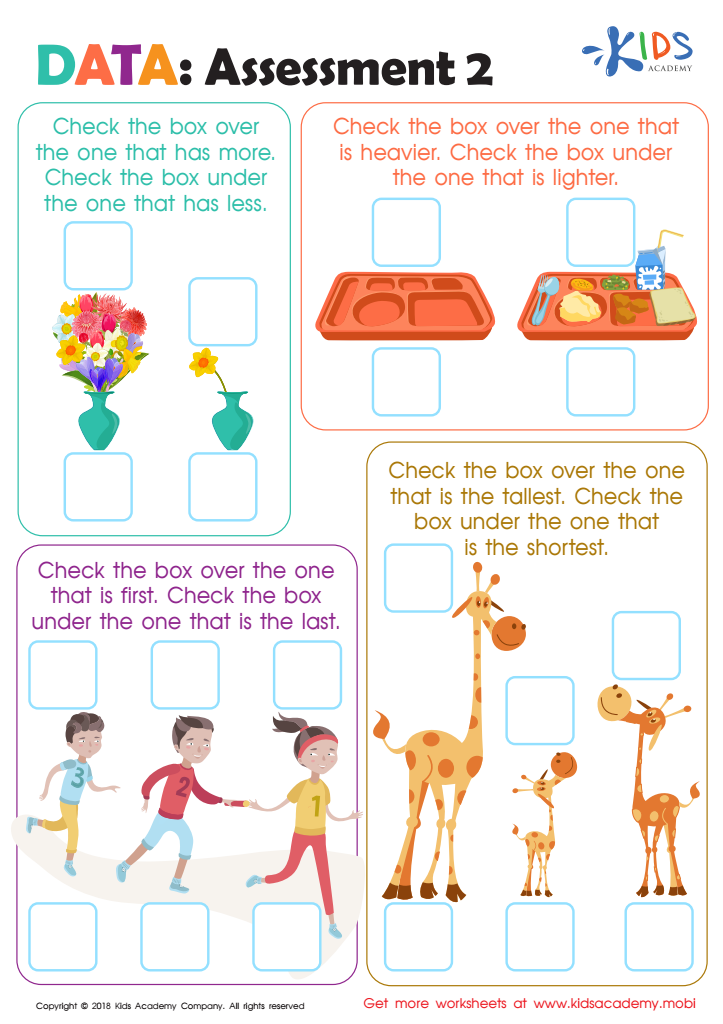
Data: Assessment 2 Worksheet






Understanding Basic Math Skills for ages 4-8 is crucial for parents and teachers because these early years lay the foundational blocks for a child's future academic success. During this developmental stage, children are particularly receptive to learning and can easily grasp concepts like number recognition, counting, addition, and subtraction. By comparing basic math skills among peers, educators and parents can identify individual learning milestones, enabling them to tailor instruction to meet each child's needs effectively.
Moreover, recognizing areas where children excel or struggle fosters early intervention, which can prevent larger gaps in understanding down the line. Early math skills correlate with later academic success; children who master basic math concepts in these formative years are often more confident and capable learners in higher grades.
Furthermore, fostering a positive attitude towards math at an early age diminishes anxiety or resistance to the subject as they progress in school. By actively engaging in this process, caregivers and teachers create a nurturing environment that encourages exploration and curiosity in math, helping children develop critical problem-solving and analytical skills essential for their lifelong learning journey. Ultimately, focusing on this comparison helps support children's holistic growth, paving the way for future success both academically and in everyday life.








