Basic geometry Geometry Worksheets for Ages 4-8
3 filtered results
-
From - To
Discover a fun and engaging way for young learners to explore basic geometry with our specially designed worksheets for ages 4-8. These resources introduce essential geometric concepts, such as shapes, patterns, and spatial awareness, through colorful activities that stimulate curiosity and creativity. Each worksheet is crafted to enhance critical thinking, fine motor skills, and problem-solving abilities while ensuring that learning remains enjoyable. Perfect for both classroom make use and home learning scenarios, our basic geometry worksheets provide a solid foundation in geometry for early learners. Download, print, and watch your child's confidence in math grow as they master these key concepts!
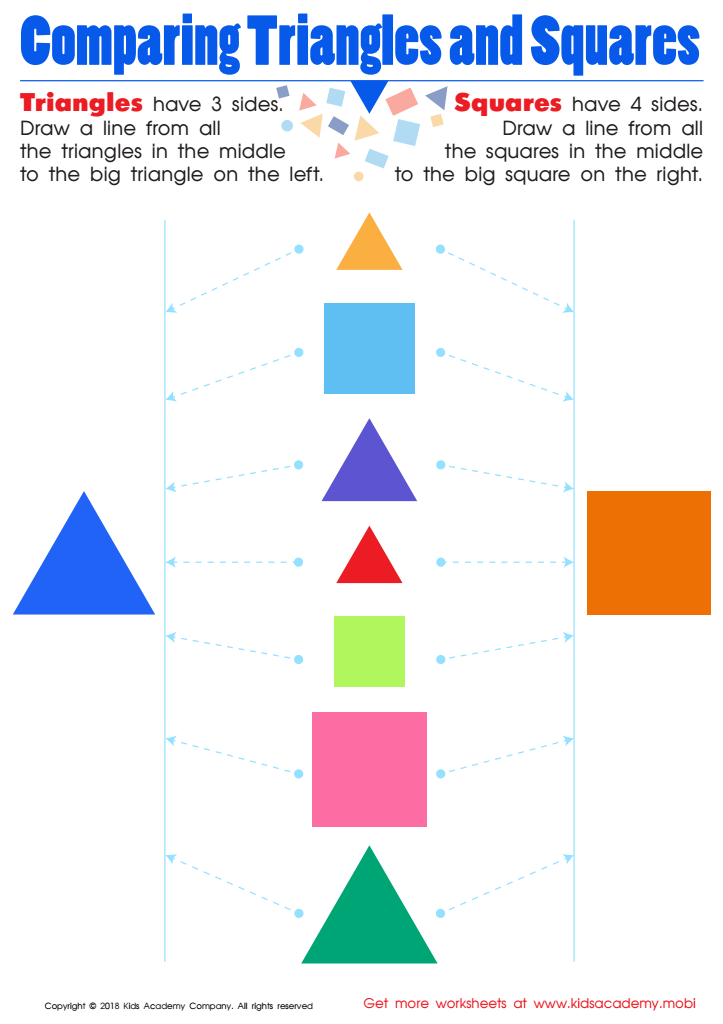
Comparing Triangles Squares Worksheet
 Assign to My Students











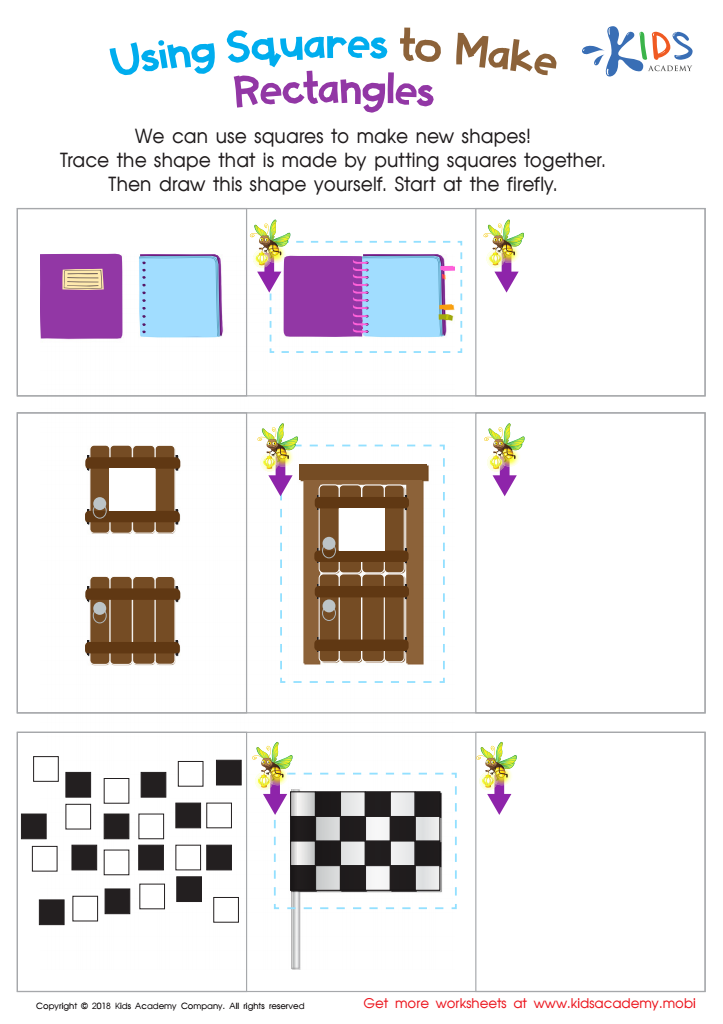
Using Squares to Make Rectangles Worksheet
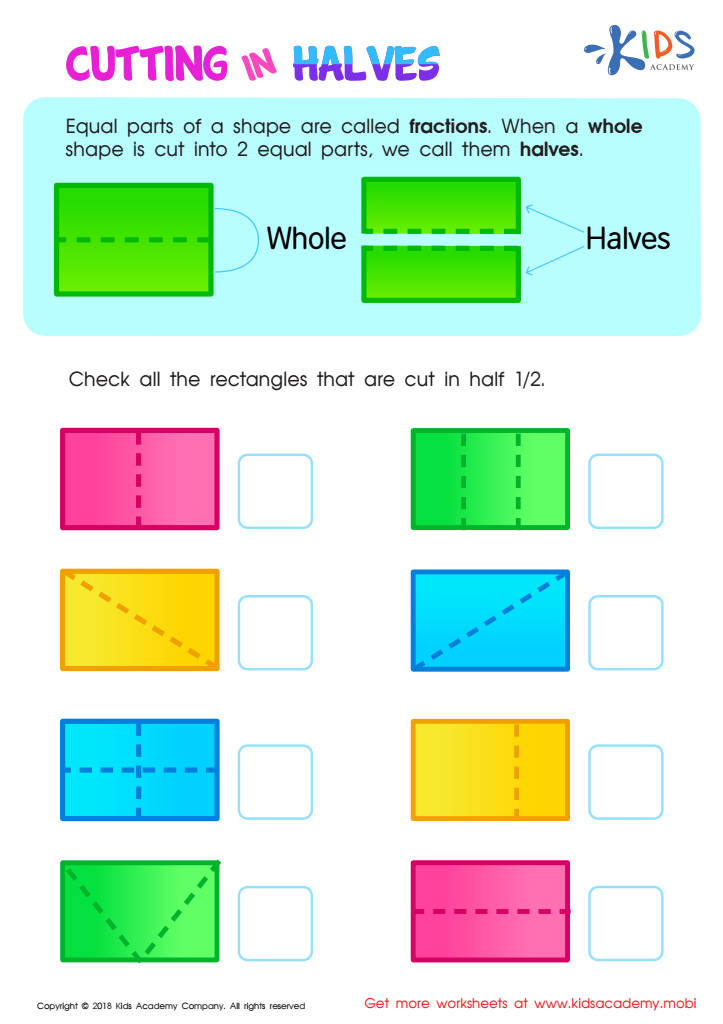
Cutting in Halves Worksheet








Basic geometry is crucial for children aged 4-8 as it lays the foundation for their understanding of the world around them. At this age, children are naturally curious and eager to explore shapes, sizes, and spatial relationships, which are fundamental concepts in geometry. Engaging with basic geometric principles helps to develop critical thinking and problem-solving skills.
For parents and teachers, fostering a child's interest in geometry can facilitate their cognitive growth. Learning to recognize shapes and understand spatial attributes supports skills in various subjects, including math, art, and science. Additionally, geometry enhances children's ability to visualize and manipulate objects, which is essential in everyday tasks like navigation and construction.
Moreover, geometric concepts are integrated into life skills, such as telling time, measuring distances, and understanding patterns. As children excel in these foundational skills, they build confidence and resilience, essential traits for success in later academic endeavors. Encouraging early engagement with geometry not only makes learning fun, but it also prepares children for future learning opportunities, ultimately equipping them with essential skills for their educational journey. Investing in basic geometry education nurtures a well-rounded, innovative mindset that benefits children both in school and in their everyday lives.








