Basic geometry knowledge Geometry Worksheets for Ages 4-8
3 filtered results
-
From - To
Explore our engaging Basic Geometry Knowledge worksheets designed specifically for children aged 4 to 8! These activities introduce essential geometric concepts through fun and interactive lessons, helping young learners recognize shapes, understand symmetry, and grasp spatial relationships. Each worksheet features colorful visuals and age-appropriate tasks that spark curiosity and promote critical thinking. Perfect for classroom use or at-home learning, our worksheets reinforce foundational math skills while keeping kids entertained. Encourage your child's love for learning and geometry with our easy-to-use resources, perfect for supporting early education. Start building their confidence in geometry today with our well-crafted, printable worksheets!
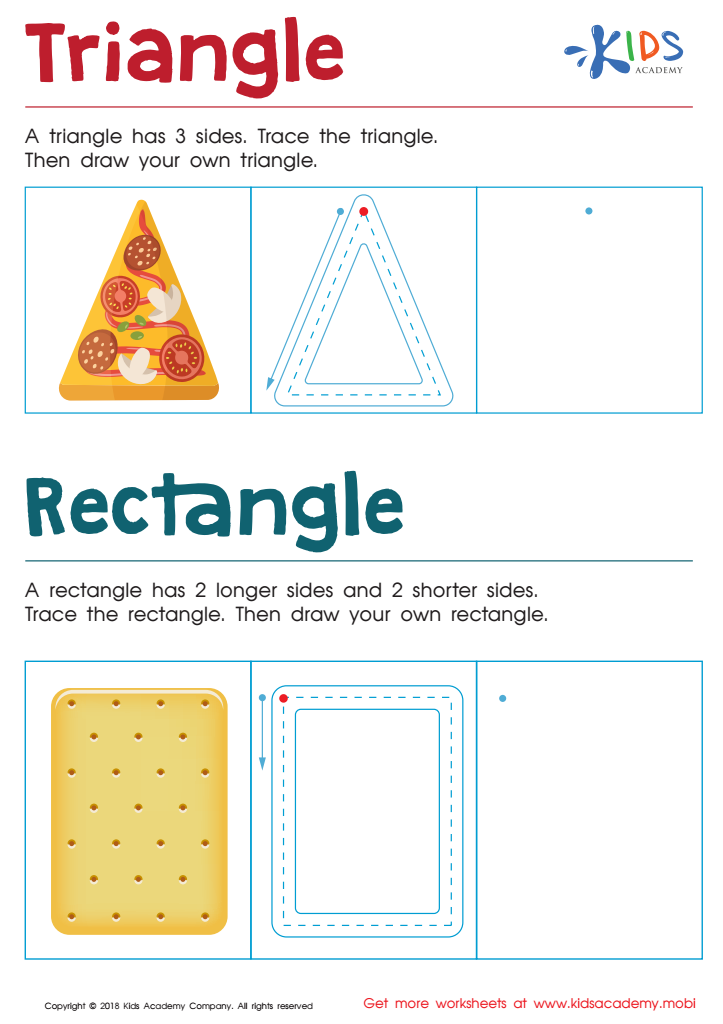
Triangle Rectangle Worksheet
 Assign to My Students











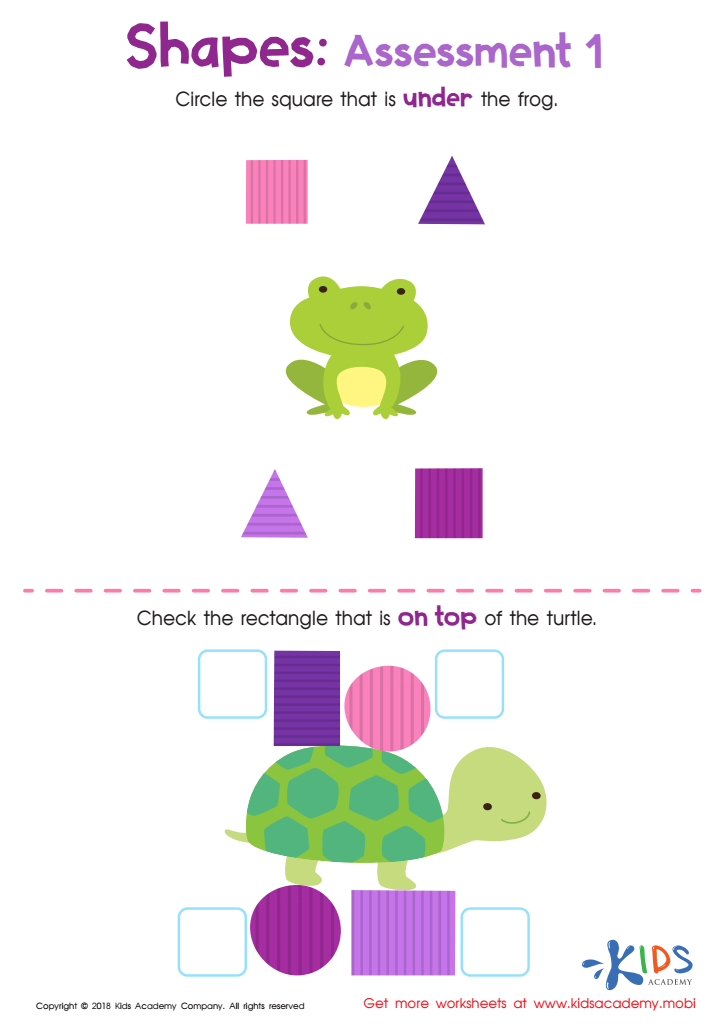
Geometry – Assessment 1 Worksheet
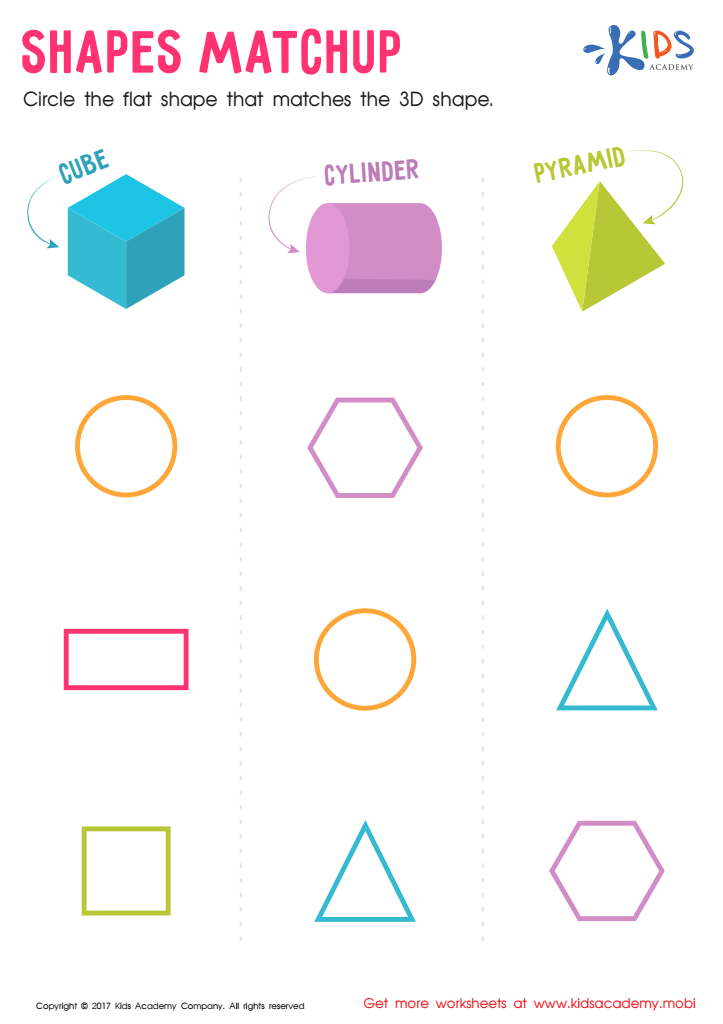
Shapes Matchup Worksheet








Basic geometry knowledge is essential for young children aged 4-8 as it lays the foundation for critical thinking and problem-solving skills. During this developmental stage, children are naturally curious and begin to engage with the world around them, making it an ideal time to introduce geometric concepts.
Understanding shapes, sizes, and spatial relationships helps children make sense of their environment, enhancing their observational skills. This knowledge fosters cognitive development, as they learn to classify objects, recognize patterns, and understand the fundamental characteristics of shapes. Additionally, geometry supports early math skills, providing children with a practical context to explore counting, measuring, and even basic arithmetic.
Moreover, geometric learning often involves hands-on activities, promoting fine motor skills and spatial awareness through sorting, crafting, and building. Exposure to geometry also encourages creativity and a sense of exploration, leading to a greater appreciation for the arts and sciences.
By prioritizing geometry education, parents and teachers promote not only academic readiness but also holistic development. Instilling a strong foundation in geometric concepts supports lifelong learning and paves the way for success in advanced mathematics, paving a brighter path for children's future educational endeavors.








