Color Identification Geometry Worksheets for Ages 4-8
5 filtered results
-
From - To
Our Color Identification Geometry Worksheets for Ages 4-8 encourage young learners to combine shape recognition and color identification skills. Perfect for preschoolers and early elementary students, these engaging activities blend fundamental math concepts with vibrant colors to make learning fun. Children will explore various geometric shapes, match them with specified colors, and enhance their cognitive abilities. Designed by educational experts, these worksheets ensure a solid foundation in basic geometry while stimulating visual discrimination and fine motor skills. Ideal for both classroom and at-home practice, these resources foster a love for math through playful and interactive learning experiences.
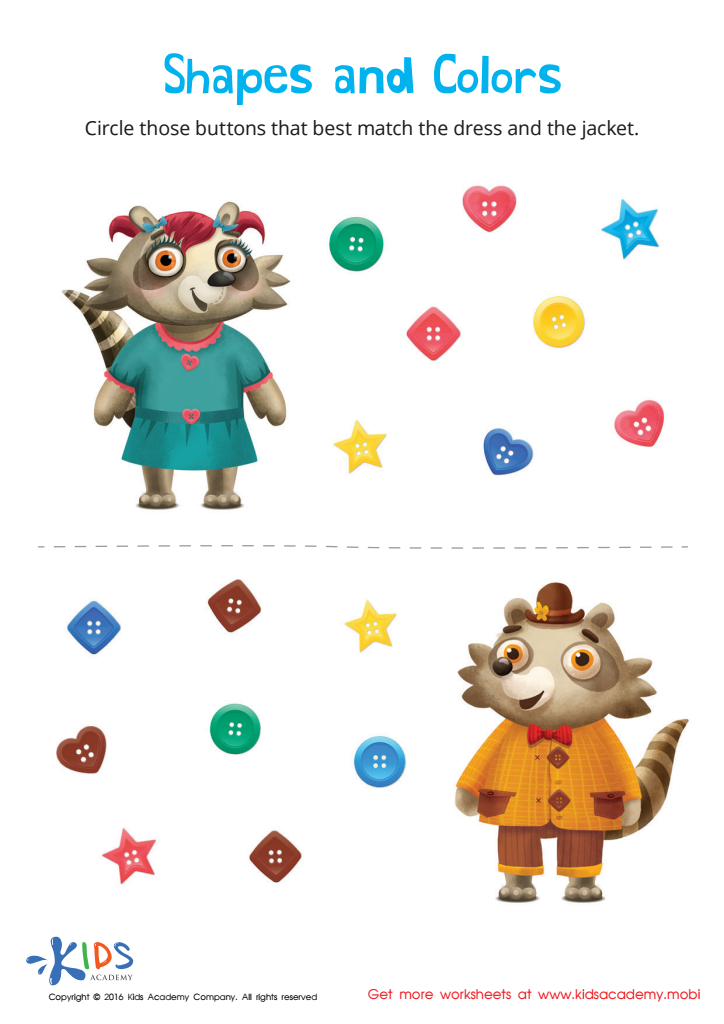
Matching: Shapes and Colors Worksheet











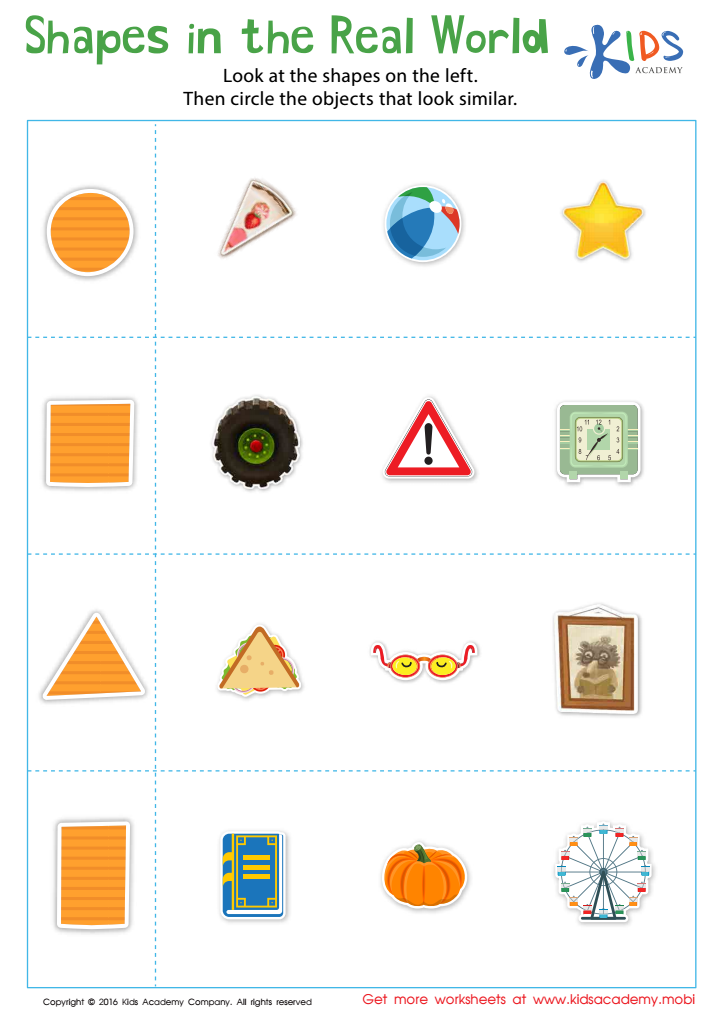
Shapes in the Real World Worksheet
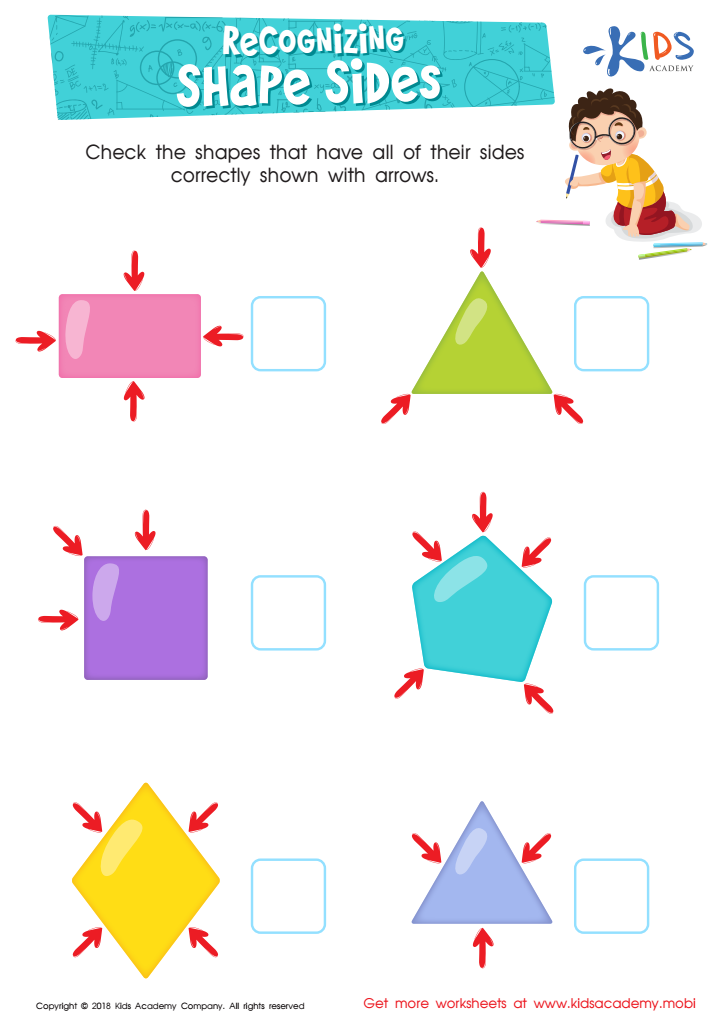
Recognizing Shape Sides Worksheet
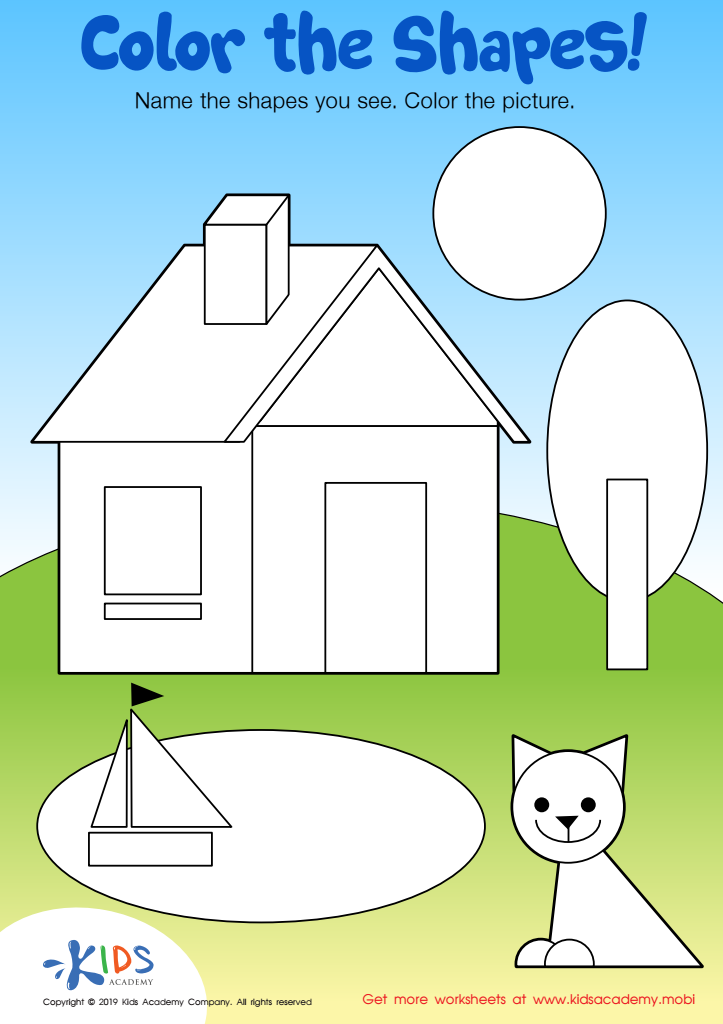
Color the Shapes Worksheet
 Assign to My Students
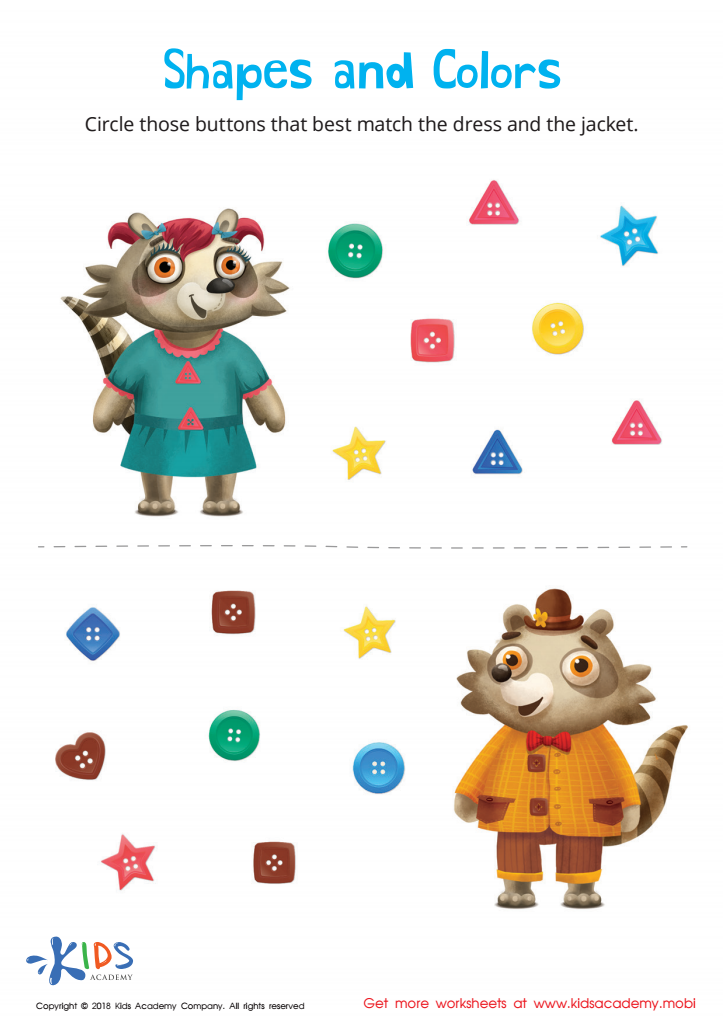
Shapes and Colors Worksheet








Color identification and geometry are fundamental skills that play a critical role in a child's cognitive and academic development. For children aged 4-8, engaging with color identification and geometric shapes can significantly enhance their visual perception, fine motor skills, and problem-solving abilities.
Firstly, recognizing and naming colors is one of the basic steps in early learning. It helps in the development of descriptive language, enabling children to articulate their experiences more vividly. Understanding colors also aids in differentiating objects, which is crucial for later reading and math skills.
Geometry introduces children to spatial reasoning, which is the ability to visualize and manipulate shapes and objects in the mind. Learning about different shapes, like circles, squares, and triangles, helps children develop logic and reasoning skills, foundational for subjects like mathematics. Geometric shapes are also omnipresent in the world, helping children make sense of the environment around them.
By integrating color identification with geometry, learning becomes more engaging and interactive. Activities such as sorting shapes by color or building structures with colored blocks foster both creativity and critical thinking. These combined skills mesh together to build a robust base for more advanced academic pursuits. Ultimately, honing these skills early paves the way for a well-rounded, educated individual who is visually astute and analytically capable.








