Comparing Fractions Geometry Worksheets for Ages 4-8
5 filtered results
-
From - To
Discover our engaging Comparing Fractions Geometry Worksheets designed specifically for children ages 4-8. These interactive worksheets make learning fractions fun and straightforward, featuring colorful illustrations and relatable examples that capture young learners’ attention. Each worksheet enhances skills in identifying and comparing fractions, helping to build a solid foundation in mathematical concepts. With an assortment of exercises tailored to various learning styles, your child will master comparing fractions in no time! Perfect for home learning or classroom activities, our resources ensure kids develop confidence in their math abilities while enjoying the exciting world of geometry. Get started today and watch your child's skills grow!
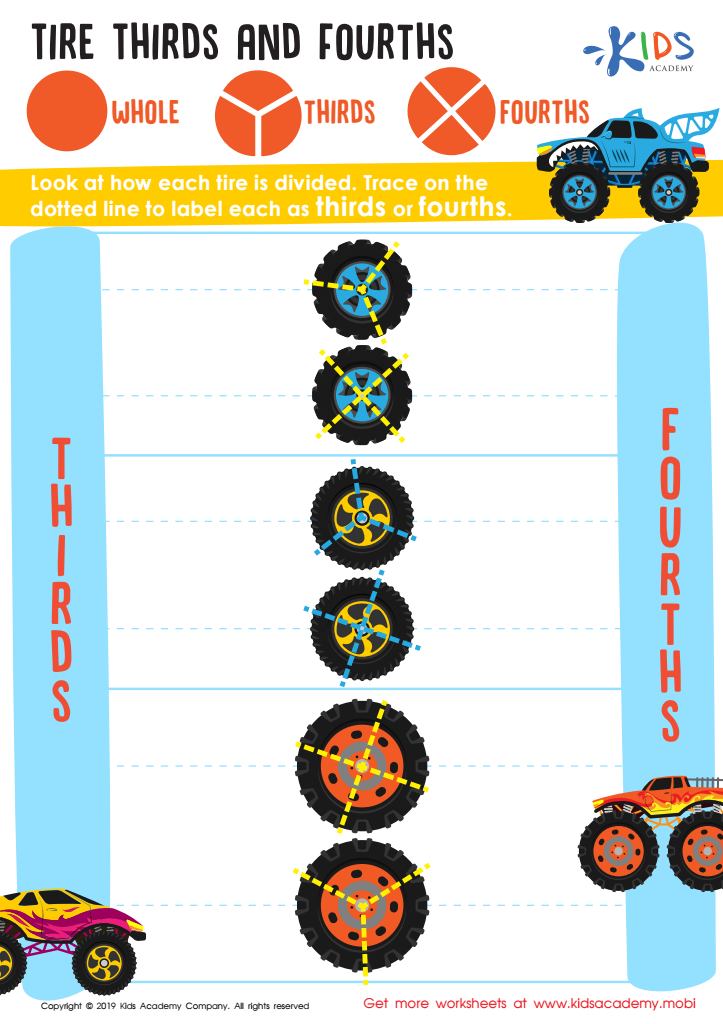
Tire Thirds and Fourths Worksheet
 Assign to My Students











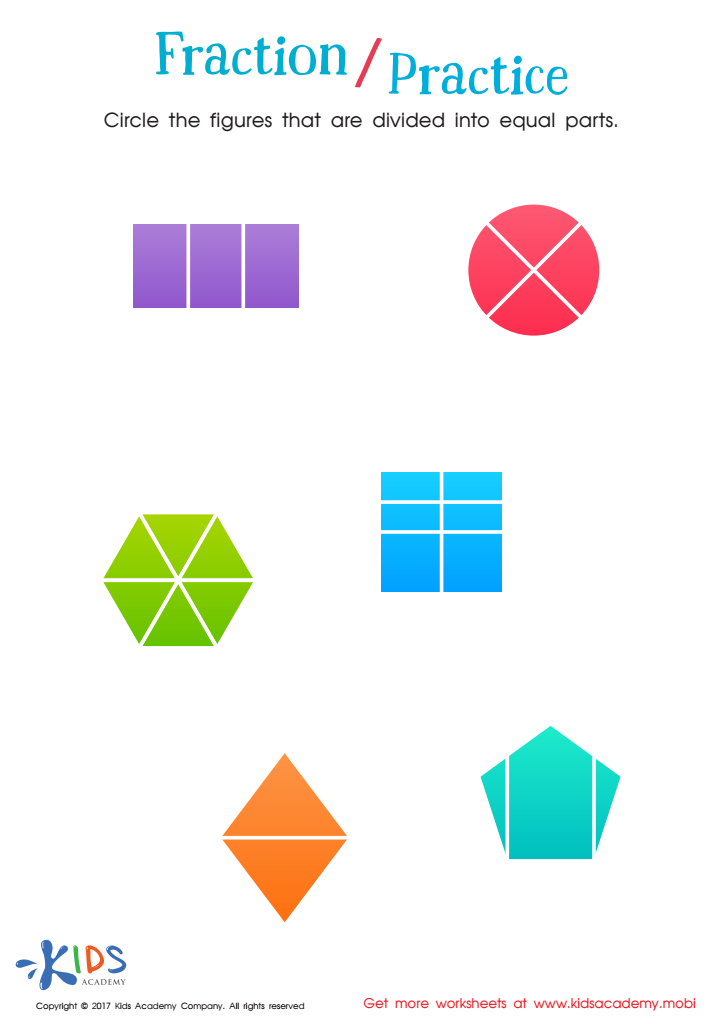
Fractions: Shapes Worksheet
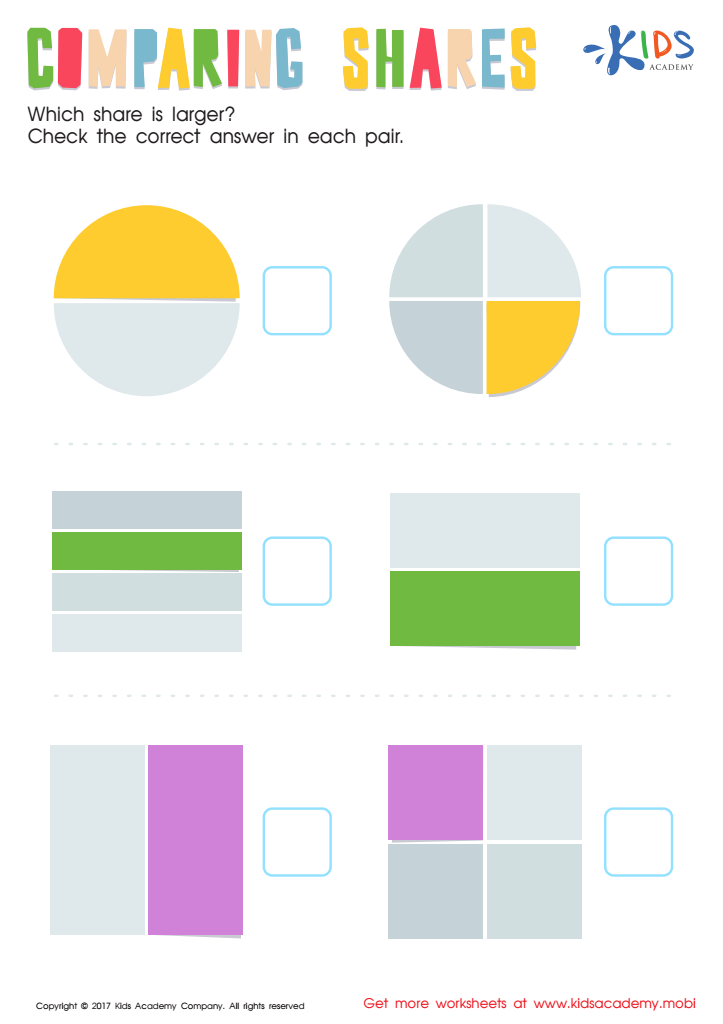
Comparing Shares Worksheet
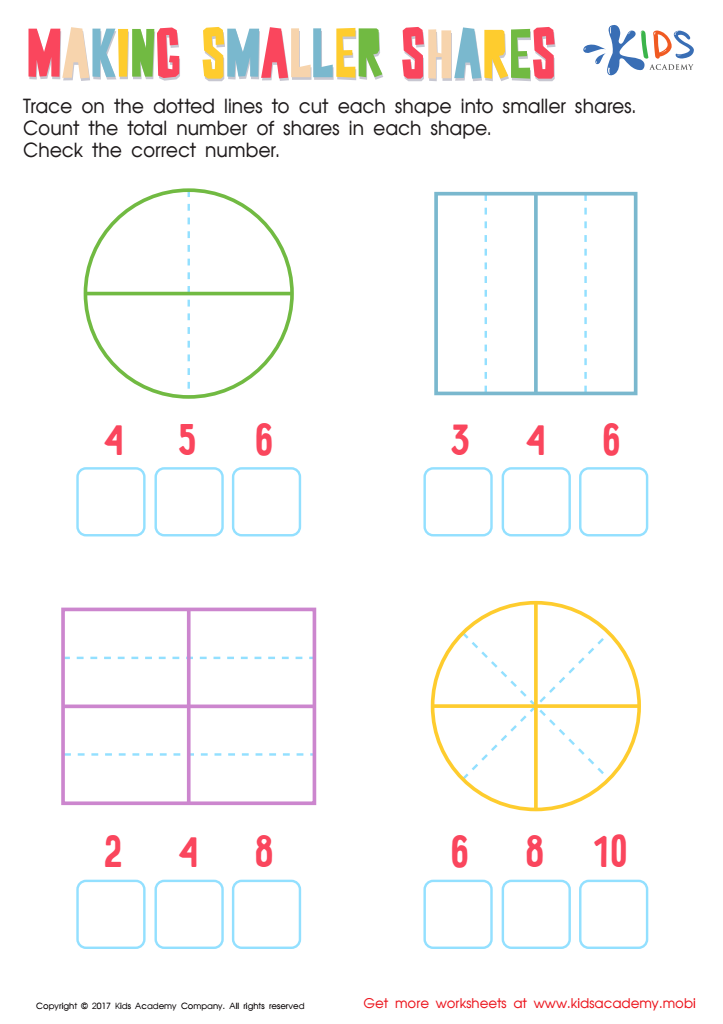
Making Smaller Shares Worksheet
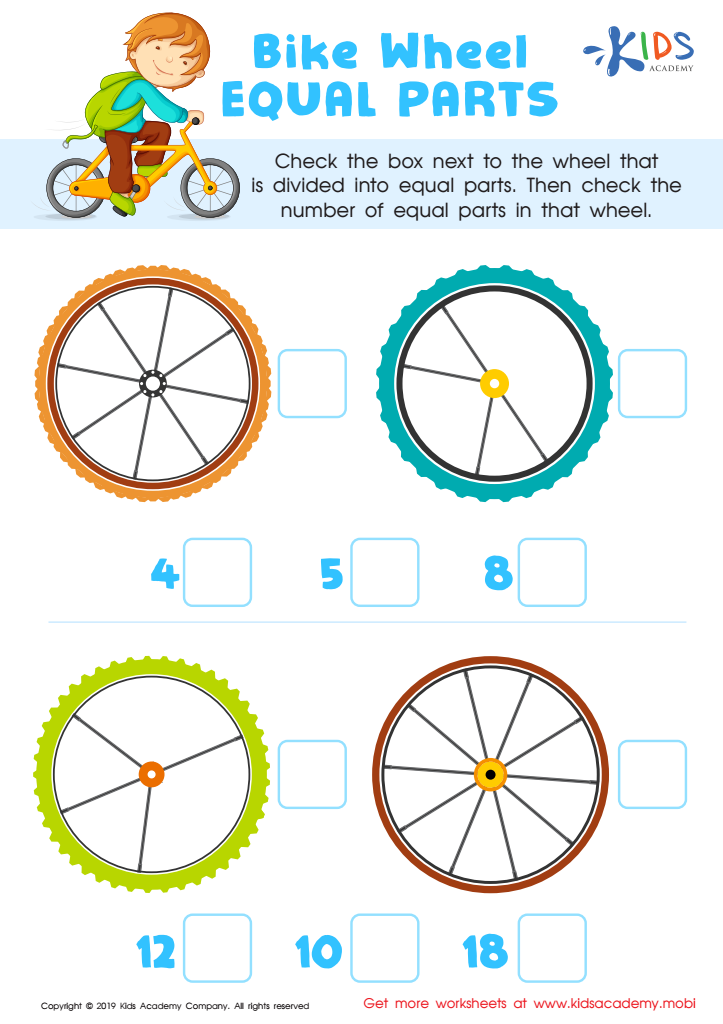
Bike Wheel Equal Parts Worksheet








Parents and teachers should prioritize teaching children about comparing fractions and geometry because these foundational concepts develop critical thinking and problem-solving skills. For children aged 4-8, understanding fractions helps them grasp the idea of part-to-whole relationships, which is crucial in both math and daily life scenarios, such as sharing food or measuring ingredients in cooking.
Geometry complements this by introducing shapes, angles, and spatial reasoning. As children learn to compare fractions, they start to visualize how different parts relate to whole objects. This visualization enhances their ability to understand more complex mathematical concepts later on.
Moreover, engaging with these topics can scaffold children's understanding of measurement, which is essential in mathematics. Encouraging activities using hands-on materials, such as fraction circles or geometric shapes, leads to experiential learning, making math enjoyable and relatable.
Incorporating these concepts into their learning routines fosters an early love for math, helping to break down any fear or barriers around the subject. Ultimately, ensuring that children build a solid understanding of comparing fractions and basic geometry sets the groundwork for future academic success and helps them navigate everyday situations confidently.








