Fraction comparison Geometry Worksheets for Ages 4-8
4 filtered results
-
From - To
Enhance your child's math skills with our engaging Fraction Comparison Geometry Worksheets designed for ages 4-8. These worksheets offer fun and interactive activities that help young learners understand and compare fractions through visual aids and practical exercises. By exploring shapes, sizes, and quantities, children will develop essential mathematical concepts while boosting their confidence. Perfect for home or classroom use, our vibrant worksheets promote a hands-on learning experience, making math enjoyable. Foster critical thinking and problem-solving skills in your child with our thoughtfully crafted materials that align with early education standards. Start their journey toward math mastery today!
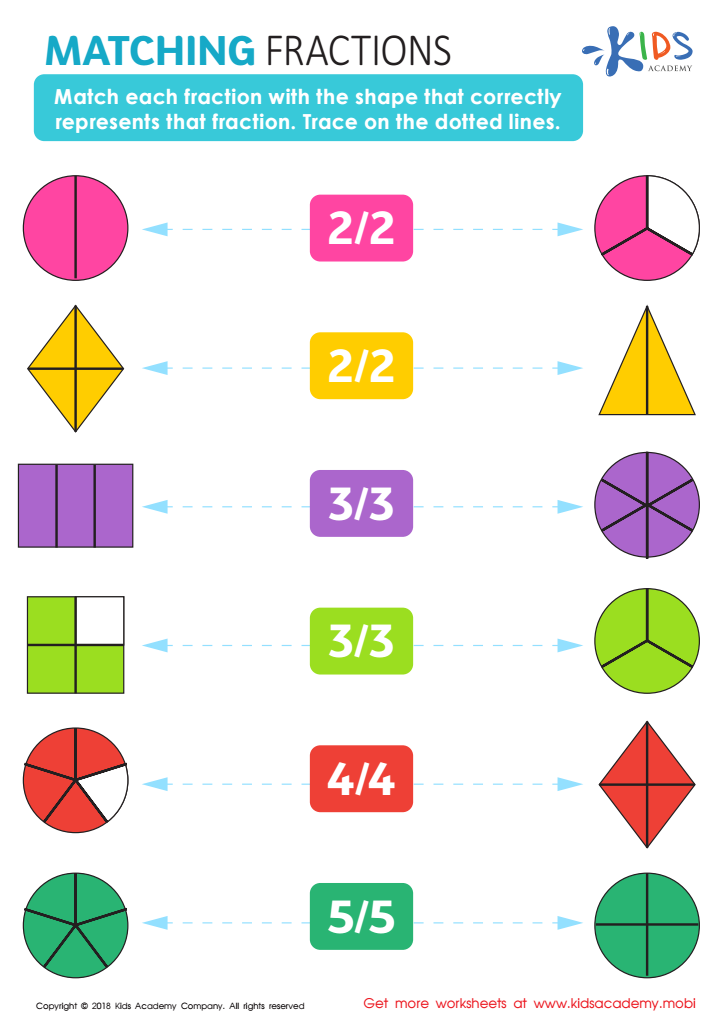
Matching Fractions Worksheet
 Assign to My Students











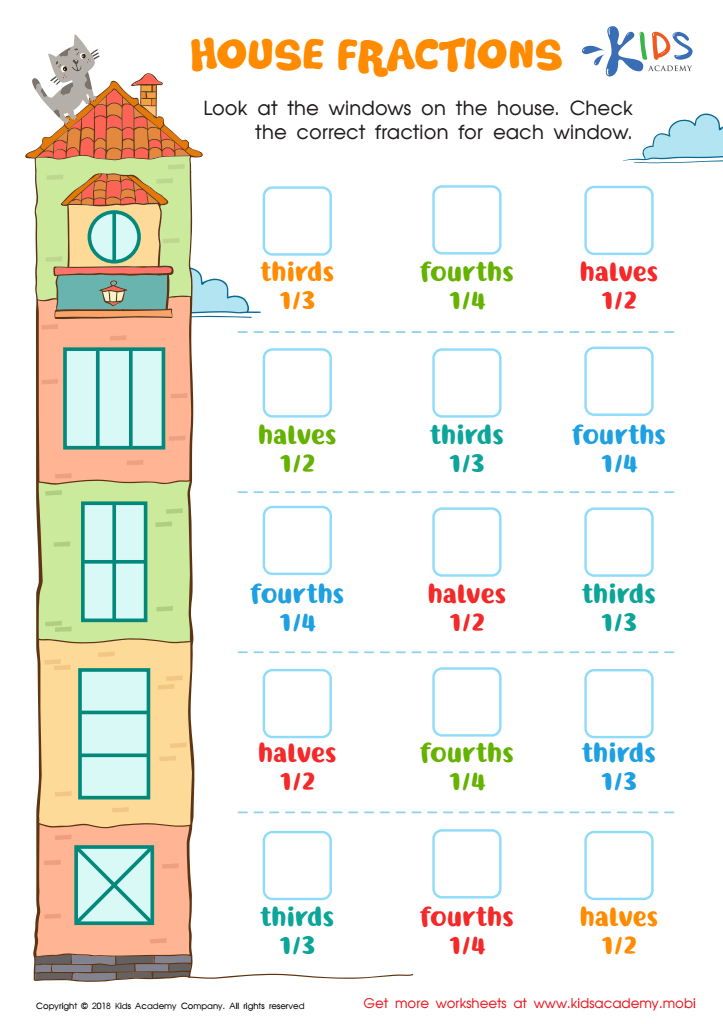
House Fractions Worksheet
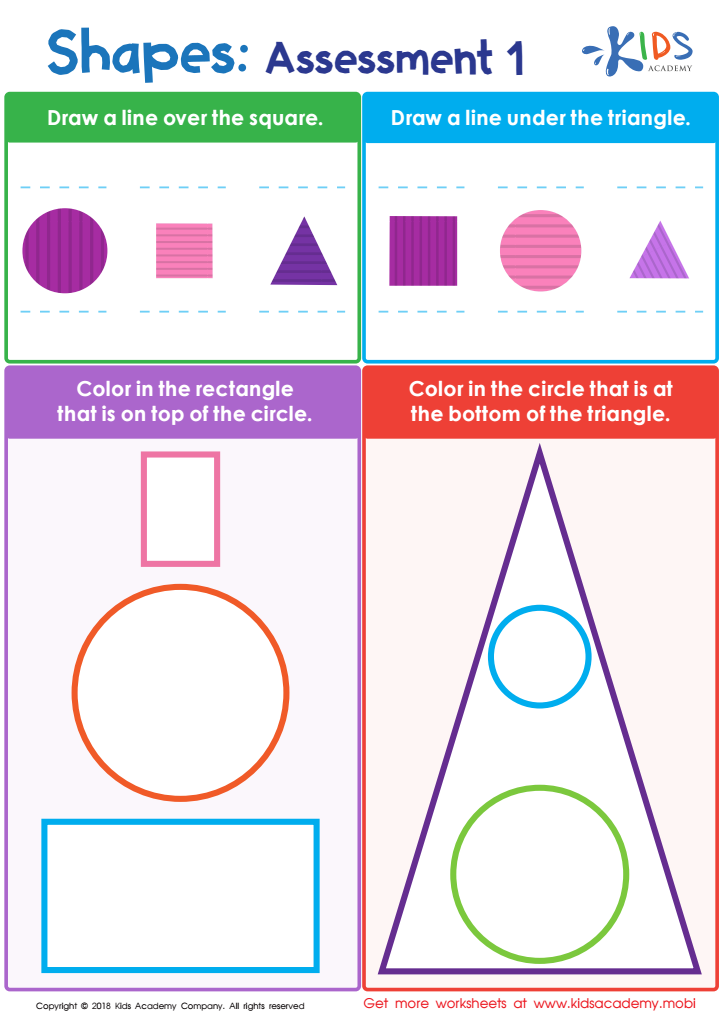
Shapes: Assessment 1 Worksheet
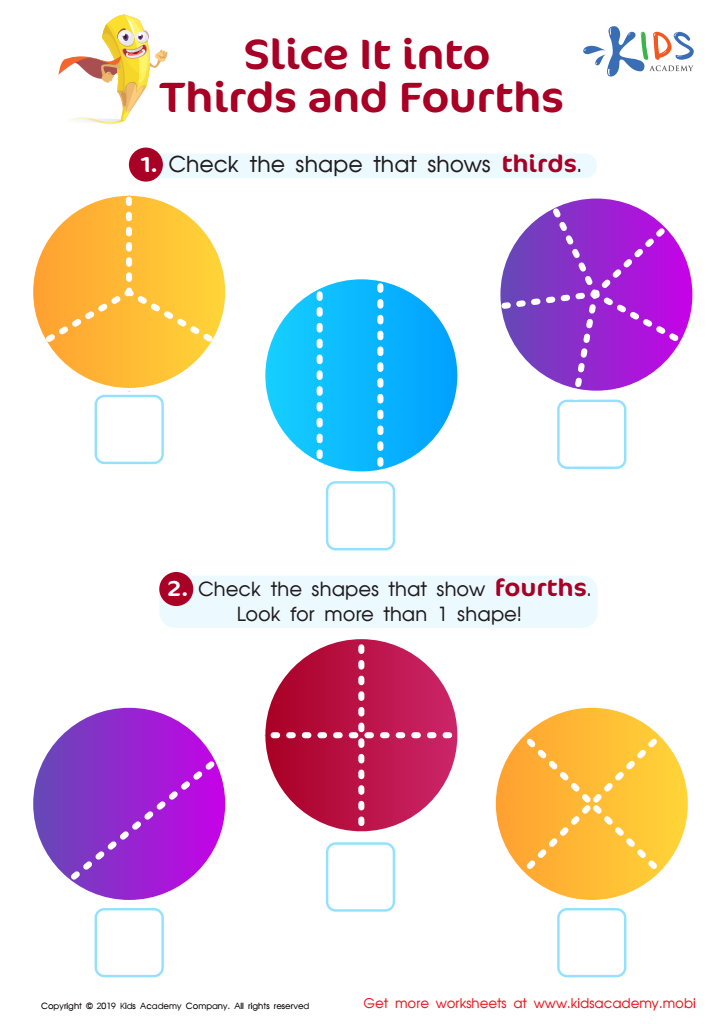
Slice in Thirds Fourths Worksheet








Understanding fraction comparison and geometry is crucial for children aged 4-8, as these concepts form the foundation for essential mathematical skills. Early engagement with fractions helps children grasp the idea of parts of a whole, paving the way for more complex mathematical understanding later on. When children learn to compare fractions, they build critical thinking and problem-solving skills that are vital for academic success.
Geometry, on the other hand, introduces children to shapes, spatial awareness, and measurement. These concepts enhance their ability to visualize and manipulate objects in 3D space, which is applicable not only in mathematics but also in everyday life. For example, recognizing shapes and understanding symmetry are vital skills in various professions, from engineering to art.
Moreover, integrating fraction comparison with geometric concepts supports interdisciplinary learning, allowing children to make connections across math, art, and science. Parents and teachers who encourage these skills help cultivate confident learners who are prepared for future challenges. In a world where problem-solving and analytical thinking are essential, fostering a strong foundation in mathematics at an early age aids in developing lifelong learners capable of tackling complex tasks. Thus, prioritizing these areas in education is invaluable for children's development.








