Identifying shapes Geometry Worksheets for Ages 4-8
3 filtered results
-
From - To
Unlock the world of shapes with our engaging Geometry Worksheets designed for children aged 4-8! These interactive resources guide young learners in identifying various shapes, promoting early math skills through fun activities. Each worksheet is crafted to make learning enjoyable while helping to develop essential geometry concepts. With vibrant illustrations and age-appropriate challenges, kids will strengthen their shape recognition skills and enhance their problem-solving abilities. Perfect for both classroom use and at-home learning, our worksheets provide a solid foundation in geometry. Get started today and watch your child's confidence in math soar as they discover the fascinating world of shapes!
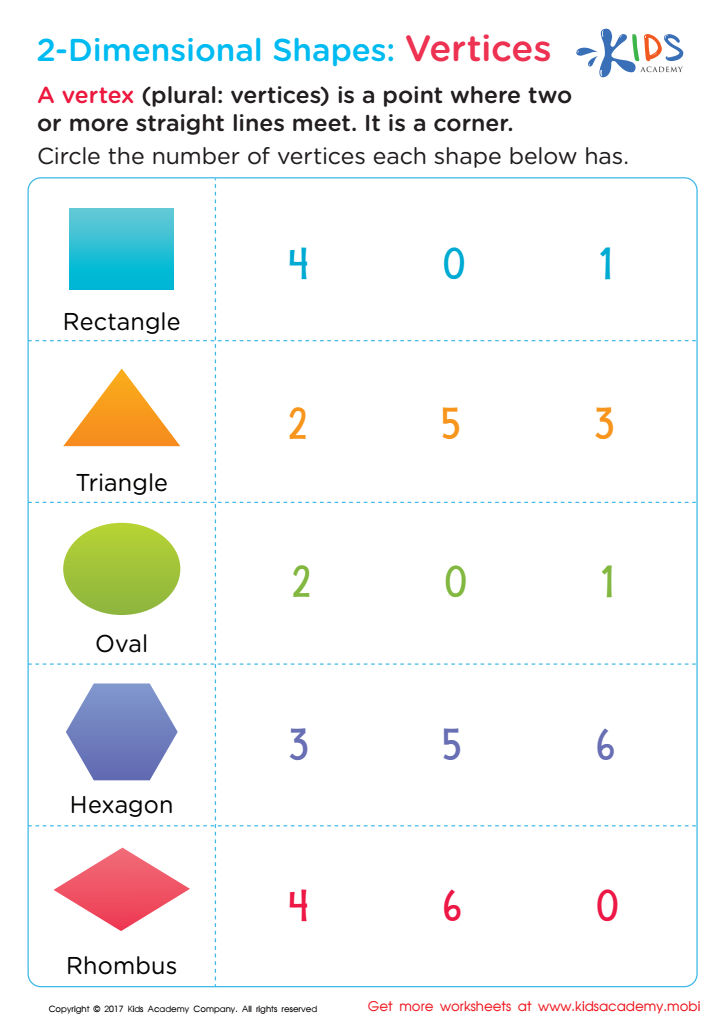
Two–Dimensional Shapes: Vertices Printable











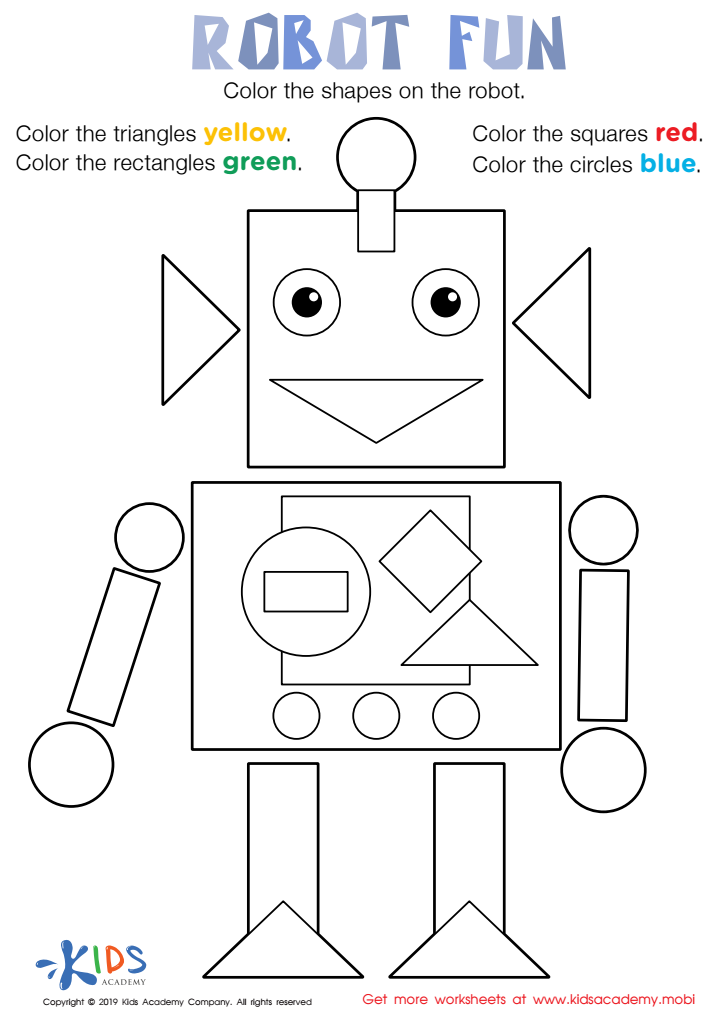
Robot Fun Worksheet
 Assign to My Students
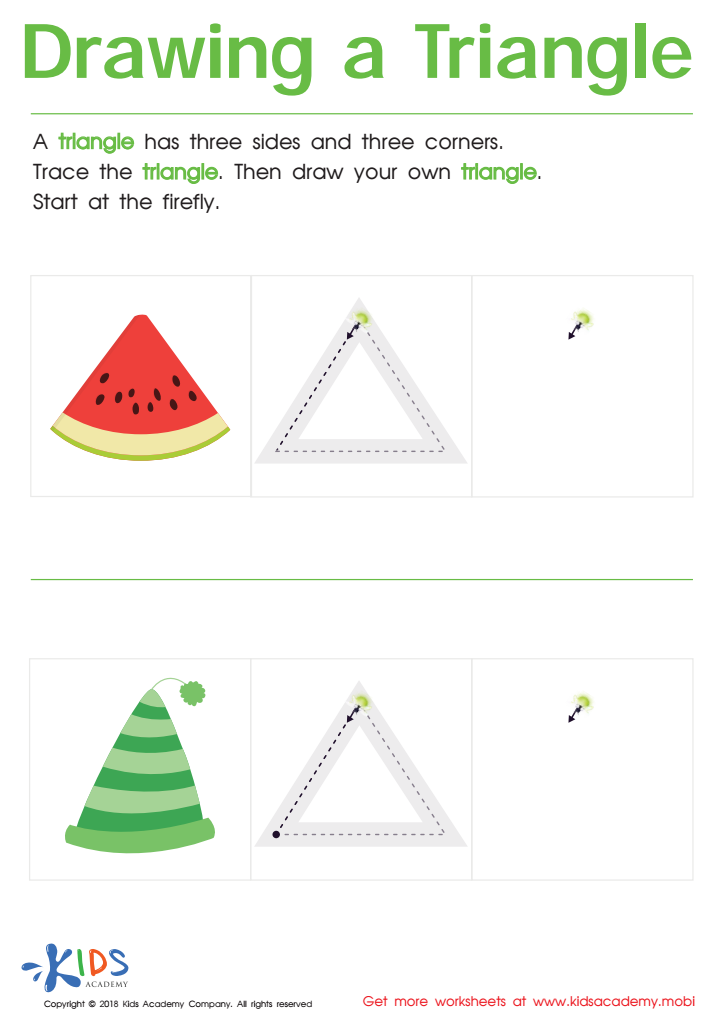
Drawing a Triangle Worksheet








Identifying shapes is a foundational skill in early childhood education that plays a crucial role in a child's cognitive development. For children aged 4-8, learning about shapes enhances their understanding of the world around them. Shapes are the building blocks of geometry, which is a significant aspect of mathematics.
Parents and teachers should care about this identification process for several reasons. Firstly, recognizing shapes boosts spatial awareness, helping children distinguish between objects and understand their relationships in space. This skill is essential for future math concepts and practical tasks like organization and navigation.
Secondly, shape identification fosters critical thinking and problem-solving abilities. As children classify and compare different shapes, they develop analytical skills vital for more complex subjects in later grades.
Moreover, engaging with shapes often includes play and creativity, making it an enjoyable learning experience. Activities such as shape sorting, building, and drawing contribute to fine motor skills while reinforcing shape recognition.
Lastly, understanding shapes is linked to broader learning areas, such as art and sciences. When parents and teachers emphasize shape identification, they provide a strong foundation for lifelong learning and prepare children for more advanced education in rhythms of development.








