Shape comparison Geometry Worksheets for Ages 4-8
4 filtered results
-
From - To
Unlock your child’s potential with our Shape Comparison Geometry Worksheets designed for ages 4-8. These engaging and educational worksheets from Kids Academy help young learners differentiate between shapes, enhancing their understanding of geometry. Through fun activities and visually appealing exercises, children will develop critical thinking and spatial awareness skills. Perfect for both classroom and home use, our worksheets make learning shapes enjoyable and interactive. Foster a love for mathematics in your child today and watch them discover the fascinating world of geometry. Visit us now to explore our wide range of resources tailored for early grade students.
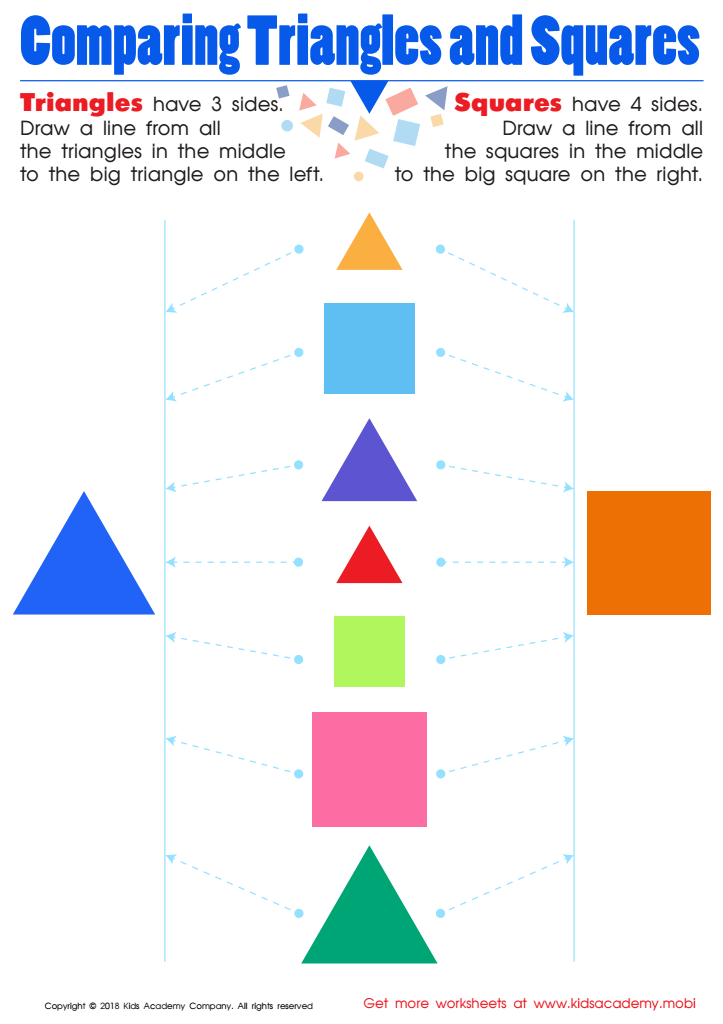
Comparing Triangles Squares Worksheet
 Assign to My Students











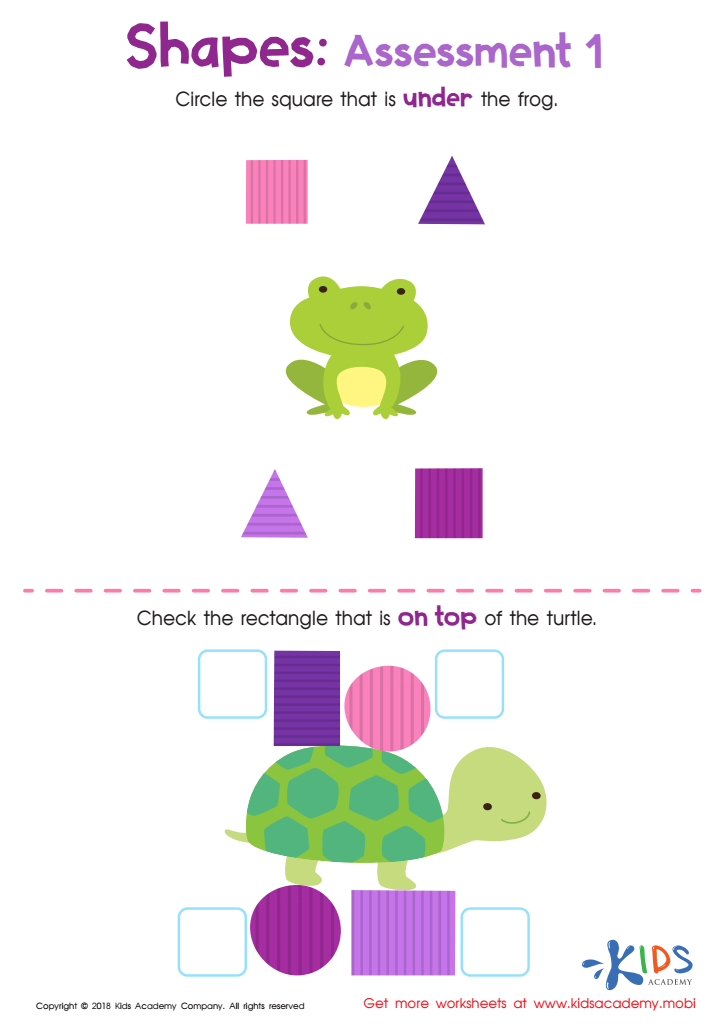
Geometry – Assessment 1 Worksheet
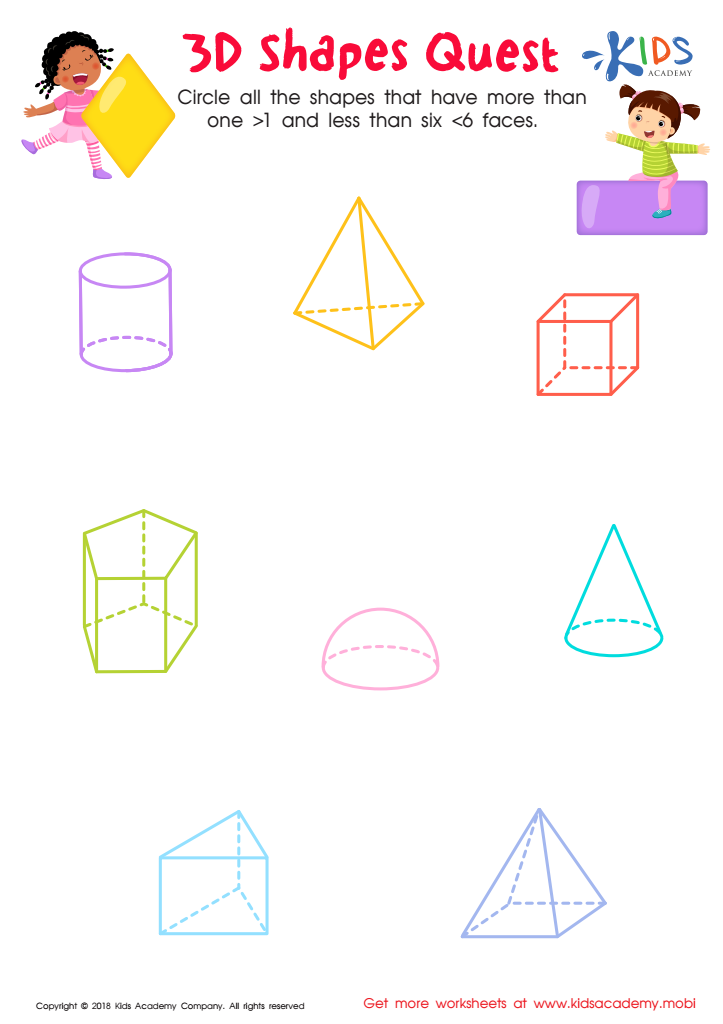
3D Shapes Quest Worksheet
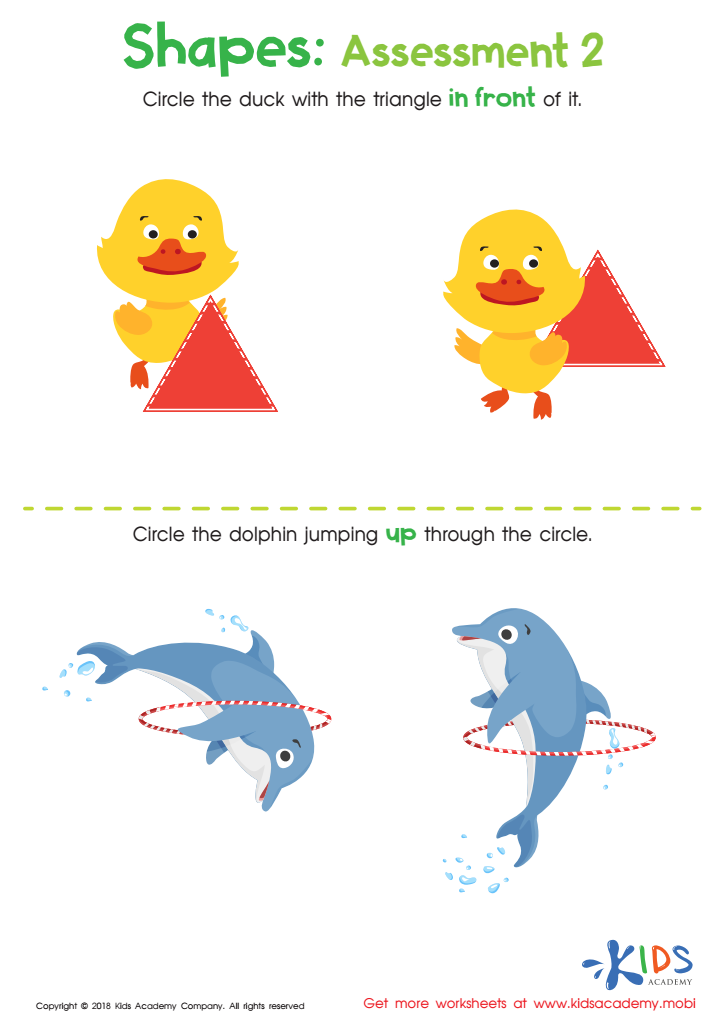
Geometry – Assessment 2 Worksheet








Children between the ages of 4-8 are in a crucial period of cognitive development, and learning about shape comparison in geometry can have profound benefits. At this age, geometric shapes are everywhere in a child's environment, from puzzle pieces to household objects. Engaging young learners in shape comparison activities specifically enhances their spatial reasoning skills, which are vital for understanding the world around them and solving everyday problems.
Moreover, exploring shapes and how they compare and contrast helps children sharpen their analytical and critical thinking skills. They learn to observe details, recognize patterns, and categorize objects based on attributes, laying a foundation for more complex math concepts they will encounter in later grades. These activities support the development of fine motor skills as children manipulate shapes and produce drawings, fostering hand-eye coordination.
Participation in shape comparison also nurtures vocabulary and language development as children learn new terms related to geometry like sides, angles, and vertices. Discussing these shapes and their properties builds communication skills and enhances their capacity to follow multi-step instructions. Furthermore, successful engagement in geometry fosters a sense of accomplishment and confidence in their mathematical abilities, paving the way for a positive attitude toward mathematics in subsequent schooling. Therefore, parents and teachers should care about incorporating shape comparison in early education to promote holistic cognitive development and long-term academic success.








